Entre em contacto com a BBP


Guia de campo de bombas para águas carregadas: como as bombas autoescorvantes para sólidos movimentam água com detritos
Uma bomba para águas carregadas é uma bomba centrífuga de auto-escorvamento concebida para movimentar água com detritos — escoamento superficial misturado com areia, paus, lamas e resíduos de obra — sem entupir. As bombas de água convencionais bloqueiam com sólidos em suspensão logo no primeiro turno. Uma bomba para águas carregadas é projetada para permitir a passagem de sólidos até cerca de 3 inches através de um impulsor semiaberto sobredimensionado e de um corpo da bomba ampliado. Este guia aborda a engenharia, o dimensionamento, a seleção do acionamento, os materiais e a operação no terreno que distinguem uma verdadeira bomba para águas carregadas de alternativas mais económicas, e indica-lhe a série de bombas para águas carregadas para serviço pesado da BBP quando estiver pronto para especificar uma.Especificações rápidas — bomba para águas carregadas em resumo
| Classe de bomba | Bomba centrífuga autoescorvante para transporte de sólidos |
| Tamanhos de carcaça | 2″ · 3″ · 4″ · 6″ · 8″ |
| Gama de caudal | 200 – 2 800+ GPM |
| Gama de altura manométrica | 40 – 145 ft |
| Passagem máxima de sólidos | Até 3″ |
| Altura de aspiração (prática) | Até 25 ft (limite atm. ~33 ft) |
| Acionamentos | Gasolina · Diesel · Elétrico · Submersível |
| Normas de referência | ANSI/HI 14.1 · ASTM A48 Class 30 · ASTM A536 65-45-12 |
O que é uma bomba para águas carregadas (e porque se chama assim)?
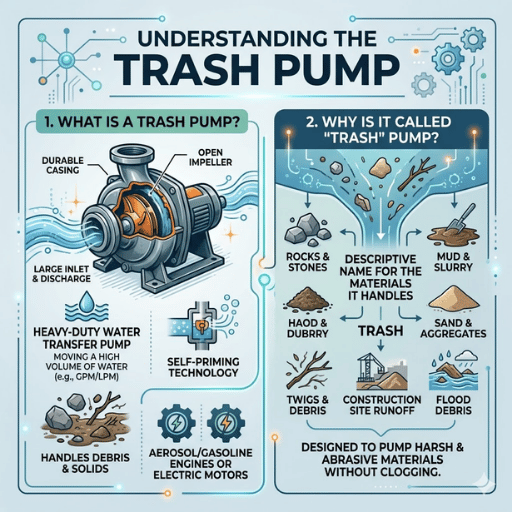 “Bomba para águas carregadas” é a designação abreviada do setor para uma bomba de transporte de detritos. A TechNote SAVER do Departamento de Segurança Interna dos Estados Unidos sobre bombas portáteis e móveis exprime a distinção de forma simples: “As bombas de drenagem são concebidas para água relativamente limpa; as bombas para águas carregadas, mais dispendiosas, têm uma construção e componentes mais robustos para lidar com água ‘mais suja'” . Uma bomba para águas carregadas suporta folhas, paus, areia, lama e detritos de construção que bloqueariam uma bomba de água comum em minutos.
A inovação do equipamento é estrutural, não comercial. O corpo da bomba para águas carregadas tem passagens suficientemente largas para admitir sólidos de 3-inch; o impulsor possui menos pás e maiores, concebidas para transportar esse sólido até à descarga, em vez de o prender contra a lingueta da voluta. Em termos de engenharia, a designação correta é bomba centrífuga autoescorvante para transporte de sólidos. “Bomba para águas carregadas” é mais curto e ficou estabelecido.
Três números definem esta classe. 3 inches é a referência do setor para serviço integral de águas carregadas. 25 feet é a altura de aspiração prática das bombas autoescorvantes, limitada pela pressão atmosférica (aproximadamente 33 ft teóricos ao nível do mar), menos a margem para atrito, pressão de vapor e altitude. 200 to 2 800+ GPM abrange desde uma unidade portátil de 2-inch até uma carcaça para indústria mineira de 8-inch montada em reboque. O restante deste guia explica como estes números se traduzem numa bomba específica para um trabalho específico.
“Bomba para águas carregadas” é a designação abreviada do setor para uma bomba de transporte de detritos. A TechNote SAVER do Departamento de Segurança Interna dos Estados Unidos sobre bombas portáteis e móveis exprime a distinção de forma simples: “As bombas de drenagem são concebidas para água relativamente limpa; as bombas para águas carregadas, mais dispendiosas, têm uma construção e componentes mais robustos para lidar com água ‘mais suja'” . Uma bomba para águas carregadas suporta folhas, paus, areia, lama e detritos de construção que bloqueariam uma bomba de água comum em minutos.
A inovação do equipamento é estrutural, não comercial. O corpo da bomba para águas carregadas tem passagens suficientemente largas para admitir sólidos de 3-inch; o impulsor possui menos pás e maiores, concebidas para transportar esse sólido até à descarga, em vez de o prender contra a lingueta da voluta. Em termos de engenharia, a designação correta é bomba centrífuga autoescorvante para transporte de sólidos. “Bomba para águas carregadas” é mais curto e ficou estabelecido.
Três números definem esta classe. 3 inches é a referência do setor para serviço integral de águas carregadas. 25 feet é a altura de aspiração prática das bombas autoescorvantes, limitada pela pressão atmosférica (aproximadamente 33 ft teóricos ao nível do mar), menos a margem para atrito, pressão de vapor e altitude. 200 to 2 800+ GPM abrange desde uma unidade portátil de 2-inch até uma carcaça para indústria mineira de 8-inch montada em reboque. O restante deste guia explica como estes números se traduzem numa bomba específica para um trabalho específico.
Como funciona uma bomba para águas carregadas: auto-escorvamento e transporte de sólidos
 Uma bomba para águas carregadas movimenta água ao rodar um impulsor semiaberto dentro de um corpo da bomba em voluta. A água entra pela porta de aspiração, atinge o impulsor e é projetada para o exterior pela força centrífuga para a voluta, onde a passagem divergente converte energia cinética em altura manométrica de pressão. Essa pressão impele a água para fora pela porta de descarga. Até aqui, a descrição corresponde a qualquer bomba centrífuga. A diferença surge em dois pontos.
Geometria do corpo da bomba. A voluta de uma bomba para águas carregadas é dimensionada para admitir sólidos que ficariam presos num corpo da bomba de tolerâncias mais apertadas. Referências do setor, incluindo a Norma de Bombas Rotodinâmicas ANSI/HI 14,1-14,2-2019 classificam-nas como bombas rotodinâmicas para transporte de sólidos. Os corpos da bomba incluem uma tampa de limpeza removível, para que um técnico no terreno possa retirar uma pedra presa sem desmontar a tubagem de aspiração ou descarga.
Conceção do impulsor. As bombas de água convencionais utilizam impulsores fechados — pás entre duas paredes — para rendimento hidráulico em água limpa. Uma bomba para águas carregadas utiliza um impulsor semiaberto — pás fixadas a uma única parede, com o lado aberto a funcionar junto à placa de desgaste do lado da aspiração. A geometria semiaberta tolera sólidos que danificariam um impulsor fechado e permite ao operador ajustar a folga de funcionamento à medida que a placa de desgaste se desgasta.
Uma bomba para águas carregadas movimenta água ao rodar um impulsor semiaberto dentro de um corpo da bomba em voluta. A água entra pela porta de aspiração, atinge o impulsor e é projetada para o exterior pela força centrífuga para a voluta, onde a passagem divergente converte energia cinética em altura manométrica de pressão. Essa pressão impele a água para fora pela porta de descarga. Até aqui, a descrição corresponde a qualquer bomba centrífuga. A diferença surge em dois pontos.
Geometria do corpo da bomba. A voluta de uma bomba para águas carregadas é dimensionada para admitir sólidos que ficariam presos num corpo da bomba de tolerâncias mais apertadas. Referências do setor, incluindo a Norma de Bombas Rotodinâmicas ANSI/HI 14,1-14,2-2019 classificam-nas como bombas rotodinâmicas para transporte de sólidos. Os corpos da bomba incluem uma tampa de limpeza removível, para que um técnico no terreno possa retirar uma pedra presa sem desmontar a tubagem de aspiração ou descarga.
Conceção do impulsor. As bombas de água convencionais utilizam impulsores fechados — pás entre duas paredes — para rendimento hidráulico em água limpa. Uma bomba para águas carregadas utiliza um impulsor semiaberto — pás fixadas a uma única parede, com o lado aberto a funcionar junto à placa de desgaste do lado da aspiração. A geometria semiaberta tolera sólidos que danificariam um impulsor fechado e permite ao operador ajustar a folga de funcionamento à medida que a placa de desgaste se desgasta.
As bombas para águas carregadas são autoescorvantes?
Sim. Uma bomba para águas carregadas autoescorvante retém uma carga de água dentro do corpo da bomba entre ciclos. No arranque, o impulsor roda essa carga e cria vácuo parcial na linha de aspiração, extraindo o ar e puxando a água. O manual de preparação de bombas centrífugas da PSG/Dover refere que uma bomba autoescorvante retém a carga de fluido de escorvamento mesmo se a bomba for utilizada de forma intermitente , pelo que não é necessária uma válvula de pé. A ressalva é a seguinte: o operador deve encher a voluta com água antes do primeiro arranque, após manutenção ou depois de a unidade ter permanecido vazia tempo suficiente para a carga evaporar.
📐 Nota de engenharia · Física da altura de aspiração
A pressão atmosférica ao nível do mar é de 14,7 psi, equivalente a cerca de 33,9 ft de coluna de água. Este é o máximo teórico absoluto que um vácuo perfeito pode elevar a água. As bombas reais perdem altura manométrica devido ao atrito na linha de aspiração, à pressão de vapor da água quente, à redução por altitude (cerca de 1 ft por cada 1 000 ft de elevação) e ao rendimento da própria bomba. A altura de aspiração prática de 25 ft na maioria das bombas para águas carregadas reflete essas perdas. Acima de 25 ft, especifique uma carcaça submersível ou um poço de bombagem mais profundo.
Bomba para águas carregadas vs. bomba de água vs. semi-para águas carregadas vs. bomba de esgoto
Quatro famílias de bombas partilham uma configuração portátil centrífuga semelhante, mas diferem na única especificação que determina se a bomba resiste ao seu trabalho: a dimensão máxima de passagem de sólidos. Escolha mal e paga por uma margem que nunca utiliza ou — mais frequentemente — danifica o empanque mecânico numa semana quando uma pequena pedra prende o impulsor.| Classe de bomba | Máximo de sólidos | Serviço típico | Impulsor | Escalão de custo (portátil) |
|---|---|---|---|---|
| Bomba de água | Inferior a 0.1″ | Rega, transferência de água limpa | Fechado, tolerância apertada | $200 – $800 |
| Bomba semi-para águas carregadas | 0.5″ – 1″ | Drenagem ligeira, esvaziamento de piscinas, escoamento de quintais | Semiaberto, pás menores | $800 – $2,000 |
| Bomba para águas carregadas (integral) | Até 3″ | Construção, indústria mineira, desvio de esgotos, inundações | Semiaberto, pás sobredimensionadas | $2,500 – $5,000+ |
| Bomba de esgoto | Até 2″ (sólidos filamentosos) | Estação elevatória, poço húmido, municipal | Aberto / vórtice / triturador | Varia (submersível) |
“Utilizamos 2 e 3 bombas elétricas HD de poço de bombagem sem pedras e 3 e 4 bombas diesel para águas carregadas que tratam dos detritos.” — Empreiteiro de construção, r/Construction (wis9ia)
Uma bomba para águas carregadas consegue bombear lamas?
Sim, dentro de certos limites. Uma bomba para águas carregadas processa lamas macias, lama e águas residuais com sólidos suspensos até 3 inches e teor orgânico moderado. Deixa de funcionar eficazmente com lamas abrasivas de elevada densidade — rejeitados mineiros, lama de perfuração e concentrados com elevado teor de sílica acima de aproximadamente 30 percent de sólidos em peso. Nessa densidade, o impulsor e o corpo da bomba desgastam-se a ritmos múltiplos do normal, sendo o produto adequado uma série de bombas para lamas para serviço pesado, com geometria de corpo da bomba mais espessa e placas de desgaste ajustáveis. A fronteira entre o «serviço para águas carregadas» e o «serviço para lamas» é a concentração, não apenas a dimensão das partículas. Uma bomba para águas carregadas bombeia água com detritos. Uma bomba para lamas bombeia lamas com água. A parte hidráulica é concebida para extremos opostos da curva de densidade.⚠️ Importante — padrão de utilização incorreta
O erro mais dispendioso num pequeno estaleiro é utilizar uma bomba de água Honda ou Predator numa vala que se enche de lama e finos de gravilha. O impulsor bloqueia em poucas horas, o empanque mecânico falha no turno seguinte e o custo de substituição — incluindo o dia de trabalho perdido à espera de uma bomba funcional — excede em 4-6x a diferença de preço inicial para uma verdadeira bomba para águas carregadas.
Dimensionamento de uma bomba para águas carregadas: carcaça, GPM e altura manométrica
 O dimensionamento otimizado de uma bomba para águas carregadas revela 3 parâmetros: capacidade de caudal fornecido (débito em gallons per minute), altura manométrica total (pressão em pés) e altura líquida positiva de aspiração disponível nas entradas. O tamanho pode parecer ser 2, 3, 4, 6 ou 8 — o diâmetro na entrada e saída da bomba escala linearmente, na maioria dos casos, com o caudal.
| Carcaça | Caudal (GPM) | Altura manométrica (ft) | Sólidos | Acionamento típico |
|---|---|---|---|---|
| 2″ | 200 – 400 | 40 – 90 | 1.25″ | Elétrico / Gasolina |
| 3″ | 250 – 650 | 45 – 110 | 1.75″ | Elétrico / Gasolina / Diesel |
| 4″ | 500 – 1,200 | 80 – 135 | 2.5″ – 3″ | Elétrico / Diesel |
| 6″ | 900 – 1,800 | 90 – 145 | 3″ | Elétrico / Diesel |
| 8″ | 1,600 – 2,800 | 90 – 145 | 3″ | Diesel (montado em reboque) |
Estrutura de decisão — serviço no local para carcaça
A ferramenta da BBP para avaliar a profundidade do poço de bombagem e a altura de aspiração orienta-o no cálculo de NPSH-A se estiver a trabalhar com uma fossa de recolha profunda ou em altitude. Para instalações correntes, a tabela acima é a resposta prática.
- Esvaziamento de piscina / escoamento de quintal (abaixo de 200 GPM, limpo): semi-para águas carregadas de 2″, acionamento a gasolina
- Drenagem de estaleiro, fundação pequena (200-600 GPM): para águas carregadas de 2″-3″, gasolina ou elétrica
- Desvio principal em construção (1 000-1 800 GPM, sem rede elétrica): para águas carregadas de 4″-6″, diesel
- Drenagem de cava mineira (1 500-2 800 GPM, contínua): para águas carregadas de 8″, diesel, atualização do impulsor Ni-hard
- Estação elevatória / poço húmido (300-1 100 GPM, submerso): submersível de 3″-4″, elétrica
📐 Regra da margem de 3-Inch
Especifique capacidade integral para sólidos de 3-inch em qualquer bomba para águas carregadas destinada a construção ou indústria mineira, mesmo que o seu perfil diário de detritos seja apenas de ¾-inch. Esta margem é a diferença entre uma vida útil de 8 000-hour e uma falha catastrófica numa única tempestade quando uma pedra de tempestade de 2-inch prende um impulsor subdimensionado. A diferença de preço entre uma bomba nominal de 1-inch e uma nominal de 3-inch na mesma carcaça é pequena. O custo de substituir uma bomba de 4″ bloqueada a meio de uma betonagem não é.
Tipo de acionamento: diesel, gasolina, elétrico e submersível
 As quatro classes de acionamento correspondem a três realidades do local: dispõe de eletricidade da rede, durante quantas horas por dia a bomba vai funcionar e alguém pode ouvi-la. Abaixo, indica-se como as quatro classes de acionamento se relacionam, em diferentes graus, com estas condições do local.
| Acionamento | Melhor adequação | Aspetos a ter em conta |
|---|---|---|
| Gasolina | Carcaças portáteis de 2″-3″, drenagem ligeira, resposta de emergência. A série WT da Honda estabelece a referência no retalho. | Logística de combustível em trabalhos de longa duração; autonomia típica de 4-8 por depósito |
| Diesel | Carcaças de 3″-8″, serviço contínuo, construção e indústria mineira sem rede elétrica. Autonomia de combustível típica do setor: 40-hour. | Os controlos de emissões EPA Tier 4 final aumentam o custo dos motores abaixo de 75 hp |
| Elétrico (acoplamento direto) | Locais com rede elétrica, utilização em interiores, zonas povoadas, trabalho noturno. Funcionamento silencioso e emissões nulas. | Requer rede elétrica ou gerador fiável; gestão de cabos em locais lamacentos |
| Submersível | Poços húmidos, estações elevatórias, esvaziamento de caves, poços de bombagem profundos abaixo de 25 ft. Elimina por completo a limitação da altura de aspiração. | Apenas elétrica; a classificação do cabo deve corresponder ao serviço; menor passagem máxima de sólidos face às bombas de superfície para águas carregadas |
As bombas para águas carregadas são submersíveis?
Algumas são. Uma bomba submersível para águas carregadas é um motor elétrico selado montado diretamente num impulsor semiaberto, colocado no poço húmido e operado no fundo da coluna de água. As carcaças submersíveis têm menor passagem máxima de sólidos do que as carcaças de superfície equivalentes (normalmente 2-2,5 inches, contra 3 inches nas bombas de superfície para águas carregadas), mas eliminam por completo o limite de altura de aspiração. Para estações elevatórias, esvaziamento de caves profundas ou qualquer serviço em que a água tenha mais de 25 feet de profundidade, uma bomba submersível é a escolha correta, independentemente do perfil de sólidos. Para drenagem à superfície acima de 600 GPM com logística diária de combustível, uma carcaça de superfície autoescorvante a diesel continua a ser preferível.Aplicações: onde as bombas para águas carregadas demonstram o seu valor
 A nota técnica do Departamento de Segurança Interna dos Estados Unidos agrupou as bombas portáteis e para águas carregadas nas suas “bombas de tipo centrífugo… utilizadas na gestão de águas de inundação”, e o mesmo equipamento surge nas quatro classes de serviço que, em conjunto, representam grande parte da procura.
Drenagem em construção
300–2 000 GPM · diesel típico · sólidos até 3″
Valas de fundação, escavações de túneis, escavações de caves, fossas de estruturas de estacionamento. Procedimento habitual: escavar até à cota, criar no ponto baixo um poço de bombagem de 2-foot preenchido com pedra e colocar a bomba para águas carregadas por cima. O guia de campo da Caltrans formaliza este procedimento exato no âmbito da conformidade ambiental.
Drenagem em minas e pedreiras
1 500–2 800 GPM · diesel / elétrico HV · atualização Ni-hard
Drenagem contínua de cava com finos de sílica em suspensão e carga de sedimentos variável. Disposições escalonadas de várias bombas a diferentes elevações. A atualização para impulsor Ni-hard é amortizada num ano em serviços acima de 3 000 hours por ano, porque os finos de sílica desgastam o ferro fundido nodular convencional a 2-3x a taxa normal.
Desvio municipal de esgotos
500–1 800 GPM · montado em reboque · elétrico ou diesel
Manutenção de estações elevatórias, desvio de conduta elevatória durante reabilitação de serviços públicos, controlo de transbordamentos de emergência. O aprovisionamento de bomba de drenagem de 8-inch montada em reboque do Illinois DOT mostra a escala típica nas frotas de obras públicas executadas por administração direta.
Controlo de inundações e resposta de emergência
200–1 200 GPM · portátil de 2″/3″ · motor a gasolina
Esvaziamento de caves, refluxo de coletores pluviais, remoção de água após furacões. As carcaças portáteis a gasolina são rapidamente colocadas em camiões municipais. Profissionais do r/Construction referem que, para drenagem durante a noite, a solução é aumentar a autonomia de combustível: “Provavelmente vai precisar de uma bomba para águas carregadas de 6″. Uma que possa funcionar durante a noite sem ficar sem combustível. Reduza bastante a rotação depois de baixar o nível” .
Materiais e normas: o que ASTM Class 30 e 65-45-12 realmente significam
O certificado de ensaio de fábrica de uma bomba para águas carregadas é mais elucidativo do que a respetiva brochura. As especificações de material relevantes para a maioria das bombas para águas carregadas norte-americanas são ferro fundido cinzento ASTM A48 Class 30 (corpo da bomba) e ferro fundido nodular ASTM A536 65-45-12 (impulsor). ASTM A48 Class 30 (corpo da bomba). O “30” corresponde a um mínimo de 30 000 psi de resistência à tração, com dureza entre 174-210 Brinell. É difícil superar o ferro fundido cinzento na amortização de vibrações e na estabilidade das tolerâncias de fundição na geometria interna ligeiramente curva dos corpos da bomba. Não que o ferro fundido nodular não tenha lugar em aplicações de maquinaria pesada — apenas que o cinzento é preferível. ASTM A536 65-45-12 (impulsor). Os números correspondem à resistência à tração mínima (65 ksi), ao limite de escoamento (45 ksi) e ao alongamento (12 por cento). ET-a12% elongation é a mana no chão de fábrica: quando uma pedra de 2 polegadas danifica uma pá do impulsor a 3 500 rpm, a pá dobra-se parcialmente e perde uma ponta, em vez de partir toda a roda. É a diferença entre reparar um impulsor que foi lavado com ácido e uma reconstrução ilimitada. A referência para a nomenclatura é a norma ANSI/HI 14,1-14,2-2019 Rotodynamic Pumps, publicada pelo Hydraulic Institute. Embora não trate a “bomba para águas carregadas” como um tipo distinto de bomba, define de forma abrangente as bombas centrífugas autoescorvantes às quais todas essas bombas para águas carregadas podem ser atribuídas.Como verificar um certificado de ensaio de fábrica em 60 segundos
Cinco campos no certificado fazem 80% do trabalho. Verifique se (1) o número do lote está associado à corrida de fundição, (2) a data de fusão é suficientemente recente para que a curva de arrefecimento controlado seja credível, (3) a secção de composição química apresenta carbono e silício no intervalo correto para o lote (3,0-3,5 percent C para ferro fundido cinzento Class 30), (4) a secção mecânica apresenta valores reais de UTS e alongamento que cumprem ou excedem os mínimos da especificação — e não apenas “conforme a especificação”, expressão sem significado quando não são fornecidos números, e (5) a assinatura do inspetor pertence a um laboratório reconhecido ou a controlo de qualidade interno com credenciais. Se algum destes cinco campos estiver em branco ou for inconclusivo, solicite educadamente um certificado substituto antes de aceitar o lote. Materiais do filtro e do crivo de aspiração. O crivo filtrante na entrada de aspiração impede que qualquer elemento maior do que os sólidos nominais alcance o impulsor. Os ecrãs filtrantes típicos são de malha em aço inoxidável 304 com metade da dimensão nominal dos sólidos do impulsor, pelo que uma bomba para águas carregadas de 3″ teria uma malha de 1.5″. Sendo a primeira peça de desgaste em qualquer bomba para águas carregadas exposta a mercados costeiros ou químicos, a malha deteriora-se por corrosão por picadas de cloretos muito antes de o impulsor apresentar desgaste. Especifique aço inoxidável 316 ao trabalhar em ambientes salinos. Nota sobre documentos normativos. As normas ASTM são pagas. Descrevemos o que incluem A48 Class 30 e A536 65-45-12 e o significado dos respetivos códigos de documento, mas não podemos reproduzir o texto das normas. Fonte oficial e ligação de compra: ASTM International astm.org.Operação, escorvamento e problemas comuns no terreno
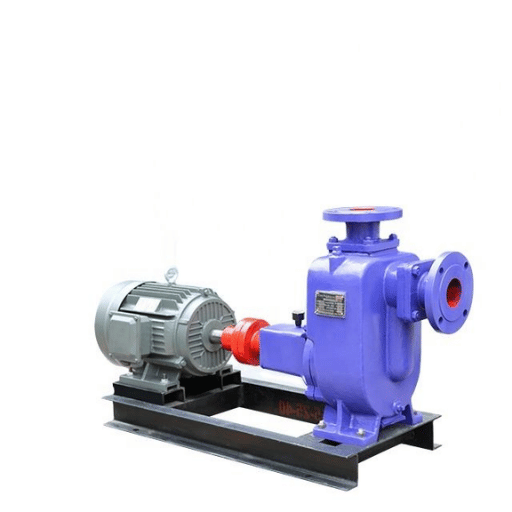 A parte difícil de operar uma bomba para águas carregadas são os primeiros dez minutos. Depois disso, uma bomba corretamente dimensionada e escorvada pode funcionar autonomamente durante horas sem risco de desastre. A maioria das falhas no terreno pode ser atribuída a cinco erros que devem ser evitados antes de comprometerem um turno.
- ✔
Encha primeiro a voluta. Abra o orifício de escorvamento, encha o corpo da bomba até a água transbordar e feche o orifício. Uma bomba de auto-escorvamento continua a necessitar da carga inicial de água — a câmara de escorvamento remove o ar da tubagem de aspiração, mas não consegue remover o ar de um corpo da bomba vazio.
- ✔
Verifique as ligações da mangueira de aspiração. A publicação especializada For Construction Pros observa que “muitas falhas de bombas se devem a uma ligação defeituosa da mangueira de aspiração” . Utilize uma mangueira reforçada, adequada para vácuo, no lado da aspiração e aperte cada ligação de engate rápido ou roscada antes de cada turno.
- ✔
Ligue o motor e aguarde o escorvamento. O tempo de autoescorvamento é normalmente de 30-90 segundos, consoante a altura de aspiração. Se a bomba não tiver aspirado água em dois minutos, desligue-a e volte a verificar a carga da voluta e se há fugas na mangueira de aspiração.
- ✔
Regule o acelerador para o funcionamento. Segundo a experiência dos empreiteiros referida acima: quando o nível no poço de escavação baixar, reduza a rotação do motor para corresponder ao caudal de reposição. Uma bomba a funcionar a plena carga contra uma descarga fechada desgasta o empanque mecânico e consome combustível sem qualquer benefício.
Uma bomba para águas carregadas necessita de válvula de pé?
Não. Por vezes, uma bomba de auto-escorvamento para águas carregadas ainda contém uma carga de escorvamento e volta a escorvar-se a partir de uma linha de aspiração drenada. Sim. uma válvula de pé é o que as bombas sem autoescorvamento utilizam para impedir que a água volte a escoar pela tubagem de aspiração ou para o furo. Numa bomba de auto-escorvamento para águas carregadas, isto apenas acrescenta atrito à linha de aspiração sem resolver nada que a bomba já não consiga gerir sozinha. A única situação em que uma válvula de retenção seria vantajosa seria a necessidade de vários impulsos em linhas de aspiração muito longas, o que preservaria de forma mais fiável a carga de escorvamento. Para utilização no local, sem válvula de pé.⚠️ Não opere a seco
O empanque mecânico de uma bomba para águas carregadas é lubrificado pela água. Operar a bomba sem água no corpo da bomba durante mais de 30 segundos provocará o sobreaquecimento e a deformação das faces do empanque, e a bomba apresentará permanentemente fugas pelo orifício de drenagem do empanque. Se a bomba perder o escorvamento durante o funcionamento, desligue-a no prazo de 60 segundos e volte a encher a voluta antes de reiniciar.
Compra: fatores de custo, prazo de entrega e opções OEM
O preço das bombas para águas carregadas varia mais do que o nível indicado na brochura sugere. Uma unidade portátil a gasolina de 3-inch de uma marca de retalho começa em cerca de $1 200; uma bomba para águas carregadas industrial de 4-inch acionada a diesel custa $4 000-5 000; uma carcaça de 6-inch acionada por motor e com autoescorvamento sobe para aproximadamente $15 000 quando se acrescentam o reboque, o conjunto de mangueiras e o pacote de garantia. Os fatores de custo, por ordem de sensibilidade:- A dimensão da carcaça e o seu ponto de funcionamento hidráulico; cerca de um fator de dez na gama 2-8
- Seleção de materiais; base de Classe 30, atualização do impulsor para minas (+); corpo da bomba em aço inoxidável duplex para zonas costeiras e químicas de voo no espaço exterior (++;)
- Conjunto de acionamento; bomba de eixo livre, motor ligado diretamente, grupo gerador com motor, montagem em skid, montagem em reboque
- Opções; mangueira de aspiração, mangueira de descarga, crivos, tampa de limpeza, acoplamentos de desligação rápida
- OEM pós-venda; marca própria, flanges esféricas especiais, cobertura de isolamento acústico, aprovação ATEX-A1 para áreas químicas
Estrutura de decisão — quando especificar marca própria OEM
Para uma solução específica do ponto de funcionamento, utilize a Calculadora de ROI para Drenagem em Construção da BBP com os minutos do seu projeto e os custos de mão de obra, ou avance diretamente para o formulário de pedido de proposta abaixo.
- Volume anual de frota superior a 50 unidades – o OEM direto com marca própria reduz o custo por unidade e assegura o fornecimento
- Personalização para além do logótipo e da cor – flange não normalizada, cobertura acústica ou acessórios específicos da frota exigem ferramental OEM
- Acordo de fornecimento plurianual com existências de segurança – um fluxo regular torna rentável a programação da produção no lado do OEM
- Qualquer valor abaixo desses totais de população – compre de stock, pague o prémio de tabela e mantenha a flexibilidade
Solicite uma proposta para uma bomba para águas carregadas →
Perspetivas do setor: eletrificação, frotas de aluguer e tendências de sólidos (2025-2026)
 Três mudanças no projeto da construção estão a alterar quais as bombas para águas carregadas que serão utilizadas até 2026 e em 2027. Nenhuma altera a ciência hidráulica básica, mas todas alteram a folha de especificações e a encomenda de fornecimento.
A procura das frotas de aluguer está a puxar pelo volume. O mercado de aluguer de equipamento de construção cresceu de $161.34B em 2024 para uma projeção de $228.30B até 2030 — uma taxa de crescimento anual composta de 6.1 percent . Os operadores de aluguer compram bombas de forma diferente dos utilizadores finais: janelas de manutenção previsíveis, peças de desgaste intercambiáveis e marca própria OEM para que o empreiteiro no local veja o nome do operador de aluguer, e não o do fabricante da bomba. É este padrão de procura que está a impulsionar o mercado de bombas para águas carregadas de marca própria OEM mais rapidamente do que o segmento mais amplo de bombas.
As bombas submersíveis elétricas estão a assumir ciclos de funcionamento que antes eram a diesel. O interesse de pesquisa por “electric trash pump” tem aproximadamente 2x o volume absoluto de “gas powered trash pump” segundo os dados atuais. Os controlos finais de emissões EPA Tier 4 para motores diesel não rodoviários abaixo de 75 hp aumentaram o custo das pequenas carcaças portáteis a diesel, enquanto as opções elétricas submersíveis baixaram de preço à medida que a tecnologia subjacente de motores e inversores amadureceu. Em locais com ligação à rede, zonas povoadas e trabalho noturno, a transição do diesel para a eletricidade está a ocorrer agora, não daqui a cinco anos.
O reforço regulamentar continua. A norma EPA Tier 4 dos Estados Unidos foi integralmente implementada até 2015 nos Estados Unidos; os requisitos equivalentes China Stage IV começaram a ser implementados em 2024 (segundo a análise regulamentar da Association of Equipment Manufacturers). Para operadores de frotas OEM de marca própria que se abastecem junto de fabricantes asiáticos, o efeito prático são restrições no fornecimento de motores para pequenas carcaças portáteis, à medida que as fundições reformulam as suas ligas para cumprir o novo nível.
Um comentário honesto sobre esta secção. A tendência elétrica de “+30 percent” é um enquadramento interpolado com base em observações de volume de pesquisa do DataForSEO durante seis meses; é direcional, não definitivo. Não estão disponíveis dados sistemáticos de vendas unitárias ano após ano sobre bombas portáteis para águas carregadas especificamente, fora de estudos pagos do setor. Considere a tendência de eletrificação como um sinal crescente a ponderar no orçamento, não como um facto comprovado.
Três mudanças no projeto da construção estão a alterar quais as bombas para águas carregadas que serão utilizadas até 2026 e em 2027. Nenhuma altera a ciência hidráulica básica, mas todas alteram a folha de especificações e a encomenda de fornecimento.
A procura das frotas de aluguer está a puxar pelo volume. O mercado de aluguer de equipamento de construção cresceu de $161.34B em 2024 para uma projeção de $228.30B até 2030 — uma taxa de crescimento anual composta de 6.1 percent . Os operadores de aluguer compram bombas de forma diferente dos utilizadores finais: janelas de manutenção previsíveis, peças de desgaste intercambiáveis e marca própria OEM para que o empreiteiro no local veja o nome do operador de aluguer, e não o do fabricante da bomba. É este padrão de procura que está a impulsionar o mercado de bombas para águas carregadas de marca própria OEM mais rapidamente do que o segmento mais amplo de bombas.
As bombas submersíveis elétricas estão a assumir ciclos de funcionamento que antes eram a diesel. O interesse de pesquisa por “electric trash pump” tem aproximadamente 2x o volume absoluto de “gas powered trash pump” segundo os dados atuais. Os controlos finais de emissões EPA Tier 4 para motores diesel não rodoviários abaixo de 75 hp aumentaram o custo das pequenas carcaças portáteis a diesel, enquanto as opções elétricas submersíveis baixaram de preço à medida que a tecnologia subjacente de motores e inversores amadureceu. Em locais com ligação à rede, zonas povoadas e trabalho noturno, a transição do diesel para a eletricidade está a ocorrer agora, não daqui a cinco anos.
O reforço regulamentar continua. A norma EPA Tier 4 dos Estados Unidos foi integralmente implementada até 2015 nos Estados Unidos; os requisitos equivalentes China Stage IV começaram a ser implementados em 2024 (segundo a análise regulamentar da Association of Equipment Manufacturers). Para operadores de frotas OEM de marca própria que se abastecem junto de fabricantes asiáticos, o efeito prático são restrições no fornecimento de motores para pequenas carcaças portáteis, à medida que as fundições reformulam as suas ligas para cumprir o novo nível.
Um comentário honesto sobre esta secção. A tendência elétrica de “+30 percent” é um enquadramento interpolado com base em observações de volume de pesquisa do DataForSEO durante seis meses; é direcional, não definitivo. Não estão disponíveis dados sistemáticos de vendas unitárias ano após ano sobre bombas portáteis para águas carregadas especificamente, fora de estudos pagos do setor. Considere a tendência de eletrificação como um sinal crescente a ponderar no orçamento, não como um facto comprovado.
Fale com um engenheiro da BBP →
Perguntas frequentes

P: Porque se chama bomba para águas carregadas?
Ver resposta
“Trash pump” é a designação informal do setor para uma bomba que manuseia detritos. Uma bomba de água normal entope com sólidos em suspensão; uma bomba projetada para resistir a folhas, paus, lama, lamas e detritos de construção passou a ser conhecida como bomba “trash” porque deixa passar o material que, de outra forma, a equipa no local teria de filtrar. A designação técnica é bomba centrífuga de auto-escorvamento para manuseamento de sólidos.
P: Qual é a diferença entre uma bomba de esgoto e uma bomba para águas carregadas?
Ver resposta
Uma bomba para sólidos de uma estação elevatória municipal (submersível de vórtice aberto ou com impulsor aberto) é concebida para sólidos filamentosos que frequentemente formam pontes no impulsor (por vezes a uma altura manométrica de funcionamento reduzida, por vezes não). Uma bomba para águas carregadas destina-se a água com detritos e sólidos até 3-inch e utiliza um impulsor semiaberto.
P: Quanto custa uma bomba para águas carregadas?
Ver resposta
As bombas portáteis para águas carregadas a gasolina de 2-inch e 3-inch começam em cerca de $1 200-$2,500. Uma unidade industrial a diesel de 4-inch custa $4 000-$5,000. Uma carcaça de 6-inch acionada por motor, com autoescorvamento, reboque e acessórios sobe para aproximadamente $15,000. Os preços de frota OEM de marca própria dependem do volume e da personalização. Consulte o nosso guia de engenharia de bombas para polpas para serviço pesado para obter contexto sobre preços de bombas industriais relacionadas.
P: As bombas para águas carregadas podem funcionar a seco?
Ver resposta
Não. O empanque mecânico é lubrificado pela água. O funcionamento a seco durante mais de 30 segundos deforma as faces do empanque.
P: Que óleo devo utilizar numa bomba para águas carregadas?
Ver resposta
O lubrificante do motor é normalmente do tipo SAE 10W-30 ou 15W-40 CK-4. Os rolamentos da bomba são lubrificados com massa lubrificante na parte hidráulica, de acordo com o plano de lubrificação do OEM da bomba.
P: Uma bomba para águas carregadas consegue bombear areia?
Ver resposta
Sim, em suspensão até aproximadamente 30 percent de sólidos em peso. Acima disso, o impulsor e o corpo da bomba desgastam-se a múltiplos da taxa normal, e o produto adequado é uma bomba para polpas para serviço pesado, com placas de desgaste ajustáveis e geometria de corpo da bomba mais espessa. A areia fina de sílica, em particular, desgasta os impulsores normais de ferro dúctil a 2-3x a taxa normal; especifique uma atualização para impulsor Ni-hard para serviço contínuo com areia.
P: Uma bomba para águas carregadas pode ser utilizada para rega?
Ver resposta
Pode, mas é excessiva para serviço de rega com água limpa. O corpo da bomba alargado e o impulsor semiaberto de uma bomba para águas carregadas são menos eficientes hidraulicamente do que uma bomba de água com impulsor fechado em água limpa — isto significa mais combustível ou eletricidade por galão fornecido. A aplicação em que uma bomba para águas carregadas faz sentido para rega é quando a fonte é um lago, vala ou canal aberto com muitos sedimentos, onde uma bomba de rega normal entupiria. Para distribuição pressurizada por aspersores a partir de uma fonte limpa, uma bomba de rega é a solução adequada.
Especifique a sua bomba para águas carregadas →
Sobre este guia de bombas para águas carregadas
Este guia sintetiza fontes governamentais e de normas do setor de Nível 1 (DHS SAVER, Caltrans, Yakama Fish, Illinois DOT, EPA, BLS e ANSI/HI 14.1) com relatórios de profissionais no terreno do r/Construction e publicações especializadas como For Construction Pros. As especificações de materiais e os dados de prazo de entrega refletem o âmbito de fabrico verificado da BBP em April 2026. O enquadramento das tendências do setor relativas à eletrificação é interpolado a partir de observações de volume de pesquisa durante seis meses e deve ser entendido como direcional, não como dados auditados de vendas unitárias. Revisto pela equipa de engenharia da BBP.
Referências e fontes
- Bombas portáteis e móveis utilizadas na gestão de inundações — Nota técnica (January 2008) — U.S. Department of Homeland Security, Programa SAVER
- ANSI/HI 14,1-14,2-2019 Bombas rotodinâmicas para nomenclatura e definições — Hydraulic Institute
- Guia de campo para drenagem em estaleiros de construção — California Department of Transportation
- Crivos para peixes para drenagem em construção (2021) — Washington Department of Fish and Wildlife
- Bombas para águas carregadas montadas em reboque — Aviso de contrato — Illinois Department of Transportation
- Regra final para o controlo das emissões de poluição atmosférica de motores diesel não rodoviários — U.S. Environmental Protection Agency
- Engenheiros de Operação e Outros Operadores de Equipamentos de Construção — OES May 2024 — U.S. Bureau of Labor Statistics
- Navegar pelos regulamentos globais sobre emissões para motores não rodoviários — Association of Equipment Manufacturers
- Bombas de auto-escorvamento ou válvulas de retenção na linha de aspiração — PSG (a Dover Company)
- Não deixe que as suas bombas para águas carregadas o desiludam — For Construction Pros
Artigos relacionados
- Bomba horizontal de carcaça bipartida: guia completo de engenharia — para serviço de movimentação de água com elevado caudal acima do limite das bombas para águas carregadas
- Bomba submersível para polpas: guia completo de engenharia — quando a concentração de sólidos ultrapassa o limite entre águas carregadas e polpas
- Guia de campo de bombas para polpas na indústria mineira — drenagem de poços de escavação em escalas acima da capacidade de bombas para águas carregadas de 8″
- Bomba para polpas revestida a borracha: como selecionar, aplicar e manter — estratégia de materiais quando o desgaste abrasivo domina o ponto de funcionamento
- Peças de desgaste para bombas de dragagem: guia de materiais e intervalos de substituição — lógica de planeamento de substituições transferível para a gestão de frotas de bombas para águas carregadas