Póngase en contacto con BBP

Actualizado en julio de 2026
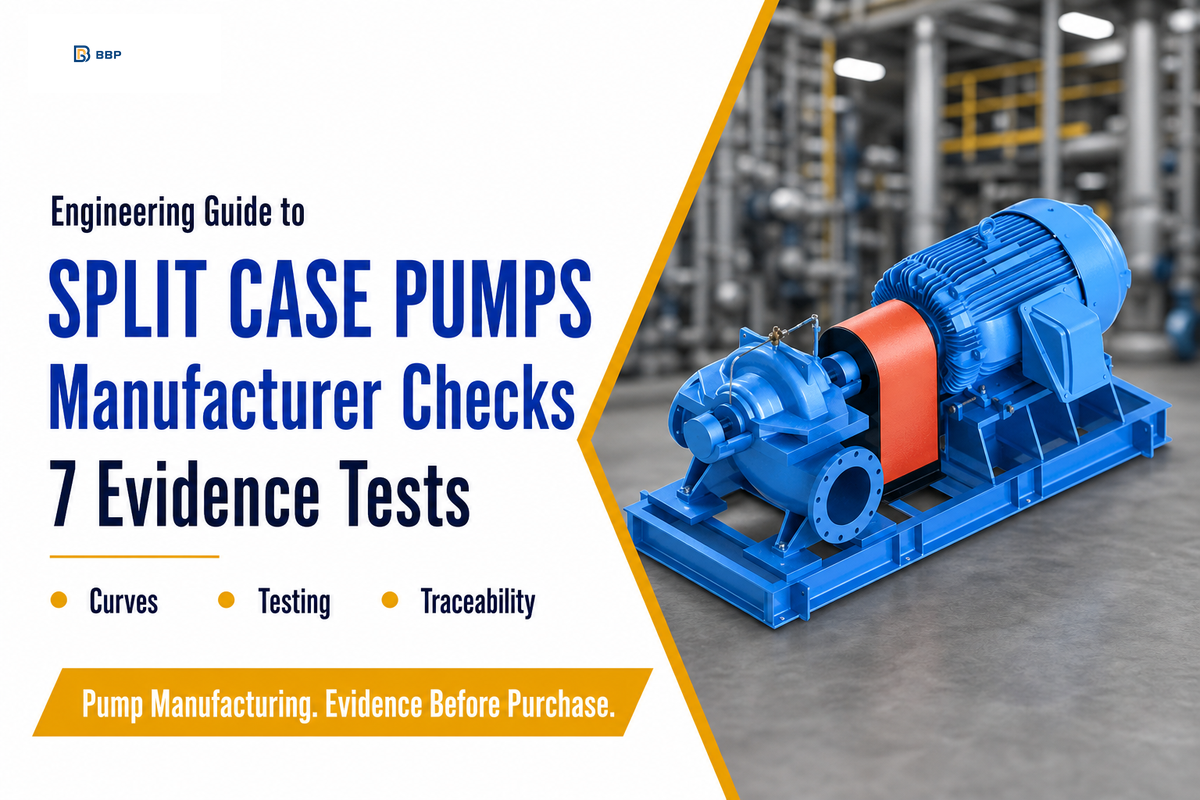
Los fabricantes de bombas de carcasa partida son proveedores que diseñan, fabrican, configuran o respaldan bombas centrífugas de carcasa partida axialmente; los compradores deben compararlos según las pruebas vinculadas a la bomba ofertada, no según máximos de catálogo, una declaración genérica de certificado o el precio destacado. Empiece por el intervalo de servicio, la identificación de la curva, el grado de ensayo, los materiales, las desviaciones, los documentos de entrega, los repuestos y el límite de servicio. Después compare el precio.
Este artículo es un filtro de compras para ingenieros EPC, compradores municipales e industriales, distribuidores y equipos de aprovisionamiento OEM. Para consultar las familias de productos disponibles y las vías de selección, vea la serie de bombas de carcasa partida BBP. Su alcance se centra en las pruebas del proveedor, en lugar de repetir el contenido básico sobre selección de bombas.
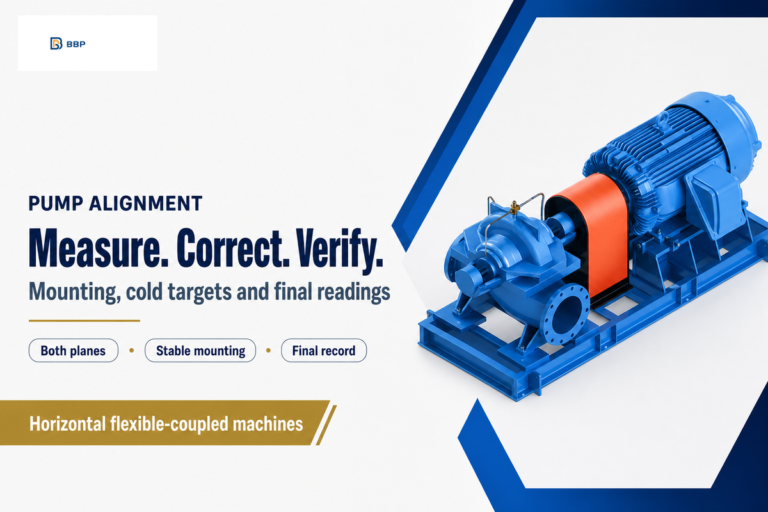
Los catálogos de proveedores emplean tanto «split case» como «split casing». Aquí, «split casing» identifica la junta de la carcasa; no demuestra el servicio hidráulico, el material, el alcance de inspección ni la facilidad de mantenimiento. Una configuración horizontal habitual combina un impulsor de doble aspiración con una carcasa dividida en dos partes para acceder al interior. Esta disposición puede ser adecuada para caudales elevados, pero no garantiza un funcionamiento estable, fiabilidad ni alto rendimiento. Considere cada oferta de carcasa partida como una bomba centrífuga de configuración específica. Compare sus caudales y el servicio de suministro de agua con el intervalo del proyecto, en vez de con el máximo de una familia; la etiqueta de carcasa partida es solo el inicio de la revisión de pruebas.
Especificaciones rápidas para una RFQ comparable
| Base hidráulica | Caudal/altura manométrica mínimo, normal y máximo, o un intervalo aprobado de curva del sistema |
|---|---|
| Líquido y emplazamiento | Composición, temperatura, densidad, viscosidad, sólidos, altitud, condiciones ambientales |
| Base de aspiración | NPSHA por escenario de funcionamiento, curva de NPSH requerido, regla de margen, geometría de aspiración |
| Configuración ofertada | Modelo, tamaño, diámetro del impulsor, velocidad de giro, accionamiento, sentido de giro, cierre mecánico, rodamiento, materiales |
| Aceptación | Norma y grado de ensayo indicados, puntos, tolerancias, derechos de presenciar, registros, regla de repetición del ensayo |
| Alcance comercial | Desviaciones, exclusiones, base de transporte, documentos, repuestos, puesta en marcha, garantía, soporte |
Utilice el filtro de pruebas de 30 minutos antes de preseleccionar

Un filtro inicial útil pregunta si el proveedor puede identificar la configuración exacta ofertada y adjuntarle pruebas. Ni una marca, ni una declaración de «certificado ISO», ni un caudal máximo demuestran que el impulsor seleccionado cumplirá el intervalo de funcionamiento requerido.
La herramienta de datos del Hydraulic Institute muestra por qué un único punto de funcionamiento puede ser demasiado limitado: cambiar la posición de la válvula, el nivel del depósito, la velocidad de giro, el diámetro del impulsor o el número de bombas en funcionamiento cambia el punto de funcionamiento. Solicite al diseñador del sistema los puntos importantes o el intervalo antes de puntuar a un proveedor.
- Fije la base del proyecto — emita a cada licitador un único programa de intervalo de servicio, líquido, emplazamiento, accionamiento y conformidad.
- Haga coincidir la identidad ofertada — exija modelo, tamaño, impulsor, velocidad de giro, materiales, cierre mecánico, rodamientos y accionamiento en la misma ficha técnica.
- Abra el paquete de pruebas — compruebe la curva, la base de ensayo, las desviaciones, los registros de fabricación, los documentos, los repuestos, la entrega y el soporte.
- Rechace la falsa comparabilidad — suspenda las ofertas que se basen en curvas de familia, grados de aceptación no indicados o exclusiones sin precio.
La condición de fabricante directo puede acortar la cadena técnica, mientras que un distribuidor competente puede ofrecer mejores repuestos locales o puesta en marcha. Las etiquetas del canal siguen siendo secundarias. Indique la parte responsable de la selección, los planos para aprobación, la FAT, el soporte en campo, las decisiones de garantía y el suministro de piezas de repuesto.
El tipo de bomba no es una regla rápida para determinar la idoneidad del sistema. El servicio, el margen de aspiración, las condiciones de instalación y el acceso para mantenimiento siguen determinando si una configuración de carcasa partida debe figurar en la lista corta.
Matriz de pruebas de proveedores de carcasa partida en 7 puntos
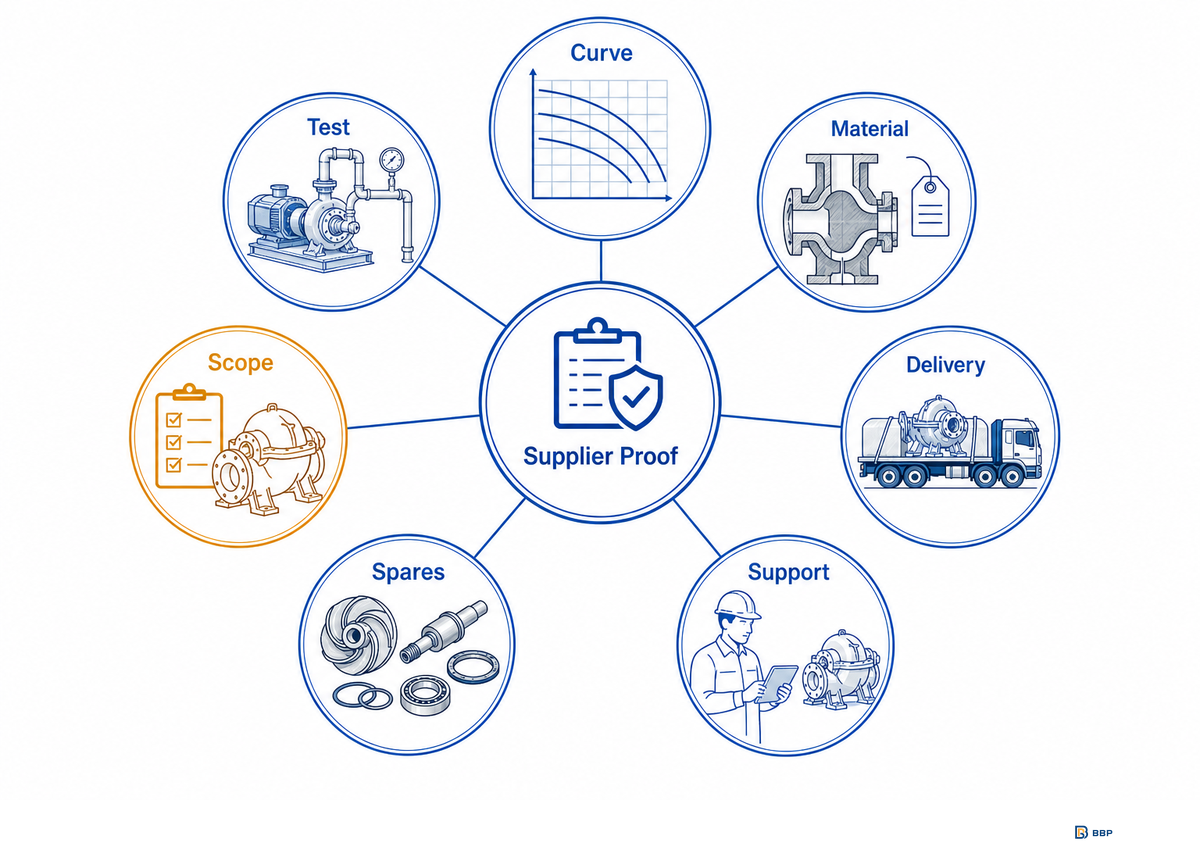
La matriz de 7 puntos convierte siete ámbitos de evaluación en diez filas de pruebas. «Cumple» significa que el documento está vinculado a la configuración ofertada y al alcance de la orden de compra. «Aclarar» significa que la capacidad puede existir, pero aún no puede utilizarse contractualmente. El registro oficial de ISO 9906 recuerda de forma útil que el método y el grado de ensayo deben ser explícitos; una referencia genérica a una norma no prueba el cumplimiento específico del pedido.
| Ámbito | Fila de pruebas | Cumple | Aclarar o detener | Limitaciones / no adecuado para |
|---|---|---|---|---|
| 1. Hidráulico | Identidad de curva certificada | Modelo, impulsor, velocidad de giro, líquido, potencia, rendimiento, NPSH requerido | Curva de familia o falta el diámetro del impulsor | Una curva por sí sola no define el intervalo del sistema |
| 1. Hidráulico | Ajuste al intervalo de servicio | Puntos requeridos representados con rango de funcionamiento y controles | Solo se muestra el caudal/altura manométrica máximos | Revise de nuevo los niveles variables, los VFD y el funcionamiento en paralelo |
| 2. Configuración | Bloqueo de ficha técnica | Todos los campos de parte húmeda, eje, cierre mecánico, rodamiento, accionamiento y sentido de giro completos | Materiales «estándar» sin grados | La metalurgia del proyecto puede requerir una revisión independiente de corrosión |
| 3. Fabricación | Plan de proceso e inspección | Puntos de parada/presenciación y registros de aceptación indicados | Declaración de fabricación interna sin registros del pedido | La trazabilidad completa es específica del proyecto, no un valor predeterminado universal |
| 3. Fabricación | Pruebas de materiales | Certificados requeridos vinculados a la pieza o a la colada/lote cuando se especifique | Muestra de certificado genérico | Especifique MTR, NDE y WPS/PQR solo cuando el contrato los requiera |
| 4. Aceptación | Método y grado de ensayo | Norma, grado, punto garantizado, tolerancia, instrumentos, registros | «Ensayo según ISO/HI» sin grado | La FAT no demuestra la instalación ni el rendimiento en campo |
| 4. Aceptación | Regla de presenciación y fallo | Aviso, aprobación, corrección, repetición sin coste, derechos de rechazo | Presenciación sujeta a disponibilidad de fábrica | Los costes de viaje e inspección aún necesitan asignación |
| 5. Entrega | Plan de hitos y entrega | Fechas de aprobación, producción, ensayo, documentos, liberación y transporte | Una fecha ex works sin respaldo | La preparación del emplazamiento y las aduanas pueden seguir siendo riesgos del comprador |
| 6. Ciclo de vida | Repuestos y servicio | Piezas conforme a obra, base de existencias, plazo de entrega, respuesta, alcance de puesta en marcha | «Soporte 24/7» sin respuesta ni ubicación | Una promesa no es garantía de existencias locales |
| 7. Comercial | Registro de desviaciones y exclusiones | Toda desviación con precio y aceptada por escrito | Lenguaje de folleto usado como cumplimiento | Las condiciones legales y fiscales aún requieren revisión contractual |
Base de fuentes: alcance de ISO 9906, orientación del Hydraulic Institute, la licitación de 2023 de la ciudad de Aberdeen, la especificación histórica del propietario de San Diego y el manual de sistemas de bombeo del DOE. Considere esta matriz como un filtro inicial, no como una lista universal de comprobación de cumplimiento.
Aplique la prueba de la curva al contrato
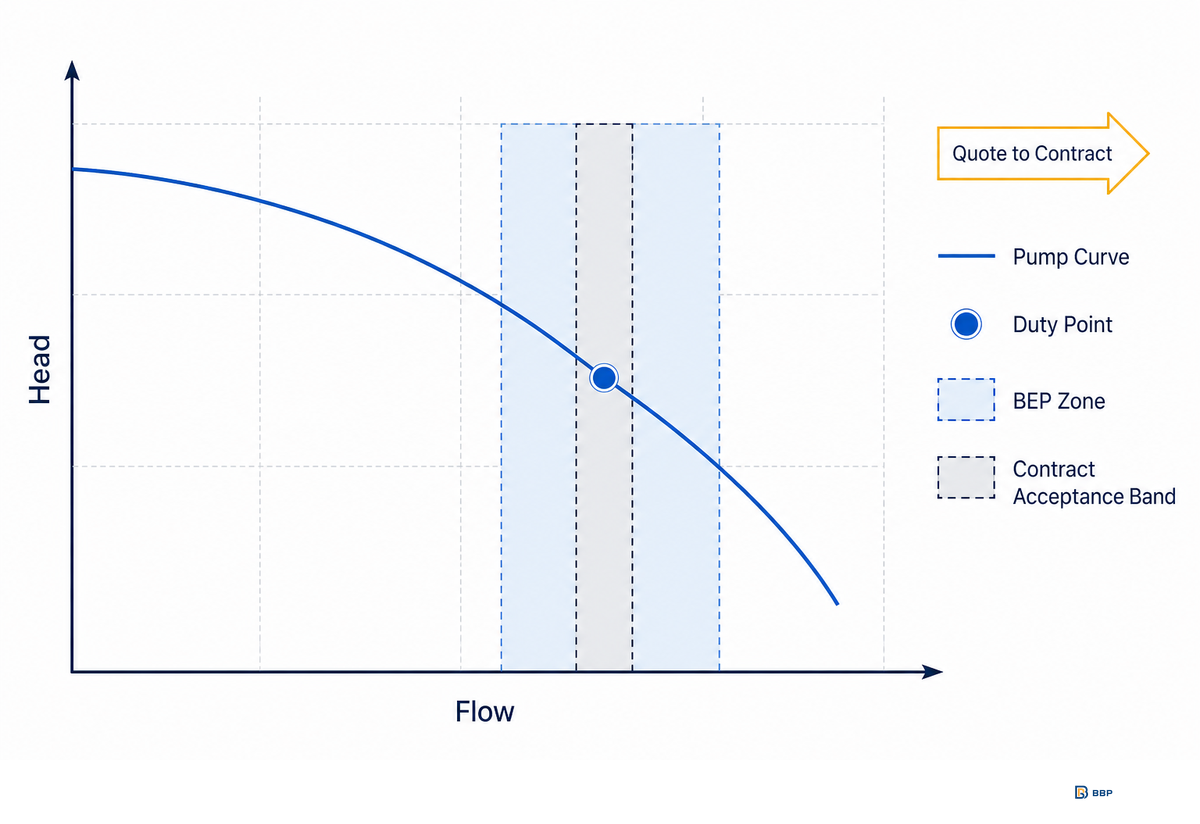
Una oferta comparable conecta el requisito del sistema con una curva de bomba ofertada. Su identidad debe abarcar el modelo, el diámetro del impulsor, la velocidad de giro, la base del líquido, el caudal, la altura manométrica, el rendimiento, la potencia y el NPSH requerido. Cuando el sistema varíe, represente los puntos mínimo, normal y máximo o el intervalo aprobado. Para servicio de gran caudal y aplicaciones con alta altura manométrica, caracterice cada escenario de fluido, aspiración, impulsión y carga antes de que el proveedor seleccione una curva.
Un ejemplo público útil aparece en la licitación de 2023 de la ciudad de Aberdeen: 700 gpm a 250 ft TDH, un punto secundario de 510 gpm a 274 ft TDH, una condición de cierre de 0 gpm de al menos 280 ft TDH, velocidad máxima de 3.560 rpm, accionamiento de placa de 75 hp y NPSH requerido máximo de 35 ft. Estas cifras describen solo ese proyecto; aquí su valor es la estructura de un requisito comparable.
700 gpmcaudal de diseño en una licitación pública de 2023
250 ft TDHaltura manométrica de diseño en la misma licitación
35 ft de NPSH requeridomáximo del proyecto, no objetivo genérico
La revisión de BEP y curva de rendimiento explica que el rendimiento de catálogo sigue siendo teórico hasta que se ensaya la bomba real. Si el proveedor recorta un impulsor o modifica la velocidad de giro, exija la curva ofertada correspondiente e indique si el ensayo es predictivo, sin presenciación, presenciado o certificado.
Utilice el asistente de selección de series para organizar las familias candidatas y vuelva después a la base del sistema antes de aprobar un modelo. La herramienta de selección de bombas de carcasa partida de BBP es otra vía inicial, no un sustituto de la ficha técnica firmada del proveedor.
Trace los materiales desde el registro de fundición hasta la bomba terminada
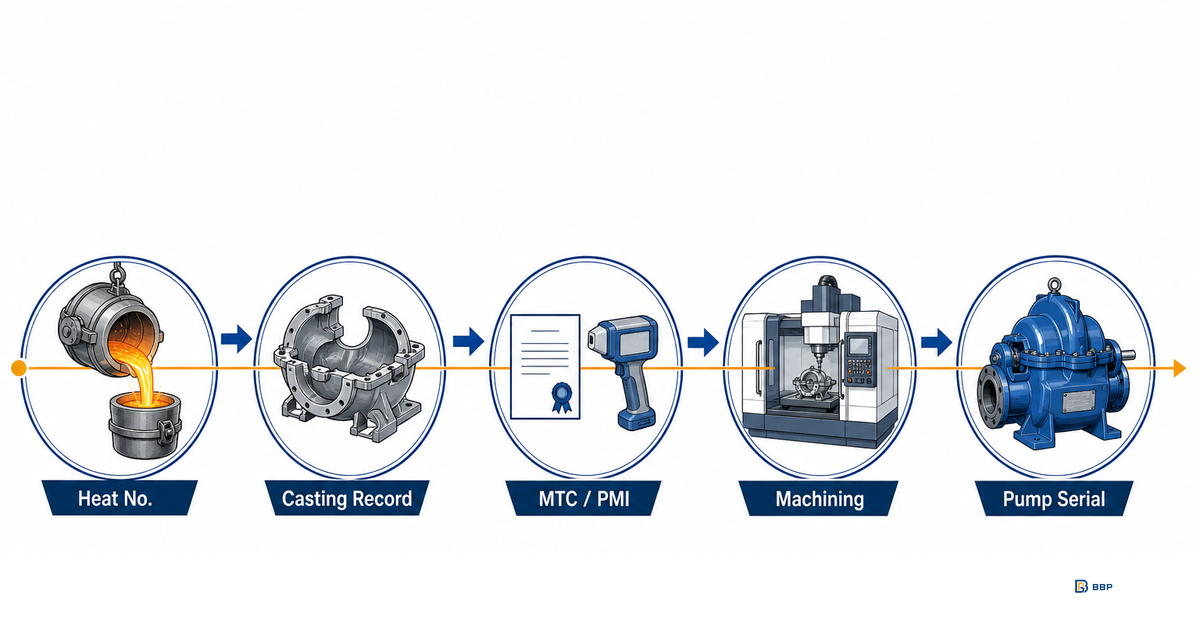
La fundición o el mecanizado internos pueden reducir las entregas entre partes, pero no demuestran que las piezas ofertadas cumplan la especificación del proyecto. Pregunte qué registros acompañan a la carcasa, el impulsor, el eje, los manguitos, los anillos de desgaste, los elementos de fijación, los revestimientos y las zonas reparadas durante la fabricación y la inspección.
La profundidad de las pruebas debe ajustarse a las consecuencias. Los pedidos HVAC de agua limpia pueden requerir grados de material especificados y registros de inspección rutinaria. Los servicios corrosivos, de agua potable, contra incendios o de consecuencias elevadas pueden justificar MTR, identidad de colada o lote, informes de revestimiento, NDE, registros de equilibrado, procedimientos de reparación o puntos de parada presenciados. Para el alcance de agua potable, la visión general de NSF/ANSI/CAN 61 de NSF distingue los criterios de efectos sobre la salud para materiales y componentes en contacto con agua del rendimiento hidráulico. Para servicio de bombas contra incendios, la visión general de normas de rendimiento y mecánicas del Hydraulic Institute refuerza por qué las pruebas específicas de la aplicación deben incluirse en la RFQ. No considere el hierro dúctil, el bronce y el acero inoxidable etiquetas intercambiables; especifique el grado requerido y el componente mojado. Ninguno de los documentos municipales revisados exigía trazabilidad completa de materiales, por lo que la RFQ debe indicarla cuando sea necesaria.
El asistente de selección de materiales de BBP puede estructurar las opciones de la parte húmeda. Confirme los grados finales en la ficha técnica ofertada y defina las pruebas de inspección en el ITP. Si la oferta dice «equivalente», exija el grado sustituto exacto y la vía de aceptación.
BBP declara que integra internamente las funciones de fundición, tratamiento térmico, mecanizado, montaje, revestimiento y ensayo. Los compradores deben verificar esa declaración propia frente a los registros prometidos para su orden de compra. Las visitas a fábrica ayudan, pero un ITP aprobado y un índice de documentos vinculado al pedido son más fáciles de exigir.
Redacte los criterios de aceptación de FAT antes de la orden de compra
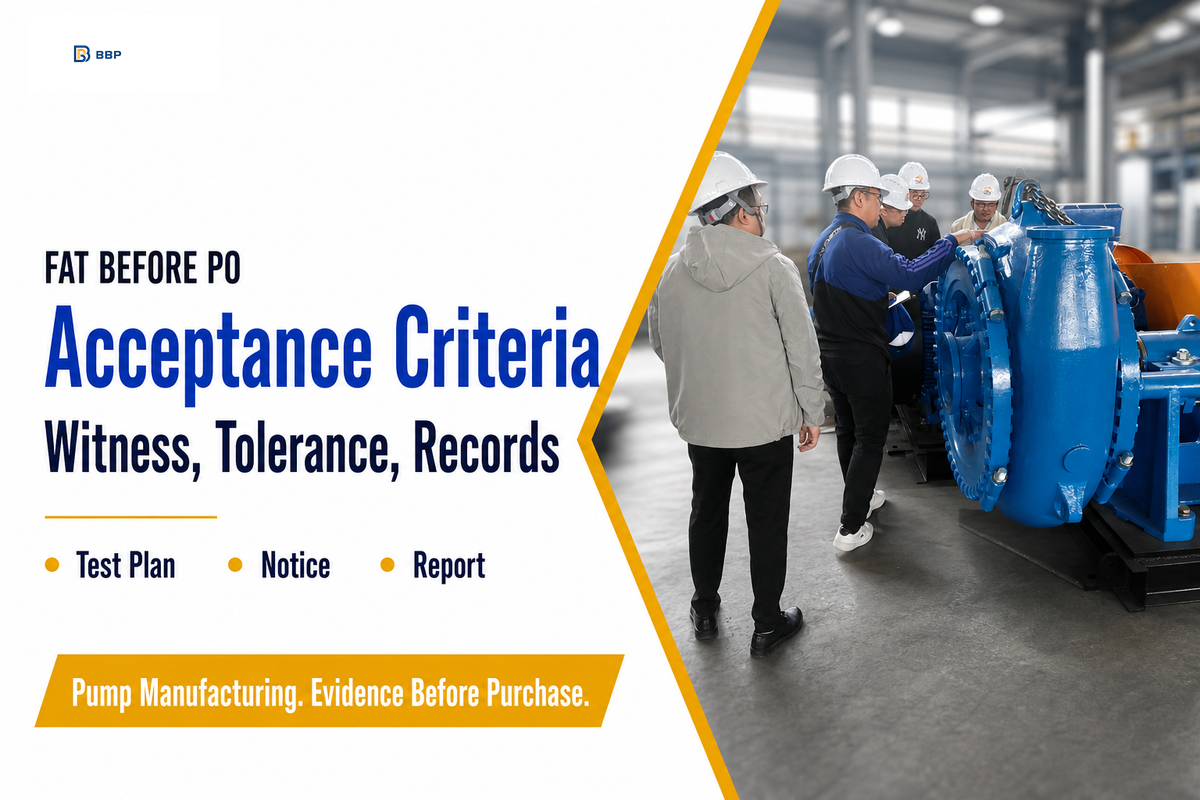
Una cláusula FAT utilizable indica el método, el grado de aceptación, los puntos garantizados, los instrumentos, los derechos de presenciación, el registro de ensayo y la respuesta al fallo. «Ensayado en fábrica» deja estos elementos abiertos y dificulta resolver una controversia posterior.
El registro oficial de ISO 9906 de ISO describe los ensayos de aceptación del rendimiento hidráulico y enumera seis grados: 1B, 1E, 1U, 2B, 2U, y 3B. ISO 9906 es una norma de ensayo. No es un certificado de gestión de calidad de una organización. Si un proveedor afirma estar «certificado ISO», solicite el número exacto de norma, el alcance, la entidad certificadora, los centros cubiertos y la vigencia, y especifique después la base independiente de ensayo de la bomba.
Una especificación histórica de un propietario público de San Diego muestra el grado de detalle que puede alcanzar una cláusula de proyecto: presentación del procedimiento al menos 10 semanas antes del ensayo, aviso escrito de presenciación con 4 semanas de antelación, ensayo de NPSH requerido del 10 % al 120 % del caudal de máxima eficiencia, al menos 10 puntos de datos, rechazo tras el fallo del rendimiento garantizado y repetición del ensayo después de recortar el impulsor. Estos valores de especificación de 2000–2002 son ejemplos, no umbrales universales vigentes.
La protección contra incendios necesita su propia cláusula. La revisión provisional de abril de 2025 de FM de la Ficha técnica 3-7 propone un régimen de caudal de seis puntos al 0 %, 50 %, 75 %, 100 %, 125 %, y 150 % de la capacidad nominal, e indica que toda la instrumentación de ensayo debería haberse calibrado dentro de los 12 meses anteriores. Aplique los requisitos de listado, aprobación, código y aseguradora específicos de incendios solo cuando corresponda ese servicio.
Límite de ingeniería
Una FAT superada verifica la bomba ensayada según el método acordado. No demuestra la calidad de la cimentación, la alineación, la geometría de aspiración, las cargas de tubería, los controles, el cebado, la puesta en marcha ni el rendimiento en campo.
Ejemplo de especificación pública normalizada por unidades en 10 categorías
Las licitaciones internacionales resultan más fáciles de comparar cuando el evaluador conserva cada valor de fuente vinculante y añade una conversión de trabajo calculada. Las conversiones siguientes son aproximadas y no deben sustituir las unidades del documento rector del proyecto.
| Categoría | Ejemplo vinculante | Conversión o extracción de trabajo | Uso en RFQ |
|---|---|---|---|
| Caudal de diseño de Aberdeen | 700 gpm | ≈159 m³/h | Mantenga el caudal vinculado a su punto de altura manométrica |
| Altura manométrica de diseño de Aberdeen | 250 ft TDH | ≈76,2 m | No oferte solo el caudal |
| Caudal secundario de Aberdeen | 510 gpm | ≈116 m³/h | Conserve el segundo punto garantizado |
| Altura manométrica secundaria de Aberdeen | 274 ft TDH | ≈83,5 m | Empareje con 510 gpm |
| Cierre de Aberdeen | 0 gpm a ≥280 ft TDH | 0 m³/h a ≥85,3 m | Indique el límite de cierre permitido |
| Velocidad de giro de Aberdeen | Máximo 3.560 rpm | Conserve 3.560 rpm | Vincule la curva y la velocidad del motor |
| Accionamiento de Aberdeen | Placa de 75 hp | ≈56 kW | Compruebe la potencia nominal del motor ofertado |
| NPSH requerido de Aberdeen | Máximo 35 ft | ≈10,7 m | Compare con el NPSHA del proyecto |
| Planificación de ensayos de San Diego | 10 %–120 % de BEF; 10 semanas y 4 semanas | Cláusula histórica, no mínimo universal | Indique explícitamente las fechas de procedimiento y presenciación |
| Régimen de caudal propuesto por FM | 0%, 50%, 75%, 100%, 125%, 150% | Secuencia empleada solo para servicio contra incendios | Aplique solo con la base contra incendios del proyecto |
Base de conversión: 1 US gpm ≈ 0,227 m³/h; 1 ft = 0,3048 m; 1 mechanical hp ≈ 0,746 kW. Conserve los valores de unidades de origen en la orden de compra.
Puntúe la entrega, documentación, repuestos y soporte

El plazo de entrega es creíble cuando se divide en hitos de aprobación, compras, producción, ensayo, documentos, liberación y transporte. Pregunte qué fecha inicia el plazo y qué aprobaciones del comprador pueden pausarlo. Añada la entrega de documentos y piezas de repuesto al mismo calendario.
El ejemplo de Aberdeen especifica ensayos de grado 1U y seis categorías de repuestos de mantenimiento: manguitos de eje, juntas tóricas, rodamientos, anillos de desgaste, juntas y cierres mecánicos. Sus cantidades exactas son específicas del proyecto. Transfiera la estructura, no las cantidades: indique las piezas conforme a obra, el momento de entrega, el control de compatibilidad y la base de existencias antes de la adjudicación.
El marco de ciclo de vida del Hydraulic Institute separa los costes de compra, instalación, energía, funcionamiento, mantenimiento, medio ambiente, tiempo de parada y fin de vida útil. Compare estas categorías sin inventar una vida útil universal ni ahorros energéticos garantizados. Para una hoja de trabajo específica del proyecto, utilice la calculadora de TCO de bombas de carcasa partida.
El texto de puesta en marcha necesita tareas indicadas: revisión de preparación del emplazamiento, comprobación de conservación, verificación de alineación, supervisión de arranque, lecturas de instrumentos, formación de operadores, cierre de lista de pendientes e informe de servicio. Defina las cualificaciones de los técnicos, los días en el emplazamiento, la base de viaje, la respuesta remota y el efecto sobre la garantía.
Normalice cada oferta con una tabla comparativa de 12 líneas
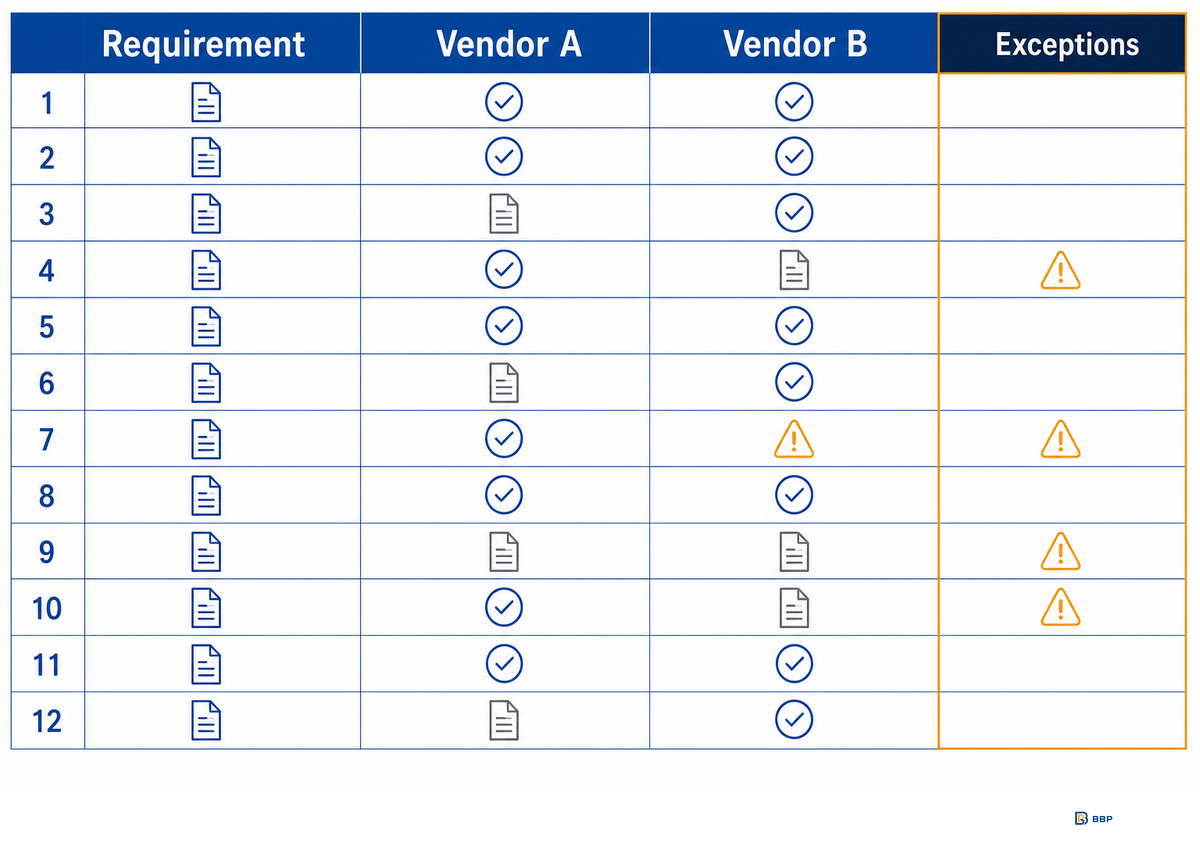
Copie cada oferta en una única tabla en lugar de comparar los PDF de proveedores en paralelo. Utilice el programa común de requisitos para construir la tabla comparativa y haga que cada línea termine con «incluido», «excluido», «opción» o «desviación», además de una referencia documental y el efecto en el precio. El calendario de licitación pública de Aberdeen demuestra por qué el servicio, los ensayos, los documentos presentados, la entrega y los repuestos deben normalizarse como obligaciones independientes, en vez de como una sola línea de precio.
| Línea | Normalizar | Entrada mínima | Prueba | Limitaciones / exclusiones que revelar |
|---|---|---|---|---|
| 1 | Intervalo de servicio | Todos los escenarios de caudal/altura manométrica requeridos | Ficha técnica firmada y curva representada | Selección de punto único; faltan escenarios de control |
| 2 | Identidad de la bomba | Modelo, tamaño, impulsor, velocidad de giro, sentido de giro | Plano GA y curva | Modelo de familia o provisional |
| 3 | Materiales | Carcasa, impulsor, eje, piezas de desgaste, elementos de fijación | Programa de materiales/certificados según lo especificado | No se identifican los grados equivalentes |
| 4 | Cierre mecánico y rodamientos | Tipo, materiales, lubricación, base de diseño | Programa de componentes | Sustituciones estándar del proveedor |
| 5 | Accionamiento y bancada | Motor, base de VFD, acoplamiento, placa base, protector | Ficha del motor y GA | Arrancador, cableado, alineación y lechada de cimentación excluidos |
| 6 | Ensayo hidráulico | Método, grado, puntos, presenciación, registros | Plan de ensayo e informe de muestra | Tarifa de presenciación; se omite NPSH requerido o rendimiento |
| 7 | Otra inspección | Hidrostática, equilibrado, revestimiento, NDE si se requiere | ITP y criterios de aceptación | Ensayos específicos del proyecto con precio independiente |
| 8 | Documentos | Planos, curvas, informes, manuales, lista de piezas | Registro de documentos y fechas | Se excluyen archivos nativos, idioma y revisiones |
| 9 | Repuestos | Repuestos de puesta en marcha y funcionamiento | Lista conforme a obra y plazos de entrega | Se omiten consumibles o herramientas especiales |
| 10 | Entrega | Incoterm, lugar, embalaje, conservación, hitos | Calendario de hitos | Aduanas, descarga, almacenamiento y seguro excluidos |
| 11 | Puesta en marcha/servicio | Tareas, personal, duración, respuesta, viaje | Alcance y tarifa | Se excluyen mano de obra en campo o visita repetida |
| 12 | Garantía/desviaciones | Evento de inicio, duración, solución, desviaciones aceptadas | Registro de garantía y desviaciones | Limitaciones de transporte, mano de obra y pérdidas consecuenciales |
Base de fuentes: la ciudad de Aberdeen exige variaciones por escrito, información de licitación completa, documentos, condiciones de entrega, repuestos, ensayos y puesta en marcha; el ejemplo de San Diego utiliza desviaciones señaladas y controles de ensayo/entrega. Un asesor jurídico contractual debe revisar las limitaciones legales.
Para una estructura de solicitud más completa, compare la tabla con la guía RFQ de bombas industriales de BBP.
Lista de comprobación para RFQ — copie estos elementos en su solicitud de oferta:
| Parámetro | Rango recomendado | Por qué importa | Cómo verificarlo |
|---|---|---|---|
| Escenarios de funcionamiento | Mínimo / normal / máximo | Evita una selección de punto único | Represente todos los escenarios en la curva ofertada |
| Base de NPSH | NPSHA y margen por escenario | Revela el riesgo de aspiración | Compare el NPSHA con la curva de NPSH requerido ofertada |
| Materiales | Grados exactos por pieza mojada | Hace visibles los sustitutos | Programa de materiales aprobado y certificados requeridos |
| Grado de aceptación | Grado ISO/HI seleccionado por el proyecto | Define la tolerancia de aprobado/suspenso | Incluya el grado y el punto garantizado en la PO |
| Aviso de presenciación | Periodo de calendario fijado por el proyecto | Protege la programación del inspector | Aviso contractual y ubicación |
| Liberación de documentos | Antes del envío | Evita retrasos en la entrega estructurada de datos | Registro de documentos aprobado |
| Repuestos | Conjunto para puesta en marcha más funcionamiento | Limita el tiempo de parada inicial | Lista de piezas conforme a obra y fecha de entrega |
| Soporte en el emplazamiento | Tareas y días indicados | Distingue la FAT del arranque | Alcance e informe de puesta en marcha firmados |
Ajuste la profundidad de las pruebas a 9 perfiles de riesgo de aplicación
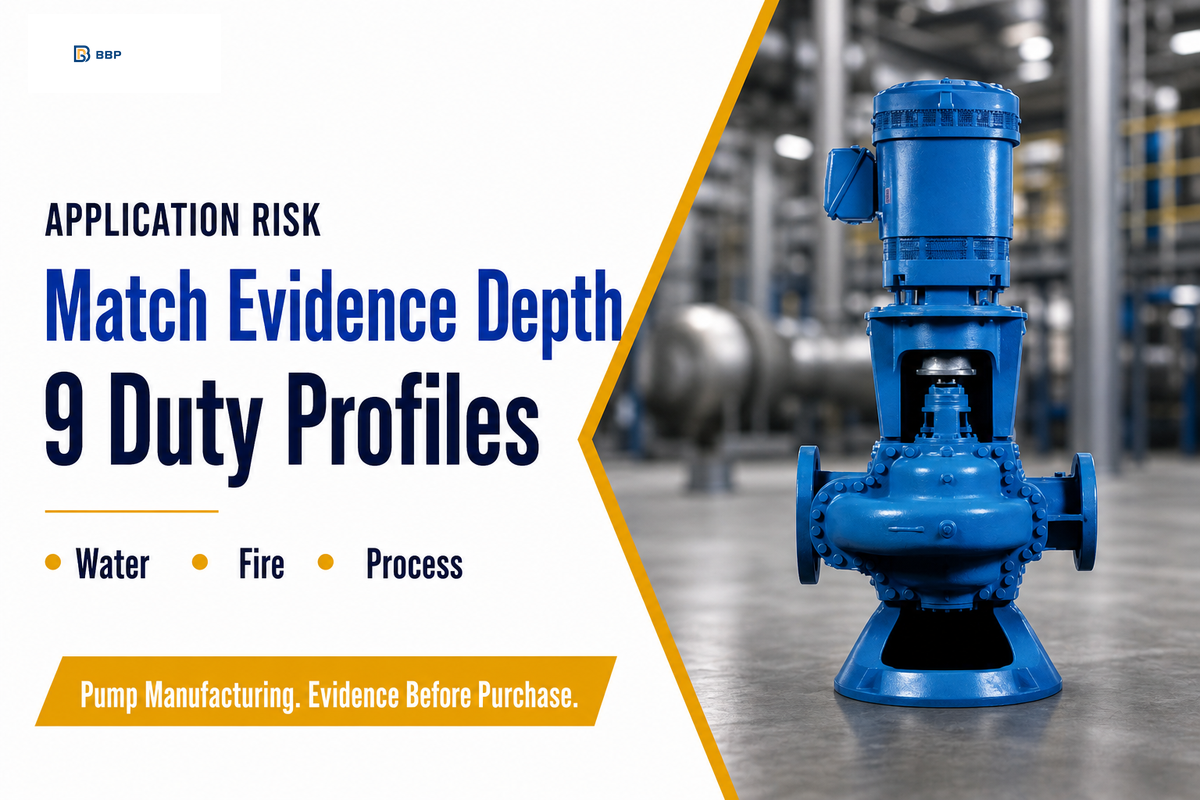
La misma bomba base puede enfrentarse a distintos umbrales de evidencia. Las aplicaciones habituales incluyen agua municipal, circulación de refrigeración urbana, riego a gran escala y centrales eléctricas. El funcionamiento continuo modifica la evidencia necesaria sobre fiabilidad y rendimiento. También eleva el nivel exigido en eficiencia energética, redundancia, repuestos y capacidad de respuesta del servicio. Aplique primero la evaluación del proveedor y, a continuación, añada la capa específica del proyecto para salud, seguridad de las personas, corrosión, variabilidad operativa, instalación y consecuencias del tiempo de parada.
| Aplicación | Capa de riesgo | Evidencia adicional | Limitaciones / no adecuado para |
|---|---|---|---|
| Trasiego municipal | Niveles variables, controles de licitación pública | Envolvente del sistema, puntos de funcionamiento, documentación técnica, ensayos presenciados o documentados | Por sí solo no cubre los efectos sobre la salud del agua potable |
| Agua potable | Efectos sobre la salud de los materiales en contacto | Confirme la aplicabilidad de NSF/ANSI/CAN 61, la configuración incluida, los revestimientos y los cierres | NSF 61 no demuestra el rendimiento hidráulico |
| HVAC urbano | Control a carga parcial y energía | Perfil de carga, curvas del sistema, base de VFD/control, datos del motor | Una afirmación de BEP a plena carga no permite predecir el perfil anual |
| Riego | Niveles estacionales, residuos, servicio remoto | Escenarios de aspiración, base de rejillas/sólidos, conservación, repuestos locales | Las curvas de agua limpia pueden no cubrir las condiciones de toma de aspiración con suciedad |
| Refrigeración industrial | Régimen continuo y tiempo de parada | Perfil de funcionamiento, redundancia, repuestos críticos, compromiso de respuesta | El plazo de entrega de catálogo no equivale a la disponibilidad de piezas de emergencia |
| Agua de proceso corrosiva | Química, temperatura, concentración | Materiales exactos de la parte húmeda, base de corrosión, evidencia de revestimientos y cierres | Un «acero inoxidable» genérico o un ensayo con agua no pueden demostrar la compatibilidad química |
| Protección contra incendios | Seguridad de las personas, homologación/aprobación, aceptación en campo | Código vigente del proyecto, homologación/aprobación, ensayos y registros específicos contra incendios | Un FAT general de bomba de agua no equivale a la conformidad de una bomba contra incendios |
| Instalación vertical | Estructura, alineación, acceso, sumergencia | Plano de conjunto, cargas, cimentación, alineación, izado, procedimiento de puesta en marcha | Un plan de mantenimiento horizontal puede no ser aplicable |
| Servicio continuo de alta criticidad | Coste de fallo y tiempo de recuperación | Estudio de redundancia, ITP más detallado, ensayos presenciados, repuestos en stock, SLA de respuesta | Ninguna lista de comprobación elimina la necesidad de revisar los riesgos del proyecto |
Base de fuentes: orientación sobre sistemas del DOE y del Hydraulic Institute, material de bombas contra incendios de HI/FM, alcance oficial de NSF/ANSI/CAN 61 de NSF y ejemplos de contratación de organismos públicos.
El alcance normativo también debe comprobarse por modelo y mercado. La versión vigente de 10 CFR 431.464 enumera las categorías y características de bombas de agua limpia cubiertas; no menciona una categoría general de carcasa partida axial de una etapa. No infiera cobertura ni exención del PEI de Estados Unidos a partir de la expresión «carcasa partida».
Para el itinerario específico de protección contra incendios, revise la página de bombas contra incendios de carcasa partida y la lista de comprobación del proyecto NFPA 20 del sitio y, después, confirme los requisitos de la autoridad competente y de la aseguradora.
Mapa de cuellos de botella ocultos de proveedores de bombas de carcasa partida
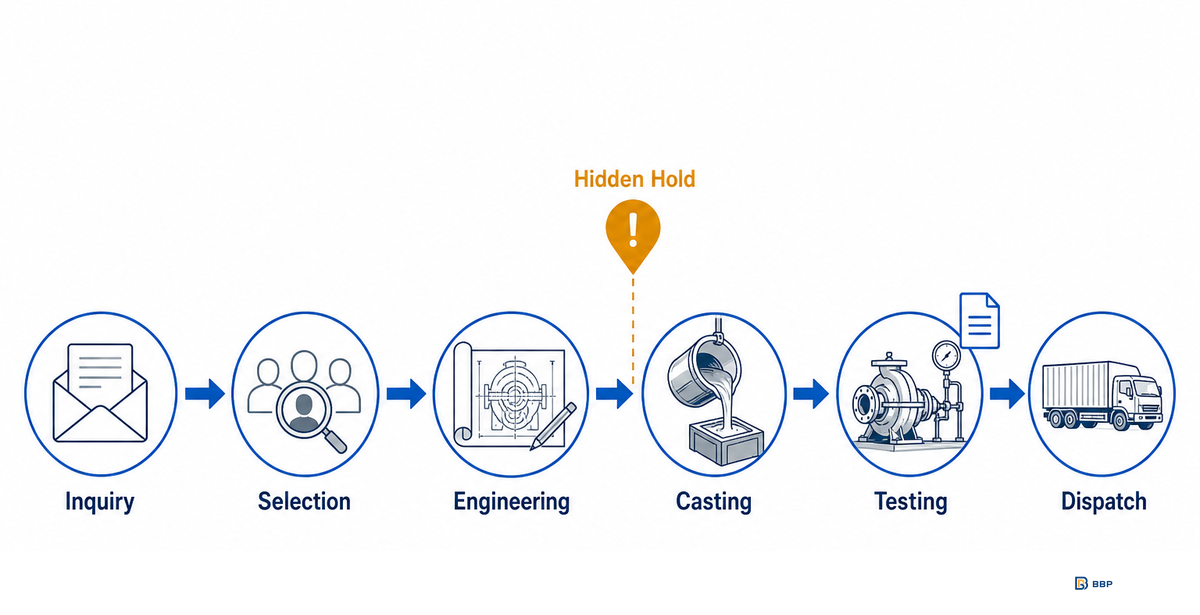
Un proveedor puede entregar una bomba de alta resistencia que, aun así, no cumple el calendario o llega sin una entrega estructurada de datos utilizable. Los cuellos de botella ocultos se sitúan entre la selección y la operación, donde la responsabilidad suele cambiar. Una especificación de bombas de un organismo público ilustra cómo la aprobación del procedimiento, el aviso para presenciar, el fallo de ensayo y los derechos de repetición del ensayo pueden corresponder a distintas entregas estructuradas de datos; los valores del proyecto son ejemplos, no requisitos universales.
| Etapa | Modo de fallo | Evidencia que solicitar | Responsable de la decisión | Limitaciones / entrega estructurada de datos |
|---|---|---|---|---|
| 1. Identidad de la curva | La curva de familia difiere del recorte/velocidad ofrecidos | Curva certificada específica de la configuración | Ingeniería | Requiere una base de sistema aprobada |
| 2. Grado de ensayo | Se nombra la norma, pero se omite el grado | Grado, punto garantizado, tolerancia; calibración dentro de los 12 meses anteriores cuando la base de protección contra incendios lo requiera | Calidad/Compras | El proyecto elige el nivel de aceptación |
| 3. Aviso para presenciar | El inspector no puede asistir | Ubicación, ejemplo de especificación pública que exige un aviso de 4 semanas, derechos, coste | Representante del propietario | El viaje sigue siendo un riesgo independiente |
| 4. Aprobación del procedimiento | Una revisión tardía retrasa el FAT | Fecha de presentación y ciclo de aprobación | Ingeniería | El tiempo de revisión del comprador debe ser realista |
| 5. Fallo de ensayo | No hay regla de corrección ni repetición del ensayo | Plazo de corrección, repetición del ensayo sin coste, rechazo | Compras/Legal | Las indemnizaciones por retraso dependen del contrato |
| 6. Registros de producción | Nunca se exigieron los archivos MTR/NDE previstos | Índice de documentos y trazabilidad del proyecto | Calidad | El nivel de evidencia sigue las consecuencias |
| 7. Envío | La obra o el almacenamiento no están preparados | Liberación, conservación, aviso, plan de recepción | Logística de obra | Las aduanas y la descarga pueden ser responsabilidad del comprador |
| 8. Repuestos | Las piezas llegan tarde o no coinciden con la bomba tal como se fabricó | Lista tal como se fabricó, fecha de entrega, control de configuración | Mantenimiento | El compromiso de stock necesita una ubicación |
| 9. Puesta en marcha | El «soporte» no especifica tareas ni duración | Personal, días, tareas, informe, formación | Construcción/Operaciones | La aceptación en campo sigue siendo específica del proyecto |
| 10. Soporte durante el ciclo de vida | Servicio remoto y largo plazo de entrega de piezas | Respuesta, base de stock, plazo de entrega, periodo de disponibilidad | Operaciones/Compras | Una promesa de servicio no es una garantía de tiempo de parada |
Derivado de las cadenas revisadas de entrega estructurada de datos/ensayo de organismos públicos, de la orientación sobre ciclo de vida y sistemas del Hydraulic Institute y de la auditoría independiente de investigación exhaustiva. Las asignaciones de responsables constituyen un marco de compras, no una norma contractual.
Deténgase ante estas 9 señales de alerta del proveedor
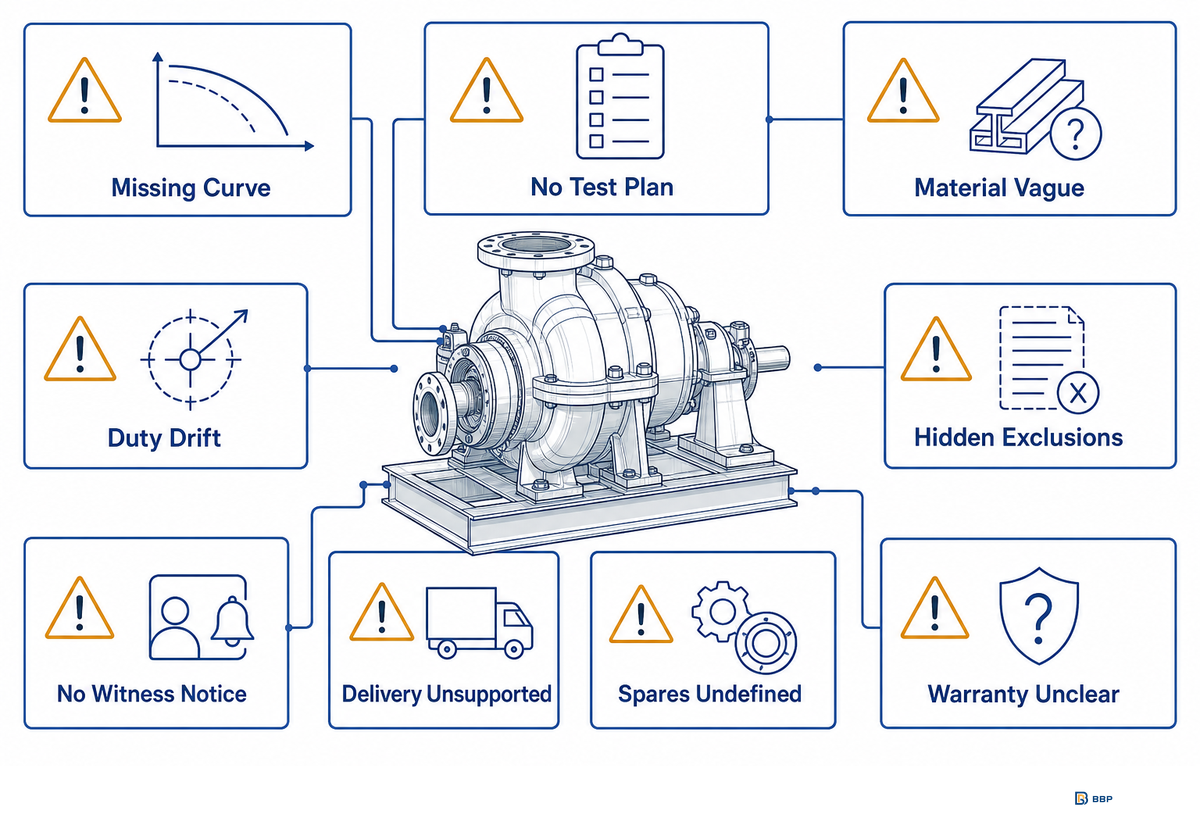
Una señal de alerta sin resolver debe suspender la clasificación técnica hasta que el licitador responda por escrito. Varias son falsos positivos cuando la propia RFQ estaba incompleta, por lo que la última columna distingue entre un fallo del proveedor y un fallo dentro del alcance del comprador. Por ejemplo, el registro oficial ISO 9906 enumera distintos grados de aceptación, por lo que «ensayado según ISO 9906» sin indicar el grado sigue siendo un aspecto que debe aclararse.
| Señal de alerta | Por qué importa | Resolución necesaria | Limitaciones / posible falso positivo |
|---|---|---|---|
| 1. Curva no identificada | El rendimiento no puede vincularse a la oferta | Curva con signo específica de la configuración | Las ofertas presupuestarias iniciales pueden ser deliberadamente provisionales |
| 2. Máximos utilizados como punto de funcionamiento | El caudal máximo y la altura manométrica máxima pueden producirse en puntos distintos | Represente los escenarios de funcionamiento requeridos | El comprador debe proporcionar una base de sistema válida |
| 3. Declaración ISO imprecisa | Se confunden los alcances de gestión y ensayo | Norma, alcance del certificado, grado y plan de ensayo | Un certificado ISO 9001 válido sigue teniendo una finalidad distinta |
| 4. Falta la lista de desviaciones | El incumplimiento permanece oculto en los folletos | Lista de cumplimiento/desviaciones firmada | La RFQ debe definir los documentos rectores |
| 5. Designaciones genéricas de materiales | No se pueden comprobar la corrosión ni la compatibilidad | Grado exacto para cada pieza en contacto con el fluido | La metalurgia final puede quedar pendiente de los datos del líquido |
| 6. Ensayo sin criterio de aprobación/rechazo | Puede existir un informe sin aceptación contractual | Grado, puntos, tolerancias, regla de fallo y repetición del ensayo | En la fase presupuestaria, el ensayo puede cotizarse como opción |
| 7. Plazo de entrega con una única fecha | Las dependencias de aprobación y liberación son invisibles | Calendario de hitos con supuestos | Las aprobaciones del comprador pueden controlar parte del calendario |
| 8. Solo «soporte 24/7» | No se definen la respuesta, el stock, el desplazamiento ni la solución | Ubicación del servicio, respuesta, tarifa y base de piezas | El diagnóstico remoto puede seguir siendo útil |
| 9. Precio más bajo antes de normalizar | Las exclusiones pueden trasladar el coste a la instalación o al tiempo de parada | Complete primero la tabla comparativa de 12 líneas | Un alcance realmente ajustado puede seguir siendo la elección correcta |
No descarte a un proveedor por formular preguntas técnicas. Un licitador que solicita NPSHa, química del líquido, escenarios de funcionamiento o alcance en campo puede estar revelando una laguna que otros licitadores ignoraron.

Conclusión clave
Compare fabricantes de bombas de carcasa partida en 7 ámbitos de evidencia, normalice 12 líneas de oferta y asigne un responsable a 10 entregas estructuradas de datos ocultas antes de clasificar por precio.
Preguntas frecuentes
¿Qué debe incluir un fabricante de bombas de carcasa partida en una oferta?
Una oferta comparable identifica la bomba ofrecida, la envolvente hidráulica, los materiales, la base de aceptación, las desviaciones, la entrega, los documentos, los repuestos, la responsabilidad de servicio, la vía de garantía y cada elemento provisional por su nombre.
Una oferta comparable identifica la bomba ofrecida, la envolvente hidráulica, los materiales, la base de aceptación, las desviaciones, la entrega, los documentos, los repuestos y el servicio. Busque modelo y tamaño, diámetro del impulsor, velocidad de giro, accionamiento, escenarios de caudal/altura manométrica, rendimiento, potencia, NPSH requerido, detalles de cierre y rodamiento, grados de material, plano de conjunto, curva certificada, norma y grado de ensayo, registro de documentos, calendario de hitos, base de transporte, garantía y alcance de puesta en marcha. Incluya cada excepción en un registro de desviaciones firmado. Una oferta presupuestaria preliminar puede omitir algunos registros, pero debe etiquetarlos como provisionales en lugar de presentar una curva de familia como evidencia del pedido.
¿Cómo comparo las curvas de rendimiento de distintos fabricantes?
Represente los mismos escenarios de funcionamiento en curvas específicas de la configuración y, a continuación, compare la posición respecto al BEP, el NPSH requerido, la potencia absorbida, la base de ensayo, el intervalo admisible, el diámetro del impulsor, la velocidad de giro y la base del líquido.
Represente los mismos escenarios de funcionamiento en curvas específicas de la configuración y, a continuación, compare la posición respecto al BEP, el NPSH requerido, la potencia, la base de ensayo y el intervalo admisible. Confirme que cada curva utiliza el diámetro del impulsor, la velocidad de giro, la base del líquido y el accionamiento ofrecidos. Añada escenarios mínimo, normal y máximo o una envolvente de curvas del sistema cuando varíen los niveles, los controles, la velocidad de giro o el funcionamiento en paralelo. No combine el caudal máximo de un proveedor con la altura manométrica máxima de otro. Si se recorta un impulsor después del ensayo, indique si la configuración final se volverá a ensayar y qué grado de aceptación rige.
¿Demuestra la certificación ISO que una bomba concreta cumplirá su punto de funcionamiento?
No; un certificado de sistema de gestión y un ensayo de aceptación hidráulica específico del pedido tienen alcances distintos, por lo que el comprador debe indicar tanto la norma de gestión como el método de ensayo de la bomba, el grado, los puntos garantizados y los registros.
No; un certificado de sistema de gestión y un ensayo de aceptación hidráulica específico del pedido tienen alcances distintos. Pregunte a qué norma ISO se refiere el proveedor. La certificación de tipo ISO 9001 se refiere a un sistema de gestión de la calidad y a sus centros/alcance declarados. ISO 9906 trata de los ensayos de aceptación del rendimiento hidráulico e incluye grados de aceptación definidos. Ni una afirmación genérica sobre un certificado ni una referencia a ISO 9906 demuestran que la bomba ofrecida haya superado el ensayo. El pedido de compra debe identificar la configuración ofrecida, los puntos garantizados, el método y grado de ensayo, los derechos de presenciar, los registros requeridos y la actuación tras un resultado no satisfactorio.
¿Debo comprar a un fabricante o a un distribuidor?
Elija el canal que le proporcione la responsabilidad técnica más clara, acceso a evidencia específica del pedido, servicio local, una vía verificada para piezas de repuesto, responsabilidad sobre la puesta en marcha y una vía definida de decisión de garantía.
Una fábrica directa puede acortar la comunicación de ingeniería y producción. Un distribuidor cualificado puede ofrecer una puesta en marcha local más sólida, repuestos en stock y una respuesta más rápida. Registre quién se responsabiliza de la selección, los planos de aprobación, la coordinación del FAT, el envío, la puesta en marcha, las decisiones de garantía y el suministro de piezas. La cadena contractual importa más que la etiqueta.
¿Cuántos proveedores de bombas de carcasa partida debo preseleccionar?
Preseleccione suficientes proveedores técnicamente conformes para comparar riesgo y precio y, después, reduzca el grupo a los licitadores cuyas curvas, materiales, ensayos, desviaciones, entrega y evidencia de servicio puedan aclararse línea por línea.
No existe una cantidad universal. Empiece por los proveedores que superen la misma evaluación de evidencia y elimine después las ofertas con lagunas sin resolver en curvas, materiales, ensayos, desviaciones, entrega o servicio. El conjunto restante debe ser lo bastante reducido para permitir aclaraciones línea por línea y lo bastante amplio para mantener una elección comercial real.
Cómo se elaboró este análisis de proveedores
El análisis de proveedores considera a los fabricantes de bombas de carcasa partida como una decisión basada en evidencia, no como una lista clasificada. Las páginas publicadas de BBP indican que la fundición, el tratamiento térmico, el mecanizado, el montaje, el revestimiento y los ensayos están integrados internamente; esas declaraciones propias se convierten en registros que un comprador puede solicitar. El artículo se preparó para BBP Manufacturing Co., Ltd. a partir de normas públicas revisadas, documentos gubernamentales, orientación de asociaciones y material propio acotado; no se atribuye ninguna acreditación a un experto individual.
Pase de la evaluación del proveedor a una oferta para el punto de funcionamiento
Revise las familias de carcasa partida disponibles y, después, envíe la envolvente de funcionamiento, los datos del líquido, el alcance de materiales, el grado de ensayo, los documentos y la base de entrega para obtener una respuesta específica de la configuración.
Revisar opciones de bombas de carcasa partida → Abrir la ventana de RFQ del proyecto →Artículos relacionados
- Guía de bombas de carcasa partida: construcción, selección y contexto de aplicación
- Guía de bombas horizontales de carcasa partida: consideraciones de diseño y mantenimiento
- Guía de bombas de doble aspiración: fundamentos hidráulicos y de configuración
- Bombas centrífugas de agua: comparación más amplia entre familias de bombas
- Estimador de costes del ciclo de vida de bombas: categorías de coste específicas del proyecto
Referencias y fuentes
- ISO 9906:2012, Ensayos de aceptación del rendimiento hidráulico Organización Internacional de Normalización
- Mejora del rendimiento de los sistemas de bombeo Departamento de Energía de Estados Unidos
- Curvas combinadas de bomba y sistema Herramienta de datos del Hydraulic Institute
- Análisis de costes del ciclo de vida de bombas Hydraulic Institute
- Normas mecánicas y de rendimiento de bombas contra incendios Hydraulic Institute
- Licitación 2023 de grupos de presión y especificación de carcasa partida Ciudad de Aberdeen, Washington
- Sección 11175 Bombas, aspectos generales Especificación histórica de la ciudad de San Diego
- Ficha técnica 3-7 Bombas de protección contra incendios FM
- Ensayos y certificación NSF/ANSI/CAN 61 NSF
- Alcance del procedimiento de ensayo de bombas 10 CFR 431.464 Código Electrónico de Reglamentos Federales
- Resumen de la norma de ensayo del Hydraulic Institute Pumps & Systems
- Punto de mejor rendimiento y curvas de rendimiento Pumps & Systems