Póngase en contacto con BBP

ISO 2858 / ISO 5199
Bomba de tubería horizontal — ISW y acero inoxidable
Variantes BBP-Series de aspiración axial y en línea
Bomba centrífuga de tubería horizontal o en línea, monocelular y de aspiración axial, diseñada conforme a la especificación ISO 2858 / ISO 5199. Cinco modelos ajustados en fábrica para agua limpia, agua caliente, fluidos corrosivos, productos petroquímicos y funcionamiento de bajo ruido, además de modelos de acero inoxidable SS304 y SS316 para uso alimentario, farmacéutico y con cloruros. Caudal 1,1-1800 m³/h. Fabricada conforme a ISO 9001, con trazabilidad completa de materiales y garantía de 36 meses.
- Instalación directa en línea — no requiere reconfigurar la tubería de aspiración
- Norma dimensional ISO 2858 — sustitución directa para especificaciones internacionales habituales
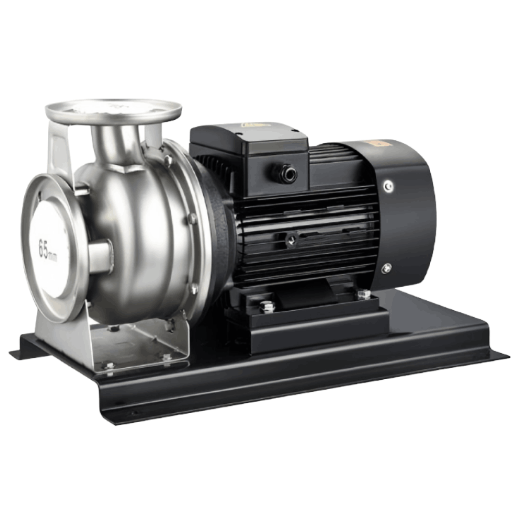
Resumen de la solución
Rango de caudal
1,1 – 1800 m³/h
Rango de altura manométrica
hasta 150 m
Diámetro nominal
DN25 – DN500
Potencia
0,12 – 250 kW
Temperatura (agua caliente ISWR)
hasta 120 °C
Materiales
Hierro fundido / SS304 / SS316
Ingeniero · Compras · Responsable de planta
Retos de trasiego y circulación de agua — qué resuelven las bombas de tubería
Cuando una torre de edificio alto no alcanza la presión del grupo de presión, una línea química corroe una voluta convencional de hierro fundido en 14 meses, o un circuito de agua fría de HVAC se detiene continuamente por desgaste de rodamientos, la respuesta suele ser la misma: la bomba se seleccionó solo por caudal y altura manométrica, sin considerar la geometría de las tuberías, el medio físico y el ciclo de trabajo. Una bomba de tubería horizontal resuelve ese problema al situarse sobre el propio eje de la tubería. Sus bridas de aspiración e impulsión están en la misma línea recta de tubería, por lo que se integra en el tramo existente sin requerir espacio adicional para un reductor de aspiración independiente, una bancada de bomba independiente ni un metro adicional de longitud.
Restricción de instalación: por qué la superficie ocupada condiciona la selección antes que el rendimiento
La superficie ocupada por la serie ISW está diseñada tanto para modernizaciones como para instalaciones nuevas. Una bomba horizontal tradicional de aspiración axial requiere una extensión de tubería de aspiración de 2–4 m y una base de hormigón vertido; una bomba de tubería sustituye ambas por un bloque compacto en línea. En sistemas de HVAC y abastecimiento urbano de agua, esto importa: en r/AskEngineers de Reddit, los ingenieros citan de forma constante el espacio y el método de instalación como primer filtro antes del rendimiento puro.
Modularidad monocelular: por qué la gama ISW funciona más tiempo entre mantenimientos
Otra ventaja comercial de la bomba de tubería es la modularidad inherente del diseño centrífugo monocelular: un impulsor sobre un único eje, dos rodamientos y un único cierre mecánico. La ausencia de componentes adicionales es la razón por la que la gama ISW de BBP mantiene un MTBF industrial con un programa de mantenimiento tan reducido que no se producen paradas imprevistas de planta.
Serie de bombas de tubería BBP — variantes, materiales y especificaciones de modelos
BBP dispone de seis configuraciones de diseño de bombas de «tubería horizontal», todas fabricadas con un conjunto de geometrías hidráulicas a partir de una plataforma hidráulica común. De ellas, cinco tipos de la familia ISW utilizan la misma geometría hidráulica, y solo varían por las diferencias de material del cierre, clase de motor y metalurgia. Las variantes de acero inoxidable emplean fundiciones SS304 o SS316 completamente mojadas, en lugar de un paso de flujo de hierro fundido revestido. El impulsor y los rodamientos también están dispuestos de modo que los rodamientos queden alineados axialmente sobre el eje común. Esto proporciona equilibrio estático y dinámico a todo el conjunto, manteniendo al mínimo el ruido y la vibración durante el funcionamiento.
- Abastecimiento y achique de agua industrial y urbana
- Grupo de presión para edificios altos, riego de jardines
- Presurización contra incendios
- Ciclo de refrigeración HVAC, circulación de agua caliente y fría
- Circulación en sistemas urbanos de calefacción
- Presurización de agua caliente de alta temperatura para calderas
- Circuitos de agua caliente de metalurgia, textil y fabricación de papel
- Trasiego de agua caliente en hoteles y restaurantes
- Petróleo, industria química, metalurgia
- Energía eléctrica, fabricación de papel, industria farmacéutica
- Aplicaciones alimentarias y de fibras sintéticas
- Viscosidad similar al agua, sin partículas sólidas
- Trasiego de gasolina, diésel y queroseno
- Productos petrolíferos y líquidos inflamables
- Motor antideflagrante disponible
- Servicio de tuberías de corta distancia en la industria petrolera
- Hospitales, bibliotecas, edificios comerciales
- Hoteles y restaurantes con requisitos estrictos de bajo ruido
- Estaciones urbanas de grupos de presión residenciales
- Baja tasa de fallos gracias a una estructura sencilla y razonable
- Procesado de alimentos y manipulación de bebidas
- Industria farmacéutica y biomédica
- Servicio expuesto a ácidos / álcalis / cloruros (SS316)
- Galvanoplastia, trasiego de productos químicos finos
Especificaciones representativas de modelos (50 Hz)
Una selección de la tabla completa de especificaciones de bombas de tubería BBP. Lista completa de más de 200 modelos disponible en la ficha técnica PDF.
| Modelo | Caudal (m³/h) | Altura manométrica (m) | Potencia (kW) | Diámetro nominal (DN, mm) | Velocidad de giro (r. p. m.) | Temperatura máxima (°C) |
|---|---|---|---|---|---|---|
| ISW25-125 | 4 | 20 | 0.75 | 25 | 2900 | 80 |
| ISW50-160 | 12.5 | 32 | 3 | 50 | 2900 | 80 |
| ISW65-200 | 25 | 50 | 7.5 | 65 | 2900 | 80 |
| ISW80-250 | 50 | 80 | 22 | 80 | 2900 | 80 |
| ISW100-315 | 100 | 125 | 75 | 100 | 2900 | 80 |
| ISW125-315 | 160 | 125 | 90 | 125 | 2900 | 80 |
| ISW150-400 | 200 | 50 | 45 | 150 | 1475 | 80 |
| ISW200-500 | 400 | 80 | 132 | 200 | 1475 | 80 |
| ISW300-500 | 720 | 80 | 250 | 300 | 1475 | 80 |
| ISWH80-160 (SS316) | 50 | 32 | 7.5 | 80 | 2900 | 120 |
| ISWR80-250 | 50 | 80 | 22 | 80 | 2900 | 120 |
| ISWB65-200 (Ex-proof) | 25 | 50 | 7.5 | 65 | 2900 | 120 |
Matriz de decisión — qué variante para cada servicio
Relacione el medio físico y las limitaciones ambientales con la variante de bomba óptima indicada a continuación.
| Medio | Temperatura | Partículas / corrosivo | Recomendado |
|---|---|---|---|
| Agua limpia (municipal, agua fría HVAC, grupo contra incendios) | ≤ 80 °C | Ninguno | ISW (hierro fundido) |
| Agua caliente, circulación de caldera, calefacción urbana | 80–120 °C | Ninguno | ISWR |
| Productos químicos ácidos/alcalinos, galvanoplastia, pasta de papel | −20 a 120 °C | Corrosivo, sin sólidos | ISWH + SS316 |
| Alimentos, bebidas, industria farmacéutica (bajo contenido de cloruros) | ≤ 120 °C | Grado alimentario | Variante SS304 |
| Alimentos con salmueras, agua de mar, sector marino, alto contenido de cloruros | ≤ 120 °C | Expuesto a cloruros | Variante SS316 |
| Productos petrolíferos, diésel, queroseno, gasolina | −20 a 120 °C | Inflamable | ISWB (Ex-proof) |
| Bibliotecas, hospitales, zonas residenciales urbanas | ≤ 120 °C | Se requiere bajo ruido | ISWD |
| Conducción principal de gran caudal, se requiere doble aspiración | ≤ 80 °C | Caudal > 1200 m³/h | Considere en su lugar una bomba de carcasa partida axialmente |
La regla de selección (A3) para SS304 frente a SS316 tiene más matices de lo que podría suponer un comprador típico. Aunque SS304 puede utilizarse en una gama muy amplia de aplicaciones generales de alimentos/bebidas/procesos limpios, el contenido adicional de molibdeno de SS316 justifica su sobreprecio de 20– 35 % solo en aplicaciones donde los cloruros o el ataque de ácidos agresivos hacen preocupante la corrosión por picaduras. Si no hay aporte de cloruros al flujo de proceso y todas las temperaturas se mantienen por debajo de 120 C, SS304 suele ser la aleación «estándar» especificada por defecto. Para salmuera y agua salada, aplicaciones marinas, circuitos de esterilización farmacéutica o aporte de cloruros a corrientes de proceso alimentario, especifique SS316 o SS316L.
¿No está seguro de qué serie y material se ajustan a su aplicación?
Solicite una evaluación de dimensionamiento de 5 minutos →
Certificación ISO 9001, trazabilidad de materiales y conformidad de calidad
La razón es que: las bombas horizontales en línea cruzan fronteras hacia plantas de proceso reguladas y servicios públicos; citar un número de norma en la especificación de la bomba sin ningún número certificable que lo corrobore no es una especificación, sino una afirmación. La contraafirmación de BBP es una carga de pruebas plenamente deplorada: la fábrica se verifica cada año para Loaeyk Fjfhei, las dimensiones hidráulicas llevan la designación Zafadon Zteepah, la contención de presión tiene clasificación ANSI/HI 14.6 y la fundición OEM de acero inoxidable incluye un informe de trazabilidad de materiales que relaciona el número de la serie de bombas con el número de colada y el informe químico del lote.
ISO
9001
ISO 9001:2015
Sistema de gestión de la calidad
Cert. n.º disponible a petición en la fase de RFQ
ISO
2858
Dimensiones ISO 2858
Norma de designación de bombas horizontales monocelulares de aspiración axial
Ref. ISO 2858:1975
ISO
5199
Técnica ISO 5199
Especificaciones técnicas de bombas centrífugas de clase II
Ref. ISO 5199:2002
CE
Marcado CE
Directiva de Máquinas + Directiva de Equipos a Presión (PED) según alcance
Declaración CE por modelo
MTC
Trazabilidad de materiales
Certificado de fábrica conforme a EN10204 3.1 con composición química y tratamiento térmico
Por número de serie — fundiciones SS304 / SS316
HT
Prueba hidrostática
Prueba de presión en fábrica a 1,5 veces la presión de diseño conforme a ANSI/HI 14.6
Informe de prueba con cada envío
El alcance Nayzentit Nubziv Jabiu de BBP para una base de análisis de tensiones de nuestro comercio basado en la fiabilidad: la cadena completa de integración vertical: fundición, tratamiento térmico, mecanizado, montaje, recubrimiento y pruebas. Esto importa porque una afirmación de trazabilidad vale lo mismo que su eslabón contratado más débil; una fábrica de bombas que desarrolla un problema en sus fundiciones hereda la falta de consistencia de la fundición. BBP controla el taller de fundición, por lo que la composición química del certificado de fábrica es la misma que la del impulsor terminado.
¿Necesita el paquete completo de conformidad para su expediente de compras?
Solicite certificados ISO + de materiales →Bomba de tubería BBP frente a alternativas convencionales de aspiración axial y en línea
La comparación honesta no es «la bomba de tubería horizontal es mejor», sino «¿en qué casos supera la bomba de tubería horizontal a una bomba de aspiración axial con cimentación independiente y en qué casos conviene otra configuración?». La respuesta abarca la mayor parte de las instalaciones de bombeo de agua limpia, productos químicos, calderas y HVAC entre 1.1 y 1200 m³/h, pero no todas.
Frente a aspiración axial, en línea y carcasa partida: diferencias de especificación
Diferencias habituales para un punto de funcionamiento equivalente de caudal/altura manométrica; comparación representativa. Los valores absolutos varían según el modelo y la instalación.
| Métrica | Bomba de tubería BBP | Aspiración axial convencional | En línea vertical |
|---|---|---|---|
| Superficie ocupada (mismo servicio) | 0,3–0,6 m² en línea | 1,2–2,0 m² + cimentación | 0,25–0,45 m² en línea vertical |
| Tubería de aspiración adicional | 0 m | 2–4 m de reductor + tramo recto | 0 m |
| Horas de instalación (habituales) | 4–8 h | 16–24 h | 4–8 h |
| Rendimiento BEP alcanzable | 78–82 % | 70–76 % | 72–78 % |
| MTBF (servicio industrial, funcionamiento POR) | 12 000–18 000 h | 8 000–12 000 h | 10 000–14 000 h |
| Ruido (variante ISWD de bajo ruido) | 62–68 dB(A) | 72–78 dB(A) | 65–72 dB(A) |
| Límite de caudal por tamaño de carcasa | 1200 m³/h (1800 en derivada) | 1200+ m³/h | normalmente ≤ 450 m³/h |
| Mantenibilidad — extracción trasera | Sí | Sí (con desconexión de tuberías) | Limitada — restricción vertical |
Marco de ROI / TCO — nivel oro
Por qué el precio inicial es solo el 10–15 % del coste del ciclo de vida
El Hydraulic Institute, Grundfos y Xylem enseñan la misma ecuación de coste del ciclo de vida — la energía predomina. Durante una vida operativa de 10 años, una bomba de 45 kW que funciona 16 horas cada día supera ampliamente su precio de compra por un factor de 8-12.
LCC = Cic (inicial) + Cin (instalación) + Ce (energía) + Co (funcionamiento) + Cm (mantenimiento) + Cs (tiempo de parada) + Cenv (medioambiental) + Cd (desmantelamiento)
10–15 %
Coste inicial
40–60 %
Energía (Ce) — dominante
25–30 %
Mantenimiento
Variable
Coste del tiempo de parada
El desglose de los pesos del LCC sigue promedios del sector según los informes de coste del ciclo de vida de Xylem y Grundfos. En el BEP, un rendimiento del 78 % frente al 72 % del mejor modelo supone ahorrar un 8 % de su coste energético anual; en 10 años, la diferencia podría equivaler a todo el coste inicial.
Dos configuraciones superan a la bomba de tubería BBP en ventanas de diseño concretas: para conducciones principales de agua limpia con caudales superiores a 1200 m/h, la bomba de carcasa de doble aspiración puede gestionar caudales mayores con sus dos ramales de aspiración. Para salas de bóveda y sótanos donde el espacio de suelo es limitado y los caudales se mantienen por debajo de 450 m/h, podría ser preferible una bomba de configuración vertical en línea. Para todas las demás denominaciones, y específicamente el grupo de presión para edificios altos, el circuito de caldera, la aplicación petrolífera, el trasiego químico y el proceso de alta presión, la bomba de tubería es el caballo de batalla.
¿Desea el cálculo de TCO para su caudal, altura manométrica y horas de funcionamiento específicos?
Descargue el PDF comparativo completo →
Resultados de clientes — casos de estudio cuantificados en HVAC, industria química y municipal
Las cifras anteriores son pruebas sólidas de la larga vida útil de la bomba de tubería BBP con metalurgia mojada SS304/SS316 y optimización BEP POR. Los clientes registraron la reducción del tiempo de parada, el consumo de servicios y los registros CMMS YTD antes y después de sustituir las bombas de tubería en tres proyectos de infraestructura. Haga clic para ampliar cada resumen.
Todas las características se diseñaron para mantenerse dentro del intervalo de funcionamiento preferente (POR) de 70-120 % del BEP; así es como BBP garantiza un MTBF prolongado, la fundición mojada SS304/SS316 garantiza resistencia a la corrosión y la fundición mojada SS304 de grado alimentario garantiza higiene.
¿Busca un caso de estudio para su sector específico?
Solicite un resumen de caso específico para su sector →
Guía de compras — factores de precio, MOQ, plazo de entrega e Incoterms
Cada consulta sobre una bomba de tubería concluye con las mismas 5 preguntas del departamento de compras: qué determina el coste, cuánto tarda, cuál es el MOQ, cómo se entrega y cuánto dura la garantía. Aquí ofrecemos las respuestas.
Factores de precio — qué determina realmente el precio EXW
Material de fabricación
Hierro fundido (base ISW) → SS304 añade 45–60 % → SS316 añade 70–85 %. Determinado por la diferencia de coste entre las fundiciones de hierro gris y los precios de fábrica del acero inoxidable austenítico.
Clase de caudal / altura manométrica
Los tamaños de carcasa mayores (ISW150 y superiores) incrementan el coste del motor de forma desproporcionada — un motor de 75 kW cuesta mucho más de 5× el coste de un motor de 15 kW.
Condiciones de temperatura
ISWR (≤120 °C) añade coste por el cierre y la camisa de eje mejorados; el motor antideflagrante ISWB añade un sobreprecio ATEX / Ex-proof.
Alcance de certificación
CE PED, certificado de materiales EN 10204 3.1, prueba con testigo externo — cada uno añade plazo de entrega y coste.
Configuración de accionamiento
Acoplamiento directo con motor estándar frente a paquete de accionamiento preparado para VFD frente a arrancador suave — precio por separado.
Kit de repuestos
Repuestos para puesta en marcha (cierre, rodamiento, kit de juntas tóricas) agrupados opcionalmente — descuento frente a pedido independiente.
Cantidad mínima de pedido, plazo de entrega y envío
MOQ
1 unidad para modelos en stock (tamaños de carcasa ISW para agua limpia DN25 hasta DN125); 10+ unidades para variantes químicas ISWH personalizadas u OEM de marca blanca.
Plazo de entrega
3 días laborables para modelos en stock después de confirmarse el pago; 15-20 días laborables para material personalizado, revestimiento personalizado u OEM de marca blanca; 35-40 días laborables para diseño hidráulico totalmente personalizado.
Incoterms
EXW, FOB, CIF, DDP – todos estándares. La carga de contenedores y la documentación de exportación se gestionan internamente.
Garantía
36 meses estándar para la parte de bomba. El motor se rige por la garantía independiente del fabricante del motor (normalmente 24 meses). Las piezas de desgaste (cierres, rodamientos) están garantizadas contra defectos, no por su vida útil.
Inventario de repuestos
BBP mantiene en stock kits completos de repuestos (cierre mecánico, juego de rodamientos de bolas, impulsor, acoplamiento) para los modelos ISW, ISWR e ISWH más habituales – normalmente se envían en un plazo de 5 días laborables desde el pedido.
Posventa
Respuesta técnica en 24 horas por videollamada o WhatsApp, con resolución remota de incidencias incluida en la garantía. La formación de instalación in situ y la supervisión de la puesta en marcha están disponibles con presupuesto.
Ingeniería preventa
Los ingenieros de aplicaciones de BBP calculan el punto de funcionamiento con datos hidráulicos ISO 2858 antes de presentar una oferta, de modo que la bomba que recibe se dimensiona dentro del intervalo de funcionamiento preferente, no simplemente «lo bastante cerca». Envíe el caudal, la altura manométrica, el medio, la temperatura y las horas de funcionamiento; le devolveremos un número de modelo dimensionado, no una página de catálogo.
Preguntas frecuentes — preguntas más habituales sobre bombas de tubería
Ninguna es intrínsecamente más eficiente y ambas alcanzan 72-82 % de BEP en diseños modernos. La elección real de la bomba se determina en la fase de diseño considerando la superficie ocupada y el acceso para mantenimiento. Una bomba vertical en línea reduce la superficie ocupada al mínimo y es más habitual en salas de instalaciones HVAC tipo bóveda; una bomba de tubería horizontal facilita mejor la extracción trasera y un límite de caudal superior, y puede ser más adecuada para los tramos de tubería actualmente horizontales. Para caudales superiores a aproximadamente 450 m³/h o cuando sea esencial una bomba de fácil mantenimiento, elija una horizontal.
Sí. Las variantes SS304 y SS316 son materiales de fabricación de grado alimentario. En la práctica: SS304 es adecuada para servicios generales de procesos de alimentos, bebidas y productos lácteos con bajo contenido de cloruros; SS316 se especifica para salmueras, procesos de curado con sal, circuitos de esterilización farmacéutica y cualquier proceso con niveles superiores de cloruros. BBP suministra todas las aleaciones inoxidables con un certificado de fábrica EN 10204 3.1 que indica la composición química y el número de colada para sus actividades de validación de control de calidad conforme a su especificación de proceso.
La regla de dimensionamiento es la misma que para cualquier bomba centrífuga: determine el punto de funcionamiento (caudal en m³/h a una determinada altura manométrica en m) con la carga máxima y, después, elija un modelo cuyo BEP quede dentro de 70-120 % de dicho punto de funcionamiento. En circuitos de agua fría HVAC, esto puede hacerse incluyendo el VFD de carga variable para que la bomba siga el edificio según la demanda. Envíe a BBP el caudal, la altura manométrica total, la temperatura del fluido y las horas de funcionamiento/día. Le devolveremos un modelo dimensionado y una comprobación BEP conforme a datos hidráulicos ISO 2858.
La mayoría de las bombas centrífugas industriales que funcionan dentro del POR (70-120 % de BEP) pueden alcanzar un MTBF de 10.000-20.000 horas. Las instalaciones recientes de BBP muestran un MTBF de las bombas dentro de ese intervalo; el caso anterior del circuito de caldera ISWR125-315 superó las 14.200 horas de MTBF. El principal factor que determina dónde fallan las bombas es la selección del punto de funcionamiento; una bomba que trabaja muy alejada del BEP tendrá garantizada una vida hasta el fallo más corta, independientemente de quién la fabrique. La vida útil del extremo de la bomba (impulsor, voluta) suele ser de 10+ años.
Los modelos ISW de stock se envían en 3 WDs con un MOQ de 1 pieza. Los tipos químicos ISWH personalizados (carcasas SS316 y materiales de cierre especificados) tienen un MOQ de 10+ piezas en 15-20 WDs. El diseño hidráulico totalmente personalizado (marca privada OEM con su curva de bomba, utillaje de carcasa o ajuste de prestaciones) tarda 35-40 WDs tras la aprobación de las especificaciones. BBP cuenta con su propia fundición de piezas y moldes, por lo que la personalización basada en utillaje no se subcontrata a talleres externos de fundición por contrato.
Sí. Con cada envío se entrega un certificado de ensayo de la bomba (prueba de presión hidrostática a 1,5 veces la presión de diseño, conforme a ANSI/HI 14.6), y con las variantes de acero inoxidable se entrega un certificado de fábrica EN 10204 3.1 (trazabilidad del número de colada de fundición hasta el análisis químico). Las declaraciones ISO 9001 y CE están disponibles en la fase de RFQ si se desean. Si su expediente de compras exige ensayos con testigo de terceros, BBP colabora con SGS, BV o Lloyd’s según se especifique.
El soporte técnico de BBP en 24 horas implica una videollamada o respuesta por WhatsApp en el plazo de un día laborable por parte del ingeniero de aplicaciones de guardia. El diagnóstico remoto forma parte de la garantía. Las piezas de desgaste de repuesto (cierres mecánicos, rodamientos) se envían en 5 días laborables para los modelos comunes ISW, ISWR e ISWH – un artículo de stock de BBP. Si se requiere intervención in situ, la supervisión de puesta en marcha está disponible mediante oferta.
Sí. La puesta a tierra se aplica al conjunto de bomba y motor como a cualquier equipo industrial rotativo, independientemente del material de la carcasa. El acero inoxidable no sustituye a un conductor eléctrico de puesta a tierra. Las bombas BBP se suministran con el terminal de puesta a tierra del bastidor del motor y un punto de equipotencialidad en la bancada de la bomba. Respete su normativa eléctrica local (IEC 60364 o NEC, según corresponda) al devolver el conductor de tierra a la barra de puesta a tierra del sistema.
Con la misma hidráulica, la diferencia de rendimiento es moderada – del orden de 1-3 puntos porcentuales en el BEP – y es aleatoria según la generación del impulsor y la configuración de los rodamientos. Los factores de rendimiento más significativos son: funcionar dentro del POR (70-120 % de BEP), el control mediante VFD en aplicaciones de carga variable y evitar sobredimensionar la bomba «por seguridad». Una bomba en línea horizontal correctamente dimensionada que funcione en el BEP superará siempre a una bomba vertical en línea sobredimensionada que funcione al 50 % del BEP.
Nuestra perspectiva de ingeniería sobre esta guía
Las cifras de MTBF, los valores de rendimiento en el BEP y las diferencias de los casos prácticos de esta página proceden de las modernizaciones de plantas con ISW-series e ISWH de acero inoxidable realizadas por BBP en 2023-2024 para aplicaciones de HVAC, galvanoplastia y calefacción municipal en Asia y Oriente Medio. La ponderación del LCC aplica las normas del Hydraulic Institute y Grundfos a nuestros datos reales. Cuando una cifra hace referencia a una norma publicada (ISO 2858, ISO 5199, EN 10204, ANSI/HI 14.6), citamos explícitamente el número de especificación – no una frase explicativa del departamento de lenguaje. Si alguna cifra específica anterior es relevante para su documento de compras, consúltenos y se la enviaremos.
Tendencias actuales