Get in Touch with BBP

ISO 9001 / NFPA 20 Certified
Horizontal Split Case Pump
Horizontal Split Case Pump — High Flow HVAC & Fire | BBP
Horizontal split case pumps engineered for 440–31,700 GPM — HVAC cooling, NFPA 20 fire protection, and municipal water supply.
-
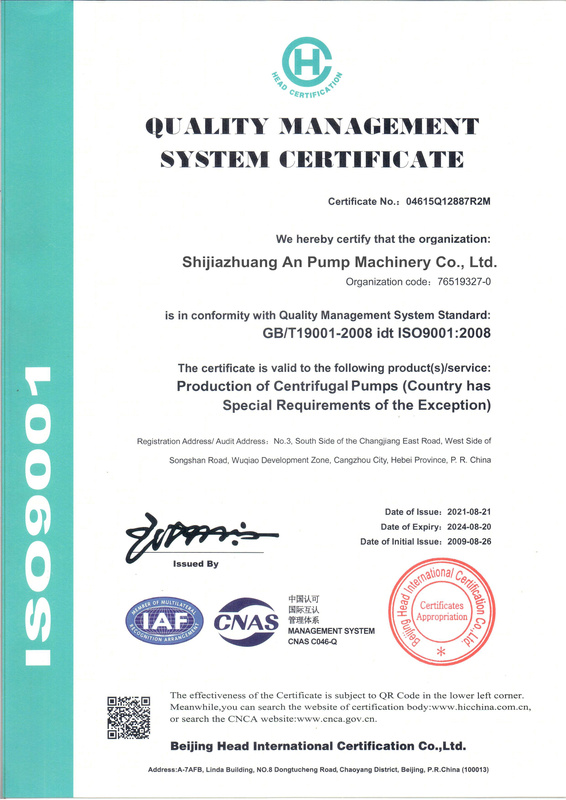
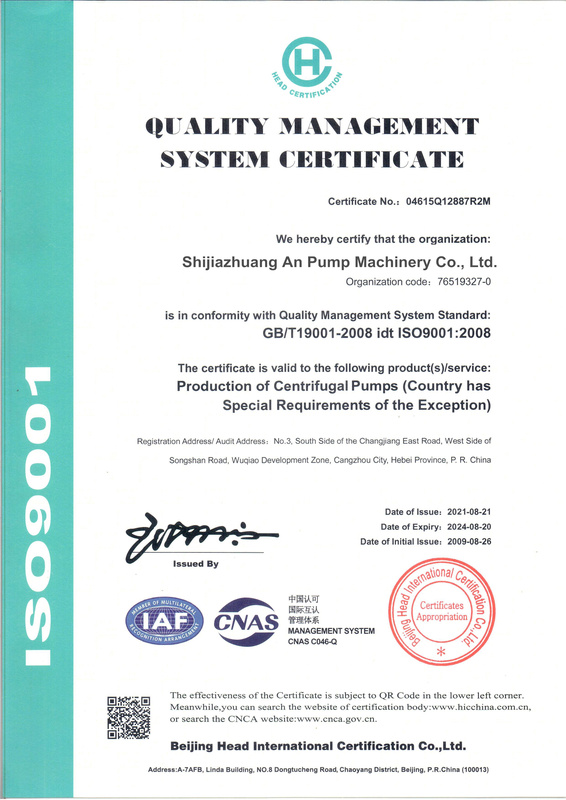
ISO 9001:2015 Quality Management System
-
CE Marking European Conformity
-
ISO 14001 Environmental Management
-
NFPA 20 Compliant Fire Series (F Series)

Flow Range
440–31,700 GPM
Head Range
Up to 525 ft
Efficiency
Up to 90% BEP
High-Flow Pumping Challenges — How Split Case Pumps Solve Them
A horizontal split case pump is a centrifugal pump whose casing splits along a horizontal plane, giving maintenance crews easy, direct access to the impeller, wear rings, and bearings without disconnecting system piping. Its double-suction impeller draws water from both sides simultaneously, balancing axial thrust and enabling high flow rates that single-suction designs struggle to sustain.
Commercial HVAC Systems
Vertical split case pump designs are not new to the water industry, but they are often misunderstood. Facility managers operating large commercial heating, ventilation, and air conditioning (HVAC) systems stress pumping equipment to move acutely high volumes of chilled or condenser water through high-density building circulations while remaining within operating budgets. A campus chilled water pumping station must find a pump that functions at all flow rates with the same sureness and efficiency, rather than a high flow water pumper that offers little advantage at lower flows. Because of their double suction feature, split case horizontal pumps maintain consistent performance over a broad range of flow rates by significantly decreasing the radial forces exerted on the impeller, as well as the hydraulic induction of the impeller in the flow path.
Fire Protection Applications
Fire protection presents different pressure. NFPA 20 mandates specific pump performance curves, and the fire pump must start reliably after months of standby and immediately reach rated flow. Horizontal split case fire pumps meet these requirements with heavy-duty construction, anti-friction bearings rated for extended dormant periods, and driver setups that include both electric motor and diesel engine options. The axially split casing allows fire marshals and insurance inspectors to verify internal components without a full system teardown.
Utilities & Manufacturing Mills
Water utilities, power plants, and manufacturing mills operate continuously for thousands of hours each year, and require ease of maintenance to break down as seldomly as possible. With split case pumps, maintenance teams remove the entire top half of the pump’s casing, lift out the spindle and impeller assembly, swap out the expensive wear parts, and put it all back together – with the suction and discharge flange intact. That means cutbacks in the time spent downtime for repairs, and increased longevity of equipment investments.
The Universal Design Advantage
Across all of these applications, the common thread that makes the horizontal split case design preferable, and in some instances unavoidable, stems from the design’s provision for rapid, short turn-around maintenance. In those areas where end suction centrifugal equipment rapidly hits its performance ceiling, horizontal split case pumps can continue to operate efficiently and effectively.
BBP Horizontal Split Case Pump Series — Models & Selection Guide
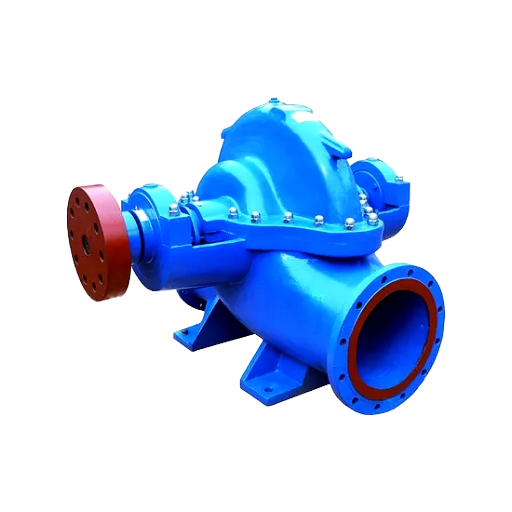
BBP manufactures the QS series horizontal split case pump — a single-stage, double-volute, axially split centrifugal pump with double-suction impeller design. With capacities reaching 14,000 m³/h and discharge sizes from 6 to 48 inches, the QS series covers HVAC, fire protection, municipal water, irrigation, power generation, and industrial process applications. Selecting the right configuration starts with your flow rate, system head, working pressure, and whether fire protection certification is needed.


QS Series — Standard
Application: HVAC, Water Supply & Irrigation
Flow: 440–3,500 GPM (100–800 m³/h)
Head: Up to 312 ft (95 m)
Power: 22–90 kW (29–120 HP)
Outlet: 6–10 inch
Materials: Cast Iron / SS304 / SS316 / Bronze
Seal: Mechanical seal or gland packing
Ideal for building HVAC loops, cooling towers, water distribution, irrigation

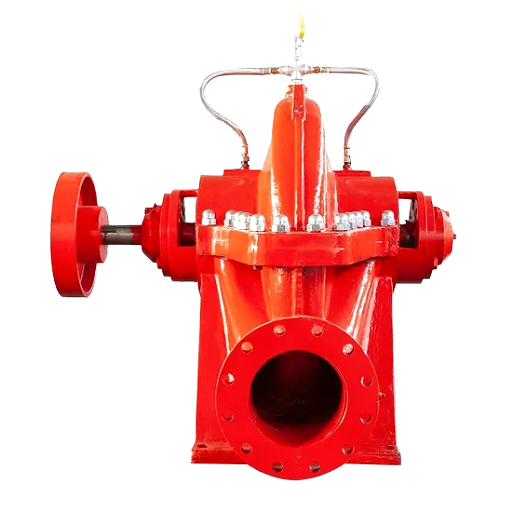
QS Series — High Capacity
Application: Municipal, Power Plant & Industrial
Flow: 1,500–31,700 GPM (360–7,200 m³/h)
Head: Up to 525 ft (160 m)
Power: 55–1,250 kW (75–1,676 HP)
Outlet: 12–48 inch
Materials: Cast Iron / SS316L / Duplex SS / SS904L / Bronze
Seal: Mechanical seal or gland packing
Built for municipal water, power plant cooling, desalination, boiler feed, chemical processing
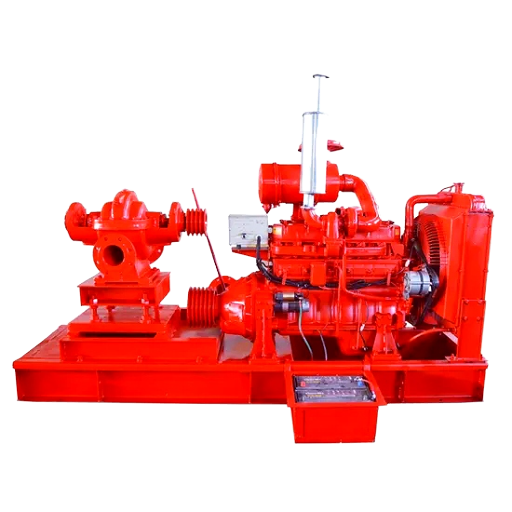

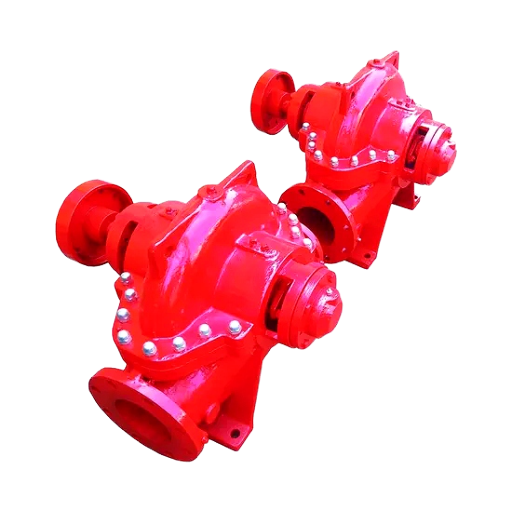

QS-F Series — Fire Protection
Application: NFPA 20 Compliant Fire Pumps
Flow: 500–5,000 GPM
Pressure: To 175 PSI
Feature: UL-ready design, NFPA 20 compliant
Drive: Electric motor & diesel engine
Coupling: Belt or direct
Engineered for sprinkler, standpipe, and hydrant systems
Recommended SeriesQS Standard
Flow Range440–3,500 GPM
Max Head312 ft
Key FeatureHigh BBP at variable loads
Recommended SeriesQS High Capacity
Flow Range1,500–31,700 GPM
Max Head525 ft
Key FeatureMultistage head capability
Recommended SeriesQS-F Fire
Flow Range500–5,000 GPM
Pressure175 PSI
Key FeatureNFPA 20 compliant, UL-ready
Recommended SeriesQS Standard / High Cap
Flow Range440–31,700 GPM
Max Head312–525 ft
Key FeatureContinuous-duty rated bearings
Recommended SeriesQS High Capacity
Flow Range1,500–31,700 GPM
Max Head525 ft
Key FeatureHigh-temp material options
Recommended SeriesQS High Capacity
Flow Range1,500–31,700 GPM
Max Head525 ft
Key FeatureStainless / duplex wetted parts
| Model | Capacity (m³/h) | Head (m) | Speed (rpm) | Power (kW) | Efficiency (%) | NPSHr (m) |
|---|---|---|---|---|---|---|
| TQSO-16 | 100–230 | 59–95 | 2,960 | 30–90 | 74–79 | 5 |
| QS-42 | 130–360 | 14–42 | 1,480 | 22–55 | 79–84 | 3–4.25 |
| QS-422 | 252–720 | 15–45 | 1,480 | 22–110 | 83–87 | 3.5–5 |
| QS-323 | 360–1,080 | 15–32 | 1,480 | 30–132 | 85–88 | 3.5–5 |
| QS-325 | 540–1,404 | 14–32 | 1,480 | 37–160 | 86–90 | 4–5.5 |
| QS-22 | 720–1,620 | 12–22 | 980 | 37–132 | 86–89 | 4–5 |
| QS-25 | 1,260–2,880 | 10–25 | 740 | 55–280 | 84–88 | 4–6 |
| QSO-16 | 1,980–4,680 | 7–16 | 590 | 75–315 | 82–86 | 4.5–6.5 |
| QS-70 | 3,600–7,200 | 44–70 | 590 | 710–1,250 | 85–89 | 5–8 |
Engineering Note
Double-suction impeller design balances hydraulic forces on both sides of the impeller, reducing bearing load by up to 50% compared to single-suction designs. Water enters the impeller eye from both sides simultaneously, which cancels axial thrust forces that would otherwise push the shaft rotation off-center toward the suction end. This reliability advantage translates to extended bearing life — typically 40,000+ hours between replacements — and lower vibration levels during operation. For engineers sizing pumps in the 1,000+ GPM range, the double suction split case pump consistently offers better NPSHr margins, meaning fewer cavitation problems under identical system conditions.
Horizontal Split Case Pump vs End Suction Pump — Performance Data
Choosing between a horizontal split case centrifugal pump and an end suction pump depends primarily upon flow rate, efficiency at the operating point, and lifetime costs. Our comparison below uses accepted industry benchmarks to help make the decision easier.
| Parameter | Split Case Pump | End Suction Pump | Source |
|---|---|---|---|
| Flow Range | 440–31,700 GPM | 50–5,000 GPM | QS Series specs |
| BEP Efficiency | 68–90% | 70–85% | Industry benchmark |
| NPSHr | Lower (double-suction) | Higher (single-suction) | Engineering principle |
| Axial Thrust | Self-balancing | Requires thrust bearing | Design characteristic |
| Maintenance Access | Open casing without disturbing piping | Must disconnect piping | Industry practice |
| Floor Space | Larger footprint | More compact | General |
| Initial Cost | Higher | Lower | Market data |
| Lifecycle Cost | Typically lower (efficiency + bearing life) | Typically higher (energy + maintenance) | NREL LCC framework |
Maximum Flow Capacity (GPM)
In-Depth Engineering Analysis
Impeller Geometry and Thrust Management
The primary contributor to split case pump efficiency at high volumetric flows comes from the impeller design. The geometry allows water to enter the impeller twice, rather than once, and directionally guides the water in a twin lateral flow pattern rather than a single mono-directional entry. What this does on a practical level is prevent the water from exerting an unwanted thrust on the pump shaft – impeller balance takes care of it for you, by combining the directional emissions of the dual impeller to prevent excess vibration or shaft misalignment. The result is a vertical split case pump design that produces lower costs over its lifetime via less on-going maintenance or wastage of energy.
Lifecycle Efficiency at High Volumetric Flows
At flow rates above 1,000 GPM, the efficiency gap widens further. An end suction pump operating at 3,000 GPM may already be running near or beyond its best efficiency point, where hydraulic losses climb sharply. A properly sized split case pump handling that volume still operates within its optimal efficiency band, delivering the same volume with measurably less input power. Over a 20-year pump lifecycle running 6,000+ hours annually, that efficiency difference compounds into substantial energy savings — which is why lifecycle cost analyses consistently favor the split case design for continuous high-flow duty.
Application Window and Cost Considerations
End suction pumps function better at a narrower flow window, where their compact enclosure and relatively inexpensive initial costs replace the efficiency advantages that horizontal split case pumps establish at large volumetric flow rates. The decision range for most installations falls between 500-1,000 GPM. Above 1,000 GPM, the efficiency advantages of split case pumps mean lower electricity and maintenance costs.
Application Results: HVAC, Fire Protection & Municipal Water

HVAC Chilled Water
Campus chilled water circulations and district cooling strategies rely on consistent high-volume flow at constant pressures. BBP horizontal split case pumps are engineered for delivering those high flow rates with minimal fluctuations – from elevators of 800 GPM through the Central Business Districts of metropolitan areas pushing over 10,000 GPM via miles of underground piping networks.
Double-suction design keeps vibration levels low, which matters in occupied buildings where pump noise travels through structural connections. High BBP efficiency at design flow means lower energy consumption across cooling seasons that run 4,000–6,000 hours annually in warm climates.

Fire Protection (NFPA 20)
BBP’s F Series horizontal split case fire pumps serve sprinkler, standpipe, and hydrant systems in commercial, industrial, and high-rise buildings. These pumps deliver up to 175 PSI working pressure with both electric motor and diesel engine drive options.
Every F Series fire pump is engineered to NFPA 20 requirements: performance curves verified at 150% of rated flow, automatic transfer switches for redundant power, and controller integration for alarm and supervisory circuits. An axially split casing enables annual fire pump inspections without disturbing system piping — a practical requirement for occupied facilities.

Municipal & Industrial
Municipal water supplies, agricultural irrigation networks, power station condenser cooling loops, electricity generation facilities, desalination plants, and steel mill boiler feeds demand high-capacity, nonstop operation. BBP produces horizontal split case pumps with oversized shafts, heavy-duty bearings, and corrosion-resistant material options — including SS316L, duplex stainless, SS904L, and bronze — that handle everything from clean municipal water to aggressive chemical fluids and seawater.
Municipal water utilities value the split case design’s maintenance accessibility — rotating assemblies come out through the top half of the casing while the pump body stays bolted to the foundation. That reduces planned maintenance windows from days to hours. BBP’s DQS diesel-driven models provide the same hydraulic performance with diesel engine power for remote sites, emergency backup, and locations without reliable electrical infrastructure.
5–15%
Typical lifecycle cost reduction vs. end suction alternatives in continuous-duty applications above 1,000 GPM
Based on NREL Pump Life Cycle Cost analysis framework
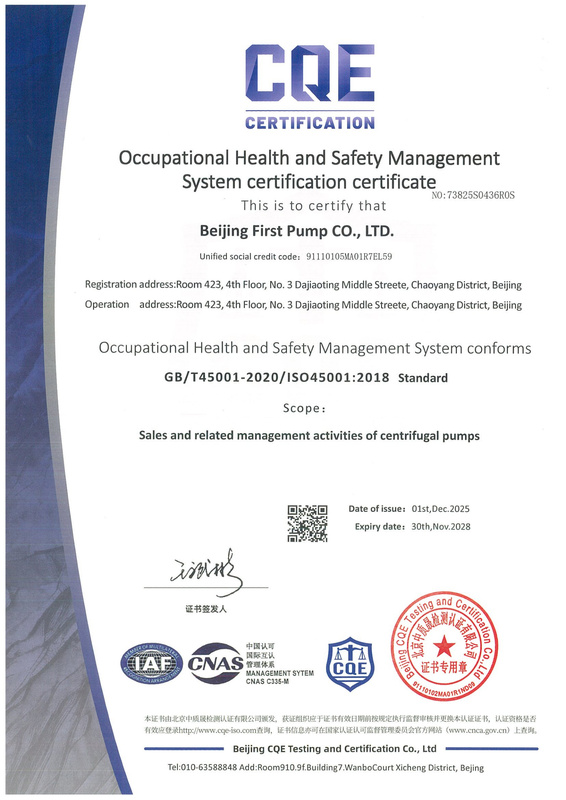
Certifications & Standards — ISO 9001, NFPA 20, CE
Every BBP pump moves through casting, heat treatment, precision machining, assembly, protective coating, and performance testing under one roof. This end-to-end control eliminates supply chain variability and guarantees traceability from raw material to delivered unit.
Casting
Heat Treatment
Machining
Assembly
Coating
Testing
Raw Material Casting Control
Our quality management system tracks every critical dimension and material certification right from the foundational casting stage. Internal control ensures that raw materials meet stringent structural integrity requirements before proceeding down the line.
Precision Heat Treatment
Eliminating supply chain variability allows us to perform rigorous heat treatments internally. This process guarantees the mechanical properties and durability of the pump casing and impellers under high-stress conditions.

CNC Precision Machining
State-of-the-art CNC machining centers shape components to exact tolerances. This step is critical for ensuring perfect shaft alignment, impeller balancing, and leak-free casing fits for high volumetric flows.

Expert Assembly
Every pump is assembled by trained technicians who verify clearances and mechanical seal integrity. Traceability is guaranteed as component serial numbers are logged into our central quality system.

Protective Industrial Coating
Specialized industrial coatings are applied to both internal wetted parts and exterior casings. This protects against corrosive fluids and environmental wear, drastically extending the lifecycle of the pump.

Performance & Compliance
Before leaving the facility, pumps undergo rigorous hydraulic and hydrostatic testing. We guarantee the unit meets specified operational points and complies with international standards like NFPA 20 and ISO 9001.
Global Documentation Compliance
Our quality management system tracks every critical dimension, material certification, and test result throughout production. Third-party test reports and material certificates are available on request for project documentation requirements. We supply pumps to clients across 30+ countries, and our engineering team understands the documentation standards that different markets and industries require — from ASME compliance in North America to CE marking for European installations.
Advanced Material Upgrades
With materials upgrade features such as 316 stainless, duplex stainless or specialty alloys wetted to the pumping liquid, BBP can meet the needs of corrosive and high temperature fluids for many industrial applications. Material selection is part of our engineering review process when sizing a pump.
×
![Zoomed Certificate]()
Procurement Guide: Pricing, Lead Time & After-Sales Support
Factors That Affect Price
Horizontal split case pump pricing varies based on several engineering and commercial factors: the pump model and series selected, material grade (cast iron, SS304, SS316, SS316L, duplex stainless, SS904L), motor power rating, drive type (electric vs. diesel), certification level required, and the scope of any custom engineering. Because these variables interact — a stainless steel F Series fire pump with diesel drive costs substantially more than a cast iron S Series HVAC pump with electric motor — we provide project-specific quotations rather than list prices.
Lead Time & Warranty
Standard QS models ship within 17 days for orders of 1–10 sets. Larger orders and custom-engineered pumps — requesting exotic materials such as SS904L or duplex stainless, irregular driver setups, or unique performance curves — proceed through a defined project schedule from order confirmation to production, testing, and delivery. All BBP horizontal split case pumps carry a 3-year warranty covering manufacturing defects in materials and workmanship. Contact BBP’s project team for a timeline tailored to your specifications.
After-Sales Support
BBP’s support infrastructure includes a 24/7 technical hotline, remote diagnostics capability, on-site installation guidance, and maintenance training for your operations team. We maintain an extensive spare parts inventory for all current and recent-production pump series, enabling quick dispatch for bearing replacements, mechanical seals, wear rings, and impeller assemblies. Our service engineers provide scheduled maintenance programs tailored to your operating hours and application severity.
Procurement Tip
When comparing pump quotes, request lifecycle cost projections — not just unit price. A pump with 5% higher BEP efficiency can offset its premium within 18–24 months of continuous operation. Ask each supplier for a total cost of ownership estimate that includes energy consumption at your actual operating point, projected maintenance intervals, and spare parts pricing over a 10-year horizon.
Receive a specific project quotation for this equipment with complete technical specifications and lifecycle cost analysis.
Request a QuoteFAQ — Horizontal Split Case Pump
A horizontal split case pump is a centrifugal pump with a casing that is split along the horizontal axis, into an upper and lower half. Many horizontal split case pumps incorporate a double-suction impeller that draws liquid in from both sides, cancelling out a thrust due to hydraulic imbalance and allowing for large volumes at high efficiencies.
The primary differences are flow capacity, efficiency at high volumes, and maintenance access. Split case pumps handle 440–31,700 GPM with BEP efficiency between 80 and 89%, while end suction pumps cover 50–5,000 GPM at 70–85% efficiency. Split case designs allow internal maintenance without disconnecting system piping; end suction pumps require piping removal for impeller access. End suction pumps have a smaller footprint and lower upfront cost, making them practical for lower-flow installations.
Efficiency and accessibility are the most significant benefits of this pump. Axial thrust is minimized by the hydraulic forces in a double-suction impeller and consequently bearing fatigue and vibration are delayed. From the standpoint of servicing the wear parts—impeller, wear rings, bearings, and seals—the pump’s top half can be lifted off without disturbing the suction or discharge connections and the pump can be examined and serviced.
The double-suction impeller is a common feature in most horizontal split case pumps, and the standard design for this category. In some vertical split case layouts and some specialty types, single-suction impellers are also used. When designers use the phrase “split case pump,” they mean a horizontal, double-suction impeller, which is the pump that attributes the long-lasting thrust balance and high efficiencies to the category.
A well-maintained horizontal split case pump delivers 20–30 years of service life. Bearing replacement intervals average around 40,000 hours of operation, and impeller wear rings are replaced as erosion dictates — usually every 5–8 years in clean water applications. Aggressive fluids, abrasive particles, or cavitation from improper system design shorten these intervals. Regular vibration monitoring and alignment checks help identify developing problems — such as seal leak or bearing wear — before they cause unplanned downtime.
BBP’s manufacturing facility holds ISO 9001:2015 quality management and ISO 14001 environmental management certifications. Our products carry CE marking for European market compliance. Our F Series fire pump line is designed to NFPA 20 standards with UL-ready construction. Third-party test reports and material certifications are available on request for any BBP pump order.
Begin with the four variables that most influence a pump selection: flow rate (GPM), total dynamic head (feet or PSI), specific application category (HVAC, industrial, municipal, fire security), and any required certifications. Reference the table above to arrive at a series— S, XS, or F—then consult with our technical engineering staff using your system curve data. We offer a pump selection tool and engineering services that document the hydraulic performance, net positive বাধা suction head margin, motor power requirements, and maximum efficiency point. Our online pump selector can help identify the best match for less challenging applications.