Get in Touch with BBP

Sewage Pumps
Sewage Pumps — ISO-Certified OEM Manufacturer for Municipal & Industrial Wastewater
End-to-end vertical integration: in-house casting, machining, assembly, and ISO 9906 hydraulic testing. One OEM partner from spec sheet through commissioning, with a four-series sewage pump lineup that covers municipal collection, industrial wastewater treatment, lift stations, and high-solids transfer.
- Quality System: ISO 9001:2015 + CE + EAC
- OEM Lead Time: Stock < 2 wk · Custom 8 – 12 wk
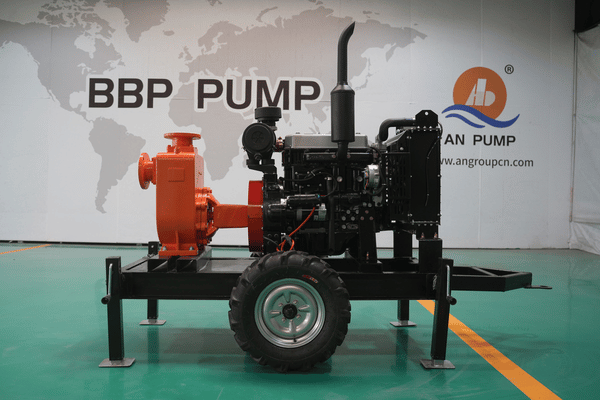
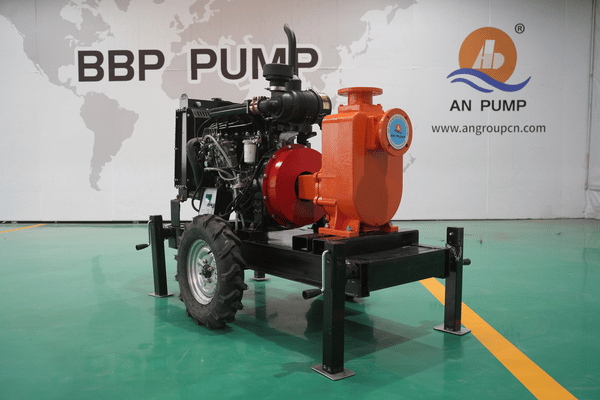
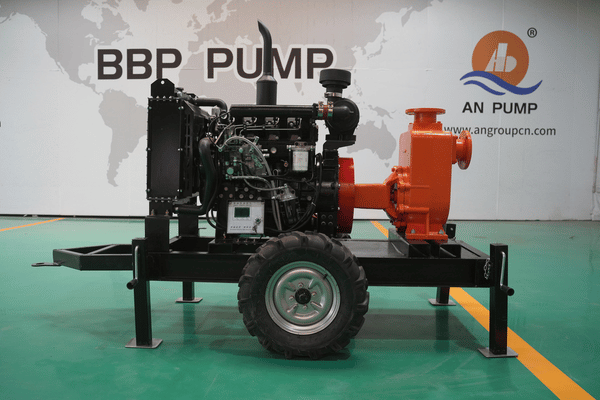
4 Sewage Pump Series
Submersible / Grinder Self-Priming / Lift Station
Flow Range
10 – 5,000 m³/h
Head Range
5 – 80 m
Solid Passage
30 / 50 / 76 mm options
When Stock Sewage Pumps Fail Under Your Site Conditions — and How a Custom-Engineered System Solves It
Industrial sewage pumps fail early when site conditions differ from the catalog assumptions a stock unit was engineered to serve. Specification sheets get misread, vendor performance numbers get accepted on brand alone, and pumps rated for “general municipal sewage” arrive at a chloride-contaminated industrial wastewater intake. Outcome: a pump that should run 12 to 18 years gets spares inside 5 to 7, and maintenance expense dwarfs the original procurement cost savings.
01
Specification Mismatch
Stock units rated for 30 mm solid passage meet with a fibrous-rag intake and clog weekly. Cast iron casing finds a chloride-rich industrial discharge and pits within 18 months.
02
Hidden Total Cost
Acquisition is 5 – 15 % of 10-year TCO. Energy is 60 – 80 %. A 20 % cheaper pump with a 5 mm wear margin can cost 30 % more during its operating lifetime.
03
Replacement Lead Time
An emergency replacement order arrives within days but freight, expedited engineering, and a 3 – 7 day plant shutdown often cost five times the original pump purchase price.
BBP’s answer is to engineer the pump to the wastewater profile, not the other way around. Our submersible sewage pump and sewage grinder pump series are built around four design principles that drive long service life: matched hydraulic-test grade per ISO 9906, copper-wound motors per IEC 60034 reference, double mechanical seals with material selected for the actual fluid, and a casting-to-test workflow held under one ISO 9001 quality system.
A sewage pump in the BBP sense is the integrated system transporting raw or treated sewage from a wet well, sump, or collection point through a discharge line to a treatment plant or sewer main. Category options include submersible wastewater pumps, self-priming, grinder, and packaged lift-station designs, each appropriate to a different site geometry and waste composition. Our four-series lineup below relates each to the application it best serves, with the waste chemistry and solid-passage requirement dictating the choice.
BBP Sewage Pump Lineup — 4 Series for Every Wastewater Profile
Four series address every typical wastewater application we encounter, regardless of municipal, industrial, or other infrastructure project. Each series provides an OEM customization pathway, so flange size, discharge orientation, motor brand, and impeller material are interchangeable with current site piping without requiring modifications. Follow the links to the dedicated detail and datasheet page.
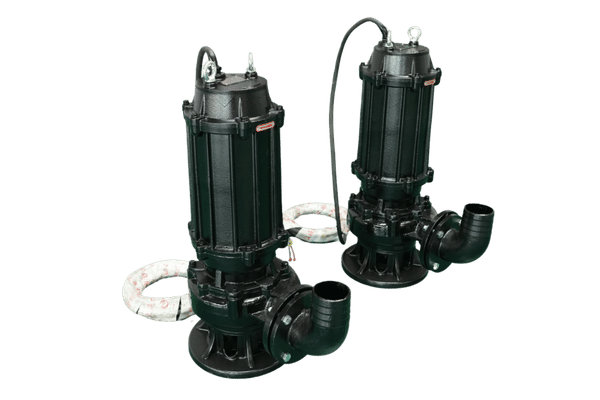
ASW Series — Submersible Sewage Pump
Flow rate: 30 – 5,000 m³/h
Head: 5 – 60 m
Solid passage: 50 / 76 mm
Power: 1.5 – 200 kW
Discharge size: DN50 – DN500
Head: 5 – 60 m
Solid passage: 50 / 76 mm
Power: 1.5 – 200 kW
Discharge size: DN50 – DN500
Channel-impeller and semi-vortex impeller variants for municipal collection, lift stations, and industrial wastewater treatment plants. These pumps are designed around an IP68 motor with thermal protection, a double mechanical seal in an oil-filled chamber, and an optional ATEX configuration.
→ See The Submersible Sewage Pump
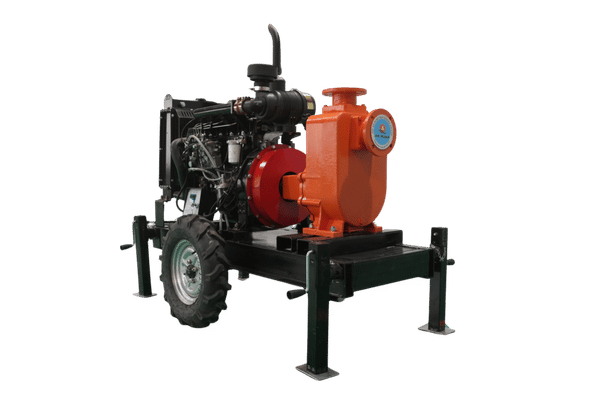
Grinder Pump Series — Cutter / Macerator Sewage Pump
Flow: 10 – 80 m³/h
Head: 10 – 50 m
Solid handling: shred to ≤ 6 mm
Power: 1.1 – 22 kW
Discharge: DN40 – DN100
Head: 10 – 50 m
Solid handling: shred to ≤ 6 mm
Power: 1.1 – 22 kW
Discharge: DN40 – DN100
Tungsten-carbide cutter ring upstream of a high-pressure impeller, designed for fibrous waste, “flushable” wipes, and force-main applications where a non-clog impeller alone would still bind. Single-phase and three-phase motor options.
→ See The Sewage Grinder Pump
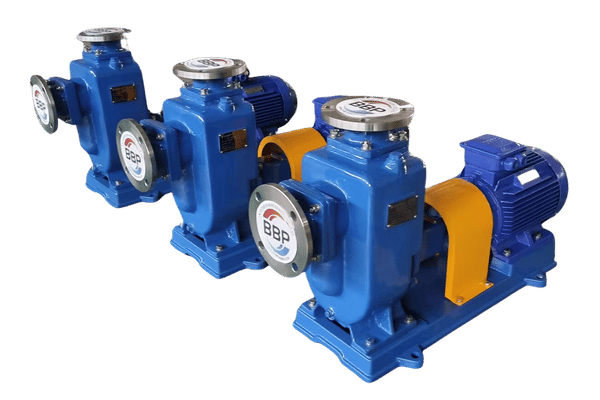
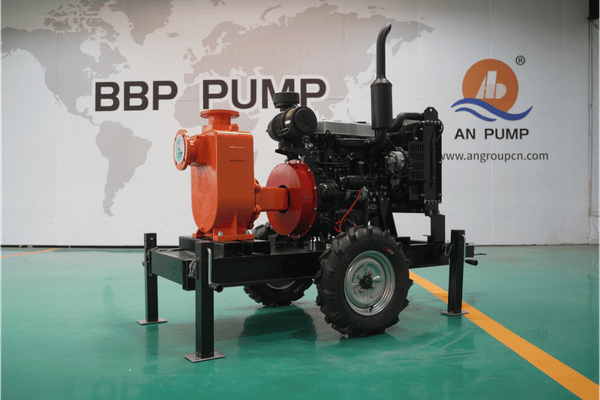
AZX Series — Self-Priming Sewage Pump
Flow : 25 – 700 m³/h
Head : 8 – 45 m
Passing solids : 30 / 50 mm
Power : 2.2 – 75 kW
Suction lift : 7 m
Head : 8 – 45 m
Passing solids : 30 / 50 mm
Power : 2.2 – 75 kW
Suction lift : 7 m
Above-ground installation that re-primes after each duty cycle, suited to lift stations where a wet pit is impractical or maintenance access is the priority. HT250 cast iron casing with optional 304 stainless steel impeller.
→ See The Self-Priming Sewage Pump
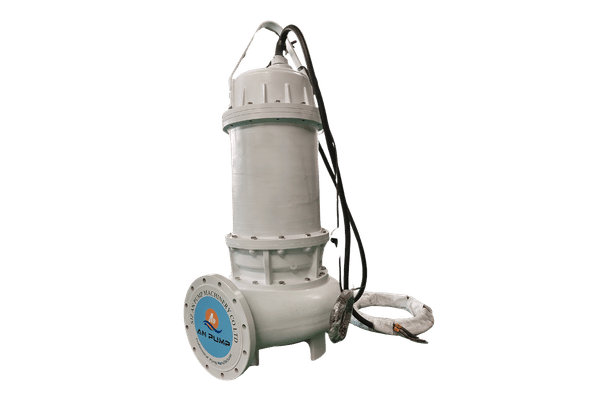
Packaged Lift Station Series
Flow: 10 – 1,500 m³/h
Head: 5 – 40 m
Tank volume: 0.5 – 30 m³
Configuration: Simplex / Duplex / Triplex
Control: PLC + level float + alarm
Head: 5 – 40 m
Tank volume: 0.5 – 30 m³
Configuration: Simplex / Duplex / Triplex
Control: PLC + level float + alarm
Pre-engineered package: GRP or HDPE tank, two BBP submersible pumps in alternation, control panel with high-level alarm float switch, hatch with safety grating. These packaged stations are designed as drop-in replacements for failed concrete wet wells.
→ See The Sewer Lift Station
Lineup Specification Summary
| Series | Q (m³/h) | H (m) | Solid Passage | Power Range | Discharge | Body Material |
|---|---|---|---|---|---|---|
| ASW Submersible | 30 – 5,000 | 5 – 60 | 50 / 76 mm | 1.5 – 200 kW (2 – 270 hp) | DN50 – DN500 | HT250 / 304 SS |
| Grinder / Cutter | 10 – 80 | 10 – 50 | Shred to 6 mm | 1.1 – 22 kW (1.5 – 30 hp) | DN40 – DN100 | HT250 + tungsten cutter |
| AZX Self-Priming | 25 – 700 | 8 – 45 | 30 / 50 mm | 2.2 – 75 kW (3 – 100 hp) | DN50 – DN200 | HT250 / 304 SS |
| Lift Station Package | 10 – 1,500 | 5 – 40 | 50 mm typical | 2.2 – 90 kW (3 – 120 hp) per pump | DN80 – DN300 | GRP/HDPE tank + ASW pumps |
Pump Selection Matrix — Match Your Sewage Profile to the Right Series
Choosing the wrong series is the single largest driver of premature pump replacement we see. Five wastewater scenarios drive the selection matrix below; together they account for roughly 95 % of our quoted projects across municipal sewage treatment plants and industrial sites. Each row gives the recommended series, a target hydraulic window, and the casing material that survives the chemistry.
| Scenario | Recommended Series | Target Q × H | Solid Passage Needed | Body Material | Why |
|---|---|---|---|---|---|
| Municipal Collection (residential + light commercial) | ASW Submersible (semi-vortex) | 50 – 600 m³/h × 8 – 25 m | 50 mm | HT250 cast iron, epoxy-coated | Neutral pH, mixed solids; pH 6.5 – 8 keeps cast iron at 0.1 mm/yr corrosion. |
| Industrial WWTP (chloride-rich, mild acidic) | ASW Submersible (channel impeller) | 200 – 2,500 m³/h × 12 – 40 m | 76 mm | 304 stainless steel | 304 SS pitting resistance (PRE 30 – 35) holds for 12 – 18 yr in chloride exposure where cast iron lasts 4 – 6. |
| Lift Station (deep wet well, alternation duty) | Lift Station Package (Duplex ASW) | 20 – 800 m³/h × 6 – 30 m | 50 mm | HT250 in tank with GRP shell | Pre-engineered package eliminates concrete wet-well construction; alternation halves seal load per pump. |
| Commercial Building (basement/parking, fibrous waste) | Grinder Pump (cutter + high-head impeller) | 5 – 25 m³/h × 15 – 45 m | Shred to 6 mm | HT250 + tungsten carbide cutter | Wipes and rags collapse non-clog impellers; cutter shreds before discharge to a force main. |
| Sludge Recirculation (WWTP secondary clarifier) | ASW (vortex impeller, low-NPSH) | 500 – 5,000 m³/h × 5 – 12 m | 76 mm | HT250 with 27 % Cr wear ring | Vortex impeller minimises blade contact for high-solids return; 27 % Cr ring holds at 0.02 mm/yr wear. |
Two judgement calls dominate this matrix. Material selection is set by the fluid chemistry plus the surrounding atmosphere — coastal salt air alone justifies an upgrade from cast iron to 304 SS even when the pumped fluid is benign. Solid-passage sizing is driven by the worst-case foreign matter, not the average — sizing for the average is what produces the weekly clog calls a procurement team only hears about after commissioning.
“We have run cast-iron submersibles in straight municipal sewage for 14 years and watched the same model fail in 18 months at an industrial wastewater intake. On paper the fluid was the same — a single tenant’s chloride spike changed the corrosion math entirely. After that project we standardised on a fluid-chemistry questionnaire before every sewage pump quote.”
BBP vs Stock Vendor Catalogs — Where In-House Foundry Wins
Two quotations for what looks like the same pump can hide very different ten-year outcomes. Differences sit inside the casing — winding material, seal face, impeller alloy, motor efficiency class — and they decide whether a pump runs 8 years or 18. Use the table below as the audit grid we walk every customer through before they sign a PI.
| Audit Point | Generic Catalog OEM | Typical China Export | EU/US Tier-1 | BBP |
|---|---|---|---|---|
| Motor Winding | Aluminium common | Mixed (verify per order) | Copper (SECW) standard | Copper (SECW) standard |
| Mechanical Seal | Single seal common | Single or double | Double, TC/TC | Double, TC/TC default · SiC/SiC option |
| Casing Material | Cast iron only | Cast iron, occasional SS | Cast iron / SS304 / SS316 / Duplex | HT250 / SS304 / SS316 / 27 % Cr per spec |
| Hydraulic Test Grade | None or vendor-internal | ISO 9906 Grade 3 typical | ISO 9906 Grade 2B | ISO 9906 Grade 2B per shipment |
| OEM Customisation | Stock SKU only | Limited (flange + label) | Limited (long lead, high MOQ) | Casing geometry, impeller alloy, control panel |
| Spare Parts Inventory | Distributor-dependent | Per order | Regional warehouse | In-house casting + critical-spare buffer |
| Aftersales Engineering | Phone only | Email only | Engineer on call (US/EU hours) | 24/7 hotline + remote diagnostics + on-site option |
Cross-Vendor Terminology Cheat Sheet
Procurement engineers asking “what’s the BBP equivalent of a Grundfos SE/SL Range 48 or a Tsurumi B Series” lose hours to vendor-specific naming. Our reference matrix below maps each application duty to the corresponding vendor series code, so a spec sheet from any source can find its BBP counterpart in seconds.
| Application Need | Grundfos | Tsurumi | Goulds (Xylem) | KSB | BBP |
|---|---|---|---|---|---|
| Submersible sewage (general municipal, 1.5 – 15 kW) | SE/SL Range 48 | B Series · U Series | 3886 RH/RL | Amarex N | ASW Standard |
| Heavy-duty submersible sewage (large WWTP, 12 – 200 kW) | S Range 62 / 66 / 70 | BK Series | 3996 | Amarex KRT | ASW XL |
| Grinder pump (force main, fibrous waste) | SEG | MG Series | 3886 GR | Amarex NS Cutter | BBP Grinder |
| Self-priming sewage (above-ground access) | (not in catalog) | (limited) | NPE / PVI | (not in catalog) | AZX Self-Priming |
| Packaged lift station (simplex/duplex/triplex) | EONE / DP package | UZ + hatch | 4MTX | (custom build) | BBP Lift Station |
| Sludge recirculation (low-head, high-flow) | SRG | (limited) | NM3171 | (custom build) | BBP Recirc |
Disclaimer: Naming conventions and exact spec ranges vary by vendor, model year, and revision. Use this matrix for first-pass equivalence, not flange-level interchange. Cross-verify with the OEM datasheet for your exact application before specifying a replacement, and ask BBP for a flange-and-discharge match document on the BBP equivalent.
Customer Outcomes — Municipal & Industrial Deployments
Each deployment below is a representative project from our 2024 – 2025 export window into municipal and industrial sewage treatment plants. Numbers in each card are customer-reported flow, head, and operating-window data; ROI is framed against the Hydraulic Institute TCO model rather than a single point estimate.
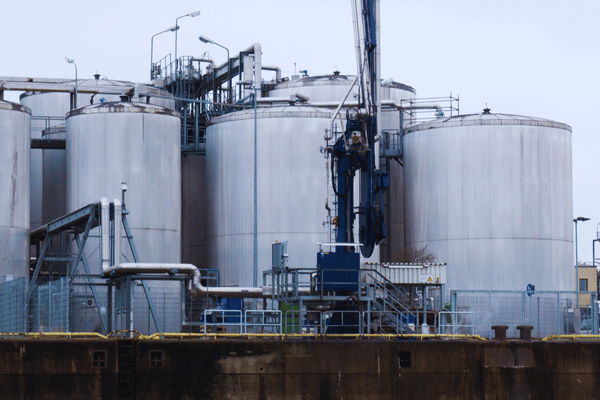
Municipal WWTP Retrofit — Southeast Asia
ASW Submersible × 6 (duplex alternation, 2 standby) · 850 m³/h × 22 m · IE3-equivalent motor · 304 SS impeller
After a third early-life motor burnout in 14 months, this site replaced six 8-year-old aluminium-wound competitor units. BBP delivered six ASW units with copper-wound motors and a 304 SS impeller against a chloride-rich industrial discharge feeding into the municipal stream. Operating energy fell measurably against the prior aluminium-wound baseline, with reported electricity savings tracking the IEC 60034-30-1 IE3-vs-IE1 efficiency delta over an 8,000-hour operating year.
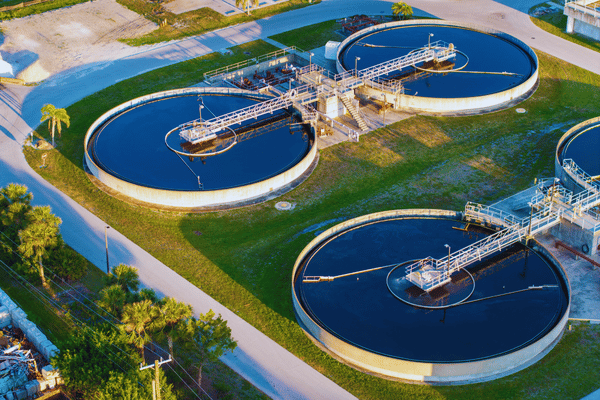
Industrial Lift Station — Middle East Petrochemical Site
Lift Station Package (Duplex ASW + GRP tank) · 320 m³/h × 18 m · Atmospheric chloride exposure · IP68 + ATEX-compatible motor
A failed concrete wet well was replaced with a BBP packaged GRP lift station running two ASW pumps in 60-minute alternation. The previous concrete structure had cracked at the inlet within seven years; the GRP tank is rated for the same atmospheric chloride exposure with no scheduled re-coating. Their procurement team chose the package over an in-place repair after engineering review estimated repair labour alone would exceed the package price.
SILVER · TCO ADVANTAGE
10-Year Total Cost of Ownership Logic
Industry benchmarks place pump acquisition at 5 – 15 % of 10-year TCO and energy at 60 – 80 %, with maintenance and failure absorbing the remainder. A premium-tier sewage pump with a copper-wound motor, double mechanical seal, and ISO 9906-tested hydraulics typically returns 5 – 20 % lower 10-year TCO than a budget-tier unit, even when the acquisition premium runs 30 – 60 %.
BBP positions the four sewage pump series in the upper-mid tier on acquisition cost, with the Tier-1 European reliability profile on motor, seal, and hydraulic specification. Exact savings vary with duty cycle, electricity rate, and pumped-fluid chemistry; we run a per-application TCO comparison against the customer’s incumbent pump on request.
Industries We Ship Into
Municipal WWTP
Industrial Wastewater
Building & Lift Stations
Mining & Slurry Adjacent
Marine & Coastal Drainage
Certifications & Compliance
Six external standards anchor every shipment leaving the BBP factory. Each one ties to a specific decision a procurement engineer or compliance auditor will make about the pump on site.
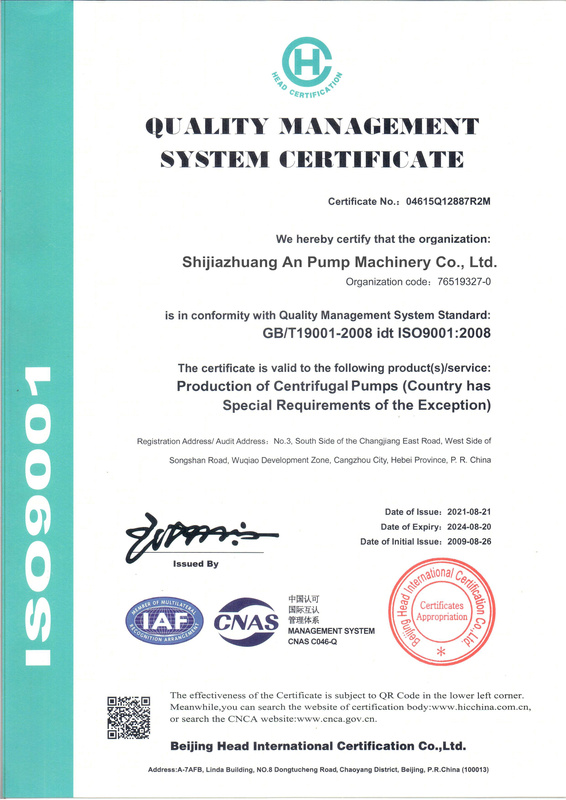
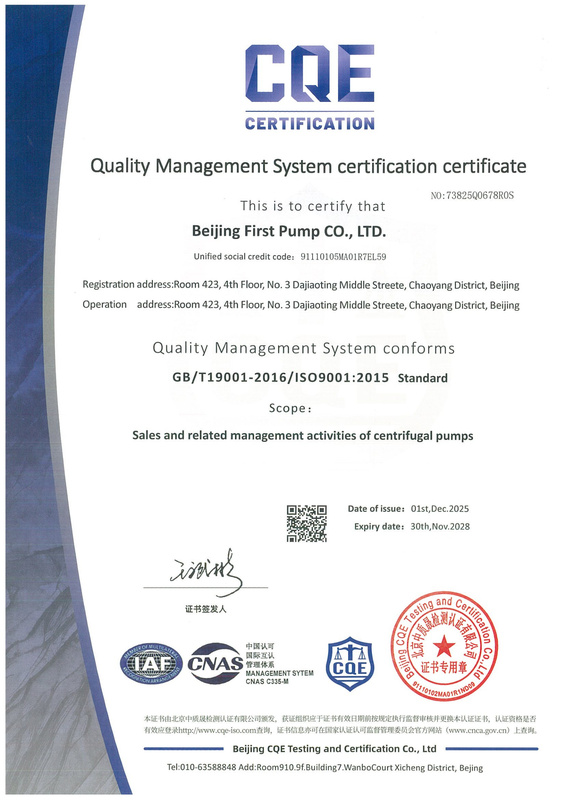
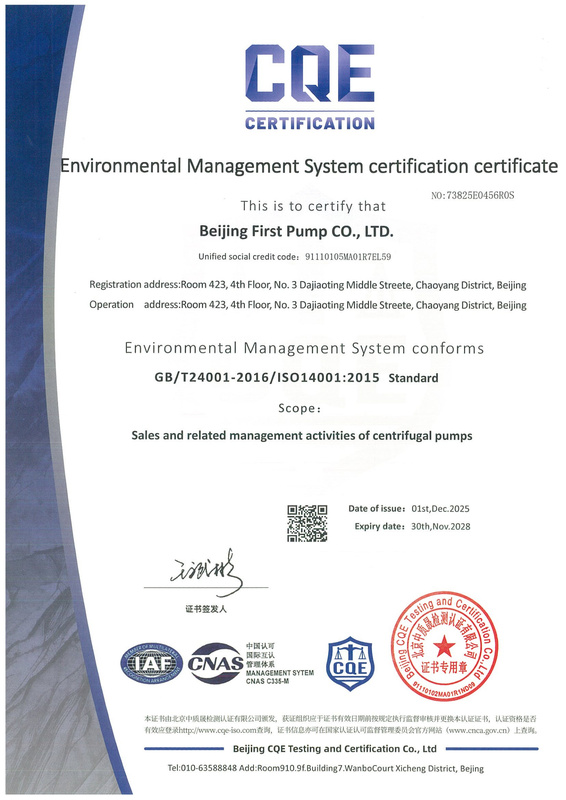
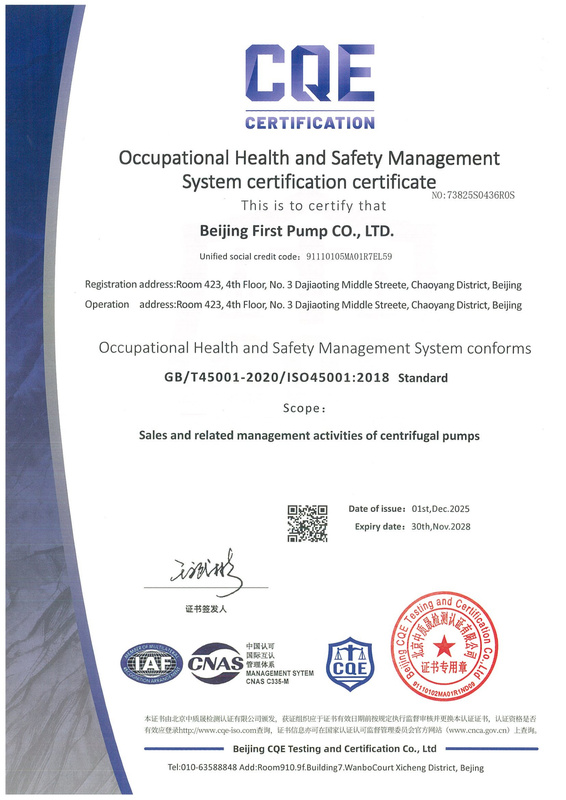
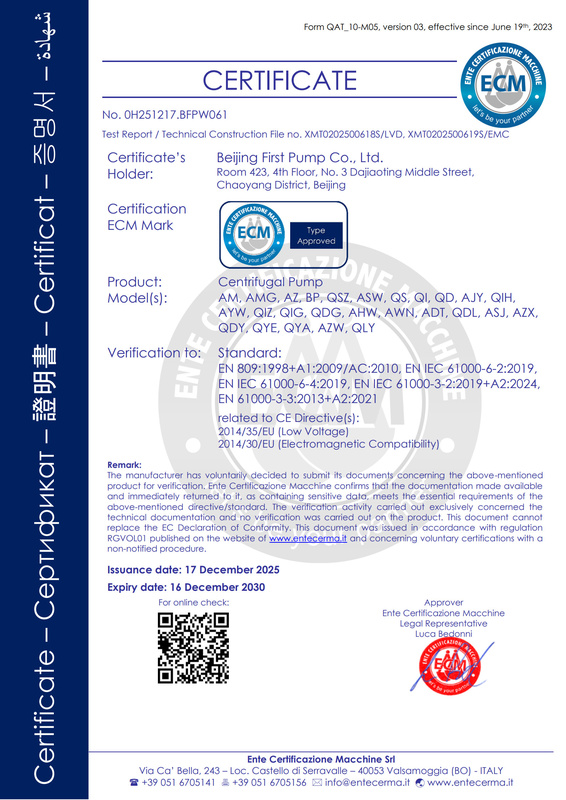
ISO 9001:2015
Quality management
CE
EU conformity
ISO 9906 Grade 2B
Hydraulic test
IEC 60034-30-1
Motor efficiency
IP68
Submersion sealing
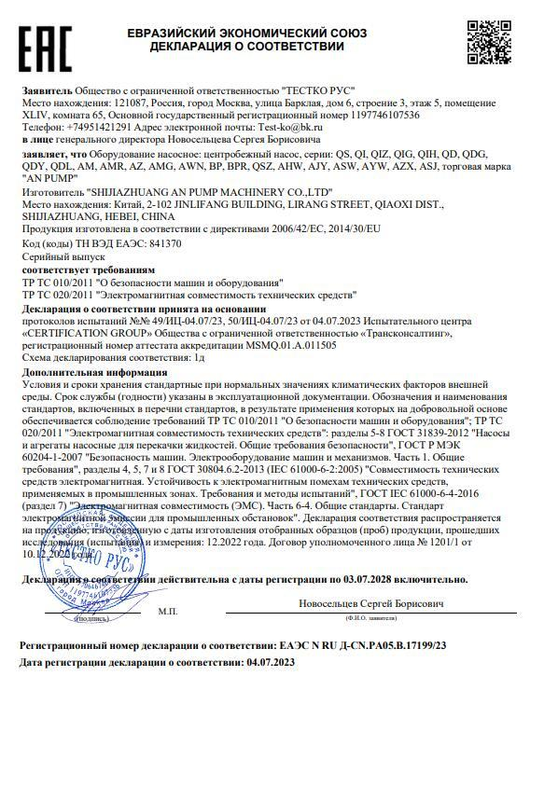
EAC
EAEU customs union
What Each Standard Decides For You
ISO 9001:2015 traces material certificates from foundry pour through final hydraulic test. CE covers the Pressure Equipment Directive and the Machinery Directive scope every EU buyer asks for. ISO 9906 Grade 2B is the bilateral-tolerance hydraulic acceptance test that gives you a measured Q-H curve, not a brochure curve.
IEC 60034-30-1 defines the IE1 / IE2 / IE3 motor efficiency classes; an IE3-class continuous-duty industrial motor delivers a measurable kWh saving against IE1 over an 8,000-hour operating year. IP68 is the IEC 60529 ingress-protection rating that confirms the motor housing tolerates continuous submersion. EAC is the customs-union mark for buyers shipping into Russia, Kazakhstan, Belarus, and adjacent markets.
Submersible-motor energy efficiency carries an industry caveat worth flagging: KSB and other Tier-1 manufacturers have publicly noted that EU Commission Regulation 2019/1781 explicitly excludes submersible motors from the binding IE3 mandate, given their intermittent duty profile and shared-bearing design. BBP’s submersible motors meet IE3-equivalent test results under separated-loss measurement; we publish wire-to-water efficiency on the spec sheet because that is the only number that actually predicts your electricity bill.
Procurement Guide — Pricing Tiers, Lead Time, MOQ, and OEM Customization
Procurement teams need a budget number before they can route an RFQ for approval. Most pump OEM websites give you “contact for pricing” and an empty form. The Tier Pricing Transparency table below is the actual USD FOB China range we quote into North American, EU, MENA, and Southeast Asia distributors during 2024 – 2025.
Tier Pricing Transparency — USD FOB China (2024 – 2025)
| Series | Basic Tier | Mid Tier | High-End Tier |
|---|---|---|---|
| ASW Submersible Sewage Pump | $400 – $1,200 | $1,200 – $3,500 | $3,500 – $12,000 |
| Grinder / Cutter Sewage Pump | $700 – $2,000 | $2,000 – $5,500 | $5,500 – $15,000 |
| AZX Self-Priming Sewage Pump | $600 – $1,800 | $1,800 – $4,500 | $4,500 – $12,000 |
| Packaged Lift Station (Duplex) | $3,000 – $8,000 | $8,000 – $20,000 | $20,000 – $60,000+ |
Lead Time Grid
| Order Type | Lead Time | Buffer | Notes |
|---|---|---|---|
| Stock SKU (standard ASW + standard motor) | < 2 weeks | Critical-spare buffer maintained | FOB Tianjin / Shanghai |
| Standard configuration (catalog spec) | 4 – 6 weeks | Foundry slot scheduled at PO | Includes ISO 9906 hydraulic test report |
| Custom OEM (casing geometry, alloy upgrade) | 8 – 12 weeks | Engineering review at order entry | Includes flange-match drawing + DFM review |
| Spare parts (impeller, seal, bearing) | 2 – 4 weeks | Buffered in-house | Air freight option for emergency |
OEM Process Timeline
1
RFQ + spec sheet
2
Engineering review
3
Quote + drawing
4
PI + deposit
5
Production
6
ISO 9906 test
7
FOB shipment
MOQ & Aftersales
Minimum order quantity is one unit on the standard ASW, AZX, and Grinder series; the packaged lift station carries an MOQ of one assembly. Custom-alloy or non-standard discharge configurations carry a project-engineering fee that is credited against orders of three units or more. Aftersales includes a 24/7 hotline staffed by application engineers, a remote-diagnostic service for VFD-driven installations, and on-site commissioning for orders above the project threshold.
Industrial Sewage Pump Engineering Toolkit
sewage pump tco calculator
Accurately calculate the total cost of ownership to analyze long-term operational expenses and optimize your investment.
Calculate Now
cross vendor replacement finder
Quickly identify compatible drop-in replacements across different vendors to streamline equipment upgrades.
Find Replacements
sewage pump sizer
Determine the exact sewage pump specifications based on your specific flow rate and total dynamic head requirements.
Start Sizing
FAQ — Procurement & Engineering Questions
Q1: What is the difference between a sewage pump and a wastewater pump?
Both terms overlap heavily in practice. A “sewage pump” usually handles raw or lightly-screened municipal sewage with solid passage in the 30 – 76 mm range, distinct from a household sump pump that handles only clean groundwater. “Wastewater pump” is a broader category that also covers industrial wastewater, treated effluent, and lift-station duty; many engineers use the terms interchangeably when specifying a submersible model.
Q2: What type of sewage pump is best for industrial wastewater applications?
For most industrial wastewater intakes, the default is a submersible sewage pump with a channel impeller or semi-vortex impeller and a 304 SS or 316 SS casing. Chloride content and pH range of the pumped liquid push you toward stainless over cast iron, while the solids profile sets the impeller geometry. For fibrous waste from a force-main installation, a grinder pump replaces the channel-impeller submersible.
Q3: How do I choose between submersible, self-priming, and grinder sewage pumps?
Submersible suits a wet-pit installation where the pump sits in the fluid; self-priming suits an above-ground installation where the pump must lift fluid from a remote sump. Grinder suits any case where fibrous waste, wipes or rags would clog a non-clog impeller. Use the Pump Selection Matrix above as the first-pass filter, then validate with a fluid-chemistry questionnaire before specifying.
Q4: What is the typical lead time for a custom OEM sewage pump order from BBP?
Stock SKU ships in under two weeks. Standard catalog configurations take 4 – 6 weeks including the ISO 9906 hydraulic test. Custom OEM orders involving casing geometry changes, alloy upgrades or non-standard discharge orientations take 8 – 12 weeks; the engineering review at order entry fixes the drawing before the foundry slot is reserved.
Q5: Can BBP match a flange or discharge spec from an existing Grundfos, Tsurumi, or Goulds installation?
Yes; the cross-vendor terminology cheat sheet above maps the application duty to the BBP equivalent series. KSB has publicly stated that submersible motors have no standardised mechanical interface across vendors, so flange-match drawings are part of every replacement quote. We supply the match document as part of the OEM engineering review at no extra charge.
Q6: How long do industrial sewage pumps last under continuous duty?
Service life depends primarily on casing material and seal selection. A cast-iron submersible in neutral municipal sewage runs 8 – 12 years; a 304 SS submersible in chloride-rich industrial wastewater runs 12 – 18 years; a 316 SS or duplex unit in a coastal or aggressive-chemistry duty runs 15 – 25 years. Premature failure almost always points back to a material mismatch between pump specification and real fluid chemistry.
Q7: What MOQ does BBP support for OEM or private-label sewage pump orders?
Standard MOQ is one unit on the ASW, AZX and Grinder series, and one assembly on the packaged lift station. Custom-alloy or non-standard discharge configurations carry a one-time project-engineering fee that is credited back against orders of three units or more. Private-label branding is supported on orders of ten units and above.
Q8: Does BBP provide on-site installation and commissioning support?
Yes, on orders above the project threshold and in markets where we have a regional engineer available. Standard support is the 24/7 application-engineer hotline plus remote diagnostics for VFD-driven installations. On-site commissioning includes pump install, alignment, control panel programming and operator training; scope is fixed in the project SOW prior to shipment.
Q9: What certifications and standards do BBP sewage pumps comply with?
All shipments carry ISO 9001:2015 quality system traceability, CE conformity, ISO 9906 Grade 2B hydraulic test data, IEC 60034-30-1-referenced motor efficiency, IP68 ingress protection on the motor housing, and EAC for the EAEU customs union. ATEX-classified configurations are available for hazardous-area installations. Material certificates trace from foundry pour through final test.
Q10: How does BBP’s pricing compare to Grundfos, Sulzer, or Liberty Pumps?
BBP’s published Tier Pricing Transparency ranges (above) are approximately 30 – 50 % less than Tier-1 European OEM equipment acquisition cost to produce a similar piece of equipment with a matching motor power rating. This gap reduces somewhat on long-term Total Cost of Ownership once power factor correction, energy, and MTBF maintenance demands are included in the calculation: a Tier-1 European pump with a matched 10-year TCO is typically within 10 % of a BBP high-end-tier pump with a matched 10-year TCO as long as both items are specified for the application and an efficient motor is used, and this saving can be increased with the addition of a high-efficiency motor. Acquisition savings (apart from purchase discounts), and comparable reliability, are the most influential factors in cross-over purchasing decisions.