Get in Touch with BBP

Submersible Sewage Pump: How Engineers Select, Size, Install, and Maintain Them

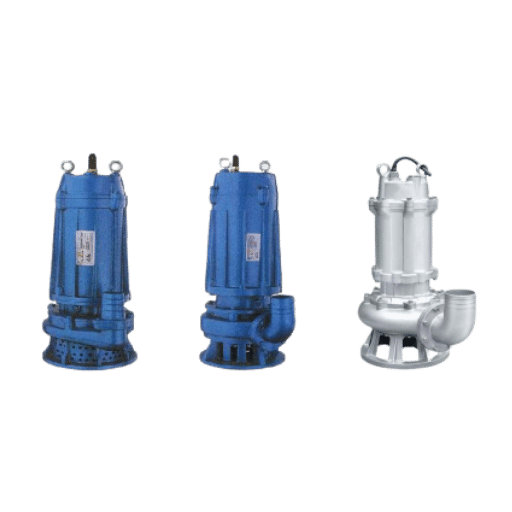
A submersible sewage pump is an unusual animal: it is a setback – taking gravity out of the equation, it lifts raw waste, solids, TP and all, from below-grate to the drain line above. Choosing well and it will be silent and reliable for 10-15 years. Choosing poorly and you are scheduled for history’s largest clean-up party, a $4,200 remediation bill and an hour-an-a-hole replacement call. This is a primer on the engineering: how they operate, selection per SSPMA Std. 101, what IPC 712 demands at installation, and how the quarterly inspection anticipates failure modes.
📐 Quick Specs: Submersible Sewage Pump
| Power Range | 0.5 HP residential → 420 HP municipal |
| Flow Rate | 30–6,000 GPM |
| Max Solids Passage | Up to 2″ standard / 3.15″ heavy-duty |
| Discharge Size | 2″–24″ NPT/flanged |
| Housing Material | Cast iron (standard) / SS 316 (corrosive media) / thermoplastic (light residential) |
| Float Switch Types | Tethered (wide basin ≥14″) / Vertical (narrow sump ≥11″) |
| Typical Service Life | 10–15 years at correct duty point |
| Power Supply | 115/230V single-phase 60 Hz (residential); 3-phase 460V (commercial/municipal) |
| Key Standards | SSPMA Std. 101 · IPC §712 · UPC §710 · NEC Art. 430 |
What Is a Submersible Sewage Pump — and How Does It Work?
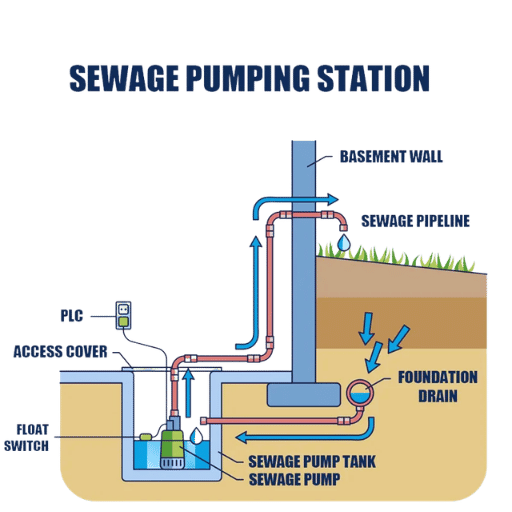
Two terms have two meanings, here. Submersible defines the installation: the motor and housing are dimensioned for operation submerged – though this requires the component parts to be 100 percent waterproof. Sewage denotes duty class: the pump is rated to pass solids — raw waste, toilet paper, grit, and fibrous cellulosic matter — with a minimum 2-inch solids passage. The categories are not interchangeable. Submersible by itself is not enough: before specifying the pump check it clearly specifies the minimum solids passage for specified duty cycle.
The meet all submersible sewage pump specifications, motor drives water-tolerant impeller via watertight seals. Wastewater enters via the suction inlet to the impeller eye, is accelerated centrifugally and is discharged via an outlet to a pressurized discharge line. The float switch, internal or external, measures the basin level and starts or stops the motor depending on set-points. When it rains too much and the floor gets wet, pump-on is activated. When the water clears the basin the pump switches off.
The motor bears the IEC 60034 classification, IP68 water-tightness. Many residential pumps are oil-filled (dielectric oil aids cooling), with a starting capacitor for torque. Commercial or municipal pumps use the double mechanical seal with intermediate oil chamber, greatly extending maintenance intervals and pre-emptively indicating a leak, through an agreed valve pressure differential.
📐 Engineering Note
Submersible tells you where it works; sewage tells you what it can take. If the listing reads “submersible pump” without sewage duty and minimum solids specifications, query the impeller design and minimum passage in the product literature before choosing it – a mislabeled pump in an ejector pit will violate code and cause maintenance. The manufacturer instructed it to be used that way, an intelligent, informed choice.
What is the difference between a sewage pump and a submersible pump?
A sewage pump is a duty class: it passashis way toilet wastes, TP, and paper, and has been rated for minimum passage of “hole. “A submersible effluent pump is an installation class: it can operate immersed, but its design handles filtered septic length wise flow only – no fibrous material. Specifications must identify the pump as certified for sewage duty. Choosing a lightly-fibrous duty pump for the wrong application is a trouble-free way to 1000$ the life out of it 9 months into it, without a smile, in the middle of the night.
Sewage Pump vs. Sump Pump vs. Effluent Pump: Which One Do You Actually Need?
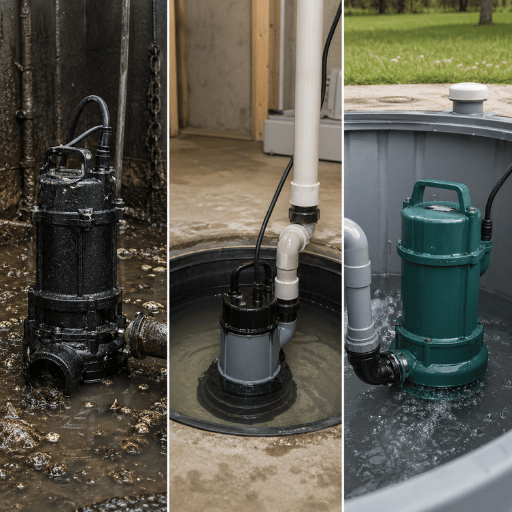
The single most costly spec mistake in a sewage system is choosing the wrong pump type. Three categories look alike but are entirely different:
| Type | Solids Capacity | Head Range | Impeller Type | Typical Application | Regulatory Basis |
|---|---|---|---|---|---|
| Sewage pump | Up to 2″ (standard) | 10–60 ft | Vortex / channel / non-clog | Below-grade bathrooms, ejector pits, lift stations | IPC §712, UPC §710 |
| Sump pump | Particles only (<⅛”) | 5–25 ft | Closed impeller | Groundwater, clean water basement drainage | IPC §1113 |
| Effluent pump | Solids ≤¼” | 10–30 ft | Semi-open | Septic tank outflow, filtered effluent to drainfield | SSPMA Std. 101 |
| Grinder pump | Grinds all waste to slurry | Up to 130 ft | Cutting/grinding | Low-pressure sewer forcemain only | SSPMA Std. 101 |
3-Category Waste Stream Rule- this flowchart should precede specifying:
- Toilet solids to be carried through this pipe range.→ Sewage pump required (IPC 712 requires a minimum of 2″ solids passage; 2″ passage is recommended for residential reliability)
- Filtered septic tank effluent, solids ≤¼” → Effluent pump
- Groundwater or clean surface drainage → Sump pump
- Below-grade toilet discharging to low-pressure municipal forcemain→ Grinder pump
- Utility pump (non-sewage submersible) → Not suitable for sewage duty — lacks minimum 2″ solids passage and IPC §712 sewage rating
⚠️ Grinder Pump Warning
According to SSPMA Std. 101-2022: Do not install a grinder pump ahead of a septic system. Grinder pumps turn the solids into a fine slurry. This eliminates the particle structure that anaerobic septic bacteria require for digestion, and a grinder pump installed ahead of any septic tank will cause complete failure of the entire septic system—a costly mistake prevented by the use of a standard sewage pump.
Is a sump pump the same as a sewage pump?
No- and confusing these two commonplace residential devices; a sump pump can not handle sewage solids, as its impeller is not abraded even by hardened steel. Install a sump pump in a sewage ejector and it will be compromised by the solid waste in under 1.5 years. Using a sump pump in sewage service will violate IPC 712, create a health code liability, and in the process, “bring the house down” with respect to the system failure it causes. Confirm “sewage-rated” or “sewage ejector” label on any device before purchasing it for below-grade toilet drainage.
For submersible sewage pump options verified to IPC and SSPMA standards, BBP’s ASW-series range can handle just about anything from residential ejector to municipal lift station duty.
How to Size a Submersible Sewage Pump: TDH, GPM & HP Calculation
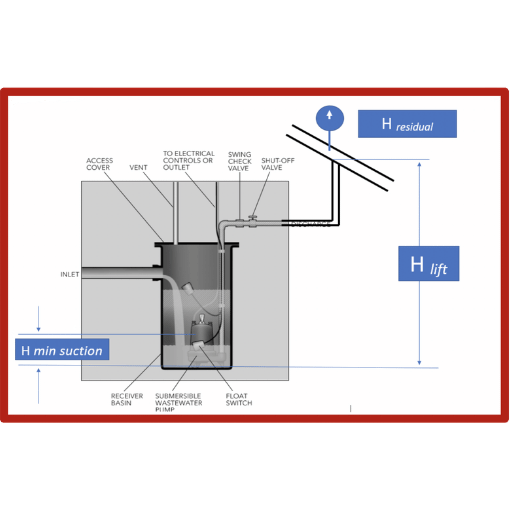
Oversizing and incorrect sizing in pump requirements is traced back to 1. starting at the specification step. Make sure your consultant or supplier understands oversizing is just as damaging as undersizing; SSPMA Std. 101-2022 states: “An oversized pump head starts and stops too frequently. Each motor start draws high inrush current. Also, insufficient pump-off time prevents the motor windings and the mechanical seal from recovering”. We can follow a four-step methodology.
Step 1 — Calculate Total Dynamic Head (TDH)
TDH- total head- How much resistance does the flow have to overcome to get from point A to point B? Per SSPMA:
TDH = Static Head + Friction Head
- Static Head: head height in feet from pump inlet (floating or on-the-floor pump) to the inlet point at the highest discharge outlet.
- Friction Head: pressure losses in pipe length, fittings and valves (expressed in feet of equivalent head):
SSPMA friction equivalent values (2″ diameter pipe fittings):
| Fitting | Equivalent Head (ft) |
|---|---|
| 90° elbow (2″) | 5.2 ft |
| Check valve (2″) | 17.2 ft |
| Gate valve, fully open (2″) | 1.4 ft |
| Straight pipe per 100 ft (2″) | ~3.5 ft |
Worked Example: 4-bath home; Static head=15 ft, 20 ft of 2″ pipe=5.2 ft/minute, so: 15 ft static + 23 ft friction/rounding down to 7 ft (a standard residential run) = 22 ft Total Head.
Step 2 — Determine Minimum GPM via Fixture Units
SSPMA Std. 101 states that flow capacity remains constant when calculating a fixture count load: 1 fixture equals± 1 fixture:
- 4-bath home; 37 fixture units=minimum pump capacity of23.5gpm
- Minimum flow velocity to evade solids builds in pipe (through a 2″ discharge pipe /78)=that through a 4″ pipe.
- Maximum number of start cycles- 3-4 (residential) to preclude early motor failure:
Step 3 — Apply the 2× TDH Safety Factor Rule
📐 The 2× TDH Safety Factor Rule
Never specify a pump at its rated TDH maximum. SSPMA Std. 101 guidance: multiply calculated TDH by 2 before selecting a model. A pump working at the extreme edge of its performance curve is undesirable: it operates at very low efficiency and is susceptible to instability with head fluctuations. Calculated TDH = 22 ft specify a pump rated for 44 ft TDH at your required GPM. This is by far the most neglected step in sizing for residential sewage pumps – meanwhile, ignoring it accounts for over-represented numbers of early motor failures.
Step 4 — Select HP Bracket
| Application | Fixture Units / Flow | Min HP | Min GPM |
|---|---|---|---|
| Small residential (1–3 bath) | 3–5 FU | 0.5 HP | 50 GPM |
| Standard residential (4+ bath) | 6–10 FU | 0.5–0.75 HP | 60–80 GPM |
| Commercial restaurant | High grease / variable load | 1.0–1.5 HP | 100 GPM |
| Small commercial building | 10–30 FU | 1.5–3 HP | 150 GPM |
| Municipal lift station | High volume / variable | 10–420 HP | 500+ GPM |
Should I get a 1/2 HP or 3/4 HP sewage pump?
For a standard 1-3 bathdomestic with static head of 10-15 ft, a ½ HP unit(50 GPM at 20 ft TDH) is generally adequate – provided the basin adheres to the IPC 712.4 minimum 18″ diameter. Increase to ½ HP if: (a) the discharge run exceeds 20 ft, adding significant friction head; (b) the application has 4+ baths; or (c) a laundry or utility sink shares the same ejector pit. Using the 2 TDH Safety Factor: 15-ft static head + 7 ft friction = 22 ft calculated specify a pump rated for 44 ft TDH at 50 GPM. Most ½ HP units accommodate this margin with ease. If calculated TDH exceeds 25 ft on its own, proceed to ½ HP minimum.
Sewage Pump Installation: IPC/UPC Requirements, Basin Sizing & Electrical Code
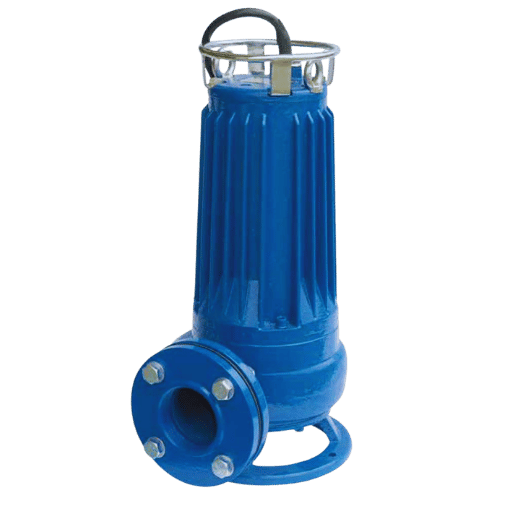
Code minimum installation is not optional – and it is cheaper than the alternative. The following example demonstrates what happens when one of your specs is missed:
📋 Field Case: Phoenix Plumbing Contractor
A plumbing contractor is called to troubleshoot a 6 month old sewage ejector installation which inadvertently begins short cycling intermittently, triggering the float switch every 90 seconds. Upon investigation: the basin is 16″ diameter – 2″ too small as per the IPC 712.4 minimum. Under-dimensioning prevents the basin from holding sufficient liquid volume, so the pump begins pulsing on its own cycle, eventually straining the motor windings. Cost of correction? $1,400 ,000 labor + unit cost. a code minimum 18″ basin would only have added 00 to the original bill.
The IPC 18″ × 24″ Basin Minimum Rule — and Why It Matters
Per IPC 2021 §712.4, a sewage basin must meet the following minimums:
- Minimum basin diameter: 18″ (457 mm)
- Minimum basin depth: 24″ (610 mm)
- Why 18″? A tethered float switch needs a minimum 14″ swing clearance to operate effectively. 18″ proves sufficient, ensuring margin of safety. Employ a vertical float switch if your basin is 11″-13″.
- Why 24″ depth? SSPMA Std. 101 specifies a minimum 5-gallon surge volume between pump switch-off level, and basin inlet, which the 24″ depth maintains. Shallower basins cannot provide the necessary surge volume, resulting in unreliable short-cycling.
12-Point Installation Check-list(SPCMA Std. 101 + SSPMA Std. 101 + NEC 2023):
- ✔ Basin diameter ≥18″ (IPC §712.4)
- ✔ Basin depth ≥24″ (IPC §712.4)
- ✔ Discharge pipe ≥2″ diameter (IPC §712.9)
- Check valve on discharge line (IPC 712.7) – prevents back flow into basin
- Vent pipe attached at basin top (IPC 712.5) – prevents sewer gas buildup
- ✔ Basin cover airtight/gas-tight seal (IPC §712.6)
- Dedicated electrical circuit, rated at 125% of motor full-load current (NEC Article 430.22)
- GFCI protection for all basement/garage outlets (NEC 2023 210.8)
- ✔ Equipment grounding conductor per NEC §250.114
- ✔ Float switch clearance ≥2″ from basin wall
- ✔ Discharge pipe horizontal slope ≥¼” per linear foot
- Isolation valve upstream of check valve to facilitate future servicing
⚠️ Check Valve: Non-Negotiable
Once the pump stops, the discharge pipe’s column of fluid will selfreverse and drive sewage back into the basin then re-trigger the float switch in a backflow cycle that will never clear. IPC 712.7 mandates a check valve on the discharge line, which not only meets code – it nullifies the backflow cycle completely. Cost: $15-$40. Cost of not installing one: endless short-cycling, premature pump burnout, IPC code violation.
For submersible sewage pumps with installation support documentation, BBP supplies IPC-compliant technical data sheets with all of our ASW-series models.
Sewage Pump Maintenance Schedule & Common Failure Modes
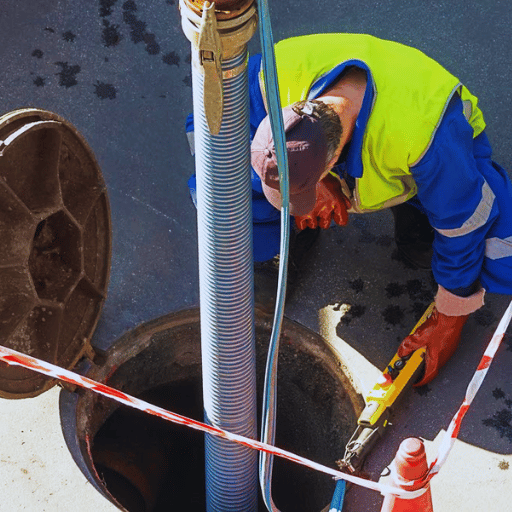
The difference between a 10-year pump and a 3-year pump is rarely the quality of the pump; it is “normal” maintenance schedule adherence. This example underscores the real cost of ignoring symptoms:
📋 Field Case: New Jersey Homeowner
A homeowner experiences gurgling sounds and basin drainage significantly slower than normal for three weeks, but delays troubleshooting. Pump catches fire on a Tuesday night, garbage-collects through basement floor drain before owner can respond. Total inbasement remediation and pump replacement cost: $ 850 + emergency plumber $ 600 + sewage cleanup and sanitation $2,750 = $4,200. Root cause analysis: tethered float switch entangled in 15″ basin (2″ below IPC spec), causing premature burner wear. Symptoms had been visibly present three weeks before burnout.
Why do submersible sewage pumps fail prematurely?
According to SSPMA Std. 101-2022 technical guidelines, the three dominant causes of premature failure are: (1) electrical problems (incorrect wiring, circuit overload, GFCI pis); (2) basin venting and sealing issues; (3) mechanical failures including float switch collapse and mechanical seal failure. What is so counterintuitive about this list: electrical problems are the #1 premature failure – not mechanical wear. Therefore, checking the dedicated circuit and required GFCI protection at installation prevents more pump burnout than any other maintenance task.
“The single greatest factor in premature sewage pump failure is improper basin sizing – specifically, oversized basins that allow solids to settle before float activation, and undersized basins that cause short-cycling motor stress.”
— SSPMA Standard 101-2022, Technical Maintenance Guidelines
| Failure Mode | Root Cause | Early Symptom | Prevention |
|---|---|---|---|
| Electrical failure | Improper circuit, GFCI trip, moisture ingress at junction box | Pump will not start; GFCI tripped | Dedicated circuit per NEC 430; annual power cord inspection |
| Impeller clogging | Fibrous solids — wipes, rags, hygiene products | Reduced flow; pump runs longer than usual | Vortex or non-clog impeller; no-wipes signage at fixture |
| Float switch failure | Tethered float tangling in undersized basin (<18″) | Pump runs continuously or will not start | Basin ≥18″; annual float inspection; vertical switch for narrow sumps |
| Mechanical seal wear | Operation below 60% rated flow — oversized pump | Oil seepage at shaft; motor overheating | Correct sizing; avoid oversizing; maintain correct duty point |
| Motor thermal trip | Continuous duty beyond rated cycle rate | Intermittent shutdown; hot casing | Thermal overload relay; correct basin sizing to limit starts/hour |
BBP field data: When properly sized and specified, sewage pumps last 10-15 years under normal residential use. Most premature failures trace to two factors: operation below 60% of rated capacity for prolonged periods (accelerating seal and bearing erosion), or impeller nodule condition (impeller wedge erosion or deposit buildup) leading to stall.
Maintenance Schedule:
- Quarterly: monitor float-initiated pump activation and deactivation. Listen for unusual sounds- grinding indicates impeller wear; humming indicates impeller clogging. Make sure float switch moves freely in basin.
- Annually: test discharge check valve for seating, engage oil reservoir in oil-loaded models, check power cord and junction box for tightness and moisture incursion.
- Every 5 years: “professional” check-up on impeller and Seal 12W, and motor bearing tolerance.
For a cross-pump-type maintenance comparison covering bearing inspection intervals and seal replacement protocols, see our horizontal split case pump maintenance guide.
Submersible Sewage Pump Applications: Residential, Commercial & Municipal
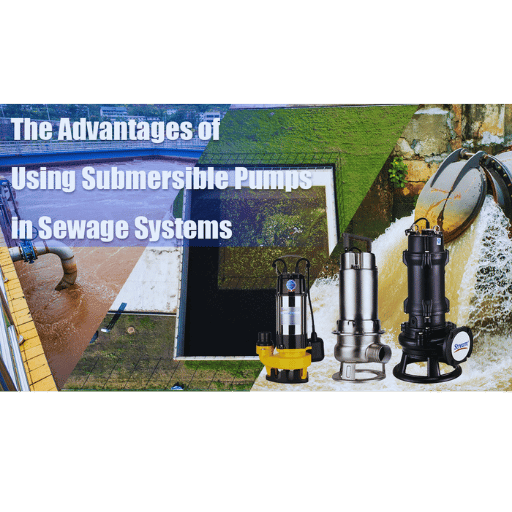
Proper pump select application isn’t about selecting the highest-horsepower unit–it’s about operating within the design duty. This example shows the impact of misspecification in the commercial class:
📋 Field Case: Miami Hotel, 215 Rooms
A building manager tries to debug persistent basement sewer backups on weekends when occupancy is high. The pump: a 0.75 HP residential pump with a 60 GPM / 20 ft TDH spec. With 215 guest rooms, the expected specification: 150-200 GPM / 25 ft TDH–about 5 HP. The 0.75 HP pump had been spec’ed at 250% of its design load, destroying the motor every 8-10 months. Annual replacement cost: $3,200. The 5 HP commercial unit costs Madumes-uponce–and has a design service life of 12-15 years.
Application Specification Matrix — 4-Tier Pump Framework:
| Sector | Flow Range | Head Range | Power | Key Spec Note |
|---|---|---|---|---|
| Residential (1–3 bath) | 50–80 GPM | 10–20 ft | 0.5–0.75 HP | 2″ NPT, tethered float, cast iron casing |
| Residential (4+ bath) | 60–100 GPM | 15–25 ft | 0.75–1 HP | 2″ discharge, vertical float switch |
| Commercial building | 100–300 GPM | 20–40 ft | 1.5–5 HP | Auto-coupled mounting, duplex system required (SSPMA) |
| Municipal lift station | 200–6,000 GPM | 10–60 ft | 10–420 HP | Guide rail system, redundant pumps, SCADA compatible |
| Industrial wastewater | 50–1,000 GPM | 15–40 ft | 2–200 HP | Stainless steel SS316 or cast iron per media; VFD compatible |
| Construction dewatering | 200–2,000 GPM | 5–30 ft | 5–100 HP | Portable, abrasion-resistant, soft-pipe connection |
BBP’s ASW series covers 0.75–315 kW across all tiers, with cast iron or stainless steel options to match media corrosivity. See the BBP ASW series specification guide by sector for model selection by flow and head.
For applications crossing into dewatering or slurry service, see our submersible pump selection guide for dewatering applications.
Submersible Sewage Pump Cost: 2025 Pricing Guide by Tier
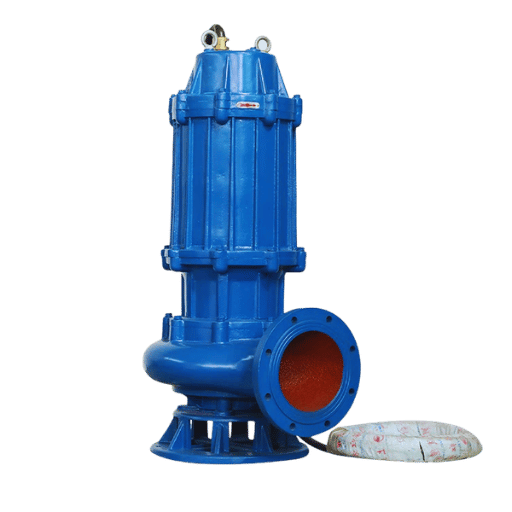
Unit costs are only one aspect of equipment select. Cost-based procurement over the years tends to produce the highest total ownership costs because of energy consumption over a decade–for commercial projects and above. Market estimates below are based on a Q1 2025 evaluation (20-30% variance depending on location, source, and specification). Confirm with your current supply sources.
| Tier | Unit Cost | Installation | Annual Maint. | 10-yr TCO Est. |
|---|---|---|---|---|
| Residential 0.5–1 HP | $200–$600 | $400–$900 | $50–$150 | $2,100–$7,500 |
| Commercial 1.5–5 HP | $800–$3,500 | $1,500–$4,000 | $200–$600 | $9,500–$41,000 |
| Industrial 10–50 HP | $4,000–$20,000 | $5,000–$15,000 | $1,000–$3,000 | $55,000–$230,000 |
| Municipal 100+ HP | $25,000+ | $50,000+ | $5,000+ | $300,000+ |
💡 TCO Over Unit Price
For commercial and industrial applications within North America or EU, the 10-year energy savings of VFD operation at 75% motor efficiency as opposed to 85% may be an order of magnitude greater than equipment costs. Specify IE3 minimum (International Efficiency Class) for 1.5 HP or greater. Budget for VFD readjustment in larger variable flow/ demand applications greater than 5 HP(20-40% reduction in energy costs within 2-4 years).
What’s Changing in Sewage Pump Technology: 2025–2026 Industry Outlook

Based on global media and specification trends, the worldwide market for sewage pumping equipment reaching $14.5 billion in 2025 will increase to $24.5 billion by 2034 with a Compound Annual Growth rate of 6.5%. Four technology shifts are underway that will change requirements for specification in the projects starting today:
1. Smart Monitoring and IoT Integration
Municipal specification packages are increasingly requiring integrated vibration, temperature, and flow sensor capabilities that facilitate predictive maintenance. Conversely, remote SCADA communication is shifting from an addition in to a baseline requirement in commercial projects already under way as of 2024. Action: specify a motor with IoT (Internet of Things) capabilities or confirmed remote SCADA specification at the project start to avoid added costs of retrofit.
2. IE3/IE4 Motor Efficiency Standards
Minimum specifications for high-head commercial pumping projects already in process are adopting IE3 (Premium Efficiency)motor certification in the EU and increasingly in North America. Beyond 5 HP, budget for ultra-premium IE4 rated high-duty application equipment with integrated VFD (-20-40% reduction in energy over 2-4 years).
3. Non-Clog Design Market Growth
The “non clog” submersible sewage pump sector is approaching $4.4 billion dollars world-wide, driven by aging inner urban sewer systems and concerns over time intensive municipal upkeep. Vortex and non-clog channel impellers are replacing the traditional closed impeller in municipal specifications. Action: for any application where wipe contamination is likely (residential, hospitality, or public amenities) specify vortex or non-clog impeller. The 10-15% efficiency delta compared with a closed impeller is offset by savings in increased maintenance intervals.
4. VFD Integration at Smaller Scale
Variable frequency drives, formerly confined to major inner city municipal bids, are now trickling into commercial specs in the 3-5 HP size. They reduce starts per hour, extend bearing life, and can twin the pump’s output to match demand without short-cycling. For industrial and wastewater treatment specs involving varying throughput, FVD compatibility is now a de minimus spec.
📐 2025–2026 Future-Proofing Checklist
- Commercial / municipal: specify (or specify a unit with) an IoT capable monitoring port or SCADA compatible controller
- Any duty >1.5 HP: require IE3 motor certification at minimum in spec
- Variable demand >5 HP: budget VFD – target returns 2-4 years under commercial power costs
- Residential / hospitality / public property: default to non-clog or vortex impeller
FAQ: Submersible Sewage Pump
What is the difference between a sewage pump and a submersible pump?
“Sewage pump” is a ‘duty’ category – it describes a pump capable of passing raw sewage including toilet tissue, paper, and fiber, with a 2″ passesable solids diameter minimum (IPC) suitable for residential use. “Submersible” is an installation method category – it applies to any pump which is intended to be operated submersed. Recent developments make the two often merge: today almost all sewage spec pumps are submersible by nature, as submersion cools the motor without external cooling equipment. But they are not co-equal: a submersible utility or effluent pump will not pass toilet solids, and will likely experience rapid failure when fed with raw waste. Specification should always specifically state “sewage-rated” pump with minimum 2″ solids passable for residential use.
How do I know if my sewage pump needs replacing?
These are troubleshooting tips for sewage pumps: (1) if the motor stays on continuously and the basin doesn’t drain, then either the float switch may be jammed in the on position, or the pump is undersized for the load; (2) if occasional gurgling paired with stubborn basin drainage is experienced, the impeller may be variably clogged or worn; (3) if the basement smells of sewage, the check value may be degraded and/or the basin has failed with a cracked seal. If the pump is over 10 years old, and showing two or more symptoms, then replacement may be more practical; parts availability becomes problematic after year ten.
Can a submersible sewage pump run continuously?
No, not while on normal operating cycle. Waste water pumps are designed for intermittent duty – SSPMA Std. 101 maximum residential cycle rate is 3-4 starts/hour. Continuous duty points to one of 3 faults in an isolation application: (a) float switch stuck in ON; (b) basin inflow currently exceeds current pump capacity (undersized pump); or (c) Pump wear has increased pump output over the years to less than required to clear basin. Either way, continuous operation damages the motor in constantly heating and destroys the mechanical seal prematurely, reducing operating life from 10-15 years to 2-5 years. Eliminate the root cause rather than waiting for the motor to burn out.
What basin dimensions does a sewage pump require?
Per IPC 2021 Section 712.4: minimum basin diameter 18 inches (457 mm), minimum depth 24 inches (610 mm). The 18-inch minimum is not arbitrary — a tethered float switch needs at least 14 inches of swing clearance to operate freely without tangling against the basin wall, which is the most common cause of float switch failure in residential ejector systems. SSPMA Std. 101 adds a volume requirement: a minimum 5-gallon surge volume above the pump-on activation level, with start cycles not exceeding 3–4 per hour. Undersized basins cause short-cycling, which is the leading cause of premature motor failure in residential sewage ejector systems and a direct IPC code violation.
How often should I service a submersible sewage pump?
Schedule: Quarterly – verify to float switch to activate pump to turn off at float, inspect float switch and confirm tangle corrosion free; visually inspect float for oil and debris; listen for abnormal noises. Annually – test discharge check valve and ensure proper seal; monitor oil level in oil-filled motor; confirm junction box and power cord free from encroaching moisture or surface cracking. Every 5 years – professional inspection of bearing clearance on motor, impeller polish/wear, and mechanical seal status – citation: SSPMA Std 101-2022 observe the commercial and municipal program intervals.
What is the difference between a sewage ejector pump and a sewage pump?
Although terms are interchangeable in one-family home set-ups, there is a subtle difference. “Sewage ejector pump” points specifically to the submersible sewage unit in the ejector pit – a basin sealed in the basement for handling waste water generated from 1 below-grade bathroom, and a sewer backup safeguard. “Sewage pump” in the wider sense, includes the ejector unit but also municipal lift station units, commercial sewage applications, and high capacity industrial pumps. All sewage ejector pumps are sewage pumps. Not all sewage pumps are home ejector units. For commercial applications, and municipal applications for example, all basins must at least meet minimum volume requirements per the parent code, IPL or region-specific municipal code. When in doubt, check the pump manufacturer specifications.
Specify the Right Submersible Sewage Pump for Your Project
The PPAS series ASW — 0.75-315 kW, ISO 9001/14001/45001 certified, individually tested for ISO 9906 Grade 2B quality control — addresses residential ejector through municipal lift station duties in 40-plus countries.
Our Perspective on This Guide
BBP has used our own field engineering experience (in addition to information that is publicly available from IPC/SSPMA ) to define best practices for submersible sewage pump selection and operation on this site, with quantitative engineering data (TDH calculation, maintenance cost, etc) based on 20+ years of manufacturing and servicing submersible sewage pumps for municipal and industrial clients in 40+ countries. We have not developed this site as part of any marketing initiative, so all published data that is based on a number estimate (cost, market size, etc) is identified as such.
Approved by BBP Engineering Team—A team of 20+ professional engineers, who has been working on submersible pump design, ISO 9906 Grade 2B hydraulic performance test and municipal waste water system application. The BBP facility: 50.000 m, 600 t/month casting system, the export market: more than 40 countries.
References & Standards
- SSPMA Standard 101-2022 — Sewage Ejector Pump Sizing and Installation Guidelines
- International Plumbing Code (IPC) 2021, Section 712 — Sewage Ejector Systems
- NFPA 70 National Electrical Code 2023 — Article 430 (Motor Circuits), Article 210.8 (GFCI)
- IEC 60034-30-1 — Rotating Electrical Machines, Motor Efficiency Classes (IE1–IE4) and IP68 Protection
- Custom Market Insights — Global Sewage Pump Market Report 2025
- OpenPR — Non-Clog Submersible Sewage Pump Market 2025
WHY BUYERS WORK WITH BBP
About BBP Manufacturing
BBP Manufacturing Co., Ltd. is a Beijing-based industrial pump manufacturer with in-house foundry, heat treatment, machining, assembly, coating and inspection capabilities. We support industrial projects across slurry handling, sewage treatment, clean water transfer, chemical service, fire protection, irrigation and OEM pump supply.
Our Engineering Support
We help engineering buyers select and source the right pump configuration, not just compare prices. Send us your flow rate, head, medium, solids content, temperature, pH value, material requirement and installation conditions. BBP engineers will recommend a pump series, material option, duty curve basis, lead time and spare-parts plan for your RFQ.
Company Profile // DATA_SHEET
Name
BBP Manufacturing Co., Ltd.
Brand Name
BBP
Country
China
Headquarters
Beijing, P.R. China
Business Type
Industrial Pump Manufacturer
Model
B2B / OEM / ODM / Project Supply
Main Products
Slurry Pumps, Sewage Pumps, Centrifugal Pumps, Split Case Pumps, Multistage Pumps, Chemical Pumps, Fire Pumps, Irrigation Pumps
Manufacturing Capability
Foundry, Heat Treatment, Machining, Assembly, Coating, Inspection
Certifications
ISO 9001 / CE / SGS / BV / TÜV
Export Reach
90+ Countries & Regions
Standard Lead Time
About 25 Days for Standard Configurations
Contact Person
Wesley · International Sales
Phone / WhatsApp
+86 182 1085 0516
Email
contact@bbpmfg.com
Website
https://bbpmfg.com/
Address
Room 2803, Building 11, Phase II, Nuode Center, Fengtai District, Beijing, P.R. China