Get in Touch with BBP

ISO COMPLIANT OEM
STAINLESS STEEL DEEP WELL PUMP
BBP ASJ Submersible Series for Aggressive Water and Deep Bore Wells
Corrosion resistant 304/316 SS borehole pumps designed for saline water, high sedity aquifers, and high temperature geothermal extraction to 100C. A stainless steel submersible water pump designed for industrial duty-from-a global OEM deep well pump manufacturer of 40+years of vertical integration. Castings, heat treating, machining, assembly, coating, and performance testing is carried out 100% in-house.
REQUEST A QUOTE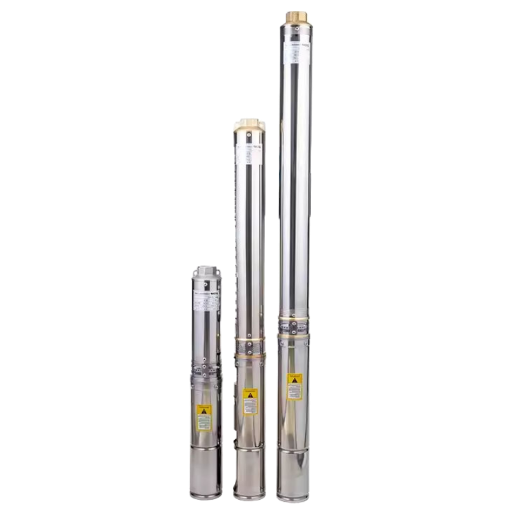
15–652 m
HEAD RANGE
2–250 m³/h
MAX FLOW
0.37–230 kW
MOTOR POWER
304 / 316 SS
MATERIAL GRADE
100 °C
ASJ(R) MAX FLUID TEMP
≤400 mg/l
CHLORIDE TOLERANCE (304)
Why Pumps Fail in Aggressive Water
Why Standard Cast-Iron Well Pumps Fail in Aggressive Water — and How BBP’s ASJ Stainless Steel Series Solves It
Cast-iron submersible well pumps server virtually all fresh-water uses globally- but in saline aquifers, high-HS-wells, and geothermal extraction, cast iron corrosion rate exceeds the industrially-acceptable-repair cycle. BBP designed the ASJ series for precisely these circumstances: water chemistry disqualifies thermoplastic and cast-iron alternatives, and a 2-year cast-iron pump cost repeats four times across an 11-year service life.
Pain 1 — Chloride & Mineral Attack
Cast-iron pump casings begin pitting at chloride concentrations greater than 50mg/l. Coastal wells, arid-zone irrigated lands, and saline groundwater routinely have chloride content greater than 200-400mg/l. At that level, a cast-iron deep well pump becomes structurally compromised in 18-36 months, contaminates the discharge with particulates of iron, and fouls the water supply.
Solution 1 — 304 / 316 Stainless Steel Shell
ASJ Standard (304 SS): rated for chloride 400 mg/l – 8 the cast-iron tolerance ceiling. For saline boreholes or high-mineral wells where Cl exceeds 400 mg/l, BBP installs the 316 SS grade with molybdenum addition, extending chloride tolerance to 1,200 mg/l. Both grades sustain a passive oxide coating which re-heals itself after flow has stopped.
Pain 2 — H₂S Electrochemical Pitting
Wells in geothermal areas, agricultural drainage, and upstream/oil-field water supplies regularly carry hydrogen sulfide (HS) concentrations of 1-3 mg/l. HS undermines iron-metal formation by sulfide stress cracking and localized galvanic deterioration- increases from the submersible environment where the pump body cannot be inspected or maintained between installations.
Solution 2 — H₂S-Tolerant Design
ASJ series tolerance: HS 1.5 mg/l with standard elastomer seals. Stainless impeller and diffuser stages resist sulfide pitting in a continuously submerged environment. For bottoms approaching or above the threshold, BBP engineers diagnose the water sample and recommend upgraded fluorocarbon seals… pre-installation as a factory floor option.
Pain 3 — Geothermal Heat Above 60°C
Other factors, especially abnormally hot water causes cast-iron parts to thermally expand and seize when hot. Standard submersible motor types quickly degrade with fluid temps beyond 40C. Most available off-the-shelf liquid-handling equipment including most of Chinese origin manufacturers-based pumps are not financially suitable for long-term elevated-temperature operation.
Solution 3 — ASJ(R) Hot-Water Variant to 100°C
ASJ(R) combines the stainless steel hydraulic stage with the TQS(R) thermally-stabilized submersible motor, certified for service at constant fluid thermal loads to 100C. Clearances of the bearings are governed by thermal expansion at operating temperatures, and the motor winding insulation has been improved for prolonged high-temperature service. Geo extraction at 80-100C- where all other pumps run for several months before failure- has been maintained continuously for 8 years on BBP systems.
Chemical Tolerance Data — ASJ Stainless Steel Deep Well Pump
See the table below for the operating envelope of the ASJ series. Specifications confirmed with BBP factory pressure/flow test records in accordance with GB/T 2816-2014 specifications.
| Parameter | ASJ Standard (304 SS) | ASJ 316 SS Grade | ASJ(R) Hot Water |
|---|---|---|---|
| Water pH | 6.5–8.5 | 6.5–8.5 | 6.5–8.5 |
| Chloride (Cl⁻) | ≤400 mg/l | ≤1,200 mg/l | ≤400 mg/l |
| Hydrogen sulfide (H₂S) | ≤1.5 mg/l | ≤1.5 mg/l | ≤1.5 mg/l |
| Total mineralization | ≤1.5 g/l | ≤1.5 g/l | ≤1.5 g/l |
| Sand content (by mass) | ≤0.01% | ≤0.01% | ≤0.01% |
| Maximum fluid temperature | 20°C | 20°C | 100°C |
Engineering Note — Test Standard: ASJ series performance conforms to GB/T 2816-2014 (China national Deep-well Submersible Pumps guide line) type, model, basic parameters, dimensions of connection, technical requirements, test methods, inspection rules. Materials selection principle is based on ASTMG48-11 (2020) e1 pitting corrosion methodology: recommendation for 304vs 316 SS grade.
Product Selection
BBP ASJ Product Line — Stainless Steel Submersible Well Pump Selection Matrix
Three sub-series within the series match different operating conditions: all share the same 304/316 SS hydraulic stages, sealed waterproof motors and 3Ø3 80V/50Hz power source. Each produced in-house from raw casting to final test—independent third-party assembly. Borehole size form 100mm to 300mm (4-12inch) for entry level agriculture 4″ bore head to large scale industrial & mining dewatering.
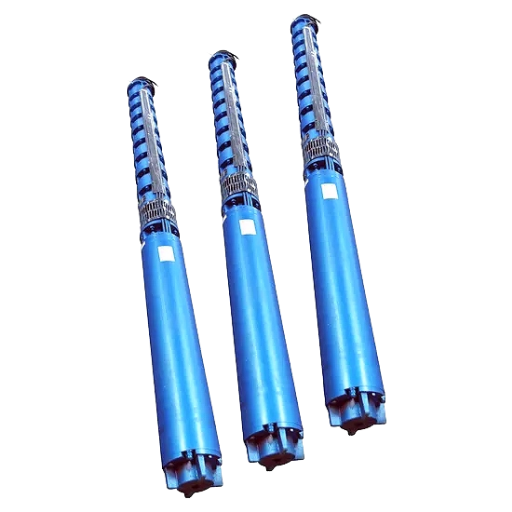
ASJ Standard
- Cold water ≤20°C, pH 6.5–8.5
- Chloride 400 mg/l (304 SS)/1,200 mg/l (316 SS)
- Flow: 2–250 m³/h
- Head: 15–652 m
- Motor: 0.37–230 kW
- Frame: 100–300 mm
- Applications: municipal water supply, saline irrigation, borehole extraction
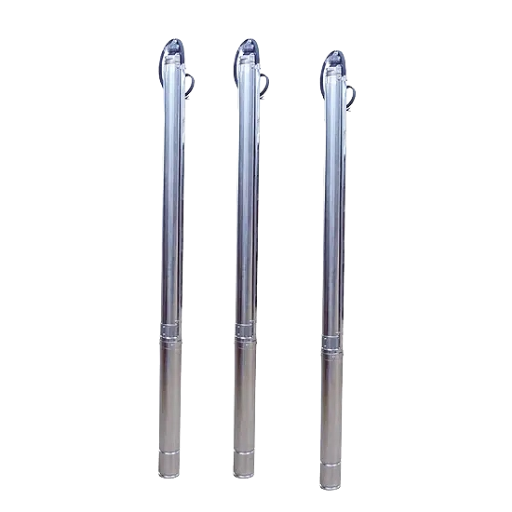
ASJ(R) Hot-Water / Geothermal
- Fluid temperature ≤100°C continuous
- TQS(R) thermally-stabilized motor
- Bearing clearances adjusted for thermal expansion
- Same hydraulic stage geometry as ASJ Standard
- Useage: geothermal extraction, geothermal hot spring, district heating, high temp process water
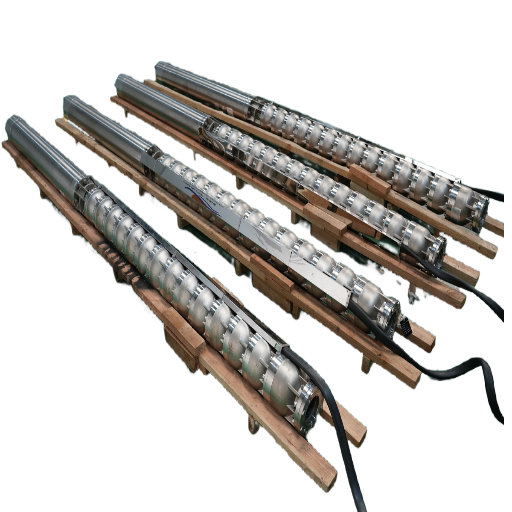
ASJ(B) Anti-Sand / High-Sediment
- Sand content ≤0.1% by mass (10× Standard)
- Hardened impeller and diffuser stages
- Wear-resistant casing geometry
- Applications: mining dewatering, alluvial aquifer extraction, construction dewatering
| Frame Size | Flow Range (m³/h) | Head Range (m) | Motor Power (kW / HP) | Typical Application |
|---|---|---|---|---|
| 100 mm (4″) | 2–10 | 15–120 | 0.37–3 kW / 0.5–4 HP | Domestic borehole, small irrigation well pump |
| 125 mm (5″) | 5–20 | 30–200 | 1.5–7.5 kW / 2–10 HP | Agricultural water pump, village supply |
| 150 mm (6″) | 10–50 | 40–300 | 3–22 kW / 4–30 HP | Industrial water supply, saline irrigation |
| 200 mm (8″) | 30–100 | 80–450 | 11–55 kW / 15–74 HP | Municipal, mining dewatering pump |
| 250 mm (10″) | 80–180 | 120–550 | 37–110 kW / 50–148 HP | Large-scale industrial, geothermal |
| 300 mm (12″) | 150–250 | 200–652 | 75–230 kW / 100–308 HP | High-head deep borehole, reservoir extraction |
Typical specs-range begins 0.5hp-1hp for most shallow agriculture and domestic well-pumping; industrial models scale to 308 HP. Download the full ASJ catalogue to see model-by-model hydraulic curves, NPT thread connection sizes, cable length options and TQS motor combinations. All with 3/?380V 50Hz. Alternative power sources on request.
| Water Condition | Recommended Sub-Series | Key Spec Trigger | Min Frame |
|---|---|---|---|
| Fresh / municipal, Cl <400 mg/l, <20°C | ASJ Standard 304 SS | Cl ≤400 mg/l | 100 mm |
| Saline coastal / brackish, Cl 400–1,200 mg/l | ASJ 316 SS Grade | Cl ≤1,200 mg/l | 100 mm |
| Geothermal / hot spring, fluid 40–100°C | ASJ(R) Hot-Water | Temp ≤100°C | 100 mm |
| Mining dewatering, sand ≥0.01–0.1% | ASJ(B) Anti-Sand | Sand ≤0.1% | 150 mm |
| High-sediment + high Cl (combined) | ASJ(B) + 316 SS specification | Cl + Sand combined | 150 mm |
Uncertain about which sub-series suits your applications? Send your water analysis report and target depth to BBP engineering: we will confirm the suitable specification within 30 minutes.
Manufacturing Note — Vertical Integration
Every ASJ pump is brought to market from the same integrated production line: BBP manages casting, heat-treating, CNC machining, impeller balancing, assembly, coating and hydro-test. tight end-to-end process control ensures batch-to-batch specification repeatability across OEM production—an Achilles’ heel at semi-assembled factories.
Material & Life-Cycle Comparison
Stainless Steel vs Cast Iron vs Thermoplastic Deep Well Pumps — Material, Corrosion & Life-Cycle Comparison
Deciding the deep well pump material for highly aggressive water application is not best cost-wise—it’s best service-interval wise. In fresh water the material cost where acceptable. In agressive saltwater, high HC, geothermal the cost-effectiveness is flipped: cast iron needs replacement every 2~4 years; 304 SS runs 8~12 years without body corrosion; 316 SS runs further in high chloride places.
| Performance Dimension | ASJ 304 SS (BBP) | ASJ 316 SS (BBP) | Cast Iron | Thermoplastic |
|---|---|---|---|---|
| Chloride tolerance (Cl⁻) | ≤400 mg/l | ≤1,200 mg/l | ~50 mg/l | ~200 mg/l |
| Max continuous fluid temp | 20°C (std) / 100°C (R) | 20°C (std) / 100°C (R) | ~80°C | ~60°C |
| Typical service life — aggressive water | 8–12 years | 10–15 years | 2–4 years | 4–6 years |
| Sand tolerance (max %) | 0.01% (B: 0.1%) | 0.01% (B: 0.1%) | 0.01% | 0.005% |
| Relative initial cost | 1.0× | 1.4× | 0.6× | 0.5× |
| 8-year TCO in high-Cl water (relative) | 1.0× (baseline) | 1.2× | ~2.4× (4 replacements) | ~1.8× (1–2 replacements) |
Chloride tolerance of cast iron and thermoplastics by published materials science literature & industry standard practice. BBP 304/316 SS values are as-built specification as specified by factory testing GB/T 2816-2014. TCO is based on high-chloride application(Cl 300~400 mg/l); project atlie costs will vary. Ask for a customized TCO calculation based on your water chemistry & your uptime.
At roughly 1.7× the initial cost of cast iron, a 304 SS deep well pump pays off differently when measured over an 8-year horizon in high-chloride water. In a high-chloride well with Cl near 350 mg/l — high end of co-opted irrigation, high salinity aquifer or nav water, desalination-ingratiated source. If cast iron is replaced on a 2-year cycle, with 4 pump procurements and4 pull-puts of the kit over an 8-year span, field deployments at similar chemistry show the 304 SS unit amortizes cost premium about year3-4, and each additional year thereafter is straight-TCO benefit.
Procurement Note — 304 vs. 316 SS Grade Decision
Unquestioning recommendation of 316 over 304 begins at Cl>400 mg/l. The occasional short term exceedance (seasonal flooding) does not mandatorily call for 316. If your analysis has Cl of 350-500 mg/l then email BBP engineering the entire report before ordering – we compare the Mo content required to your actual ion balance, not a lone Cl figure. The wrong grade costs money; the right grade circumvents a pump pull 18 months early.
Compare 304 and 316 stainless steels for your particular well chemistry, and see the material selection guide here.
Customer Results
Customer Results — Saline Irrigation, Mining Dewatering & Geothermal Extraction Case Studies
Three typical applications of the ASJ series are shown that demonstrate water chemistries and applications in which the selection of submersible stainless steel pump can make the greatest difference. Each was designed for installation by BBP engineering following detailed review of the water analysis.
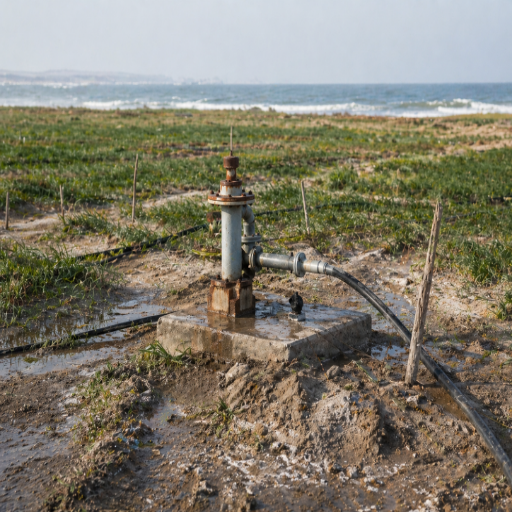
Case A — Agricultural Saline Irrigation
Coastal Farmland Saline Well, 8-Unit Installation
Problem: Saline alluvial plain irrigation borehole, Cl 320-350 mg/l, cast-iron pumps replaced every 18-24 months as casing corroded and impellor pitted. Dc following each pump replacement interrupted irrigation during window of largest demand.
Solution: Eight ASJ 150mm 304 SS stainless steel submersible well pumps, scaled to combined flow based on the scheduling for the irrigation canal and reservoir refill.
Results: Zero corrosion failure after 12 years of duty, with no unplanned pump removaales. Regular maintenance only included motor electrical checks, and visual inspection of dischrage line annually.
Solution: Eight ASJ 150mm 304 SS stainless steel submersible well pumps, scaled to combined flow based on the scheduling for the irrigation canal and reservoir refill.
Results: Zero corrosion failure after 12 years of duty, with no unplanned pump removaales. Regular maintenance only included motor electrical checks, and visual inspection of dischrage line annually.
12 Years
Continuous service — zero corrosion failures
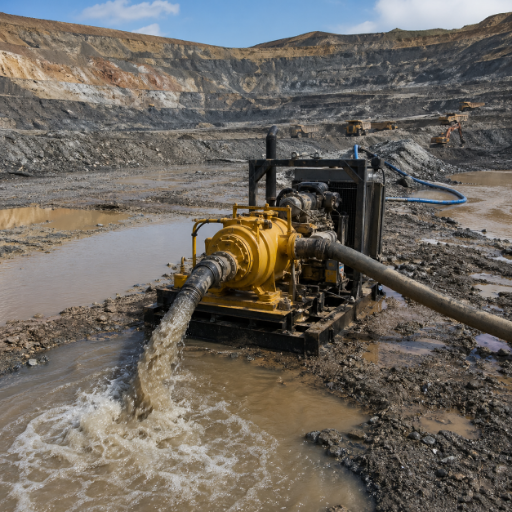
Case B — Mining Dewatering
Open-Cut Mine Dewatering, High-Sediment Groundwater
Problem: Mine pit dewatering in a laterite zone, I.e. Groundwater contaminated with 0.25-0.35% Sand (by mass) and dissolved Fe3+; Conventional submersible pumps required impeller treatment after 4,000-6,000 hours of service. MTBF was one of the key…
Solution: Six ASJ(B) 200mm anti-sand heavy duty stainless steel deep well pumps with hardened stage components and wear-resistant casing geometry, coupled with TQS submersible motors.
Outcome: MTBF of approximately 32,000 operational hours under continual dewatering duty- a 5-6 improvement of past units.
Solution: Six ASJ(B) 200mm anti-sand heavy duty stainless steel deep well pumps with hardened stage components and wear-resistant casing geometry, coupled with TQS submersible motors.
Outcome: MTBF of approximately 32,000 operational hours under continual dewatering duty- a 5-6 improvement of past units.
32,000 h
MTBF under continuous high-sediment dewatering
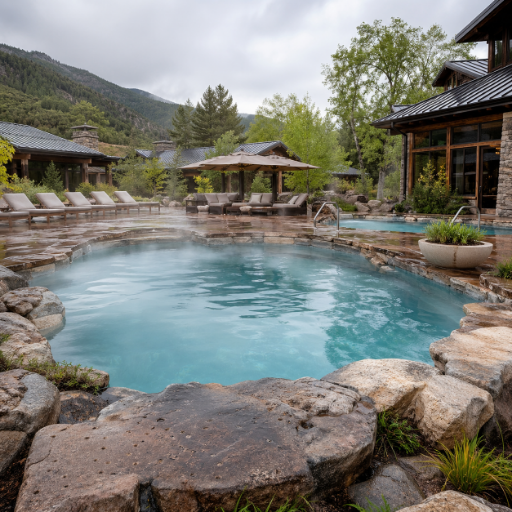
Case C — Geothermal Hot Spring
Thermal Tourism Resort, 85°C Continuous Hot Water Pump
Challenge: Using the geothermal aquifer with the fluid temperature of 80-88 o C, for the heating of Resort pool and the balneotherapy circuits. Conventional submersible motorsweared out in every 3-6 months. The calcareous scaling in contact with bearing surfaces resulted in faster wear.
Solution: Four (4) or more ASJ(R) hot water submersible pumps with TQS(R) thermally-stabilized motors, modified bearing clearances to operate at 85C continuously, and anti-scalping bearing design.
Result: 8 years continuous running period without a major overhaul. Planned inspection of bearing every 4 years, no unforeseen stoppage in the service life.
Solution: Four (4) or more ASJ(R) hot water submersible pumps with TQS(R) thermally-stabilized motors, modified bearing clearances to operate at 85C continuously, and anti-scalping bearing design.
Result: 8 years continuous running period without a major overhaul. Planned inspection of bearing every 4 years, no unforeseen stoppage in the service life.
8 Years
Continuous geothermal operation — no major overhaul
TCO Advantage — Stainless Steel vs Cast Iron in High-Chloride Wells
Based on BBP field service data and published material science literature. In aggressive-water applications (Cl 300–400 mg/l), field deployments typically show the following differences versus cast-iron alternatives:
3–5×
Longer service life
(8–12 yr vs 2–4 yr typical)
(8–12 yr vs 2–4 yr typical)
0
Unscheduled pump pulls
in Case A (12-yr record)
in Case A (12-yr record)
32,000 h
MTBF in ASJ(B) mining
dewatering (Case B)
dewatering (Case B)
TCO metrics: BBP field service records. Service life comparison uses standard cast-iron performance data in high-chloride water chemistry (industry literature). Exact results vary by well depth, flow regime, and water chemistry. Request a custom TCO analysis based on your application parameters.
Need a flow-head curve chart for your specific well depth and flow target?
Certifications & Standards
Certifications & Chemical Tolerance

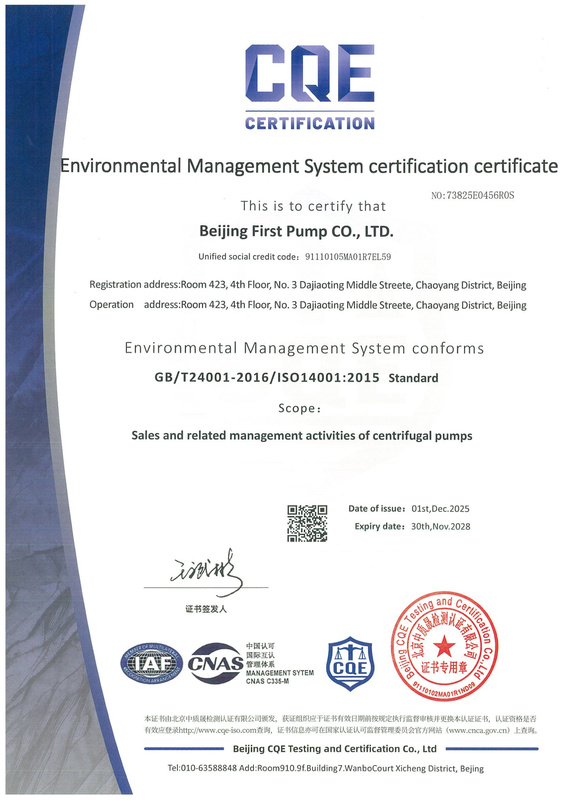
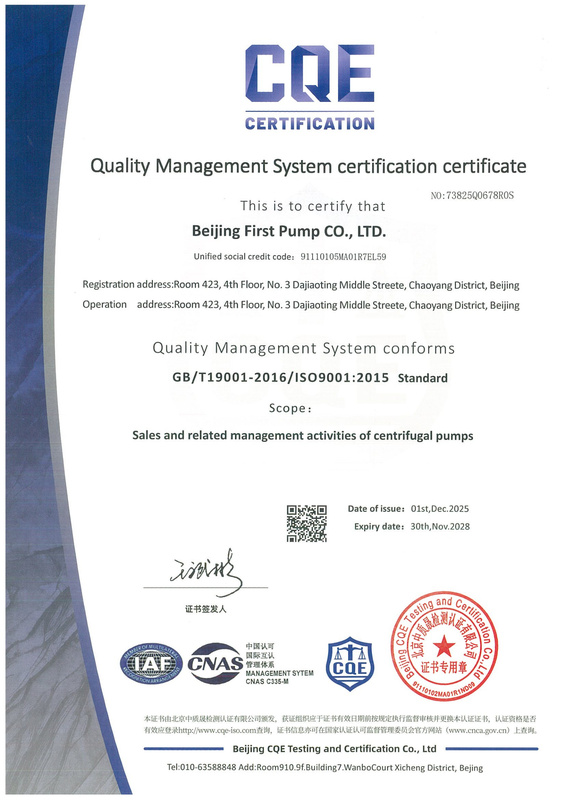
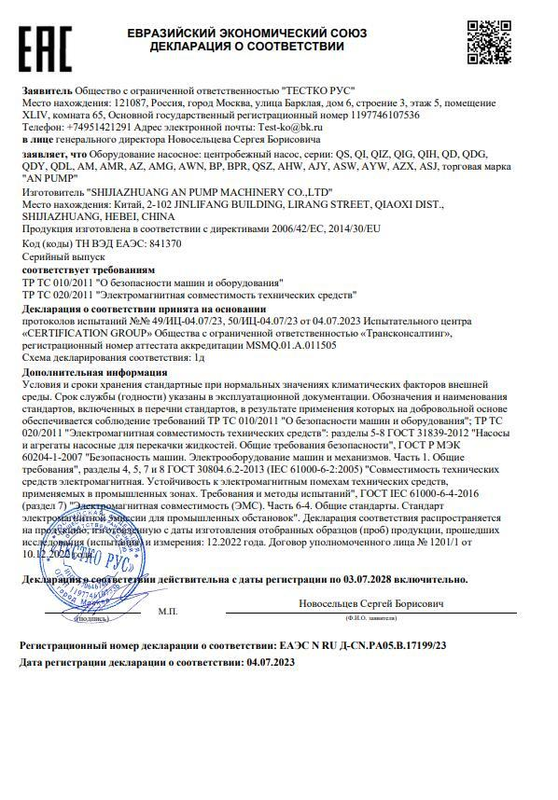
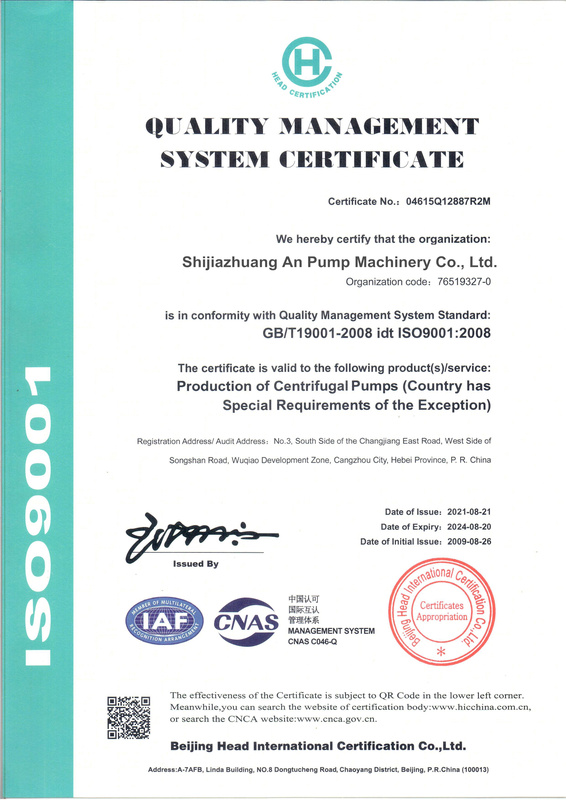
ISO 9001
Quality Management
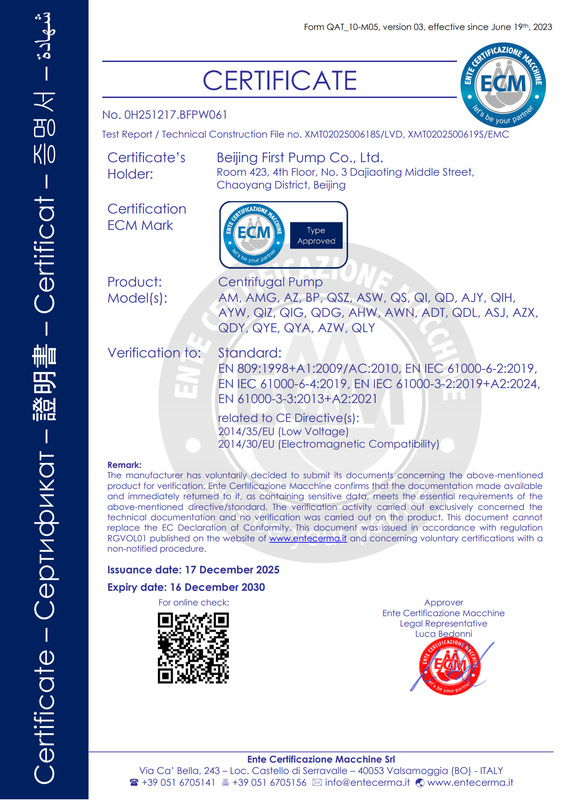
CE
EU Market Compliance
ROHS
Hazardous Substance
GB/T 2816
Deep Well Standards
40+ YRS
Production Record
The BBP ASJ series is produced on ISO 9001 system standards at BBP’s Beijing factory. Hydraulic performance, insulation resistance, pressure integrity are tested before shipment to ensure compliance with GB/T 2816-2014. CE certification is obtained as an export requirement for the EU market. All electrical components meet ROHS standards.
GB/T 2816-2014 — What It Covers
This Chinese national standard designates the type numbers, model coding, fundamental hydraulic data, connection sizes, technical requirements, testing procedures, and inspection criteria for deep well submersible pumps. It is the design, production and factory acceptance test standard for the ASJ series, supplier to customer over the entire manufacturing cycle. Cross-references to size conventions of AWWA E103 standard dimensional series are available on request for projects on North America standards.
We do not have certification or testing documents for standards we do not currently hold; the ASJ series has not been third-party tested and certified by Hydraulic Institute (HI), AWWA, or comparable industry organization. We have the 40-year history of manufacturing, the company documentation and the specific field test data as noted above. Buyers requiring third-party certification in addition to CE/ROHS standards, please contact BBP to discuss your application.
Interactive Engineering & Specification Tools
Utilize BBP’s specialized calculators to estimate total cost of ownership, determine appropriate material grades, and size equipment accurately for your deep well installations.
8-Year TCO Calculator — Stainless Steel vs Cast Iron Deep Well Pump
Compare the long-term financial impact and replacement cycles between premium cast iron and 304/316 SS pumps in aggressive water conditions.
Launch Calculator
→
Water Chemistry Grade & Sub-Series Selector — BBP ASJ Deep Well Pump
Input your water analysis data (Chloride, Sand content, Temperature) to determine the exact material grade and ASJ sub-series required.
Open Selector
→
Frame Size & Head Requirements Estimator — BBP ASJ Deep Well Pump
Estimate total dynamic head (TDH) based on your installation parameters and find the most efficient frame size for your borehole.
Calculate Now
→
Procurement Guide
Procurement Guide — Pricing Tiers, Lead Time, MOQ & OEM Customization
BBP transacts direct with project engineers, procurement teams of EPC companies, direct customers, and distributors around the world. Unlike many Chinese or other Asian deep well pump suppliers, BBP does not sell through third-party trading companies- you deal directly with the manufacturer. Follow terms apply to all standard ASJ applications:
Procurement Note — Pricing
ASJ pricing depends on: frame size (100mm-300mm), number of stages, SS material grade (316 or 304 grade), desired motor kilowatt size, order volume. Standard quotations to input data supplied, no catalog list prices available. Provide buyer information including: bore depth, target flow rate, water chemistry, desired order size and receive pricing within 30 minutes (business day).
| Parameter | Standard Stock Models | Custom / OEM |
|---|---|---|
| MOQ | 1 unit | 10 units |
| Standard lead time | 30 days ex-factory | 30–45 days |
| Rush production lead time | 15 days | 20–25 days (discuss) |
| In-stock lead time | 7 days | N/A |
| Incoterms available | EXW / FOB Tianjin / CIF | EXW / FOB Tianjin / CIF |
| Warranty | 12 months factory defect | 12 months factory defect |
| RFQ response SLA | 30 minutes (business hours) | 30 minutes (business hours) |
OEM Customization Process
BBP factory OEM specialty including: voltage capability, impeller matching for odd water flow/pressure curves, international discharge size options (ANSI, DIN, JIS), private-label nameplate and package options, and surface finishing. OEM timeline from purchase order to execution,:
OEM Timeline (Typical)
Design review & approval (5 days) production of sample (20 days) sample approval (5 days) production of first order (30 days) quality inspection & shipment. Sum time from purchase order approval to first shipment, 55-65 days typically; series OEM contractual terms negotiated individually.
BBP has been OEM manufacturers for distributor customers in Middle East, South East Asia, South America, Africa. If batch consistency is an OEM requirement, bulk purchase orders can be requested to be reviewed and inspected by a third-party inspection firm, we will provide inspection points and hold points documentation. Technical files including specimens, hydraulic curves, material certficate will be provided along with the OEM purchase order.
Frequently Asked Questions
FAQ — Sizing, Installation, Materials, Warranty & OEM
Sizing is determined by 3 inputs: static water level, flow rate (m/h or GPM) required and head of system (piping friction plus elevation). For initial sizing: use same diameter as your casing (ie 100mm pump in 4″ casing, 150mm pump in 6″ casing etc) and then select stages to meet your head requirements. BBP engineering will locate suitable model for free – send us your well depth, flow rate required and diameter of discharge pipe and we will send back selected model within 30 minutes.
Yes. The ASJ 304 SS series is tested/qualified for chloride up to 400 mg/l — sufficient for most brackish groundwater and on most brackish groundwater and saline irrigation applications. For water with higher concentration of chloride (coastal wells, some mine dewatering), the 316 SS item will be suitable to 1,200 mg/l. If readings are above 1,200 mg/l, that product needs duplex stainless or super duples – please check with us before purchasing.
Both are austenitic stainless steels, corrosion resistant in nearly all water conditions. 316 has 2-3% molybdenum added to the alloy, and this greatly increases resistance to chloride-induced pitting (the predominant corrosion mode in submersible well use). Chloride concentration is the engineering decision point: below 400 mg/l 304 SS will provide similar service life at less cost; only specify 316 SS when soda ash can run well over 400 mg/l sustained. The 0.4 cost premium for 316 SS is very reasonable in coastal or high-mineral groundwater environments, where anything else will lead to a 2-year pump life.
Yes, the ASJ(R) sub-series is custom built for continuous duty in the fluid temperature range up to 100C. It combines the standard 304 stainless steel (SS) hydraulic stages with the TQS(R) thermally-stabilized submersible motor, modified bearing clearances for hot-water thermal expansion, and enhanced winding insulation. We have installed BBP units at 80-88C, and operated them 8 years through market peaks without major over-hauls. Call us about fluid temperatures over 100C: this is high-temperature ESP engineering, with its own unique set of design challenges.
Stock models: 1-unit MOQ, 30-day lead time (7-day in-stock / 15-day rush). OEM custom orders: 10-unit MOQ, 30–45 days from approved drawings. All lead-time commitments are confirmed in writing.
Includes ISO 9001 quality management certificate of approval, CE mark for export to EU market, and ROHS compliance to all electrical components. Production is in accordance with China national standard, GB/T 2816-2014, for deep well submersible pumps, with standard hydraulic parameters, technical requirements and test methods. Material certification can be supplied along with each order (mill certs supplied for 304/316 SS). Third party inspection available for OEM buyers.
The ASJ series can reach head values of 652 m, the equivalent of installations far beyond 500 m borehole depth, depending on flow rate and piping system head losses. Installation depth is subject to the hydraulic curve of the particular model intersecting your system curve – greater depth installation with the same flow target will require additional stages. For very deep boreholes (>300 m), electrical power cable sizing and harmonic filtering needed for VFD control also need engineering review. BBP offers free hydraulic calculation assistance for any depth of installation within the entire product range.
12 months from factory delivery, inclusive of manufacturing defect in materials and workmanship. Replacement delivery of a new unit- rather than repairing and sending back installation. N.B. does not cover damage due to operation outside rated water chemistry (e.g. Cl 800 mg/l running on 304 SS unit rated to 400mg/l) or dry-run failure. The history of your water water analysis is reviewed with you prior to specification confirmation – we want your pump to give the long service life it was designed for, not 6 months.
In fresh water below 50 mg/l chloride, the justification for the price premium of stainless steel over premium cast-iron is less convincing on pure TCO. In saline, mineral-rich, or aggressive chemistry (Cl 200+ mg/l, HS present, geothermal temperature): yes, definitely. Simple maths: a cast-iron pump at 0.6× initial cost but 2-year service life carries ~2.4× the 8-year TCO of a 304 SS unit running 8–12 years. The break-even point in aggressive waters is normally year 3-4. After this time, every extra year of stainless steel service life is net saving against cast-iron replacement cycle.
All pumps ship with detailed installation manuals, electrical connection diagrams, and starter/control box specification advice. Pre-installation engineering consultation is available 24/7 via WhatsApp, WeChat, or email. For larger projects, BBP engineers can attend on-site commissioning; our specialists have supported installations across the Middle East, Southeast Asia, and Sub-Saharan Africa. For remote sites, we provide step-by-step video guidance and real-time troubleshooting support throughout the commissioning process. Contact us with your project scale and location for a support plan.