Get in Touch with BBP

Blog
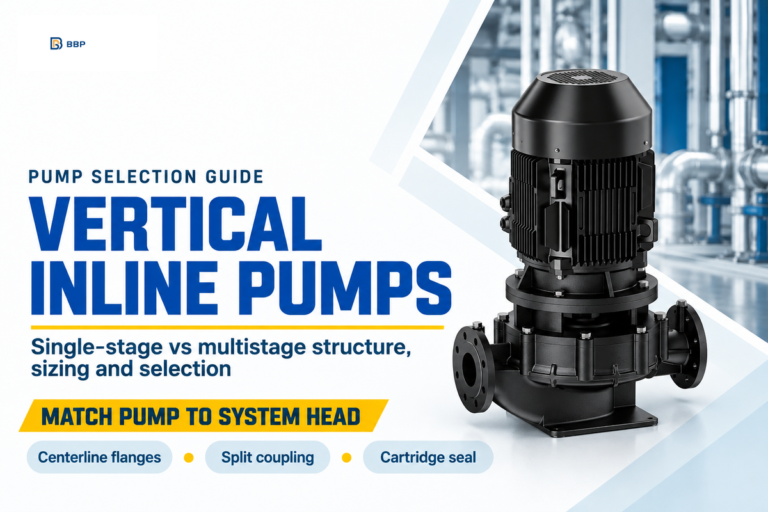
Vertical Inline vs. Vertical Multistage Pumps: Structure, Sizing, and Selection
A vertical inline centrifugal pump places its suction and discharge flanges on a single…
What Is a Progressive Cavity Pump? Working Principle, Rotor-Stator Geometry, Elastomer Selection, and Industrial Applications
A progressive cavity pump is a type of rotary positive displacement pump. This was…
Who Invented Water Pumps? A Chronological Engineering History from Ancient Screw Lifts to Industrial Centrifugal Pumps
Direct Answer: The first pump did not originate in a single workshop. When engineers…
Axial Thrust and Radial Thrust in Centrifugal Pumps: Hydraulic Causes, Formulas, and Mitigation
Axial thrust is the lengthwise hydraulic force parallel to the pump shaft centerline. Pump…
Pumps in Parallel: Combined Curves, Flow Sharing and Operating Limits
Pumps in parallel feed a common discharge header. The total flow is estimated as…
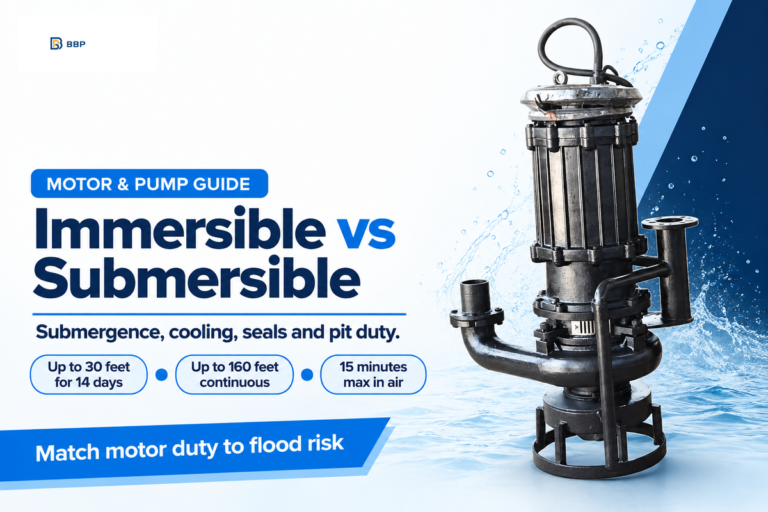
Immersible vs Submersible Motors and Pumps: Differences in Submergence, Cooling, Sealing, and Dry-Pit Installation
Updated November 2026 · Published by BBP Manufacturing Co., Ltd. An immersible motor can…
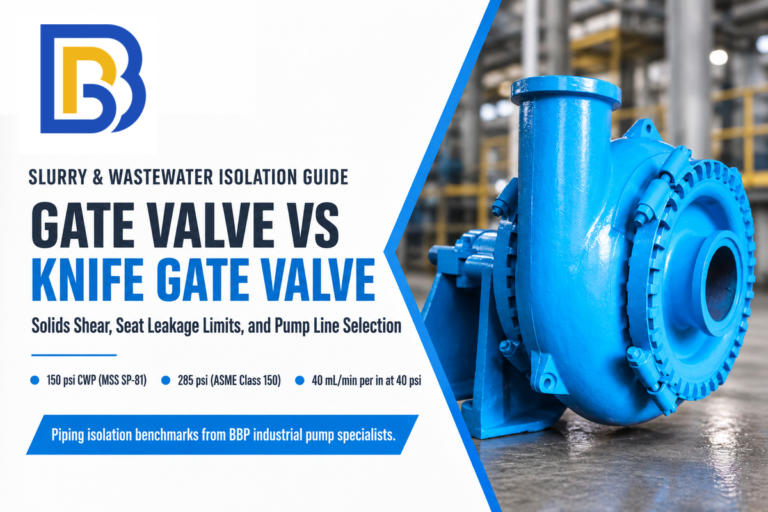
Gate Valve vs Knife Gate Valve: Differences, Sealing Limits, and Selection for Slurry and Wastewater Lines
Comparing a gate valve vs knife gate valve comes down to solid particle clearance,…
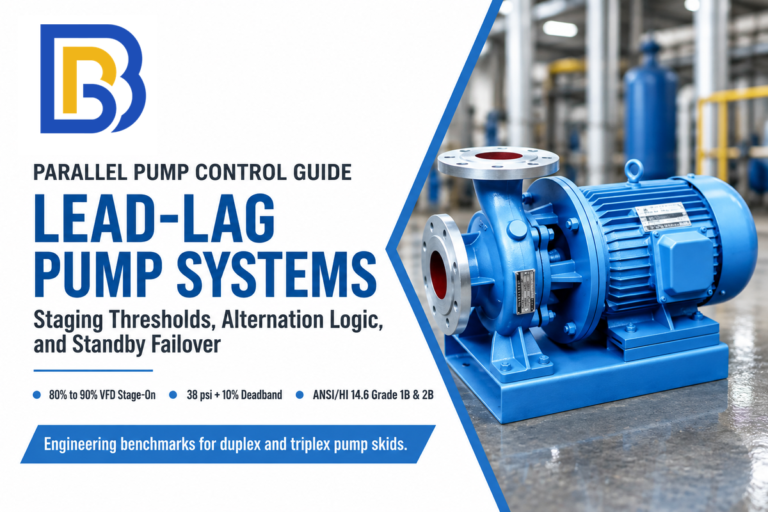
Lead-Lag Pump Control Systems: Staging Thresholds, Alternation Logic, and Standby Failover
In fluid handling, lead-lag pumps are parallel units managed by a shared controller that…

What Is an ECM Motor? Electronic Commutation, Control Module Functions, and Pump Drive Selection
Pump Drive & Motor Engineering Guide By CYH · Fluid Handling & Centrifugal Pump…
Trending now