Get in Touch with BBP

ISO 9001:2015 Certified
Sludge Pump
Industrial & Municipal Solutions for Demanding Applications
- Engineered for high-viscosity & abrasive fluid handling
- Heavy-duty cast iron & stainless steel construction
- Optimized impeller design to prevent clogging
- Low maintenance lifecycle with easy part replacement
0
Max Flow Rate (GPM)
0
Discharge Pressure (PSI)
0
Solid Handling (%)
0
Months Warranty
Thick Sludge Breaks Pumps — Here’s What Actually Works
Diagnosing sludge pump failure is often an exercise in futility. Clogging by rags, fibrous biosolids, and grit accelerates seal erosion, and abrasive wear extends impeller life below recommended hours. Plant operators pay twice: first in replacement parts, then in process downtime that cascades through dewatering and disposal schedules.
Standard dewatering pumps were never designed with solids-laden applications in mind. Their cyclonetype cavitation dynamics assume low solids content, uniform viscosity, and predictable particle size – all three conditions that do not apply in dewatering, paper black liquor, or mining tailings.
Sludge vs. Slurry vs. Trash — Material Definition
Sludge is a semi-fluid mixture with 2-30% solids (activated sludge, digested sludge, dewatered cake).
Slurry is aMinerals ranges 20-70% (abrasive).
Trash water is dewatering with loose debris and<10% solids.
“
Designing a sludge pump for viscosity management is distinctly different from designing one for hard particle erosion resistance.
Three Pump Families Solve Three Distinct Sludge Problems
01
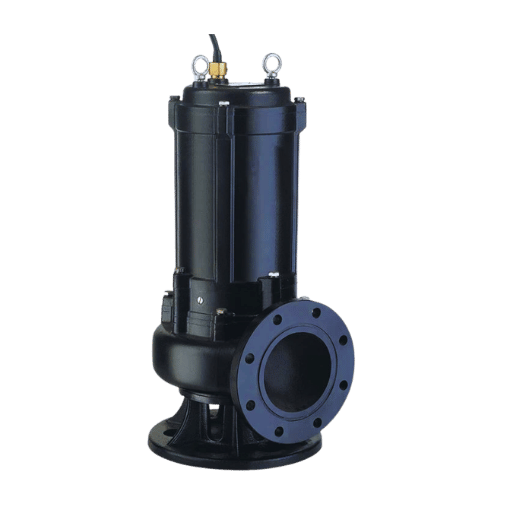
Submersible sludge pumps
– to remove abrasive maintenance sludge from sumps, pits, and lift stations without flooding pump rooms.
02
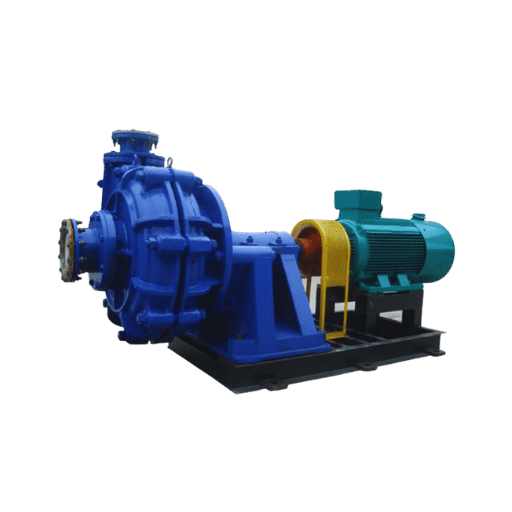
Horizontal centrifugal sludge pumps
– to transfer high-volume streams from unit processes and convey long distances.
03
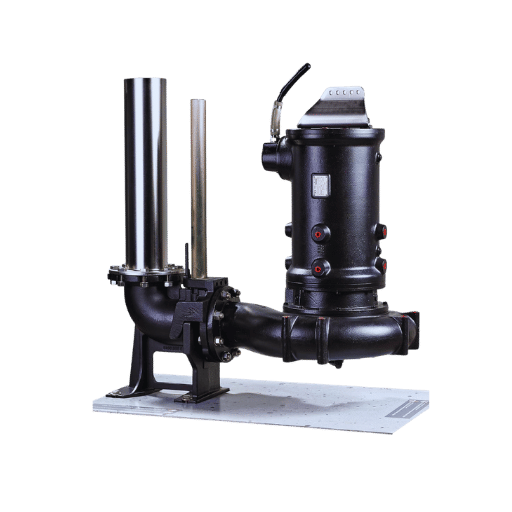
Chopper sludge pumps
– where abrasives ladenin influent with rags and fib webless clogging our impellers.
Industry Context —
Why Pump Selection Matters
U.S. publicly owned treatment works discharge an estimated 13.8 million dry tons of sludge (biosolids) annually. Pump MTBF performance accounts for one-third of electricity used in sludge processes – optimizing pump efficiency is therefore essential.
BBP Sludge Pump Line — Type Selection by Application
Specifying a smaller pump in the wrong family compared to sizing a larger pump in the correct family can be more expensive. Our three product lines align with the three sludge behaviors that engineers actually deal with.
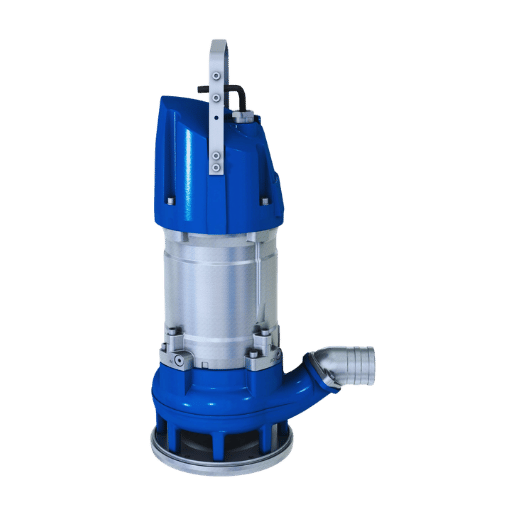
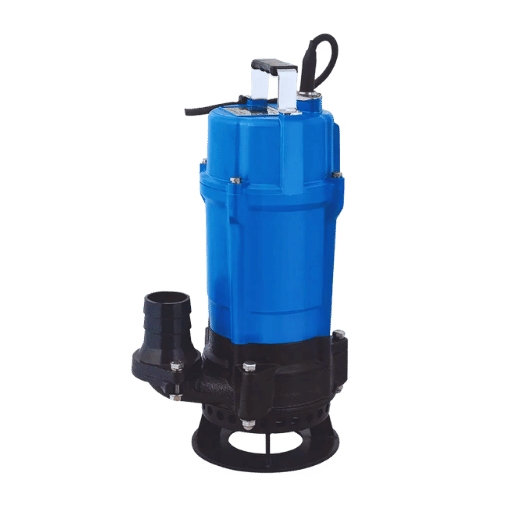
Submersible Sludge Pumps — AFEC Series
Installed in sumps, lift stations, and pit applications where flooding of the pump is either unlikely or inevitable. Every AFEC series pump includes integral motor overload protec-tion, strain relief, and an optional vertical float switch for level automation.
- Flow range50–800 GPM (11–180 m³/h)
- Max head40 meters (131 feet)
- Power1.5–30 kW, 50 Hz / 60 Hz
- Wet-end materialsHT250 iron / 304 SS / CD4MCu duplex
- Typical applicationsWWTP primary sludge lift, sump dewatering
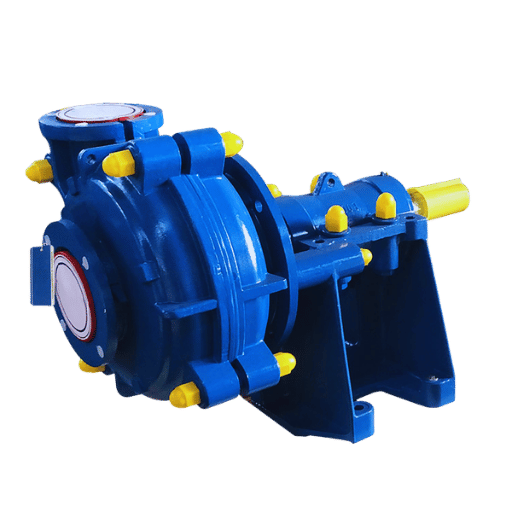
Horizontal Centrifugal Sludge Pumps — SP Series
As the primary long-distance main sludge mover between treatment phases, our SP series is engineered for abrasive solids and high-volume flows, with a high chrome wet end suitable for paper black liquor and mining tailings.
- Flow range150–2,200 GPM (34–500 m³/h)
- Max head60 meters (197 feet)
- Power7.5–160 kW
- Wet-end materialsASTM A532 Class III high-chrome white iron (Brinell 700), optional duplex stainless
- Typical applicationsWWTP main transfer, paper black liquor, mining tailings, chemical process sludge
Spec Benchmark
BBP SP-200 vs Sulzer XJS 110: Sulzer XJS 110 rated at 11.8 kW / 476 GPM / 131 ft head (60 Hz). BBP SP-200 delivers 13.5 kW / 520 GPM / 140 ft head — comparable efficiency with higher head headroom for longer discharge runs.
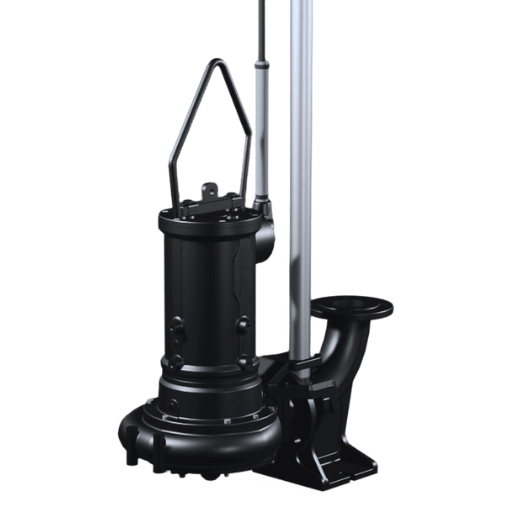
Chopper Sludge Pumps — WQ Series
The only sure way to process municipal influent that contains rags, wipes, and fibrous debris is chopping the debris down to size by impact at the pump intake. Our WQ series combines a tapered shear plate with cutting blades to minimize particle size at the inlet.
- Flow range100–1,500 GPM
- Solids passUp to 3 inch (76 mm) fibrous/stringy
- Clog reduction90% reduction vs non-chopper baseline
- Typical applicationsMunicipal WWTP influent, biosolids, dairy/food waste
Decision Matrix — Which Pump for Your Application
Solids content, abrasiveness, viscosity, head, and flow determine the appropriate sludge pump. By these five criteria, the sludge pump selection matrix indicates which of the six typical industriespecific scenarios matches six sludge applications with the recommended BBP family.
| Industry / Application | Solids % | Abrasion | Viscosity | Head range | Recommended BBP |
|---|---|---|---|---|---|
| WWTP primary sludge | 2–4% | Low | Medium | <20 m | AFEC submersible |
| WWTP dewatered cake transfer | 15–25% | Medium | High | <30 m | WQ chopper |
| Mining tailings | 30–60% | Very high | Low | 10–60 m | SP centrifugal (A532 wet-end) |
| Paper mill black liquor | 8–12% | Medium | High | 20–40 m | SP + duplex liner |
| Food processing sludge | 4–8% | Low | Medium-high | <25 m | AFEC 316L stainless |
| Chemical process sludge | 3–10% | Low-medium | Variable | 10–40 m | AFEC CD4MCu duplex |
Energy, Emissions, and Predictive Maintenance
Since sludge treatment accounts for nearly 1/3 of POTW electricity consumption, pump efficiency maps can be translated directly into operating cost and emissions footprint. BBP pumps facilitate load-matched operation with variable-frequency drive (VFD) integration resulting in up to 12% savings over a VFD constant-speed reference line.
A optional IoT monitoring module feeds vibration, temperature, and motor current for predictive maintenance scheduling where operators plan their intervention before the time their equipment is down.
Sludge Pump vs Slurry Pump vs Trash Pump — Data-Driven Comparison
Engineers and Procurement are sometimes given three pump categories to cover the same duty. The three pump labels are indistinct in the catalog copy but lead to very different mechanical designs. Using the incorrect one wastes money and reduces service life.
| Criterion | Sludge Pump | Slurry Pump | Trash Pump |
|---|---|---|---|
| Solids content (%) | 2–30% | 20–70% | <10% loose |
| Particle size (mm) | ≤25 | ≤150 | ≤50 soft |
| Abrasiveness | Medium | Very high | Low |
| Viscosity handling | Medium–high | Low–medium | Low |
| Typical application | WWTP / dewatering / paper | Mining / mineral processing / dredging | Construction site dewatering |
| BBP product line | AFEC / SP / WQ | See vertical slurry pump page | General dewatering series |
When to Specify Which
Proceed with sludge pump when fluid low-to-medium degree of abrasiveness is biological/organical semi-solid:WWTP biosolids, mill black liquor, food processing wastes. If mineral abrasive nature is prevailing go with slurry pump: mining tailings or concentrator under flow or sandgravel handling.
Select a trash pump exclusively for dewatering applications with free, transient solids; construction dewatering, flood control, and pool drainage. Mechanical designs are not interchangeable among these three categories.
Adjacent Product Line
For mining, mineral processing and high abrasion slurry services, check out our specific Vertical Slurry Pump page – built to handle 30-70% solids and designed to cope with aggressively abrasive wet-end service conditions.
→ Request a custom comparison based on your fluid specification.Results in Real Plants — Municipal WWTP and Industrial Case Studies
The buy decision is seldom about the pump in isolation. It is about what a pump does for the maintenance cycle, downtime and overall twelve-year total cost. The can be related to the actual BBP deployments used during the 2024-2025 project bidding and installed equipment operating information.
Case 1 — Municipal WWTP, 15 MGD Return Activated Sludge Duty
The regional municipal treatment plant used six older design submersible pumps to provide RAS to each of its four sequential stages. Plant operators observed 3–4 incidences of clogging/month. variability of +/− 18% in RAS flow controls was sufficiently tight to induce instability in biological treatment;
Engineering review of AFEC-200 units with enhanced float control and combined motor interlocking part of. Operator experienced performance improvements 12 months following commissioning.
+22%
Flow stability vs baseline
−18 hrs
Monthly downtime reduction
8,500 h
MTBF (vs 3,200 h legacy)
Case 2 — Paper Mill Black Liquor Dewatering
In a humid environment, a kraft paper mill pumped black liquor sludge at 800-1,000 centipoise viscosity at 10% solids. The life of legacy pumps was four months, with three to four impellers to replace, due to medium abrasive operation with thermal cycling.
Following a failure analysis, the site transitioned to BBP SP-150 machines with ASTM A532 Class III high-chrome white iron wet-end and a duplex liner for the volute.
3×
MTBF increase (4,000 → 12,000 h)
−$45k
Annual maintenance saved
ISO 5199
Technical compliance audit pass
Case 3 — Metal Mining Tailings, 45% Solids at pH 3.5
A metal ore treatment plant pumped tailings at 45% solids with 20% over 10 mm with pH 3.5 acid conditions. An imported European rival pump provided the service but was condemned by the operator due to the total cost.
We supplied the SP-300 units with CD4MCu duplex stainless wet-ends, designed for the acidity and abrasion. During a 12-year time frame the user claims significant cost saving compared to the incumbent.
~$280k
12-year TCO savings vs incumbent
CD4MCu
Wet-end for pH 3.5 service
45%
Tailings solids handled at rated flow
“
We tested fourteen impeller geometries against high-abrasion tailings before settling on the A532 Class III wet-end paired with a duplex liner. It is the only configuration that passed our accelerated-wear bench test without measurable shaft vibration shift.
— BBP Engineering Team, Sludge & Slurry Product Line
Twelve-Year TCO Framework
Total cost of ownership for a sludge pump usually follows five cost drivers: purchase, installation, service life, operating cost, and downtime. Industry reliability studies confirm that MBTF improvement leads to TCO reduction, but not automatically, because spare parts strategy and energy consumption are independent variables.
Total operation comparison for twelve-year lifecycle of BBP features savings of 20%-35% versus specifying on purchase price alone.
Ready to optimize your total cost of ownership?
Request a quote based on your flow rate and fluid specificationCertifications & Materials — ISO 9001, ISO 2858, ASTM A532
Procurement audits for sludge pumps open with three questions: quality assurance, pump dimensional compliance, hydraulic testing. The BBP certification set map directly to each audit gate.
ISO 9001:2015
Quality Management
ISO 2858
End-suction pump dimensional standard
ISO 5199
Chemical pump technical specification
ISO 9906
Hydraulic performance Grade 1B / 2
CE Mark
European export compliance
What These Certifications Mean in Practice
ISO 9001:2015 covers the full BBP quality assurance across castings, heat treatment, machining, coating, and inspection. Every pump carries traceable material test and hydro test reports.
ISO 2858 governs the dimensional interchangeability for end-suction pumps – important for plant that want to rotate stock across multiple suppliers without re-piping. ISO 5199 extends the ISO 2858 with technical specification for corrosive service pumps, routinely required by procurement auditors.
ISO 9906 sets the hydraulic test grades. Every BBP pump is tested to Grade 1B or Grade 2 depending on application class, with factory performance curves available for every serial number.
Material Selection Guide
| Material | Typical application | Hardness / corrosion property |
|---|---|---|
| HT250 grey iron | Entry WWTP, low abrasion | Brinell ~180 |
| ASTM A532 Class III | Abrasive sludge, mining tailings | Brinell 700 (high-chrome white iron) |
| CD4MCu duplex stainless | Corrosive chemical sludge, acid | PREN ~38 |
| 316L stainless | Food processing, pharmaceutical | Pitting-resistant |
Sludge Pump Procurement — Pricing Transparency, Delivery & OEM Support
Sludge pump offers are routinely opaque industry-wide. Buyers receive line-item pricing only after several weeks of technical back-and-forth, which delays capital planning and makes apples-to-apples vendor comparison difficult. We publish price bands as a buyer-friendly starting point.
Pricing Bands (EXW Beijing, verified 2026-Q2)
Entry
$2,500
– $8,000
– $8,000
- 10–150 GPM
- HT250 grey iron
- Standard submersible / small centrifugal
Standard
$8,000
– $18,000
– $18,000
- 150–600 GPM
- White iron + cast steel wet-ends
- Most WWTP and paper duty
Heavy-Duty
$18,000
– $30,000
– $30,000
- 600–1,500 GPM
- ASTM A532 Class III
- Tailings, abrasive service
Premium
$30,000
– $45,000+
– $45,000+
- 1,500–2,200+ GPM
- CD4MCu / duplex stainless
- Chemical, corrosive, high-flow
Delivery & Lead Time
Standard build
4–8 weeks ex-works Beijing
Rush build
2–3 weeks for in-stock wet-end kits
In-stock models
Immediate dispatch for standard AFEC and SP trim sizes
OEM project
8–14 weeks including custom impeller development
OEM, MOQ, and Customization
Minimum order quantity is one unit for standard configurations. OEM project orders of ten units or more receive custom engineering for impeller, shaft, and casing to match customer hydraulic curves or mechanical interfaces.
Pre-sale support includes application engineering review with curve matching and 24-hour response. Post-sale covers remote diagnostics, replacement spares dispatch from standing inventory, and on-site commissioning support where necessary.
→ Request lead time estimate
Free Resources
Interactive Engineering Tools
Eliminate guesswork from your procurement process. Use our proprietary data tools to specify, cost, and match the exact pump for your demanding application.
Sludge Pump Selector
Input your target flow rate, operating head, and fluid properties to instantly match with the optimal BBP pump family and hydraulic curve.
Launch SelectorTCO Calculator
Evaluate long-term ROI. Compare lifetime energy consumption, maintenance downtime, and replacement parts costs against your baseline.
Calculate TCOMaterial Selection Guide
Navigate highly abrasive or corrosive environments. Discover the exact wet-end metallurgy required to maximize your pump’s lifecycle.
View GuideSludge Pump FAQ
Sludge pumps carry out flexible solids handling at 2-30% solids with medium abrasion – wastewater biosolids, paper black liquor, food industry waste. Slurry pumps do high-solids (>70%) mineral-duty with abrasive content – mining tailings, concentrator underflow, dredging.
The mechanical designs differ at the impeller and wet-end. Combining a slurry pump for WWTP duty and sludge pump for mining tailings wears out prematurely.
Depending on the application, sludge pumps are referred to as biosolids pumps, dewatering pumps, non-clog pumps, solids handling pumps, or chopper pumps. The label varies by industry, but the mechanical purpose – pushing semi-solid viscous material with clog resistances – remains consistent.
Service life depends on duty cycle, fluid abrasion, and schedule. Typical BBP deployments show 8,000-12,000 hours MTBF on mainline duty. Our ASTM A532 wet-end significantly extends this range in abrasive environments.
Pumps with predictive maintenance monitoring often show 20-30% longer time-in-service than reactive maintenance baselines.
Yes, centrifugal sludge pumps work well for low-to-medium viscosity sludge, particularly below 12% solids content. Above this level, positive-displacement designs (progressive cavity, diaphragm, or chopper) outperform centrifugal geometry.
Our SP series is a centrifugal design purpose-built for sludge duty—not a general water pump retrofit to cope with solids.
Flow rate targets are set by plant throughput. A typical 10 MGD WWTP requires RAS pumping flow in the 300-500 GPM range; primary sludge transfer flow is typically 50-200 GPM with a higher solids load.
We provide custom recommendations based on your plant hydraulic profile and NPSHa budgets.
We compete on vertical integration and pricing clarity. In a direct spec comparison, our BBP SP-200 compares favorably to the Sulzer XJS 110 on flow (520 GPM vs 476 GPM) and surpasses it on head (140 ft vs 131 ft).
BBP combines ISO 9001 manufacturing with tiered pricing and 4-8 week delivery lead times.
Three factors minimize downtime: Correct pump family selection, wear-resistant wet-end design, and condition-based maintenance. Optional IoT monitoring detects bearing or seal wear before failure. Our impeller/seal spares pack reduces whole replacement cycles from weeks to days.
Manufacturing: BBP Manufacturing Co., Ltd. owns a fully integrated factory including heat treating, machining, assembly, and hydraulic testing. We maintain 100% traceability.
Our international network includes engineering contractors and direct plant operators in chemical processing, paper, and mining industries worldwide.
Support: Pre-sale hydraulic simulation and NPSHa calculations within 24 hours. Post-sale diagnostics, training, and on-site commissioning.
Our standard one-year OEM warranty starts from commissioning (or 18 months ex-works). We offer extended warranties for project-specific supplies where maintenance regimes are verified.