Get in Touch with BBP

Gravel Pump
BBP Manufacturing Co., Ltd. — BBPGravel Pump — Heavy-Duty Dredging & Mining Solutions | BBP
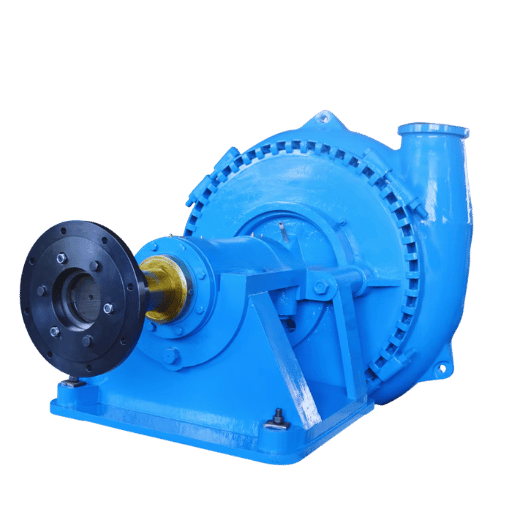
BBP gravel pumps encompass 24 designs including AMG and AWN ranges- engineered for solid passage of up to 241mm on land based installations & to 1,200mm on large dredging ships. All gravel pump equipment supplied by BBP is manufactured & quality assured in our ISO-certified facility in Beijing.
Total Models
24Series
AMG + AWNMax Solid
241 mmMax Flow
25,000 m³/hMax Head
85 mDrive Options
5 Types
The Engineering Problem
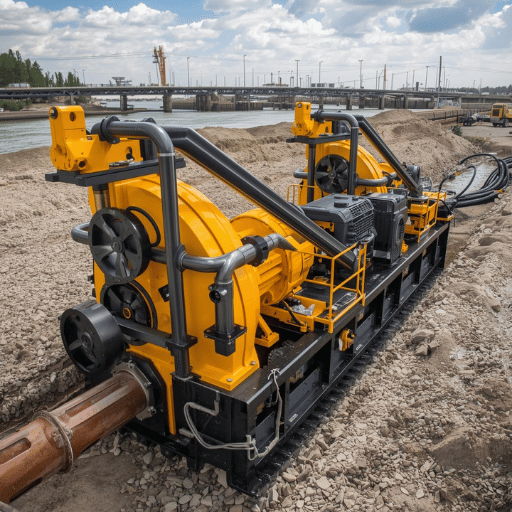
The Gravel Pumping Challenge — And How BBP Solves It
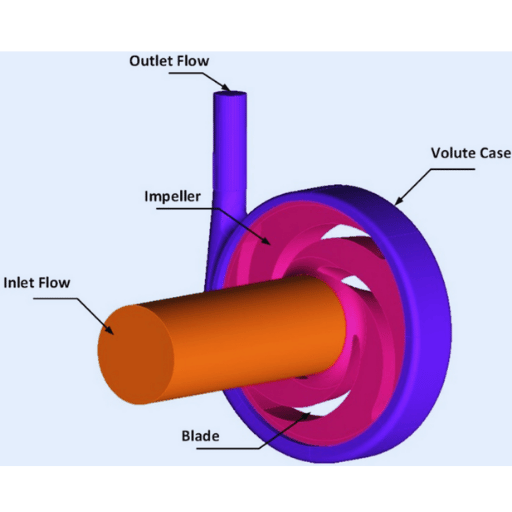
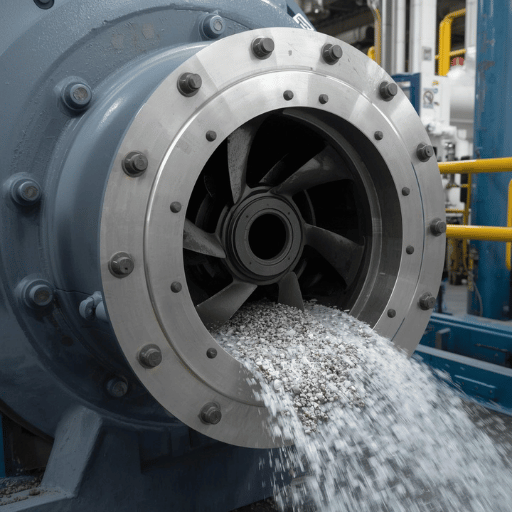
A gravel pump is a high-capacity centrifugal pump with the capability of transporting abrasive materials such as gravel, rough sand, rock particles and oversized solids in suspension without sacrifice of efficiency or blockages. In contrast to the common centrifugal pump, where slurry passes through a narrow impeller geometry optimized for fine particulates, the gravel pump features wide flow passages, an open or recessed impeller and corrosion-resistant alloy construction to transport large angular solids constantly at high throughput. Consequently the gravel pump offers an intermediate point on the solid handling spectrum between a regular slurry pump & a dredge pump- engineered with the ability to process what standard centrifugal solutions cannot.
The primary mode of pump failure of gravel & dredging pumps is premature impact erosion of the impeller and casing. When handling solids larger than 50mm, regular pumps with tight clearances between impeller & casing will clog or fail rapidly; should solids get through impact wear will intensify and lead to implosion. Downtime in sand & gravel operations in excess of $100,000 per annum due to using the wrong pump.
Pain
Premature Wear & Unplanned Downtime
Standard pumps are unable to operate at this size range, impacting the tapered settled particles more rapidly, leading to blade vane impact erosion, advanced casing throughput & impeller destruction.
Cause
Standard Impellers Can’t Handle Large Particles
Conventional closed impellers designed for particles less than 38mm in size cause concentrated impact erosion due to high velocity vane edge skimming at the inlet passage window.
Fix
BBP Open Impeller + 27% Chromium Alloy Construction
Our open impeller range prevents impact damage at the inlet passage & the 27% Cr alloy wear ring sections prolong component lifetime in abrasive applications against abrasive impacts from the large sized material. We offer a range of sealing solutions from packing, to mechanical seals & combinations to prevent leakage.
Proof
241mm Max Solid, 24 Models, 5 Drive Configurations
AMG gravel sand pumps pass solids to 241mm. AWN dredging pumps scale to 1,200mm solid capacity. Combined, they cover flow from 36 to 25,000 m³/h — one manufacturer, tested in-house, delivered with OEM support.
Details of different models, seals, drive solutions & application selection guides so your engineering department can define the optimum pump configuration below.
Product Specifications
BBP Gravel Pump Series — AMG & AWN Models, Specs & Selection Guide
AMG Gravel Sand Pump — Performance & Specifications
The AMG series is BBP’s land-based sand & gravel pump series. From a single casing, wide passage open impeller, 360deg adjustable discharge & a high chrome wet end, the AMG pumps are known around the world for reliability & consistency of performance. Models range from the 100mm (6/4D) outlet to 350mm (16/14TU-AMGH) with the high-head AMGH covering the higher head needs where required. Casing and impeller are production-matched from 27% chrome white iron to give the optimum combination of hardness & toughness- delivering 2-3x the wear resistance of standard cast iron alloy in material operations. Shaft sleeves and roller bearing elements are nip-press fitted for ease of on-site servicing.
| Model | Outlet Dia (mm) | Speed (rpm) | Flow (m³/h) | Head (m) | Max Power (kW) | Max Solid (mm) |
|---|---|---|---|---|---|---|
| 6/4D-AMG | 100 | 600–1,400 | 36–250 | 7–56 | 60 | 82 |
| 8/6E-AMG | 150 | 800–1,400 | 180–540 | 12–52 | 120 | 120 |
| 10/8F-AMG | 200 | 500–1,000 | 180–820 | 12–65 | 560 | 178 |
| 12/10G-AMG | 250 | 400–650 | 180–1,200 | 12–40 | 600 | 220 |
| 14/12G-AMG | 300 | 300–700 | 700–2,750 | 8–70 | — | 241 |
| 14/12TU-AMG | 300 | 300–700 | 700–2,750 | 8–70 | 1,200 | 241 |
| 10/8F-AMGH | 200 | 500–1,100 | — | — | 960 | 180 |
| 12/10G-AMGH | 250 | 300–700 | 500–2,000 | — | 400 | 210 |
| 16/14TU-AMGH | 350 | 250–500 | — | — | 1,200 | 200 |
AMG Application Range: AMG gravel pumps serve sand and gravel mining operations, explosive sludge handling in metal melting and foundry processes, river and harbor dredging, sugar beet processing (beet-to-flume transport), slag granulation in steel mills, and tunneling dewatering with rock fragment carryover. At one end, the 6/4D-AMG is the entry point for moderate particle loads; the 14/12TU-AMG and 16/14TU-AMGH are specified for high-tonnage quarry and mine de-watering where maximum solid diameters reach 241mm.
AWN Dredging Pump — Performance & Specifications
BBP’s AWN series is purpose-built for trailing suction hopper dredgers (TSHD) and cutter suction dredgers (CSD). From 200AWN to 500AWN we use a single-single. Sump volute type pump to achieve high head at moderate speeds. From 600AWN (AWND suffix) double-single. Sump volute pump it provides balance of axial thrust and speed efficiency above 5,000 m/ h (solid up to 1,200mm on 1000AWN) to allow. Offshore aggregate extraction of secondary archipelagic construction requiring 85 87% pump efficiency.
| Model | Flow (m³/h) | Head (m) | Speed (rpm) | Efficiency (%) | NPSHr (m) | Max Solid (mm) |
|---|---|---|---|---|---|---|
| 200AWN | 400–800 | 20–40 | 700–900 | 60–65 | <4.5 | 170 |
| 250AWN | 750–1,000 | 40–65 | 700–850 | 70–72 | <4 | 250 |
| 300AWN | 1,050–1,300 | 40–65 | 400–600 | 74–78 | <4.5 | 300 |
| 350AWN | 2,000–3,200 | 14–65 | 400–550 | 70–78 | <4 | 350 |
| 400AWND | 2,600–3,000 | 40–65 | 400–550 | 74–78 | <4.5 | 450 |
| 500AWN | 3,600–4,200 | 20–40 | 220–350 | 72–75 | <4.8 | 500 |
| 500AWND | 4,500–5,500 | 24–45 | — | — | — | 500 |
| 600AWN | 5,000–9,000 | 45–65 | 260–420 | 81–87 | <6 | 600 |
| 700AWN | 3,600–4,200 | 20–40 | 220–350 | 72–75 | <4.8 | 700 |
| 800AWN | 8,000–12,000 | — | — | — | — | 700 |
| 900AWN | 12,000–19,000 | 50–77 | 280–330 | 85–87 | <8 | 900 |
| 1000AWN | 34,000–25,000 | 25–74 | 151–200 | 85–87 | <12 | 1,200 |
Seal Options — Packing, Mechanical & Combined
The seal you select affects maintenance interval, dilution water requirements and operating cost throughout the life of the pump. All BBP gravel pumps are supplied with three different seal options. Select the appropriate one according to the particle load, water supply and cleanliness requirement of your site.
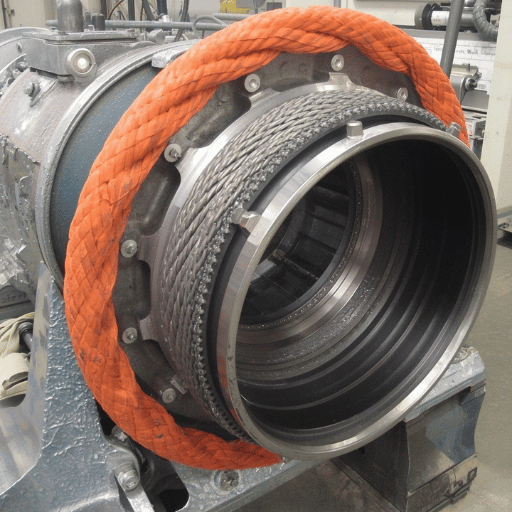 Option A
Packing Seal
Compressed braided packing rings around the pump shaft sleeve. Low first cost, replace in the field without special tools. Suitable for moderate abrasive service, where controlled dilution water is available, and some leakage at the stuffing box is acceptable. Frequent gland adjustment required; packings to be replaced periodically.
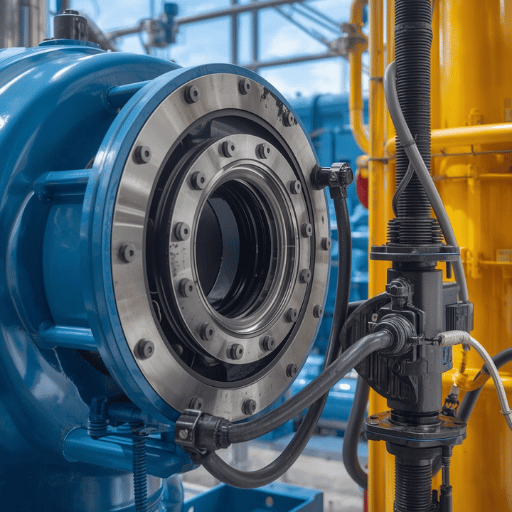 Option B
Mechanical Seal
Face-type mechanical seal with no leakage requirement. Designed for clean side situation, sensitive environment installations or critical process water contamination requirements. Higher initial costs less than dilution water and gland water maintenance. Used on AWN installations with limited deck arrangements for water plumbing.
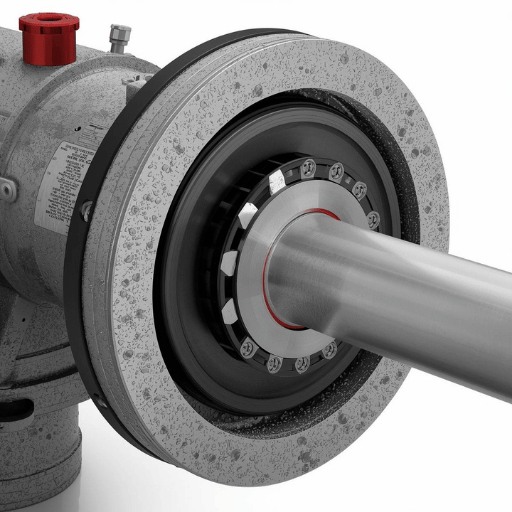 Option C
Combined Packing + Mechanical
A hybrid design with a mechanical seal inboard, packing outboard of the shaft sleeve. Packing serves as the secondary barrier, allowing the mechanical seal to remain the primary. Providing the longest service intervals of heavy duty gravel and mining applications where particle ingress may be an issue through the face of the mechanical seal. Standard on our larger AMG offering in quarry duties.
Drive Configurations
BBP Gravel Pumps can be supplied with five drive options—designed to complement the most appropriate power source, speed control capability, footprint, start-up torque demand.;
V-Belt Drive
Speed reduction via sheave ratio — cost-effective for fixed-speed installations with moderate power requirements. Easy belt replacement on-site.
Flexible Coupling
Direct drive through an elastomeric coupling. Low maintenance, compact footprint. Best when motor and pump speeds are matched and axial misalignment is controlled.
Gear Box
Gear reduction for high-torque, low-speed applications — common on large AWN dredging pumps driven by diesel prime movers where motor-to-pump speed ratios exceed 3:1.
Hydraulic Clutch
Fluid coupling for soft-start capability — absorbs shock during start-up against a settled gravel bed. Preferred on dredgers where sudden load spikes would trip motor protection.
Variable Frequency Drive
Electronic speed control for precise flow management, soft starting, and energy savings at partial load. Increasingly specified on land-based mining installations with fluctuating feed rates.
Decision Parameters for Gravel Pump Specification
How to Select the Right Gravel Pump
Four factors are used to select the right gravel pump for your application. Obtain these figures for your BBP application engineer before requesting a quote – all impact the model selection, impeller design and sealing arrangement, as follows:
Required flow rate(m/hr):
Total volume of slurry topass through your operating point—no water flow! Include slurry sg.
Figure 2 (Gau2). Total Head (m):
Static head+pipe friction headloss+discharge head(SDUL are due to under sized head). Pump run out and cavitations occurs due to under size head.
Maximum Particle Size (mm):
The largest solid you require to go through. Don’t worry about average particle size. Design for worst-case in your feed stream.
Slurry Concentration (%by weight):
Higher solids concentration results in reduced effective head & flow – correction factor used by BBP engineers for concentrations >20%by weight.
Type of installation:
land (AMG) versus dredger-mounted (AWN), whether driven by diesel or electric, submerged depth of the suction inlet that is used for NPSHa calculation.
Using these 5 parameters our engineering team will identify the correct model of AMG or AWN, the seal, drive and model impeller clearance setting to use, plus verify your maximum solid size will clear the chosen model’s passage geometry. Enter your parameters in the form below or ask our engineering team directly using WhatsApp for a quick reply.
Failing to find the suitable model for your application parameters?
WhatsApp Our Engineer →
Technical Comparison
Gravel Pump vs. Standard Slurry Pump — Performance & Total Cost Comparison
Choosing a standard slurry pump or sand pump for a coarse or gravel dredging duty is the most costly design error in abrasive-slurry handling. Particle-passing capacity is not just marginally different — it differs by a factor of 10. Below, measured BBP results are compared with published industry standards, showing where pump types can operate and where they cannot:
| Feature | Gravel Pump — BBP AMG / AWN | Standard Slurry Pump | Standard Sand Pump |
|---|---|---|---|
| Max Particle Size | 82–241 mm (AMG) / 170–1,200 mm (AWN) | 25–76 mm | 10–38 mm |
| Flow Range | 36–25,000 m³/h | 10–5,000 m³/h | 20–3,000 m³/h |
| Wet-End Material | 27% Cr alloy / Ni-hard | A05 high chrome | Cast iron / rubber lined |
| Seal Options | Packing / Mechanical / Combined | Packing / Expeller | Packing only |
| Typical Service Life | 2–3× longer (high-chrome wet end) | Baseline | 0.5–1× (accelerated wear) |
| Best Application | Dredging, mining, quarrying, tunneling, slag granulation | Mill discharge, cyclone feed, tailings transfer | River sand transfer, fine aggregate |
| Drive Options | 5 types (V-belt, coupling, gearbox, hydraulic clutch, VFD) | 2–3 types typically | Direct / V-belt |
Total Cost of Ownership Analysis
Industry studies indicate investment cost of the pump makes up only a small 5-10% of total life cycle costing. Typically 25-35% of total pump operating cost of the system service life is maintenance and wearing parts – energy comprising the dominant remaining portion. The 27% chromium alloy wetted end components of the BBP gravel pump tend to produce 2-3 times longer service life than equivalent standard cast iron designs between overhauls, thus directly lowering your maintenance-driven TCO. In a three-year, continuous sand and gravel mining operation, the maintenance cost savings of specifying a heavy duty alloy wet end well exceed the additional capital cost. Once you consider the financial impact of unscheduled downtime – lost production, emergency parts sourcing, increased labor – the argument for specifying the right pump to begin with becomes a no-brainer. Pumping large particles in an abrasive slurry compatible pump prevents increased wear and tear that destroys equipment and production schedules.
Where your application leans towards either the slurry pump or the gravel pump ( solids of 38mm to 82mm and fairly rich slurry ) BBP engineers will evaluate your particular duty point and advise whether selecting a large diameter slurry pump from our BBP slurry pump range, or a small AMG gravel pump will provide the optimum service life and total cost solution for your installation.
Prepared to evaluate total cost of ownership for your application?
Connect with our engineering team to compare service life metrics based on your exact duty point.
Request a Custom Comparison →
Quality Assurance
Quality Assurance & Certifications
BBP is certified under the ISO 9001 quality assurance system, which covers the entire production chain from the procurement of raw materials to the final dispatch. Our ISO 14001 certification in environmental management demonstrates our commitment to casting and heat treatment operations that are environmentally responsible. ISO 45001 implements occupational health and safety regulations throughout our production floor in Beijing. CE marking confirms our compliance with European machinery and safety directives, which we apply to all export customers with direct access to EU markets.
ISO 9001
Quality Management System
ISO 14001
Environmental Management
ISO 45001
Occupational Health & Safety
CE Mark
EU Conformity Declaration
Production Quality Chain
Each BBP gravel pump is subject to a six-stage quality sequence before leaving our shop, with wet-end castings first passing a physical chemistry analysis and metallographic inspection to confirm sample Cr percentages and carbide distribution within the alloy matrix. Once carburized and quenched, every impeller and casing is subjected to a Rockwell hardness test, (any casting not firm enough to pass our critical HRC 58 requirement is rejected at this stage, rather than holding up final inspection). Water test monitoring guarantees flow, head and efficiency data conforms to the published curve at your duty point. The high service factors demanded of our pumps mean no marginal component makes its way to assembly.
Casting
01
Heat Treatment
02
Machining
03
Assembly
04
Coating
05
Testing
06
“Every impeller and casing passes our metallographic analysis protocol before assembly – we reject any casting that falls below HRC 58 on the Rockwell hardness scale.”
Need compliance documentation for your procurement file?
Download Certification Package →
COMMERCIAL INFORMATION
Procurement Guide — Pricing, Lead Times & OEM Support
With application-specific requirements this variable determined by your duty point parameters, BBP can advise within 24 hours for AMG and within 48-72 hours for AWN dredging pump setups requiring individual engineering packages.
| PRICING FACTOR | WHAT IT AFFECTS | YOUR INPUT REQUIRED |
|---|---|---|
| Model Size & Config | Base unit cost scales with outlet diameter and series. | Flow rate (m³/h), head (m), max solid (mm) |
| Material Grade | Standard 27% Cr alloy vs. premium Ni-hard (adds 15–25%). | Slurry abrasivity, particle hardness (Mohs) |
| Seal Type Selection | Mechanical seal adds cost vs. packing; combined is premium. | Installation environment, dilution water availability |
We do not publish a list price as applications are simply too varied in their duty requirements to make generic pricing helpful information for your procurement department to work from.
OEM Manufacturing Capability
A full OEM service is available for manufacturing gravel pump components to your specifications- whether full custom designs for OEMs to produce under their own brand, or white label components for your dredging or processing plant OEM partners.
Our OEM service offers local component supply for OEM production in Southeast Asia, Africa and South America to satisfy dredging or mining clients requiring assembly in country.
After-Sales & Tech Support
Your duty cycle support needs- from initial sales and commissioning through long-term process optimization- are supported through our dedicated after sales operation. Technical telecommunication support is available 24 hours/day.
Prepared to evaluate total cost of ownership for your application?
GET INSTANT QUOTEEngineering Tooling & Calculators
Gravel Pump FAQ
What is the solid passage capacity of BBP gravel pumps?
AMG gravel sand pumps pass solids from 82mm (6/4D-AMG) to 241mm (14/12TU-AMG). AWN dredging pumps go higher — the 1000AWN handles solids up to 1,200mm for offshore aggregate extraction. BBP engineers always size for the largest solid in your feed stream, not the average.
How do I determine the correct gravel pump size for my application?
Five parameters lead to your pump choice: your required flow in m/h, total dynamic head in metres, your feed stream maximum particle size, total slurry concentration as a percentage by weight, and installation type - land based versus dredger mounted. Providing these figures, BBP engineers perform performance curve matching, passage geometry verification and NPSHa/NPSHr analysis to determine the correct model, impeller size and drive configuration.
Difference between a gravel pump and standard slurry pump?
Gravel pumps are engineered for particles above 50mm - they feature larger flow passages, open or semi-open impeller geometries, heavier duty casing walls and higher-grade alloy construction to ensure that coarse materials do not cause clogs or accelerated impeller wear. Standard slurry pumps are generally designed for finer particles, usually sub 38mm.
How does a BBP centrifugal gravel pump function?
A centrifugal gravel pump moves slurry into the pump through the suction nozzle by drawing slurry into the eye of an open impeller. The impeller accelerates slurry moving from the feed point radially outwards, creating velocity that develops pressure in the volute casing. Passage widths allow coarse particles to accelerate smoothly without clogging.
What does the daily maintenance schedule involve for BBP pumps?
Maintenance addresses 4 activities: 1) impeller-to-casing clearance inspection & adjustment, 2) monitor packing gland seal condition, 3) grease-lubricate roller bearings (every 500-1,000 hours), and 4) inspect wear liner condition. The modular design allows in-field component swaps without removing the entire pump.
Does BBP offer OEM manufacturing and white-label services?
Yes. BBP delivers complete OEM services spanning tooling design, casting, heat treatment, machining, and assembly. Deliverables include alloy chemistry certification, dimensional inspection reports and hydro test records. We stock a spare parts inventory of commonly replaced wear items for standard AMG & AWN series.
What drive arrangements are available for the AMG & AWN series?
BBP offers five drive arrangements: V-belt drive, direct coupling, gear box, hydraulic clutch, and VFD (variable frequency drive). Drive selection depends on available space, required starting torque, type of prime mover, and flow control value.