Get in Touch with BBP

ISO 9001:2015 Certified
Precision Heavy-Duty Processing Equipment
Engineered for maximum durability, structural integrity, and uninterrupted operational flow in harsh industrial environments.
- High-Grade Steel Housing
- Vibration Control Tech
- Extended MTBF Rating
- Global Compliance

100k+
Hours MTBF
40%
Energy Savings
15mm
Casing Thickness
24/7
Continuous Duty
Tight Pump Rooms, High-Flow Demand — How Vertical Split Case Solves Both

Retrofit HVAC plants, high-rise fire pump rooms, and municipal booster stations share one constraint: water demand keeps growing, floor area does not. A horizontal split case can consume 30% more room than an inline alternative — a trade-off that quickly rules it out in space-constrained buildings.
A vertical split case pump is a centrifugal pump with an axially split casing and a vertically mounted shaft. The motor sits directly above the casing; suction and discharge flanges exit horizontally at matching elevations — collapsing the long piping run a flat-mounted split case demands, while retaining the double-suction impeller that made the BB1 family the default for high-flow water, fire, and cooling duty.
-
01
Footprint Collapsed to Piping
Suction and discharge rise directly above the casing. The pump occupies only the area beneath the header — not the horizontal run.
-
02
Serviceable In Place
The axially split top cover lifts off without disturbing motor or piping. Impeller, wear rings, seals, and bearings come out intact.
-
03
Hydraulically Self-Balanced
The double-suction impeller cancels axial thrust. Lower bearing load, lower NPSHr, longer service intervals.
Why Vertical Changes the Math
Vertical orientation does not alter hydraulic behaviour — efficiency, NPSHr, and thrust balance stay identical to a horizontal equivalent. What changes is the volume the pump occupies: suction and discharge ascend into the header rather than extending radially, collapsing the footprint to the casing cross-section.
BBP Vertical Split Case Pump Series — Models & Selection EN · PROC
Our V-series covers three duty categories. Each model uses the same axially split casing, between-bearing shaft, and double-suction impeller design; distinctions lie in stage count, material class, and compliance scope. Reliability is built in at the casting and balancing stage — not marketed as an afterthought.

V-S · STANDARD
V-S Series — HVAC & Water Supply
- Flow: 200–6,000 GPM
- Head: 10–200 ft
- Pressure: 175 PSIG standard
- Material: Cast iron / ductile iron / SS 316
- Best fit: Commercial HVAC, district cooling, municipal booster.

V-XS · MULTISTAGE
V-XS Series — High-Pressure Booster
- Flow: 200–2,000 GPM
- Head: 100–400 ft
- Pressure: 300 PSIG optional
- Material: Cast iron / SS 316 / duplex
- Best fit: High-rise zoning, boiler feed, condensate return.
V-F · FIRE-RATED
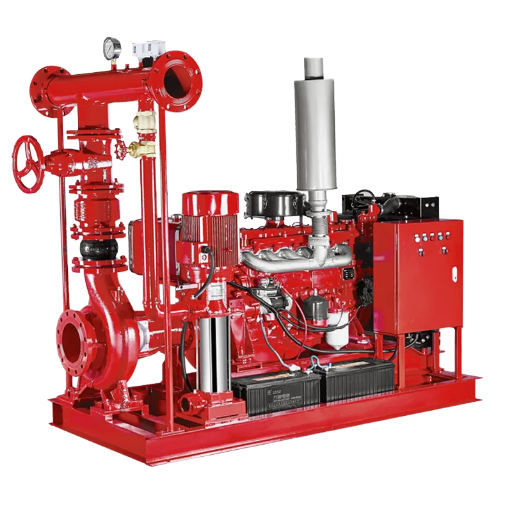
V-F Series — NFPA 20 Fire Protection
- Flow: 500–4,000 GPM
- Head: 60–260 ft
- Drive: Electric / diesel
- Compliance: NFPA 20 · UL/FM optional
- Best fit: Sprinkler & standpipe systems per NFPA 20 Ch. 4.
- V-Series Duty Envelope configuration
- Decision Matrix Series Matching
| Model | Flow (GPM) | Head (ft) | HP | Inlet / Outlet | Typical Material | Compliance |
|---|---|---|---|---|---|---|
| V-S 3×4 | 200–800 | 10–80 | 5–60 | 3″ / 4″ | Cast Iron / SS 316 | ISO 9001 |
| V-S 6×8 | 800–3,200 | 20–150 | 30–200 | 6″ / 8″ | Cast Iron / Ductile Iron | ISO 9001 |
| V-S 10×12 | 2,500–6,000 | 30–200 | 100–500 | 10″ / 12″ | Ductile Iron | ISO 9001 |
| V-XS 4×6 | 200–1,200 | 150–400 | 60–250 | 4″ / 6″ | SS 316 / Duplex | ISO 9001 |
| V-F 6×8 | 500–2,000 | 60–180 | 50–250 | 6″ / 8″ | Cast Iron | NFPA 20 · ISO 9001 |
| V-F 8×10 | 1,500–4,000 | 80–260 | 150–500 | 8″ / 10″ | Cast Iron | NFPA 20 · ISO 9001 · UL/FM opt. |
The Performance curves (exact, hydrostatic test pressure, ANSI B16.1 / B16.5 / DIN PN16 flange standards) are confirmed for the project per the RFQ submittal data sheet.
| Your Duty | Flow Point | Head Point | Recommended Series |
|---|---|---|---|
| Commercial HVAC chilled water circulation | 500–4,000 GPM | 40–150 ft | V-S |
| District cooling / high-rise chilled water | 2,000–6,000 GPM | 100–200 ft | V-S (10×12) |
| High-rise pressure zoning / boiler feed | 200–1,500 GPM | 200–400 ft | V-XS |
| NFPA 20 sprinkler / standpipe fire pump | 500–4,000 GPM | 60–260 ft | V-F |
| Municipal water supply / booster | 1,000–6,000 GPM | 30–150 ft | V-S |
| Industrial cooling water transfer | 500–3,000 GPM | 30–120 ft | V-S |
Procurement Note
Each V-series model ships with a factory-witnessed performance test certificate per HI 14.6 acceptance criteria. MOQ is 1 unit for standard SKUs listed in the table above. OEM private labeling, non-standard flanges, and ATEX/EAC compliance are available on engineered orders with an extended lead time — see the Procurement section below.
Vertical vs Horizontal Split Case Pump — When to Choose Which
Both arrangements employ the same BB1 axially split casing and double-suction impeller. Honestly: neither is globally "better." Two parameters drive the choice — available floor space and maximum required flow. Beneath each parameter below, we note the data source so this comparison stays auditable.
| Parameter | Vertical Split Case | Horizontal Split Case | Data Source |
|---|---|---|---|
| Pump room footprint (same duty) | Up to 40% smaller | Baseline | Bell & Gossett VSC B-476e, vs VIL & traditional DSL horizontal |
| Practical flow ceiling | 200–12,000 GPM | 200–16,000 GPM | HI 14.3 BB1 class practice |
| Installed height | 2.0–3.0 m (pump + motor stack) | ~1.0 m profile | Engineering principle |
| NPSHr sensitivity at large frame | Slightly higher margin required | Lower NPSHr | HI 14.3; r/AskEngineers field practice |
| Maintenance access | Top-cover removal, tight-room friendly | Side access, needs clearance each side | Engineering principle |
| NFPA 20 mounting (fire pumps) | Housekeeping pad OR pipe-stand (per install) | Concrete housekeeping pad required | NFPA 20-2022 Ch. 4; Consulting-Specifying Engineer |
| Best application | Space-constrained, mid-high flow | Unlimited floor area, ultra-high flow | Industry practice |
Mechanically, the footprint advantage is straightforward. A horizontal pump arranges the shaft, motor, and coupling end-to-end on the floor, so the mechanical room absorbs the entire assembly length plus suction piping expansion. A vertical split case pump stacks the motor over the casing and runs the suction/discharge above the pump, leaving only the casing cross-section on the floor plate. Bell & Gossett's VSC technical brochure documents a 13 sq ft plant footprint for an equivalent-duty vertical unit — up to 40% smaller than a traditional vertical in-line or large double-suction horizontal arrangement at a comparable operating point.
If your mechanical room has unlimited floor space and you require flow rates over 12,000 GPM - for example, a municipal treatment plant or a central plant serving multiple buildings - then our horizontal split case pump family is the better solution, capable of covering flow rates to 16,000 GPM in a single unit. The two families of products share the same casting, heat treatment and test standards - selection is layout-driven.
Need to compare the two orientations for a specific project layout?
Download the BBP Pump Comparison Guide →Application Results — HVAC, NFPA 20 Fire Protection & Municipal Water MGR · EN
V-series cover three primary duty classes. For each application shown below, the typical hydraulic brackets it falls in, and why vertical orientation earned its inclusion.
HVAC Cooling & Chilled Water
500–4,000 GPM · 40–200 ft · 175 PSIG
Chilled water loops for commercial offices, data centers, hospitals, and district cooling plants. The vertical arrangement allows floor space to be used for additional chillers or parallel pumping trains.

NFPA 20 Fire Protection
500–4,000 GPM · 60–260 ft · Electric/Diesel
Sprinkler and standpipe systems in high-rise towers, warehouses, and industrial plants. Reliability of fire duty is witnessed against NFPA 20 test points before shipment.

Municipal Water Supply & Transfer
1,000–6,000 GPM · 30–150 ft · Continuous
Potable water booster, treatment plant transfer and irrigation main. The vertical layout prevents civil reworking where floor extensions are not feasible.
Silver Tier · TCO Framework
Estimated savings for space deployment negates 10-20 sq ft of pump room area.
PROC · EN
Certifications, Standards & Manufacturing Integration
Every V-series pump is built under an ISO 9001:2015 quality management system and tested against Hydraulic Institute performance standards before shipment. Compliance scope scales with the intended application — HVAC duty carries the ISO 9001 baseline, fire duty adds NFPA 20 documentation for split case fire pumps, and export orders can be configured for CE, EAC, or UL/FM listing on request. Each certification carries a specific reliability implication spelled out in the accompanying test report.
ISO 9001:2015
Quality Management
System (all V-series)
System (all V-series)
NFPA 20 · 2022
V-F fire pumps
Ch. 4 compliant
Ch. 4 compliant
HI 14.3 BB1
Axially split,
double-suction class
double-suction class
CE Marking
EU Machinery
Directive (optional)
Directive (optional)
Third-Party Tests
SGS / BV / TÜV
reports on request
reports on request
End-to-End Vertical Integration
BBP Manufacturing operates its own foundry, machining lines, assembly floor, coating shop, and hydrostatic/performance test bay under one roof. Casting, heat treatment, machining, balancing, assembly, coating, and factory acceptance testing are executed in-house — meaning every V-series pump we ship carries full material traceability from raw alloy heat number to finished unit serial number, and any corrective action during RFQ design-review runs through a single engineering team rather than a chain of outsourced workshops.
This unification is the backbone of our OEM pump manufacturing and private-label programs. Distributors, engineering project integrators, brand owners who partner us often get drawings, FAT reports, compliance documentation based on their project package needs, not re-packaged out of a restdefault OEM file layout.
Procurement Guide — Pricing Factors, Lead Time, OEM & After-Sales
Vertical split case is a relatively niche product line — discussions on r/firePE note that "few manufacturers make vertical split case" as a dedicated product family. BBP runs the V-series as a standing production line rather than as a low-volume variant of a horizontal design, which shortens our quotation turnaround and widens the configurable envelope.
"Vertical split case versus vertical inline is interesting but I notice few manufacturers make vertical split case. Horizontal split case is [the default most specifiers see]."
— Fire protection engineer, r/firePE community threadPricing Factors — What Drives the Quotation
We do not publish a static price list. A quotation for a V-series pump is driven by following means; each of which has a defined pricing impact tier. (Note for simplicity we have not included cycle operating controls in the below list):
Model and hydraulic frame size
(V-S / V-XS / V-F and casing size). Relative to our baseline - small-frame V-S 3x4 and large-frame V-S 10x12, there can be a 6-8x price difference between extremes of price.
Wetted material category
cast iron(+), ductile iron (++), SS 316(+++), duplex/super duplex(+++).
Drive & Motor package
direct electric, VFD-ready, or diesel(P-F fire pumps). Diesel, includes cost of engine and fuel system; versus other packages, controls.
Scope of compliance
Sagomum Rimekem baseline and NFPA 20 documentation supplied versus UL/FM listed units (material surcharge + independent certification lead time).
OEM customization
private labeling, non-standard flange standard, coating spec, ATEX/EAC compliance, factory witness testing.
Quote dispatch
4 working hours subsequent to receipt of complete RFQ [applicaiton specific quotation available on request].
Lead Time — Production & Shipping
Standard V-S SKUs in stock
2-4 weeks ex-works.
Engineered V-XS multistage & custom materials
6–10 weeks.
V-F NFPA 20 fire pumps (witnessed test)
6-8 weeks standard, 10-12 weeks UL/FM listing.
OEM private-label packages
scheduled against customer's annual forecast; buffered stock can be maintained in our Beijing warehouse.
After-Sales & Lifecycle Support
Pre-sales design engineering
Our engineers review your duty curve, Net Positive Suction Head( NPSH) required and available, and system head calculation in the RFQ to accurately specify the correct series & frame size - rather than having to self-declare from a configurator.
Post-sales technical support
24/7 support in English & Chinese channel for remote diagnostics, troubleshooting & commissioning support.
Spare parts
Consumables (wear rings, mechanical seals, miscellaneous spare, replacement Gillisms).
Onsite assistance
Commissioning supervision (Cebonium), vibration & balance commissioning and maintenance training available for engineered project as required.
Buyer Advisory · International Procurement
For international order please also provide, and will include in RFQ - NPSH available maximum system pressure, and flange standard you prefer (ANSI B16.1 / B16.5, DIN PN16, JIS B2210). For fire duty, advise the Authority Having Jurisdiction ( AHJ) and whether the UL/FM listing is a requirement vs NFPA 20 compliance alone - both have a material contribution to price and lead time.
Vertical Split Case Pump Engineering Tools
Access our proprietary sizing calculators and engineering selectors to optimize your pump room layout and ensure NFPA 20 compliance.
Pump Room Footprint Savings Calculator
Access CalculatorVertical vs Horizontal Split Case — Orientation Selector
Launch SelectorNFPA 20 Fire Pump Quick Sizing Check
Run Sizing CheckFAQ — Vertical Split Case Pump ALL
What is a vertical split case pump?
A vertical split case pump is a single-stage (or multistage) centrifugal pump with an axially oriented shaft, a double-suction impeller, and an axially split casing. Its motor mounts directly above the casing, and the suction and discharge flanges exit in a horizontal plane. It falls into the HI 14.3 BB1 category — the same class as horizontal split case pumps — but its vertical orientation occupies less pump room floor area than laying the assembly horizontally.
What is the advantage of a vertically mounted split case pump?
There are two main benefits, both tied to the vertical orientation. First, the pump occupies only the space directly beneath its piping infrastructure; references such as Bell & Gossett's VSC studies indicate that, for equivalent duty, floor area can be reduced by up to 40% compared with vertical inline or large horizontal split case arrangements. Second, the axially split (top-mounted) casing can be opened for maintenance and servicing without disturbing the motor or the suction/discharge piping, which is highly desirable in congested high-rise mechanical spaces.
What is the difference between a vertical split case pump and a vertical in-line pump?
In-line pumps use a single-suction impeller and mount inline with the piping (suction and discharge are opposite, same flange size). They are compact at low-to-moderate flows but carry the full axial thrust on their bearings. By contrast, a vertical split case pump uses a double-suction impeller inside an axially split casing — axial thrust self-balances, and the pump is sized for substantially higher flows (thousands of GPM rather than hundreds). Field engineers on r/firePE and r/AskEngineers typically specify vertical split case when sustained flow exceeds roughly 1,000 GPM and maintenance access is a design priority.
Can a vertical split case pump be used for NFPA 20 fire protection?
Yes. NFPA 20-2022 Chapter 4 recognizes vertical split case as an approved fire pump type, alongside horizontal split case, vertical in-line, vertical turbine, and end-suction designs. Our V-F series is engineered to the NFPA 20 requirements; UL/FM listing is available as an option on engineered orders. Housekeeping pad and pipe-stand mounting details differ from horizontal split case counterparts — consult your AHJ or request the BBP NFPA 20 spec sheet for the specific installation class.
Is a vertical split case pump always double-suction?
Yes, in the BB1 axially split class. The double-suction impeller is a defining feature of split case design — fluid enters from both sides of the impeller, the radial forces cancel, and axial thrust is hydraulically self-balanced. This is what allows split case pumps to run at high flows with lower bearing load and longer service intervals than single-suction equivalents. Multistage variants (V-XS) still use double-suction first-stage impellers.
How does the footprint of a vertical split case compare to a horizontal one?
For equivalent duty, a vertical split case typically occupies 30-40% less floor area than a horizontal split case, because the motor and coupling stack vertically rather than extending the assembly lengthwise. The specific savings depend on frame size, piping layout, and clearance rules in your mechanical code. Vertical designs do require greater ceiling height — roughly 2.0-3.0 m of vertical clearance for the pump-plus-motor stack. In retrofit projects where floor expansion is expensive but ceiling space is available, vertical almost always wins the trade.
What is the lead time for a custom BBP vertical split case pump?
Standard V-S SKUs ship in 2-4 weeks ex-works. Engineered V-XS multistage or non-standard material orders run 6-10 weeks. V-F NFPA 20 fire pumps with factory-witnessed test are 6-8 weeks, extending to 10-12 weeks when UL/FM listing is required. OEM private-label programs are scheduled against a rolling forecast. After a complete RFQ, we confirm the quotation within 4 working hours and lock the production slot on order release.