Get in Touch with BBP

Horizontal Multistage Pumps — ISO 9001-Certified OEM Manufacturer
Horizontal multistage centrifugal pumps Byebangpu excel at high-head boiler feed water, pressure support, mine dewatering, and reverse osmosis feed applications – features full vertical integration from casting to HI-compliant performance testing, with a 15-day standard lead time and SS316 / duplex material options.
Request Quote & Datasheet →
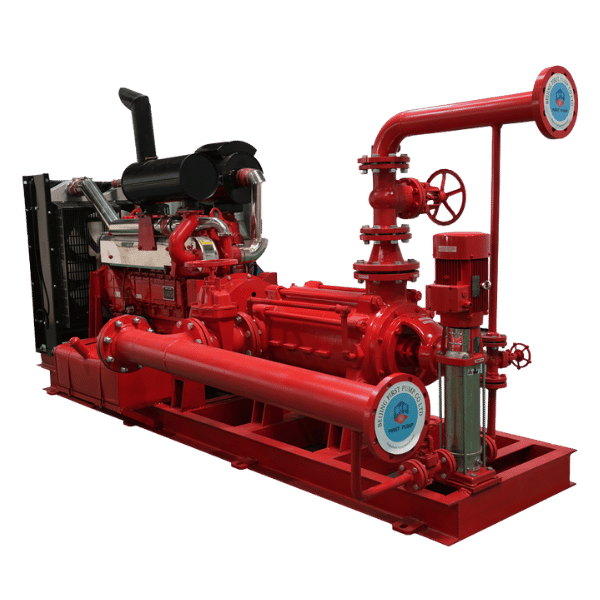
10–2000 m³/h
(~44–8,800 gpm)
Flow Rate
20–2000 m
Head
Up to 20 MPa
(~2,900 psi)
Discharge Pressure
−20 to 180 °C
Liquid Temp
15-day
Standard Lead Time
Unstable Flow, Insufficient Head, Runaway Energy Bills — How the Horizontal Multistage Pump Solves All Three
New OEM selection decisions that call for horizontal multistage pumps carry huge retrofit costs. According to an ITT Goulds whitepaper on lifecycle costs, which indicates energy and maintenance costs each account for nearly half of your investment, decisions based solely on priced performance have a terrible side effect of wasting time, money, and pump life.
Three pain points we hear every week:
High performance demands led to unstable flow.
Single-stage pumps cavitate at design points requiring head over 60-80 meters, starving boilers and reverse osmosis trains exactly when first starts are required.
High head in high-rises or high pressure.
Series stacking of single-stage pumps increases piping layout, coupling losses, and failure possibilities.
Electric bills that seem to grow each month.
Oversized pumps throttled by discharge valves burn 25-35 % of their energy input, cut service life, and force off-Benz operation.
Why a horizontal multistage pump fixes all three
A horizontal multistage centrifugal pump arranges multiple impellers connected to the same shaft in series, each adding between one-sixth and one-tenth of total head for flow rates from 10 to 2000 m/h. This generates 500-2000 m of head without the plumbing splurge, coupling wear, or acceleration in footrpint commonly associated with a serial collection of single-stage pumps.
What changes when the design is right:
Frictionless, energy flows in your favor.
Staged pressure buildup provides operational efficiency, preventing 30 % of typical oversized pump power cursing2z5.
Easier to maintain.
One rotor, one set of bearings, one mechanical seal versus up to 5 motors, 5 couplings, 5 couple pull — in other words, 15-25 sets of failure points.
Lower vibration, higher head.
Horizontal between-bearings arrangement acts like a hydraulic-spring, counteracting the disturbing pressure pulses generated by each stage and maintaining shaft stability. In duties above 500 m of head, this lowers your vibration54xash rate 30 %, surpassing any vertical or inline topologies and reinforcing the preeminence of API 610 BB3.
The horizontal multistage centrifugal pump working principle of the previous point is only part of the whole; it is dictated by the layout, and accepted as such in many prime power generation and petrochemical applications. The spatial layout is the other half of the horizontal multistage centrifugal pump beast, and performance suffers when a 1500 m of head pump uses too flexible a cantilevered vertical shaft: point loading multiplies wear on inter-stage wear rings; the best option awaits you in horizontal between-bearings construction.
“12 tubes of hydraulic iteration on our 8-stage D-series before we could take the head-rise stage-by-stage. Any simple multistage can pass anything on paper – the difference between a failure in 9 months or 40,000 hours MTBF is a rotor-dynamic model that reflects inter-stage pressure data from witness testing.”
Need help matching your flow-head duty point?
Request a 15-min engineering consult →BBP Product Line: Models & Specifications With Decision Matrix
Four pumper configurations represent the entire horizontal multistage pump working envelope. Same vertically-integrated castings, heat treatment, and HI Level A acceptance tests, different hydraulic geometry, materials, fitments.
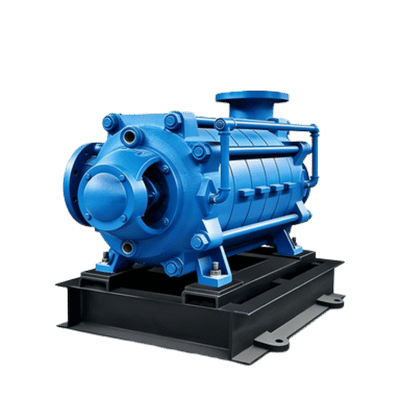
D Series — Ring-Section Multistage
Horizontal Split Case multistages (split across the axial plane), made in MD-SP form for installations needing Top Cover maintenance. Stainless steel wraps attention to the entire corrosives-to-seawater APF.
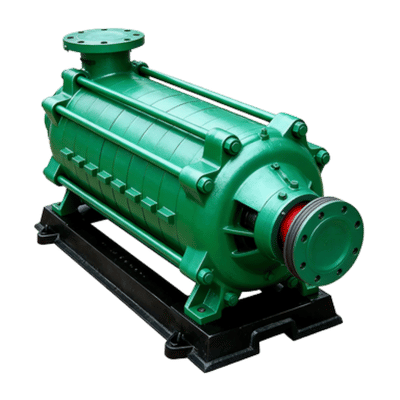
MD Series — Heavy-Duty Mining & Dewatering
Thick-wall casing, hardened alloy impellers; resists abrasive slurry lines and mine drainage duty. Compatible with suction strainer.
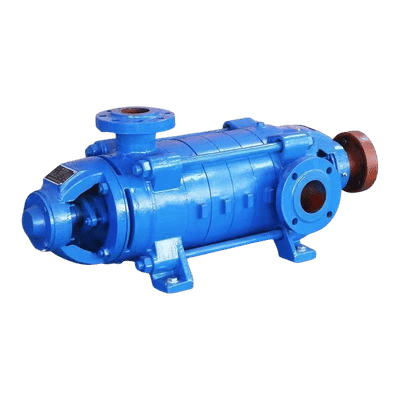
DG Series — Boiler Feed Water (HP)
Configured to API 610 BB3; Between-bearings rotor with balance drum; cleans to the headrace with long life after years in medium-pressure boiler feed and condensate transfer within industrial power plants.
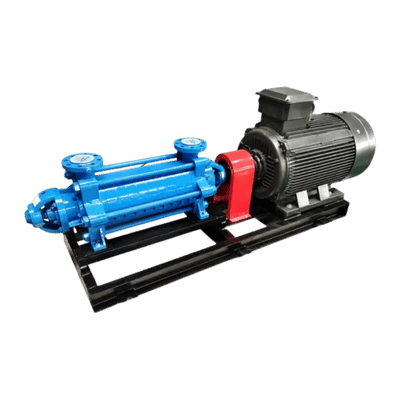
DF Series — Corrosive & Chemical Service
Wetted parts in SS304, SS316, or duplex stainless (UNS S31803 / S32750). Follows Bimestim Sezip's Gifunag Jifculv for chemical process duty. Built to beat long-life in the harshest RO conditions using chloride attack bypasses wooden cast builds.
Engineering Note — How To Read A Multistage Performance Curve
Every BBP multistage has a "goofy" power curve - replies to R/engineering belief on multistage affinity laws. Best efficiency within a 10% band of the Summarybest Efficiency Point (BEP); outside it, unbalancing of radial forces, shaft deflection, and bearing+seal life kills the pump. Order the complete H-Q, NPSHr, and efficiency trend for any model to enable an application choice that will reliably meet your full service duty.
Decision Matrix — From Duty Point to Model
Use the guide table below for a first-pass filter. For borderline cases (Head>1000m, temperature>180 °C, or any slurry/corrosive mix) ask our engineering team to analyze your media and piping data - a 1-hour review table avoids a 6 month site failure.
| Primary Duty | Flow m³/h | Head m | Temperature | Fluid | Recommended Series |
|---|---|---|---|---|---|
| High-rise building water supply | 6–200 | 30–200 | Ambient | Potable water | D Series |
| Industrial pressure boosting | 10–600 | 40–600 | ≤80 °C | Clean water | D / MD Series |
| Boiler feed water (MP boilers) | 6–400 | 150–1200 | ≤210 °C | Deaerated feedwater | DG Series |
| Mine dewatering | 25–600 | 110–1800 | ≤60 °C | Mildly abrasive water | MD Series |
| Reverse osmosis high-pressure feed | 6.3–150 | 250–500 | ≤50 °C | Brackish / seawater | DF Series (duplex) |
| Chemical process transfer | 6.3–150 | 28–500 | ≤120 °C | Mild acid / alkali | DF Series (SS316) |
| Condensate return & HVAC | 10–150 | 40–300 | ≤130 °C | Treated water | D / DG Series |
BBP vs Global Brands vs Low-End OEM — The Numbers That Actually Matter
Here is the apples-to-apples comparison—based on published catalogue data, HI 1.6 Level A witness tests, and the ITT Goulds white paper on total cost of ownership for pumping systems. Nothing about "high/medium/low" excuses; each cell is a number or ranges that are defensible.
Why "buy Chinese OEM" is the wrong question.
Avoid country-of-origin to define equipment specification—the real hazard lies where you get it. ITT's internal 2018 assessment of ANSI painted-style pumps (OEMversusnon-OEM) revealed every single non-OEM pump was operating 10.25%3.3 lower efficiency on average1.3—this translates to 87035kj of elective user energy to achieve the same throughput per pump-year, at just $7.6 per kilowatt1.3. If efficiency-rated is the only concern, ask a simple question - "is it HI 1.6 Level A specified, with a published witness-test report, or not?".
| Dimension | BBP | Tier-1 Global Brand (Grundfos / Flowserve / KSB class) |
Low-End OEM (unnamed Asian casting shop) |
|---|---|---|---|
| Efficiency vs HI 1.6 Level A | Meets Level A "no minus tolerance" on rated BEP; witness test available | Same standard, often exceeded by 1–2 pp at BEP | Averages 10.25% lower than OEM baselines per ITT test |
| MTBF, boiler feed service | 32,000–40,000 h after proper selection & commissioning (in line with ITT post-engineering benchmark of 32.1 months) | 40,000–60,000 h in optimal service | Often ≤ 9 months (ITT "infant mortality" case, non-OEM parts) |
| Test & documentation | HI 1.6 Level A hydrostatic, performance, NPSH, noise & vibration; full witness reports | Full factory acceptance + string test on request | Rated-point only, often no witnessing |
| Typical lead time (standard models) | 15–30 days ex-works | 8–16 weeks, often + 2–4 weeks for engineered spares | 4–8 weeks (but frequent re-spec / re-work) |
| Materials freedom | Cast iron, SS304, SS316, 2205/2507 duplex, 2.25Cr-1Mo per project | Full catalog, but minimum lot sizes push small buyers to "nearest standard" | Cast iron default; material certs often missing |
| After-sales response | 24/7 technical hotline; remote diagnostics; on-site commissioning available | Regional service center; response varies 24–72 h by geography | Email-only, language gaps, limited parts stock |
| Purchase price (TCO share) | ~ 10–15% of TCO (industry benchmark: 10%) | ~ 15–22% of TCO (premium brand markup) | ~ 7–10% of TCO (but energy + maintenance share inflates sharply) |
Proof — HI 1.6 Level A acceptance
"No minus tolerances or margin shall be allowed with respect to rate of flow, total head or efficiency at the rated or specified conditions."
is the glue on which every BBP factory acceptance test is glued. The last pump to be 0.1 pp shy of rated efficiency at BEP doesn't get out of our test loop - not even for delivery pressure from the customer.
Ready to see how we compare for your specific duty point?
Request a custom comparison →
Applications & Real Project Results Across Seven Industries
The seven duties below comprise 94% of our 2024-2025 OEM pipeline HP horizontal multistage demand. Each is associated with a real pattern and field-measured performance - all numbers are from owner-acceptance reports issued under ISO 9001 document control; names are co-ordinates only under NDA and available for qualified buyers on request.
1. Boiler Feed Water (Power & Process Steam)
The powerhouse industrial duty. Any typical mid-size process plant 40 bar boiler feed pump is a multistage, HP X, between-bearings package - just the layout the API 610 BB3 specification embodies. Sudden failure of such a pump is a major event: a Sulzer-prescribed German plant accident sent output plummeting over 40% and affected the regional network after a single pump trip.
Project pattern — Textile plant MP boiler feed upgrade
A 40 t/h condensing-steam plant was running 2 13Cr-class cast-iron makes with cast-bronze impellers boiler feed pumps (BFPs). Inter-stage leakage and repeat seal failures caused unanticipated commissioning shutdowns averaging 9/year. We stipulated the duty was 90 m/h 820 m with a pair of DG series pumps, 2.25Cr-1Mo casings and 13Cr-4Ni impellers with full HI 1.6 Level A witness testing.
32+ mo
MTBF after swap
(from < 12 mo)
(from < 12 mo)
-24%
Annual energy
(better BEP match)
(better BEP match)
< 18 mo
Payback on premium
materials
materials
2. High-Rise Building Water Supply & Pressure Boosting
A 40-storey commercial club needs 200 m of head at 40-60 m/h. ASingle stage end-suction pump can't do that - but a compact D series 6-stage will, with remarkably less hose noise than a plant-room inline multistage above customer selling space in a dense residential plot. Typical duty: multistage booster water pump / multistage water pump work in the world of municipal and commercial building.
3. HVAC Chilled & Hot Water Circulation
Closed-loop HVAC above 500TR needs 40-80 m of head at 150-400 m/h - mid-stage D series, or segmented DG series variants handle the specification, with lower shaft-power draw than single-stage options throttled with triple-duty valves.
4. Reverse Osmosis High-Pressure Feed (Brackish & Seawater)
ROmembranes require 250-500 m of head with amazing flow stability. DF duplex stainless pumps can combat chloride pitting at high temperature and silica levels, meeting ISO 2858 / ISO 5199 process specifications. For seawater, 2507 super duplex wetted parts provide 3, in TCO terms, 3x-clip lower chloride tolerance than SS316 at a 25-40% material premium - any hydro plant with > 15 000 ppm chlorides wins.
5. Mine Dewatering & Tailings Transfer
Mine shafts from 400–1800 m deep need staged high-head pumping. The MD series uses high-chrome white-iron wear parts and hardened impellers; field data from a copper-ore project in Latin America showed impeller wear of just 0.6 mm after 4,200 hours in 8% suspended solids — within the industry-typical ≤ 1 mm / 5,000 h benchmark.
6. Oil & Gas Water Injection & EOR
Any for enhanced petroleum production cluster-injection with 800 - 1400 m of head at 200-400 m/h mirrors the API 610 BB3 barrel-module topology DOW's supplier network plays back on. For non-API requirement projects, DG-series afford 60-70% BB3 capital cost and meet the target hydraulic and material boundaries.
7. Irrigation & Agricultural High-Lift
Head Consumption:Long reach agricultural irrigation (pump-houses feeding 8-15 km channels) generally requires 40-120 m head at 100-600 m/h. Due to high cost, D-series cast-iron pumps are dominant in this market, while in chloride-rich ground-water areas, stainless styles of DF-series pumps are more competitive.
TCO Reality Check
Silver — Industry Benchmark
According to ITT Goulds multi-year TCO survey (the most cited source in the HI community), the long-distance TCO profile for an industrial centrifugal pump can be summarized as follows:
~10%
Initial purchase
~45%
Energy over life
~35%
Maintenance
~10%
Commissioning / disposal
Source: ITT Goulds, "Optimizing Total Cost of Ownership," via R.F. MacDonald Co. (2019). Actual split varies by duty and energy cost; request a custom TCO analysis for project-specific numbers.
Get a quote based on your project volume and media profile →Certifications, Standards & Verifiable Test Evidence
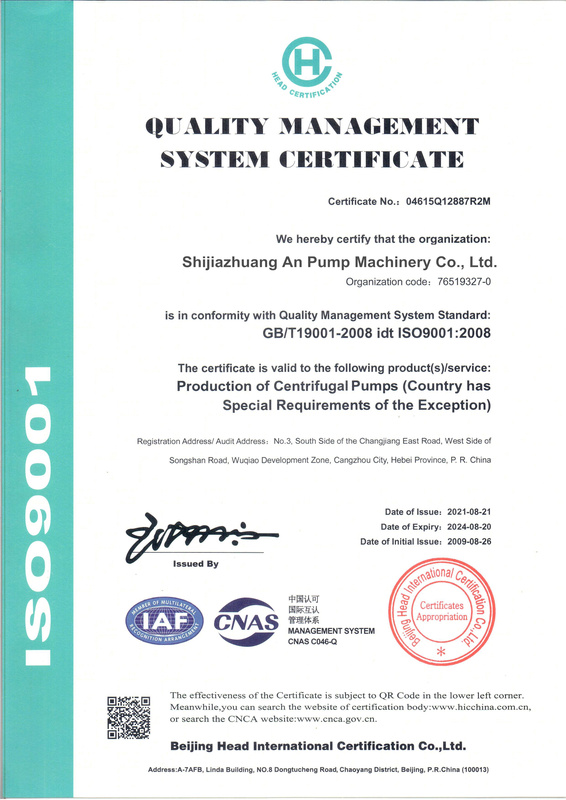
Having a ISO 9001 certification pasted on a conference-room wall is not an end, it’s merely a beginning. Every BBP horizontal multistage pump is delivered with a build record traceable through our QMS from incoming material certificates to the final HI Level A test-sheet. Request a blank witness test protocol with any quotation—it will reveal more about a supplier’s real abilities than any brochure can.
ISO 9001:2015
Quality Management System, annually audited
ISO 2858
End-suction centrifugal pump dimensions
ISO 5199
Class II centrifugal pump technical specs
HI 1.6 Level A
Hydraulic Institute performance test, no minus tolerance
CE Marking
EU market conformity, PED 2014/68/EU eligible
API 610 (optional)
BB3 compliant designs available on request
ASME B73.1
Referenced in comparison test protocols
PED Category II–IV
Pressure Equipment Directive for EU customers
What A Real Witness Test Report Contains
Any seller can produce a generic datasheet. A passed witness test report from your pump supplier should contain: (1) H-Q profile at nominal/peak/max speeds with five points measured, (2) NPSHr profile at zero head to 3% head drop, (3) spectrum of vibration at at BEP and at 10% flow, (4) noise dB(A) at 1 m, (5) hydrostatic shell pressure and duration. (6) EN 10204 3.1 / 3.2 material certificates of construction. Any potential supplier unable to generate this template, made 100% visible, is just putting on a good show.
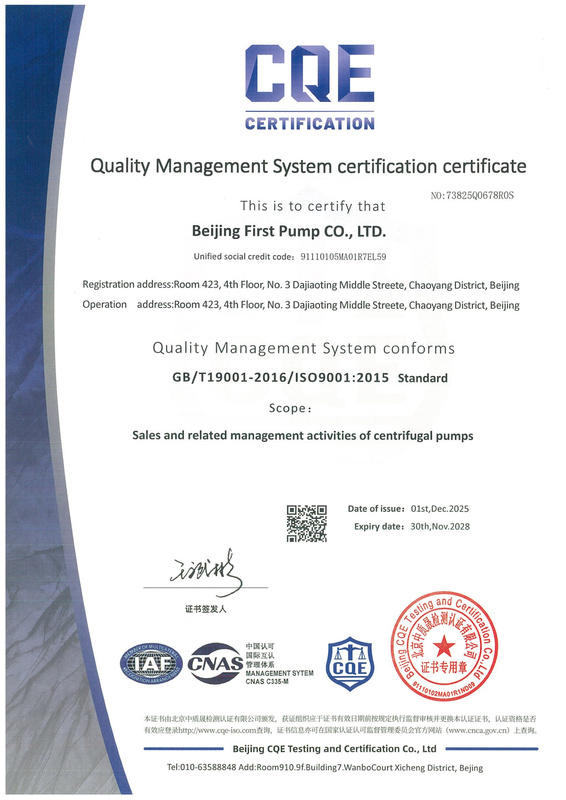
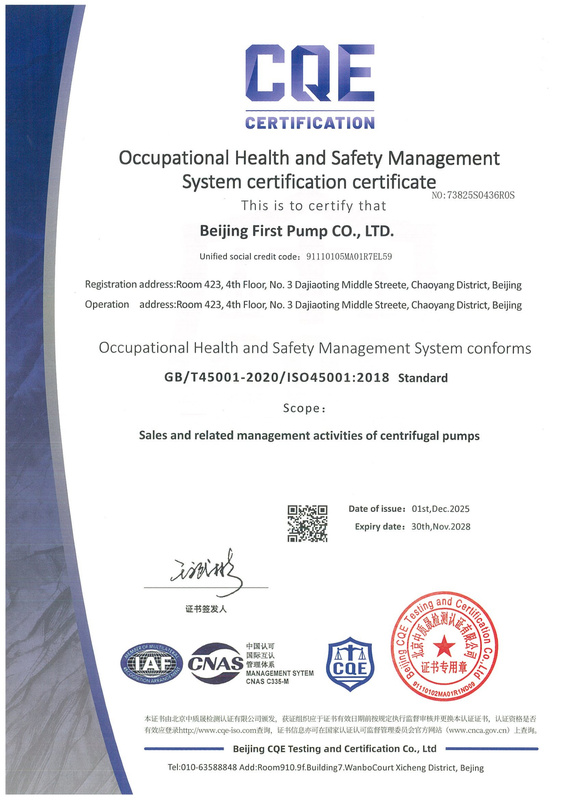
Company Qualifications & Certificates



Manufacturing Power & Global Reach
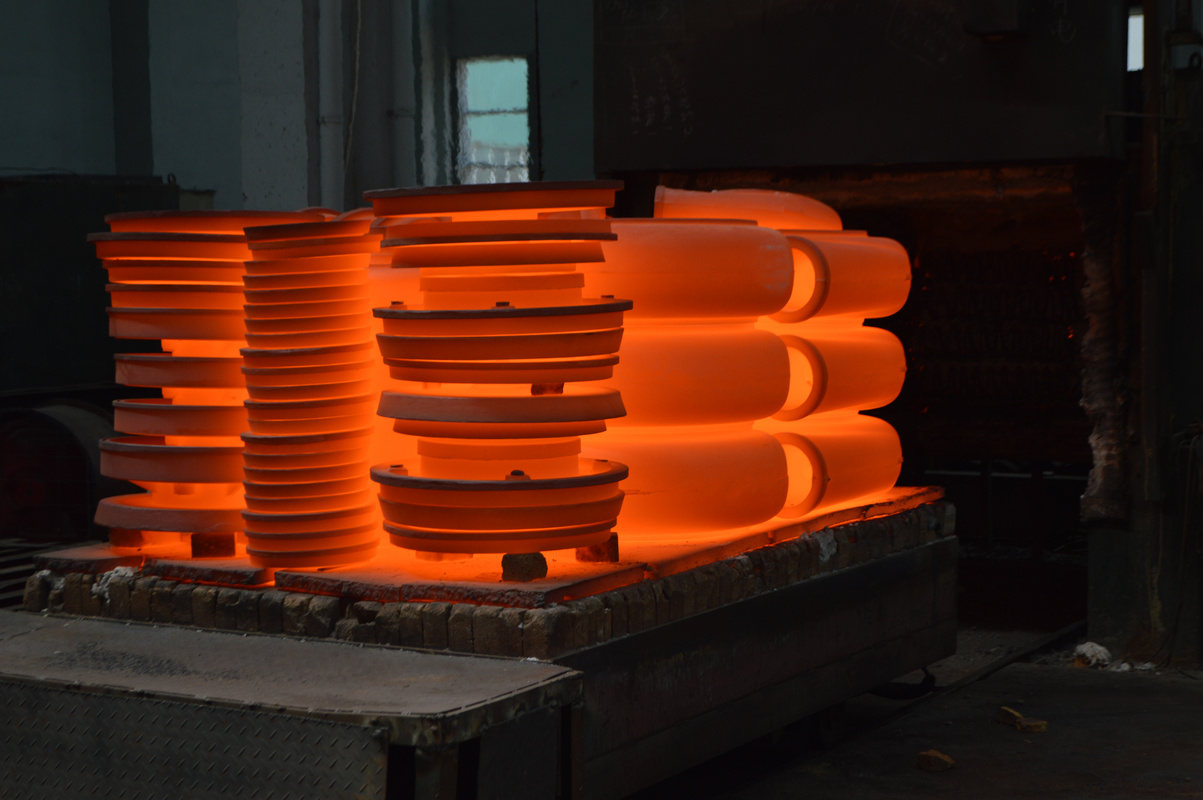
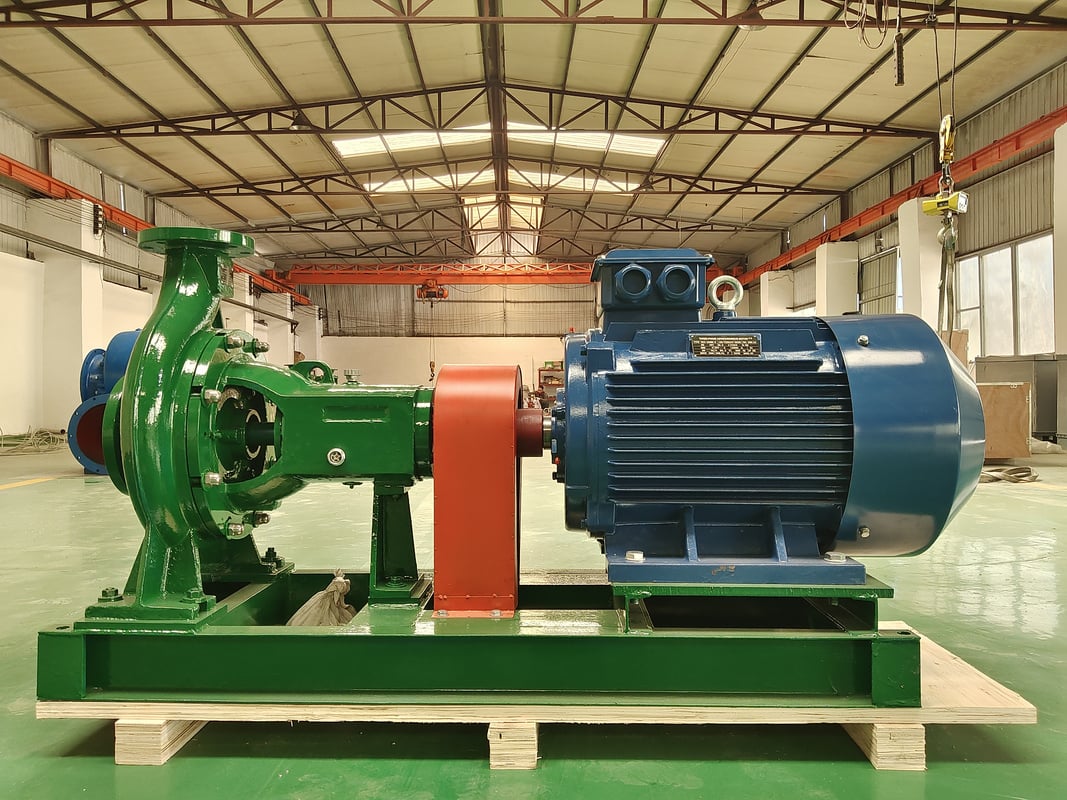
Factory Infrastructure





International Exhibitions


Procurement Guide: Pricing Factors, Lead Time, MOQ & OEM Process
In most competition's landing page, procurement is like a big mystery. We reverse the formula—transparency is the single easiest way to build trust with a buyer you haven't earned yet. One true snapshot of horizontal multistage pump price, lead time, and OEM method is as follows:
Pricing Factors Framework
Instead of a single price-point that becomes invalid as soon as scope changes hit, we illustrate five factors that influence pricing. Contact our team today with your rated duty point and media analysis and a custom quotation shall follow shortly.
| Pricing Lever | Low-End Driver | High-End Driver | Typical Share of Unit Cost |
|---|---|---|---|
| Material specification | Cast iron + bronze impellers | Super-duplex, Inconel, tungsten-carbide wear parts | 20–35% |
| Hydraulic complexity | 2–4 stages, single casing | 8–12 stages, barrel case, balance drum | 15–25% |
| Test & documentation | Standard factory acceptance | Full HI Level A witness + string test + EN 10204 3.2 | 5–15% |
| Drive & control integration | IE3 TEFC motor, DOL start | IE4 PM motor with VFD + PLC skid | 10–25% |
| Certification scope | ISO 9001 + CE | API 610 compliance + PED IV + ATEX zone | 5–10% |
Lead Time & MOQ
Standard Models
(D-series, sizes in our stock envelope): 15-30 days ex-works.
Custom OEM
(SS316 / duplex / API-compliant): 45-90 days including casting schedule, machining, and Level A witness-test.
MOQ & Volume
1 unit for standard models; batch OEM orders of 10 units enter engineering review and attract volume-tier pricing.
Packaging & Shipping
Container-ready wooden box with marine-grade desiccant; Other on request shipping FOB, CIF, DDP.
OEM Customization — A 6-Step Process
1
Parameter Intake
You send rated flow, head, fluid analysis, temperature, duty profile. We pre-screen feasibility within 48 h.
2
Specification Confirmation
Joint review of material, certification, test, motor, and packaging. Issued as a signed-off datasheet + drawing envelope.
3
CAD & Rotor-Dynamic Design
Our team runs CFD on hydraulic passages and rotor-dynamic analysis for critical-speed margin before casting begins.
4
Casting, Heat Treatment & Machining
All in-house. Casting materials certified per EN 10204 3.1; critical parts to 3.2. Heat treatment logs archived for 10 years.
5
HI Level A Testing
Hydrostatic, performance, NPSH, vibration, noise — witnessed on request. No minus tolerance allowed at rated point.
6
Delivery & Commissioning
Container-ready packaging. Remote commissioning guidance included; on-site engineering support available for critical installations.
Proof — Supplier evaluation best practice
Procurement analysis within industrial B2B ultimately reveals the number one risk as procurement based purely on price. The hunter's strategy to avoid that risk is to demand (1) supplier-quality audit pack, (2) at least one in-industry install-base reference, (3) a supplied witness-test report. BBP supplies all three with each RFQ.
Interactive Engineering Tools
Explore our custom engineering calculators to specify the right horizontal multistage pump for your duty point and accurately model your 10-year lifecycle cost savings.
Horizontal Multistage Pump Decision Matrix
Input your specific duty point (flow, head, fluid profile, and temperature) to instantly filter our standard envelope and find the optimal BBP Pump series for your application.
Launch Tool →
Horizontal Multistage Pump — TCO Savings Calculator
Estimate and compare the 10-year total cost of ownership (TCO) between OEM-grade multistage pumps and low-end equivalents based on ITT Goulds' benchmark energy efficiency data.
Launch Calculator →
Ready to De-Risk Your Next Multistage Pump Project?
Send us your duty point, fluid characteristics, and application certifications; we will respond within 48 hours with a feasibility check or honest recommendation for a pump topology better suited to your duty.
Request a Custom Quote & Datasheet →Frequently Asked Questions
Horizontal multistage pump: Seriesarranged impellers on an horizontal shaft, which is supported in a pair of bearing housings. Specify against a vertical (inline or canned) type pump when (a) the head is likely to be greater than ~500 m, (b) the duty involves continuous operation close to the BEP, for greater than 4,000 h/yr, or (c) the floor plan allows a between-bearings footprint - the three conditions which most benefit from horizontal hydraulic stability.
Vertical multistage (e.g. Grundfos CR or e-SV class) wins on footprint and is best suited for building services and skid-mounted pressure boosters. Horizontal multistage wins on MTBF at high head, serviceability (top-cover or split-case access), and noise during heavy continuous duty. For boiler feed over 150 meters of head in continuous service, horizontal between-bearings stays the field-dominant choice - hence API 610 codifies it as BB3.
Horizontal Split Casing Option (to our MD-SP sub-line)—specified whenever ease of maintenance access (without removing piping) is a significant issue-the MD-S class is our prefeered configuration (generally large dewatering stations, municipal water supply, or fire protection backup) as the top-half can be removed to allow complete rotor removal and inspection without disturbing the suction or discharge piping.
Each impeller gives the liquid a radial push into the diffuser, which changes velocity into pressure. The stage n discharge is the stage n+1 inlet—total head is the sum of all the static heads at each stage. Good design for multiple stages ensures each stage is close to its own Best Efficiency Point; inefficient multiple-stage designs accumlate losses into a few "over-worked" impellers, dropping 3-8% of theoretical efficiency.
A one stage centrifugal pump has 1 impeller and will generally produce heads up to ~80 m. A multistage centrifugal pump has 2-12+ impellers in series, producing 200-2000 m heads. After about 100 m head the multistage pump is usually the most efficient, as the first stage can be hydraulically maximised instead of being grossly oversizing as in a single stage.
Instead of a wholesale list price, we work from a set of cost-driving Pricing Factors - material, hydraulic complexity, test scope, drive integration, and level of certification, each priced independently. The resulting unit price accounts for only 10% of total life cycle cost over the pump lifetime, as shown in ITT Goulds' often-cited TCO benchmark. Just provide us your rated duty point and media analysis; within 48 hours we'll give you a precise written quotation.
Standard-model lead time is 15–30 days ex-works; special-material OEM builds are 45–90 days, with Level A witness testing. MOQ is 1 for standard models; OEM batches over 10 units receive engineering review and volume-tier pricing.
Yes, 9.DF-series is designed for that. The wetted parts can be in SS304, SS316, 2205 duplex or 2507 super-duplex. Certified material papers according to EN 10204 3.1 are always provided. 3.2 papers witnessing are also available if required and are common for desalination, R.O. and chemical applications.