Get in Touch with BBP

Boiler Feed Pump Manufacturer — High-Pressure Centrifugal & Multistage BFP for Steam Systems
BBP – Boilers API 610 boiler feed pumps for Thermal Power, Industrial Steam and Heavy OEM applications. From casting to testing, you keep all pressure stages, seals, and impellers in one location.
Request a Quote

Why Standard Boiler Feed Pumps Fail — And How BBP Engineers Around It
A boiler feed pump (BFP) transports feedwater from the deaerator – often heated to 105-170C – against the full discharge pressure of the steam boiler. The BFP sets the load’s ability to closely follow steam generation: each oscillation in feedwater flow rate appears as a drum-level wave downstream. That is the mission profile where many standard multistage pumps find their limits: impeller cavitation in Stage 1 when NPSH margins shrink, failed seals under dirt and gassing, and thrust imbalance from diverse stages. Our boiler feedwater pumps deal with each of those failure modes directly, not incidentally.

The four failure modes we design against:
1
NPSH starvation & cavitation
after the low-conductivity, saturaion-temperature feedwater leaves the deaerator the margin at the pump suction eye is effectively zero. Our initial-stage inducer helped impeller utilizes a low NPSHr design that keeps 3% headloss (NPSH3) well below what the deaerator supplies.
2
Electrical corrosion on mechanical seals
because our boiler feedwater has a conductivity below 1S/cm, tangential static charge builds up on sliding rings. Published reports show material loss on seal faces equal to a fingertip-sized depression within several hundred hours on stream. Our DLC-seal face upgrades passed endurance testing for 27,000 hours.
3
Minimum Flow Overshoot
Running a feedpump below 25% of best efficiency point overshoots the feedwater balance drum and induces overheating. All BBP BFPs include an automatic minimum-flow recirculating loop that returns to the deaerator.
4
Thrust imbalance from stage to stage
in multistage BFPs the heavier axial forces from consecutive stages add up to unbalance total thrust. All of our barrel-type BB5 pumps for supercritical service use a balance drum & thrust bearing stack rated for full runout.
“We spent two years re-qualifying our BFP seal chamber after repeat failures at a biomass cogeneration site. The root cause wasn’t workmanship – it was static discharge across sliding rings. Switching to DLC-coated faces eliminated repeat trips across three follow-up projects.”
In summary, it is not enough for a BFP to survive a pressure test. It must survive reliable operation for 8,000 hours per year. The rest of this page shows the hardware, assurance, and procurement terms that make that happen, organized by the questions an engineering and procurement team asks.
BBP Boiler Feed Pump Series — Models & Selection Matrix
Our multistage pump series covers three casing classes that map cleanly to ISO 13709 (API 610) types BB3, BB4, and BB5. Each class balances maintainability, pressure envelope, and footprint. Below we show how flow, pressure, and temperature drive the construction choice — rather than defaulting to the costliest option.
BFP Decision Matrix — Capacity × Pressure × Temperature
| Capacity Range | Discharge Pressure | Feedwater Temp. | Recommended Construction | BBP Series |
|---|---|---|---|---|
| 30 – 200 m³/h | Up to 40 bar | Up to 150 °C | Vertical multistage, ring-section | BBP-VR |
| 100 – 600 m³/h | 40 – 100 bar | Up to 180 °C | Horizontal ring-section, end-suction | BBP-HR |
| 200 – 1,200 m³/h | 80 – 170 bar | Up to 200 °C | Axially split, double-suction first stage (BB3) | BBP-AS |
| 500 – 2,500 m³/h | 170 – 500 bar | Up to 220 °C | Radially split barrel casing (BB5) | BBP-BB5 |
Pricing rule of thumb: industry standard (API recommendation) is to specify a barrel casing class BB5 if the rated discharge pressure exceeds 100 bar (1450 psig) and the temperature exceeds 200C (400F). Lower-pressure flow would default to the easy-access, axial-split BB3 to cut overhaul labor in half.

BBP-HR Horizontal Ring Section
Capacity: 100 – 600 m³/h
Head: 300 – 1,000 m
Pressure: up to 100 bar
Stages: 4 – 10
Ideal for: Mid-pressure industrial steam, process heating boilers, chemical plant utilities.

BBP-AS Axially Split (BB3)
Capacity: 200 – 1,200 m³/h
Head: up to 1,500 m
Pressure: up to 170 bar
Stages: 4 – 8
Ideal for: Combined-cycle HRSG feed, mid-to-large coal-fired plants, biomass cogeneration.

BBP-BB5 Barrel Casing
Capacity: up to 2,500 m³/h
Head: up to 4,000 m (full diff.)
Pressure: up to 500 bar
Temp: up to 220 °C
Ideal for: Supercritical coal, large oil-fired utility, nuclear balance-of-plant (non-safety).
Centrifugal vs Positive Displacement vs Turbine-Driven BFP — Data-Driven Comparison
Within most power plant cycles, the boiler feed pump decision reduces to one of three archetypes: multi-stage centrifugal pump, reciprocating positive-displacement, or steam-turbine driven. Instead of echoing their costs and interfaces in the abstract, here are their influencing factors.

Multistage Centrifugal (Motor-Driven)

Positive Displacement (Reciprocating)

Turbine-Driven Centrifugal
| Dimension | Multistage Centrifugal (motor-driven) | Positive Displacement (reciprocating) | Turbine-Driven Centrifugal |
|---|---|---|---|
| Practical pressure ceiling | 500 bar (BB5 barrel) | 350 bar (plunger) | 545 bar (utility BFP) |
| Flow range | 30 – 2,500 m³/h | 5 – 120 m³/h | 400 – 4,000 m³/h |
| Hydraulic efficiency at BEP | 78 – 85 % | 88 – 93 % | 80 – 86 % |
| Part-load efficiency | 55 – 70 % (without VFD) 70 – 82 % (with VFD) |
85 – 90 % | 72 – 80 % |
| Typical startup | 15 – 45 s | 5 – 20 s | 60 – 180 s (turbine roll) |
| Installed cost index (1.0 = centrifugal) | 1.0 | 1.8 – 2.4 | 2.5 – 3.5 + steam extraction |
| Best fit | Most industrial and utility steam; 80 % of BFP duties | Low-flow, very high-pressure dosing or specialty feed | Utility-scale > 300 MW units with extraction steam available |
Steam-utility feed water applications usually default to the multistage centrifugal stage – there is a happy compromise available at the intersection of flow range, initial footprint, and lifecycle cost. Positive displacement is the choice where absolute flow measurement is a driver for downstream process quality. In steam utilities, turbine drives are only used where the plant design integrates parallel steam extraction.
Performance Results from Global Power & Industrial Projects
The BFP must excel in a running environment, not a bench test. Our installed base is founded in the world’s largest coal utilities, biomass cogeneration plants, chemical steam utilities, and food-processing boiler utilities across Asia, the Middle East and Europe. Three typical installations show how the choice of multistage pump relates directly to goals observed.
Deployment patterns at a glance
150 MW coal-fired utility (Southeast Asia)
2× 100% BBP-BB5 (one running, one standby), 800 m³/h each at 320 bar. Achieved 97.8 % availability across a 24-month observation window, with seal intervals extended beyond the OEM standard.
Biomass cogeneration, East Europe
BBP-AS axially split, 240 m³/h at 95 bar, feeding a 45 t/h biomass boiler. DLC mechanical seal option selected; zero seal-driven unplanned stops across the first 18 months.
Chemical plant utility block in the Middle East
3× BBP-HR in 2+1 configuration, 180 m³/h at 60 bar. Variable frequency drives on all three units absorb boiler load swings from 40 % to 100 % without hot-start cycling.
Silver · TCO Advantage
Five-Year TCO Framework for Motor-Driven BFP
Economics plays a greater role than budget on a 2400h/year in-service duty, the dominant cost factors in a mid-pressure industrial BFP are hours kWh; seal operating cost; and unplanned plant downtime; and based on empirical data and supply chains:
Energy
Variable-frequency drive pairing typically reduces motor electricity consumption by 20–50 % on variable-load duties — the exact figure depends on your load profile and tariff.
Mechanical Seal Service
DLC-upgraded faces extend replacement intervals from the 1–3 year industry baseline toward the 27,000-hour endurance range documented in published testing.
Minimum-Flow Protection
Automatic recirculation prevents the overheating and erosion that cause the most expensive BFP failures.
Spare Parts Availability
In-house casting + machining supply chain keeps critical wear parts at 2–4 week delivery versus the 20-week crisis that traditional procurement faces.
Certifications & Compliance — API 610 / ISO 13709 / ASME / CE
Package tender documentation for a utility boiler feedwater pump according to an EPC specifications is incomplete without third-party BFP certification and inventory reports. We apply to the document standards even when our customers don’t ask and provide heat number to heat number logs with every shipment, not merely component certificates.
API 610
12th Ed. centrifugal pumps for petroleum & heavy-duty industries
ISO 13709
International equivalent of API 610 (BB3 / BB4 / BB5)
ASME BPVC
Pressure-containing casings per Section VIII
CE / PED
Pressure Equipment Directive for EU-delivered units
ISO 9001
Quality management, audited annually
ISO 14001
Environmental management
Procurement Note
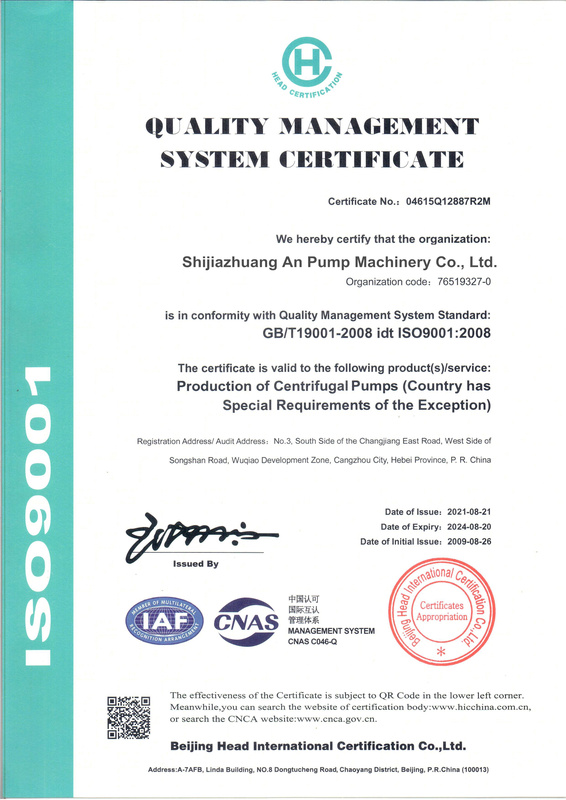
Several of our clients have audited so-called “ISO 9001 certified” suppliers that could not produce the certificate on request. We publish our certificate numbers on the documentation package cover sheet and honor site audits during fabrication — not just at factory acceptance test.
Vertical Integration
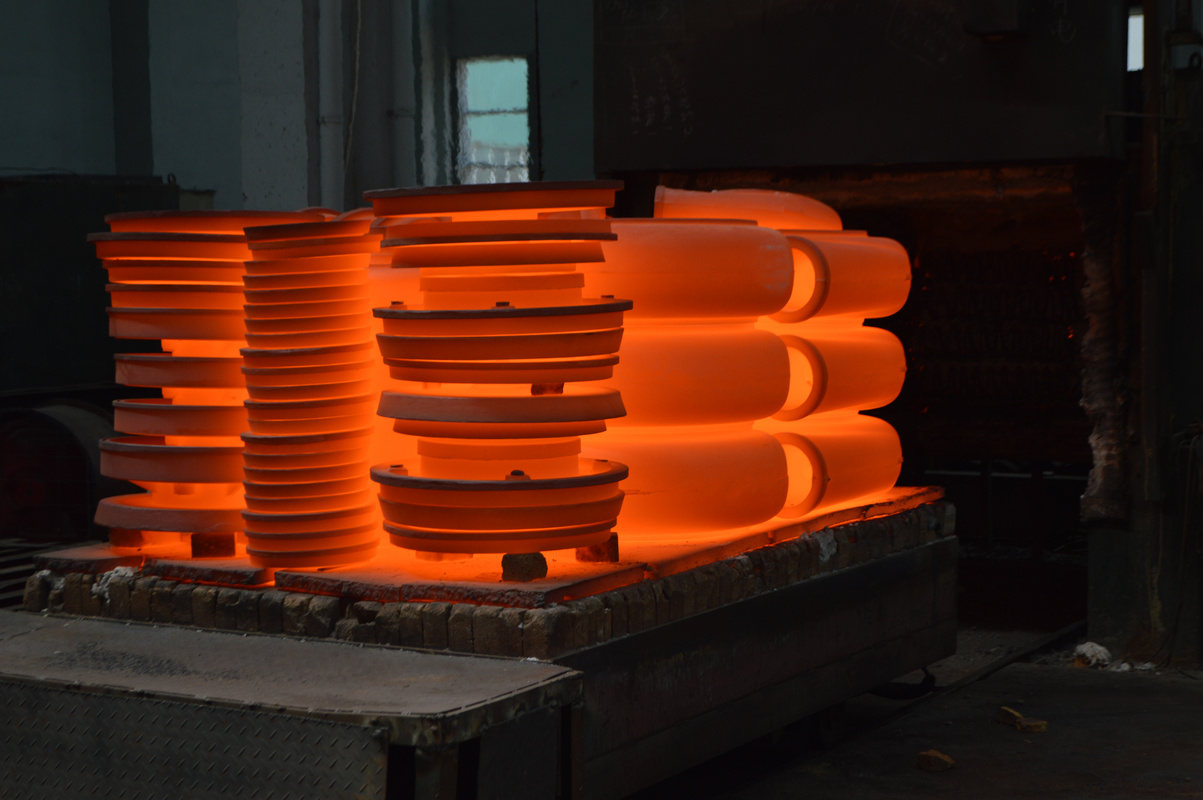
Vertical integration behind these certifications matters: every critical process — casting, heat treatment, machining, assembly, coating, performance testing — happens inside one facility. Material traceability is preserved from melt-shop heat number through the hydrotest signature, rather than relying on out-of-house coordination.
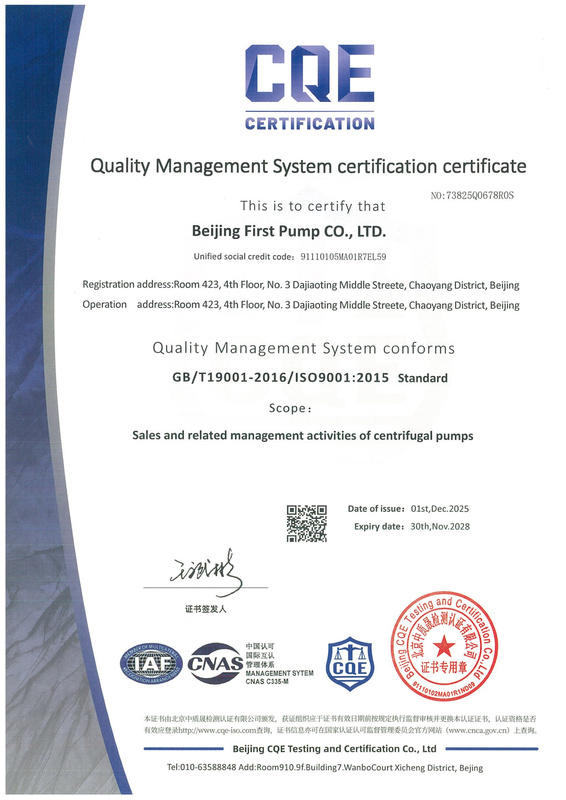
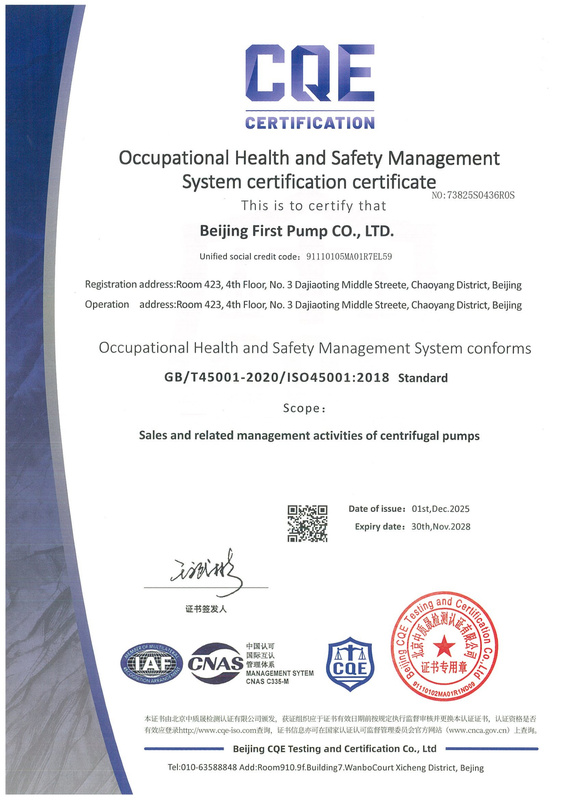
Company Qualifications & Certificates



Manufacturing Power & Global Reach
Factory Infrastructure





International Exhibitions


Procurement Guide — Price Factors, Lead Time, MOQ & Spare Parts
Procurement teams evaluating industrial boiler feed pump manufacturers deserve transparency about what actually drives a quotation, how long a delivery window genuinely takes, and what spare-part support looks like five years after commissioning. Below is how BBP structures its commercial terms.
Pricing factors — what moves a BFP quote
Published “$X” prices for BFPs mislead — a single capacity number can land anywhere across a 5× cost range depending on what the following factors look like on your specification sheet:
Casing construction class — ring-section vs. axially split (BB3) vs. barrel casing (BB5) drives material volume and machining time. BB5 barrel castings alone add 30–50 % to base pump cost.
Material of construction — 12 % chrome steel is baseline for standard feedwater; 17-4PH or duplex adds cost but handles corrosive deaerator upsets.
Mechanical seal arrangement — single vs. double, cartridge vs. component, API Plan 21 vs. Plan 23 flush lines. DLC face upgrade adds incremental cost but pays back over 3–5 seal intervals.
Drive arrangement — bare-shaft pump vs. packaged with motor, baseplate, coupling and guard. Variable frequency drive adds capital cost but changes the TCO equation.
Documentation level — standard works certificate, API 610 data sheet pack, or full ITP with NDE level III reporting.
Certification scope — API 610 stamp, CE/PED for EU destination, ASME U-stamp for North American projects.
Lead time — what is actually realistic
Industrial pump lead time in 2026 continues to be a challenge through out the industry – traditional BFP procurement time lines exceed 20 weeks, especially for barrel-casing BB5 units where forging processes require extended metallurgy cycles. BBP’s announced windows:
Catalog models (BBP-HR, BBP-VR with matching catalog size): 6-10 weeks ex-works.
Mid-complexity customization (BBP-AS with selected material upgrades): 10–14 weeks.
Full API 610 ITP for barrel-casing BB5s: 14-18 weeks, due to casting lead times.
Critical spares – impellers, seals, and contact wear parts – kept in stock in the highest population models: 2-4 weeks shipping.
MOQ, payment & after-sales
Order minimums are one unit for all standard and custom models, no multi-piece pledge is asked. Typical commercial terms are 30% deposit at order, 70% against bill of lading, OEM program customers operate on open accounts post first project. After startup, our technical support team operates 24/7 in three time zones, with remote diagnostics thrown in for the first 12 months plus contractual on-site service for multiple-unit plants.
Interactive BFP Engineering Tools
Leverage our proprietary digital tools to accelerate your engineering and procurement process. Evaluate 5-year ownership economics or instantly identify the optimal pump construction class tailored to your exact duty point.
BFP Model Selector
Input your required capacity, discharge pressure, and feedwater temperature to instantly determine the recommended API 610 / ISO 13709 construction class (BB3 vs BB5 vs Ring-Section) for your operational parameters.
Launch Selector →
BFP TCO Calculator
Calculate your comprehensive 5-year total cost of ownership. Quantify the financial impact of integrating Variable Frequency Drives (VFD) for energy savings and upgrading to DLC mechanical seals to reduce downtime.
Launch Calculator →
Ready to Size Your Boiler Feed Pump?
Send us your duty point — capacity, discharge pressure, feedwater temperature, and annual operating hours — and we will return a fitting recommendation, lead-time estimate, and pricing framework within two business days.