Get in Touch with BBP

Sea Water Pump
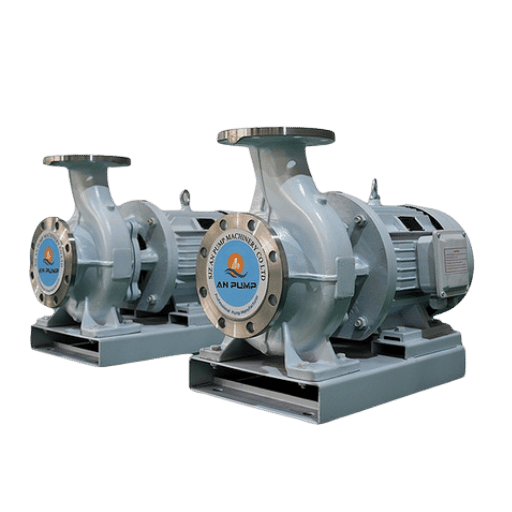
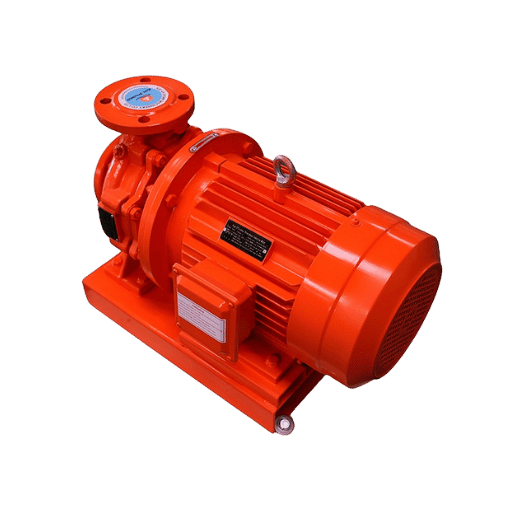
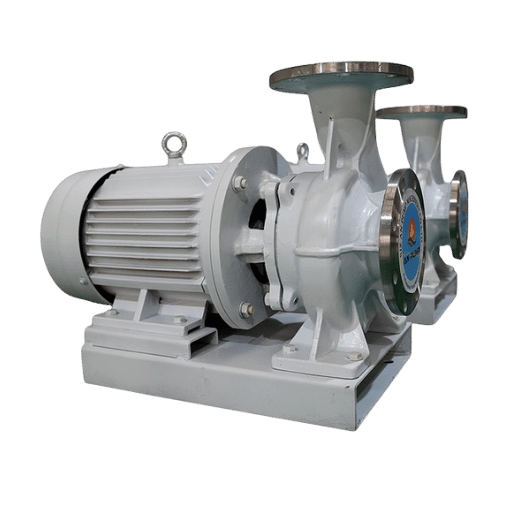
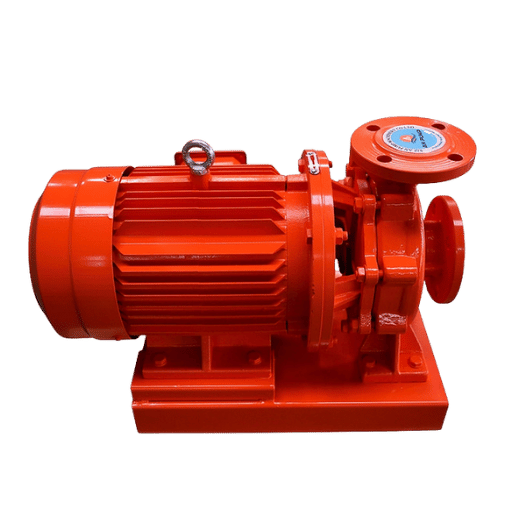
Sea Water Pump — QIZ Horizontal Centrifugal by BBP (ISO/ABS · 6 Alloys · 2-Week Lead Time)
Industrial-grade centrifugal pumps engineered for chloride concentrations up to 35,000 ppm, heads to 125 m, and flows from 3 to 1,000 m³/h. Built in BBP’s own foundry, machined and tested in-house since 2005.
- Flow: 3 – 1,000 m³/h (13 – 4,400 GPM)
- Maximum head9: 3 – 125 m (10 – 410 ft)
- Aliys Alloys Metal: Cast Iron Bronze 316 SS Duplex 2205 Super Duplex 2507 NAB C95500
- Performance test: ISO 9906 Grade 2B as standard
- Certifications: ISO 9001 ISO 14001 CE ABS BV CCS
- Lead time: 2–3 weeks standard / MOQ 1 unit
Flow:
3 – 1,000 m³/h (13 – 4,400 GPM)
Maximum head9:
3 – 125 m (10 – 410 ft)
Performance test:
ISO 9906 Grade 2B as standard
Lead time:
2–3 weeks standard / MOQ 1 unit
Seawater Service Costs More to Get Wrong — Here's What Decides ROI
A sea water pump is a centrifugal pump designed using the chloride resistant alloys to pump sea water across in factory, marine and municipal systems. The alloy you specified on day one is idiosyncratic for the difference in operating life of a two year pump with a twelve year pump.′
Saltwater corrosion is approximately five times more aggressive than fresh water and salt blow air adds a further multiple while the pumps/helixes are in and out of use. Seawater service has a true corrosion effect and the alloys that it supports operate fundamentally differently from the steels proposed for fresh water use. This is why the three breakdown modes below are common to so many industrial estate repairs and are again all driven by exactly one root problem.
Corrosion Failure
Chloride pitting, galvanic attack between different flange metals, microbiologically-influenced corrosion in dead-legs are always lurking in the background and quietly trimming MTBF. When the inevitable happens and the pump goes off-line, the ultimate cost is complete shutdown, not just the repair.
The Capex-Optimization Trap
At a lower grade alloy, the savings are 30% on unit price. However the industry TCO studies reveal that the original cost is only 20-30% of lifetime material cost. The rest 70-80% is money on maintenances, nonplanned repairs, losing time and replacement.
Delivery Delays
A 4-week quoted lead time pump that arrives 12 weeks jeopardises your commissioning plan. Stainless steel and super duplex castings may have long lead times unless a supplier maintains stock, which few do.
QIZ addresses each of these systematically: six corrosion-graded alloys spanning cast iron through super duplex 2507, a decision matrix that ties alloy choice to your actual chloride ppm and temperature, ISO 9906 Grade 2B performance tests on every delivered unit, and 2–3-week standard lead times backed by in-house casting and machining. The rest of this guide walks through how each decision point works — starting with which alloy fits your service.
QIZ Series Models, Alloys & Selection — Full Specification Matrix
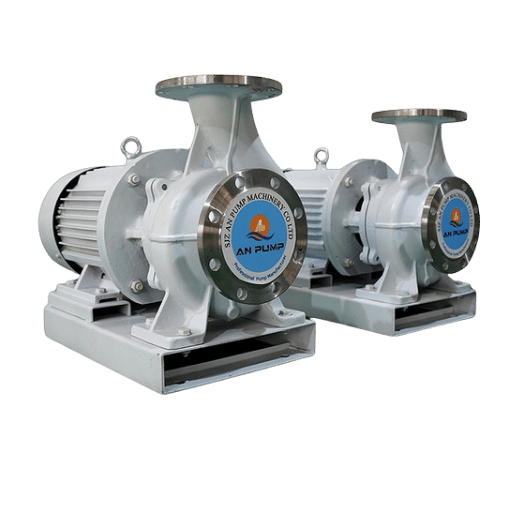
Every QIZ pump is built from three main components — an impeller to accelerate the water, a volute pump casing to convert that kinetic energy into discharge pressure, and a driver that is usually an electric motor. The series uses a horizontal end-suction configuration with a rear pull-out design that keeps suction and discharge piping untouched during maintenance. Model names encode flow-head-impeller-diameter at the BEP: a QIZ100-65-200 delivers roughly 100 m³/h (440 GPM) through a 65 mm discharge with a 200 mm impeller. Sizes scale from compact QIZ32 units for small cooling duties up to QIZ300+ frames for desalination intake service.
Series at a Glance — Four Capacity Bands
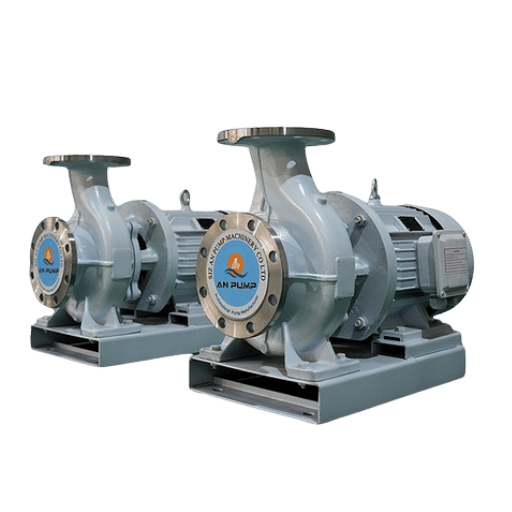
QIZ32 – QIZ80
3 – 50 m³/h · Heads to 50 mCompact modules for small cooling loops, auxiliary marine service, aquaculture circulation, and skids of pumping units are also listed. All Six Alloys Available.
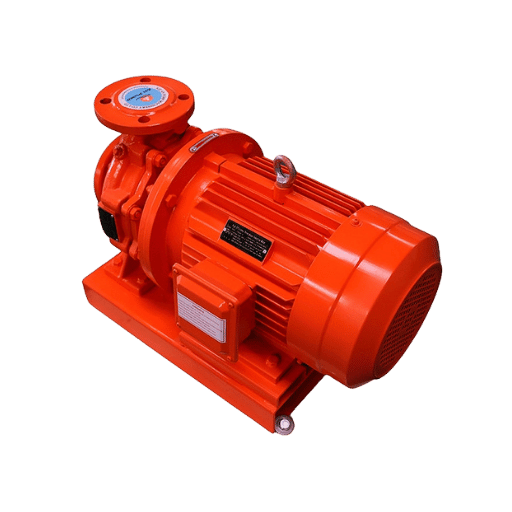
QIZ100 – QIZ150
50 – 200 m³/h · Heads to 80 mWorkhorse range for coastal cooling water, mid-size RO feed, marine engine cooling on larger vessels, and HVAC seawater circulation.
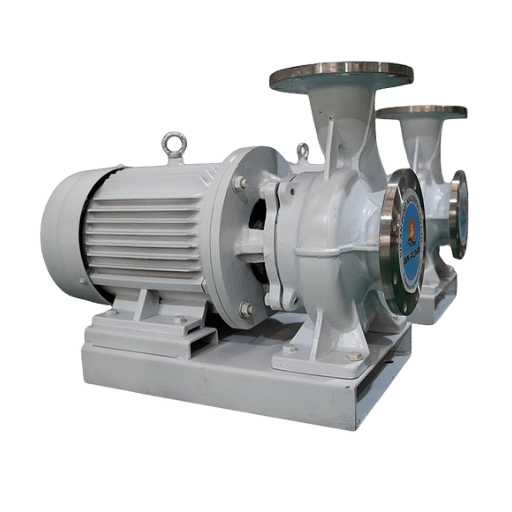
QIZ200 – QIZ250
200 – 500 m³/h · Heads to 100 mCondenser cooling water extraction for all coastal power plants. Desalination feed water corrosion allowances and offshore platform water service. Large fire water systems where Peakot reliability is the only thing that matters.
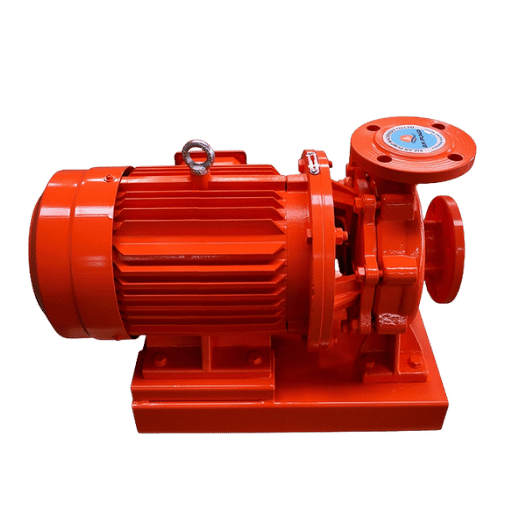
QIZ300+
500 – 1,000 m³/h · Heads to 125 mHigh-flow duties: sea-water RO pre-treatment banks, combined-cycle power cooling air cooler fans, and large marine ballast or bilge service on industrial ships.
Representative Specification Table
| Model | Flow (m³/h) | Head (m) | Power (kW) | Inlet × Outlet (DN) | Speed (rpm) |
|---|---|---|---|---|---|
| QIZ50-32-125 | 12.5 | 20 | 2.2 | 50 × 32 | 2900 |
| QIZ80-65-125 | 50 | 20 | 5.5 | 80 × 65 | 2900 |
| QIZ100-80-160 | 100 | 32 | 15 | 100 × 80 | 2900 |
| QIZ125-100-200 | 150 | 50 | 37 | 125 × 100 | 2900 |
| QIZ150-125-250 | 200 | 50 | 45 | 150 × 125 | 1450 |
| QIZ200-150-315 | 400 | 50 | 75 | 200 × 150 | 1450 |
| QIZ250-200-400 | 600 | 65 | 132 | 250 × 200 | 1450 |
| QIZ300-250-500 | 1000 | 80 | 250 | 300 × 250 | 1450 |
Material Decision Matrix — Chloride × Temperature × pH
This is the single most important criterion in determining pump service life, and it is the one investors tell us they need assistance with most often. Use the samples of your offshore water analysis against the condition below to determine candidate alloys - then refine to available NPSH and budget.
| Service Environment | Cl⁻ (ppm) | Temp (°C) | pH | Recommended Alloy |
|---|---|---|---|---|
| Coastal cooling (filtered, low-Cl intake) | < 5,000 | < 40 | 7.0 – 8.0 | Cast Iron + epoxy coating / 316 SS |
| Open seawater (typical) | ~ 19,000 | < 40 | 7.5 – 8.3 | Duplex 2205 / NAB C95500 |
| High-chloride / evaporator brine | > 35,000 | 40 – 70 | 6 – 8 | Super Duplex 2507 |
| Sour (H₂S-containing) brackish / oilfield | 19,000 – 30,000 | variable | acidic | Super Duplex 2507 (per NACE MR0175) or Titanium |
| High abrasion (silt or sand brackish) | 5,000 – 15,000 | < 35 | variable | Duplex 2205 + hard-facing / tungsten carbide sleeve |
Bronze still is the mariner's marine default because it offers decades of corrosion resistance for a moderate price; reference books the world over note service lives of more than 50 years in seawater applications if well maintained. For any current industrial where ASTM-approved traceability is required, and where greater strength is desired, duplex 2205 and super duplex 2507 have become the ordinary whether for steam engines or for pumps that would experience failure through crevice corrosion using 316 stainless in a similar duty.
Key Components Engineered for Seawater
- Impeller: semi-open, 316L stainless steel, or closed, bronze construction available; sand-entrained impeller with semi-open configuration for brackish water services. All impellers balanced dynamically to ISO 21940-11 G6.3 grade.
- Mechanical seal: single cartridge standard; double cartridge with API Plan 32 flush for high-chloride or H₂S service; silicon-carbide faces as option.
- Shaft: carbon-steel with sleeve additional protection in TP into sure injection waters; sleeve material matches wetted parts to avoid galvannic pairs.
- Bearing housing: independent, grease-lubricated; IP55 motive enclosure; rear pull-out without disturbing pipe work.
"The most common mistake made by specifiers is comparing duplex to 316 parts on the same spec sheet, and then calling the 316, the cheaper pump. It isn't. Your intentionally inflicting failure in the service causing you to spend your work life mopping up leaks. We stress-test every piece of QIZ duplex castings to ASTM A923 methodology so you can see the balance on request."
Why Pumps Fail in Seawater — and How QIZ Is Built to Outlast
There are four primary reasons why unplanned seawater pump trips occur. You need to recognize which one is threatening your application, in order to specify the proper QIZ configuration - and to avoid a quote that doesn't reflect the risk you actually face.
Pain
Chloride Pitting & Crevice Corrosion
By industry consensus, standard 304 and 316 stainless steels are susceptible to crevice corrosion in seawater service, especially proximate to gaskets and stagnant zones. Pitting has been observed to propagate at alarming speed below waterline, under painted and unpainted.
Our Countermeasure
QIZ duplex and super-duplex castings show a Pitting Resistance Equivalence Number (PREN) in excess of 40 - considering that environmental stress corrosion is a feature well-researched and well-understood in excess of 36, subject to evaluation by industry acknowledged testing methodology, resistant to seawater service, in excess of limit of known service at normal operating temperatures.
Pain
Galvanic Corrosion at Dissimilar Flanges
Pair a bronze casing with a carbon-steel suction flange and you build a battery. The less-noble metal sacrifices itself at the joint, usually starting inside the gasket where no one can see it.
Our Countermeasure
Every QIZ is specified with matched-alloy sleeves, shafts, and impellers; we review your upstream and downstream pipe materials before shipment and flag any galvanic pairings in writing.
Pain
MIC Biofouling in Dead-Legs
Sulfate-reducing bacteria colonize stagnant saltwater in standby pumps and bypass lines. The resulting sulfide attack is aggressively corrosive and can penetrate stainless casings in weeks — a much faster failure mode than the "corrosion-over-decades" mental model most buyers carry.
Our Countermeasure
QIZ casing geometry is designed without internal dead-legs; optional cathodic protection and biocide injection ports are available for standby-duty installations.
Pain
Cavitation at Low NPSHa
Seawater temperatures rise seasonally, vapor pressure rises with them, and NPSH margin shrinks. An impeller running cavitated for one summer can lose years of service life from mechanical damage alone.
Our Countermeasure
Every QIZ quotation is specified at the worst-case NPSHa you provide; oversize suction eyes and inducer options are offered where margin is thin.
QIZ vs Submersible vs Self-Priming — Data-Driven Selection
Three pump types dominate seawater service: horizontal end-suction, submersible, and self-priming centrifugal configurations. Each suits a different duty — and the comparison below uses the metrics that actually determine lifecycle cost, not yes/no feature ticks. All numbers reflect published industry benchmarks for each configuration class; your application sizing may vary.
| Selection Criterion | QIZ Horizontal End-Suction | Submersible Sea Water Pump | Self-Priming Centrifugal |
|---|---|---|---|
| Typical hydraulic efficiency | 72 – 85% (ISO 9906 Grade 2B tested) | 55 – 72% | 60 – 78% |
| NPSHa required | 3 – 5 m (flooded suction typical) | 0 m (pump submerged) | self-vents; 5 m dry-lift capable |
| MTBF (field-typical range) | 35,000+ hrs | 20,000 – 30,000 hrs | 25,000 – 35,000 hrs |
| Service life expectation | 8 – 15 years | 5 – 10 years | 7 – 12 years |
| Maintenance access | On-grade; rear pull-out without disturbing piping | Requires lifting out of wet well; crane access needed | On-grade; simple access |
| Relative 5-year TCO (baseline = QIZ) | 1.0× | 1.6 – 2.2× | 1.3 – 1.6× |
Common Selection Mistakes
Submersible is always easier, until you need to pull one. A 150 kW submersible pump in a 6 meter wet well requires a crane, trained riggers and a service window. QIZ units service in place with a two person crew.
"Self-priming does anything." No, but the dry-lift capacity is valid, NPSHa still applies after the pump has been primed. A self-priming can cavitate on a borderline suction line for the same thermodynamic reasons any other centrifugal would.
Always worse—except when the incremental hourly costs of unanticipated downtime is more than the capital cost delta for a single failure.—and that is far more the norm than exception in continuous-duty cooling and desalination service.
Decision Tree — Which Configuration Fits Your Service?
Yes → Go to Q2.
No (submerged wet-well only) → submersible is your configuration.
No (submerged wet-well only) → submersible is your configuration.
Continuous → QIZ horizontal end-suction; highest efficiency and longest MTBF.
Intermittent / portable → consider self-priming.
Intermittent / portable → consider self-priming.
Yes → Strongly prefer QIZ on-grade with rear pull-out.
No → either on-grade configuration is fine.
No → either on-grade configuration is fine.
Yes → Self-priming variant, or QIZ with vacuum priming package.
No → QIZ standard.
No → QIZ standard.
Customer Outcomes — Coastal Power, Desalination, Offshore & Marine
QIZ pumps operate across the four seawater service environments that dominate industrial demand: coastal power plant condenser cooling, desalination plant intake and RO feed, offshore platform auxiliary service, and marine vessel engine cooling and fire systems. The financial case for specifying correctly becomes clearer once framed as five-year Total Cost of Ownership rather than unit price.
5-Year TCO Framework · Silver-Tier Evidence
Why the Initial Price Tells You Less Than Half the Story
Lifecycle analysis by industry has consistently demonstrated that first material cost can account for as little as 20 - 30% of the entire lifetime cost, the balance 70 - 80% comprising maintenance, unplanned repair, downtime and final replacement. Seawater pumping for example overweighs this trend - farther-stretched due to chloride loading, corrosion failures tends to agglomerate towards the end of service when most standard warranties have fallen to nil.
5-Year Cost Component (typical mid-size continuous-duty QIZ installation)
QIZ Duplex / Super Duplex
Under-specified 316 SS
Initial capex (unit + motor + typical installation)
1.6× reference
1.0× reference (lower)
Energy cost (continuous duty at design BBP)
1.0× (higher efficiency preserved)
1.05× – 1.15× (efficiency drops with corrosion roughness)
Unplanned downtime + emergency replacement
Low (single crevice event rare)
Elevated (crevice corrosion + pitting in year 2-3)
Maintenance labour + spare parts
Moderate (planned)
Elevated (reactive)
Indicative 5-year relative TCO
1.0× (baseline)
1.6× – 1.9×
Figures above are typical of industry lifecycle analysis and are presented here for indicative purposes in evaluation only. Your own TCO will depend on duty cycle, electricity tariff, maintenance contract, and local spares logistics; request an application-specific estimate for a precise figure.
Three Representative Service Profiles
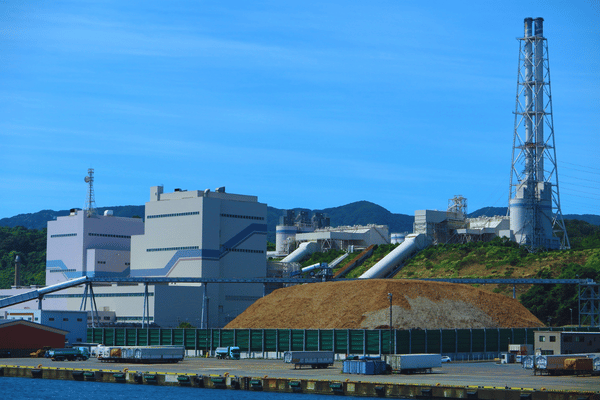
Coastal Power Plant Condenser Cooling
Typical duty: 800 m³/h per unit, continuous 8,000 hrs/year, seawater 18°C – 32°C seasonal range, duplex 2205 specification. Multi-unit installations in this class run on planned-only maintenance when the material is correctly matched to the chloride envelope.
Target MTBF > 35,000 hrs · zero unplanned crevice events across a 4-year window
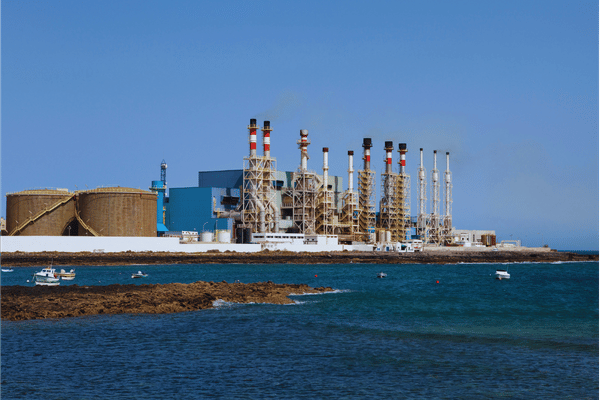
Desalination Plant Seawater Intake (RO Feed)
Typical duty: 350 m³/h per unit, continuous duty with seasonal chloride peaks to 38,000 ppm during evaporation months, super duplex 2507 specification. Pre-treatment feed pumps experience the highest chloride loading in the entire RO train.
Target operating efficiency ≥ 81% retained through 3+ years · zero pitting failures
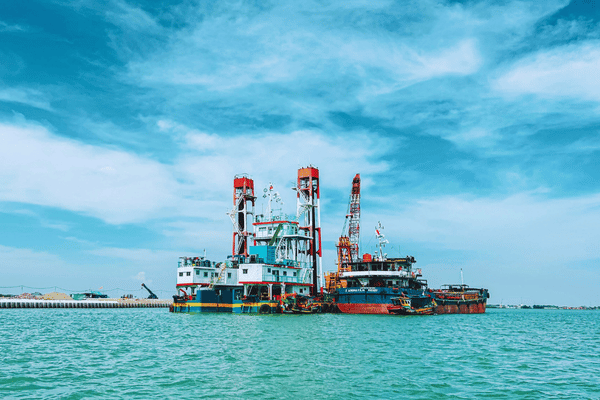
Marine Auxiliary & Engine Cooling
Typical duty: 180 m³/h per unit, intermittent service on main engine raw water circuit, NAB C95500 specification for IACS classification compliance. Vessels running across tropical routes see the fastest biofouling load.
Through-class-renewal service without pump body replacement · lifecycle maintenance cost reduction versus 316 SS baseline
Applications by Industry
Coastal and combined cycle power plants
Condenser cooling, auxiliary service water, firefighting ring main.
Desalination plants
Seawater intake, pre-treatment feed to RO banks, high-pressure boost ahead of membranes.
Offshore and marine
Platform cooling, ballast tank service, firefighting ring main, bilge discharge, engine raw water cooling.
Aquaculture
Circulation through grow-out tanks and hatchery systems.
Coastal chemical and petrochemical plants
Cooling water intake from ocean or brackish harbour sources.
Industrial and municipal operations
Sited near the ocean where fresh water is reserved for process use. Seawater transfer and oil transfer duties on offshore platforms use similar alloy selections.
Across these services the common thread is efficiency and reliability: a correctly specified QIZ moves large volumes of water at relatively low cost per m³ delivered, and the centrifugal force generated by the rapidly rotating impeller keeps discharge pressure stable across wide flow ranges.
Certifications & Quality Assurance — Documentation You Can Send to Your Engineer
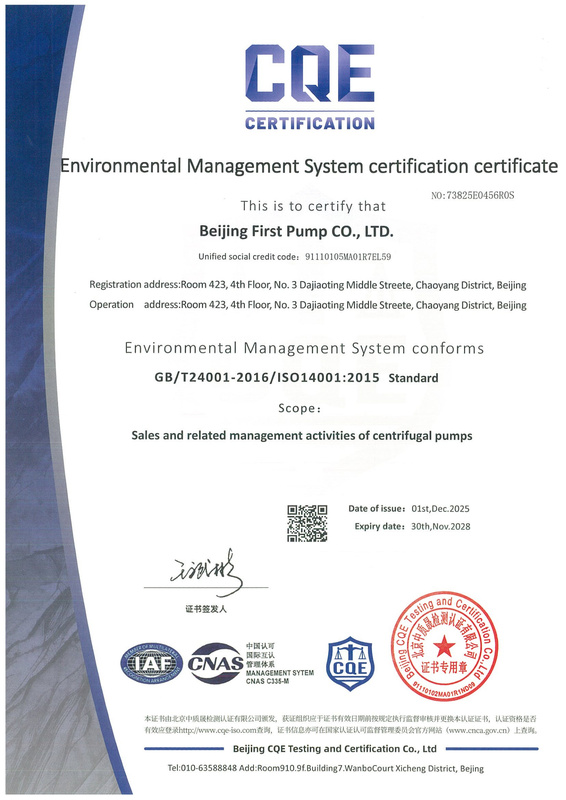
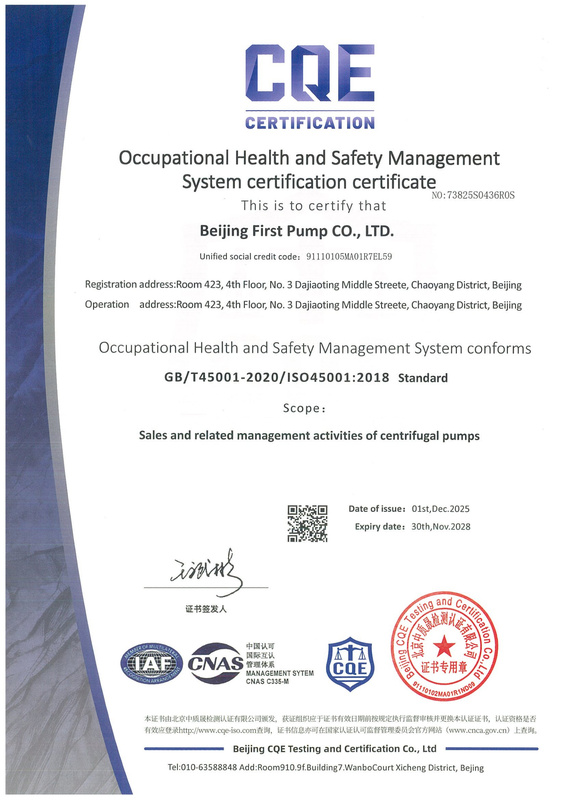
Our certification programme is organized around what your buying engineer and classification surveyor actually need to see. Each certificate below maps to a specific use case. We will send the current certificate in PDF form with any RFQ on request.
Certifications Held by BBP
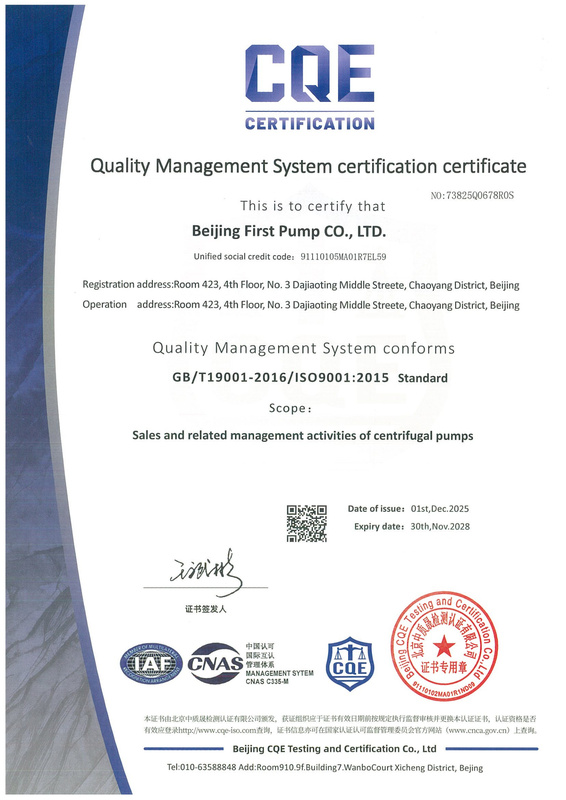
ISO 9001:2015
Quality management system
ISO 14001:2015
Environmental management
ISO 45001:2018
Occupational health & safety
CE
EU market conformity
ABS Type Approval
American Bureau of Shipping
BV Mode Approval
Bureau Veritas classification
CCS Certificate
China Classification Society
ISO 9906 Grade 2B
Performance test standard
RoHS
Restricted substances
Quality Documentation Delivered with Every Order
Material Test Certificate (EN 10204 3.1) - mill-traceable material composition for every casting.
Hydraulic Performance Test Report (ISO 9906 Grade 2B) - actual flow, head, power, efficiency at the duty point.
Hydrostatic Pressure Test Report - casing tested at 1.5 design pressure.
Impeller Dynamic Balance Report (ISO 21940-11 G6.3) - measured residual unbalance.
Paint and Coating Inspection Report - dry film thickness measurement and, where specified, accelerated salt-spray validation hours.
‹



›
ISO 9906 Grade 2B is the default acceptance class for chemical-industry pumps and cooling-water service. Its bilateral tolerance band allows 8% on flow, 5% on head, and either 8% overage on power or 5% deficiency on efficiency. We run every QIZ unit on the test bench at a minimum of four duty points before shipment.
Procurement Guide — Price, Lead Time, MOQ, Incoterms & Support
We publish the procurement conditions that matter to a working buyer so that you can budget and schedule without a round of calls. Specific pricing is configuration-dependent, but the driving factors below will let you estimate within a reasonable band before sending an RFQ.
Pricing Factors by Alloy Grade
Price scales primarily with the alloy specification. Using cast iron with epoxy coating as a reference baseline (1.0), typical relative pricing is: Bronze 1.5 - 1.8, 316 Stainless Steel 1.6, NAB C95500 2.2 - 2.4, Duplex 2205 2.0 - 2.1, Super Duplex 2507 2.8 - 3.2. Final pricing depends on size, motor class, seal configuration, and certification package. [Contact for application-specific quote]
Lead Time (Standard vs Custom)
Standard QIZ models in cast iron, bronze, 316 SS, or duplex 2205: 2 - 3 weeks from order confirmation. Larger frames (QIZ250+) or super duplex 2507 castings: 4 - 6 weeks. Full OEM customization involving new tooling: 6 - 10 weeks. Spare parts for active QIZ models ship next business day from our stocked inventory.
Minimum Order, Payment & Incoterms
MOQ is 1 unit for any standard QIZ configuration. Standard payment terms are 30% deposit / 70% before shipment, or irrevocable LC at sight for established buyers. We quote EXW factory, FOB Tianjin, or CIF buyer-specified destination port as required.
OEM, ODM, and Customization
Our foundry and machining facility supports alloy upgrades, flow and head customization, special seal configurations, non-standard coating systems, and ATEX-certified motor options. Engineering review and manufacturing typically adds 2 - 4 weeks to the standard lead time depending on scope.
Lifecycle Support
Pre-sales engineering review includes application sizing and alloy recommendation at no cost. Commissioning support, on-site installation guidance, and 24/7 remote technical diagnostics are available throughout the service life. Wear parts and seals for active QIZ models are carried in inventory.
Sea Water Pump Engineering Tools
Alloy Selector
Identify the optimal material composition for marine environments. Prevent corrosion and ensure long-term durability for your applications.
Access Tool →TCO Calculator
Accurately forecast the Total Cost of Ownership across the pump's lifecycle. Analyze energy consumption and structural maintenance costs.
Access Tool →Size Selector
Determine the exact pump specifications required for your hydraulic system. Ensure peak efficiency and operational reliability.
Access Tool →FAQ — Top Questions Before You Buy
1. Which alloy should I choose for my seawater service conditions?
Start with three numbers from your water analysis: chloride concentration (ppm), operating temperature, and pH. Open seawater at around 19,000 ppm Cl⁻ and temperatures below 40°C is the comfort zone for duplex 2205 or nickel aluminum bronze. Above 35,000 ppm (brine or evaporator service) or elevated temperature, super duplex 2507 becomes necessary.
For low-chloride filtered cooling intake below 5,000 ppm, cast iron with epoxy coating or 316 stainless is adequate and considerably cheaper. If your service involves H₂S (sour brackish or oilfield), NACE MR0175 governs and super duplex or titanium is the default. Send us your water analysis with an RFQ and we will flag the specific risks in writing.
2. Sea water centrifugal pump vs submersible pump — which fits my operation?
Choose submersible only when you cannot install on-grade with flooded suction. The horizontal end-suction QIZ configuration is more efficient, easier to service, and carries lower 5-year TCO in any continuous-duty application where installation geometry allows it.
Use the decision tree in the comparison section above. Short version: wet well with no access submersible; otherwise QIZ with horizontal end-suction.
3. What's the typical price range and lead time for QIZ seawater pumps?
Lead time 2 - 3 weeks for cast iron, bronze, 316 SS, duplex 2205 standard size models; 4 - 6 weeks for larger frames or super duplex 2507; 6 - 10 weeks for full OEM customization. Spare parts for active models ship next business day.
Pricing scales with alloy grade. Relative to a cast iron baseline bronze is ~1.5 - 1.8, duplex 2205 is 2.0 - 2.1, and super duplex 2507 is 2.8 - 3.2. We can provide a firm quotation within 48 hours of receiving your application parameters.
4. How do I correctly size a sea water pump for my flow and head?
Sizing requires four inputs required flow rate, total dynamic head (static lift plus pipe friction plus fittings), available NPSH at the pump suction, and your seawater temperature range. Select a pump whose best efficiency point (BBP) is close to your duty point and whose NPSH required curve remains 0.6 m below your worst case NPSH available.
Send these four numbers to our engineering team and we will propose two or three candidate QIZ models with performance curves overlaid on your system curve. There is no cost for this review.
5. What certifications do you hold, and can you provide the actual test reports?
BBP holds the quality system certifications listed in the certifications section above. These cover management systems, market conformity, and the major marine classification societies.
For every delivered pump we ship five core test reports: EN 10204 3.1 material certificate, ISO 9906 Grade 2B hydraulic performance test report, hydrostatic pressure test report, ISO 21940-11 G6.3 dynamic balance report, and paint and coating inspection report. Additional class-specific certificates (ABS, BV, CCS) are available on request.
6. What is the expected service life and maintenance interval?
Service life in seawater depends nearly solely on alloy match. A correctly specified QIZ in duplex or super duplex can provide 8 - 15 years of service, with bronze installations generally exceeding that range; industry references note bronze service lives in excess of 50 years in sea water when maintenance is observed.
We recommend annual visual inspection, mechanical seal inspection at 2,500 operating hours, bearing re-greasing at 4,000 hours, and full overhaul at 10,000 hours or any time that performance deteriorates by more than the ISO 9906 tolerance band.
7. Can QIZ handle sand, silt, or unusual media such as inhibited or chlorinated seawater?
In the event of an abrasive-laden brackish intake we specify a semi-open impeller with tungsten-carbide shaft sleeve and hard-faced wear rings. A solids content above 3% by volume should be reviewed with our engineering team - a slurry-duty pump may be more suitable than a centrifugal.
Inhibited seawater, chlorinated seawater for biofouling control, and seawater with chemical dosing are all supported - but each changes the material calculus. Send the inhibitor or chemical datasheet with your RFQ and we will re-check the recommended alloy against the dosing regime.
8. Do you offer OEM / ODM customization and specification changes?
Yes. Our foundry supports alloy upgrades, flow and head point customization, special seal arrangements, non-standard shaft lengths, coating systems, and ATEX or explosion-proof motor options. New casting tooling has a longer lead time (~6 10 weeks typical) but delivers fully custom hydraulic profiles.
For some minor modifications (e.g.Non-standard connections, different position for motor mountings, more tappings on instrumentation etc.) on conventional QIZ frames, we typically add 1 - 2 weeks to the normal delivery times.