Get in Touch with BBP

Engineered, manufactured, and factory-tested in-house by BBP
High Pressure Plunger Pumps — Ceramic-Plunger Triplex Pumps up to 300 MPa
For operators who cannot afford downtime: ceramic-plunger triplex pumps for high-pressure duty up to 300 MPa, with a field-proven 4-year wear-part service interval across 10 models from 350 kg to 7,000 kg plunger load.
Request a Quote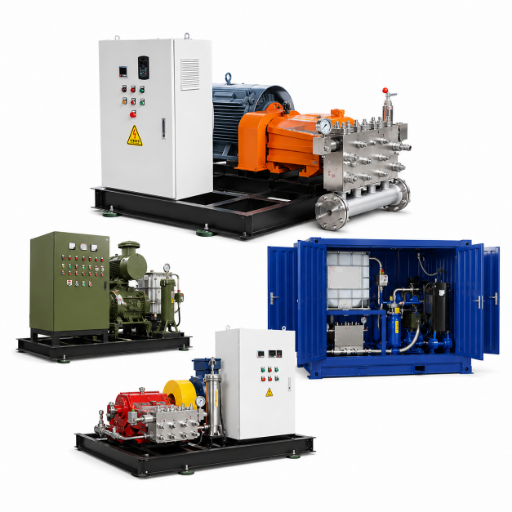
- 300 MPa
- Max pressure (3,000 bar / ~43,500 psi), small-plunger models
- 16–200 mm
- Plunger diameter range
- 7,000 kg
- Max rated plunger load (3ZH120)
- Ra 0.004 µm
- Ceramic plunger surface finish
- 4 years
- Rated wear-part service interval
- Electric + Diesel
- Drive options, ISO-certified build
Built for engineering teams, procurement managers, and plant operators
The Hidden Cost of High-Pressure Pump Failure
A high-pressure plunger pump rarely fails on installation day. The real failure often arrives months later, when a scored plunger damages the packing and forces an unplanned shutdown during production. A plunger pump is a positive displacement reciprocating unit – typically triplex (three pistons) or quint (five). Pistons or plungers that oscillate back-and-forth against each other driven off a shaft to create a constant (for this application at least) stream of high-pressure flow. The basic mechanism is simple; long service life depends on seal design, plunger surface finish, coupling alignment, feed-water cleanliness, and lubrication control.
Maintenance literature points to the same failure chain: plunger scoring damages the packing, causing fluid leakage and unexpected stops. Hard water, dirty feeds, and wear are called out by name over and over as the root cause. Whether it’s a steel-mill descaling header or an oilfield water-injection skid, that’s not a maintenance issue to dismiss – it’s simply lost productivity at maximum hourly value. The design choices below focus on extending the service life of that wear point beyond 4 years.
Selection support for engineers and RFQ teams
BBP Plunger Pump Series — Models & Selection
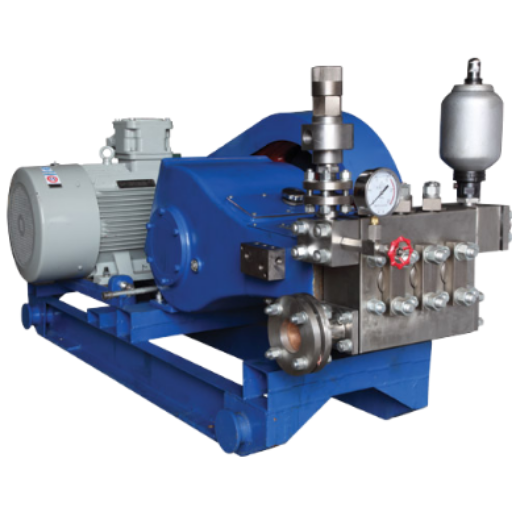
BBP’s range is centered on two triplex plunger designs. In contrast, the 3DP line is the small high-speed one, the 350-kg-capacity 3DP20 up to the 3,100-kg 3DP80. It finds service when weight and space are at a premium and pressure rises into the ultra high region on the smallest plunger sizes. BBP’s heavy duty continuous running product and comprises pumps 2,500 kg to 7,000 kg plunger load- designed for oil field injection and for the big descaling heads. All pumps in both families use solid ceramic plungers as standard, with stainless high-pressure wetted parts, cast-iron crankcases, and forced lubrication. Plunger diameters range from 16 mm to 200 mm, and stroke length, drive type, and duty-point configuration can be matched to your operating conditions.

| Model | Rated plunger load | Stroke length | Bare-pump weight | Typical role |
|---|---|---|---|---|
| 3DP20 | 350 kg | 20 mm | 50 kg | Compact ultra-high-pressure |
| 3DP35 | 650 kg | 35 mm | 107 kg | Cleaning / metering |
| 3DP40 | 1,200 kg | 40 mm | 157 kg | Jetting / test |
| 3DP60 | 2,100 kg | 60 mm | 256 kg | Descaling / jetting |
| 3DP80 | 3,100 kg | 80 mm | 670 kg | Heavy cleaning / injection |
| 3ZH75 | 2,500 kg | 75 mm | 420 kg | Continuous process duty |
| 3ZH75-100 | 2,500 kg | 100 mm | 450 kg | Long-stroke high flow |
| 3ZH100 | 4,900 kg | 100 mm | 1,500 kg | Oilfield injection |
| 3ZH80 | 5,350 kg | 80 mm | 1,900 kg | Heavy continuous duty |
| 3ZH120 | 7,000 kg | 120 mm | 1,800 kg | Max-flow injection / fracturing |
Beijing First Pump (BBP) electronic catalogue:
- rated plunger load, stroke and weight per model. Pressure, flow and drive power are determined for each model by its speed and plunger diameter;
- please ask the full characteristic data sheet for your particular application.
How to read the selection envelope
With any given model of this pump family, a smaller plunger diameter will result in less flow in trade for higher pressure; that is how the small 3DP20 can achieve the ultra-high pressure range, while the big 3ZH120 favors high flow. First choose your required plunger load and stroke, then calculate your plunger diameter until you get on the characteristic curve your desired pressure and flow rate (L/min, gpm and m³/h), assuming rated pump speed (rpm). From that, calculate your motor horsepower as pressure x flow, and know that your crankcase has the power ratings to handle operation for continuous duty at your desired load shown above. Inlet and outlet valve are stainless steel unit construction as opposed to forged brass, as would be found on smaller duty pumps. All BBP plunger pumps are built ready for direct-coupled electric motor or diesel engine.
Decision matrix — matching model family to duty
| If your priority is… | Pressure band | Flow priority | Best-fit family |
|---|---|---|---|
| Maximum pressure, compact footprint | Ultra-high | Low–medium | 3DP20 / 3DP35 |
| Balanced cleaning / jetting duty | High | Medium | 3DP40 / 3DP60 |
| Continuous process, long stroke | Medium–high | High | 3ZH75 / 3ZH75-100 |
| Max flow, oilfield injection / fracturing | Medium–high | Highest | 3ZH100 / 3ZH120 |
Not sure which plunger diameter lands on your duty point?
Get a free assessment →

Cost-of-ownership guidance for engineers, managers, and procurement teams
Ceramic Plunger vs Steel Plunger — A Data-Driven Comparison
| Characteristic | Conventional Steel Plunger | BBP Solid Ceramic |
|---|---|---|
| Surface Finish | ~ Ra 0.8 µm | Ra 0.004 µm |
| Hardness Level | Low Hardness | ~ 85 HRC |
| Coupling Method | Round flat / Threaded connector | Ball-type coupling (Linear travel) |
| Seal Stress/Wear | High (Lateral side loads) | Low (Self-compensating V-type) |
| Expected Reliability | Months to ~1 Year | Long working life |
This is where total cost of ownership is won or lost, so the comparison needs engineering detail rather than broad marketing claims. Metallic plunger assemblies can be difficult to balance across hardness, surface finish, repair cost, and long service life.
Most steel, and even coated metal, plungers have the capability of achieving a surface finish of about Ra 0.8 µm. With that level of finish the low- hardness metal surface will conform itself under pressure to score and ultimately tear the seal that it passes. Our proprietary BBP solid ceramic plungers can achieve a finish of Ra 0.004 µm at approximately 85 HRC , so they resist abrasive and chemical erosion and prevent the initial “scoring and tearing.”
The coupling row of pump components is an important area worth noting, as this can resolve a failure that has actually been reported at customer sites. One field failure account noted a ceramic plunger separating from its mating steel slider after approximately one year. Another unit on the same system subsequently separated within mere months! What is happening in that situation? With a flat-ended or threaded connector, repeated reciprocating movement under high pressure can introduce lateral load, increasing seal wear and raising the risk of connector disengagement.
To address this, BBP uses a ball-type coupling to ensure true linear plunger travel, reducing lateral seal wear and lowering the risk of joint disengagement. This V-type seal supports the same goal: it remains low-friction when unloaded, then expands during the high-pressure discharge cycle to form a self-compensating seal.
” We gave up on packing material and flat-ended steel plungers some time ago. Once we switched over to ceramic plungers utilizing a spherical coupling and our v-seal design, we virtually eliminated seal destruction, and that’s how we are now able to publish 4 year wear part life, rather than suggesting you service the pumps every quarter. “
4-year rated wear-part service interval, versus the quarterly re-pack cycle typical of scored steel-plunger pumps. Fewer rebuilds means fewer planned shutdowns — the single largest line item in high-pressure pump cost of ownership.
Service interval: BBP spec. Steel-plunger maintenance pattern: industry maintenance guides.Want the ceramic-vs-steel numbers applied to your own duty cycle?
Request a custom comparison →SYSTEM / SPECIFICATIONS
Application Engineering — From Oilfield Injection to Hydro-Descaling
Application notes for engineering validation and operations planning
We don’t discriminate on industry – so same triplex platform, entirely different businesses; duty point-not pump category-makes the machine. One may be a descaling header for a steel plant; the other may be a water-injection skid for a far-flung oil field, but the heart of both has to be a PD plunger pump, operated at a unique set of conditions. Pressure bands below give a typical application range; our own sales engineer will pin your exact operating point on to a manufacturer’s performance characteristic for the pump you select.
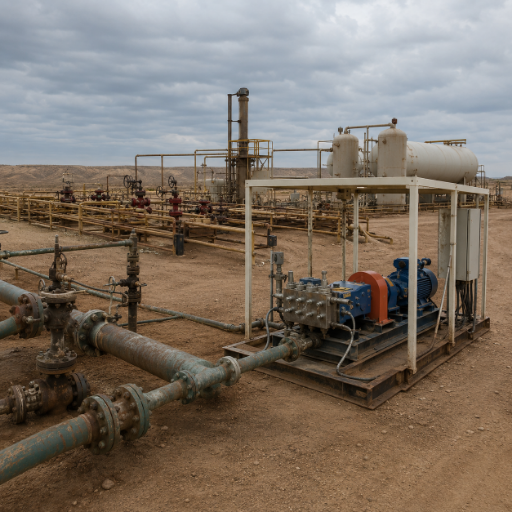 High pressure, pulsed
Fracturing & Pressure Pumping
High pressure, pulsed
Fracturing & Pressure Pumping
High-pressure fluid delivery for well stimulation. Diesel-driven 3ZH-series pumps deliver the pressure with ceramic plungers rated for abrasive, intermittent service.
 ~150–420 bar
Hot-Metal Hydro-Descaling
~150–420 bar
Hot-Metal Hydro-Descaling
Stripping mill scale off billet and strip in steel plants. Demands instant, repeatable pressure and plungers that survive abrasive scale-laden return water — exactly the case the ceramic-plus-filtration design targets.
 Medium–high, continuous
Coal-Mine Emulsion Supply
Medium–high, continuous
Coal-Mine Emulsion Supply
Supplying emulsion fluid to powered roof supports. Known in mining as the emulsion pump, this duty rewards the long, stable continuous-running behaviour of the 3ZH line.
 Per test standard
Hydrostatic Testing & Pipe Cleaning
Per test standard
Hydrostatic Testing & Pipe Cleaning
Vessel and pipeline pressure testing, chemical pipeline flushing, and road line-marking removal. Precise, holdable pressure makes the compact 3DP models a clean fit.
Proof — what the equipment photos show
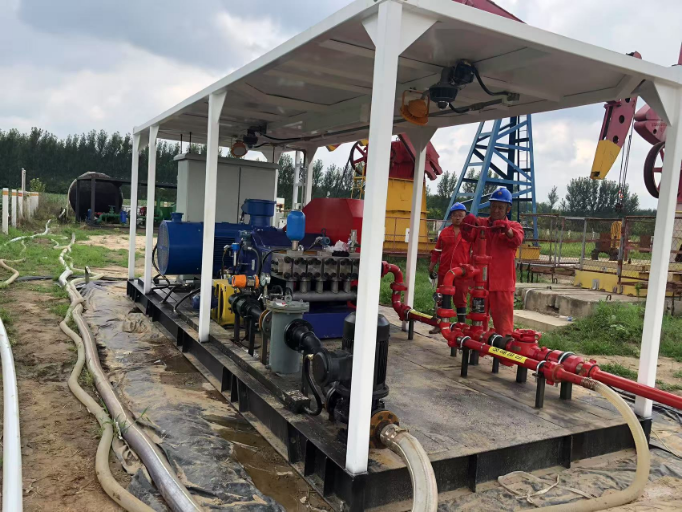
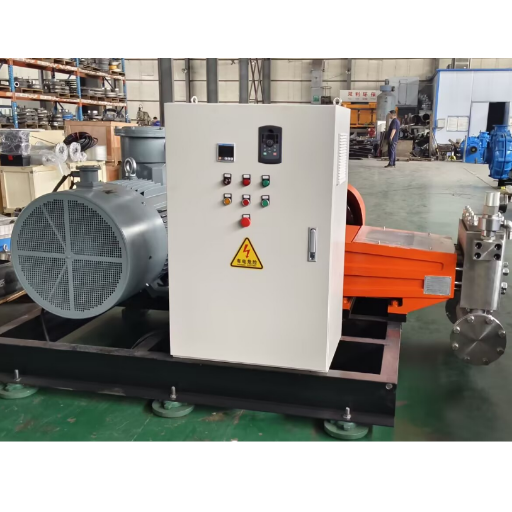
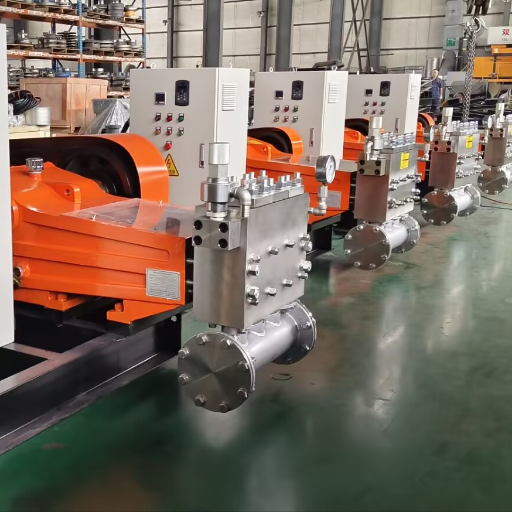
BBP reference photos show oilfield water-injection skids, steel-plant descaling units, and pumps running under load on the factory test stand. Unlike suppliers that rely mainly on outsourced assemblies, BBP controls casting, machining, assembly, and testing in-house. Each pump is assembled, run-tested, and inspected before shipment.
Documentation for procurement review and engineering approval
Certifications & In-House Quality Control
The 4-year wear expectation is supported by BBP’s vertically integrated manufacturing process. Raw materials are cast, heat-treated, machined, assembled, coated, and tested under one roof, reducing the uncertainty that often comes with outsourced or off-the-shelf assemblies. BBP runs ISO-certified processes aligned with recognized standards for PD reciprocators, as contained in such documents as API 674, Hydraulic Institute standards for reciprocators and other accepted codes.
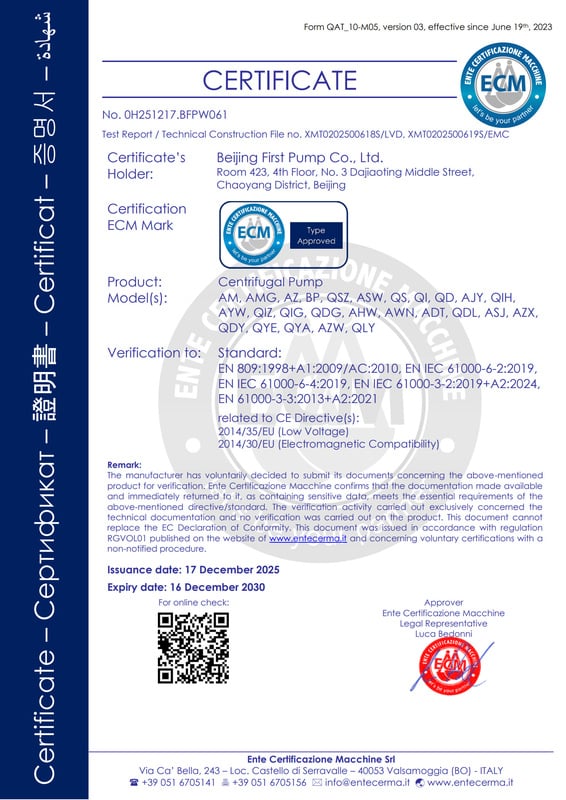
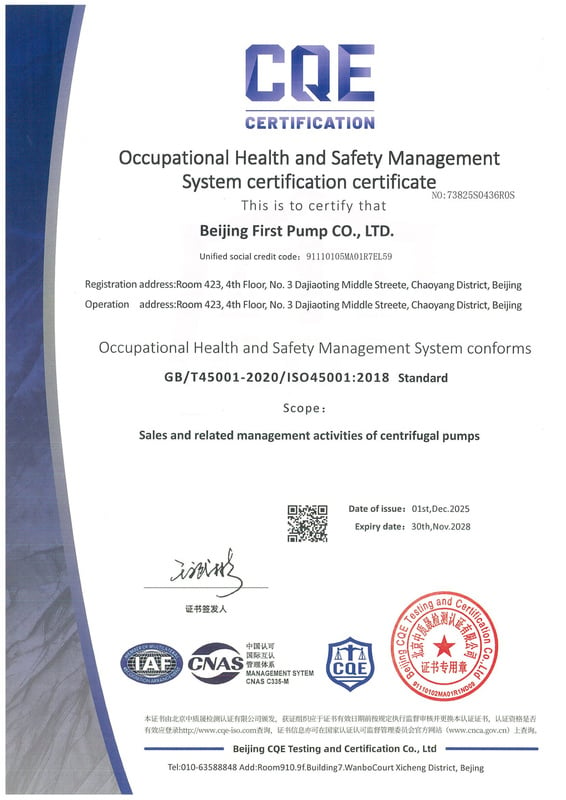
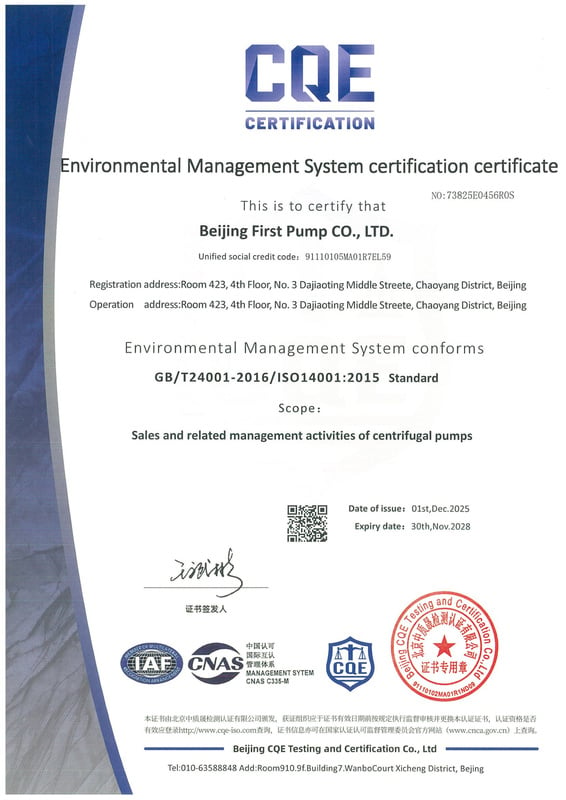
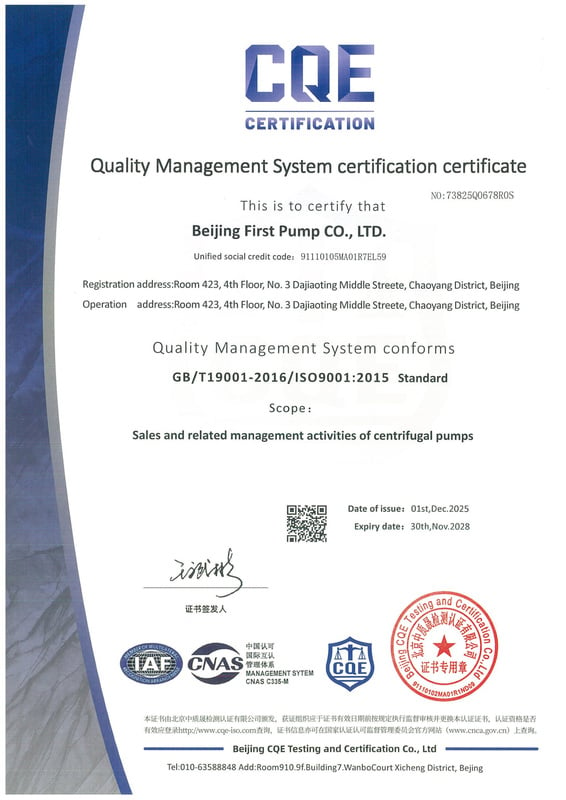
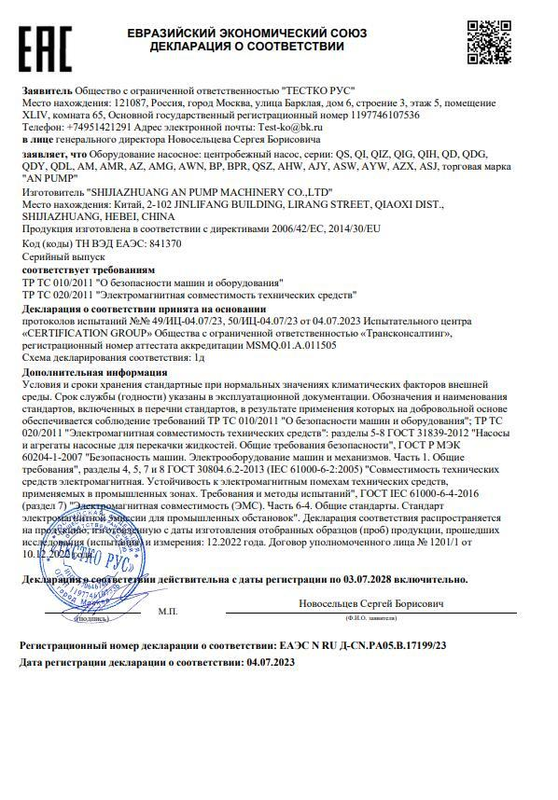
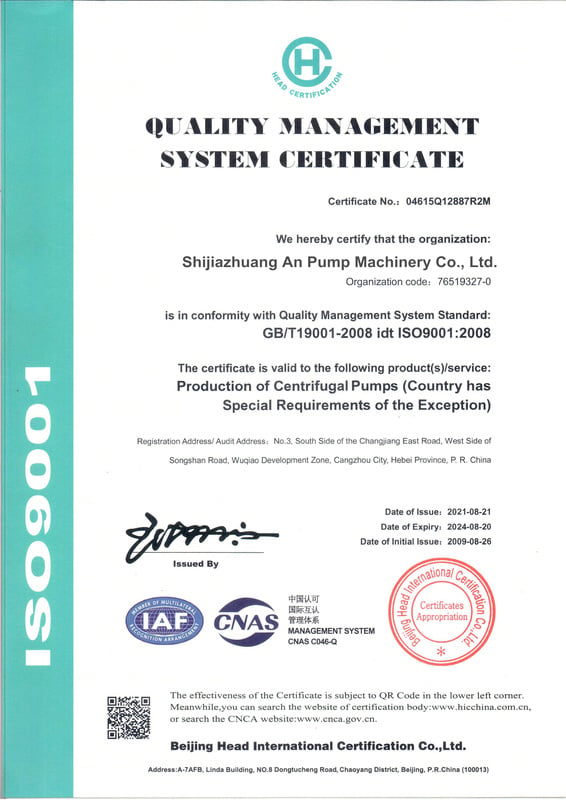
ISO 9001
Certified quality management
Grade 12.9 bolting
72-hour salt-spray rated
1000 MPa
High-pressure cylinder enhancement
20 µm filtration
Stainless two-stage, re-cleanable
Rupture-disc relief
Instant full depressurisation
4-way monitoring
Auto-alarm on temp / pressure / supply
Even the highest alternating-load parts – high-pressure cylinder, valve seat, core and spring – are built from high density alloy stainless steel then subjected to a 1000 MPa enhancement procedure. Grade 12.9 bolts, certified for over 72-hour salt-spray exposure, secure the pressure connections. The crankcase is force cooled to assure bearings and crankshaft never go hungry. Likewise, positive lubrication by the oil pump never leaves either dry, while a stainless two-stage filter ensures that feed-water does not get beyond 20 µm, thus protecting the pump against damage due to hardness and contamination, identified by maintenance manuals as two principal failure modes for PD plungers. A safety rupture disc immediately vent the excess pressure, while the 4-way auto-alarm, monitors oil pressure and temperature, plus low water pressure to notify the operator of a potential issue before it leads to an unplanned teardown.
Need the certificate pack for your vendor audit?
Download full compliance documentation →
Frequently Asked Questions
How does a high-pressure plunger pump work?
It is a positive-displacement reciprocating pump. A crankshaft drives three plungers (triplex) in sequence; each plunger draws fluid in on its suction stroke through an inlet valve, then forces it out through a discharge valve at high pressure on its return stroke. Using three plungers offset on the crankshaft smooths the combined flow and reduces pulsation compared with a single-plunger pump.
What is the difference between a plunger pump and a piston pump?
In a piston pump the seal moves with the piston inside the cylinder; in a plunger pump the seal is stationary and the smooth plunger slides through it. A stationary high-pressure seal is easier to inspect and replace and tolerates higher pressure, which is why plunger pumps dominate ultra-high-pressure work. A high pressure plunger pump and a high pressure piston pump look similar, but the plunger design is the one that scales to thousands of bar.
Which pump gives the highest pressure?
Among common industrial pumps, the reciprocating plunger pump reaches the highest pressures — well into the ultra-high-pressure band above 10,000 psi, with specialised units running into the thousands of bar. BBP’s smaller-plunger models reach up to 300 MPa (3,000 bar / ~43,500 psi); a centrifugal pump cannot approach that range.
Why are three plungers used instead of two or four?
Three plungers offset at 120° give a good balance: the combined discharge is far smoother than one or two plungers, while staying mechanically simpler and more compact than five. Triplex is the industry-standard reciprocating configuration; quintuplex (five) is used when even lower pulsation or higher flow is required.
What are the disadvantages of plunger pumps, and how are they addressed?
The classic weaknesses are seal wear and flow pulsation. BBP addresses seal wear with the ceramic-plunger, V-seal and spherical-coupling combination backed by 20 µm feed filtration, and limits pulsation through the triplex layout. The honest trade-off remains: any plunger pump needs clean feed and correct seal maintenance, and a pump fed dirty or aerated water will wear faster no matter how good the wet end is. That is precisely why the on-board four-way monitoring system and the re-cleanable stainless filter are fitted as standard equipment rather than sold as optional extras.
Can a triplex plunger pump run dry?
No. Running a triplex plunger pump dry scores the plungers and destroys the seals within minutes — which is exactly what the built-in low-water-supply auto-alarm exists to prevent.
Electric motor or diesel engine drive — which should I choose?
Electric drive suits fixed sites with reliable grid power and the lowest running cost; diesel suits remote oilfield pads and mobile rigs without grid. Both share the same wet end, so it is a site decision, not a performance one.