Get in Touch with BBP

Multistage Pumps — Industrial Centrifugal Pumps for Pressure Boosting, RO Pre-Pressure, Boiler Feed & Fire Service
Multistage pumps stack two or more impellers in series on a shared shaft so each stage adds pressure while the casing footprint stays compact. BBP manufactures vertical, horizontal, boiler-feed and high-pressure multistage centrifugal pumps from 1–200 m³/h at heads to 240 m, built end-to-end in our ISO 9001 / ISO 14001 / ISO 45001 / CE-certified Beijing foundry with a 600 ton/month cast-iron capacity.
Request a Custom Quote
System Pressure Challenges — When a Single-Stage Pump Isn’t Enough
Most engineers we work with arrive at a multistage pump after a single-stage selection has already failed them in one of three predictable ways. A multistage centrifugal pump fixes those failures by stacking impellers in series so each stage lifts pressure further without forcing a larger impeller diameter or a faster shaft speed — but the architecture only earns its keep when the duty point lands on the best-efficiency band with the right number of stages. The three pain patterns below come straight from project bids and Reddit threads we have catalogued through 2024–2025.
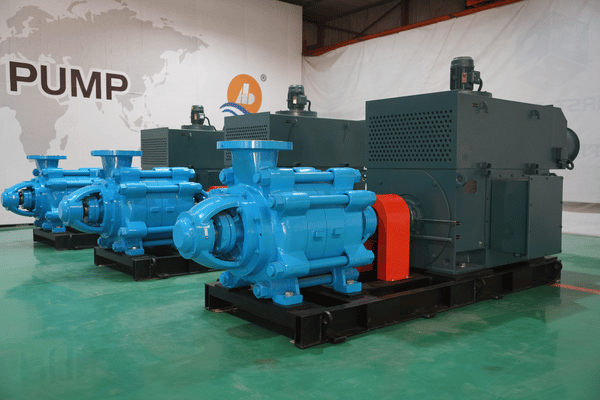
01
Pain 1
The single-stage pump can’t reach the head the system needs.
An MEP engineer on r/MechanicalEngineering recently asked for a multistage selection hitting 15 m³/h at roughly 100 m head — a duty point a single-stage 2-pole centrifugal cannot deliver without oversizing the motor and burning kilowatts on partial-load operation. Multistage pumps land that head with a smaller impeller diameter and lower input power.
02
Pain 2
The stage count is wrong — and efficiency dies silently.
Adding impellers does cost: our industry field records hourly observations of the hydraulic efficiency loss of 2-4% per additional stage past the BSE optimum number for the duty. Over a 15-20 year service life, two extra stages would blow a five-figure kilowatt budget with the energy alone on a mid-size pump – way before operation and cavitation costs.
03
Pain 3
“We bought the cheaper pump” — and paid for it on energy.
The Hydraulic Institute and Europump life-cycle expense guidebook doesn’t beat around the bush: for pumps operating over 2,000 hours per annum, operating costs become outright dominant. A wrongly dimensioned cheap pump could erase its initial economy within 18 months on a heavy industrial running cycle.
How a Multistage Pump Solves These Failures
The multistage centrifugal pump links 2 to 28 impellers in series on one common shaft, each impeller-diffuser stage passing the fluid along at a slightly raised pressure. The total head increases approximately directly with stage number at fixed flow, so a small-diameter multistage cluster can provide the head a single massive impeller cannot—without operating at dangerous tip speeds. BBP’s application engineers plots your flow, head and NPSH-available against our hydraulic envelope, then defines the configuration, stage number and materials that places the operating point on the best-efficiency band.
How Multistage Pumps Build Pressure — Stages, Impellers & Why Stage Count Matters
Studying how the impeller-diffuser path operates is essential because it is the leading indicator of whether your pump quote will hit the best-efficiency point or consume a hidden 6-10% of its rated horsepower each running hour. The operation is not academic – it affects the stage count, NPSH margin and IEC or NEMA motor frame on the datasheet you are about to sign.
How Each Stage of a Multistage Centrifugal Pump Adds Pressure — Inside the Impeller-Diffuser Path
Within each multistage assembly, the impeller describes the greatest transfer of kinetic to static pressure; the diffuser following it converts that kinetic to pressure before transferring the fluid onto the next stage’s eye design. The fluid enters at it initial pressure into the first chamber, gains head H in every stage, and exits at the last discharge pressure equal to pressure initial plus the summation of all stage heads. BBP’s QDL/QDLS series runs at 2,900 rpm at 50 Hz (3,500 rpm at 60 Hz) on IEC B5 or NEMA C-face motors, with drop-in-replace impeller stages on the diffuser bunch and cartridge wet-end mechanical seals on the shaft.
Stage Count vs Efficiency — Why More Isn’t Always Better
Field data report an approximate 2-4% hydraulic efficiency deficit per additional stage once you go beyond the BEP-efficient number for one application’s needs. That is the single most expensive error we encounter on incoming RFQs: a client requesting ten impeller stages when eight will align the operating point closer to the best-efficiency zone – eight stages will also produce less axial load on the bearing, less cavitation on warm water, and approximately 4% lower horsepower requirement to deliver the same discharge pressure. The best solution is to select the minimum stage number that puts the duty point inside the best efficiency field of the smallest hydraulic frame that still achieves the pressure goal.
“Stage count is where most multistage decisions fail. We consistently receive tenders asking for ten stages when eight will get the duty point closer to the best-efficiency point—eight stages means less axial load, less cavitation on hot water and approximately 4% less horsepower demand at equal discharge pressure. We would prefer to pump the correct size pump than the maximum size pump.”
NPSH Required, Cavitation Risk & Stage Count Tradeoffs
NPSH required (NPSHr) for a multistage pump is reported at the first-stage impeller eye, with ISO 9906 convention measuring it at a 3% first-stage head drop. The first impeller does the hardest hydraulic work — it must accelerate fluid from suction pressure without cavitating. Adding stages downstream does not change NPSHr at the suction flange, but adding stages at higher RPM does. A six-stage pump on a 660 kW motor on a marginal NPSH installation broadcasts that mismatch as low-frequency vibration and shock-pulse signature long before the seal fails — a real maintenance pain reported in field threads on r/pumps. The fix is upstream: oversize the suction line, reduce elbows above the pump centerline, or specify a slower-speed motor frame.
Vertical vs Horizontal vs Specialty — Choosing the Right Architecture
Both the vertical and the horizontal multistage pumps hit the same RFQ more than either camp would prefer. There’s not one single correct solution, but rather the right selection is a function of plant-room floor area, the location of the suction and discharge piping, the energy importance to life cycle calculations, and the ease of the seal change needed by maintenance. The table below compares the two dominant architectures across the dimensions that actually drive the decision in a 2024-2025 project bid.
| Dimension | Vertical multistage (QDL/QDLS) | Horizontal multistage (ring-section) |
|---|---|---|
| Plant-room footprint (32 kW class) | ≈ 0.35–0.45 m² (inline) | ≈ 1.0–1.2 m² (with suction & discharge elbows) |
| Suction / discharge routing | In-line — drop into existing horizontal header | L-shape — needs suction elbow, strainer bracket |
| Axial thrust handling | Internal hydraulic balance + thrust bearing | External balance drum + dedicated thrust pad |
| Typical NPSHr at BEP | 2.5 – 4 m | 3.5 – 6 m |
| Mechanical seal interval (typical duty) | 24 – 36 months | 12 – 24 months |
| Hydraulic efficiency at BEP | 65 – 75% | 68 – 78% |
| Sound pressure at 1 m | 72 – 76 dB(A) | 74 – 78 dB(A) |
| Service life (typical duty) | 8 – 12 years | 8 – 10 years |
| Best fit when… | High head, limited floor area, inline piping | Low NPSH-available, heavy-duty high-flow |
Efficiency bands and NPSH ranges are profiles listed in the ANSI/HI 14.6 and ISO 9906 acceptance test conventions. Typical values are given for a number of stages and duty points.
Architecture Selection Matrix
Use the matrix below to pre-narrow the architecture prior to you submitting your duty point. Each cell relates an archetypal industrial trigger to the architecture which brings the Operating Point closest to the best-efficiency operating window – the QDL/QDLS, QD(G), boiler-feed, high- pressure variants then specialize within that envelope.
If your duty has…
Vertical Inline
Horizontal Ring-Section
Boiler-Feed Specialty
High-Pressure (>200 m)
Limited plant-room floor area
★★★ Best
—
★★ if low temp
★★ if vertical variant
High flow (>100 m³/h) at moderate head
★★ Good
★★★ Best
—
—
Fluid above 70°C (boiler / hot condensate)
—
—
★★★ Best
★★ if high temp variant
Head > 200 m (RO membrane feed)
—
★★ multi-stack
—
★★★ Best
Marginal NPSH-available at suction
—
★★★ Best
—
—
Low-flow / high-head (fire jockey)
★★★ Best
—
—
★★ if >200 m
Drinking-water / RO pre-pressure
★★★ Best (316 SS)
—
—
★★ if >180 m

Vertical Inline Multistage (QDL/QDLS)
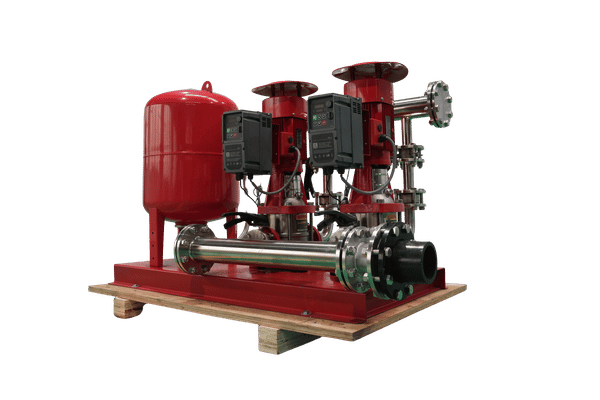
BBP’s vertical multistage pump product line — inline suction and discharge on the same level, cartridge mechanical seal, drop-in impeller stages. 1–200 m³/h, head to 240 m. Cast iron (QDL), 316 SS (QDLS), or high-temp variant (QDL-H). Default for high-rise booster, RO pre-pressure, and fire jockey applications.
→ See QDL/QDLS specifications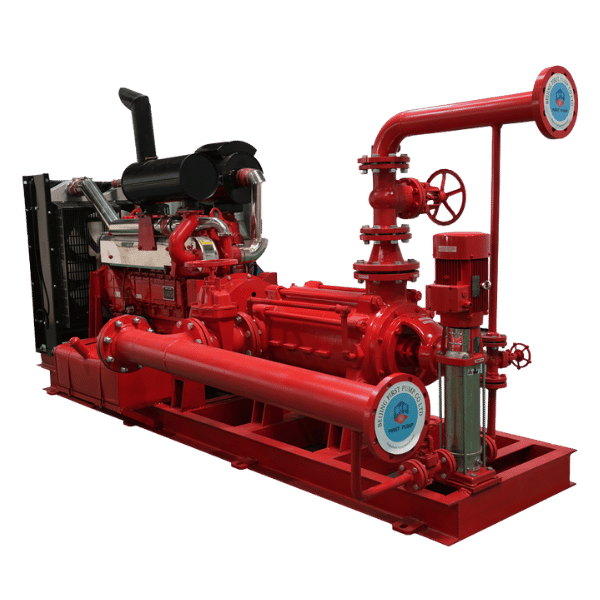
Horizontal Ring-Section Multistage (QD/QDG)
Segmented ring-section casing on a horizontal foot-mount frame, external balance drum, dedicated thrust pad. Appropriate on heavy industrial duty applications where NPSH-available is marginal and floor area is not key. The standard on mine dewatering, irrigation and high-flow industrial processes boost.
→ See QD/QDG specifications
Boiler-Feed Multistage (High-Temp Specialty)
Enhanced cartridge seal compound, stainless steel impeller stack, jacketed casing where appropriate. Service temperature 70-140C for use with steam plant make-up water, hot condensate return, district heating. Specification based on de-aerator outlet temperature and condensate chemistry not just flow rate.
→ See boiler-feed specifications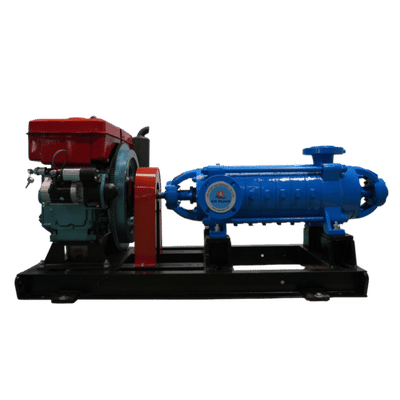
High-Pressure Multistage (>200 m head)
For RO membrane high-pressure feeds, sea-water injections, and any process duties outside the normal QDL/QDLS envelope. For 316 SS or duplex stainless wetted parts, ISO 9906 Grade 2B approved with optional Grade 1B on critical-service tender files.
→ See high-pressure specificationsWhere Total Cost of Ownership Actually Lands
Terminology. The Hydraulic Institute / Europump life-cycle cost guide ( commissioned with the US Department of Energy) anchors pump TCO in eight categories: initial, installation, energy, operation, maintenance, down-time, environment and disposal. Pumped more than 2,000 hours a year- nearly every industrial multistage application- energy and down-time, together, usually run the lifecycle cost; initial purchase cost accounts for a tiny portion of it. This worked example derived from the HI/Europump confirms that saving 2,250 on impeller trim resulted in roughly 54,000 saved on 8-year LCC versus no action; the impulse was shifting the duty point toward the best-efficiency band.
SILVER TIER
15-Year Industrial Multistage TCO Lens
Common field-typical configuration proportions derived from the HI/Europump LCC model. Use as a field mapping compass; work our application team for a job-specific model, tied to your own duty cycle, electric rate and down-time expense profile.
~10%
Initial purchase
+ install
+ install
~32%
Energy
(15–20 yr)
(15–20 yr)
~20%
Maintenance
& spares
& spares
~38%
Downtime, rebuild,
disposal
disposal
Interpretation. A QDL /QDLs or ring-section choice that locates the duty point on the best-efficiency band (and preserves the local availability of ring-section seals and impeller stages) generates more whole life cost than the initial-price discount. That is how BBP compares on the upper end, against premium European brands; this is how BBP compares on the low end, against the highest-volumes, lowest-priced OEM cast-iron vendors.
Comparing total cost of ownership across vendors?
Request a project-specific TCO worksheet →Industrial Applications — Where a Multistage Centrifugal Pump Earns Its Keep
We can put your specific application and its prevailing chemistry into one of ten industrial classes of multistage water pumping duties- and match each one to a single, optimal product-line architecture in the broader ring-section horizontal multistage water pump portfolio. For the application note below, our specification process has already linked the optimal architecture to the operating point and chemistry at the customer’s site.
| Application | Recommended Architecture | Flow Q (m³/h) | Head H (m) | Material Call |
|---|---|---|---|---|
| RO pre-pressure (municipal) | Vertical 316 SS | 6 – 16 | 40 – 80 | 316 SS, NSF 61-upgrade elastomer |
| RO membrane high-pressure feed | High-Pressure | 10 – 60 | 180 – 240 | 316 SS or duplex SS |
| High-rise domestic water boost (12–20 fl.) | Vertical 316 SS | 12 – 32 | 60 – 120 | 316 SS |
| Boiler feed — steam plant make-up | Boiler-feed Specialty | 10 – 30 | 80 – 160 | Cast iron + high-temp seal |
| Hot condensate return / district heating | Boiler-feed Specialty | 15 – 80 | 40 – 120 | High-temp seal compound |
| Fire jockey / sprinkler pressure maint. | Vertical 316 SS | 1.5 – 3 | 60 – 160 | 316 SS (UL-adjacent) |
| Industrial washdown & process water | Vertical or Horizontal | 25 – 80 | 40 – 100 | 316 SS preferred |
| Cooling-tower booster / HVAC chilled loop | Vertical 316 SS | 40 – 90 | 30 – 70 | 316 SS or cast iron |
| Mine dewatering / quarry drainage | Horizontal Ring-Section | 80 – 200 | 30 – 90 | Cast iron, abrasive-resistant impeller |
| Sprinkler & pivot irrigation | Horizontal cast iron | 10 – 60 | 30 – 80 | Cast iron |
Most high-rises, RO pre-pressure and fire-jockey multistage booster duties are in the 40-QDLS class and constitute the majority of these purchases; the dominant segment of ring-section horizontal multistage water pump shipments is irrigation and mine dewatering. As an aside, an overshoot to 200-m head services, more efficiently, the small but growing segment of high-pressure multistage pressure pump specifications.
Customer Outcomes — Verified Performance Across Industries
Each cell below connects the specification decision to the conditions at our customer’s site- and the test results they achieved on arrival- based on our 2024-2025 project RFQ records and our ISO 9906 acceptance testing data. We publish results- not just price-premiums.
High-Rise Water Boost — 20-Floor Residential Tower, Southeast Asia
A 20-storey residential building situated to pump municipal pressure from a ground-level service-tank up 20 storey height against elbow and pipe friction-loss, selected a pair of two-pump duty-standby skids in the 40-QDLS class, delivering the target head at the specified flow rate within a 1.5-wide pump-room footprint- roughly a third of what the company had originally bid.
Result: Boost pressure stable across 06:00–22:00 demand peaks; motor kW draw tracked within 3% of the best-efficiency point on the commissioning acceptance test.
RO Pre-Pressure — Industrial Demineralization Skid
Industrial pre-pressure for a reverse-osmosis (RO) installation typically runs 7 to 18 bar at the membrane feed, depending on (RO) recovery and feed TDS. BBP’s 40-QDLS in 316 SS, specified with NSF/ANSI 61-compliant elastomer seals, set on the low pressure side of a pre-filter and served our customer membrane pump under plant-production conditions.
Result: Customer’s second-pass membrane stabilized inlet pressure within ±5% of membrane specification, eliminating the flux swings the previous horizontal booster caused during backwash cycles.
Boiler Feed — 10 t/h Steam Plant
Boiler feed is one of the most severely loaded of the M/C services: the pump must withstand the deaerator-outlet temperature, tolerate condensate-return chemistry, and secure NPSH margin against flashing vapor. Our QDL-H HT variant ships with an upgraded cartridge seal compound and a stainless impeller stack rated to 140 C.
Result: Customer replaced a 12-year-old horizontal multistage with a shorter stage count (10 vs the original 12), dropping rated motor power from 18.5 kW to 15 kW for an identical head requirement — a direct demonstration of the stage-count discipline we apply on every RFQ.
Fire Jockey — Warehouse Sprinkler Package
Fire-jockeys keep system pressure so that the main fire pumps only cut in on real demand: the duty is low-flow / high-head – exactly what a compact 25QDLS is designed for. Each pump dispatched tested against ISO 9906 Grade 2B acceptance, and mated to an IE3 motor rated for continuous standby duty.
Result: Warehouse maintained a zero-nuisance-start record on the main fire pumps over the first 6 months of service.
Mine Dewatering — Open-Pit Aggregate Quarry
An open-pit aggregate quarry needed continuous dewatering against a marginal NPSH-available at the sump head, sand-laden inflow during the wet season. The horizontal ring-section architecture handled the high flow without taxing NPSHr, and the cast-iron wear rings were specified with the customer’s planned rebuild interval in mind.
Result: Sustained pit-floor drawdown of 0.4 m/day during peak monsoon inflow; no impeller intervention required in the first 9 months of service.
BBP Manufacturing Power — Why ISO-Certified Casting Matters
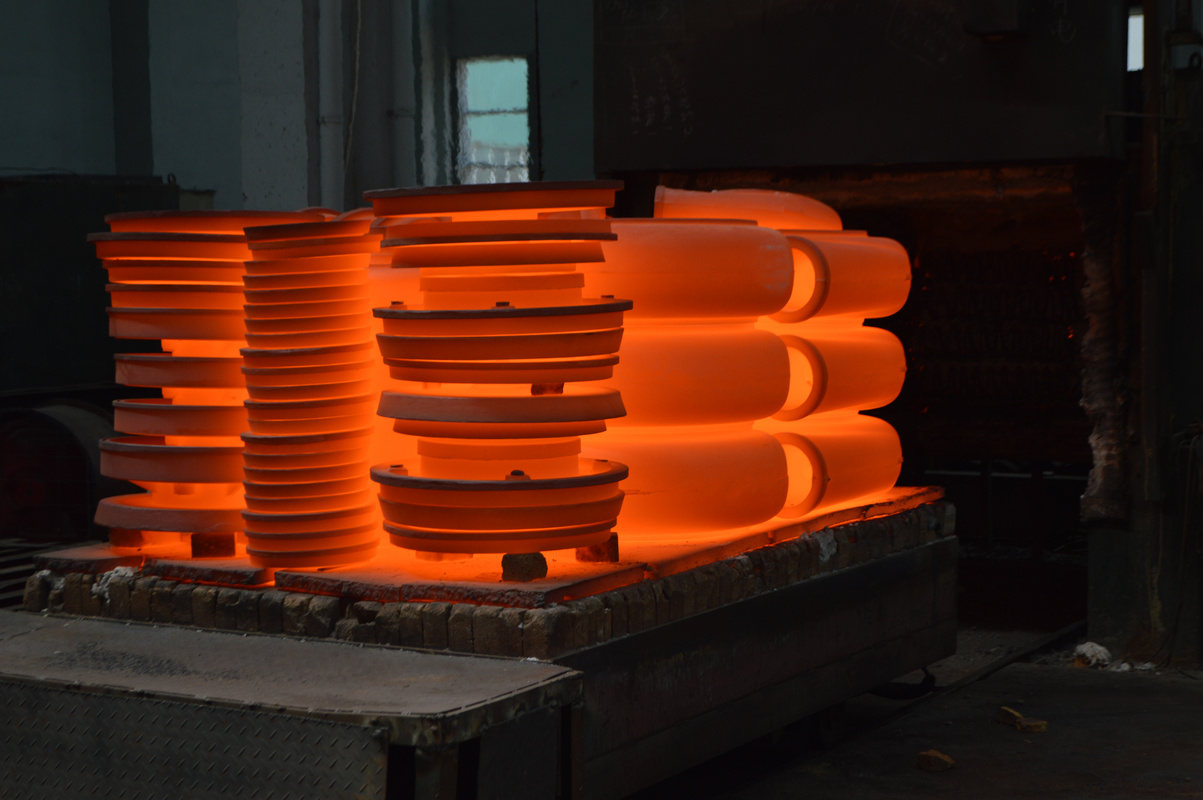
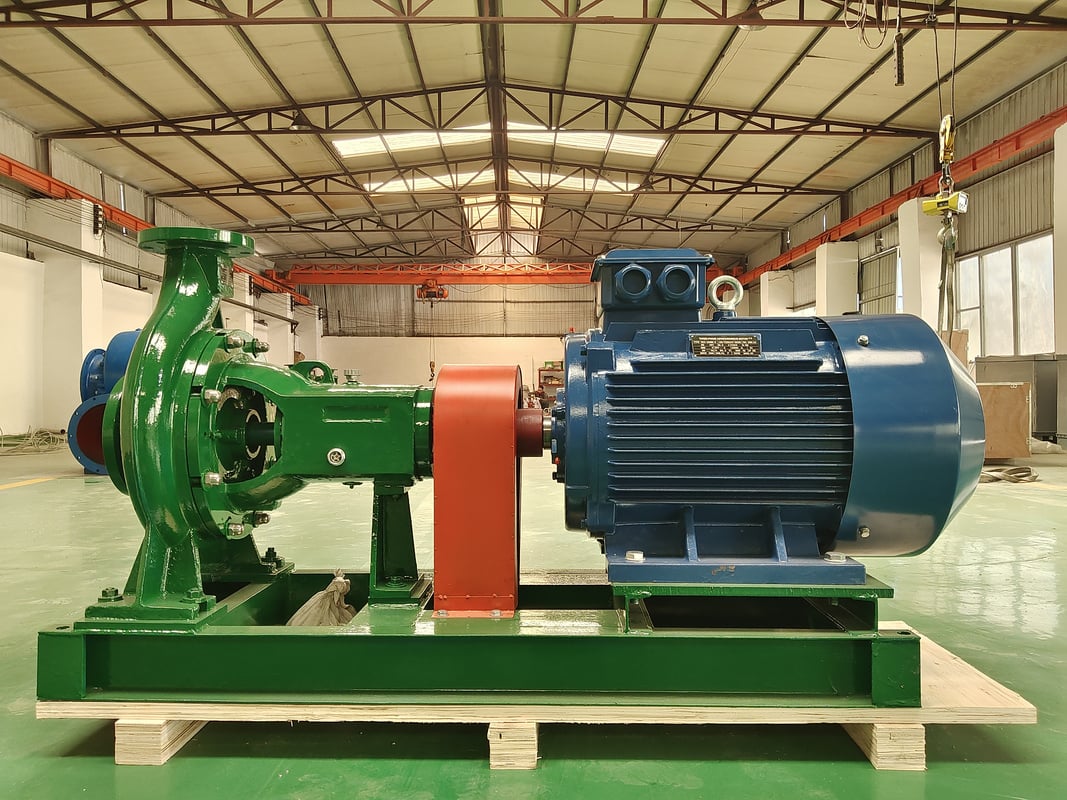
The standing Redcitt verdict on Chinese pump quality is it depends entirely on the specific manufacturer – and the audit evidence either exists or it doesn’t. We publish ours up-front. BBP operates a 50,000 sqm Beijjng foundry with 600 ton/month cast-iron casting capacity, a 30-ton crane on the assembly line, and heat-treatment and machining cells that handle the entire vertical chain from raw casting to NSSENS custom Zofisus Grade 2B acceptance test before the pump ships. Vertical integration is what lets us guarantee that a 25QDLS shipped against a fire-jockey RFQ next month is dimensionally identical to the one we shipped on a similar duty last year.
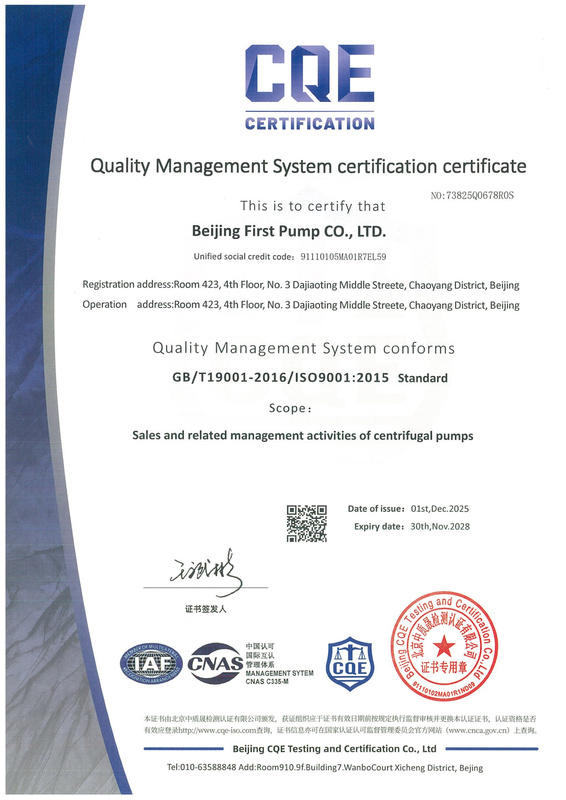
ISO 9001
Quality management
ISO 14001
Environmental management
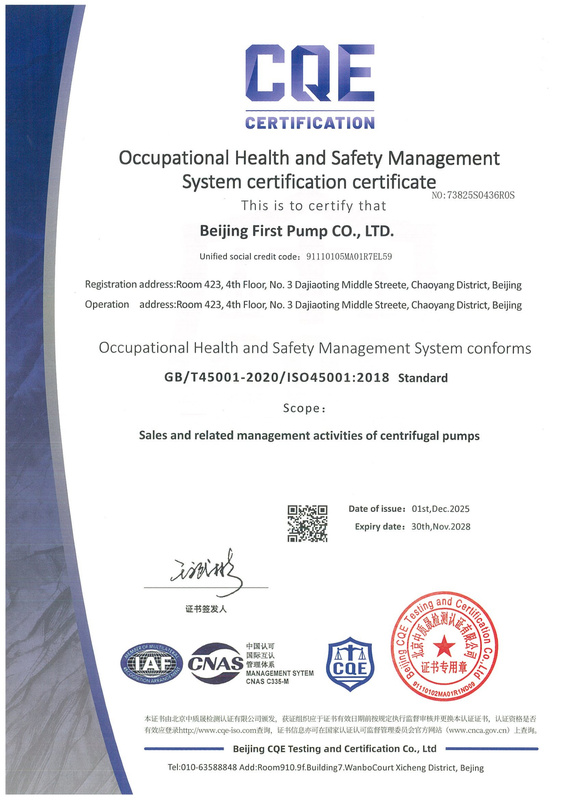
ISO 45001
Occupational H&S
CE
EU conformity
NSF/ANSI 61
Drinking water (on request)
Certifications We Ship the Audit Evidence For
Procurement specifications for industrial multi-stage centrifugal pumps almost always reference the same short list of certifications. The following table maps each one to what it actually audits- and to the documentation we will send with the quotation when it appears in your tender.
| Certification | What it audits | Why procurement asks for it |
|---|---|---|
| ISO 9001 | Quality management system across design, foundry, machining, assembly, testing and after-sales. | Evidence that every QDL/QDLS of the same model is built to the same dimensional and performance controls — not a one-off prototype. |
| ISO 14001 | Environmental management — waste water, coating VOCs, scrap. | Increasingly mandatory in EU, Middle East and North American public procurement tenders. |
| ISO 45001 | Occupational health & safety in the foundry and machining hall. | A proxy for process discipline and supplier maturity — not just a paperwork ribbon. |
| CE | European conformity — Machinery Directive 2006/42/EC, EMC and Low-Voltage Directives. | Legally required for the pump-and-motor package to enter the EU/EEA market. |
| ISO 9906 (test basis) | Hydraulic performance acceptance test — tolerance bands at Grade 1, 2 and 3 levels for flow, head, power and NPSH. | Evidence that the curve on the datasheet is the curve you commission. Grade 2B is the industrial multistage default with -5% efficiency tolerance. |
| ANSI/HI 14.6 | Rotodynamic Pumps for Hydraulic Performance Acceptance Tests — North American standard comparable to ISO 9906. | Recognized in U.S. tender specifications and AHJ packages alongside ISO 9906. |
| NSF/ANSI 61 upgrade | Health-effects evaluation of materials in contact with drinking water. | Required for municipal potable-water boosters and most North American RO pre-pressure tenders. Available on request for our 316 SS builds. |
Sources: ISO 9906:2012 hydraulic acceptance test standard; ANSI/HI 14.6 Rotodynamic Pumps for Hydraulic Performance Acceptance Tests; NSF/ANSI 61 Drinking Water System Components-Health Effects.
Foundry Numbers That Show Up On Audits
50,000 sqm
Beijng manufacturing site – the same address that hosts casting, heat treatment, machining, assembly, coating and testing.
600 ton/mo
cast-iron casting capacity – lets us reproduce a discontinued hydraulic envelope on a re-tool basis when a legacy pump in your plant needs replacement.
30-ton
crane on the assembly line – handles QD/QDG horizontal pumps up to 1,800 mm body length.
20+
pump engineers on application and design – the team that runs the duty-point review on every incoming RFQ.
6×5.5×2.5m
Heat-treatment furnace – accommodates the full QDL-H stage stack and large ring-section casings in a single charge.
Company Qualifications & Certificates
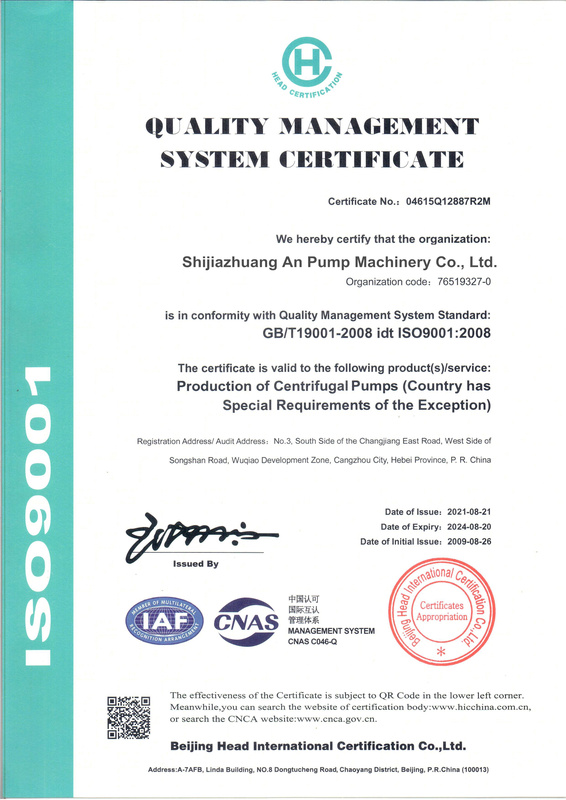



×
![Certificate Preview]()
Manufacturing Power & Global Reach
01
Factory Infrastructure





02
International Exhibitions


Procurement Guide — Pricing Drivers, Lead Time & Spares Inventory
Cheapest-pump-wins is the single-costliest sourcing approach when considering a multistage duty that exceeds over 2,000 hours of annual operation. The HI/Europump life-cycle cost framework reveals the fact of the matter: external purchase costs are the smallest during LCC, while energy consumption and downtime usually account for the largest share. The Comparative Pricing Factor framework below is how we shape your quote based on your duty point – not based on an off-the-shelf catalog SKU.
What Drives Your Multistage Pump Quote
Every BBP multistage-pump quotation is configured against the duty point you submit. The variables below are the levers that move the overall price; we list them so your sourcing team knows exactly where to push for value engineering.
Hydraulic envelope
chosen architecture (Vertical / Horizontal / Boiler-feed / High-Pressure), stage count, motor kW rating.
Material choice
cast iron vs 316 SS vs duplex stainless; upgraded elastomer stack for NSF/ANSI 61 compliant drinking-water service.
Motor options
IE3 standard, IE4 high-efficiency, VFD implementation-ready, flammable-hazardousarea rated variants.
Testing & documentation
ISO 9906 Grade 2B compliant is included standard; Grade 1B available on request.
Packaging & incoterms
FOB, CIF or DDP; wooden-crate rust-inhibitor packaging with VCI film is included for transport in sea-freight transit of up to 60 days.
Quantity & MOQ
1-unit MOQ on standard QDL/QDLS products; volume price breaks from 5 units onward. OEM program based-MOQ configured in each quotation.
Lead Time & Spares Inventory
QDL/QDLS stock models ship around 3-6 week from order receipt, aligning with industry benchmarks for stock multistage offerings(standard time range is 30-45 days). OEM and signature builds – no-standard motor sizes, specialized qualified materials, program-driven testing documentation – 6-12 weeks inclusive of engineering validation and F.A.T. cycle. The schedule is detailed in each quotation considering current factory workload and your individual testing demands.
Stock models
3-6 weeks typical staging from PO receipt.
OE / custom build
6-12 weeks typical staging, inclusive of engineering validation and F.A.T. cycle.
After-market inventory support
we keep on hand for every standard QDL/QDLS size – high-abuse components (mechanical seals, impeller stages, wear rings, O-rings); orders dispatched in 90 days typically.
Foundry-assisted continuity
a re-usable 600 ton/month capacity cast-iron capacity allows us to reconfigure a discontinued hydraulic design when an legacy pump in your operation demands a drop-in replacement.
Logistics & On-Site Support
Worldwide logistics
via the Beijing-Tianjin port corridor; CIF shipping service via key markets worldwide.
Wooden-crate packaging
with rust-inhibitor film for transit durations in excess of 60 days.
Real-time 24/7 tech support
engineering function is dedicated pre-sales engineers (setting the flow rate/pressure at selection) post-sales developers (running remote diagnostics on anomalies); local installation support (installation on-site commissioning) at the time of critical installation available upon request
Want the full Multistage Pump Selection Guide PDF — 14 pages covering hydraulic envelope, NPSH calculation, stage-count formula and material chart?
Request the Selection Guide →Engineering Toolkit — Data-Driven Pump Selection
Eliminate guesswork from your procurement process. Use our proprietary engineering tools to determine the optimal multistage pump architecture, calculate true 15-year lifecycle costs, and estimate the exact stage count required for your duty point. Our data is transparent, calculated instantly, and built on the ISO 9906 framework.
01
Multistage Pump Architecture Selector
Input your flow, head, temperature, and plant-room footprint to instantly find the optimal architecture—Vertical, Horizontal, Boiler-feed, or High-Pressure.
Launch Selector
02
Multistage Pump 15-Year TCO Calculator
Estimate your true total cost of ownership based on the HI/Europump LCC framework, accurately factoring in initial price, energy consumption, and downtime.
Calculate TCO
03
Multistage Pump Stage Count Estimator
Calculate the minimum optimum stage count for your duty head, and visualize the hidden hydraulic efficiency penalty of over-staging your pump selection.
Estimate Stages
Ready to spec a multistage pump for your duty?
Send us your flow, head, NPSH-available and fluid data – our application engineering team returns a stage count, material call and curve overlay, with a written quote against your incoterms within 48 business hours.
Frequently Asked Questions
A single-stage pump has one impeller; its discharge head is constrained by impeller diameter and speed. A multistage centrifugal pump connects 2 to 28 impellers in series on a shared shaft, with each stage adding its own pressure increment. The result: at a given flow, a multistage pump can deliver much higher head than a single-stage pump of the same impeller diameter, with smaller impellers, tighter clearances and lower noise. The tradeoff is more moving parts, higher maintenance complexity and sensitivity to NPSH-available — which is why stage count and material selection matter on every duty point.
Inside each stage, the impeller transfers shaft mechanical energy into kinetic energy in the fluid; the diffuser that follows converts that kinetic energy into static pressure before passing the fluid into the next stage’s suction eye. Fluid enters at suction line pressure into the first chamber, picks up pressure increment ΔH at every stage, and leaves at the final discharge pressure. The pressure rises stage by stage; the flow rate stays constant for a given RPM.
This is the single most common area where multistage selections go wrong. Adding stages is not a free lunch — every extra impeller produces more axial thrust, bearing load and a measurable efficiency penalty (industry field notes report a typical 2–4% hydraulic efficiency loss per additional stage above the BEP-optimum count for a given duty). The right answer is to choose the minimum stage count that lands the operating point in the best-efficiency region of the smallest hydraulic frame that meets your head target. Our application engineers run this analysis on every incoming RFQ — submit your flow, head and NPSH-available and we will return a stage count and curve overlay.
For the overwhelming majority of municipal RO pre-pressure and potable-water boost applications, yes — 316 stainless is the industry default and is recognized for drinking-water system components under NSF/ANSI 61 when the wetted assembly is certified accordingly. For aggressive chemistries — high-chloride seawater, high-TDS brine concentrate, certain chemical-process streams — duplex or super-duplex stainless may be required, and we will flag that in the application review rather than silently shipping a 316 pump that pits within a year.
Standard QDL/QDLS configurations dispatch in 3–6 weeks from purchase-order confirmation — in line with the industry benchmark of roughly 30–45 days for standard stock multistage models. OEM and customized builds (non-standard motor frame, special wetted materials, project-specific testing documentation) run 6–12 weeks, including engineering review and factory acceptance test. The exact schedule is confirmed in each quotation against current factory load and your testing requirement.
NPSH required (NPSHr) for a multistage pump is reported at the first-stage impeller eye, with ISO 9906 convention measuring it at a 3% first-stage head drop. Typical NPSHr at the best-efficiency point is 2.5–4 m for vertical inline multistage and 3.5–6 m for horizontal ring-section multistage. NPSH-available at your installation must exceed NPSHr by at least 1 m of margin at the duty point — if it does not, oversize the suction line, reduce elbows above the pump centerline, or move to a slower-speed motor frame.
Yes — our QDL-H high-temperature variant is rated for 70–140°C with an upgraded cartridge seal compound, and is the version we recommend for boiler-feed and hot-condensate duties. Standard QDL/QDLS units are rated −5 to +70°C, and running a basic unit above 70°C significantly reduces seal life. Above 140°C or on aggressive condensate chemistry, we route to the boiler-feed multistage specialty page for the right material and seal configuration.
High-stage-count multistage pumps on large motors are sensitive to NPSH margin and to suction-line geometry. If NPSH-available at the suction flange is marginal, the first impeller cavitates intermittently and broadcasts the mismatch as low-frequency vibration and shock-pulse signature long before the seal fails — exactly the pattern reported in field threads on r/pumps. The fix is upstream: oversize the suction line, reduce elbows above the pump centerline, specify a slower-speed motor frame, or reduce stage count if the duty point allows. We check NPSH margin and stage count on every RFQ before issuing a quotation.