Get in Touch with BBP

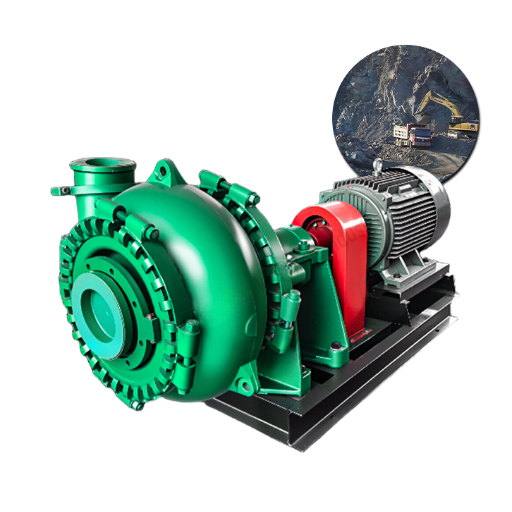
Sand Dredge Pump
Request a Quote / Get Specs
Sand Dredge Pump — Heavy-Duty Solutions for Mining & Dredging Operations
Transport sand, gravel & sediment with centrifugal pumps designed for particles down to 400 mm. Two specially developed series- one pump solution for any dredging application.
2
Product Series
20+
Pump Models
400 mm
Max Particle Size
14,000
m³/h Max Flow
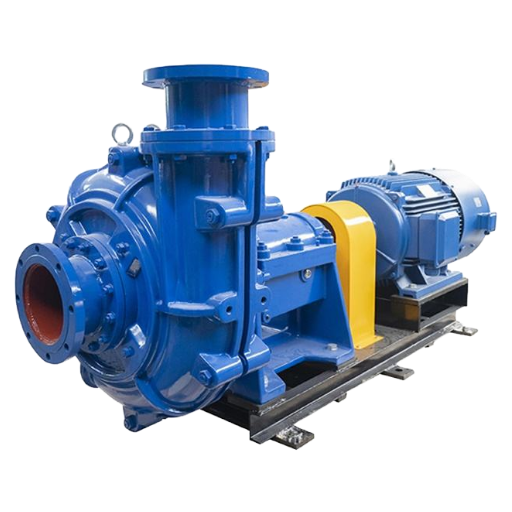
Pump Selection Matters
Understanding the challenges of extracting sand and gravel slurries
A sand dredge pump is a heavy-duty centrifugal pump specifically designed for extracting sand, gravel, and mixed sediment. Unlike general-purpose water pumps, dredge pumps are built to handle highly abrasive slurries at sustained high flow rates — and the wrong pump choice can cost an operation far more than the equipment itself.
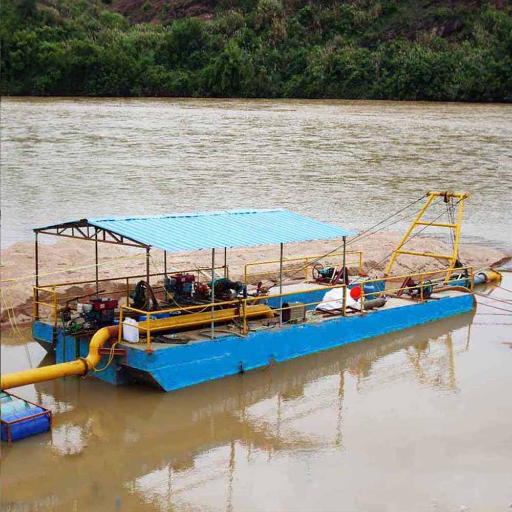
Sand dredging presents the most severe way that any pump will operate. Continuous contact with angular quartz particles, varying slurry concentrations, and oversized debris tests the impeller, casing, shaft seal, and suction liner more than any other application. Regular pumps do not last as long as their wear parts are not resistant to the ongoing abrasion of sand and gravel.
Just one unplanned breakdown on a dredging vessel can cost thousands of dollars per hour in lost production, crew standby charges, and project delays.
Most failures trace back to three engineering gaps: wet-end components too soft, suction designs that induce cavitation, and impeller geometries unable to clear large solids without plugging. Failures to recognize these factors result in reduced pump life, greater operational down time and added maintenance costs that reduce project profitability.
The BBP Engineering Solution
BBP addresses each of these failure modes through purpose-engineered dredge pump designs. The AMG and AWN series use Ni-Hard high-chromium alloy wet parts with hardness exceeding 58 HRC, wide-channel impellers that pass solids up to 400 mm…
Whatever is your operation is in need of a centrifugal sand pump for mining or port construction, our parameters will guide your selection.
Understanding these challenges is the first step — next, we walk through the exact models that solve them.
BBP AMG & AWN Sand Dredge Pumps — Models & Specifications
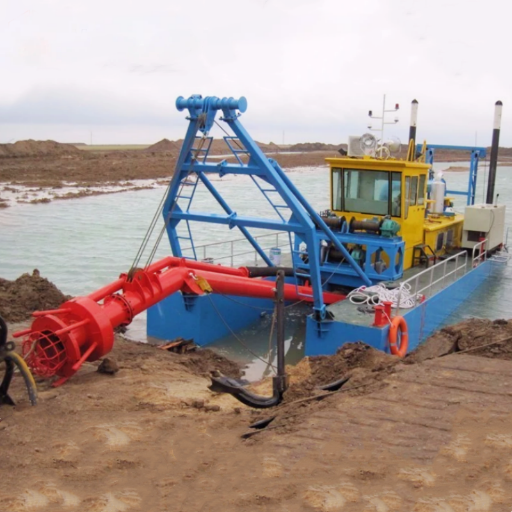
BBP manufactures two distinct sand dredge pump series, each engineered for a specific segment of the dredging market. The AMG series covers shore-based and barge-mounted gravel sand pumping, while the AWN series targets large-scale dredging vessels including trailing suction hopper dredgers and cutter suction dredgers. Both series share BBP’s commitment to abrasion-resistant materials, field-proven pump design, and interchangeable wear parts that keep maintenance costs predictable.
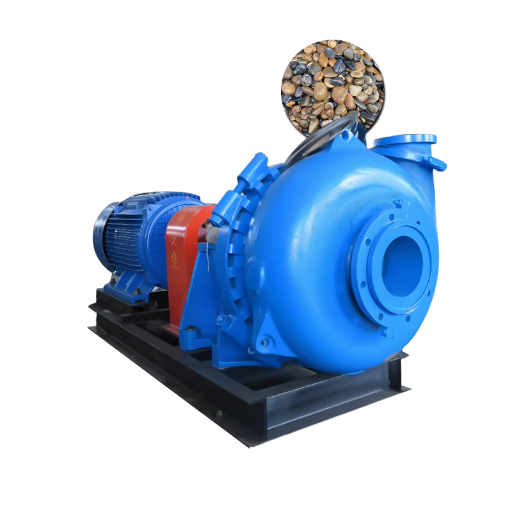
AMG Series — Gravel Sand Pump
Horizontal centrifugal sand pump for sand and gravel mining, river dredging and aggregate processing. Wide-channel impeller—that prevents blockaging due to oversize solids.
- Models:
- 6/4D – 16/14TU
- Outlet Diameter:
- 100 – 350 mm
- Speed Range:
- 600 – 1,400 rpm
- Flow Rate:
- 36 – 2,700 m³/h
- Head:
- 7 – 96 m
- Max Solids Passage:
- 82 – 241 mm
- Wet Parts Material:
- Ni-Hard High-Cr (>58 HRC)
Best For: Sand mining, river sand extraction, aggregate washing and processing, land reclamation feed.
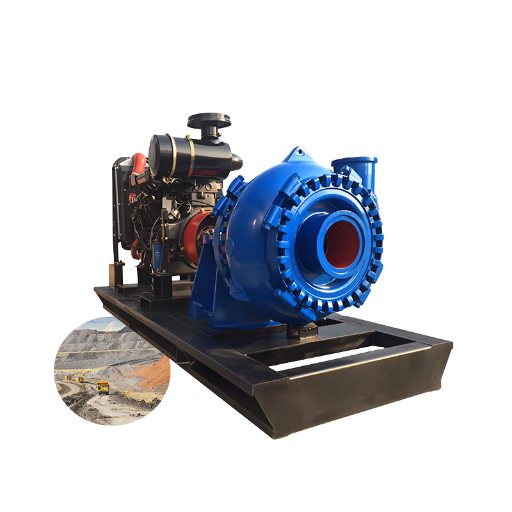
AWN Series — Dredging Pump
Heavy-duty trailing suction dredging pump for hsph and csph. Exceptionally low NPSH, suits the deep sand suction from seabed and riverbeds.
- Models:
- 200AWN – 1600AWN
- Flow Rate:
- 600 – 14,000 m³/h
- Head:
- 20 – 65 m
- NPSH Required:
- <1 m
- Max Solids Passage:
- 170 – 1,200 mm
- Wet Parts Material:
- Ni-Hard High-Cr (>58 HRC)
Best For: Construction of port, maintenance of channel dredging, dredging of sand and gravel by ships, capital dredging.
| Selection Criteria | AMG Gravel Sand Pump | AWN Dredging Pump |
|---|---|---|
| Primary Application | Shore-based sand mining, barge-mounted extraction | Vessel-mounted dredging (trailing suction, cutter suction) |
| Max Particle Size | 82 – 241 mm | 170 – 1,200 mm |
| Flow Range | 36 – 2,700 m³/h | 600 – 14,000 m³/h |
| Head Range | 7 – 96 m | 20 – 65 m |
| NPSH Requirement | Standard | <1 m (ultra-low for deep suction) |
| Installation | Horizontal, fixed base or barge deck | Vessel hull, dredger ladder, or pump room |
| Ideal Project Type | Sand quarries, river dredging, aggregate plants | Port deepening, channel maintenance, coastal reclamation |
Each and every BBP sand dredge pump can be fitted with seal type and drive arrangement of your choice to best suit your operating condition and maintenance philosophy.
| Configuration | Options | Recommended For |
|---|---|---|
| Seal Types | Packing seal • Mechanical seal • Combined (packing + mechanical) |
Packing for abrasive slurries; mechanical for clean-water flush applications; combined for critical dredging operations |
| Drive Types | V-belt • Flexible coupling • Gear box • Hydraulic • VFD (Variable Frequency Drive) |
V-belt for standard installations; gear box for high-torque dredgers; VFD for variable-flow dredging operations; hydraulic for remote or underwater drive systems |
As each pump line has multiple models there are needs for different wear parts throughout the pump range for every part in the pump that consumes wear. All AMG and AWN pump models have exclusive wear parts, the impeller, pump casing liner, throat bushing, and frame plate liner which are common and interchangeable across ALL designs and are replaceable individually with no removal of the pump necessary. This greatly reduces downtime for maintenance as well as allows for a reduced inventory of spare parts within a multi-pump dredge.
Having covered the entire range of specifications, the next question that most engineers ask is: how does a dedicated sand dredge pump differ from a normal slurry pump?
Sand Dredge Pump vs. Slurry Pump — Data-Driven Comparison
Buyers evaluating a dredge pump for sand applications frequently consider standard slurry pumps as alternatives. While both are centrifugal pump designs that move solid-laden fluids, the engineering differences between a sand dredge pump and a slurry pump are substantial — and choosing the wrong type can lead to premature failure, constant clogging, or inadequate throughput. Our comparison below uses real specification ranges, not relative ratings, so you can make a data-driven decision.
| Feature | Sand Dredge Pump (AMG / AWN) | Standard Slurry Pump |
|---|---|---|
| Max Particle Size | 82 – 400 mm | 25 – 76 mm |
| Flow Range | 36 – 14,000 m³/h | 10 – 1,000 m³/h |
| Typical Applications | River dredging, sand mining, port construction, land reclamation | Mill discharge, tailings transfer, mineral processing circuits |
| Impeller Design | Wide-channel, anti-clog, designed for large solids passage | Closed or semi-open, built for finer abrasive slurries |
| Wear Material | Ni-Hard / High-Chromium alloy (>58 HRC) | A05 / A49 chrome alloy (typically 45–55 HRC) |
| Seal Options | Packing / Mechanical / Combined | Expeller / Mechanical |
| Suction Capability | Designed for deep suction (AWN NPSH <1 m) | Standard NPSH, often requires flooded suction |
High-chromium impellers and casing liners rated above 58 HRC reduce maintenance costs by approximately 20% compared to standard alloy alternatives, based on extended wear testing in sand slurry service.
Passage size is the critical differentiator. A standard slurry pump tops out at roughly 76 mm maximum particle passage. In real-world sand dredging, the feed stream routinely contains gravel, cobbles, clay lumps, and debris that exceed that threshold. Running oversized solids through a pump not designed for them causes impeller damage, casing erosion, and seal failure within weeks rather than months.
For both coarse sand and fine slurry fraction operations, BBP recommends a combined pump system approach: AMG or AWN sand dredge pumps for primary extraction, paired with BBP slurry pumps downstream for classification and tailings circuits. This staged design allows each pump to operate within its specified duty range, which extends service life across the full dredge system.
Specifications tell you what a pump should be able to do on paper; here are how BBP sand dredge pumps perform in reality:
Dredging Project Results — Efficiency & Uptime Data
BBP sand dredge pumps serve six primary application sectors. Each presents distinct challenges for pump performance, abrasion resistance, and uptime. Performance data below draws from industry benchmarks and materials science research to contextualize what operators can expect from Ni-Hard high-chromium pump components.
Field Benchmarks
Ni-Hard alloys have been the material of choice for abrasive pumping applications since the mid-20th century because of their exceptional wear resistance in sand and gravel service.
Field deployments typically show 2–4 times the wear part service life compared to standard cast iron in environments where angular quartz particles dominate.
Market Context
Global dredging market value reached approximately $19.2 billion in 2025 and is projected to grow at 4–5% CAGR through the decade.
Under continuous duty, maintenance intervals of 6–12 months are industry benchmarks for replacement. Actual life depends on slurry concentration.
“Every sand dredge pump we ship undergoes full hydraulic performance testing per ISO 9906. Our metallographic lab confirms alloy composition on every casting batch, not just sample lots — because in dredging, there is no tolerance for underperformance.”
Total Cost of Ownership — Maintenance Cost Framework
From a procurement perspective, sales teams should be quantifying all items that influence total cost of ownership (TCO) when considering a sand dredge pump supplier.
Wear Parts Interval
Alloy (>58HRC) parts last 2-4x longer than cast iron, decreasing replacement costs.
Unplanned Downtime
High reliability affects project margin directly by preventing crew standby costs.
Spare Parts Stock
Stocked spares shorten replacement lead-times from weeks to several days.
Energy Consumption
Maximized pump efficiency controls operational energy cost for your duty point.
Field Service Support
24/7 technical support and remote diagnostics eliminate troubleshooting time.
Certifications & Quality Assurance
BBP holds four internationally recognized certifications that cover every dimension of dredge pump manufacturing — from quality management and environmental responsibility to occupational safety and product compliance. For procurement teams evaluating a dredge pump manufacturer, these certifications provide third-party verification that BBP’s production processes meet the standards required for international dredging projects.
ISO 9001:2015
Quality Management Systems
ISO 14001:2015
Environmental Management
ISO 45001:2018
Occupational Health & Safety
CE Marking
European Conformity
Vertical Integration — From Raw Casting to Tested Pump
Controls every stage of sand dredge pump production entirely within its own manufacturing facility. As a result there is no variation in quality that some times accompanies the outsourcing of heavy industrial equipment. Material properties, tolerances and surface appearance are all verified and recorded at every stage of manufacture, not just final inspection.
01
Casting
02
Heat Treatment
03
Machining
04
Assembly
05
Coating
06
Testing
BBP’s quality laboratory performs chemical analysis and metallographic testing on every batch of high chromium alloy castings used in pump wet parts. Spectrometer verification confirms chromium, nickel, and molybdenum content before castings proceed to heat treatment. Hardness testing validates that finished internal components meet the >58 HRC specification that delivers the abrasion resistance sand dredging demands.
Completed sand dredge pumps are hydraulically tested on-site at BBP’s factory on their own test-stand in the ISO 9906 specification. Flow rate, head, efficiency and NPSH are checked and recorded against catalogued performance curves for the pump size and type specified. All test results are filed as part of the final build documentation for that pump and can be supplied to buyers if required.
Download Full Compliance Documentation →
Our high quality standards, and manufacturer logistics control capability give buyers peace of mind that this is a reliable product. Details of pricing, scheduling and after sales support are covered in the procurement section shown below.
Sand Dredge Pump Selector
Find the right BBP pump model for your dredging application
App
Specs
Result
Select Your Application
Choose the primary use case for your dredge pump installation.
Define Operating Parameters
Adjust the sliders and select installation type to narrow down your pump match.
Required Flow Rate500 m³/h
Required Head30 m
Maximum Particle Size100 mm
Installation Type
Frequently Asked Questions
A centrifugal sand dredge pump with a wide-channel impeller is the best choice. BBP’s AMG series handles particles up to 241 mm for shore-based extraction, while the AWN series manages particles up to 400 mm for vessel-mounted dredging. Both series use Ni-Hard high-chromium alloy wet parts exceeding 58 HRC for sustained abrasion resistance.
BBP sand dredge pumps handle maximum particle sizes between 82 mm and 400+ mm, depending on pump model and series. AMG gravel sand pumps accept solids from 82 mm (Model 6/4D) up to 241 mm (Model 16/14TU). AWN dredging pumps are engineered for even larger debris, accepting particles from 170 mm (200AWN) up to 1,200 mm (1600AWN). For reference, standard slurry pumps cap out at 25–76 mm, making sand dredge pumps the required choice whenever the feed stream contains gravel, cobbles, or mixed oversized solids.
A sand dredge pump operates on centrifugal force principles. An electric motor or diesel engine drives a rotating impeller inside the pump casing. As the impeller spins, it creates a low-pressure zone at the center suction inlet, drawing sand-water slurry through the suction pipe and into the pump. Impeller vanes accelerate the slurry outward toward the volute casing, which converts velocity energy into pressure energy.
Pressurized slurry then exits through the discharge port and travels through the pipeline to the discharge point. Sand dredge pumps are designed with extra-wide impeller channels and hardened casing materials to resist wear from continuous flow of abrasive sand and gravel particles.
Choose a sand dredge pump for large particles (82–400 mm), high-volume flow rates (up to 14,000 m³/h), and primary extraction from rivers, sand mines, or ports. Choose a slurry pump for finer materials (25–76 mm) at lower volumes in mill discharge or tailings circuits. Sand dredge pumps use wide-channel anti-clog impellers; slurry pumps use closed or semi-open impellers built for finer abrasive slurries.
Wear parts manufactured from Ni-Hard high-chromium alloy (>58 HRC) deliver 2–4 times the service life of standard cast iron components in sand dredging applications. Under continuous duty, maintenance intervals of 6–12 months are standard industry benchmarks for impeller, casing liner, and throat bushing replacement. Actual wear part life depends on several operating variables: particle size and angularity, slurry concentration by weight, pump operating speed relative to best efficiency point, and the mineralogical hardness of the sand being pumped. Fine river sand at moderate concentration is less aggressive than coarse quarry gravel with high clay content. BBP recommends scheduled visual inspections at defined intervals to monitor wear progression and plan replacement timing for your specific operating conditions. Pumps are designed for fast wear part changeover to minimize maintenance downtime.
A qualified sand dredge pump manufacturer should hold ISO 9001:2015 (quality management), ISO 14001:2015 (environmental management), ISO 45001:2018 (occupational health and safety), and CE marking for international market compliance. These certifications verify that the manufacturer maintains repeatable production quality, meets environmental standards, and protects worker safety. BBP holds all four certifications and tests every pump to ISO 9906 hydraulic performance standards. When evaluating suppliers, also ask about vertical integration — manufacturers who control casting, heat treatment, machining, and assembly in-house can demonstrate tighter quality control over critical pump components.
Yes. BBP engineers work directly with project teams to configure sand dredge pumps for application-specific requirements. Customization parameters include flow rate and head duty points, maximum particle size, slurry concentration, suction conditions, and physical installation constraints. Configuration options cover material grade selection for wet parts, seal type (packing, mechanical, or combined), drive arrangement (V-belt, flexible coupling, gear box, hydraulic, or VFD), discharge port orientation, and specialized coatings for corrosive or high-temperature service. BBP provides pump selection guidance and technical quotations within 48 hours of receiving your project specifications. Customized pump configurations serve river dredging, port deepening, sand mining, and tunnelling projects worldwide.