Get in Touch with BBP

ISO 9001 CERTIFIED
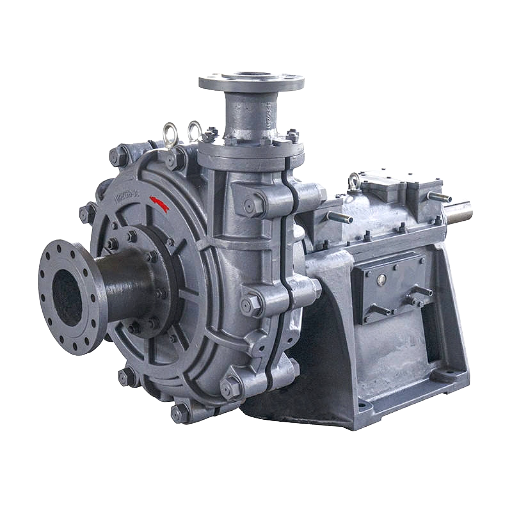
Slurry Pumps
Industrial Slurry Pumps — Heavy-Duty Solutions from BBP Manufacturing (BBP)
ISO certified manufacturer. Complete in-house foundry from pour to hydraulic testing the entire casting is traceable. Huge range of parts inventories including water ends à la Warman AH. We offer technical after and pre sale support on 24/7 basis.
Centrifugal & Submersible
Rubber Lined & High Chrome
Mining Series
Horizontal Design


❮
❯
6 Models
Centrifugal, Submersible, Horizontal, Rubber Lined, High Chrome, Mining Series
~60 HRC
High-Chrome Impeller Hardness (A05/A33 alloy)
100%
Hydraulic Tested In-House Before Shipment
24/7
Pre- and Post-Sale Technical Support
The Slurry Handling Challenge — Why Standard Pumps Fail in Abrasive Duty
Slurry (any solid suspended in a liquid) causes pump internals to wear far faster than clean water. In the harsh environment of the mill circuit, abrasive particles rapidly erode impeller vanes, casing liners and shaft sleeves at rates of more than 2 mm of wall thickness lost per day. Conventional centrifugal pumps built for clean-water duty just don't perform in slurry service since their materials, clearances and impeller design are not fine-tuned for non-stop erosion. Consequences include unscheduled plant shutdowns, compressed change-out schedules and mounting maintenance costs that quickly outstrip the original capital expenditure.
Numbers speak clearly. An actual life cycle for a cyclone feed slurry pump in a run of the mill mining circuit is typically between 1, 500 hours and 4, 000 hours.0 Piping this through shows us that research from Weir Minerals confirms that energy costs are a significant figure and comprise the biggest percentage (61%) of a slurry pump's total cost over its entire life cycle, in addition to maintenance parts and labour, which make up the remaining 24%. in turn, this means the pump purchase price, reported to be the biggest spend, at 13% of all costs accrued, is in fact not the biggest, at all. Selecting the wrong pump, or the incorrect wet-end material for the duty point, has not only a detrimental effect on wearing rate, but also on the entire operating cost structure.
Industrial slurry pumps – still more colloquially known as sludge pumps, for lighter municipal duty – address this concern through the marriage of heavy-duty wet-end morphology with metallurgy tailor-made to resist this particular wet-end erosion process. The engineering staff at BBP defines the match-up between pump specification and intended duty point from the inside out: Our in-house foundry creates every casing and impeller under tightly-controlled metallurgical conditions, and each individual pump is hydraulically tested against its rated duty curve before delivery.
The Engineer's Note-Why Off-BEP Operation is the Silent Killer
The operation of a centrifugal slurry pump at some points well away from B.E.P can lead to internal recirculation and incidence angle peaks at impeller eye. Field profiles indicate this can alone reduce component life by 30 70%, whether you have specified high-chrome or rubber lined. Check your system curve intersects pump published water curve well away from B.E.P. before selecting material grade. We regularly note this in duty point review and it represents one of the cheapest factors to change.
Our Complete Slurry Pump Range — Types, Models & Configurations
BBP's range of slurry pumps covers the entire breadth of industrial and mining duty - from high tonnage horizontal centrifugal machines used to pump hydro cyclone feed and tailings, right through to highly efficient submersibles used for pit dewatering and sump transfer. Click on a series below to view detailed specs, performance curves and wet-end materials.
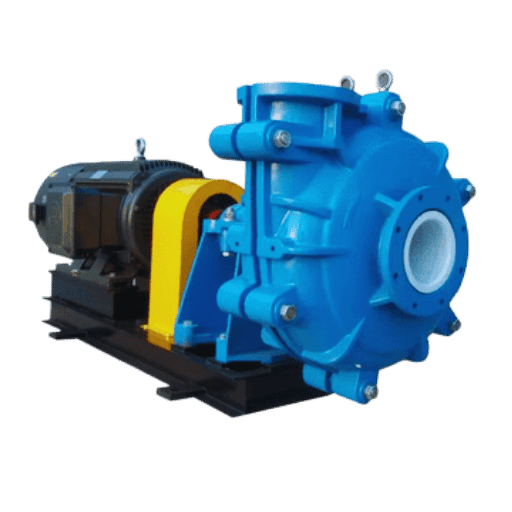
Heavy-Duty Slurry Pumps
Duty: mill circuit, cyclone feed, tailings
Liner: high chrome ~60 HRC or natural rubber
Config: horizontal, belt or direct drive

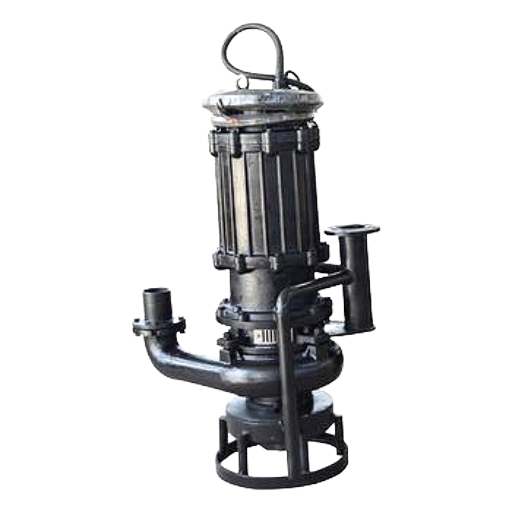
Submersible Slurry Pumps
Duty: pit drainage, sump transfer, dredging
Seal: mech seal, no external gland water
Config: vertical submersible, agitator option
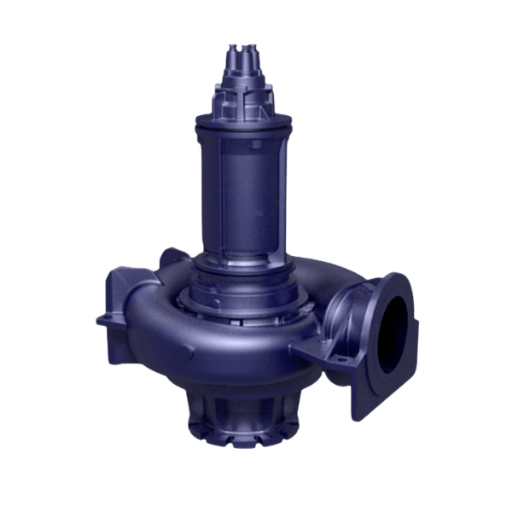
Mining Slurry Pumps
Duty: ore dressing, mineral processing, backfill
Material: high chrome, duplex or rubber options
Config: multi-stage and high head operation

Rubber Lined Slurry Pumps
Duty: fine tailings, chemical, low-pH slurry
Liner: natural rubber 50–60 Shore A
Fit: particle size below d85 ~700 µm
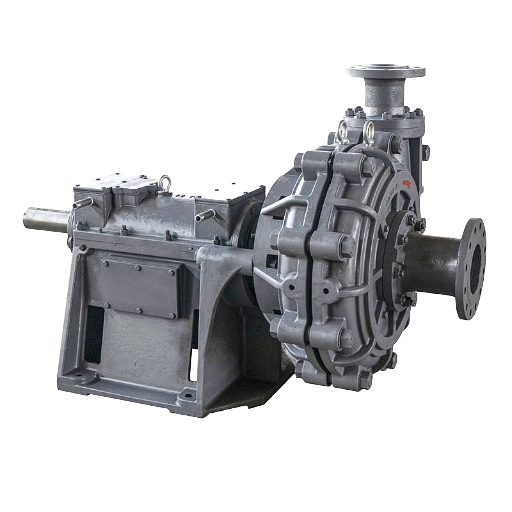
High Chrome Slurry Pumps
Duty: coarse ore, cyclone feed, sand transfer
Impeller: ~60 HRC chromium carbide alloy
Fit: particle size above d85 ~700 µm
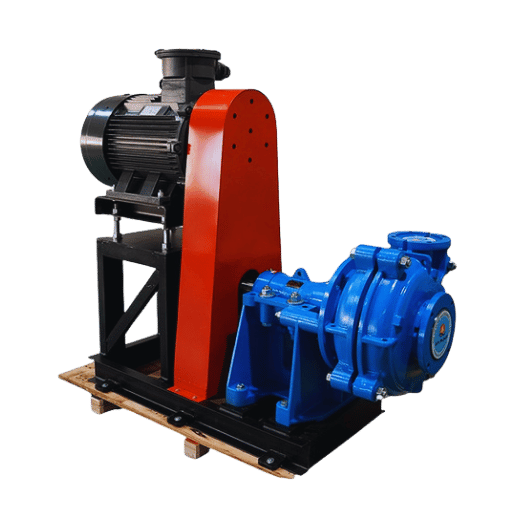
Horizontal Slurry Pumps
Duty: abrasive & high density slurries
Liner: 27% chrome iron, rubber or urethane
Config: heavy-duty horizontal centrifugal
Model Selection Guide — Match Your Duty to the Right Series
Unless you know what series is correct for your application, this matrix plots the key duty parameters against the BBP configuration.
| Application / Duty | Particle Size | Solid Content | Best Liner Choice | Recommended Series |
|---|---|---|---|---|
| Cyclone feed — coarse ore | d85 > 700 µm | 25–45% w/w | High Chrome ~60 HRC | Heavy-Duty / Mining |
| Fine tailings — neutral pH | d85 < 700 µm | 20–40% w/w | Natural Rubber 50–60 Shore A | Rubber Lined |
| Acid leach / chemical slurry | Fine, < 500 µm | Up to 30% w/w | EPDM or NR rubber lined | Rubber Lined / Chemical |
| FGD absorber recycle | Fine gypsum, < 300 µm | 10–25% w/w | Rubber lined preferred | Horizontal / Mining |
| Sump / pit dewatering | Variable | Variable | Agitator + chrome or rubber | Submersible |
Centrifugal Design & Wet-End Materials — The Engineering Behind Wear Life
A centrifugal slurry pump imparts energy to slurry with an independently rotating impeller. The particle laden fluid enters the pump's wet end at the suction diameter, where centrifugal force converts the energy imparted in the motor to an outward radial acceleration through the passages within the vane diffusers; the energy is then recovered in the volute casing through conversion of velocity to pressure. What sets an industrial slurry pump apart from a standard centrifugal pump is everything that takes place at the wet end: the casing, impeller, liners, and seals are all required to endure continuous erosion by solid particles impacting with increasing velocity as flow rate and head change, and as particle trajectory varies.
Peer-reviewed wear literature points to one critical insight: particle size determines which material wins. At particle sizes above d85 ~700 µm — coarse ore, sand, cyclone feed — high-chrome cast iron clearly outperforms natural rubber, because the impact mechanism shifts from fine-particle erosion (where rubber's elasticity absorbs energy) to large-particle cutting (where hardness is decisive). At particle sizes below d85 ~700 µm — fine tailings, gypsum slurry, chemically aggressive duty — rubber typically outperforms chrome because it deforms and recovers rather than abrading; rubber also delivers inherent corrosion resistance benefits in low-pH environments.
Material Wear Data Peer-reviewed Field Study (Warman Mill Circuit Throatbush)
In a peer-reviewed field test on a warman MC mill circuit throatbush to handle coarse abrasive silica, the rubber was worn 45% more rapidly than the standard eutectic high-chrome white iron under the same conditions. Replacing the standard eutectic white iron with hypereutectic white iron yielded a further 43% decrease in wear rate - perhaps a 3 total spread between rubber and the best high chrome alloy in this coarse abrasive duty. The key message: you should be able to change the wet-end life by a factor of three simply by specifying the correct material for your duty, and I mean without changing the pump design. Now, that multiplication is the most important aspect of pump specification.
It is these engineering choices - if specified correctly and executed with consistent foundry quality - that determine whether your maintenance budget tracks the 24% TCO average or rises to the top of the range.
BBP Wet-End Material Options
All of the cast wet-end components - impellers, volute casings, liners, throatbushes - are produced within our own foundry and their metallurgically supported raw material sources. Many material options within the BBP slurry pump range are available:
High-Chrome Cast Iron (~ 60 HRC):
A05/A33 chromium carbide alloy. Optimum for coarse, sharp abrasive slurry above d85 ~700 µm: cyclone feed, coarse mineral processing, sand and gravel transfer.
Natural Rubber (50-60 Shore A):
Vulcanised NR lining. Optimum for fine to medium particle slurry below d85 ~700 µm, especially at neutral to mildly acidic pH where both abrasion and corrosive attack must be managed simultaneously.
Polyurethane (Shore A~ 85-95):
intermediate hardness; much harder than rubber and somewhat more chemically resistant than metal. Most suited to abrasive fine slurry with inert and chemical attack.
EPDM Rubber:
allow accelerated chemical attack to be best handled.
Seal options:
mechanical seals (no external gland water required - cuts out both the water usage cost and the dilution penalty), a packing gland with low-flow water injection, and an expeller/centrifugal seal for remote duty. Mechanical seal option also cuts out the gland water supply system from your capital cost - Weir Warman's own TCO model shows this can run into the millions of dollars for remotely sited pumps.
BBP vs. Warman / Metso / Weir — A Data-Driven Comparison
Warman, Weir Minerals and Metso are the dominant data points in heavy-duty slurry pump procurement. They set the standards - and rightly so: their hydraulics are well recognised, their published performance curves are available and their spare parts are stocked worldwide. The point procurement teams need to consider is whether paying a high premium over Chinese OEM equivalents is always justified by hard TCO data, or whether that premium will remain for historic reasons and procurement risk mitigation. Here is a frank comparison across five areas where data is available.
| Dimension | BBP | Warman (Weir) | Metso |
|---|---|---|---|
| High-Chrome Impeller Hardness | ~60 HRC (A05/A33 alloy, in-house cast) | ~60 HRC (Hypermax alloy) | ~60 HRC (Skega/Trellex range) |
| Manufacturing Traceability | 100% in-house: casting → heat treatment → machining → test. Every batch traceable. | Multi-site global foundry network; casting source may vary by region | Multi-site; regional casting sourcing |
| Pre-Shipment Hydraulic Test | 100% of units tested against rated duty curve in-house before shipment | Witnessed FAT available on request (additional cost/lead time) | Witnessed FAT on request |
| AH-Series Dimensional Compatibility | Wet ends and spare parts engineered to Warman AH dimensional standards | OEM original | Own model range (not AH-compatible) |
| Spare Parts Availability | Extensive in-stock inventory; rapid dispatch to minimize downtime | Global distribution network; standard commercial lead times apply | Regional distribution; standard lead times |
The transparency of manufacturers is a topic that warrants specific focus. On Eng-Tips forums, engineers have reported instances of BHP building up to 40% above the published curve and headloss reaching 18% at the operating point for a manufacturer who made no disclosure after shifting its casting source. With every casting in BBP's supply chain poured, heat-treated, and machined in-house, there is no upstream substitution to account for. Your hydraulic test report and your pump are produced from the same controlled batch.
The upshot is clear: if you negotiate a lower purchase price but the wet-end parts are made from inconsistent metallurgies that prematurely fail you are optimising the smallest aspect of the overall cost formula while driving the largest one higher. Conversely, when a BBP centrifugal slurry pump achieves wear life comparable to OEM (as underpinned by our in-house material controls and hydraulic testing regimes), the capital saving directly benefits your bottom line. This is the total cost of ownership (TCO) argument for looking at a verified Chinese OEM.
Procurement Note — Warman AH Compatibility
If your plant uses Warman AH-series pumps and you need spare parts for your BBP pump (impellers, volute casings, liners, throatbushes, expellers), these have been designed to match the dimensions of the original AH series. This is standard practice for any other Chinese OEM that operates at a level. Please advise us of the original AH model number and we will check to see whether the dimension and material are compatible with your current pump frame.
TCO Cost Breakdown
Energy Cost
61%
of slurry pump longevity cost is energy - not capital.
Source: Weir Warman TB-32 (March 2018)
Maintenance
24%
is maintenance (parts + labour) - cut down by material choice.
Source: Weir Warman TB-32, March 2018
Capital
13%
is capital - the only component most procurement teams fight to lower.
Source: Weir Warman TB-32, March 2018Applications Across Mining, Power, Water Treatment & Chemical Industries
Pump applications for BBP slurry pumps vary greatly. The pumps are found wherever solid-laden liquids are being pumped continuously. Four broad application groups have different pumping demands - and each one has its own choice of wet-end materials, impeller shape and seal design.:
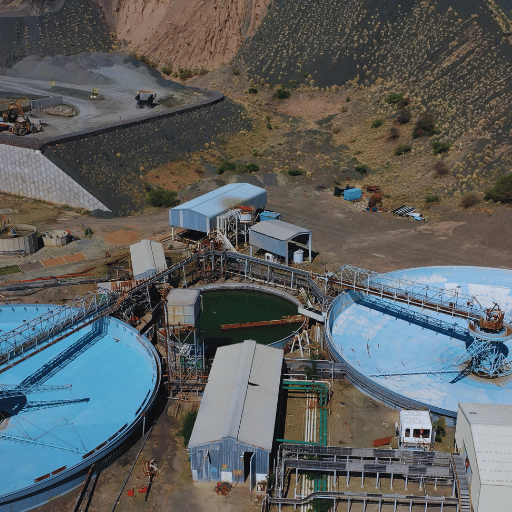
Mining & Mineral Processing
Mining slurry pump applications include Hydrocyclone feed, tailings disposal, mill discharge, flotation feed, and mine backfill. Tailings service is the fastest growing worldwide as mines expand and operators walk to dry-stack tailings with higher-solids transport. Highly chrome wet ends are employed on coarse ore service; rubber-lined units are used on fine tailings circuits and acid leach service.
Typical solid content: 20–50% w/w
Particle: d85 200 µm – 5 mm depending on circuit stage
Desired material: High chrome or NR rubber at each particle size
Power Generation — FGD
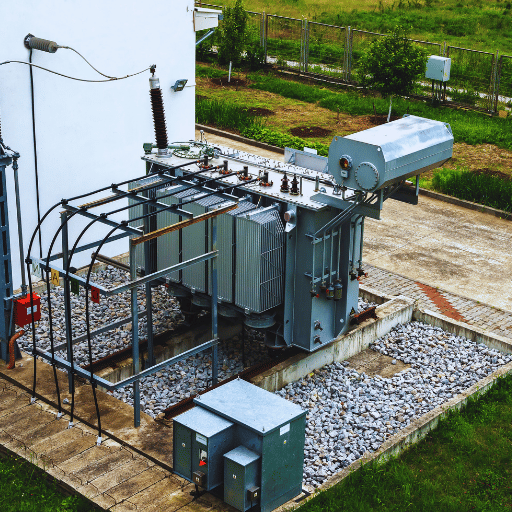
FGD absorber recycle is one of the most severe slurry pump applications in the power generation industry. The slurry containing a high proportion of gypsum is only mildly abrasive and extremely erosive at large scale - FGD absorber recycle pump flow rates have grown from 2,000 m³/h in the 1970s to well over 15,000 m³/h in modern plants, with motor powers exceeding 1,000 kW. Modern plants favor rubber-lined arrangements for sulfate corrosion resistance.
Slurry: calcium sulfate/sulfite, pH 4–6
Flow: 2,000 – 15,000+ m³/h
Preferred material: Rubber lined or duplex stainless
Water Treatment & Municipal
Wastewater treatment such as sludge thickening, transfer of primary sludge, dewatering feed, and lime slurry dosing uses pumps that can take moderate solids load without the high hardness of mining duty. Selection for lime slurry pump, cement slurry pump is widely used in softening and construction of infra-structure. They are selected as rubber-lined or putrolined units with mechanical seals thus no need for gland water in facilities where dilution control is important.
Typical duty: lime slurry, cement slurry, sludge
Solid content: 5–25% w/w
Preferred material: NR rubber or polyurethane

Chemical & Dredging
Chemical slurry pump applications include phosphate slurry transfer, "acid plant" absorption tower recirculation, etc. Chemical aggressiveness along with medium abrasion susceptibility demands EPDM or natural rubber lining with pH validation. Sand slurry pump and dredge pump applications - port dredging, sand mining, or aggregate transfer, for example — handle the demanding abrasion of high specific gravity, coarse particle slurry. Hard, high-chrome liners and heavy-duty bearing assemblies are frequently implemented for longer duty hours.
Chemical: EPDM for acid service, NR for neutral
Dredge/sand: High Chrome, heavy bearing frame
Configuration: horizontal or submersible

Why Source from BBP — ISO-Certified Slurry Pump Manufacturer with End-to-End Foundry
The management of out sourcing industrial slurry pumps to a Chinese OEM manufacturer presents a real qualification question: how do you prove that what you get is precisely what you ordered with no Quality Engineer in Beijing? Our response is architectural, not process based.
The manufacturing model at BBP is reduced to a single statement: one hundred percent of the component that contacts your slurry is produced internally. Casting, heat treatment, machining, assembly, coating and hydraulic testing are all conducted in one location, under one quality management system. There are no foundry suppliers exporting feed stock -- there's no tier-2 casting producer providing gray market stock -- and there is certainly no undisclosed casting source substitution.
If Eng-Tips engineers lament that the poor performance of their pump has a root cause based in the fact that manufacturer has covertly changed sourcing batches, they did not have a root cause in accordance with the BBP supply chain. Our foundry, our materials, our logs -- all can be verified. And our OEMs do so routinely.
What "decades of expertise" actually entails in practice at BBP:
01
Global distributors and brand owners count on us for OEM pump foundry capability. We build to their patterns, their metallurgical standards and to dimensional drawings, with first piece inspection, and performance test records.
02
Clients with engineering project data get duty-point review and approval prior to manufacture: flow rate, head, slurry specific gravity, particle size, pH and operating temperature are all checked against our pump selection before an order is finalized.
03
Large inventory of spare parts—such as a complete range of pump models including Warman AH compatible wet ends—reduces downtime for the flusher and the maintenance team when they need impellers, liners or seal assemblies replaced and don't want to wait around for any special assembly.


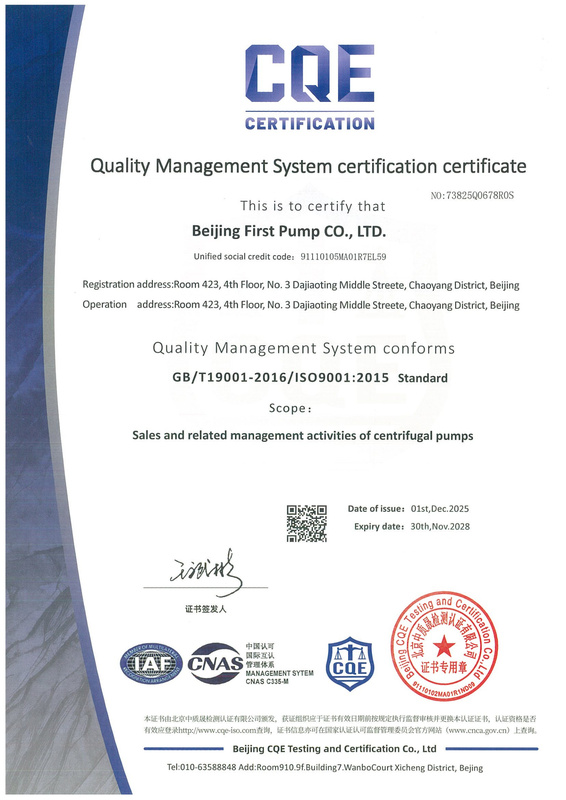
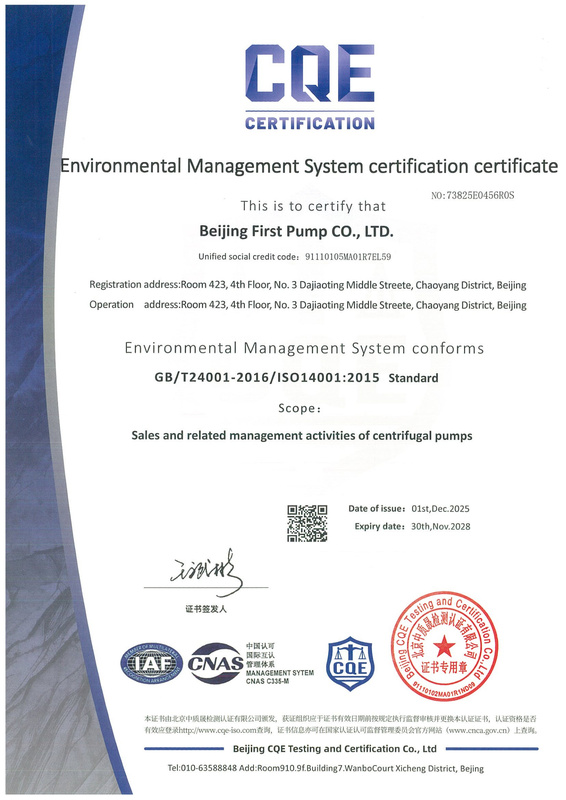
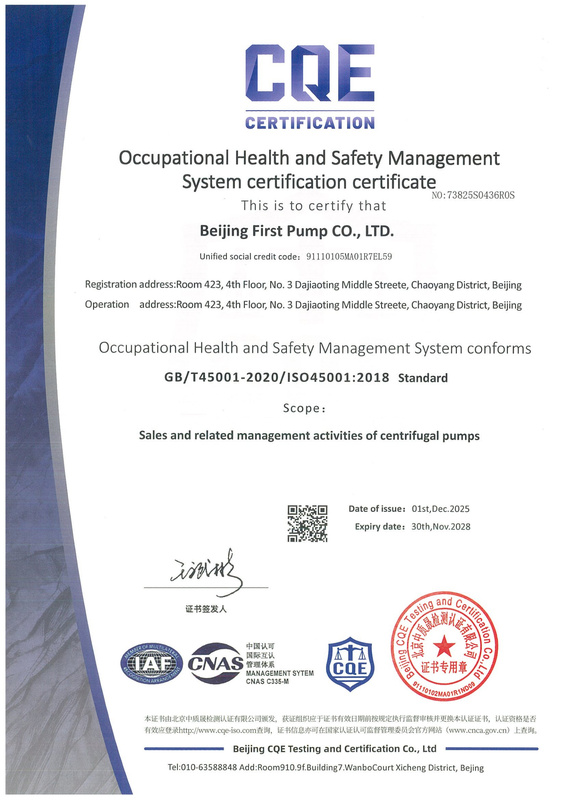

ISO 9001
Quality Management System — ISO Certified for industrial manufacturing.
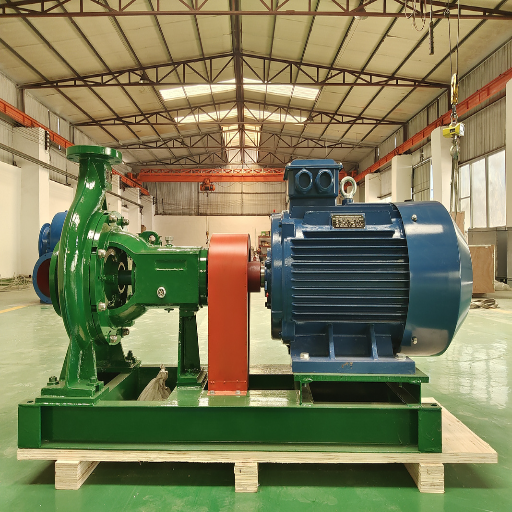
100% Hydraulic Test
Every pump is rigorously tested against rated duty curves pre-shipment.
In-House Foundry
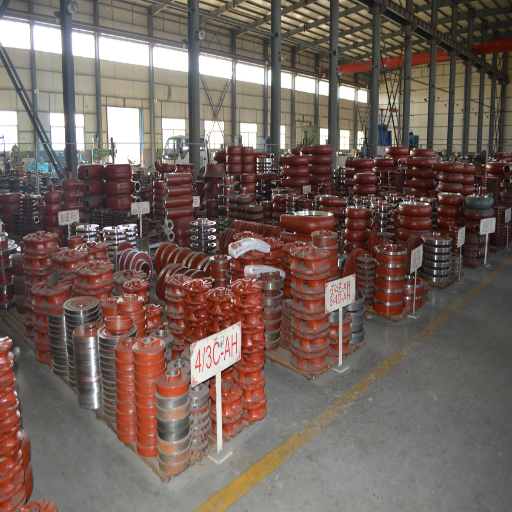
Cast, heat treat, machine, and assemble entirely under one roof.
OEM Capabilities
In-house mold design and foundry dedicated for OEM parts programs.
24/7 Support
Expert technical engineers available for both pre- and post-sale assistance.
Require our ISO certificate, foundry audit statements or a factory test report sample prior to deciding to source?
Advanced Slurry Pumps Manufacturing Facility






Procurement Guide — Pricing Factors, Lead Time, MOQ & After-Sales
Slurry pump pricing is application-specific: two pumps rated for identical flow and head can carry drastically different prices based on wet-end material choices, liner arrangements, seal types and drive set-ups. Instead of providing a list price that would not reflect your duty point, below are some of the things that influence BBP slurry pump pricing—and what you need to tell us to get a quote accurately fast.
Wet-end material
High-chrome alloy Impellers & Liners attract a material premium over Rubber lined ones. Hypereutectic alloys (top wear resistance) cost more than standard eutectic grades. The correct choice for your particle size will repay the premium by longer changeout cycles.
Liner configuration
Full metal construction, metal impeller & rubber liner or full rubber wet end- between the configurations there can be significant variations in involved castings, tooling and the level of testing required.
Motor and drive arrangement
Direct drive, V-belt, or VFD-compatible configuration can vary price of pump unit. For TCO dominated by energy, VFD capital cost generally advantages against low power draw in first year of operation.
Quantity and frequency
OEM partners and repeat buying arrangements enable BBP to get buy and schedule its production ahead to provision materials.
Certification & documentation
Requirements (3rd party inspection, witnessed FAT, ISO report, material certification, etc.) adds additional cost and lead time to any order.
Get a Detailed Quotation
Provide your duty point data: flow rate, total head, slurry specific gravity, particle size distribution, solid concentration, and pH for an accurate selection.
Spares Inventory & After-Sales Support
BBP carries a large range of most spare parts (impellers, casings, liners, shafts, mechanical seals, expellers, and bearing assemblies) in stock for each of the primary pump models that BBP offers. By maintaining local spares, we prevent down time due to long international shipping times. Our technical support team is on hand for troubleshooting, duty-point evaluation and operations advice before and after delivery.
Logistics Note — FOB Export Terms
BBP offers FOB Tianjin Port delivery as the norm. Freight forwarder assistance, combined freight for multi-unit purchase programs, and documentation package (commercial invoice, packing list, certificate of origin, test report) are standard. For large project packaging requirements, LCL and FCL freight coordination is available via our logistics partners.
Industrial Slurry Pump Financial & Performance Evaluation Tools
Slurry Pump 5-Year Total Cost of Ownership Calculator
See where your lifetime pump cost actually goes — energy, maintenance, and capital — based on verified industry data from Weir Minerals.
Access Calculator →Slurry Pump Unplanned Downtime Cost Estimator
Quantify what pump failures actually cost your operation — and what extending wear life is worth in hard dollars.
Access Estimator →Frequently Asked Questions
What types of slurry pumps does BBP manufacture?
BBP carries horizontal centrifugal slurry pumps (heavy duty AH type, high chrome and rubber lined), submersible slurry pumps, hard-rock abrasive service mining slurry pumps, fine abrasive and chemically aggressive slurry rubber lined, and coarse abrasive high chrome models. We also stock a wide inventory of abrasive pump spare parts (impellers, casings, liners, seals, and expellers) including Impellers and Casings built to the geometric standards of a Warman AH. All types are manufactured on-site and individually hydraulic tested prior to shipment.
What factors should I consider when choosing between a high chrome and rubber lined slurry pump?
Particle size distribution is the strongest factor in the decision matrix. When particle size distribution d85 (roughly the size where 85% of the particles are smaller) exceeds approximately d85 ~700 µm, high-chrome cast iron (~60 HRC) outperforms natural rubber – thus in coarse transfer to cyclone feed where particle cutting is the dominant wear mechanism. When d85 falls below roughly 700 mesh, rubber out performs high chrome, especially in fine tailings, chemical slurry or any application that involves elemental pH below near neutral, since rubber inherently resists the combined corrosion-abrasion attack that rapidly erodes iron structures. Travel position is also a factor; both materials love to operate at their best efficiency point and will have reduced life otherwise. Our engineers take look at your particle size analysis, flow rate, solid concentration and pH before making a formal recommendation.
My existing Warman AH slurry pump is failing; are BBP spare parts appropriate?
BBP own brand spare parts – including impellers, volute casings, liners, and throatbushes - match Warman AH dimensional standards, consistent with other top Chinese OEMs. This means that they will physically fit into an AW frame, although we have experienced no inconsistencies so far in our own validations. In all cases however, we request your specific model designation for the existing AH; allowing our engineering department to verify cross compatibility and material equivalence with regard to your specific duty.
What is the difference between a slurry pump and a sludge pump?
The term 'slurry pump', is generally thought to refer to the like of heavy duty centrifugal pumps handling highly concentrated, abrasive or particulaterich fluids in the mining and process industries. The term 'sludge pump' is in more common use for municipal or wastewater derived applications sewage sludge, digested biosolids and primary sludge, highly concentrated (or highly dilute) at a lower abrasiveness. Our product range covers both ends of this heavy duty, industrial spectrum i.e our slurry pump range for mining and mineral processing applications and our submersible sewage pump range for municipal waste water. For highly abrasive solids over 15% w/w concentration, the use of a designed-for-purpose centrifugal slurry pump with suitable liner material is the correct specification.
What solid concentrations and particle sizes can industrial slurry pumps cater for?
Centralised slurry pumps are often selected for solid contents from 5% up to 50-60% by weight in dense-slurry transportation duties, however, it can be far higher depending upon particle specific gravity and slurry viscosity. Particle maximum size handled can be dictated by the impeller passage width and casing design - specialized coarse-duty slurry pumps are capable of passing particles over 50 mm diameter in heavy industrial dredging or large-solids transfer services. For the majority of mineral processing and tailings duties, particle size are often in the range of sub-millimetre fine tailings through to 10-15 mm cyclone feed duties. Please contact BBP with your detailed duty parameters - particle size distribution, PSD d85, solid specific gravity, design flow rate - to discuss pump selection.
What is the effect of running at (or far away from) the best efficiency point (BEP) on wear life?
This is one of the most underestimated factors in slurry pump total cost of ownership. By operating considerably away from best efficiency point (BEP), the pump encounters both internal recirculation at the impeller eye and off-design incidence angles across the vane surfaces, both of which exacerbate localized erosion. Based on field monitored data, when a pump operates off-BEP it is generally c. 30-70% less reliable than near-BEP operation, irrespective of whether the wet end is a high chrome or a rubber lined pump. Prior to specifying grade of material we will examine your system curve against the pump's published performance curve to establish that your operating point is within 75-110% of BEP flow. This costs nothing and regularly "raises the yellow flag" for changes to system design - bypass controls, impeller trims, variable frequency drive application - that more effectively prolong component wear life.
What is the average delivery lead time for BBP Slurry Pumps and Spares?
Lead time is a function of pump size, material configuration, and production schedule. For the commonest configurations, standard line specifications and partial in-progress stock and casting pattern, lead times are quite short relative to the fully customized line specifications. For spare parts impellers, liners, seals, bearing assemblies - BBP maintains stock inventory of key pump models to allow immediate shipment in time-critical maintenance situations. Please provide the pump model, duty specification, and delivery date to our Customer Service team for a specific lead-time commitment.
Is BBP providing OEM slurry pump components and custom foundry services?
Yes. BBP operates an in-house foundry producing OEM pump components for global distributors and pump brand owners selling under their own labels. OEM contract manufacturing includes in-house mold making and cavity design, casting to client specified metallurgical specifications, heat treatment, CNC machining and full dimensional inspection on all parts, per client drawings. This service caters primarily to pump distributors who want a consistent, high-quality cast wet end for their installed base, as an alternative source to the OEM branded spare parts program. Minimum order quantities and production scheduling for OEM offerings are addressed during first contact - please email our team your drawing set or sample part.
What grade of certications do BBP slurry pumps have? How would I confirm?
BBP is an ISO 9001 accredited producer, with established certified quality management system for design, manufacturing, testing and after-sales. Hydraulic testing is performed in accordance with centrifugal pump test standards (including test criteria according ISO 9906 rotodynamic pump hydraulic performance test method). Hydraulic test reports with flow, head, power and efficiency performance data relative to rated duty point are included in each pump shipment as free of charge document. Material certification reports with chrome alloy hardness test results and rubber liner Shore A hardness are available on demand. Certificates copies and quality documents are available to qualified purchasing teams on demand. Please contact us in order to receive the documentation set applicable to your supplier qualification procedures.
Which industries use industrial slurry pumps most extensively?
Mining and mineral processing (copper, iron ore, gold, coal, phosphate) form the largest industrial slurry pump demand sector worldwide. Power generation ranks second with the critical use of FGD systems at coal-fired plants and industrial cogeneration facilities. Water & Wastewater treatment plants operate slurry pumps for transfer and thickening of sludge. Chemical processing, dredging, construction (including cement slurry pumps in tunneling and infrastructure projects) contribute the other major application segments. BBP supplies all those end uses worldwide.
Ready to Specify Your Slurry Pump?
Tell us your duty point- flow rate, head, slurry type and particle size- and our factory engineers will get back to you with a pump selection, material recommendation and quotation. No obligation. Response 24/7.
References & Data Sources
- Walker, C.I. & Robbie, P. (2013). "Comparison of some laboratory wear tests and the wear of slurry pump impeller materials in field use." Wear, 302(1–2), 1026–1034. Elsevier. DOI: 10.1016/j.wear.2012.12.064
- Walker, C.I. (2001). "Slurry pump side-liner wear, a comparison of some laboratory wear tests and the wear experienced by the pump in field operation." Wear, 250(1), 81–87. DOI: 10.1016/S0043-1648(01)00613-5
- Weir Minerals. (2018). Total Ownership Cost Model for Slurry Pumps. Warman Technical Bulletin No. 32 (Revised March 2018). (Easily scraped for numerical elements).
- Wang, Y. et al. 2024 "Erosion Wear Features of Centrifugal Slurry Pump Components of the CFDDEM Simulation." Water 16(21):3050. MDPI. Open access.
- FLS/KREBS (2023). "Choosing the right slurry pump for mining and minerals processing applications". Florida FLSKREBS fls.com.
- "Pump Systems and Total Cost of Ownership" by Sulzer AG. Retrieved from courtpumpparts.co.uk; Campaign reference - sulzer.com.
- Dynaproco (2025). " Slurry pump impeller materials." Field reference for the practitioners - dynaproco.com.
- Eng-Tips Engineering Forums. "Published Pump Data" thread. eng-tips.com/threads/published-pump-data.44644. Engineer community discussion.
Statement of openness:
Our specifications for BBP branded products come directly from manufacturer product literature ; industry data comes from the above references and, where included, is labeled or noting actual source and date accessed. We do not distribute any data we are unable to confirm. When citing other sources which are behind a pay-wall, the journal and DOI are included rather than the entire data set. Figures marked as estimated are industry consensus values we consider directionally accurate but have not confirmed against a primary source — treat them as reference points, not contractual obligations.