Get in Touch with BBP

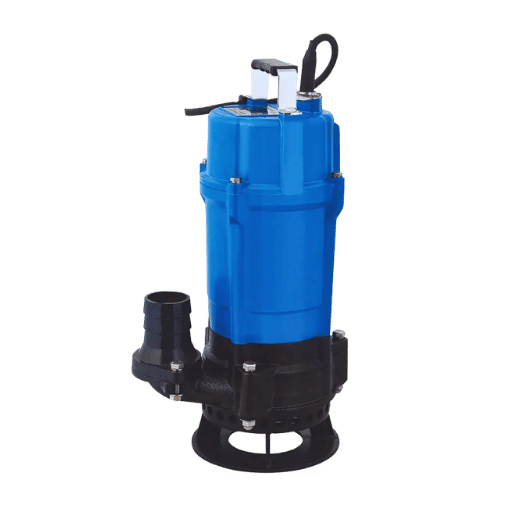
A sludge pump handles semi-liquid sludge with suspended solids, viscosity, grit, fibers, or settled debris. Naming the pump is simple; choosing the right pump for the material is what prevents lost flow, burned motors, and plugged discharge lines.
Quick Specs: Sludge Pump Duty at a Glance
- Fluid behavior: semi-fluid sludge, not clean water.
- Core inputs: solids percentage, particle size, viscosity, flow, head, NPSHa, duty cycle, and debris type.
- Common pump families: submersible, centrifugal, chopper, diaphragm, and progressive cavity.
- Main failure risks: clogging, seal wear, cavitation, motor overload, and discharge-line settling.
- Commercial handoff: once flow, head, solids, and material data are known, move to industrial sludge pump specifications.
What Is a Sludge Pump Used For?
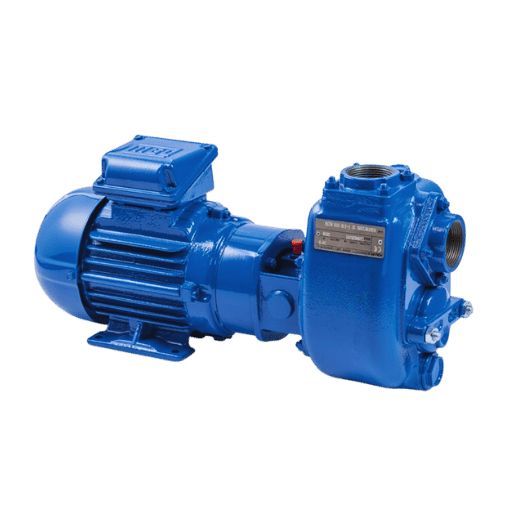
Use a sludge pump where the liquid has a significant solids, fiber, grit or biological content such that a standard water pump is the unsuitable machine. In sewage treatment that may be primary sludge, return activated sludge, waste activated sludge, or thickened biosolids. In industrial service that may be paper mill sludge, process residue, food waste, or abrasive tailings.
That difference does matter because sludge is both a hydraulic problem and a handling problem. The equipment has to produce flow, hold solids in suspension, limit the risk of blockages and cope with the wear pattern imposed by the material.
According to the EPA’s Plain English Guide to the EPA Part 503 Biosolids Rule, biosolids are primarily organic solid products generated from municipal wastewater treatment. Pump buyers can use that definition to treat sludge as a changing material stream, not a fixed liquid.
Consumer search results can be confusing. Pressure-washer sludge pumps, pond-sludge pumps, and pool-drain accessories are not the same purchase as an industrial sludge transfer pump. If the duty point is a municipal plant, industrial sump, mine, paper mill, or process tank, stay in industrial units: GPM or m³/h, head, solids, viscosity, particle size, motor power, and materials.
On construction sites or after a flood, sludge dewatering is not automatically a sump pump job; filter debris, grit, and viscous residue can cause pump damage if the crew tries to pump sludge with standard pumps. A vacuum truck may help with emergency removal, but it does not replace pump selection when solids still need to pass through the line.
What is another name for a sludge pump?
There are also alternative names for a sludge pump, such as biosolids pump, solids handling pump, non-clog pump, sump sludge pump, dewatering pump, chopper pump, or sludge transfer pump. Depending on the plant and material, these names are not interchangeable because they can indicate different impeller geometry, inlet design, solids passage, and maintenance risk.
Key takeaway: use the word “sludge” to start the search, but use solids behavior to choose the machine.
How Does a Sludge Pump Work?
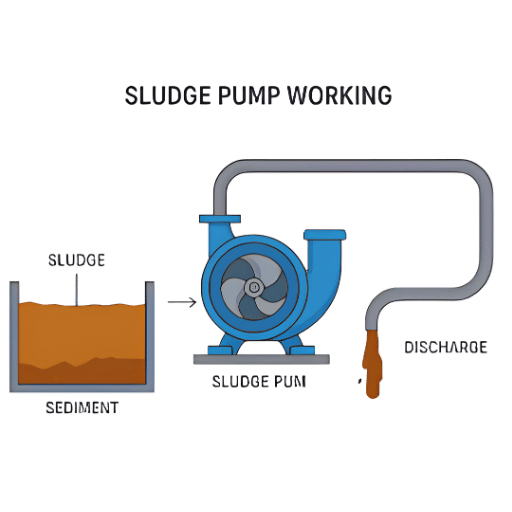
Most sludge pumps work by creating a pressure difference that moves sludge from the suction side into the casing, through the impeller or pumping element, and out through the discharge. That sounds simple until the liquid stops behaving like water: solids settle, fibers wrap, viscosity increases friction, and abrasive grit erodes internal clearances.
The impeller of a centrifugal sludge pump imparts energy in the form of velocity and pressure to the sludge. The impeller’s volute turns a greater proportion of that velocity into a discharge pressure. Chopper sludge pumps use cutting elements to remove any fibrous debris that could bridge the inlet.
Diaphragm and progressive cavity pumps use positive displacement to move more viscous or shear-sensitive sludge at a lower velocity.
Solids percentage is a very important variable. As noted by an EPA gravity thickening fact sheet, thickening 3% sludge to 6% sludge reduces volume by 50%, and gravity thickener bottoms are generally in the 4-6% solids range, with concentrations as high as 15% total solids in some cases. This is why a line that performed well yesterday may be overloaded or clogged after thickening parameters change upstream.
📐 Engineering Note: Do not treat sludge viscosity as clean-water viscosity unless the solids are very low and verified. Field discussions among wastewater engineers often warn that sewage and sludge behavior changes once total solids rises above the low single-digit range. In design review, ask for total solids, temperature, particle profile, and whether solids settle during shutdown.
Sludge Pump Types Compared
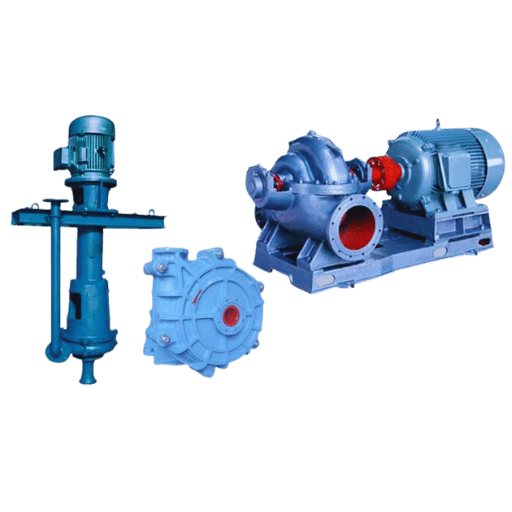
Pump choice is driven by the function of the sludge within the pump, not by the general name of the plant. Municipal sumps with wipes, mining tailings streams, and paper mill sludge lines can all use the word sludge, but all will give different stresses to the pump.
| Pump type | Best fit | Main limit | Buyer check |
|---|---|---|---|
| Submersible sludge pump | Pits, sumps, lift stations, temporary dewatering | Access and clogging risk | Solids passage, cable length, motor protection |
| Centrifugal sludge pump | Higher flow, lower to medium viscosity transfer | Settling solids and high viscosity | Pump curve, NPSHa, impeller clearance |
| Chopper pump | Fibrous sludge, wipes, rags, stringy waste | Cutting-element wear | Blade access, solids passage, service intervals |
| Diaphragm pump | Intermittent high-solids transfer or chemical sludge | Pulsation and capacity limits | Chemical compatibility and air supply |
| Progressive cavity pump | Viscous sludge and controlled low-shear flow | Stator wear and dry-run sensitivity | Rotor/stator material and solids size |
| Trash pump | Dirty water with loose debris | Not a thick sludge solution | trash pump duty boundary |
Advantages
- Multiple pump families let engineers match the failure mode.
- Submersible designs reduce pump-room exposure for pit service.
- Chopper designs can reduce rag-related clogging where fibers dominate.
Limitations
- No pump type fixes poor duty data.
- Where abrasive mineral solids are anticipated, a heavy duty slurry pump selection should be considered.
- High-viscosity sludge can make clean-water curves misleading.
What type of pump is best for sludge?
Watery sludge in pits most often starts with a submersible sludge pump. Fibrous municipal waste deserves a comparison to a chopper or grinder pump, including a sewage grinder pump option. When mineral solids are involved, the decision shifts toward slurry-pump wet-end materials. When the material is thick and viscous, a positive displacement design may be justified over a centrifugal design.
Sludge vs Slurry vs Trash Pump: The Boundary Problem
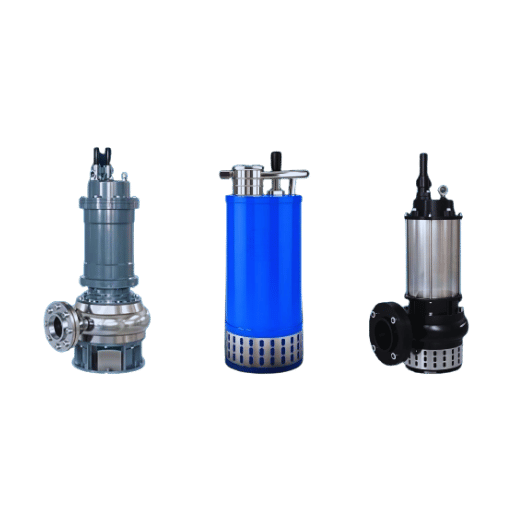
Sludge, slurry, and trash water can overlap in casual language, but they do not punish pumps in the same way. Sludge is often biological or semi-solid. Slurry is more likely mineral and abrasive. Trash water is thinner water carrying loose debris. Those differences affect impeller choice, material choice, motor load, and spares planning.
| Category | Dominant risk | Typical buyer mistake | Better next step |
|---|---|---|---|
| Sludge | Viscosity, fibers, biological solids, settling | Buying a clean-water pump with a bigger motor | Check sludge-specific pump family |
| Slurry | Abrasive mineral solids and wet-end wear | Under-specifying alloy or liner material | Review submersible slurry pump duty |
| Trash water | Loose debris in comparatively thin water | Using it for thick biological sludge | Check trash or dewatering limits |
In one piece of boundary testing, the responses differ. Material that settles allows a question about keeping it entrained. Material that wraps allows a question about cutting or passing fibrous material. Materials that abrade demand a question about sacrificial spare wear parts. Thickening troubles lead to questions about deriving the necessary torque and the pumping conditions required at start up.
9-Point Solids-Viscosity-Abrasion Triage Framework
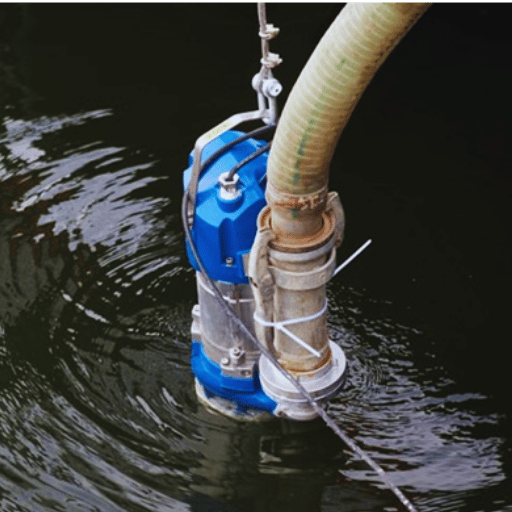
Any call for equipment should start by classifying the duty on three axes: solids, viscosity, and abrasion. The 9-Point Solids-Viscosity-Abrasion Triage Framework helps prevent two expensive problems: buying a pump that cannot pass the material, or selecting a tougher pump than the application needs.
This cost calculus is not only logical, every real-world example bears it out. The DOE Pumping System Sourcebook points out that oversizing pumps increases operating and maintenance costs. Oversizing sludge pumps can even move a pump away from its most comfortable operating region, decreasing reliability.
| If your material shows… | Ask for… | Why it matters |
|---|---|---|
| Fibers, wipes, rags | Chopper or grinder evaluation | Prevents inlet bridging and repeated lifting from pits |
| Mineral grit or tailings | High-chrome or lined wet end | Moves the decision from clogging to abrasion control |
| High viscosity | Torque, suction, and positive-displacement review | Clean-water curves can understate power demand |
| Long discharge line | Velocity and settling check | Settled solids turn a pipe into a blockage |
| Variable flow demand | Control method and VFD review | Energy and wear depend on how flow is controlled |
| Corrosive sludge | Material compatibility check | Wrong metallurgy can fail before hydraulic wear appears |
| Tight acceptance requirements | Hydraulic test grade and document package | Makes procurement auditable |
| Unknown solids data | Sample test or conservative trial point | Exact values vary by site and upstream process |
| Ready duty data | sludge pump selector | Turns the guide into sizing input |
In sludge applications, the first useful question is not always “which model?” It is “which failure mode are we trying to avoid: clogging, wear, cavitation, or unstable control?”
Why Sludge Pumps Fail
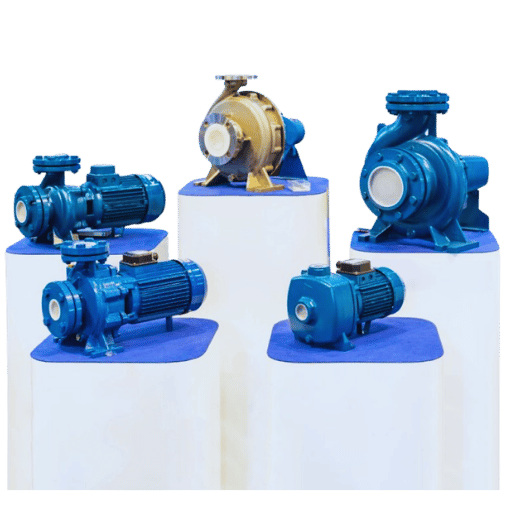
Sludge pumps fail in recognizable ways. Clogging occurs when material cannot pass. Abrasive solids cut clearances. Poor suction conditions lead to cavitation. Added viscosity, solids, or a poor operating point can demand more power than the motor and drive can deliver.
A practical example is a wastewater clarifier cleanout where operators repeatedly lower and raise a submersible pump because the inlet keeps clogging. That is more than a labor problem. It is a clue that the pump family, solids passage, or cutting method does not match the material.
Cavitation deserves special attention because it is easy to misread as a weak pump. Hydraulic Institute, in its NPSH and pump operating regions guide, points out that NPSH is central to avoiding cavitation and protecting pump reliability. If sludge thickens or suction losses change, effective NPSH margin can shrink even when the pump hardware has not changed.
| Symptom | Likely cause | Inspection point |
|---|---|---|
| Flow drops suddenly | Clogged inlet or settled discharge solids | Inlet, hose, discharge velocity |
| Noise and vibration | Cavitation or off-curve operation | NPSHa, suction losses, operating region |
| Fast impeller wear | Abrasive grit or wrong wet-end material | Material certificate and solids analysis |
| Motor trips | High viscosity, overload, voltage issue | Amps, voltage, density, startup condition |
Why is my sludge pump not working?
Start with the material, not the motor. Confirm whether the inlet is bridged, the discharge hose is partly blocked, the sump has settled solids or the sludge is thicker than the original duty. Then check whether the pump is running close to its design flow region. Failing to do this when replacing the same model often repeats the failure.
Materials, Standards, and Acceptance Checks

Sludge pump material selection is a risk decision. Cast iron might be OK for low-abrasion wastewater sludge. Stainless steel is a better choice for corrosion and hygiene. High-chrome white iron is worth considering for abrasive solids where the wear driver dominates.
ASTM describes A532/A532M abrasion-resistant cast irons as white cast irons alloyed for resistance to abrasive wear in mining, milling, earth-handling, and manufacturing applications. This scope is relevant when sludge acts more like abrasive slurry than biological wastewater.
ISO 9906 is the usual reference for hydraulic acceptance. ISO states that ISO 9906:2012 specifies hydraulic performance acceptance tests for rotodynamic pumps. A specification or RFQ should mention which acceptance grade or test record is required, even if the whole standard is not quoted.
- Specify the wet-end material and its standard, not “cast iron” or “stainless steel.”
- Specify if the pump is to be tested to an acceptance standard such as ISO 9906.
- Request the performance curve, motor data, seal plan, and spare-parts list.
- Abrasive duty requires a review of sludge pump wet-end material choices before the quote is approved.
- A heavy-duty fitting, hose, and wet-end package may be needed when abrasive solids dominate.
Installation and Maintenance Checklist for Sludge Pump Duty
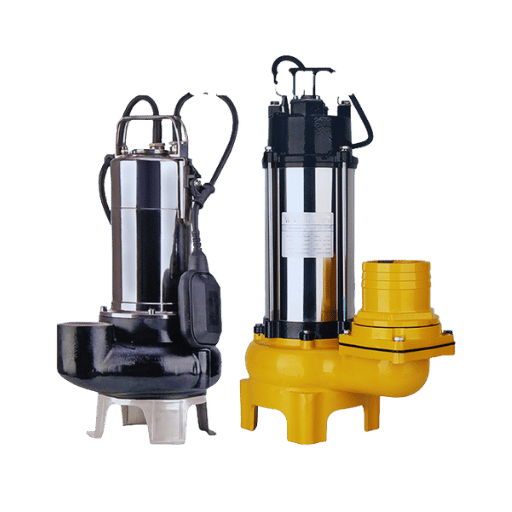
Installation determines whether the installed pump gets a useful service life. Sludge service demands ample suction margin, a discharge path that prevents settling, access for cleaning and a maintenance plan that detects wear before a performance break-down.
Pre-start checklist
- Note flow, head, solids percentage, temperature, viscosity and expected debris.
- Determine suction submergence, NPSHa margin and whether the pump begins operation against settled material.
- Inspect discharge pipe or hose for low points where solids can settle.
- Identify motor power, voltage and overload protection and confirm cable rating for a submersible.
- Stock the first wear parts: impeller, seal, wear plate or liner, gasket and bolts.
Monitor amps, vibration, flow, seal leakage, and sludge characteristics. An increase in amps with a reduction in flow should not be assumed to mean the motor is the only cause of failure. Pump operation may be challenged by thicker sludge, off-curve operation, or a partial blockage.
Safety and compliance checks belong in the installation plan, not after startup. For biosolids handling, confirm whether 40 CFR Part 503 applies; for wet-well entry, retrieval, or field implementation work in confined spaces, check OSHA 29 CFR 1910.146 before the project timeline is set. During installation, record a baseline for amps, flow, vibration, and seal leakage so later troubleshooting has a real comparison point.
When to Move From Guide to Specifications, Sizing, and Quote

Guide the problem with this material. Do not go to specifications until flow, head, solids percentage and particle size, viscosity, material chemistry, installation type, application, voltage and duty cycle can be provided. Then the application engineer can work productively rather than guess.
RFQ data format example: replace these examples with site-measured values before sizing: 32 m head, 6% solids, 12 mm particle size, 1050 kg/m³ density, 35°C sludge temperature, 15 kW motor, 60 Hz power, 100 mm discharge, 20 m cable, 2 m suction lift, 4 m submergence, 5 m hose low point, 3 mm wear allowance, 10 mm rag screen, 2% daily solids swing, 8% startup solids, 1.5 kW auxiliary mixer, and 50 Hz alternate supply. For spares and site fitting checks, document 75 mm and 150 mm connection sizes, 5 kW and 30 kW motor options, 4 hr and 6 hr duty cycles, 12 months and 24 months inspection windows, and any 10 psi flush-water limit.
Once BBP selection work begins, the next step is the sludge pump product and sizing page. If the duty is still unclear, use the sludge pump TCO calculator or send the fluid data for review. For procurement records, request the pump curve, material certificate, and ISO 9001:2015 document package with the quotation.
Industry Outlook: Energy, Monitoring, and Solids-Handling Pump Design
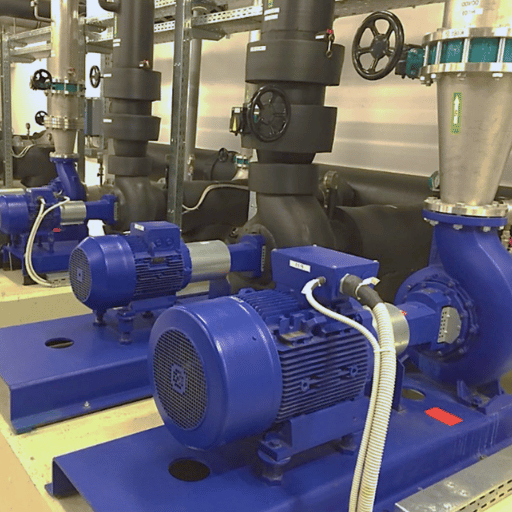
In 2026 projects, the sludge pump discussion is moving beyond “will it pass solids?” Buyers are also asking how the pump will be controlled, how early the site can detect seal or bearing problems, and whether the equipment can run near its design operating region instead of being oversized for safety.
According to a Variable Speed Pumping guide issued by the Department of Energy, pumping systems use nearly 20% of the world’s electric-motor energy and 25% to 50% of total electrical energy in some industrial facilities. The guide also identifies pump speed control as the most efficient flow-control method.
Standards of reliability are increasingly defined. In Hydraulic Institute’s 2025 summary of the 2024 ANSI/HI 9.6.1 update, the pump manufacturer’s NPSH margin guidance is tightened into application-specific advice, referencing NPSHR to define margin. Sludge customers may now want to specify suction conditions and fluid properties in their RFQ, as well as flow and head.
Action for 2026 planning: specify the pump, the control method, the sensor package, and the document package together. Treat VFD logic, motor current monitoring, vibration trend, and spare-parts access as part of the pump system, not afterthoughts.
Sludge Pump FAQ
What is a sludge pump used for?
View Answer
Transports sludge, with solids, grit, fibers, biological material or sticky material present, in waste water, industrial, sump and process applications.
What type of pump is best for sludge?
View Answer
Flow and sludge makeup should guide the first selection. Pit and sump work often starts with submersible sludge pumps because they can sit near the material and reduce priming problems. Fibers, wipes, and stringy municipal debris make chopper or grinder designs worth comparing. Abrasive mineral solids move the review toward slurry-pump wet ends and wear parts.
High-viscosity sludge may need positive displacement review rather than a centrifugal selection based only on clean-water curves.
What pump removes sludge?
View Answer
A sludge pump, chopper pump, submersible solids handling pump, diaphragm pump, or progressive cavity pump can be used, depending on solids, viscosity, suction lift, particle size, and debris. Material data provides the most prudent starting point.
Can a centrifugal pump handle sludge?
View Answer
Yes, but only in the correct duty window. Centrifugal sludge pumps can work for flow-heavy transfer when viscosity and solids behavior remain compatible with the pump curve. Highly viscous, fibrous, or settling sludge may require a chopper, grinder, or positive-displacement machine.
What is the difference between a sludge pump and a slurry pump?
View Answer
Typically, sludge pumps will be selected for sticky, biological, fibrous, or viscous duty. Wet-end wear or mineral solids will typically be handled by slurry pumps. Where conditions overlap, the analysis of material is more important than the label.
How do I size a sludge pump?
View Answer
Gather the required flow, total dynamic head, solids%, particle size, viscosity notes, temp, chemistry, suction, and duty cycle. Then look at duty on a pump curve and material plan, instead of choosing the pump with just horsepower.
When should I choose a chopper pump?
View Answer
Select a chopper pump when the primary cause of clogging is rag, wipe, fiber, or stringy material. In the presence of abrasive mineral grit, consider slurry pump materials and wet-end wear parts first.
Ready to Size a Sludge Pump?
If you already know flow, head, solids, viscosity, and installation type go straight from education to sizing.
Related BBP Resources
References & Sources
- Plain English Guide to the EPA Part 503 Biosolids Rule – U.S. Environmental Protection Agency
- Biosolids Technology Fact Sheet: Gravity Thickening – U.S. Environmental Protection Agency
- Improving Pumping System Performance: A Sourcebook for Industry – U.S. Department of Energy
- Variable Speed Pumping: A Guide to Successful Applications – U.S. Department of Energy
- A532/A532M Standard Specification for Abrasion-Resistant Cast Irons – ASTM International
- ISO 9906:2012 Pumps – Hydraulic Performance Acceptance Tests – International Organization for Standardization
- The Basics of NPSH & Pump Operating Regions – Hydraulic Institute
- Understanding the 2024 Updates to ANSI/HI 9.6.1 – Hydraulic Institute