Get in Touch with BBP

ISO 9001 Certified Quality
HIGH CHROME SLURRY PUMP
High Chrome Slurry Pump Manufacturer — BBP Heavy-Duty Pumps
High chrome slurry pumps built to ISO standards 2-3 times longer life in abrasive applications. Our AM series offers HRC 58-62 hardness achieved with Cr27% white iron alloy designed to withstand the most punishing slurry conditions in mining, dredging and mineral processing.
Request a Quote
HRC 58-62
Hardness Rating
Cr27%
Alloy Composition
2-3×
Wear Life
Why Abrasive Slurry Destroys Standard Pumps — And How High Chrome Solves It
Lab-Verified Hardness on Every Casting
Our in-house testing has confirmed an average HRC 58-62 from each casting in a batch, both in the top shell and the impeller components, leaving the factory. This test method is followed as standard for all white iron castings we produce.
3-6 Month Wear Cycle on Standard Cast Iron Pumps
A typical cast iron slurry pump running in a cyclone feed circuit, or a mill discharge pump has a known lifespan of 3 to 6 months before the impeller vanes wear past operating tolerances, the casing liners need replacing, and unscheduled shutdowns have to be incurred to change the wear parts.
Material incapability is the root cause. Quartz in mineral ore concentrates, mineral fragments and silica dust remains sharp, fluid velocities in excess of 3m/sec act as a cutting tool against conventional metals.
Each impact causes removing material from the pump’s wetted surfaces, and in a slurry with high solids loading (over 30% solids by weight) the acceleration of erosion is rapid.
Three Concurrent Wear Pathways on Every Pump
Destruction follows three concurrent pathways:
Particle impacts gouge material from impeller vanes and casing walls.
Sliding abrasion grinds liner material where slurry flows through the throat ring section.
Corrosion from alkaline or acidic process waters attacks newly exposed surfaces, accelerating metal loss from each erosion site.
How High Chrome White Iron Rewrites the Wear Equation
High chrome white iron (ASTM A532 Class III, Type A) was developed for perfecting this wear scenario. Having a 27% chromium content, the alloy results in a textured surface of angular chromium carbides distributed throughout a soft matrix – aggressive mineral particles on impact cannot scratch through to the surface.
Hardness values of HRC 58-62 place high chrome alloy level with the mineral particles it will see in service, changing the wear equation from rapid consumption to slow erosion.
The 70% Lifecycle Cost Rule
Consider the economics: 70% of a slurry pump’s lifecycle cost goes toward maintenance, spare parts, and unproductive downtime during changeouts.
When wear parts that previously lasted 4 months now deliver 8 to 12 months of service life, the cost per ton of material pumped drops substantially.
For any application involving coarse mineral particles exceeding 2mm diameter, dense slurry above specific gravity 1.35, or process water with pH levels between 5 and 12, high chrome white iron (HRC 58-62) has proven to deliver the lowest total cost of ownership among all impeller and liner material options.
Field performance data from our mining, dredging, and mineral processing installations confirms this threshold.
BBP AM Series — Models, Specs & Selection Guide
Our BBP AM series covers flow rates from 3.6 m³/h to 1,620 m³/h and discharge heads from 6 m to 56 m — a range suitable for everything from small laboratory cyclone feed to mega-scale dredging and tailings hauling. Each model is designated by inlet/outlet sizing: 6/4D-AM denotes a 6-inch suction inlet with 4-inch discharge outlet on a D-frame.
All five common slurry classifier wear materials are offered over the full range: the AM (metal lined) series employs high chrome white iron for casing and impeller liners, recommended where the slurry has many coarse, sharp edged particles; the AMR (rubber lined) series features a rubber casing liner with a rubber or high chrome impeller, recommended where particles are fine enough to cause less wear in metal and have a tendency to be packed tightly against the impeller.
| Model | Capacity (m³/h) | Head (m) | Speed (r/min) | Power (kW) | Inlet/Outlet (inch) |
|---|---|---|---|---|---|
| 1.5/1B-AM | 3.6–12.6 | 6–18 | 1200–2600 | 0.41–5.5 | 1.5/1 |
| 2/1.5B-AM | 7.2–28 | 6–24 | 1200–2600 | 1.5–10 | 2/1.5 |
| 3/2C-AM | 14.4–56 | 6–30 | 1000–2000 | 2–20 | 3/2 |
| 4/3C-AM | 36–108 | 8–38 | 800–1800 | 5–40 | 4/3 |
| 6/4D-AM | 54–252 | 10–52 | 600–1400 | 10–90 | 6/4 |
| 8/6E-AM | 162–540 | 10–56 | 500–1200 | 20–200 | 8/6 |
| 10/8F-AM | 270–972 | 12–56 | 400–1000 | 30–315 | 10/8 |
| 12/10G-AM | 540–1620 | 14–56 | 350–800 | 75–560 | 12/10 |
Seal Configuration
Six common slurry classifier sealing styles are available: they’re chosen based on severity of service and considerations of maintenance and reliability:
Gland Packing
A classic, field adjustable wear plan that allows consumption of higher-cost packing rings to run out without removing the pump from service. Requires frequent adjustments and is only suitable for concentration ranges where any leakage must be pumped away.
Expeller Seal
Provides an internal roadblock to slurry migrating to the shaft seal area. Maintenance is straightforward. Completely eliminates the need for seal water supplies to ensure seal cooling. Recommended for remote locations where procedure, power source or clean water supplies are noneffective or unavailable.
Mechanical Seal
A stationary and dynamic ring design that requires very clean barrier fluid to operate at zero leakage requirements. Used for waste material removal byproducts, toxins, toxic consumer chemical streams. Still subject to maintenance in the event of catastrophic process failure requiring pump overhaul.
Drive Arrangements
The AM series is available with 4 standard drive styles:
CV (V-Belt Drive)
The most common drive configuration; it allows traction power transmission within a common enclosure budget. V-belts allow speed adjustment after startup through pulley and step changes based on the actual duty power curve.
CRV (V-Belt Drive With Direct Coupling)
Provides the best combination of drive shaft rigidity, speed tuning capability and power transmission power savings. A good selection where the pump is in regular changeover usage and the motor driver is available.
DC (Direct Coupled)
The optimum in power transmission with maximum efficiency, maximum capacity and lowest cost/footprint. Works best with drives where the pump must run at exactly 1000 rpm.
ZV (Gear Reducer Drive)
Allotted for large-frame pumps (10/8F-AM series and above) where the required pump RPM falls below common motor speeds. Provides the fastest, most capable speed reduction with the most torquey handling characteristics.
High Chrome vs Rubber Lined vs Ni-Hard — Data-Driven Comparison
Material affinity of slurry pump wear parts follows intense engineering calculation of particle shape, particle size, slurry PH, temperature, slurry density and concentration, etc.
Choosing the wrong material choice is as expensive as operating 40-60% more per year than the correct material choice. Use this matrix to match your slurry composition to the correct wear material.
| Property | A05 (Cr27%) | A49 (Cr30%) | Ni-Hard 4 | Natural Rubber | Polyurethane |
|---|---|---|---|---|---|
| Hardness | HRC 58-62 | HRC 60-67 | HRC 55-60 | Shore 40-65A | Shore 80-95A |
| Chromium Content | 27% | 30% | 1-4% | 0% | 0% |
| Wear Life Multiplier | 3-4× | 4-5× | 2-3× | 2-3× (fine) | 1-2× |
| Best For | Coarse/sharp particles, high-density slurry | Highly corrosive + abrasive environments | Moderate abrasion | Fine particles, low concentration | Fine particles, low temperature |
| Max Particle Size | >25mm | >25mm | <15mm | <6mm | <3mm |
| pH Range | 5-12 | 4-13 | 6-10 | 3-14 | 5-10 |
| TCO Index | 1.0 (baseline) | 1.2 | 1.1 | 0.8 | 0.7 |
Rubber vs High Chrome — Where Each Wins
Application guide criteria: high chrome A05 is best suited to tight particle sizes and low concentration (below 6mm, below 15% weight concentration). Rubber is more elastic than cavitation resistant — small particle impacts are deflected off its surface causing little energy transfer.
But the squeezing out thick rubber from between large, sharp particles occurs rapidly as any particle size or shape advantage is lost. A single 10mm (0.4″) rock can punch a hole through a rubber liner that would last 18 months of fine sand.
Why Ni-Hard 4 Is Falling Out of Favor
Older technique, but still a viable one, for metallic wear material determination was to compare wear rates. Ni-Hard 4 once the dominant material in slurry pumps is now moving into a diminishing middle ground.
Chromium content: 1-4% versus 27% for A05 — far fewer chromium carbides in the matrix.
Matrix hardness: softer overall, giving a wear rate 30-50% higher than high chrome in most coarse particle applications.
Matrix hardness: softer overall, giving a wear rate 30-50% higher than high chrome in most coarse particle applications.
Operations still running Ni-Hard parts are generally doing so because they bought legacy equipment specified with Ni-Hard — not because the material remains the best choice for the application.
TCO Framework: Why Wear Life Multiplier Changes Everything
When 70% of a slurry pump’s total lifecycle cost (parts, maintenance, induced downtime) comes from maintenance, spare parts, this bigger investment makes extend wear life of 2-3 pieces an entirely different matter from simply reducing parts cost – it turns into a wholesale change in maintenance schedule and staffing.
Annual Pump Cost = (Parts Cost × Replacements/Year) + (Labor/Change-out × Replacements/Year) + (Downtime Hours × Production Value/Hour)
Example: If standard parts need 3 replacements/year and high chrome needs 1:
Standard: ($2,400 × 3) + ($800 × 3) + (12h × $500/h)
= $15,600/year
High Cr: ($3,600 × 1) + ($800 × 1) + (4h × $500/h)
= $6,400/year
Annual Savings:
$9,200 per pump position
Proven Performance — Mining, Dredging & Mineral Processing
BBP high chrome slurry pumps operates in 6 core application segments across 30+ countries. Precise pump sizing, material grade and seal arrangements each apply to each duty – following cards shows the corresponding BBP model based on each application.
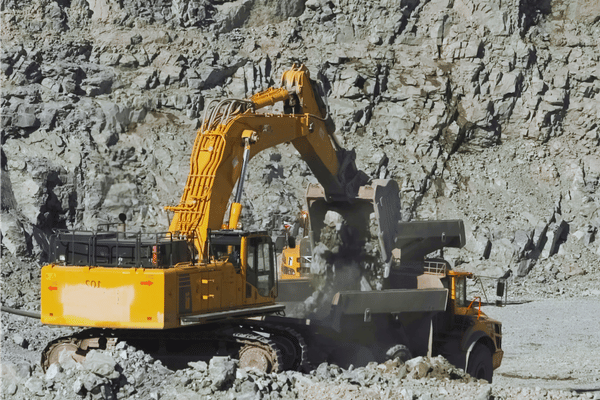
Mining — Cyclone Feed
6/4D-AM
54–252 m³/h | 10–52 m head
Cyclone feed duty in the processing plant is responsible for delivering a consistent pressure profile against varied feed density – 6/4D-AM handles solids concentrations up to 45% weight with A05 high chrome impellers rated for 8.000+ h of operation in copper and gold ore circuits.

Mineral Processing — Mill Discharge
8/6E-AM
162–540 m³/h | 10–56 m head
Mill discharge slurry carries the highest concentrations of freshly ground, angular particles found in any processing plant – 8/6E-AM’s open impeller design passes particles up to 76mm but retain hydraulic efficiency above 65%.

Dredging — Sand & Gravel
10/8F-AM
270–972 m³/h | 12–56 m head
Dredge pumps are subject to occasional impact from oversize material – rocks, shells, remnants – mixed in with the sand. The 10/8F-AM aggregate / gravel pump version uses a wider impeller passage and reinforced casing to absorb impact shock without cracking.
Power Generation — FGD
4/3C-AM
36–108 m³/h | 8–38 m head
Flue gas de-sulfurization systems circulate lime slurry at a moderate concentration but very elevated corrosion potential. The 4/3C-AM with A05 alloy (pH range 5-12) protects against the corrosive attack from sulfuric acid byproducts as well as the abrasion from lump limestone particles.

Construction — Concrete & Cement
3/2C-AM
14.4–56 m³/h | 6–30 m head
Cement slurry and concrete application can carry with cement liberated silica particles which harden if left standing – if the pump stops. The 3/2C-AM’s compact frame inserts into tight construction site layouts, while its high chrome wetted parts have excellent carbonate resistance.

Tailings Transport
12/10G-AM
540–1620 m³/h | 14–56 m head
Tailings pipelines areoperated continuously at high flow rates for 5-20km distances. The 12/10G-AM provides the volume necessary for extensive tailings disposal, with A05 wear parts rated for 6,000+ hours in iron ore and bauxite tailings.
Certifications & Quality Assurance
As part of China’s in depth slurry pump manufacturer and supplier, BBP controls the whole exporting pipe from pattern making to final performance testing.
Below is a summary of certifications governing our management system — from design and casting through machining, assembly, and testing of every pump that leaves our facility.
ISO 9001:2015
Quality Management
Quality Management
ISO 14001:2015
Environmental Management
Environmental Management
ISO 45001:2018
Occupational Health & Safety
Occupational Health & Safety
CE European
Conformity
Conformity
Vertical Integration: 6 Quality Gates
All of our production process from castings, machining, assembly, testing are conducted in house with no reliance on external parts suppliers or subcontractors.
Hence the quality produced at our end is consistent throughout. All of our high chrome castings are subjected to 6 controlled processing steps:
- 01Casting
- 02Heat Treatment
- 03Machining
- 04Assembly
- 05Coating
- 06Testing
Documentation Delivered With Every Order
- ✓ Material certification provided with each order.
- ✓ 100% hydrostatic test performed on every assembled pump.
- ✓ Chemical composition analysis with full traceability from raw material heat number to component serial number on each delivery.
- ✓ Brinell hardness of each high chrome casting measured against ASTM A532 specification prior to placement on the machining line.
We perform a Brinell test and chemistry on each high chrome casting prior to sectioning it for machining. To put it simply, each pump leaving our premises has passed 6 predetermined quality gates – from mold pattern to final hydrostatic test.
Procurement Guide — Pricing Factors, Lead Time & Spare Parts
Quotes for slurry pumps are a function of configuration, not catalogue listing. Two 6/4D-AM slurry pumps can be priced 30-40% differently based on material specification, seal arrangement and drive configuration.
Pump choice and frame size
larger frames (10/8F-AM and above) require more material for castings, larger bearings and higher material consumption for each component. The 12/10G-AM consumption is approximately 8 times that of 1.5/1B-AM
Wet-end material choice
A05 high chrome (Cr27%) castings are standard. Choosing A49 (Cr30%) for highly corrosive applications or lining the wet-end with rubber on AMR configuration increases the price indentically to material consumption and manufacturing complexity.
Seal choice
gland packing of course offers the lowest unit cost. Additional secondary impeller and housing assemblies (expeller) or sealing of the impeller bore with a mechanically sealed face and circulating barrier fluid (mechanical) are more costly options.
Drive choice
base drive (CV) is most common and most economical. Direct coupling (DC) requires a suitable motor fitted with an appropriately rated coupling. Gear reducer (ZV) drive arrangements for large pumps includes motor and gearbox assembly.
Order quantity
volume pumps or multiple disposals in an annual volume are developed into volume pricing schemes. Our sales engineering team will review your requirements to speed quote your system.
Lead Time
Our standard models in the popular sizes (3/2C – 8/6E) are generally prepared for shipping within 3-4 weeks of order confirmation, taken from our institutional inventory of completed components.
More elaborate systems (using non standard materials, drive configurations, or seal arrangements) require an engineering review period and then production planning. Your sales engineer will contact you within 48 hours with a firm delivery date after receipt of order.
Spare Parts & Aftermarket Support
These are some of the slurry pump components that we keep stocked at our facility — impellers, casing liners, throat bushings, shaft sleeves and bearing assemblies — ready for quick dispatch.
Warman-compatible stock: dimensionally suitable spare parts that fit existing pump frames with no modifications — continuity of supplier while retaining your current wear experience.
OEM & ODM Services
Our in house foundry and pattern shop supports custom mold design for non standard applications.
Whether you require a modified impeller vane geometry, change of casing configuration, or private label manufacturing for your distribution network, BBP’s engineering department will work with you from your specification down to final testing.
High Chrome Slurry Pump Engineering Tools
Frequently Asked Questions About High Chrome Slurry Pumps
What is the difference between high chrome and rubber lined slurry pumps?
Using a high chrome, white iron alloy (Cr27%, HRC 58-62), the impeller and casing liner are designed to work as an A05 design, acceptable for coarse particle slurry (above 2mm) with high solids concentration (above 30%w/w). Rubber lined pumps use natural rubber or polyurethane and have liners designed to absorb impact of fine particles by elastic deformation. Rubber pumps perform best in low particle size (below 6mm), low concentration, and non-corrosive slurry applications. The difference becomes a function of particle size and shape: large angular particles will scour rubber over the long term, but once particles become large enough to cut the surface rather than rebound off the surface, high chrome will perform better in terms of overall wear life and cost of ownership.
How long do high chrome slurry pump parts last?
In typical mining cyclone feed service (silica sand, 30-40% solids, pH 6-8), BBP high chrome impellers and liners deliver 6,000 to 10,000 hours — roughly 2-3× longer than Ni-Hard and 3-4× longer than unalloyed cast iron. Contact our engineering team with your operating conditions for a site-specific projection.
What are the main components of a slurry pump?
In a typical horizontal centrifugal slurry pump there are six major assemblies: the impeller( the rotating element that imparts energy into the slurry), the casing and liner(surrounding the slurry and directing flow), the shaft and bearing assembly(supporting the impeller and from transmitting motor torque), seal system (preventing slurry leakage along the shaft), framework and mounting plates (supporting the assembly), and drive system (drive motor, coupling or belt drive). Impeller and casing liner are the only wear components in a BBP AM series slurry pump – designed with hard chrome surfaces for maximum wear life.
How do I select the right slurry pump size?
Pump sizing depends on four core parameters: required flow rate (m³/h), total dynamic head (meters, accounting for pipeline friction and elevation), slurry specific gravity (derived from solids concentration and particle density), and maximum particle size that must pass through. Start by matching your flow and head values against our specification table to identify candidate models. Next, confirm the pump’s passage size accommodates your largest particles. For complex applications — pipelines exceeding 500 m, solids concentration above 40%, or aggressive pH conditions outside the 5-12 range — we strongly recommend submitting your full process parameters. Our engineering department will run a detailed hydraulic analysis, recommend the correct model with appropriate impeller trim, and provide a performance curve matched to your specific duty point. This service is complimentary for qualified projects.
Are BBP pump parts interchangeable with Warman and Metso?
Yes. BBP AM series wet-end parts – impellers, casing liners, throat bushings and frame plate liner inserts – are dimensionally interchangeable with the Warman AH series and similar models. You may interchange worn parts and BBP replacements in a scheduled maintenance window, therefore no frame modifications, piping adjustments, or baseplate adjustment are necessary. BBP maintains dimensional quality control through CMM verification of critical mating surface installation areas to assure first pass drop-in fit every time.
What factors affect slurry pump pricing?
There are five primary reasons slurry pump price varies; Pump frame size (the larger the pump the more material is used), wet-end material grade (A05 standard, A49 high corrosion, rubber lining), seal type (gland, expeller, or mechanical seal), drive arrangement (V-belt, direct coupled, gear reducer), and quantity ordered. Size is the single biggest cost driver for slurry pumps – a 12/10G-AM will require approximately 8 the casting weight of a 1.5/1B-AM. Obtain a project quote by specifying complete details.