Get in Touch with BBP

Factory-Direct from Beijing · ISO 9001 · 40+ Countries
Centrifugal Water Pumps
Centrifugal Water Pumps — End Suction, Self-Priming & Double Suction
Centrifugal water pumps from BBP cover end suction, self-priming, double suction, sludge, and trash duty across 3.6–14,400 m³/h flow ranges and heads up to 147 m. Each casting, machining, assembly, and hydrostatic test step happens inside one Beijing foundry under one ISO 9001:2015 quality system — so the pump that arrives matches the duty point you specified, not a standard drop-ship.
Request a Quote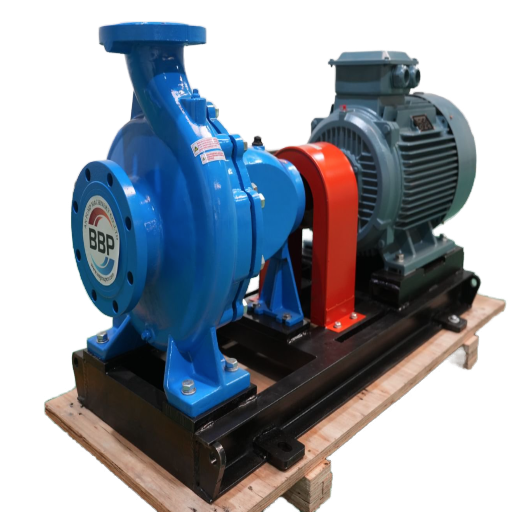
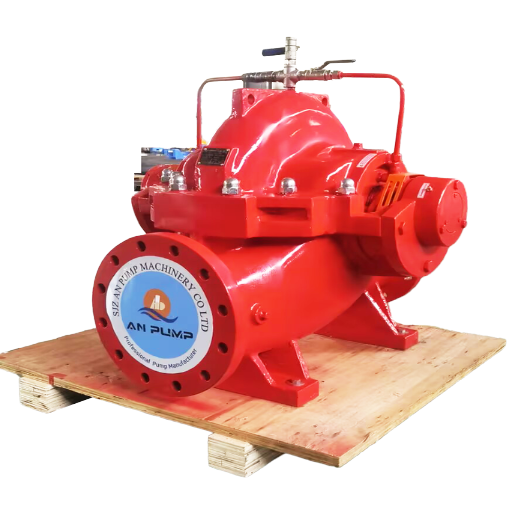
³.6 – 14,400 m³/h
Flow range across series
5 – 147 m
Head range (single stage)
0.³7 – 1,500 kW
Motor power options (IE3 default)
5 Series
End Suction · Self-Priming · Double Suction · Sludge · Trash
When Pump Failures Disrupt Your Project — The BBP Centrifugal Water Pump Solution
Centrifugal water pump failures rarely arrive on schedule. A foot valve clogs at 3 a.m., a misapplied end suction pump runs 15% off its best efficiency point for 1,800 hours a year, or a single-suction frame cycling above its axial-thrust ceiling shortens bearing life from years to months. Industry reports suggest a single unplanned pump incident can cost a manufacturing facility roughly $180,000 once downtime, expedited parts, and emergency labor are counted together . The recurring root cause is not the pump category itself — it is a duty point matched to the wrong pump.
A centrifugal water pump moves liquid by converting rotational motor energy into kinetic energy through a spinning impeller, with a casing that channels the resulting flow toward a discharge outlet. That mechanism is shared across the family — what changes between an end suction pump, a self-priming pump, a double suction split case, a sludge pump, and a trash pump is impeller geometry, casing layout, and the duty envelope each is built to serve. BBP manufactures all five, which means the recommendation you receive on RFQ is geometry-correct rather than catalog-defaulted.
BBP Manufacturing Co., Ltd. builds centrifugal water pumps under one roof in Beijing — casting, heat treatment, machining, assembly, coating, hydrostatic test, and performance test. Every unit ships with its own serial-numbered Q-H curve, SGS-verified mill certificates for cast iron, bronze, or 316 stainless steel wetted parts, and an ISO 9906 hydrostatic test record. We export to over 40 countries and the after-sales contact is the same engineer who signed off on your original sizing.
Sections that follow break down the BBP series, geometry comparisons that drive selection, field applications we ship into, and the procurement and certification
Three Pain Points Buyers Bring to the Table
HVAC and Building Pressure Loops Run 15% Off Best Efficiency Point
An inadequately selected chilled-water circulator running 1,800 hours per year 15% away from its best efficiency point burns measurable extra energy and shortens bearing life. Fixing it is rarely a matter of switching pump type — it is the right impeller trim, motor class, and seal arrangement on an end suction frame matched to your loop. We confirm the duty point against an actual Q-H curve before quoting, not against a catalog default.
Self-Priming Loops Drop Prime Because the Foot Valve Failed
Most-cited failure mode in suction-lift installations is foot valve clogging or a stuck check disc. Once prime is lost, the pump runs dry, an operator scrambles to refill the casing, and production stops. BBP self-priming pumps remove the foot valve from the equation: a retained-liquid reservoir inside the casing evacuates air from the suction line on every restart, bringing the pump back to flow in 30 to 120 seconds depending on lift height and pipe length.
Single-Suction Frames Hit Bearing-Life Walls Above 2,000 m³/h
Push a single-suction end suction pump past roughly 2,000 m³/h and the unbalanced axial thrust transfers straight into the thrust bearing. Bearing life shortens, planned overhaul intervals collapse, and the inconvenience plus downtime cost more than the pump itself. Symmetrical double suction impellers neutralize that hydraulic load — the QS series carries flows up to 14,400 m³/h with bearing life that runs the full L10 service interval rather than failing under thrust.
BBP Centrifugal Water Pump Series — 5 Types, One Factory, ISO 2858 Compatibility
BBP’s range consists of five centrifugal water pump series engineered around five duty envelopes. Each series is cast in our Beijing foundry, machined on the same 6.4-meter horizontal line to wear-ring tolerances of 0.003 inches, assembled, hydrostatically tested to ISO 9906, and supplied with a serial-numbered Q-H curve. Below, each series is linked to its own technical page for model-by-model specifics.
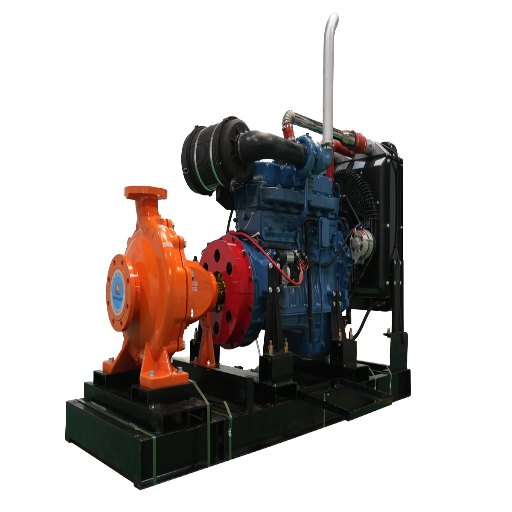
Flow 3.6 – 1,500 m³/h · Head 5 – 147 m · 120+ models · ISO 2858
Single-stage, axial-inlet, with centrifugal pump of 90 discharge. Drop-in compatible to Grundfos NB and Sulzer SES; compatible to Xylem Lowara Nsc and Pentair Aurora 3800 frames. Workhorse for HVAC, municipal water, fire protection, irrigation and industrial transfer of clean water.
View End Suction Pump →

Flow 20 – 500 GPM · Head 20 – 200 ft · Suction lift up to 25 ft
Centrifugal pump with liquid stay-tank, foot valve not needed. Includes five sub-series for clean water, trash handling with 2″ solids, chemical (316 SS + Viton) handling, diesel driven off-grid operation, and high pressure boost applications.
View Self-Priming Pump →
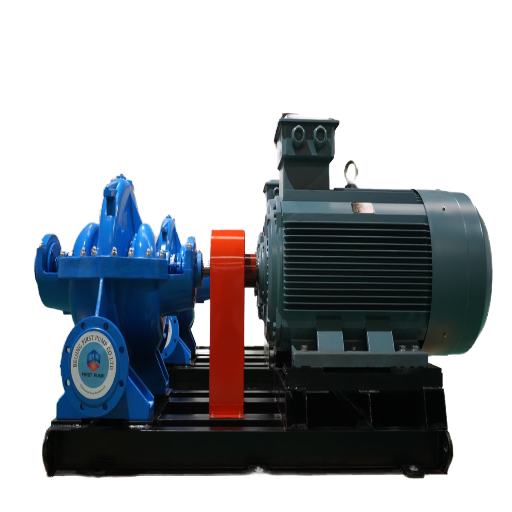
Inlet 150 – 1,200 mm · Flow 120 – 14,400 m³/h · Head 6 – 140 m
Horizontal axially split casing, symmetrical double-suction impeller. Balanced axial thrust provides for longer bearing life. Designed for high flow municipal supply, district cooling, NFPA 20 fire pumps and power-station cooling water service.
View Double Suction Pump →
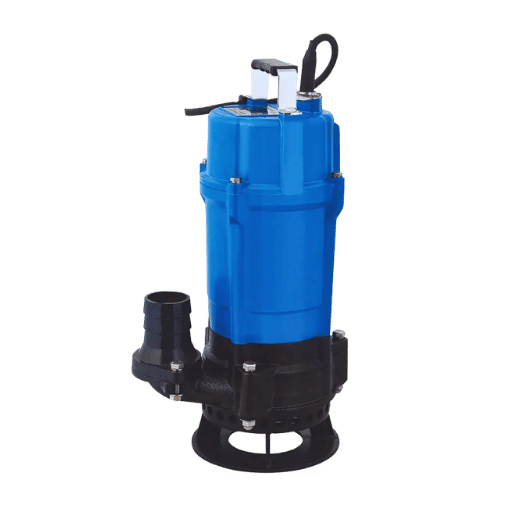
Flow 50 – 1,200 m³/h · Head 8 – 60 m · Solids handling for slurry & wastewater
Reinforced cast-iron or wear-resistant alloy casing having semi-open or recessed impeller. Designed for transportation of thick sludge including municipal sewage, paper mill stock and industrial process drains.
View Sludge Pump →
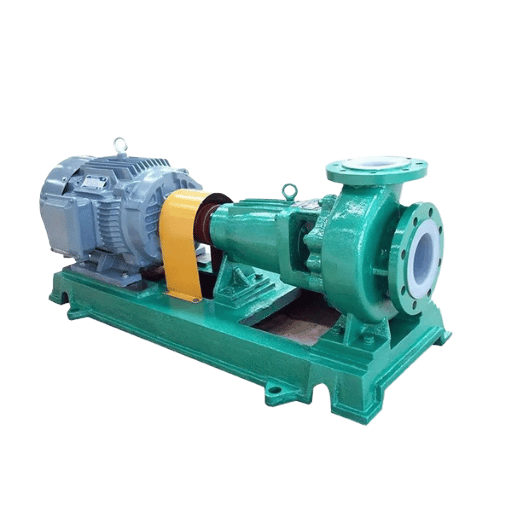
Flow 30 – 1,000 m³/h · Solids up to 2″ · Self-priming variants available
Heavy-duty, self-priming, centrifugal pump capable of passing through suspended solids. Designed to be used in construction dewatering, mining, flood response, contractor water transfer, etc.
View Trash Pump →
Centrifugal Pump Type Selection Matrix
This matrix maps each centrifugal water pump series to its duty envelope. Use it as a first-pass sizing filter before requesting a curve match against your specific flow and head.
| Pump Series | Flow Range | Max Head | Installation | Self-Priming | Solids Handling | Best Application | Details |
|---|---|---|---|---|---|---|---|
| End Suction (QI/QIH) | 3.6 – 1,500 m³/h | 147 m | Horizontal (close-coupled or frame) | No (flooded suction) | Up to 6 mm (closed impeller) | HVAC, municipal supply, irrigation, fire protection | View Specs → |
| Self-Priming (SP/ST/SC/DP/HP) | 20 – 500 GPM | 200 ft (HP series) | Above fluid level (up to 25 ft lift) | Yes (retained-liquid reservoir) | Up to 2″ (ST series) | Dewatering, sewage, chemical, off-grid transfer | View Specs → |
| Double Suction (QS) | 120 – 14,400 m³/h | 140 m | Horizontal between bearings | No | Clean to raw water (≤80 °C) | High-flow municipal, district cooling, NFPA 20 fire, power-plant cooling | View Specs → |
| Sludge | 50 – 1,200 m³/h | 60 m | Horizontal or vertical | Variant-dependent | Slurry, sludge, suspended solids | Sewage treatment, paper stock, process drains | View Specs → |
| Trash | 30 – 1,000 m³/h | 50 m | Horizontal (skid- or trailer-mounted) | Yes (most variants) | Up to 2″ spherical | Construction dewatering, mining, flood response | View Specs → |
Source: BBP factory brochure data (2024–2025 edition). Duty data presume water at 20 °C and specific gravity 1.0 unless otherwise specified.
ISO 2858 / EN 733 FOOTPRINT
Drop-In Compatibility for Brownfield Replacement
Replacing your old Grundfos NB, a Xylem Lowara e-NSC or Sulzer SES end suction pump? Every QI(H) frame sits on the same flange centerline as those other brands through the same dimensional footprint. So no new piping, no new baseplate, no new coupling guard, and no new motor mount when BBP arrives- just specify PN 10 or PN 16 at RFQ time and we’ll match the flange drilling to your existing infrastructure.
“We tested a hundred and twenty model variants against the ISO 2858 dimensional grid before locking the QI(H) catalog – we wanted any plant running an end suction pump from a European OEM to be able to replace it with a BBP without re-piping. Drop-in fit is a procurement move, not a marketing gimmick.”
End Suction, Self-Priming, and Double Suction vs. Alternative Pump Architectures
Different centrifugal water pump architectures compete for the same duty point but trade off across cost, footprint, and maintenance profile. Dimensions that matter to a plant engineer comparing architectures are flow capacity, NPSH margin, footprint, peak efficiency, bearing-life characteristics, and hours-to-overhaul. Verbal “high / medium / low” comparisons only obscure what information is available – the matrix below displays the actual numbers.
| Dimension | End Suction (QI 125-100-315) | Double Suction (QS series) | Vertical Multistage | Submersible |
|---|---|---|---|---|
| Practical max flow | ~2,000 m³/h | 14,400 m³/h (horizontal split case pump) | ~400 m³/h | ~3,000 m³/h |
| Typical head at BBP | 50 m (200 m³/h duty) | 50 m (200 m³/h duty) | 50 m via 3 stages | 50 m |
| Footprint per unit (m²) | 1.2 | 2.4 | 0.6 | Submerged (no surface footprint) |
| NPSHr at BBP (m) | 3.5 | 2.2 | 4.8 | N/A (flooded) |
| Peak efficiency (clean water) | 78–82% | 82–88% | 72–76% | 68–74% |
| Axial thrust profile | Unbalanced (carried by thrust bearing) | Balanced (symmetric dual-eye impeller) | Stage-balanced | Motor-handled |
| Maintenance access | Back pull-out (4 hr typical) | Top-cover (rotor slides up) | Cartridge replacement | Pull entire assembly |
| Relative capex (index) | 1.0 (baseline) | 1.7 | 1.4 | 1.3 |
Source: BBP catalog data, Hydraulic Institute ANSI/HI 9.6.3, ISO 9906 testing. Capex index normalized to End Suction baseline; actual cost varies with materials, motor class, order batch.
Decision Logic — Which Architecture Wins When
- Flow ≤ 2,000 m³/h, head ≤ 150 m, flooded suction available:
- End suction wins on capex and footprint. The QI(H) range starts here.
- Flow > 2,000 m³/h or 24/7 service with bearing-life pressure:
- Double suction (QS) is the cost-effective choice over the lifecycle.
- Suction below pump centerline (no flooded suction):
- Self-priming is the architecture that removes foot-valve risk.
- Footprint constraint < 1 m²:
- Vertical multistage handles boosting in tight pump rooms; pay the efficiency penalty.
- Submerged installation:
- Submersible pumps remove surface footprint entirely; accept lower efficiency and the difficulty of in-situ maintenance.
The Single-Suction Bearing-Life Wall
Push a single-suction end suction pump past roughly 2,000 m³/h at any meaningful head and the hydraulic load on the impeller is no longer balanced. Asymmetric flow on a single-eye impeller transfers axial thrust into the thrust bearing on every revolution. Hydraulic Institute analysts recommend a switch to double suction geometry above this threshold (HI 20.3-2015 §4.5) precisely because each eye sees 50% of flow — the rotor effectively cancels its own axial load, and the bearings can be sized for radial duty alone.
ROI · SILVER TIER
Get Instant Quote
10-Year Total Cost of Ownership — The Factory-Direct Advantage
Research shows that capex sums to only about 10% of a centrifugal pump’s 10 year total cost of ownership. True financial savings come from fewer or cheaper energy bills and faster or cheaper maintenance labor; the BBP factory-direct service can generate a total cost of ownership savings of 20-30% over a comparable installed distributor-sourced piece of equipment when considering the four cost components below.
20–40%
Capex savings vs Grundfos NB / Xylem NSC at equivalent duty
3–5%
BEP efficiency gain (QS over single-suction)
60–80%
Fewer overhaul-service hours (top-cover or back pull-out access)
Ext. L10
Bearing-life interval with balanced axial thrust
Actual savings depend on duty cycle, energy rates, and maintenance time-hire; ask us for a published TCO calculation based on your actual operating needs.
Where BBP Centrifugal Water Pumps Run — Industry Applications
BBP centrifugal water pumps ship into six primary industry segments. Each segment carries its own fluid profile, duty cycle, and regulatory framework, which decides which series — and which material, motor class, and seal arrangement — maps to your plant.

Commercial HVAC & High-Rise
Office towers, hotels, hospitals, residential high-rise blocks, and data center loops run chilled-water, condenser-water, and heating-water systems where steady head at variable flow is the central duty requirement. End suction QI 100, QI 125, and QI 150 frames cover the bulk of this duty, mounted horizontally in close-coupled or frame configurations, with bronze fittings on cooling-tower condenser-water service and 316 stainless steel on potable supply legs. For high-flow district cooling above 2,000 m³/h, the QS double suction series takes over.
Municipal Water Supply
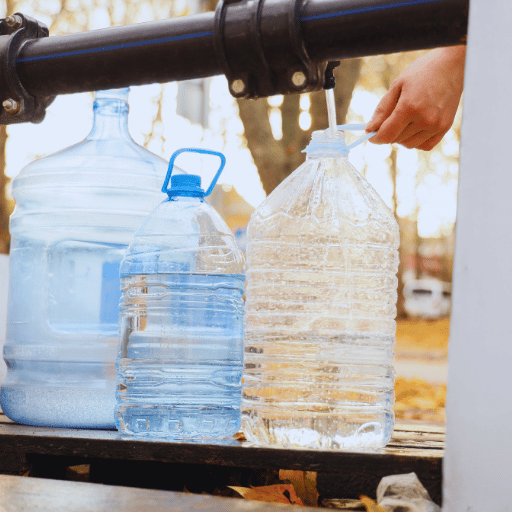
Booster stations, elevated tank fill systems, and inter-plant transfer stations require continuous duty at moderate head with a clear maintenance path that does not idle the entire station. End suction QI 150 through QI 250 frames serve mid-range distribution; QS 250 through QS 500 take over above 2,000 m³/h with top-cover access that opens the rotor without disconnecting station piping.

Fire Protection (NFPA 20)
Centrifugal pumps for trunk fire-protection and sprinkler distribution must satisfy NFPA 20 listed-fire-pump performance — at 150% of rated flow capacity the pump shall produce at least 65% of rated total head, and the operating curve must not exceed 140% of rated pressure. QS 200 through QS 350 frames meet these envelope requirements with electric or diesel drivers. QIH high-head end suction frames in 316 SS handle smaller fire protection duties.

Industrial Process Cooling
Power-plant cooling-water loops, chemical-plant utility water, beverage-industry process water, and light manufacturing transfer systems pump clean-to-raw water at temperatures up to 80 °C. QI 100 through QI 200 frames in cast iron or 316 SS handle the bulk of process duty; QS 500 through QS 1200 frames serve power-plant cooling at flows from 5,000 to 14,400 m³/h.
Irrigation & Agriculture
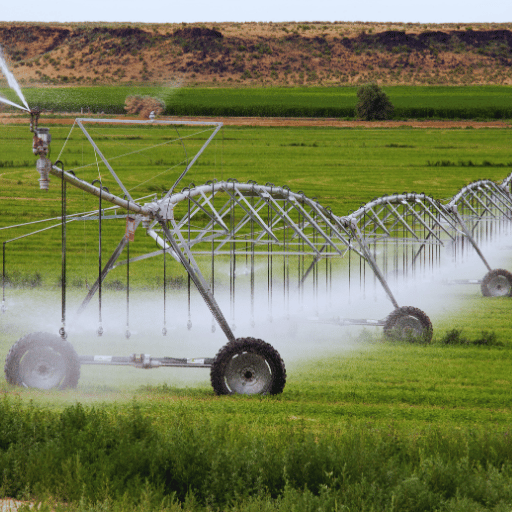
Centrifugal irrigation pumps cover center-pivot feed, drip-line irrigation, greenhouse air handling, and farmland flood irrigation. QI 65, QI 80, and QI 100 frames in cast iron or bronze fit the bulk of irrigation duty. Self-priming SP and DP series pull from open ditches or ponds where flooded suction is not available; the diesel-driven DP variant runs in off-grid jobsite deployment without grid connection.
Construction, Mining & Sewage
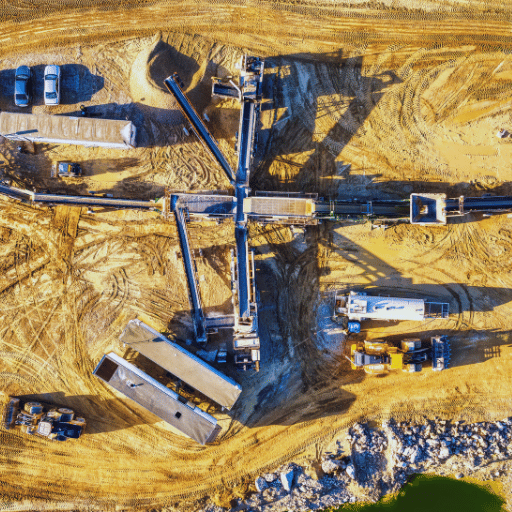
Trash pumps, sludge pumps, and trash-rated self-priming ST series handle suspended solids, abrasive slurries, and sewage. Construction sites pull from trench pits and excavations with up to 2-inch spherical solids; mine dewatering operations transfer water with mineral fines; municipal lift stations move domestic sewage with mixed industrial effluent.
Field Application Snapshots
Municipal waterworks (30,000 m³/day plant)
250QS-39 frames replaced an aging end-suction fleet; station downtime fell from two shifts to one per overhaul cycle.
Power-station cooling loop (600 MW unit)
500QS-82 triplex configuration runs in parallel, BEP-aligned across the unit’s nominal load envelope.
District cooling plant (40 MW HVAC)
200QS pair feeds the primary chilled-water loop; dual-volute construction tuned for part-load efficiency.
Construction dewatering (urban subway)
Diesel-driven BBP-DP self-priming pumps with semi-open impeller handled groundwater inflow with up to 1.5-inch construction debris.
Need a duty-point match for an HVAC, municipal, or industrial application?
Send us your flow, head, and fluid profile → recommendation in 24 hours.
Get Instant Quote
Manufacturing Standards, Material Traceability, and Third-Party Inspection
The most common failure mode in imported centrifugal pumps is not the casting defect detected at commissioning — it is the material-certificate mismatch that surfaces three years in, when a corrosion claim or a pressure-rating dispute lands on a procurement desk. BBP’s vertical integration removes the hand-off errors that produce those mismatches in multi-stage supply chains. Casting, heat treatment, machining, assembly, hydrostatic test, and performance test happen under one roof in our 50,000 m² Beijing facility, and every record links back to a single serial number.
Material Traceability
Every cast iron (GG25), bronze (G-CuSn10), and 316 stainless steel wetted part ships with an SGS-verified mill certificate. Heat-treatment records are retained per casting lot for five years. The traceability thread runs raw material heat → casting lot → machining station → assembly record → hydrostatic test → performance curve, all linked under one serial number.
Hydrostatic & Performance Testing
Every centrifugal water pump leaves the BBP factory after a hydrostatic casing test at 1.5 times working pressure and a performance test sampled at three duty points along the Q-H curve. The shipped performance curve carries the same serial number as the pump. Witnessed third-party inspection is available on request.
Factory Capability Reference
- 50,000 m² production facility with casting, heat treatment, machining, assembly, coating, and test under one roof.
- 600 tons per month cast-and-machined parts capacity.
- Heat-treatment furnace envelope: 8 × 7 × 2.5 m — one of the larger envelopes in the Chinese pump-foundry segment.
- 6.4-meter horizontal machining line finishes casing halves and impellers in one fixture, holding wear-ring tolerances within 0.003 inches.
- 30-ton assembly cranes support frame assembly through casing diameters above 1,800 mm.
- 20+ engineers across mechanical and hydraulic disciplines for selection, troubleshooting, and field commissioning.
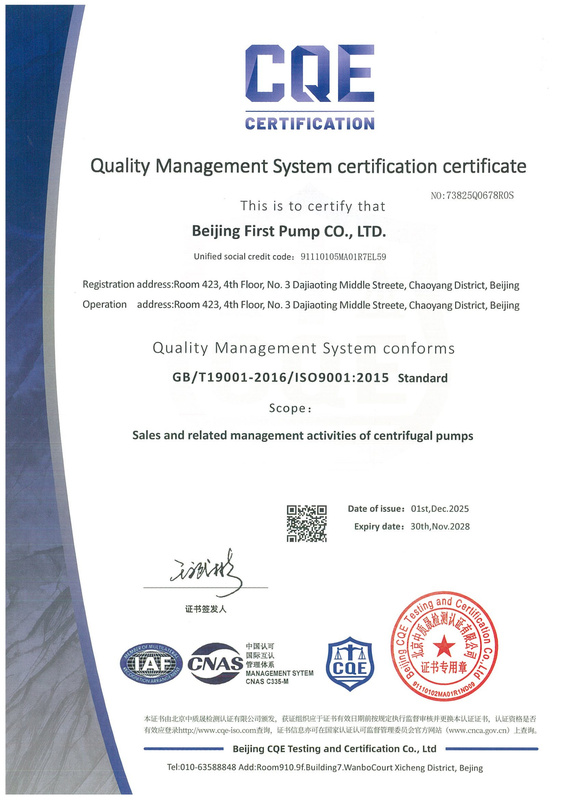
ISO 9001:2015
Quality management system

ISO 14001:2015
Environmental management
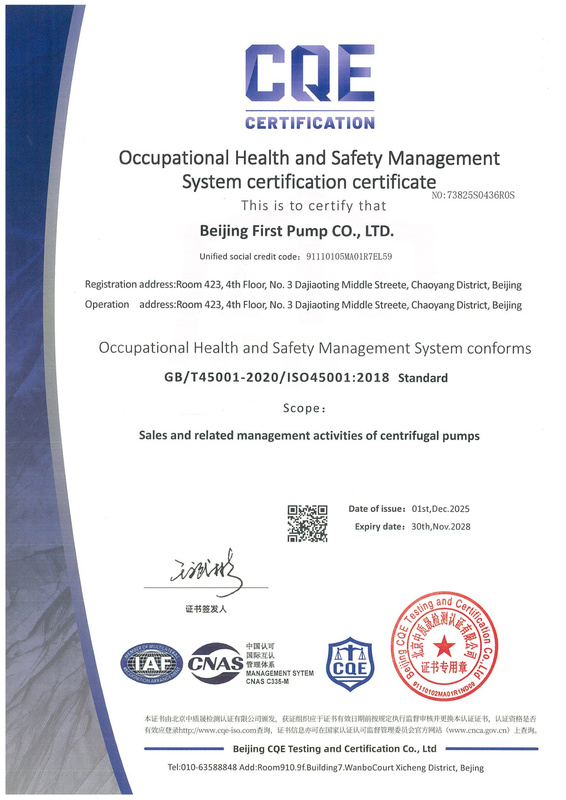
OHSAS 18001
Occupational H&S

CE Marked
EU Machinery Directive
ISO 9001:2008
Quality Management System
EAC Declaration
TR CU Compliance
×
Procurement Guide — OEM, Lead Times, MOQ, and 24/7 Lifecycle Support
All industrial buyers name the same four factors as key to a centrifugal water pump supplier: parts availability, docs, lead-time conformance, and whether you still see the reps six months after their invoice cashes. BBP’s purchasing architecture is designed to closeout those four access holes instead of being built around a one-size-fits all pricing system. A cost-factor framework below gives you a transparent view of what drives unit cost; individual quotes are presented against your duty point and configuration.
Pricing Factors Framework
| Factor | Effect on Quoted Price |
|---|---|
| Frame size and motor power class | Dominant driver. Small-frame clean-water pumps sit in a different price tier from large-frame high-head duty. |
| Material of construction | Cast iron (GG25) is the baseline. Bronze adds a casting-grade premium. 316 SS investment-cast wetted parts add a second premium. |
| Motor efficiency class | IE2 baseline; IE3 premium-efficiency standard for EU and North American buyers; IE4 super-premium available at additional cost. |
| Seal configuration | Gland packing for clean water with predictable leakage tolerance; single mechanical seal as standard; double mechanical with flush plan for hazardous duty. |
| Order quantity | MOQ is one unit for stocked models. Volume discounts apply on orders of 10+ identical configurations. |
| Certification & inspection scope | Standard factory test included. Witnessed third-party inspection (SGS / BV / TÜV) at buyer’s cost adds 5–10 working days. |
Call BBP for a price keyed to your duty point, material, motor class, and scope of certification. We respond within 24 hours of receipt of complete duty data with three candidate models.
Lead Time Reference
Stock models (cast iron, IE3 motor):Ex-works Beijing within 7 working days.
Built to order (non-stock material/motor combinations):30-45 days through a full manufacturing and test cycle.
Private label OEM custom (private label, custom paint, documentation):45-60 days through the four step OEM cycle.
Air freight for critical-path projects:3-5 days transit; per-kilogram surcharge to be quoted at RFQ.
OEM and Private-Label Capability
BBP runs a four-step OEM cycle for buyers who require custom port sizes, non-standard impeller trims, material variants, custom nameplates, custom paint to a buyer’s RAL code, or full private-label documentation packs:
1. Specification Lock
—duty point, material, motor, seal, certification, and documentation locked in one signed datasheet.
2. Tooling and Pattern
—new sizes receive new casting patterns from our foundry; standard sizes are transferred directly into the existing pattern library.
3. Sample Build and Test
—first-ever article cast, machined, assembled, hydrostatically tested, performance tested, and dispatched for buyer approval before the full run.
4. Bulk Production and Shipment
—approved sample determines full batch casting, machining, assembly, testing, packing, and dispatch.
Repeat OEM orders after the first batch are typically completed to standard lead time. Full private label nameplate engraving, custom RAL paint matches, and dual-language SI / US documentation are all available.
Spare Parts and Lifecycle Support
Stocked spares for common frame sizes (shaft sleeves, mechanical seal kits, bearings, wear rings) are shipped same-week ex-works for most QI and QS frames. Pre-sales selection engineering back includes a recommendation within two business days of inquiry; the design engineer who approves your sizing is retained as your post-sales technical contact, not a steady-flow queue position. Remote diagnostics by video conference are available 24/7; on-site commissioning and maintenance training are available for large deployments.
Export paperwork and Incoterms
BBP’s export destinations include the EU, the Middle East & North Africa, Southeast Asia, and Latin America. Incoterms default to FOB Tianjin, or we can CIF your destination port; DDP quotes are available if your project prefers an all-in landed-cost buy-up. Standard payment terms are 30% T/T deposit with 70% against shipping documents; we can support an irrevocable L/C at sight for any purchases that surpass a threshold figured during the quote by our sales desk. Exhibiting with every shipment are certificate of origin, packing list, SGS-built material certificates, ISO 9001 certificate, and individual pump performance curves.
Need an export reference list, an RFQ-ready spec sheet, or a certification dossier for a specific tender?
Request the procurement package →
Centrifugal Water Pump Engineering Tools
ISO 2858 Replacement Finder
Identify the BBP QI(H) drop-in equivalent for your existing end suction pump. Same ISO 2858 / EN 733 flange centerline means no piping changes when BBP arrives.
Launch Replacement Finder →
10-Year Centrifugal Pump TCO Calculator
Industry data shows initial capex represents only about 10% of a centrifugal pump’s 10-year total cost of ownership. Compare distributor-supplied vs BBP factory-direct procurement under your operating profile.
Open TCO Calculator →
Centrifugal Pump FAQ — Selection, Specifications, and Procurement
An end suction pump is a single stage centrifugal pump with an axial intake on one end of the casing, 90 radial discharge; flooded suction (liquid above pump centerline) or external priming is required to start. A self-priming centrifugal pump uses the same impeller principal but has a retained-liquid pump reservoir mounted in the casing which evacuates air from the suction line on every restart; eliminates foot valve and can be installed 25 ft above liquid source. End suction wins if flooded suction is available; self-priming wins if installation needs to be above source.
Please specify flow (m³/h or US gpm), TDH (m or ft), liquid name and temperature, available NPSH and power supply frequency. We plot duty point on the QS and QI(H) selection curves, provide three candidate models (one matched on head, one on flow, one on best efficiency point) for your NPSH margin, footprint and budget. For solids-handling duty, provide solid size and concentration so we can route to trash, sludge or self-priming ST type.
Full BBP coverage runs from 3.6 to 14,400 m³/h flow and 5 to 147 m head depending on series. QI(H) end suction frames cover 3.6–1,500 m³/h at heads up to 147 m; the self-priming series covers 20–500 GPM with suction lift up to 25 ft; the QS double suction series covers 120–14,400 m³/h at heads up to 140 m. Sludge and trash pumps occupy 30–1,200 m³/h with solids-handling impellers.
Yes. OEM program includes custom port sizes, non-standard flange drilling, custom impeller trims, material substitutions, mechanical seal or gland packing, custom nameplates, custom paint to RAL code and dual-language SI and US docs. Private-label OEM lead time 45-60 days first-article through approved bulk, repeat OEM order lead time matches standard OEM run. OEM specification lock tooling sample bulk process is documented in our procurement guide.
BBP operates under ISO 9001:2015 quality management, ISO 14001:2015 environmental management, OHSAS 18001 health & safety, and CE marking under the EU Machinery Directive. Every pump leaves the factory after hydrostatic casing testing per ISO 9906 and a performance test sampled at three duty points along the Q-H curve. Material certificates for cast iron, bronze, and 316 SS are SGS-verified. Witnessed third-party inspection by SGS, Bureau Veritas, or TÜV is available at the buyer’s cost.
MOQ one. Stocked cast iron end suction pumps, IE3 motor ships 7 working days ex-works Beijing. Custom configuration (non-stock materials/motors) 30-45 days through manufacturing and testing. OEM customization 45-60 days. Air freight can be arranged for time-critical projects at additional cost.
For flows above approximately 2,000 m³/h, double suction (QS) is the right architecture — the symmetrical impeller balances axial thrust, bearing life runs the full L10 service interval, and peak BEP efficiency runs 3–5% higher than a single-suction frame on equivalent duty. End suction wins below 2,000 m³/h on capex and footprint. Above that threshold, the lifecycle bearing replacement and downtime cost on a single-suction pump generally exceeds the QS capex premium within five years of duty.
The dedicated self-priming series (BBP-SP, ST, SC, DP, HP) is self-priming up to a 25 ft (7.6 m) suction lift — the physical limit set by atmospheric pressure at sea level. The end suction QI(H) series and the QS double suction series require flooded suction (liquid above pump centerline) and are not self-priming. The trash pump series includes self-priming variants for construction dewatering and mobile applications.