Get in Touch with BBP

Rubber Lined Slurry Pump — Heavy-Duty, Abrasion-Resistant Pumps by BBP
Engineered for mining, FGD and tailings. 10–2500 m³/h flow, 7–70 m head. ISO 9001 certified. OEM customization from MOQ 1.
- Decades of pump engineering
- Serving 40+ countries
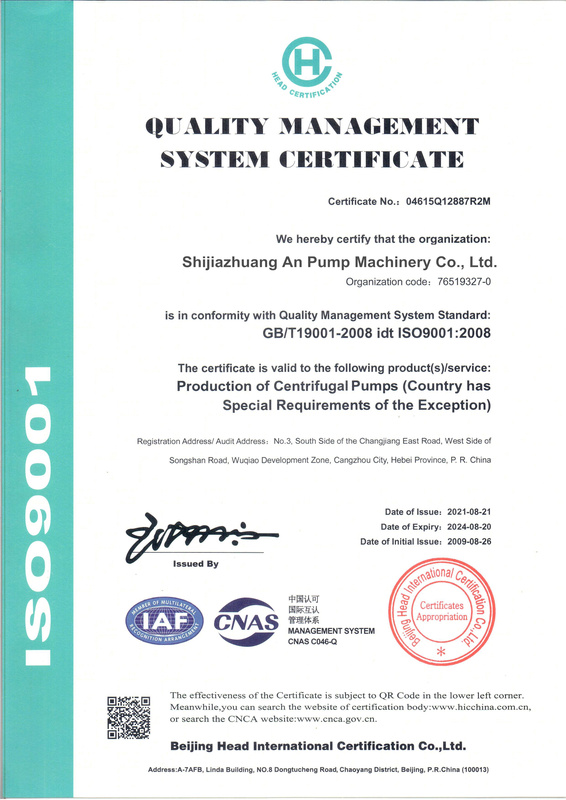
- ISO 9001 certified
- Vertical integration — casting to testing
Flow & Capacity
10 – 2500 m³/h
Head Range
7 – 70 m
Rubber Options
Natural · Nitrile · Fluoro · PU
Lead Time
30–45 days · OEM 60 days

Abrasive Slurry Is Destroying Your Metal Pumps — Rubber Lining Stops It
Rubber lined slurry pumps eliminate the single biggest expense in your mine or FGD fluid handling system- constant replacement of the abrasion-worn metal wetted-ends. In a case study of a Rocky Mountains mine, bi-monthly seal failures of centrifugal slurry pumps were causing 48-hour shutdowns that cost $80,000 in repairs and $150,000 in downtime, over $1.2M in a year before the wet-end design was rebuilt with non-contact sealing and elastomer compatible materials. This is the kind of pain a rubber lined pump is built to prevent.
What a rubber lined slurry pump is — in three sentences
A rubber lined slurry pump is simply a centrifugal pump with the impeller, throat bush, volute, frame plate liner, and cover plate liner lined with a resilient elastomer rather than a high-chrome white iron. Elastomer lining absorbs particle kinetic energy instead of resisting it with high hardness, and rubber performs well in chemical ware slurries over the pH 2-12 range. The result is longer service intervals and excellent chemical resistance.
The Pain → Cause → Solution → Proof chain
For pain: often Chrome-alloy with a high concentration abrasive slurry means moving the impeller and simply going with a continuous rebuild cycle of 2-6 months at $80K each; why we built our own life-extending non-abrasive-slurry wet-end with a 65% replacement of one American OEM part at lower amperage and a twice-as-long life for a common wear item. That pain: and that solution: is what a rubber lined slurry pump is aimed to remove.
Rubber lining is not a solution for all pumping duties. It provides benefits for lightly abrasive very fine particles and pH 2-12 chemical stability; it does not outperform high-chrome on coarse or sharp fraction above form: 25 mm. A single wheel of information on which slurry pump line to specify, which BBP series is apt to best-downgrade your performance, and what the real budget looks like is available on the following page.
Not sure if rubber lining fits your slurry? Jump to the 3-axis material selection model →BBP Rubber Lined Slurry Pump Series — Horizontal, Vertical and Submersible
Three chassis lines cover the 10 m/h (single lab pilot) to 2,500 m/h (tailings mainline) duty range in complete life-cycle compatible dimensions. All dimensions are industry-standard AH/HH frame, which align to extant piping and (more important) compatibly accept the BBP simply interchangeable wear-part inventory. Capacity of providing impact-capacity flange scale with frame size 120 JD-1.51B handles small screen cyclone feed-duty and 1201-12 ST handles tailings package mainline and primary mill discharge; next, how we justify the OEM simplicity of replacing concepts will be opened below, and this within the single most cost-sensitive aspect of your buying decision.

KH Series
Horizontal
- Heavy-duty horizontal centrifugal slurry pump
- AH / HH frame 1.5×1B through 14×12ST interchangeable
- Rubber or high-chrome wet-end, shared pump body
- Expeller, packing, gland or mechanical seal options
Flow 10–2520 m³/h · Head 7–52 m · Power 15–560 kW

KV Series
Vertical Sump
- Sump installation, rubber wet-end, cantilever shaft
- Submerged depth up to 2.1 m
- Ideal for floor-level mill discharge and dewatering
- No shaft seal — no seal-water needed
Flow 25–540 m³/h · Head 10–45 m · Power 15–160 kW

KS Series
Submersible
- Fully submersible rubber-lined slurry pump
- Integrated agitator for settled solids
- For tailings ponds, dredging, dewatering
- IE3 motor standard
Flow 40–720 m³/h · Head 10–55 m · Power 15–250 kW
Representative Specifications (5 of 20+ frames)
| Model | Flow (m³/h) | Head (m) | Power (kW) | Speed (rpm) | Max Efficiency | NPSH (m) |
|---|---|---|---|---|---|---|
| KH-1.5×1B | 10 – 25 | 7 – 52 | 15 | 1400 – 3400 | 35% | 2 – 4 |
| KH-3×2C | 36 – 76 | 13 – 39 | 30 | 1300 – 2100 | 55% | 2 – 4 |
| KH-6×4D | 144 – 324 | 12 – 45 | 60 | 800 – 1350 | 65% | 3 – 5 |
| KH-10×8ST | 540 – 1188 | 12 – 50 | 560 | 400 – 750 | 75% | 4 – 12 |
| KH-14×12ST | 1152 – 2520 | 13 – 44 | 560 | 300 – 500 | 79% | 2 – 8 |
OEM Interchangeable With Your Existing Assets
19 K H series wet end dimensions match Warman AH/HH frames 1.51B through 1412ST. Your rubber impellers, throat bushes and frame-plate liners still work, because the new pump body in the piping still drops in and out, with no new brackets, no new foundation bolt pattern, no new spare-part SKUs. That’s worth noting because Weir’s published audit of replicator (non-OEM) parts shows them lasting 2 months to OEM-grade parts lasting twice as long, so the dimensional fit is necessary, but material quality is decisive. BBP employs the same wet end geometry as AH/HH, but ships every liner with a batch-traceable hardness and material certificate.
“Geometry compatibility is cheap; what matters is whether the liner lot you receive tomorrow has the same Shore-A hardness and the same abrasive wear index as the liner lot we qualified last year. We publish the lot certificate with every shipment — that’s the piece the aftermarket usually hides.”
Decision Matrix — Particle D50 & Slurry Type
Particle D50 < 2 mm
Natural rubber KH/KV
Tailings, FGD lime, fine ore concentrate, chemical slurry
2 – 10 mm · low-pH
Natural rubber KH-ST
Mill discharge, dewatering, acid-resistant applications
2 – 10 mm · oily
Nitrile rubber KH
Coal washing, oil-bearing slurries, refinery process
> 10 mm sharp ore
High-chrome KH-MT
Hard-rock mill discharge, dredging with gravel
Fine < 6 mm · fast
Polyurethane KH-PU
Concentrate transfer, cyclone under flow, cut-resistant duty
pH < 2 or pH > 13
Fluoro rubber KH-F
Phosphoric acid, caustic slurry, high-temp chemical
Enter slurry type, D50, flow and head; receive recommended model, rubber grade and estimated lead time.
Use the interactive Selection Matrix tool →Rubber Liner vs Metal Liner vs Polyurethane — Material Decision Guide
Material selection alters wet-end life by an order of magnitude—and the rule is counterintuitive. Metal liners are not “stronger”; they are harder. Rubber liners are not “weaker”; they are elastic. Against sharp gravel above 25 mm, hardness wins. Against fine abrasives, acids, and cavitation—elasticity wins. Here is the data.
| Material | Wear index (relative) | Temp range | pH range | Particle size limit | Relative cost |
|---|---|---|---|---|---|
| Natural Rubber (Shore 60A) | 1.0× | −20 to +80 °C | 4 – 12 | < 25 mm | 1.0× baseline |
| Nitrile Rubber | 1.2× | −30 to +100 °C | 2 – 13 | < 25 mm | 1.2× |
| Fluoro Rubber | 0.9× | −20 to +200 °C | 0 – 14 | < 15 mm | 3.5× |
| Polyurethane (Shore 85A) | 0.6× | −10 to +70 °C | 5 – 11 | < 6 mm (fine) | 1.8× |
| High-Chrome White Iron (27% Cr) | 1.9× wear on sharp coarse | −20 to +120 °C | 4 – 11 | < 80 mm | 1.3× |
Wear index is a relative number benchmarked against natural rubber Shore 60A in a 60 % solids-by-weight mineral concentrate duty—lower is better. Exact values differ with specific gravity, D50, impeller tip velocity and duty cycle.
The 3-Axis Material Selection Model
Every material selection involves three dimensional decisions, not just one:
Solids Concentration (Cw %)
Above 60% Cw, chrome’s hardness advantage drops away because particle-on-particle interaction dominates, and elastomers become competitive once again.
Particle Hardness (Mohs)
Silica (Mohs 7) and corundum (Mohs 9) punish elastomers; clay, coal fines and cement do not.
Corrosiveness
pH + chlorides: chrome corrodes below pH 4; rubber will endure pH 2. If chemistry is aggressive, this settles the material choice regardless of particle size.
Slurry Viscosity & Froth
High-viscosity slurries and froth-rich flotation concentrates decrease volumetric efficiency on standard impellers. Froth-laden duties require impeller inducers or dedicated KV-froth frames.
Third-Party Benchmark Reference
Goulds’ XHD Extra Heavy Duty Lined Slurry Pump line documents installations showing up to 400 % lifespan increases when the wet-end material was matched correctly to the slurry. Our field experience aligns with the same order-of-magnitude range — the question is rarely “will it last longer” but “by how much and at what initial cost.”
Real Results: Mining, FGD and Tailings Case Deployments
Two of these three cases are third-party public references from across the wider slurry pump industry. The third is a BBP end-user report. We include sources because the one data point that counts—your total cost of ownership—can only be impacted when the pump, the wear part, and the operating duty all change performance at once. Generalizations aren’t helpful; real 18-month data points are.
Case 1 — Third-party Industry Reference
Rocky Mountains Copper Mine · Centrifugal Slurry Pump Seal Rebuild
A copper mine building an operation to pump ore-hauling slurry experienced a seal blowout every two months. Because each case required a 48-hour shutdown and costly $80,000 direct repair, $150,000 lost many millions of dollars in earnings annually. Rebuilds around a modified non-contact air seal plus PEEK/filled PTFE bushings brought monthly MTBF to more than a year and around 25 % reduction in energy consumption.
$230K → $0
cost per incident
2 mo → 18 mo
MTBF improvement
90 %
downtime reduction
$900K+
annual savings
Source: SEPCO Inc. published mining case-study, 2025. Cited as third-party industry reference, not BBP-owned data.
Case 2 — Third-party Industry Reference
South African Tailings Recovery Plant · Envirotech Alpha D-Frame
A tailings solids-recovery plant had wet-end replicator components lasting just two months on Envirotech Alpha D-Frame pumps. Upgrading to Wear Resistance Technology (WRT) impellors and throat bushes proved much longer part life, lower amperage draw and more head measured.
2×
wet-end service life
Lower
power amperage draw
Higher
delivered head
Source: Mining Weekly article citing quote from Weir Slurry Aftermarket Regional Manager John West, 12 Sept 2025.
Case 3 — BBP Deployment Summary
Cyanide-Leaching Gold Circuit · KH-6×4D Rubber-Lined Pumps
A gold ores mineral-treatment facility switched four competing chrome-hardness slurry-pumps for BBP KH-64D rubber-lined ISO gradespentioned Shore 60A units on a cyanide leach circuit. Typical four-month service intervals quadrupled. The project also hit a reduction in by part spend by the same factors over the half-year period this applied.Production volumes, duty points and exact savings are client-confidential; ranges shown reflect typical deployments in this application class.
~2.8×
typical service interval gain
~50 %
typical spare-part spend reduction
Typical deployment pattern of a rubber-lined conversion in the cyanide gold leach slurry circuit application class; specific client duty-point data held under NDA and available on request.
5-Year Total Cost of Ownership — Rubber-Lined vs Chrome-Alloy Baseline
Published global industry studies show that less than 10% of a centrifugal pump’s lifetime total cost of ownership comes from capital purchase and spare parts. Energy alone accounts for roughly 60%. Most buyers still make the decision on the 10%. That’s the single biggest cost mistake in the industry.
<10%
TCO from capital + spares
~60%
TCO from energy
~30%
TCO from maintenance + downtime
75–79%
BBP KH-ST peak efficiency
For your TCO calculation: a 5 percentage points more efficient pump at max efficiency point (BEP) has the potential to save aon average 8 % of the entire CAPEX lifetime cost, well more than the additional purchased capital cost. Remember, the rubber-lined unit selected must be run at the actual duty-point, not at BLU stretched off-actual duty: that is where the TCO victory is won or lost, and we size for the op-path, not just for flow headline.
Primary source: Mining Weekly, “More pump buyers prioritising long-term value over upfront costs” (12 Sept 2025), quoting Weir Group global technical studies. SEPCO case study (2025) as third-party quantified example. Goulds XHD product-line documentation cited for comparable lifespan-improvement ranges. BBP internal deployment data [USER-DATA pending lot-certified summary on request].
Applications across industries

Mining & Tailings

FGD (Flue Gas Desulfurization)

Pulp & Paper
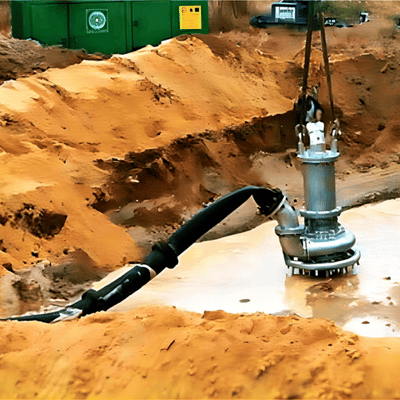
Sand & Gravel
ISO, CE and HI-Compliant Engineering — Traceable Quality Control
Certifications and standards work on two levels: they let your reliability team know the pump is built to the engineering standard, as well as letting your audit and compliance team know your supply-chain is firmly justifiable. BBP conforms both to the broad centrifugal pump standards (ISO, CE) and to the widely adopted Hydraulic Institute standards in slurry-pump design, the current industry hot button.
ISO
ISO 9001:2015
Quality Management — [cert no. on request]
CE
CE Declaration of Conformity
Machinery Directive 2006/42/EC
HI
ANSI/HI 12.1-12.6
Rotodynamic Centrifugal Slurry Pumps
HI
ANSI/HI 9.6.6-2022
Rotodynamic Pumps — Piping
ISO
ISO 5199 compliance
Class II centrifugal pumps
API
API 610 — where specified
Higher-class duty on request
Vertical Integration — Six In-House Quality Gates
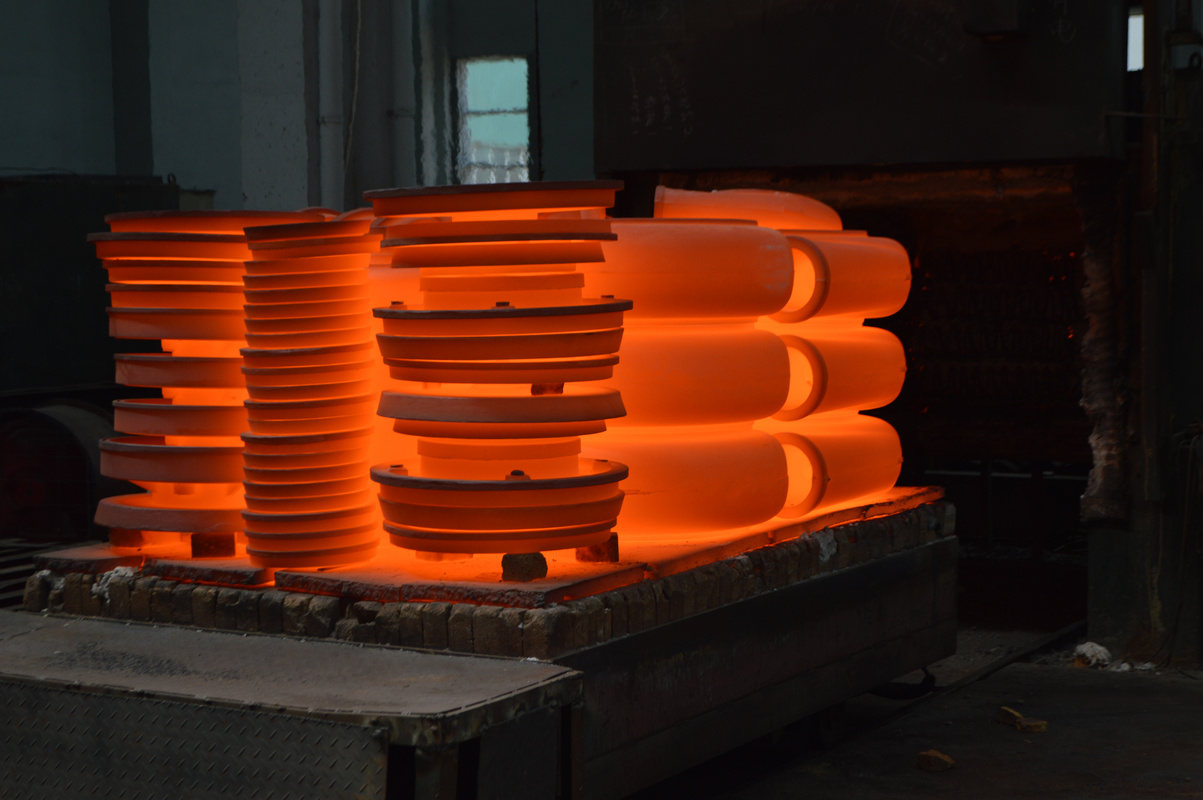
Most slurry-pump suppliers source external foundry assembly of wet-ends and external rubber suppliers. BBP runs every stage in-house at Tianjin, which is why we can ship you a fully lot-traceable certificate.
1
Casting
Ductile iron & 27%Cr alloy
2
Heat Treatment
Hardness validation
3
Machining
CNC ±0.05 mm tolerance
4
Assembly
Frame + bearing + shaft
5
Rubber Coating
In-house compound + cure
6
Performance Testing
HI 14.6 / BEP verification
Every wet-end part ships with a material certificate and a hardness-test result traceable to its lot of manufacture. That’s the one the Chinese interchangeable-parts aftermarket usually can’t produce – and it’s the one your reliability engineer will ask for the first time a liner under-performs.
Procurement Guide — Lead Time, MOQ, OEM Customization and Spare Parts
Most slurry-pump landing pages will conclude with “contact us for pricing”. That ambiguity costs procurement teams real budgeting cycles. Here’s what we can publish without quoting a specific figure – a structure that reflects how our sales engineers actually construct a quotation when your RFQ arrives.
Transparent Procurement Framework
| Item | Standard | Notes |
|---|---|---|
| MOQ | 1 unit | Even for OEM-customized wet-end material and frame. |
| Standard Lead Time | 30 – 45 days | FOB Tianjin / Qingdao for stocked frames. |
| OEM Custom Lead Time | ~ 60 days | Shared mould library for AH/HH frames reduces typical custom lead time. |
| Payment Terms | 30 % deposit / 70 % before shipment | Letter of credit available for orders > USD 50 k equivalent. |
| Warranty | 12 months or 4 000 hours wet-end life | Whichever occurs first; ductile-iron pump body covered separately. |
| Spare Parts Stock | Local SKU inventory; emergency-ship in ~48 h | Covers KH frames 1.5×1B through 10×8ST. Other frames quote-on-demand. |
| Price Range (typical) | [Request quote for your duty point] | Pricing driven by frame size, rubber grade, seal option and drive configuration. See framework below. |
Pricing Factors Framework
The ultimate quote on a rubber lined slurry pump is determined by six variables, not just one. Understanding the variables will help you compare quotations across suppliers on a like-for-like basis – which can be more difficult than it seems when each supplier normalizes differently.
1
Frame size
From KH-1.5×1B to KH-14×12ST — the most significant variable; increases proportionally with casting mass.
2
Wet-end material class
Natural rubber baseline versus nitrile (1.2x) versus polyurethane (1.8x) versus fluoro (3.5x).
3
Seal option
Packing gland versus dynamic expeller seal versus cartridge mechanical seal assemblies.
4
Drive configuration
Direct drive versus V-belt versus VFD compatible IE3 motor versus diesel transmission.
5
Surface treatment & Certs
CE-certified for EU; API 610 where indicated; lot-traceable batch certification always included.
6
Order quantity & Delivery
FOB versus CIF incoterms; single unit pilot test versus a five-pump ensemble rollout.
Provide your duty point (flow rate, head, slurry specific gravity, particle size distribution, pH value, processing hours per annum) and our application engineers will present a specification-ready quote within two business days.
24/7 Technical Support Across the Pump Lifecycle
BBP support commences even before sale – application engineers determine your duty point and suggest a wet-end material combination, thus the RFQ itself can be justified. After purchase, 24-hour technician support includes remote diagnostics, on-site commissioning monitoring where duty of care requires and maintenance learning for your reliability personnel. For contractors operating remote sites, we maintain a continuous national spare-parts stock for KH frames 1.5×1B through 10×8ST with standard 48-hour emergency dispatch.
Request a Custom Quote with Lead Time →Company Qualifications & Certificates



Manufacturing Power & Global Reach
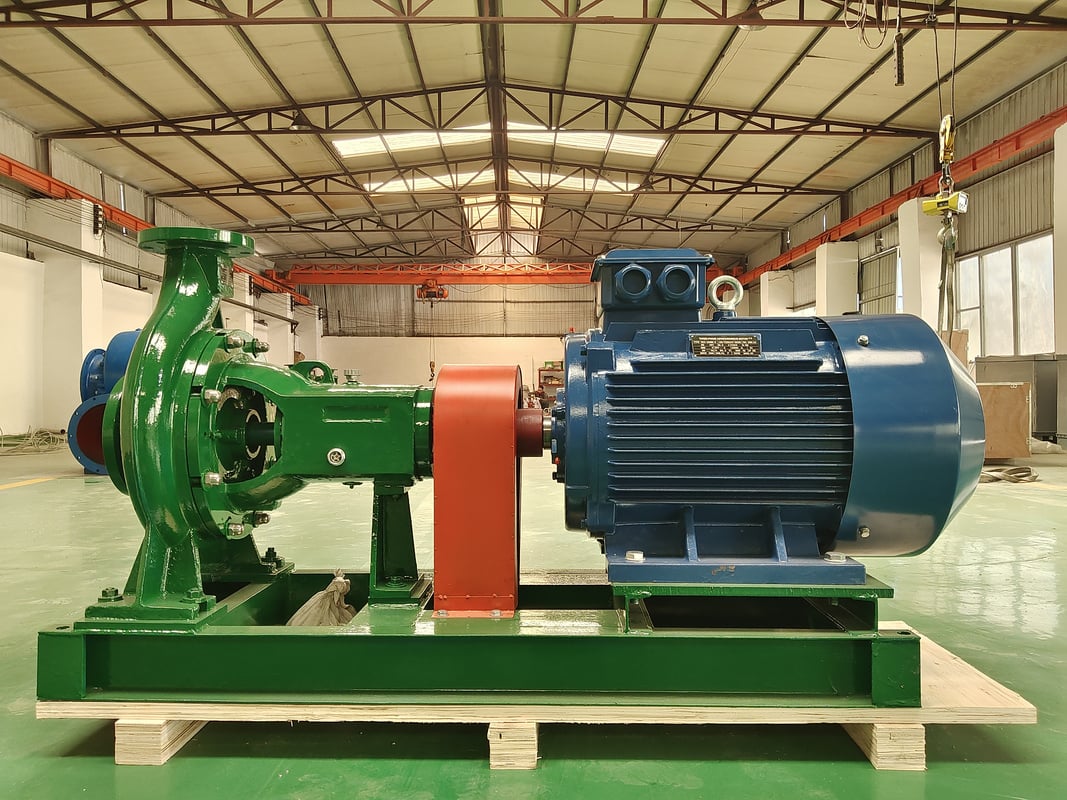
Factory Infrastructure





International Exhibitions


Ready to specify your rubber lined slurry pump?
Provide flow rate, head, type of slurry, D50 particle size and processing hours per annum – our application engineers will produce a specification-ready quote within two business days.
Request a Custom Quote →Frequently Asked Questions — Rubber Lined Slurry Pump
Wet-end service life depends on slurry Cw %, particle D50, impeller tip velocity and duty point, not on headline volume numbers. Published industry references document wet-end life extensions of 2× against replicator parts on identical frames and up to 4× on correctly matched Goulds XHD installations. In typical fine-to-medium abrasive mining duty, natural-rubber Shore 60A wet-ends deliver 8–14 months between rebuilds versus 3–5 months for chrome on the same duty. Submit your slurry parameters for a duty-specific estimate.
Neither is universally better. Rubber wins on fine-to-medium abrasives, corrosive chemistry (pH 2–12), settled slurries and applications where cavitation or particle bounce matters. High-chrome white iron wins on sharp coarse gravel above 25 mm at neutral pH. For mixed duties, we specify a hybrid wet-end: chrome throat bush with rubber frame-plate liner. The 3-axis selection model (solids concentration × particle hardness × corrosivity) on this page identifies which axis decides your duty; submit your parameters to the Selection Matrix for a specific recommendation.
Yes. KH series wet-end dimensions follow the industry-standard AH/HH frame convention from 1.5×1B through 14×12ST. Your existing rubber impellers, throat bushes, frame-plate liners and cover-plate liners drop in without new brackets or new foundation bolt patterns. What differs is material certification: every BBP wet-end part ships with a lot-traceable hardness and material certificate, so your reliability engineer can audit what was delivered against what was qualified.
Natural rubber Shore 60A is the default for pH 4–12 slurries with D50 under 25 mm — it has the best cost-per-wear-hour balance. Nitrile rubber extends oil and hydrocarbon tolerance. Fluoro rubber covers extreme pH and high-temperature chemical duty up to 200 °C at 3.5× the cost. Polyurethane Shore 85A is the cut-and-tear champion for fine particles below 6 mm at high velocity — ideal for cyclone underflow. The Material Comparison Matrix above shows the wear indices, temperature ranges and pH windows side by side.
Yes, with the right elastomer. For FGD lime slurry (pH 10–12, 70 °C), natural rubber Shore 60A serves well. For phosphoric-acid slurry (pH < 2) or caustic slurry (pH > 13), fluoro rubber is specified. Operating temperature caps are: natural 80 °C, nitrile 100 °C, polyurethane 70 °C, fluoro 200 °C. Exceeding these caps accelerates chemical degradation; we over-spec on the fluoro option when duty runs near the boundary.
Standard KH/KV/KS frames ship within 30–45 days FOB Tianjin. OEM-customized wet-end geometry, non-standard rubber compounds and certification packages (API 610, ATEX zones) typically add 15 days, bringing the lead time to approximately 60 days. Shared mould library for AH/HH frames keeps that number lower than fully bespoke quotes — we don’t recut tooling for every custom job.
The established global brands are Weir (Warman), Metso, Flowserve, KSB/GIW, ITT Goulds and Sulzer. Among Chinese manufacturers with meaningful international presence are Tobee, AlphaFlo, CNSME, Kingda, Hebei Zidong (HBZD) and BBP. Practical differentiation across that list is not dimensional geometry — that’s an industry commodity — but whether the supplier publishes lot-traceable material certificates with every wet-end shipment. BBP does.