Get in Touch with BBP

Submersible Dredge Pump
Certifications: ISO 9001 / 14001 / 45001
Submersible Dredge Pump — Underwater Sand & Sediment Removal | BBP
Transport sand, sediment, slurry from up to 30m depths. No dewatering, no truck fleets, no access roads.
SEAL ARCHITECTURE: MECHANICAL + PACKING

Flow Rate
150–2,000 m³/hTotal Head
15–85 mMax Solid
170 mmDrive Types
Hydraulic / ElectricDREDGING DEEP
Submersible Dredge Pump Solutions for Challenging Dredging Operations
Every submersible dredge pump in the BBP lineup was engineered for one reality: dredging operations happen in places where surface-mounted equipment fails. River sand beds shift weekly. Port channels silt up faster than planned maintenance windows. Tailings ponds sit behind berms with no road access. When your project needs to move sediment from below the water line, the physics of suction lift become the bottleneck — and that bottleneck disappears entirely when the pump goes underwater with the material.
The Suction Lift Barrier
Traditional surface-mounted dredge pumps hit a hard ceiling at roughly 8 meters of suction lift — a number dictated by atmospheric pressure, not by pump design. Below that depth, cavitation destroys impellers and output drops to near zero. Until now, the workaround has been longer suction pipes with booster pumps, which adds mechanical complexity, more failure points, and a crew of three to five operators just to keep the system primed. Meanwhile, truck-and-shovel excavation methods for nearshore sediment removal run upwards of $200,000 per year in labor costs alone, not counting fuel, haul road maintenance, or the environmental permits required for heavy vehicle access near waterways.
The Submersible Advantage
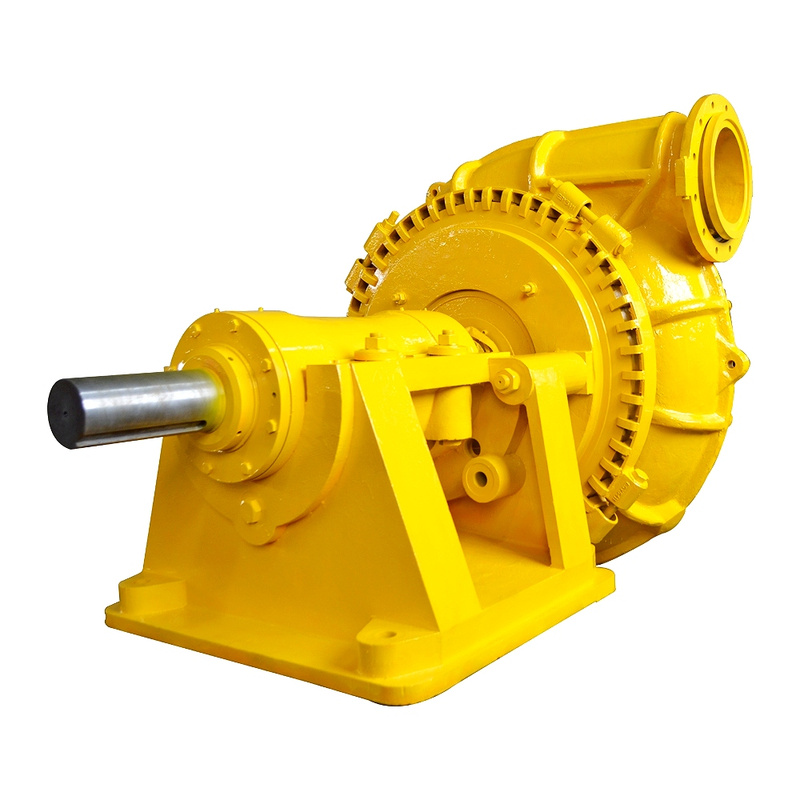
A submersible dredge pump eliminates the suction lift problem at the source. Submerged directly into the slurry, the pump operates at positive inlet pressure — no priming, no NPSH concerns, no cavitation risk at depth. BBP’s AWN series pumps feature a large spherical passage design that allows particles up to 170 mm to pass through without clogging, which means fewer shutdowns and less manual intervention. Contractors who have switched from surface-mounted setups to submersible units consistently report 60% or more reduction in on-site labor requirements. A pump designed for underwater operation simply needs fewer people watching it.
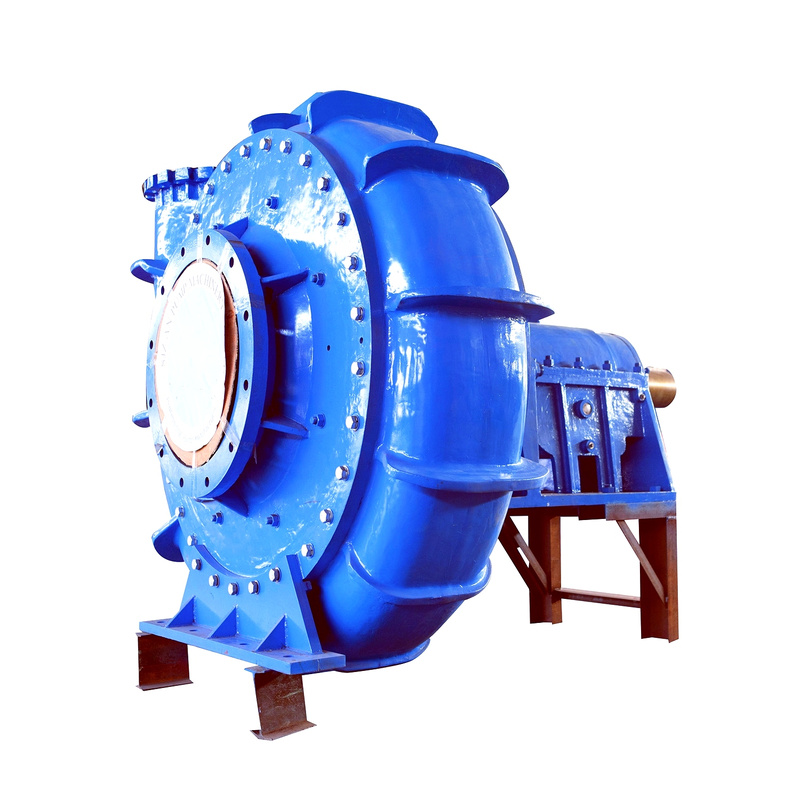
Whatever the situation—sand dredging on a river far from the sea, first-time capital dredging for a new country off-shore, or routine maintenance dredging in a busy commercial port—the submersible dredge pump approach makes sense: longer or more efficiently reliable reach, less expensive crews, and a new type of mechanical dependability based on doing away with suction side air leaks and priming issues. Below, we review BBP specific models, application information and engineering specifics for selecting a pump for a real project against real production targets.
Models & Specifications
BBP Submersible Dredge Pump Series — Models & Specifications
BBP’s AWN series of submersible dredge pump comes in five frame sizes and four variations: standard submersible, submersible with agitator, submersible with cutter head, and fully hydraulic driven. Flow capacity spans from 400 m³/h flow at the compact 200AWN to 9,000 m/h at the 800AWN—capable of everything from small construction dewatering to large river sand-mining, thousands of m of production a shift.
AWN Series — Core Performance Data
| Model | Flow (m³/h) | Head (m) | Power (kW) | Discharge (mm) | Max Particle (mm) |
|---|---|---|---|---|---|
| 200AWN | 400–800 | 20–45 | 700–900 | 250 | 170 |
| 300AWN | 700–1,300 | 25–65 | 400–600 | 350 | 241 |
| 450AWN | 1,000–3,000 | 30–70 | 300–700 | 450 | 241 |
| 600AWN | 2,000–5,500 | 40–65 | 300–500 | 600 | 220 |
| 800AWN | 5,000–9,000 | 45–85 | 250–420 | 800 | — |
Application Selection Decision Matrix
| Application | Recommended Series | Flow Need | Head Need | Solid % | Drive |
|---|---|---|---|---|---|
| River Sand Mining | 300–450AWN | 1,000–3,000 m³/h | 30–50 m | 20–40% | Hydraulic |
| Port Maintenance | 200–300AWN | 400–1,300 m³/h | 20–45 m | 10–25% | Electric / Hydraulic |
| Land Reclamation | 450–600AWN | 2,000–5,500 m³/h | 30–65 m | 15–30% | Hydraulic |
| Tailings Management | 200–300AWN | 400–1,000 m³/h | 25–45 m | 30–50% | Electric |
| Construction Dewatering | 200AWN | 400–800 m³/h | 20–35 m | 5–15% | Electric |
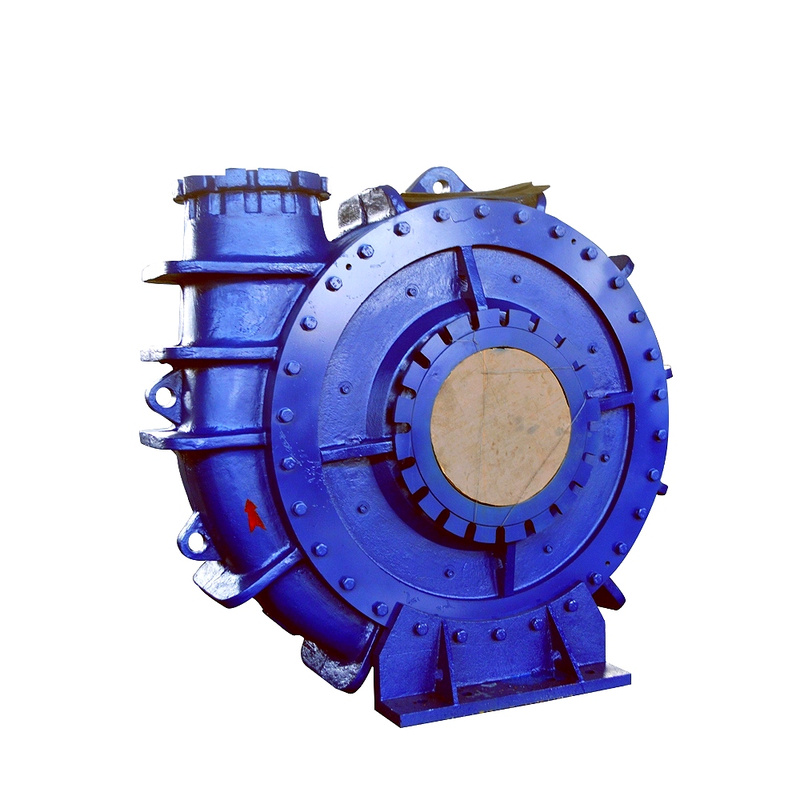
A standard submersible dredge pump works well in loose, unconsolidated sediments — fresh silt deposits, fine sand, and low-density slurry. When the material is compacted or partially ceite, an agitator attachment mounted below the suction inlet breaks up the sediment bed and feeds it into the pump at a controlled rate, preventing bridging across the suction opening.
For heavily consolidated clay or mixed sediment with embedded debris, the cutter head configuration adds rotating cutting blades that mechanically loosen the material before it reaches the pump. A jet ring — a ring of high-pressure water nozzles around the suction inlet — serves a similar loosening function in fine sediments while also diluting the slurry concentration to protect against over loading. In practice, river sand mining operations overwhelmingly choose the agitator variant, while port and channel maintenance projects tend toward cutter heads for dealing with mixed clay-and-shell deposits.
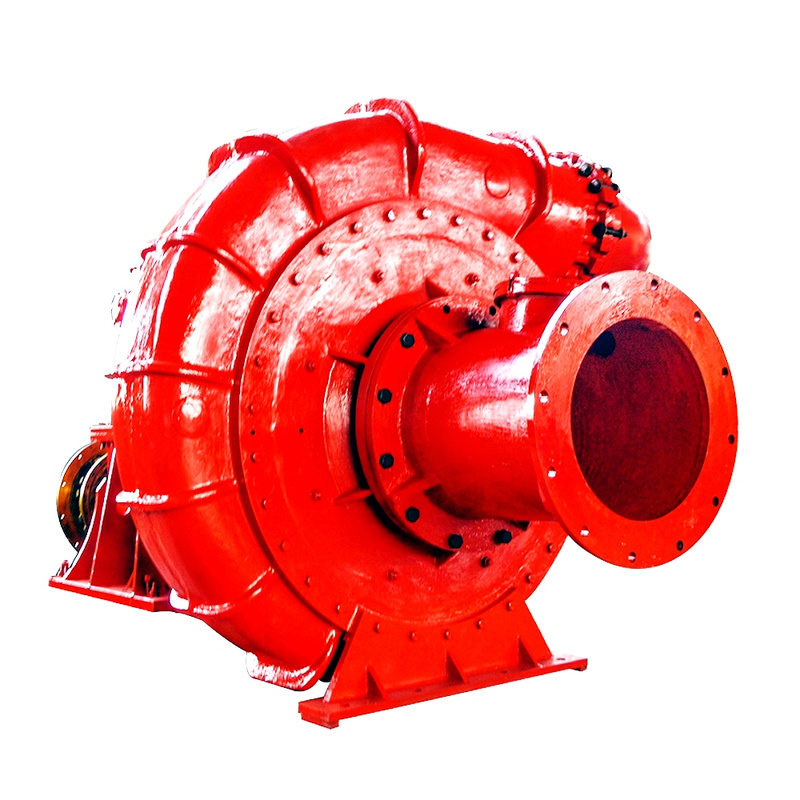
Every wet-end component in the AWN series — impeller, volute liner, wear plate, and suction inlet — is cast from Ni-hard high-chromium alloy achieving hardness above 58 HRC. BBP’s proprietary 700 HRC advanced alloy formulation, developed for extreme abrasive service, extends wear part life by 40–60% compared to standard high-chrome castings. All alloy composition, heat treatment cycles, and final hardness measurements are controlled in BBP’s own foundry and testing lab — not outsourced.
This vertical integration, combined with ISO 9001 / ISO 14001 / ISO 45001 triple certification and CE marking, directly addresses the quality concerns that international buyers rightfully raise when evaluating Chinese-manufactured pumping equipment. Our certifications are not decorative; they reflect documented process controls from raw material receiving through final hydrostatic testing.
Data-Driven Analysis
Submersible vs Surface-Mounted Dredge Pump — Data-Driven Comparison
Choosing between a submersible pump and a surface-mounted pump is purely an engineering decision — not a promotional preference. It depends on your site conditions, investment budget, and production targets. Below, we compare both options across eight factors that most closely impact total project cost and operational reliability. In addition, we have added the traditional truck-and-shovel, though most newer smaller operators tend to use pump systems by default, and for good reason.
| Dimension | Submersible Dredge Pump | Surface-Mounted Pump | Truck & Shovel |
|---|---|---|---|
| Effective Suction Depth | Unlimited (submerged) | ≤ 8 m (theoretical) | N/A |
| Clogging Frequency | Low (large passage) | Medium (suction pipe limits) | N/A |
| Equipment Cost | $20,000–$80,000 | $50,000–$100,000+ | $200,000+ fleet |
| Mobility | High (excavator-mounted) | Low (fixed installation) | Medium |
| Crew Required | 1–2 operators | 2–3 operators | 3–5 operators |
| Annual Operating Cost | Baseline | +20–35% | +150–300% |
| NPSH Requirement | None (submerged) | Critical (must manage) | N/A |
| Environmental Impact | Low disturbance | Moderate | High disturbance |
From a cost and performance standpoint, submersible units eliminate the physics barrier of shallow suction depth that caps surface pumps. They also reduce manning levels as no priming of a suction line, running a vacuum pump, and fighting air leaks is required. An excavator-mounted arrangement means that one machine operator can move the pump around a job site within minutes, whereas a surface mounted system has to be unpaced and re-piped for each new position.
On the cost side, the initial purchase price of a submersible dredge pump runs 40–60% lower than an equivalent-capacity surface system that includes the suction pipe, vacuum priming unit, and structural mounting frame. Annual operating costs follow the same pattern: fewer moving parts above the waterline, fewer crew members, and the elimination of the expensive suction pipe maintenance that plagues surface installations in abrasive service.
60–80%
Lower Equipment Investment vs Surface-Mounted Systems
Based on industry pricing data, 2024–2025
Ready to compare for your project? Request a custom TCO analysis →Field Proven Application Scenarios
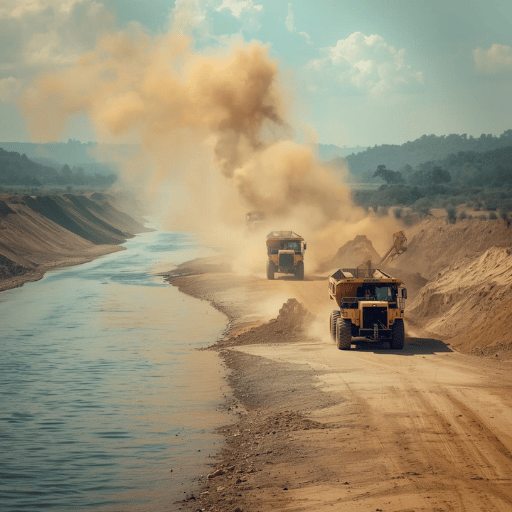
River Sand Mining
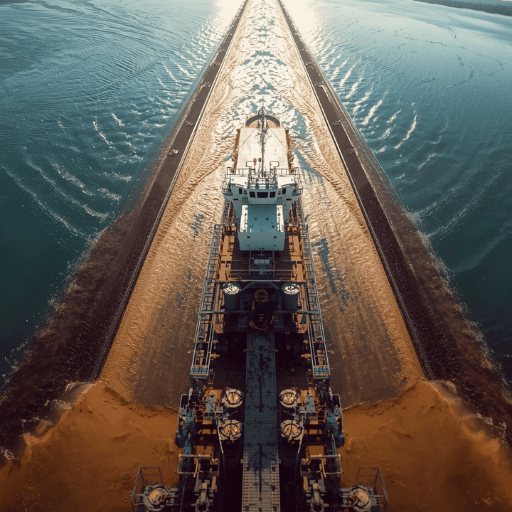
Port & Channel Maintenance Dredging
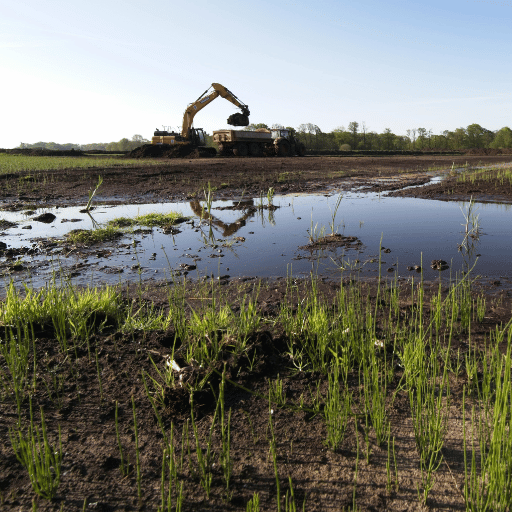
Land Reclamation
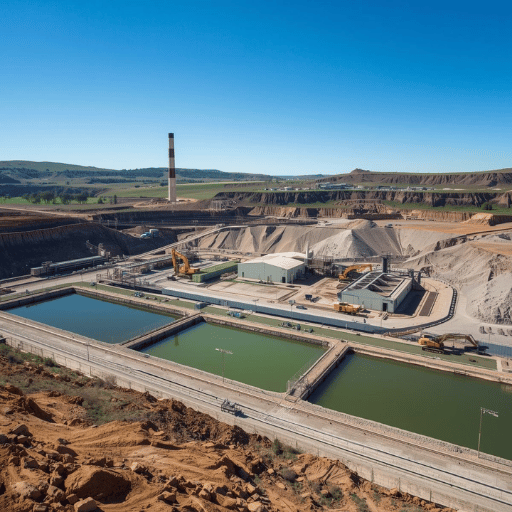
Tailings Pond Management

Construction Dewatering
Quality & Compliance
Certifications & Quality Assurance
When you are considering a submersible dredge pump offering from any manufacturer.. and especially one based abroad bringing in your product to the UK the documentation behind the product affects just as much as the performance figures on the spec sheet. BBP carries verified certifications in quality, environment and H&SE which are constantly audited and renewed as scheduled
ISO 9001
Quality Management
ISO 14001
Environmental Management
ISO 45001
Occupational Health & Safety
CE
European Conformity
Certifications alone do not build reliable pumps — process control does. BBP operates a vertically integrated manufacturing facility where every critical step happens under one roof: iron and alloy casting in our own foundry, computer-controlled heat treatment, CNC machining of all mating surfaces, mechanical assembly by trained technicians, protective coating application, and final hydrostatic and performance testing before any pump is crated for shipment. This is not a marketing claim about “in-house capabilities” — it is the operational structure that makes it possible to trace any quality issue on a delivered pump back to its root cause within hours, not weeks.
Material Standards
All wet-end components — impellers, volute liners, wear plates, and suction covers — are cast from Ni-hard high-chromium alloy with verified hardness exceeding 58 HRC on the Rockwell C scale. For extreme abrasive applications such as mining tailings and coarse sand extraction, BBP’s 700 HRC advanced material formulation delivers significantly extended service life.
Every casting batch is tested for composition and hardness before machining begins; non-conforming castings are rejected and remelted, not reworked.
We cast every impeller and volute in our own foundry – this allows us to control alloy make-up, heat treatment cycles and the final hardness check prior to any pump leaving our premises.
Procurement Guide
Procurement Guide — Pricing, Lead Time & After-Sales Support
Buying a submersible dredge pump for a project abroad is not just about the unit cost on a quotation. Drive type, material strength, attendant equipment, voltage and hertz requirements, extent of spare parts included are all elements of your actual purchase cost – and getting them wrong can cause critical delays at your job site. This section describes what to anticipate when ordering a quotation from BBP and what to check before releasing a purchase order.
Pricing Factors
BBP offers project-specific prices, whereas List pricing refers to the cost for consistent, worldwide configuration, since cost varies according to configuration choices in:
Pump model and frame size – 200AWN vs. 800AWN cover different markets and price expectations
Material grade – Standard Ni-hard ( >58HRC) or 700HRC advanced alloy for highest abrasion resistance.
Accessories – Agitator, cutter head, jet ring, or standard configuration
Drive type – Hydraulic drive units (priced separate from electric motor packages)
Electrical details – Voltage, frequency, and motor enclosure (NEMA 56, 1430V/60Hz) must be compatible with your site power
Lead Time & Logistics
Standard AWN series Pumps are generally available from normal stock in standard configuration. Special alloy grades, non-standard electrical particulars, or large-frame units (600AWN+) may require production scheduling. Inquire with BBP’s project team for your specific project delivery schedule.
Ordering Flexibility
BBP can take orders for a single unit – there is no quantity minimum for contractors or end users needing a single pump for specific projects. For fleet purchasers, equipment rental services, or OEM integrators, BBP offers complete OEM/ODM assistance from tooling design to completed component, with private label wherever appropriate.
Spare Parts & After-Sales
All major wear components, impellers, volutes, wear plates, and mechanical seal assemblies are held in stock for immediate reshipment. BBP’s after sales engineering team offers 24/7 assistance including remote troubleshooting, diagnostics, and first time installation supervision for multi-unit or high output projects.
Procurement Tips
Buyer Advisory: International Pump Procurement Tips
Request mill test certificates (mill certs) or hardness readings on wet-end features. A quality manufacturer will have no problem supplying.
Indicate your local electrical supply specifications (i.e. 380V/50Hz, 460V/60 Hz) during quotation, not after build.
Apply for wear parts sets with the purchase of the initial pump, if needed. Impellers and volutes see the most attrition.
For projects that need independent verification, request factory test (FAT) reports or schedule a witnessed testing event prior to shipment.
Confirm CIF, FOB, or DDP delivery instructions and in-transport insurance coverage to avoid Customs surprises.
Interactive Resources
Engineering Tooling & Calculators
Submersible Pump Selector
Input your required flow rate, total dynamic head, and specific gravity to find the exact submersible dredge pump model and drive configuration tailored to your application.
Open SelectorTCO & Cost Comparison
Evaluate the Total Cost of Ownership. Compare the capital investment, labor reduction, and energy efficiency of our submersible systems against traditional surface-mounted setups.
Calculate CostsFrequently Asked Questions
A submersible dredge pump operates directly underwater at the excavation site. An impeller driven by a hydraulic or electric motor creates a centrifugal force that draws a mixture of water and settled solids (slurry) into the pump casing and pushes it out through a discharge pipe. Immersing the pump creates a positive suction head, which completely eliminates the cavitation and priming issues that frequently bottleneck surface-mounted pumps.
BBP submersible dredge pumps are engineered to operate at depths up to 30 meters as a standard specification. For specialized deep-water marine operations, custom seal configurations and pressure compensators can be developed to exceed these depths. The true operational limit is generally dictated by the length of the umbilical power cables (or hydraulic hoses) and the engineering of the discharge pipeline.
Electric pumps are highly cost-effective for fixed installations (such as tailings ponds or port maintenance) where reliable grid power is available, offering lower routine maintenance. Hydraulic pumps provide infinitely variable speed control and massive low-end torque, making them the preferred choice for remote, mobile operations (like excavator-mounted river sand mining) where adaptability to changing sediment conditions is paramount.
Accurate selection depends on five critical parameters: your desired solid production rate (m³/h), total dynamic head (discharge distance plus vertical elevation), maximum particle size in the sediment bed, slurry concentration (percentage of solids by weight), and the available drive power supply. Our engineering team utilizes these specific inputs to match you with the precise AWN frame size and impeller trim for your duty point.
Routine maintenance involves periodically checking and adjusting the clearance between the impeller and the wear plate to maintain optimal suction efficiency, inspecting the mechanical seals and packing gland for integrity, and regularly lubricating the bearings according to the manual schedule. Thanks to BBP's high-chrome 700HRC alloys, the intervals between major wet-end wear part replacements are significantly extended.
Yes. BBP's submersible pumps feature a large spherical passage design explicitly engineered for heavy solids. Depending on the specific model (such as the larger AWN series variants), they can pass solid particles up to 170 mm without clogging. For highly consolidated material or thick clay beds, mechanical agitators or rotating cutter heads can be added to break up the solids before they enter the pump volute.
Wear part lifespan fluctuates heavily based on the abrasiveness of the pumped material (e.g., sharp, hard river sand vs. soft marine silt) and the operating RPM. However, BBP's proprietary Ni-hard high-chromium alloys, cast to a verified hardness of >58 HRC, consistently deliver 40% to 60% longer wear life under identical conditions when compared to standard cast iron or lower-grade chrome alternatives.