Get in Touch with BBP

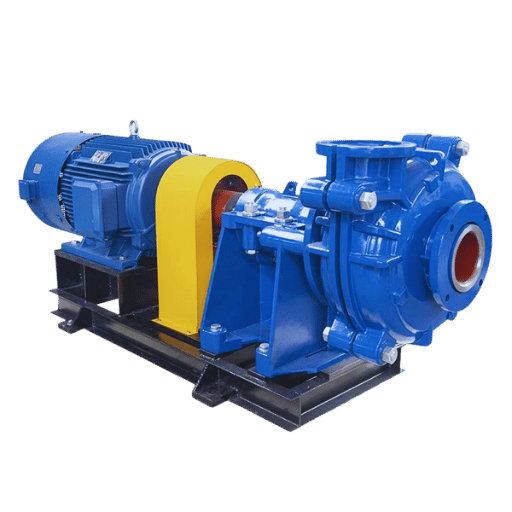
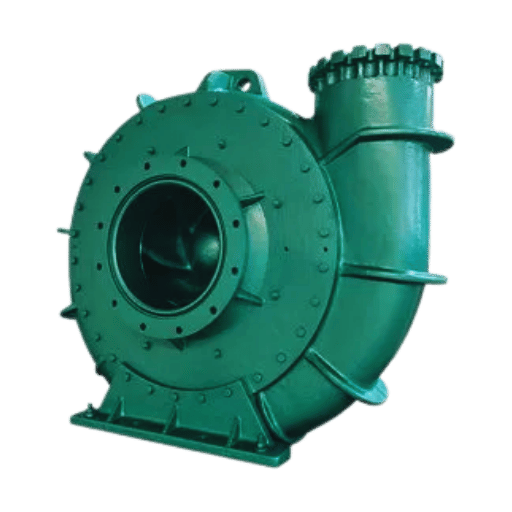
Sand and dredge pumps are the big, high-capacity centrifugal machines which transport sludge, rock, mud, raw sand, dredging mixes, silt and other sand and gravel from the seabed, lake-bed or riverbed, rather than excavating them with a bucket. They are present behind almost every operation to extract river-sand, in any depening project for dredging a harbour, or in a land reclamation project in every country on earth – but in these situations, most customers never know they want them, until their standard pump has failed. This page tells what they are, their operation, the main types, how to size them, the reasons for their failure, and how much owning one costs.
Information that is not tied to any particular OEM. Targeted to project engineers, plant managers, and people ordering pumps. When you ready to compare specific models, BBP posts a complete product breakdown here that shows this spec sheet in context.
Quick Reference: Typical Sand & Dredge Pump Duty Envelope
| Pump family | Centrifugal solids-handling (a heavy sub-class of slurry pump) |
| Solids concentration | Commonly 20–50% by weight; heavy-duty designs reach ~70% |
| Particle size handled | Fine silt through coarse gravel and stones (tens to a few hundred mm) |
| Wear-part material | 27–28% high-chrome white iron (~600 HB) or elastomer liners |
| Drive options | Electric motor, diesel engine, hydraulic, or gearbox |
| Reference standard | ANSI/HI 12.1-12.6 (rotodynamic centrifugal slurry pumps) |
Typical ranges only -specific values depend on model, manufacturer, and duty. Use as a discussion starter, not a purchase order.
What Is a Sand & Dredge Pump?
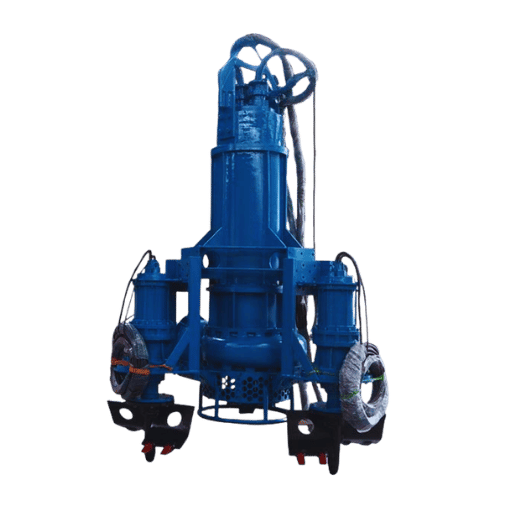
A sand and dredge pump is a type of centrifugal pump that is designed to transfer a water and solids mixture—sand, gravel, silt, mud, and yes even stone—as a single the pumped flow. That mixture—what the US industry calls slurry, and its general class of equipment is slurry pumps—are the lesser weight members of the class. Dredge pumps are meant to handle the feed—variable and unscreened—and larger hazards of a riverbed, tailings pond, or harbor floor.
That difference is important as “dredge” is a job, not a separate machine standard. As identified in the ANSI/HI 12.1-12.6 standard from the Hydraulic Institute, “slurry pump” is the standard terminology describing the design, application, and testing of these machines. A “dredge pump” is a slurry pump used for dredging duty – with a larger internal passage and a suction geometry designed to pick material up off the bottom.
Therefore when a supplier lumps together a “sand pump,” “gravel pump,” “sand dredging pump” or “dredge pump,” they are usually referring to the same family of equipment, just optimized a little differently. They all share one function: transporting large quantities of abrasive solids that would destroy a water pump in short order.
💡 Key takeaway
A sand and dredge pump is a slurry pump designed for dredging. Different names apply for the equipment depending on the supplier and country, but the engineering task of transporting abrasive solids in water is unchanged.
How a Dredge Pump Works
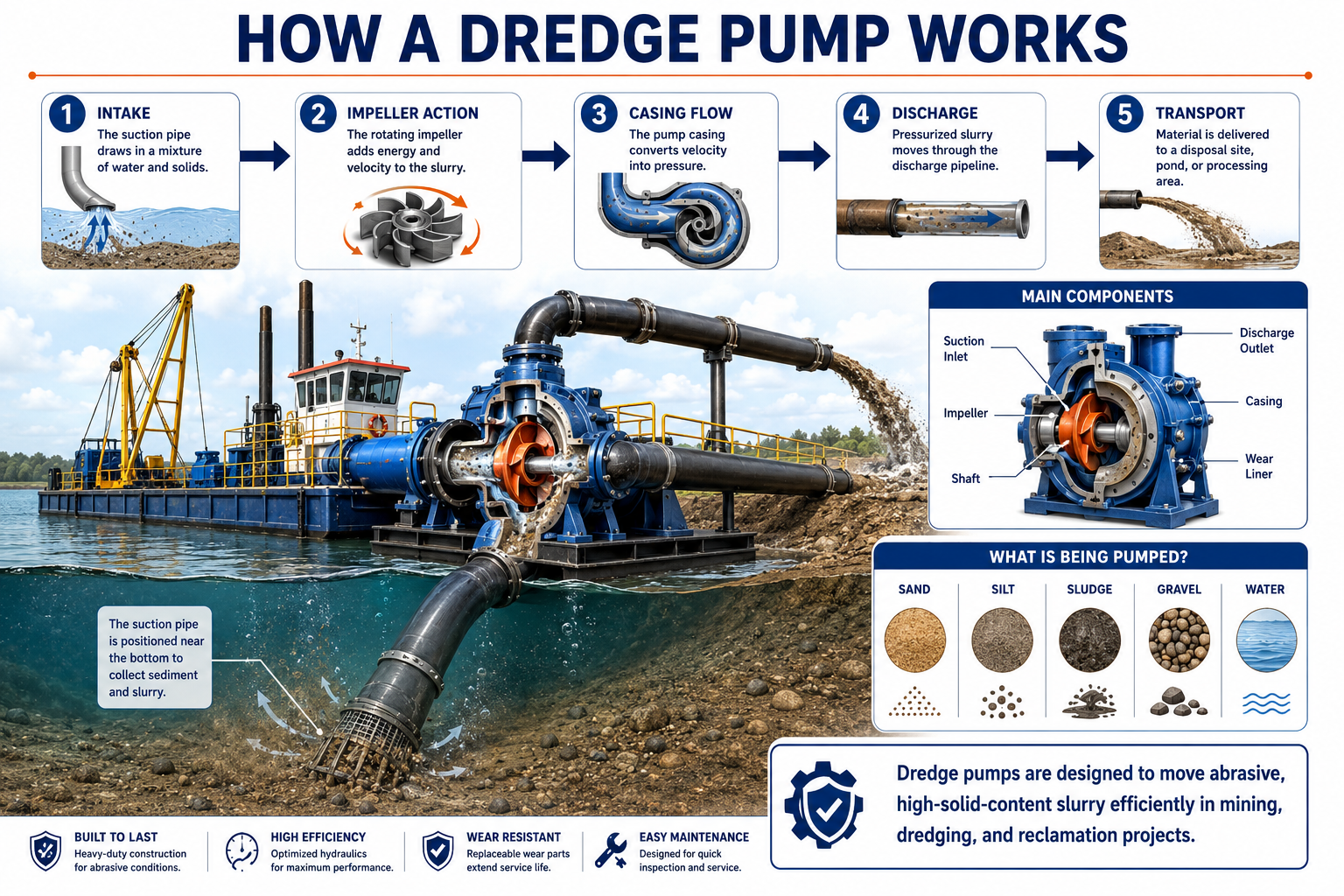
Dredge pumps do work of sorts on solids by transporting them inside an accelerated flow of water. They do not mechanically lift them. Everything you need to know about the design of them and then go on to under stand nearly all of the failure modes you will see in this textbook, is contained in that one statement!
How Does a Dredge Pump Work?
There are four steps in its working cycle: First step, suction: the rotating impeller creates a region of low pressure in front of pump. This lowers the pressure at the whole pump inlet. Atmosphere pressure and the weight of the slurry column will then push water with solid materials into the pump.
Second step, acceleration: the impeller which looks like a rotating wheel (rotates in the middle of pump) throws the water with particle solids outward in centrifugal force. Then, the third step, diffusion: the flow has to slow down and convert velocity into pressure to overcome the effect of gravity. Fourth step, discharge: the pressure pushes through the discharge pipe and leads the flow to the needed point.
Now, the article of state environmental engineers is also stirred simply: a hydraulic dredge sucks material entrained in water from the point of excavation using centrifugal pumps.
This is the fraction that the competitors go around. The water in the discharging pipe has to be moving fast enough that the solids don’t settle, above the settling velocity that engineer’s term. Literature on slurry transport shows that the pump needs to develop a super-critical velocity so the particles stay in suspension rather than settling and clogging the pipe.
Take the line at too low a velocity, the heavy particles settle, form a deposit at the bottom of the pipe, settling and clogging, thus the dredge pump is not rated for pressure per se but for flow: the flow keeps the pipe cleared of deposits.
If you under-run a slurry line it is just as bad as over-running. If you go below the settling velocity, the solids drop out of suspension and pile up in the pipe as a solid. This causes a pump problem but in fact is a speed problem.
— Dredging operators commonly report this on field forums
Submersibles alter the picture in another way. Instead of bring the entire pump up to where the slurry is, submersibles put it down at the point of delivery; greatly reducing the suction-lift limitation so that there isn’t an enormous amount of slurry that the intake of pump has to lift up and over. That’s one reason why jobs that are deep or difficult to prime so frequently switch from a bank-mounted to a submersible dredge pump.
The Main Types of Sand & Dredge Pumps
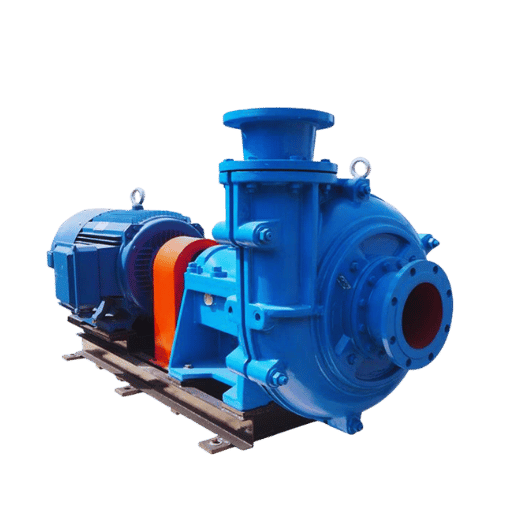
To the naked eye the market appears to be getting crowded-up: submersible, hydraulic, electric, suction, booster, cutter, but each of those descriptors is merely describing one of three separate design decisions. If we group a pump along three axes the celler becomes more than name.
Axis one is position: the point at which the pump physically sits. A dry-mounted horizontal pump is stationed on a bank or deck and suckles slurry up a suction pipe. Submersible pumps are situated under water, at the point source; while an excavator-mounted pump can be fixed to the boom of a digger for operational convenience.
Axis two is motive: by what means the pump is driven—a drive from an electric motor, a drive from a diesel engine, a hydraulic power pack, or a drive from a gearbox off a larger prime mover. Axis three is role in the line: whether it is the primary pump (one taking the material from the source) or whether it is a booster (a pump inserted into a long discharge pipeline to maintain pressure and velocity.
| Type | How it is arranged | Best when | Main trade-off |
|---|---|---|---|
| Dry-mounted horizontal | Pump on bank/deck, suction pipe down to slurry | Easy access for maintenance; shallow lift | Suction lift is limited; can lose prime |
| Submersible (electric) | Sealed pump runs underwater at the source | Deep, continuous, fixed-position dredging | Service means lifting the unit out of the water |
| Submersible (hydraulic) | Hydraulic-driven head, often excavator-mounted | Mobile work; large reach; cutting hard material | Needs a hydraulic power source on site |
| Booster pump | Added mid-pipeline to re-pressurize the slurry | Long discharge distances beyond one pump’s reach | Extra capital, power, and a second wear point |
Electric submersible units run at a lower speed with abrasion resistantwet ends, designed for continuous duty. Hydraulic submersible units-which are truly far higher horsepower and reach-are a natural match for fully compacted sand with excavators and cutting heads. For coarse aggregate, operators commonly switch to a dedicated gravel pump for coarse aggregate, which again takes the internal passages wider. The key is notto memorise labels-the key is to pose three questions: where does the pump sit,what makes it go andis it principle or booster?
Dredge Pump vs Slurry Pump: What’s the Difference?
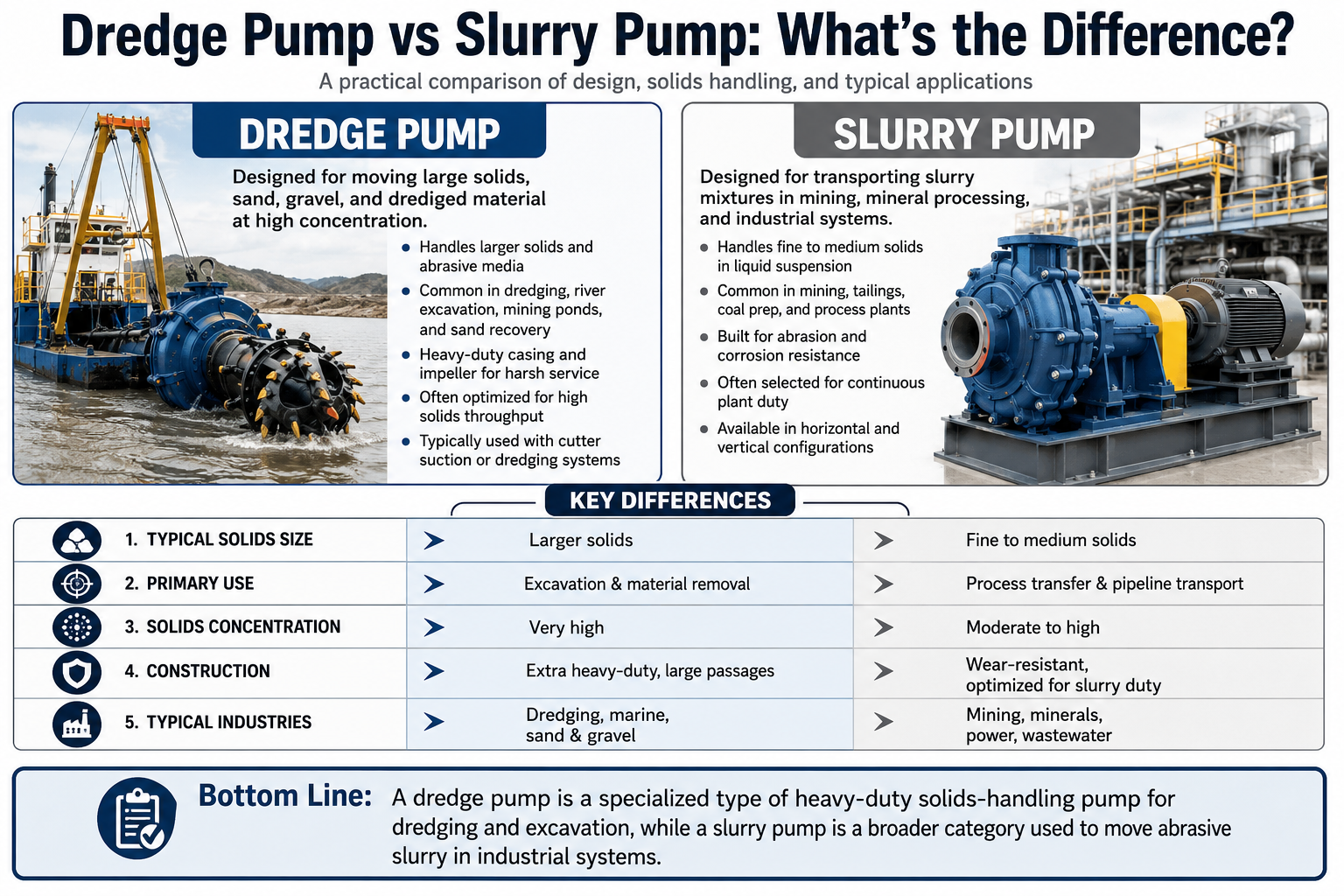
The question thatcausesbuyers to go wrong most often. Both machines are centrifugal solidshandling pumps, and the terms are used interchangeably. But they are actually designed for different feed streams, and buying the incorrect solution is a costly error.
How Is a Dredge Pump Different From a Regular Pump?
A plantappropriate for general use-slurry pumps-is consistent and often bypassclassifies or cyclone-classifies a feed at a known fine-to-medium Granulometries and flow rates. Its clearances and impeller are ccollatedto suit that flow stream. Dredge pumpsare designed for the unpredictable; a feed that varies minute to minute, is never cleaned, and can show up fist-sized debris without notice. To make it, it needs to have wider internal passages, larger clearances, and implement a geometry matched to the task of removing material from a liquid, and maintaining the prime. Typicallymini water pumps-forhigh abrasive abrasive- use tight tolerance small passages and small clearances, failing in weeks in either situation.
✔ Where a slurry pump wins
- Consistent, screened or classified feed
- Fine-to-medium particles at a known concentration
- Fixed plant duty — mill discharge, cyclone feed, tailings
- Higher efficiency on a stable duty point
⚠ Where a dredge pump wins
- Variable, unscreened feed off a natural bottom
- Coarse particles and intermittent stones
- High-volume sediment relocation over distance
- Suction lift and re-priming matter
⚠️ The Clean-Feed Test
The one rule that helps clarify most of these issues: if the feed stream is consistent and screened, use a slurry pump; if the feed stream is variable, dirty, and capable of passing debris, use a dredge pump. This screen-lubricatedprooftest easily cuts through the promotional nonsense- its about what goes in the pump, not what material is promoted in the brochure. When ambiguous, observe what actually gets into the suction the first hour.
For average coarse abrasive plant running conditions, the best choice-for known consistent feed-is most often a true slurry pump-see the mining slurry pump field guideand difference between horizontal slurry pumpsandvertical slurry pumps. For a variable offshore dredge situation, you need a dredge pump.
How Dredge Pumps Fit Into Dredging Equipment
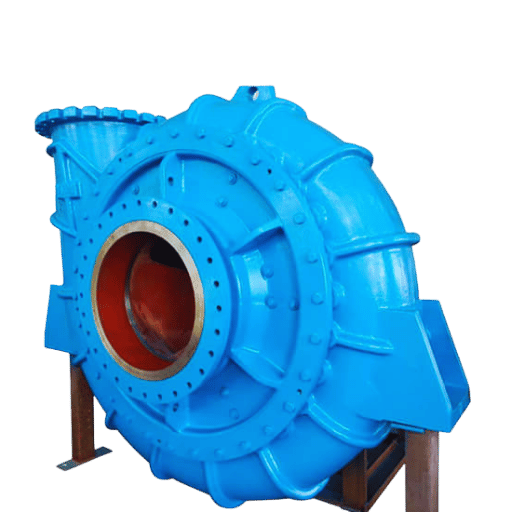
Dredge pumps are seldom purchased as a single unit. Like all pumps they arean element ofa larger system, and bids become confusing when the buyer does not have a clear grasp of which system the supplier is referring to. Industry references-grouping typical operating plants-are to the Central Dredging Association-and its introduction to dredging includes grouping the familiar equipment by a small number of types – pumps change with eachversion.
A cutter suction dredger (CSD) is a fixed installation and has its pump sit close to a cutter head, suckering abandoned material that was broken loose by the cutter, out under a pipeline. The pump is usually on deck but a second pump may be lowered down a ladder close to the cutter for better suction. A trailing suction hopper dredger (TSHD), by contrast, is a self-propelled vessel and booms a trailing suction head down toward the seabed as it is sailing. It fills its onboard hopper with slurry, and the pump is inboard. A pontoon or auger dredge is a smaller barge designed for coastal ponds and lagoons. An excavator-mounted installation hangs a hydraulic dredge pump from a digger boom. A submersible package places the pump in the water, recessed at the bottom, and feeds it via a cable or crane.
Learning these terms will save you at the inquiry stage. When a supplier quotes “a CSD-class ladder pump,” you now realize he is quoting a primary pump for an in-line application—another deck booster. BBP outlines its dredge-duty range, including the lines for either ladder or deck pumps.
How to Size and Select a Dredge Pump
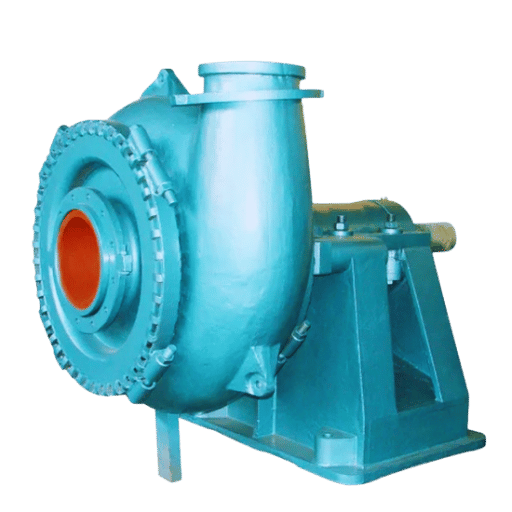
Choosing a dredge pump appears daunting, but it begins with three figures. If these are correct, an experienced supplier can complete the choice; if they are wrong, no tungsten-carbide tiles will bring success.
📐 The Three-Number Rule for Dredge Pump Sizing
- Flow rate — the slurry volume to move per hour (m). Instructs pipe and pump size and maintains the pipeline’s speed above the recently defined settling velocity.
- Total head — the vertical distance plus all the friction loss along the pipe (m). A longer pipe rapidly increases total head.
- Maximum particle size — the largest aggregate particle the pump must handle (mm). Determines the impeller and casing passage diameter.
What Factors Should You Consider When Selecting a Dredge Pump?
In addition to the three figures, two additional requirements determine the best match. Slurry concentration — the solids-to-mass by mass — indicates the work required by the pump and motor, as higher concentration makes the slurry heavier. And most buyers miss this extra input entirely. Published pump curves are derived using fresh water; when pumping slurry, the operational head is higher and efficiency lower. Hydraulic Institute suggested guidance recommends de-rating those curves, by applying a correction to match actual conditions, rather than assuming they are accurate. Interpreting a pump curve as if it were a slurry duty curve is one of the industry most frequently exaggerated claims.
| If your duty profile is… | Lean toward… | Because |
|---|---|---|
| Deep, fixed-position, continuous | Electric submersible | No suction-lift limit; low-speed wear-friendly running |
| Mobile, varied sites, compacted sand | Hydraulic excavator-mounted | Reach and cutting power; quick redeployment |
| Long discharge pipeline (over ~1 km) | Primary pump plus booster | One pump cannot supply the head; boosters split the load |
| Shallow, easy-access bank work | Dry-mounted horizontal | Simple service access; lower setup cost |
One frequent flaw in design is to quote to the flow rate and forget about maximum aggregate size. The selected pump can meet the flow rate, on paper, then it jams as soon as it encounters a split-aggregate fragment exceeding its casing passage. Drawings consistently find a failure run for intermediate material specifications, followed by an undersized impeller passage, among the largest reasons for coarse aggregate over-specification. Once you deliver your three numbers and a realistic slurry percentage, a selection calculator like the one on BBP’s dredge pump page can deliver a frame size.
Wear, Failure Modes, and Maintenance
Every dredge pump is, in a sense, a consumable. In endless service gouging high-velocity abrasive grit through itself, it wears out. The questions then are how fast, and how cheaply can you replace the worn parts. Four modes of failure dominate unscheduled outage.
Abrasive wear of the impeller and volute by the solids is a slow grind in service; clogging occurs when a particle larger than the passage is wedged in the wet end, or when the line drops below the inlet settling velocity. Cavitation is a wedge of vapor forming and collapsing at the pump inlet when the inlet pressure falls too low, and pitting metal and rattling gravel. Bearing and seal failure is a consequence of grit intrusion when reach surfaces meant to see the grit. Western Dredging research has shown that in large-rock service, accelerated impact wear not steady abrasion expends parts life.
📐 Engineering Note: matching wear material to the solids
is selected by particle shape, as well as hardness. Hard, angular, course particles call for a high-chrome white iron (28% Cr, quenched, aged to about 600 Brinell) that resists gouging and impact. Rounded, dense, fine particles often run longer on an elastomer (like natural rubber) which absorbs and rebounds particle energy and it instead from fracturing. Mismatch (rubber against big stones, high-chrome against high-velocity sun-dried sand) eats wear life, regardless of “hardness”. field indicated life-spans of abrasive wear parts run 6-24 mo because it entirely hinges on this match.
- ✔
Inspect the impeller and casing on a predetermined time: invariably they erode first. - ✔
Monitor the suction and discharge pressure, which should remain constant; failures will show up as a steady decrease. - ✔
Line velocities should remain above the settling threshold: under-running packs the pipe as surely as over-stressing it. - ✔
Number 1 cause of expensive pump repair is neglecting the seals and lubrication; this allows grit intrusion that turns a quick and simple repair into a whole new pump.
A typical cause of unneeded replacement is when falling head pressure makes operators check for a broken pump, when in fact the problem is a worn wet end or a silt underpowered line- both also easily fixable. For fine or corrosive duty, the rubber lined slurry pump guide shows the elastomer wet end is nearly always the better economic choice.
Where Sand & Dredge Pumps Are Used
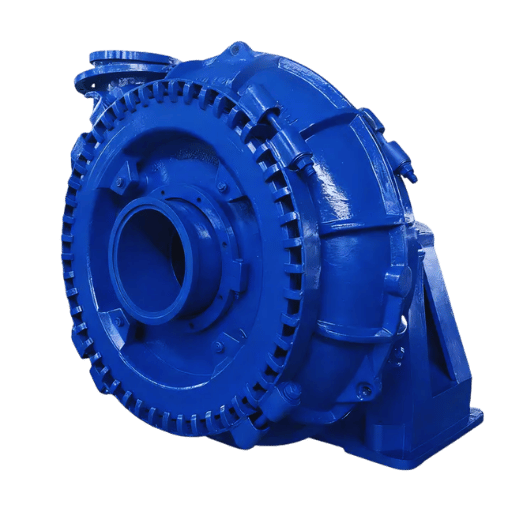
All these pumps fit into a few application clusters, and each about defines a pump configuration rather than the industry name.
River & marine sand mining
Continuous extraction of construction sand; high flow, moderate head.
Mining tailings transport
Dense, sharp, abrasive solids; wear life sets the economics.
Land reclamation & backfill
Long-distance pipeline transport; head-driven; boosters common.
Port & channel maintenance
Continuous duty, mixed silt and stones; navigation depth at stake.
Pond, lake & reservoir desilting
Restoring depth and storage; smaller pontoon or auger setups.
Industrial sumps & ash ponds
Abrasive process slurries; high volume, often rubber-lined.
Let’s work through an example. An area port authority finds its rate of channel silting accelerating each season, and vessels of deeper draughts are being turned away on low tides. Instead of commissioning a hopper dredger for a short campaign it takes the authority to assemble for the sum of the work a fixed cutter suction arrangement with a dredge pump in continuous mixed silt-and- stones condition, discharging through pipe to a reclamation area 1 km inland. What is it that distinguishes this commissioning is not “marine work” – it is several continuous duty operation with an occasional large stone that will show the decision to over-specify a heavy dredge pump with a booster rather than an easy-sole sand pump.
Hydraulic dredging is fundamental too to the application of environmental mitigation procedures; the US state agencies charge the documentation of use in removing contaminated or surplus sediment from courses of waterways. for an excavation on one group of environments, see the sand mining equipment pump-selection advice and pumping from water advice published by BBP.
What Drives Cost and Total Cost of Ownership
The pump purchase cost is what buyers focus on first, and the cost which contribute least over the life of the pump. The realistic description is the total cost of ownership: what the pump costs to purchase, and what it will add in feeding and maintenance subsequent years.
How Much Does a Dredge Pump Cost?
Auction prices are not reliable where they publish because the same pump frame may have twice the price, depending on the configuration; treat everything below a wrong number expecting to be far below a correct one. What can be relied on that describes a price is the list of cost impactor factors. Cost in purchasing varies with frame size, the alloy of wear parts specified, the drive type (a hydraulic package and a fossé engine package cost more than the electric pump without a drive), the sealing presence and design, whether buying a bare pump or a complete assembly including a motor and a baseplate. Over operating life two factors usually outweigh the purchase price unequivocally: typical expense of wear parts: impellers, liners, and adapter pieces consumption on what is known as a cycle; and energy, because moving heavy silt-or- stone laden slurry is a labour intensive operation.
This is why properly precisely rated pump is the least expensive pump. An excess capacity pump throttled back uses energy every single hour per operating time; an undersized one wears fast and stalls the project. The project is best placed to save money early: size correctly with a model-specific, configured quotation -the only kind worth investing to – on BBP sand and dredge pump size page in considering regards to your application requirement.
The Future of Sand Dredging: Industry Outlook
There are two changes coming to sand dredging that are converging: rising demand and scrutiny. The third UNEP report on sand and sustainability shows remarkable numbers; we are now using sand to build roughly 50 billon mt annually and sand demand for buildings will grow by up to 45% – more than the Earth’s natural supply can support, a “sand gap” as called by the UNEP.
Sand is sometimes called the unheralded hero of development, yet the fundamental role it plays in maintaining the natural services we rely upon is all the more neglected.
— Pascal Peduzzi, Director, UNEP/GRID-Geneva
With any spec for sand and dredge pumps comes three consequences…One, regulation is getting tougher: according to UNEP, around 50 per cent of dredging firms work within MPA; pressure for impact assessment and monitoring is on the rise – so if you are planning a 2027 project, start accounting for instrumentation and time now. two, drives are getting serious: hybrid and fully electric dredge packages, plus remote-charging and ever more automated dredgers, are going mainstream as operators look for lower emissions and tighter site control. three, monitoring is heading toward routine use: sensors for flow, density and wear mean that operators can push closer to the ideal duty point and demonstrate compliance at the same time.
Practical lesson: when you specify the pump to order today, do it with the next decade in view—one which will undoubtedly include some form of variable-speed drives, instrumentation, and the documentation which more and more regulators will demand.
Frequently Asked Questions
Q: What kind of pump is used for dredging?
View Answer
Dredging equipment employs a high-capacity centrifugal slurry-pump, typically called a dredge pump. It is designed with large internal clearances, and wearresistant materials at the wet end, to handle the suspension of water, sand, gravel and mud.
Q: Can you dredge a pond yourself?
View Answer
It is possible to dredge small ponds with a tight-draft pontoon or auger dredge pump, and quite a few landowners do this. A couple of caveats: make sure any necessary local sediment-disposal permits are secured before you begin, and that the pump’s particle rating is compatible with the bottom material. Rocky bottoms easily foil undersized equipment.
Q: Is sand dredging still legal?
View Answer
Yes – the practice of sand dredging is allowed and is prevalent, but is subject to regulation. Permitting, environmental considerations and disposal are all diverse – dependent both on location and water body. The UNEP have noted a rise in surveillance, especially in instances where extraction encroaches MPAs.
Q: What is a dredge booster pump and when is it used?
View Answer
The booster pump is a second (or possibly third) dredge pump positioned half way along the discharge pipeline. The booster utilizes a pumping head to the slurry, allowing it to travel (for the same delivery rate) further than a single pump alone. Booster pumps are commonly used on long land-reclamation/backfill line that extend several kilometers in length.
Q: How long do dredge pump wear parts last?
View Answer
Field-reported wear-part life can range from about 6 up to 24 months in abrasive service, depending on particle hardness, velocity, run-hours and wet-end material correlation, on a particular duty. No guaranteed number exists; get life information from suppliers based on a duty class comparable to your own.
Q: What is the difference between a sand pump and a dredge pump?
View Answer
In reality, the terms are interchangeable. “Sand pump” tends to stress what is being transported, whereas “dredge pump” tends to call to mind the task, removing material from an underwater floor. Both are centrifugal solids-handling pumps of the same family, and you may find the same piece of equipment offered by a supplier in both contexts.
Matching a pump to your duty?
Have your three figures (flow rate, total head and maximum size of solid) ready and BBP’s engineering team will convert them to a frame size and provide a quotation for the project.
About This Guide
This guide originated as a vendor-neutral synopsis of sand and dredge pump mechanics based on our cement-industry standards and the best published research, rather than any particular product line. When wear-life and operational-cost numbers appear to depend on the deployment, we’ve just make that clear instead of bestowing an un-supported figure. Proofed by BBP engineering team, November, 2026.
References & Sources
- Sand; Wanted dead or alive – Sand and Sustainability report (20³0) – UN Environment Program
- Dredging and Disposal Alternatives & Techniques – South Carolina Department of Environmental Services
- Development and Analysis of Slurry Transport – Centers for Disease Control and Prevention (NIOSH)
- ANSI/HI 12.1-12.6 Rotodynamic Centrifugal Slurry Pumps – Hydraulic Institute
- Introduction to Dredging Equipment – Central Dredging Association (CEDA)
- Impact Wear Behaviour of Large Rocks on Slurry Pump Materials – Western Dredging Association
Related Articles
- The Mining Slurry Pump Field Guide – What breaks and how to choose
- Submersible Slurry Pump; A complete engineering reference
- 4 Rules for Pumping Sand from Water
- Sand Mining Equipment Pump Selection Guide
- Rubber-Lined Slurry Pump; How to select, use and maintain