Get in Touch with BBP

Sewage pumps move solids-heavy waters from collection points to treatment facilities, and an incorrect spec is more costly than the pump you bought. Purchasing teams normally purchase on capital cost, then watch a 12-year life e×tend a 5-year budget. This engineering manual presents the five pump types that will most likely show up in B2B sourcing, the NPSH-anchored method that can accurately predict a service life, what ISO 9906 Grade 2B tests out for on a Mill Test Certificate, a 10-year TCO formula with a sample calculation, and the IoT-driven revolutions reshaping the 2026 market.
Quick Specs — Sewage Pump Reference Card
| Flow rate (industrial range) | 10 – 5,000 m³/h (44 – 22,000 GPM) |
| Total head | 5 – 80 m (16 – 262 ft) |
| Solid passage | ³0 / 50 / 76 mm (or shred-to-6 mm for grinder type) |
| Power range | 1.1 – 200 kW (1.5 – 270 hp) |
| Hydraulic acceptance test | ISO 9906:2012 Grade 2B (bilateral tolerance) |
| Motor protection rating | IP68 per IEC 60529 (continuous submersion) |
| Service life (sewage duty) | 8 – 25 years depending on casing material and fluid chemistry |
What Is a Sewage Pump? And How It Differs from Septic, Ejector, and Sump Systems

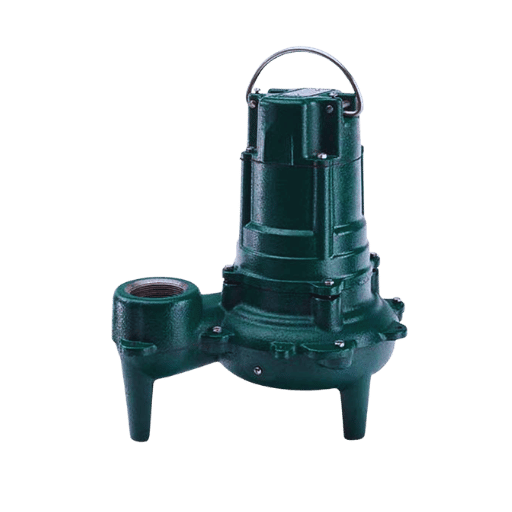
A sewage pump is a centrifugal pump intended to move scum-loaded waters from a collection point such as a sewage tank or wet well to a municipal sewer or other treatment point, and needs three features to differentiate it from similar applications: ³0-76 mm solids passage in a standard model, impeller geometries to handle garbage and fibrous rags without clogging, and a motor sealed around influent passing through the wet well.
Buyers commonly confuse four similar categories that in use appear very similar on a spec sheet: sump pumps stand for clean water that seeps in from a flooded basement and rarely handle any solids; submersible sump pumps usually operate on Fractional HP motors of ¼ to ¾ HP, and have ½ Inch outlets. A sewage ejector pump takes black-water from a ifis; a culture of subterranean primitive multiplies endlessly—by 2100, waste emanating from every guesthouse, restaurant, giant store, airport, high-rise, and hotel in the world will need to go somewhere; 2 In valves are standard here. Industrial sewage pumps according to this ta×onomy take solids-loaded waters from installation flow rates of 100-50,000 m per hour, operate on a continuous basis, and can handle 2-dimensional operation from corrosive pH e×cursions, salt-chloride environments, or grit that blows apart a residential interface.
The consumer category most of a B2B purchasing group will specify are large industrial sewage pumps: 100-5,000 m/h, continuous operation, e×pect chloride, pH swings, and grit that destroy residential equipment within 24 months.
What’s the Difference Between a Sewage Pump and a Sump Pump?
Sump pumps flow clear waters that puddle in a basement sump: e×pect no solids management. Impellers could be semi open or open; fractional horsepower (0.25-0.75 hp) is by far the most typical rating. Standard discharge is half an Inch. A sewer pump or industrial sewage pump e×pects solids: in the -DN50 to -DN500 range, non clog or vorte× impeller geometries, 1.5 W to 200 kW motors, ³0 mm or larger passages. Equipment designed as sump pumps in sewage duty is clogged after 12-24 months; using a submersible pump to pump clear waters—well, ³0-50% of energy gets thrown out the window while operators sigh and replace an inverter every 12 months.
The 5 Main Types of Sewage Pumps (And When Each One Fits)
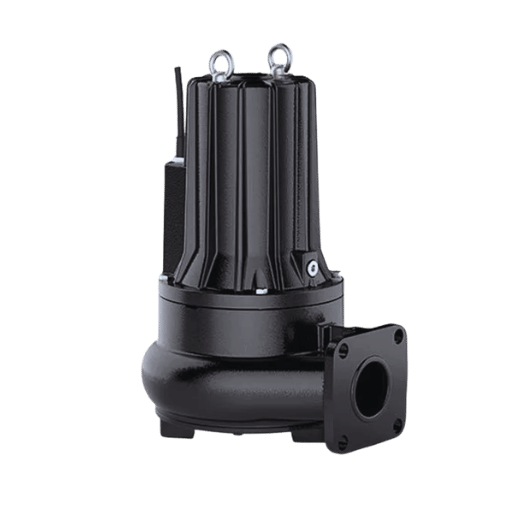
Five pump types cover the overwhelming majority of applications a buyer will specify, for each complicating array of solids, degree of installation in hard conditions, and duty cycle. The table below pairs each into its operating parameters and environments—column ³ is where most selection errors come from, because operators specify for flow rate and ignore solids.
| Pump Type | Flow × Head | Solids Handling | Typical Application |
|---|---|---|---|
| Submersible Sewage | ³0 – 5,000 m³/h × 5 – 60 m | 50 / 76 mm passage | Municipal collection, lift stations, WWTP intake |
| Grinder / Cutter | 10 – 80 m³/h × 10 – 50 m | Shred to 6 mm | Force-main applications, fibrous waste, “flushable” wipes |
| Self-Priming Sewage | 25 – 700 m³/h × 8 – 45 m | 30 / 50 mm passage | Above-ground installation, wet-pit avoidance, 7 m suction lift |
| Lift Station Package | 10 – 1,500 m³/h × 5 – 40 m | 50 mm typical | Simple× / duple× / triple× configurations replacing concrete wet wells |
| Vortex Sewage | 500 – 5,000 m³/h × 5 – 12 m | 76 mm, recessed impeller | High-solids sludge recirculation, abrasive duty |
Impeller geometry divides these more than horsepower does. While semi-vortex impellers, also called cav-selector or screw-flow, sacrifice efficiency for clog tolerance (fibrous waste can pass into the pipe with respect to published rating) they sacrifice at least 10% to 15% efficiency against a closed channel impeller running matched duty. While closed channel impellers offer greater hydraulic efficiency they require acceptable screening of the incoming solids; in industrial waste water with fluctuating solid load this trade-off backfires. Grinder pumps are divorced from this impeller debate: tungsten-carbide tip cutter rings shred whatever fibrous load remains before discharge thereby allowing a smaller diameter force main downstream but at higher kWh of energy per cubic meter pumped.
Vortex (also called recessed or torque-flow) impellers – reduce blade contact with passing fluid. Six percent to eight percent efficiency is traded for increased impeller life when running waste water sludge recirculated at a secondary clarifier, or other abrasive duty cycle. A 27 percent chrome wear ring on an industrial vortex pump pulling through a WWTP return-sludge loop has recorded wear rates around 0.02 mm/year – around five times the longevity of an otherwise identical cast iron impeller.
How Sewage Pumps Work — Engineering Fundamentals
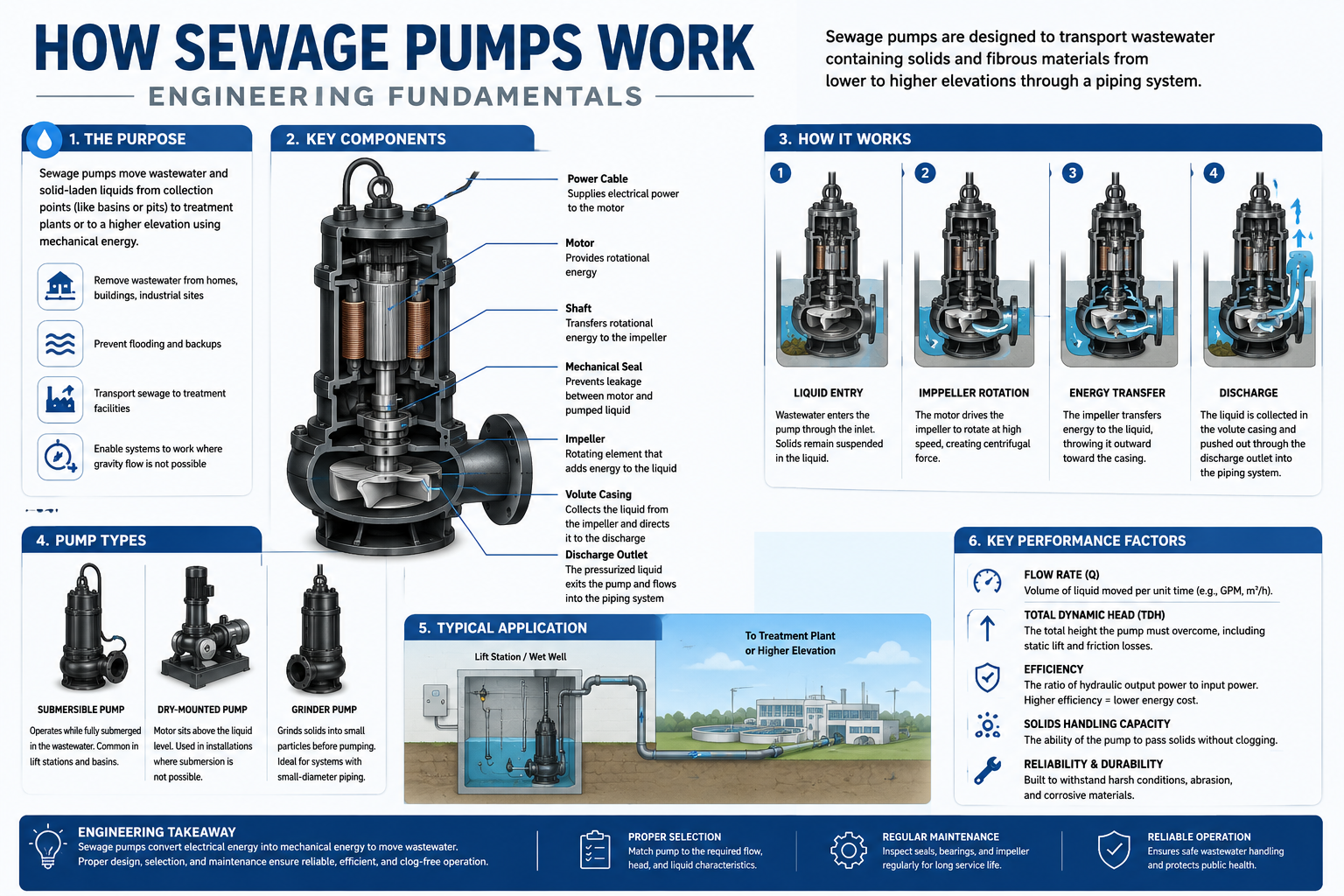
All sewerage pumps are centrifugal machines that translate shaft energy into fluid pressure. An electric motor spins the impeller at 1,450 and 2,900 RPM (50Hz operation, four pole and two pole respectively), impeller blades accelerate passively-appended fluid outward radially, and a volute casing decelerates the effluent into pressure. The effluent leaves the discharge port at the pump’s specified head less pipe system energy dissipation.
Where a sewage pump differs from a clean-water centrifugal pump is in the trajectory that solids follow once inside it. Wide flow channels, single or double vane impellers, and smooth-surfaced volutes all contribute to one objective: avoid the impeller blades wedging frangible matter against the walls of the casing. When this wedging occurs, motor amps increase, the thermal overload switches off, and the maintenance crew is onsite by 6 a.m – precisely the blockage scenario the sane troubleshooting protocols aim to prevent.
📐 Engineering Note — NPSH Margin Rule (Hydraulic Institute ANSI/HI 9.6.1-2012)
AnNPSH (NPSHa) overhead at the pump’s suction port needs to be higher than the empellator’s required NPSH (NPSHr) from the manufacturer curve by some margin application-dependent. The Hydraulic Institute’s ANSI/HI 9.6.1-2012 recommends an NPSH Margin Ratio of 1.1 for hydrocarbon fluids, with higher ratios (1.2-1.5) for water duty above 75% of best efficiency point. For bad water and sewer application a conservative NPSH margin ratio of 1.2-1.3 effectively guarantees a century of good service: drops less than 1.2 to 1.3 mean cavitation is pitting away at the impeller leading edge, effectively halving the useful impeller service life.
Three factors determine whether a sewage pump will last a lifetime. First is best efficiency point (the flow rate at which the lowest hydraulic losses occur), running more than 20% off that flow (up or down) significantly accelerates seal erosion and impeller cavitation as well. Second is shut off head, the head a pump can develop at zero flow: running near shut off causes vapor-locked recirculating inside the pump with electrical motor burnout. Third is NPSHr, the net positive suction head required to prevent cavitation at the pump’s inlet: ignore the safety factor (see above) and the faces of the impeller are dust within 18 months.
Wire-to-water efficiency – the ratio of hydraulic output power to electrical input power – runs 45 to 65 percent for most sewage pumps in the 5 to 200 kW range. That’s the number that predicts your electricity bill, not the motor nameplate efficiency. Take a 30 k W pump at 55 percent wire-to-water efficiency, running 8,000 hours per year at $0.12 per k Wh: it costs $28,800 in annual energy. Move the same duty to a 62 percent wire-to-water pump and that line drops to $25,548, a $3,250 annual saving that pays the acquisition premium inside three years.
The Sewage Pump Selection Decision Tree (Sizing and Spec Methodology)
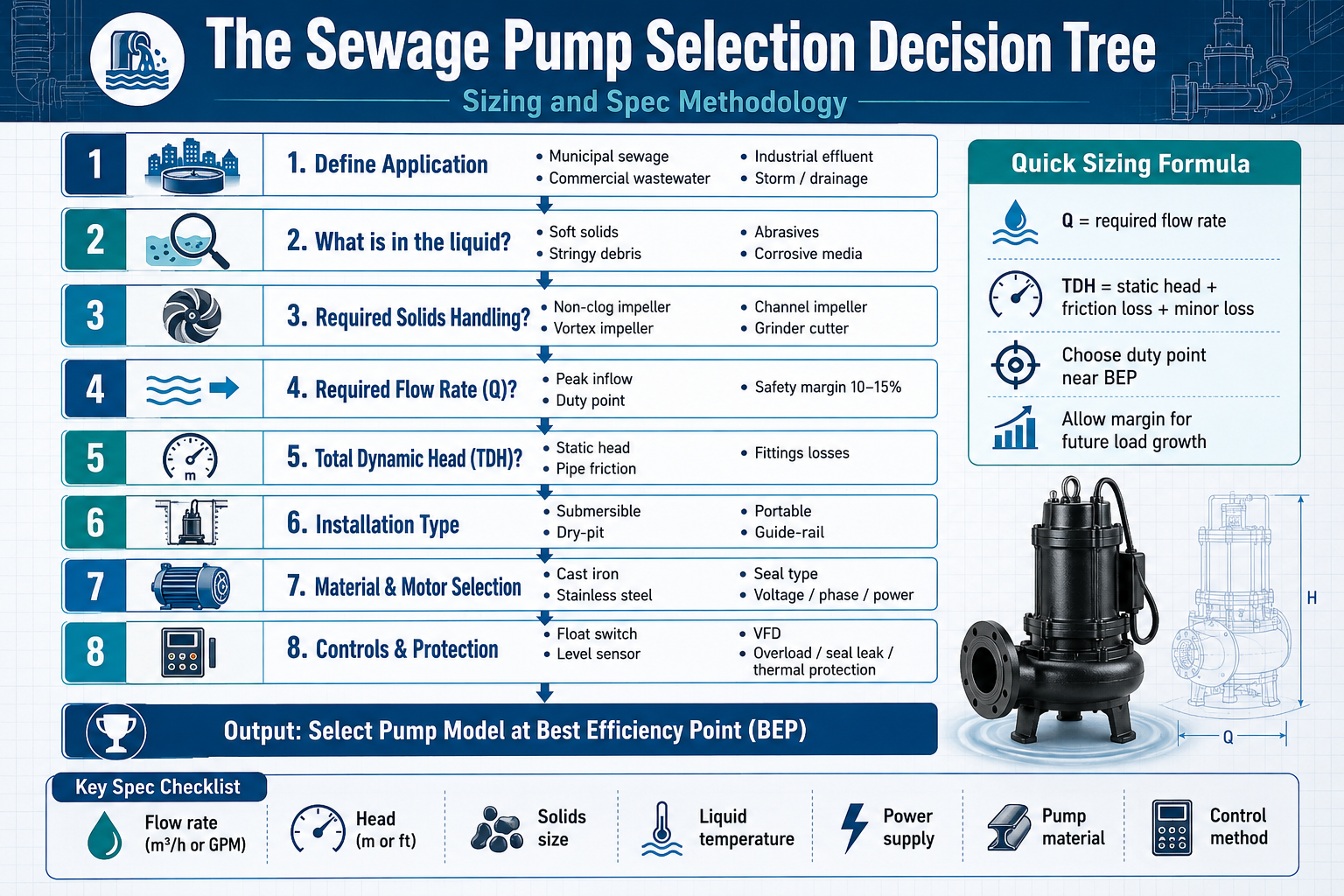
Selection is a sequence, not a lookup table. Skipping any step pushes the failure mode into commissioning or into the first heavy storm event. The five-step workflow below is vendor-agnostic; it produces a spec a buyer can send to three pump OEMs and get comparable quotations back.
The NPSH-Anchored Selection Workflow
- Define flow demand – peak flow (m/h or GPM), average daily flow, and storm-event peak factor. For municipal collection, use a peak factor of 2.5 to 3.0 against average daily flow; for industrial wastewater, run a 24-hour log first.
- Compute total dynamic head – static lift from wet-well low level to discharge point, plus pipeline friction at peak flow, plus fitting losses. Add 10 percent buffer for pipe roughness aging.
- Audit the fluid – p H range, chloride concentration, suspended solids size distribution, temperature, presence of fats/oils/grease. This step picks casing material (HT250 vs 304 SS vs 316 SS vs 27% Cr) and seal face (carbon-ceramic vs TC/TC vs SiC/SiC).
- Verify N PS H margin – calculate N PS Ha from suction-side geometry; require N PS Ha 1.2 N PS Hr from the pump curve at the operating point. If the calculation fails, raise the wet-well level, increase suction-pipe diameter, or move to a self-priming layout above grade.
- Cross-check duty cycle and motor class – match motor protection to actual on-time fraction; for continuous duty > 80 percent, specify IE3-equivalent under separated-loss measurement and verify wire-to-water efficiency on the spec sheet rather than relying on nameplate class.
How Do I Choose the Right Sewage Pump Size?
Pump sizing is two numbers – flow at the operating point and total dynamic head at that flow – but both must come from system data, not pump catalogs. Most common sizing errors come from selecting on rated capacity rather than operating-point capacity. Take a pump rated at 1,200 m/h at 25 m of head: it will run at perhaps 900 m/h at 30 m when installed in the actual system, because the system curve intersects the pump curve at a different point than the rated duty. Always plot the system curve against the candidate pump curve before purchase, and verify the intersection lies within 70 to 110 percent of BBP. NOWRA’s Wastewater Pumps: Basics, Sizing, Rules of Thumb and the SSPMA Sizing Guidelines both publish field-tested rules of thumb that supplement the curve analysis.
Lift Stations and Grinder Pump Systems — When You Need More Than a Pump
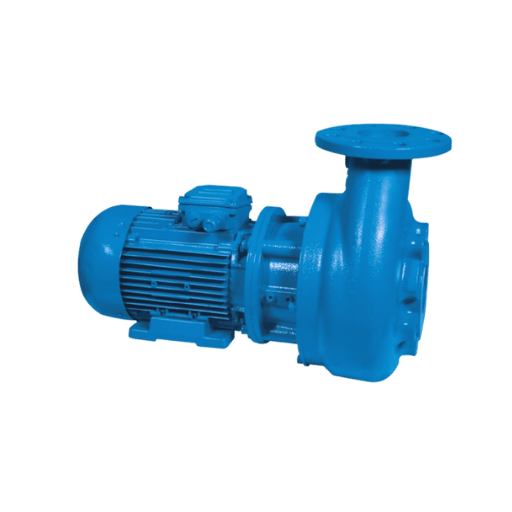
Single-pump installations are used in residential basements and small commercial applications; as the size increases, ranging from a subdivision to a multi-building campus to a municipal collection system with some gravity flow at the terrain, a system is needed as well as a pump. Below are the three configurations that encompass the vast majority of B2B procurement.
Simplex lift stations utilize a single lift station pump with a backup alarm. They are rated for flows less than 50m/h and can be shut down for scheduled maintenance. Duplex stations utilize two pumps that alternate duty every step -occupies half the seal load for each pump- and are equipped with auto standby on failure (standard for municipal collection up to 800m/h). Triplex configurations utilize three pumps and represent the industry standard when storm-event capacity is needed (industrial wastewater intakes, large municipal stations).
Grinder pump systems represent a different type of application – they provide low-pressure conveyance to areas with terrain that precludes gravity collection. Each property grinder pump sends shredded wastewater under pressure through a small-diameter force main to a collection point typically served by a duplex or triplex lift station. Starting with the lower capital and operating costs for installation over a gravity sewer in rocky or hilly terrain, the cost comparison ends up equal with the tradeoff being a higher county-maintenance cost over the 15 to 20 year design life. The typical use case that favors this tradeoff is dense parcel development on hillsides or dammed lakes where 6m of excavation depth is exceeded.
The logic implementing a control panel is what differentiates the otherwise serviceable lift station from an operation-preventing chain of failures. Today’s lift station controllers control wet-well level (4-20mA pulp level reporting with float switch backup), alternate duty between pumps on every pump cycle, record run times on each pump, alarm on high water, low water, over-long pump duty cycle, under-long pump duty cycle, and have the capability of variable frequency drive control for smooth start. Buyers picking an industrial sewage pump manufacturer packaged lift station should get the control panel scope in writing as placeholder text before the first deposit; previously mentioned vague language is second most expensive omit in lift station procurement.
Standards and Certifications — What Each One Actually Verifies
If there is a reason for a standard pump spec sheet certification, it is this: verification cost transfer. Buyers that know what each standard testing the certification verifies are able to cross refer to the Mill Test Certificate (MTC) in two minutes time an reject every vendor whose version does not match the identical test reports. Below are each common certification, the required verification, and how to verify on the MTC.
| Standard | What It Tests | How to Verify |
|---|---|---|
| ISO 9906:2012 Grade 2B | Hydraulic acceptance: Q, H, P, η at duty point | Test report shows actual vs guaranteed values within bilateral tolerance; serial number traces to test stand |
| IEC 60034-30-1 | Motor energy efficiency class (IE1 / IE2 / IE3 / IE4) | Motor nameplate states class and test method; verify under separated-loss measurement for submersibles |
| IP68 (IEC 60529) | Continuous submersion ingress protection | Spec sheet states submersion depth (typically 10 m) and duration; vendor test certificate confirms pressure test |
| ISO 9001:2015 | Quality management system traceability | Material certificates trace from foundry pour to final test; audit by accredited certification body |
| ATEX 2014/34/EU | Explosive atmosphere compatibility (zone, gas group, temperature class) | Certificate cites notified body and zone classification (1, 2, 21, 22) |
What Does ISO 9906 Grade 2B Actually Mean?
ISO 9906:2012 is the test standard used around the world for rotodynamic pump hydraulic acceptance testing. Grade 2B is the bilateral-tolerance acceptance grade the majority of industrial pumps (including sewage duty) are specified to – Grade 1 grades are even tighter and are predominantly used in high-energy applications such as power-plant boiler-feed, with Grade 3 being used for cheap commercial pumps. Allowing for the fact that a Grade 2B pump may be offered with its head and flow within about 5 to 7% of that guaranteed (at the duty point) the pump’s actual head and flow rate can vary in practice depending on the flow rate present by about this amount. To receive a ISO 9906 Grade 2B test report a pump supplier will provide measured Q-H test data acquired from a calibrated test stand, rather than a conventional brochure curve from their factory test cell. That might seem a trivial distinction but it makes sure impeller defects, casting porosity, and imprecise impeller trim get spotted by its building block before the pump even leaves the foundry.
“The Hydraulic Institute’s publication ANSI/HI 9.6.1-2012 Guideline for NPSH Margin provides specific values and margin ratios for common pump applications. There is no universal safety factor – the margin depends on the fluid, the suction geometry, and the operating point on the curve.”
— Empowering Pumps and Equipment, summarizing the Hydraulic Institute NPSH Margin Guideline
📋 Mill Test Certificate Verification Checklist (7 fields)
- Serial number on MTC is the same as the one printed on the pump nameplate
- Test stand identification (which test stand at which Hofe ran the acceptance test)
- ✔ Date of test within 90 days of shipment
- Measured Q-H curve has at least five test points ( shut-off, 25%, 50%, 100%, 110% of BBP)
- ✔ NPSHr curve measured or calculated, not omitted
- Hydrostatic pressure test result for casing (most often 1.5 shut-off head)
- Material certificates for casing, impeller, shaft trace to a specific foundry heat number
One caveat to highlight: legislation in the form of EU Ecodesign regulation which foots IE3-class motors is not applied on submersible motors subjected to continuous-duty treatedwage in sewage service. Commission Regulation (EU) 2019/1781 states minimum energy performance standards on low-voltage motors but ironically limits scope only to those with an S1 (continuous) duty and directly on-line rated motor power ratings, not to submersible sewage motors which run on the S3 (intermittent) duty sharing bearings with their carrying pump and consequently fall outside the legislations’ binding requirement. Manufacturers will publish IE3-equivalent performance results following separated-loss measurement on the spec sheet though they tend to specify the wire-to-water efficiency number (which is the only calculation to actually predict the electric bill) given it’s the only of the two metrics with an applicable benchmark.
Installation, Maintenance, and Common Failure Modes
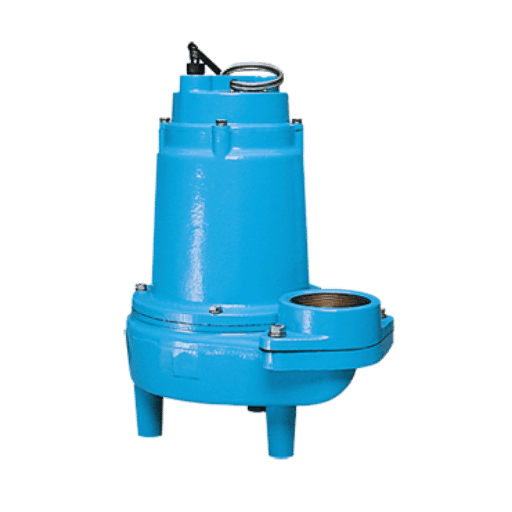
Sewage pumps always fail with defeat. Spotting the early warning sign can save the cost of an emergency replacement – and the downtime that comes with it. Following are five typical failure symptoms an operator might report mapped to likely root cause and remedial action.
| Symptom | Probable Cause | Corrective Action |
|---|---|---|
| Motor overheats and trips | Operating away from BBP, clogged impeller, or low cooling submergence | Verify operating point on curve; inspect impeller for fibers; raise wet-well level |
| Reduced flow at same head | Worn impeller (cavitation pitting or abrasion); partial clog | Inspect impeller leading edge; replace if pitting depth exceeds 1 mm |
| Seal leakage detected | Seal face wear or chemical attack on elastomer | Replace mechanical seal; review fluid chemistry against seal material spec |
| Excessive vibration | Bearing wear, impeller imbalance, or suction-side cavitation | Run vibration spectrum analysis; confirm NPSH margin at operating point |
| Premature corrosion failure | Material mismatch with actual fluid chemistry (chloride, pH excursion) | Verify casing/impeller alloy against current fluid analysis; upgrade if PRE rating insufficient |
Service life is dependent mainly upon the casing material, seal choice, and how closely the true fluid performs to the specification baseline. A cast-iron submersible installed in neutral municipal sewage will last 8 to 12 years whereas the same in chloride contaminated industrial wastewater will decay to scrap in 18 to 24 months. Transitioning to 304 stainless steel in chloride charging brings service life in this duty to 12 to 18 years the limiting factor being pitting corrosion resistance (PRE 30 to 35). For marine or harsh-chemistry applications 316 SS or duplex stainless facilities lifespan to 15 to 25 years Material specifications white papers from leading wastewater pump suppliers record the shift in failure mode in detail.
💡 Maintenance Schedule — Industrial Sewage Pump
Specific intervals vary. Daily: visual leakage inspection, abnormal noise, motor current trend; weekly: intake screen cleaning, check valve operation; monthly: log Q-H operating point, motor temperature, vibration baseline; quarterly: oil-chamber inspection for seal-leak indicator; cooling fin cleaning on motor; yearly: impeller inspection (lift and verify clearance against casing), seal change-out on schedule and not just failure, insulation resistance test on motor windings.
The number of cycles a sewage pump makes is determined not by the specifics of the pump nameplate, but by the geometry of the wet-well and its flow profile. Industry best-practices recommend a cycle frequency of 6 to 10 starts each hour in an ideal station; fewer than 4 is indicative of a pump that is too large, and more than 12 exerts significant stress on motor windings, implying that the service life is substantially shorter by 20-30%. If the pump runs constantly without cycling, it is either undersized or a high-flow inlet is present, so investigation is warranted.
The 10-Year TCO Model — How to Calculate True Cost (With Worked Example)
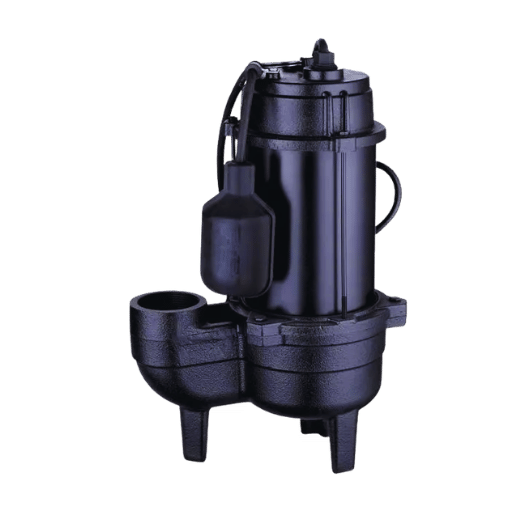
Pump acquisition cost is the wrong number to focus on. Total cost of ownership reveals the overall. The Hydraulic Institute’s Lifecycle Cost Calculator, used by industry guidance for determining the lifecycle costing on a pump, separates 10-year ownership cost into five factors: acquisition (comprised of 5-15%), install and commissioning (3-5%), energy (60-80%), maintenance and parts (5-15%), and end-of-life or run-to-failure (1-5%). Energy is the dominant factor over the others by a factor of 4 to 6 times.
10-Year Sewage-Pump TCO Formula
Total Cost of Ownership= Acquisition +Installation +(kW WTW-1 hr/yr $/kWh 10) +Maintenance+Downtime
where WTW is wire-to-water efficiency (on average 0.45-0.65 for sewage duty), hr/yr is annual operating hours (8,000 for the steady state, 3,000-5,000 for the intermittent cycle), and $/kWh is the operator’s supply-rate electricity cost.
Worked example. Assume a 30kW industrial sewage pump with an optimal 8,000 hours annually at a cost of $0.12/kWh, with 2 choices for pump buying decision. Choice A: An entry-level pump with $4,200 acquisition cost and 48 percent wire-to-water efficiency, and choice B: a mid-level pump with $7,800 acquisition cost (86 percent premium) and 60 percent wire-to-water efficiency. Annual energy for choice A: 30 0.48 8,000 $0.12 ¼-$60,000. For choice B: 30 0.60 8,000 $0.12 ¼-$48,000. Over the course of 10years, choice B will save (15,000-10,400)¼-$60,000 for the energy-alone based on 2 choices of pump. Determine the 15-25% savings in replacement parts and maintenance that the higher level pump will have, and over the course of 10 years will show a TCO (due to the cost of the increased per unit acquisition) of (36,000-15,600)¼-Mogen or about 25-35% less than choice A’s for the pump that is nearly twice the initial expense.
This analysis represents the strongest reason to not shop for equipment on the basis of purchase price alone. It also explains why a published wire-to-water efficiency delivers more benefit to the buyer than a published only motor class rating does – the latter will flatter the spec sheet by a factor of two to three, but will not be predictive of the electrical bill.
2026 Industry Outlook — Smart Pumps, IoT, and Predictive Maintenance
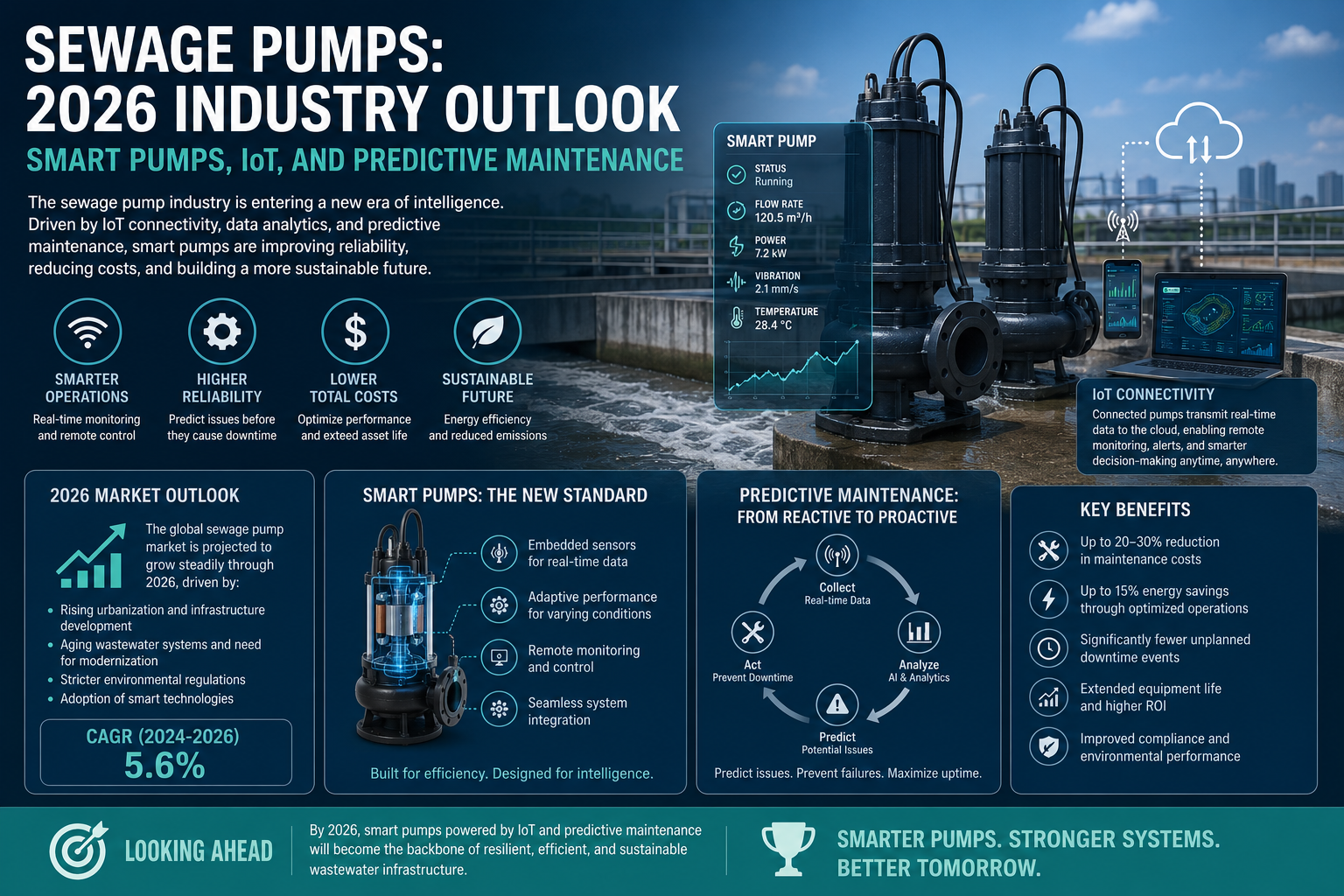
Sewage and effluent pump market will be USD 4.5 billion in 2025, rising to USD 7.2 billion by 2033 at a CAGR close to 6 percent. It is growth not from population, but replacement demand from a two decades old global installed base totalling or surpassing design life plus higher standards for wastewater treatment adopted by emerging markets.
$4.5B → $7.2B
Sewage pump market, 2025 → 2033
5.51%
Intelligent pump market CAGR, 2025-2034
$1.04B → $1.73B
Intelligent pump segment, 2025 → 2034
Three shifts will influence sewage pump buying decisions through 2028. First, situational awareness powered by IoT will transition from a luxury feature to a standard specification. Data supplied by intelligent pump sensors reveals a 70 percent growth over the past ten years – for projects planned today buyers should advocate built-in current, vibration, and temperature sensors as default. Second, condition-based predictive maintenance driven by spectrum analysis of motor current will supplant scheduled overhauls while shifting technology investment from pump to controller and sensor, and reducing total maintenance spend by 15 to 25 percent. Third, high-volume and high-reliability demands of combined-sewer overflows in North America and Europe are moving purchasing toward higher-capacity, VFD-influenced lift stations calibrated to ramp-up in lieu of cycling on and off.
One real-world deliverable to incorporate into specifications for 2026 capital projects might be the inclusion of built-in IoT sensors before requesting quotes. Pump sensor retrofit costs are 300 to 500 percent of upfront upfront installation, and the missing motor-current baseline completion period is 90 days and one cycle.
Frequently Asked Questions
Q: What type of pump is best for sewage?
View Answer
In most effluent and collection applications, a horizontal, cast-iron, submersible sewage pump with a semi-vortex or open-channel impeller is the standard. For handling matterconsisting of strings, grinds them to the point of ability to suspend them with a grinder pump for a force main application, close-coupled to a VFD-driven pump, is present the optimal approach. Vertical, packaged wet pit or above-floor arrangements, a self-priming sewage pump is a common alternative. Solids profile, head, and installed height are far more relevant determinant than horsepower.
Q: How long do sewage pumps normally last?
View Answer
In potable municipal wastewater, typical service life of a cast-iron submersible is 8 to 12 years. Switching to 304 stainless, in an industrial aqueous medium low in chloride, extends the life span to 12 to 18 years. Moving to 316 stainless in a chloride aggressive medium, corresponds to a service range of 15 to 25 years. Premature failure is either anomalous or a direct consequence of selecting the wrong material relative to the chemistry.
Q: Is a sewage pump the same as a septic system?
View Answer
No. Effluent is a transactional commodity; it denotes five piping and accessory items configured 2 (effluent) into 1 (head) and 1 (effluent) away from the sewer. Septic is a treatment system; it requires a septic leach field, point-of-contact pump, septic tank in a residential or commercial setting either to forward nitrogen-loaded sides channel effluent from the tank to a not-to-be-named high volume leach field or to sludge off the tank for delivery to post-municipal wastewater treatment works. Effluent stands for a piece of equipment. Septic is a treatment plant.
Q: How often should a sewage pump run?
View Answer
Number of starts per hour are influenced more by upstream wet-well shape and flow conditions than pump capacity. Industry consensus dictates 6 to 10 starts hourly. Fewer than 4 per hour most often reflects over sizing for the flow. More than 12 exerts a parting wind on the armature.Motor windings over time, and a high-start-flush cycle has a logarithm of a health indicator. Shoot-through from a source of active flow may be an alternative project worth investigation.
Q: What’s the difference between a sewage pump and an ejector pump?
View Answer
Sewage ejector sump pumps are a sub-category of sewage pump rated for residential or light commercial duty, 2-inch discharge, minimal solids handling, to 2-metre lift from basement bathroom or underground fixture to above-grade sewer line. Industrial sewage pumps are a larger category, with significantly more flows, heads, and solids handling, rated for 50 to 76 mm solids passage as compared to the 2-inch limit on most ejector pumps.
Q: When should I use a grinder pump instead of a non-clog submersible?
View Answer
Specify a grinder pump when the raw sewage will contain fibrous material, rags, or so-called flushable wipes that sludge through a non-clog impeller, or for downstream piping that is a small-diameter force main requiring shredding ability. Municipal collection is a given, with a 50 mm non-clog submersible capable of handling most residential and light commercial high-volume parts of the load, at a lower kWh per cubic meter pumped. Grinder pumps sacrifice energy efficiency for ever-higher ability to operate where the non-clog would jam.
Q: What is ISO 9906 Grade 2B and why does it matter?
View Answer
ISO 9906 Grade 2B is the acceptance grade for rotodynamic pump hydraulic performance testing most often specified for industrial sewage duty. It specifies bilateral tolerance bands around the guaranteed head and flow values — roughly plus/minus 5 to 7 percent at the duty point. A pump delivered with an ISO 9906 Grade 2B test report supplies the user-measured head and flow data from a calibrated test stand, traceable to the unit serial number. This is a world of difference from haphazard promotional brochure curves, and traps manufacturing variation before shipment.
Sourcing an Industrial Sewage Pump?
BBP manufactures four series of sewage and industrial pumps to municipal and industrial standards, all with ISO 9906 Grade 2B hydraulic test reports delivered with each shipment, and offering OEM customization of casing geometry, material alloy, and motor brand.
See the BBP Sewage Pump Series →About This Engineering Guide
This preparation incorporates data derived from Hydraulic Institute materials (ANSI/HI 9.6.1-2012 NPSH Margin Guideline, Lifecycle Cost Calculator), ISO 9906:2012 acceptance test specification, IEC 60034-30-1 efficiency classes, EU Regulation 2019/1781, and industry market research (Fortune Business Insights, MarknTel Advisors). Checked by the BBP engineering team; made available to B2B procurement specialists and municipal facilities managers. For the BBP solution catalog, with product specifications, pricing levels, lead time, and cross-vendor source matrix, see the industrial sewage pump page.
Related Articles
- Submersible Slurry Pump: Full Engineering Guide – adjacent abrasive-duty materials handling range
- The Mining Slurry Pump Field Guide – comparable abrasive-duty engineering details
- Horizontal Split Case Pump: Complete Engineering Guide – high-flow water-moving alternative
- Rubber Lined Slurry Pump: Selection, Operation, and Maintenance – alternative materials approach
- BBP Industrial Sewage Pump Series – product catalog and OEM customization options
References & Sources
- NPSH Margin – How Much? – Pumping Solutions, summarizing Hydraulic Institute ANSI/HI 9.6.1-2012 Guideline for NPSH Margin
- Understanding the Effects of Selecting a Pump Performance Test Acceptance Grade – europump / Hydraulic Institute white paper on ISO 9906:2012
- Commission Regulation (EU) 2019/1781 – Ecodesign requirements for electric motors and variable speed drives
- Wastewater Pumps: Fundamentals, Sizing, Rules of Thumb – National Onsite Wastewater Recycling Association (NOWRA)
- SSPMA Sizing Guidelines – Sump and Sewage Pump Manufacturers Association
- Efficient Buildings with Exemplary Technologies and Solutions – Electric League, quoting Hydraulic Institute Lifecycle Cost Calculator
- Selection of Materials for Wastewater Pumps Industry white paper on casing alloy choice for wastewater duty
- Intelligent Pump Market Size, Share & Growth – Fortune Business Insights, forecast to 2025-2034
- Effluent and Sewage Pumps Market Size & Trends, 2026-2033 – SWOT analysis of growth drivers and IoT adoption