Get in Touch with BBP

Vertical Multistage Pumps — QDL/QDLS Series
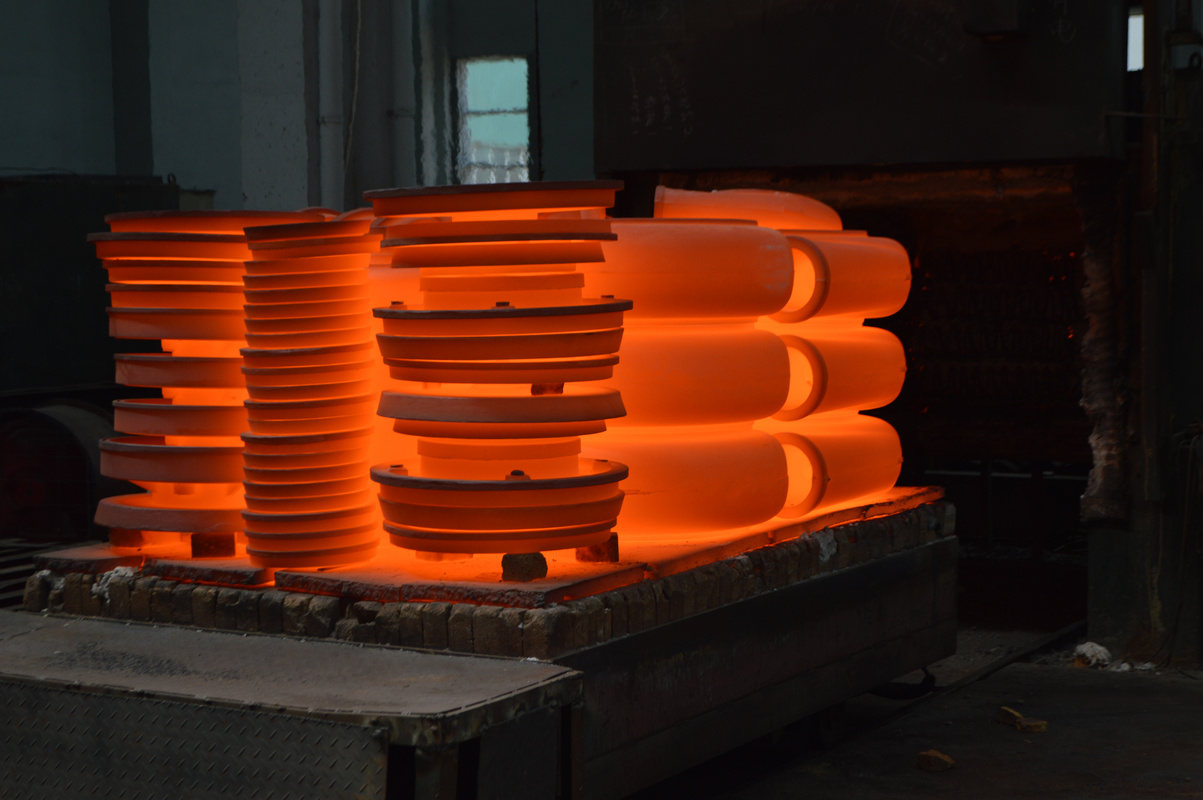
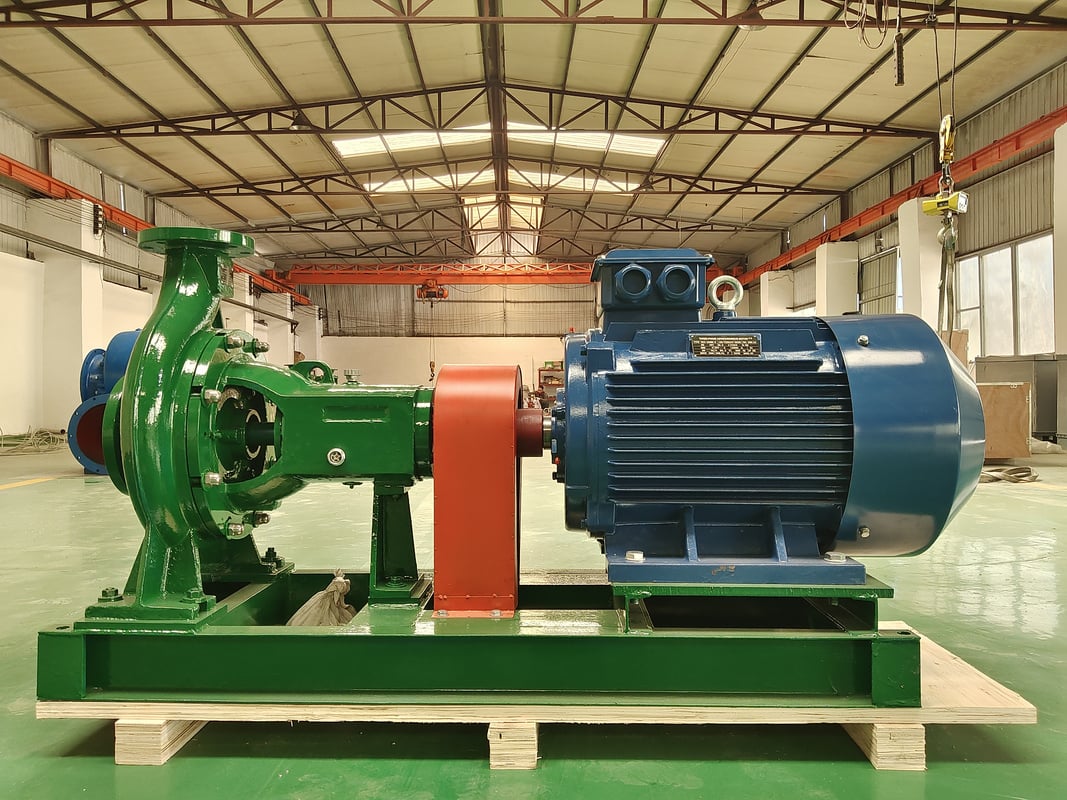
BBP vertical multistage pumps deliver 1-200 m³/h at heads to 240 m for pressure boosting, reverse-osmosis pre-pressure, boiler feed, fire-fighting jockey service and industrial process water treatment duties – built end-to-end in our ISO 9001 / ISO 14001 / CE-certified Beijing foundry with a 600 ton/month cast-iron capacity and a 30 ton crane on the assembly line.
- Flow: 1 – 200 m³/h (5 – 880 gpm)
- Head: 20 – 240 m (66 – 790 ft)
- Motor power: 0.37 – 110 kW
- Rated speed: 2,900 rpm @ 50 Hz
- Wetted parts: 316 stainless (QDLS) or cast iron (QDL)
- Standard 0–70 °C · high-temp 70–140 °C variant
- NSF/ANSI 61 upgradeable for potable water
- OEM & ODM; 1-unit MOQ on standard models

System Pressure Challenges — And How QDLS Vertical Multistage Solves Them
A vertical multistage pump is the workhorse of modern high-pressure water systems: two or more impellers stacked vertically on a shared motor shaft, with each stage adding pressure while the footprint stays compact and inline. Yet most engineers we work with arrive at QDLS after running into the same three problems with the pump they already have.
PAIN 1
Single-stage pumps can’t reach the head the system needs.
An MEP engineer on r/MechanicalEngineering recently asked for a multistage selection hitting 15 m³/h at 63.34 m head — a duty point a single-stage 2-pole centrifugal simply cannot deliver without oversizing the motor and burning cash on partial-load operation.
PAIN 2
Horizontal booster sets eat the plant room.
A horizontal multistage in the same duty class as our 80QDLS footprint typically requires 2-3 the floor area once suction piping, discharge elbows and the motor pedestal are counted – a real constraint in high-rise booster rooms, RO skids and packaged fire stations.
PAIN 3
The wrong stage count silently kills efficiency.
Adding impellers is not a free lunch: industry field notes report roughly 2–4% hydraulic efficiency loss per extra stage once you exceed the BEP-optimum count for the duty point. Over a 15-20 year life, two wasted impeller stages easily translate into five-figure energy costs on a mid-size pump – and that is before you count cavitation-driven maintenance.
How QDL and QDLS solve this
Every QDL/QDLS is matched to a duty point before it leaves the foundry. Our application engineers pull the flow rate and head requirement from your system curve, pick the exact stage count that places your operating point on the best-efficiency band, and spec 316 stainless or cast-iron hydraulics to match the fluid chemistry. The result: tighter BEP alignment, fewer stages than brochure-driven selections, lower lifecycle energy use, and a compact in-line footprint that fits booster skids, RO pre-pressure stations and fire jockey packages. The rest of this page walks through the specific models, the comparison data, and the procurement terms that go with them.
QDL & QDLS Product Line — Models, Stages and Duty Points
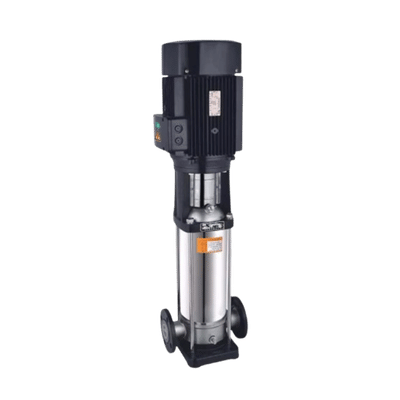
The QDL family is an inline multistage centrifugal pump built around a cartridge mechanical seal, drop-in-replaceable impeller stages, and a shared vertical shaft driven by an IEC/NEMA motor at 2,900 rpm (50 Hz) or 3,500 rpm (60 Hz). Three hydraulic variants share the same pedestal footprint:
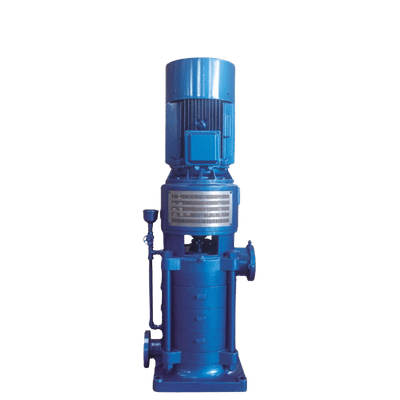
QDL — Cast-Iron Standard
- Wetted: cast-iron casing, chrome-steel impellers.
- Temp: −5 to +70 °C.
- Use for: clean industrial water, HVAC chill/condenser loops, condensate transfer.
QDLS — 316 Stainless
- Wetted: 316 stainless casing, diffuser and impeller stack.
- Temp: −5 to +70 °C (standard), upgradeable to 140 °C.
- Use for: RO pre-pressure, potable water, demineralized water, mild chemistry.

QDL-H — High-Temperature
- Wetted: cast iron or stainless; upgraded seal compound.
- Temp: 70 to 140 °C.
- Use for: boiler feed, hot condensate return, district heating.
Representative Hydraulic Envelope
| Size code | Port (DN) | Flow Q (m³/h) | Head H (m) | Stages available | Typical motor power |
|---|---|---|---|---|---|
| 25QDLS | DN25 (1") | 1.5 – 3 | 20 – 205 | 2 – 28 | 0.37 – 4 kW |
| 32QDLS | DN32 (1.25") | 3 – 6 | 20 – 180 | 2 – 21 | 0.55 – 5.5 kW |
| 40QDLS | DN40 (1.5") | 6 – 12 | 20 – 160 | 2 – 18 | 1.1 – 11 kW |
| 50QDLS | DN50 (2") | 12 – 16 | 30 – 150 | 2 – 16 | 2.2 – 18.5 kW |
| 65QDLS | DN65 (2.5") | 16 – 32 | 40 – 170 | 2 – 15 | 3 – 30 kW |
| 80QDLS | DN80 (3") | 32 – 55 | 40 – 145 | 2 – 12 | 5.5 – 45 kW |
| 100QDLS | DN100 (4") | 55 – 85 | 30 – 130 | 2 – 10 | 7.5 – 55 kW |
| 125QDLS | DN125 (5") | 85 – 150 | 30 – 110 | 2 – 8 | 11 – 75 kW |
| 150QDLS | DN150 (6") | 150 – 200 | 25 – 95 | 2 – 6 | 15 – 110 kW |
Tolerances follow ISO 9906 Grade 2 on hydraulic acceptance tests; NPSH required reported at 3% first-stage head drop per ISO 9906 convention.
Application × Model Decision Matrix
Most buyers arrive with a system curve, not a model number. The table below maps common industrial duties directly to the QDL/QDLS size code that places the duty point closest to the best-efficiency region for a typical stage count. For the exact stage selection and curve overlay, send your duty point to our application team.
| Application | Recommended model | Flow Q (m³/h) | Head H (m) | Typical power | Material call |
|---|---|---|---|---|---|
| Reverse-osmosis pre-pressure (municipal) | 40QDLS 12-6 | 6 – 16 | 40 – 80 | 2.2 kW | 316 SS (NSF 61 upgradeable) |
| High-rise domestic water boost (12–20 floors) | 65QDLS 20-8 | 12 – 32 | 60 – 120 | 5.5 kW | 316 SS |
| Boiler feed — steam plant make-up | 50QDL 16-10 (H) | 10 – 20 | 80 – 140 | 7.5 kW | Cast iron + high-temp seal |
| Fire jockey / pressure maintenance | 25QDLS 3-8 | 1.5 – 3 | 60 – 160 | 1.1 kW | 316 SS (UL-adjacent) |
| Industrial washdown & process | 80QDLS 32-6 | 25 – 45 | 40 – 80 | 11 kW | 316 SS |
| Farmland / sprinkler irrigation | 50QDL 12-4 | 10 – 20 | 30 – 50 | 2.2 kW | Cast iron |
| Cooling-tower booster / HVAC chilled loop | 100QDLS 55-4 | 40 – 70 | 30 – 70 | 15 kW | Cast iron or 316 SS |
Need a sanity check on your selection? Send us your flow, head, NPSH-available and fluid data →
Submit duty point for free sizing check
"Stage count is where most multistage selections go wrong. We regularly receive RFQs asking for ten stages when eight will land the duty point closer to the best-efficiency point - and eight stages means less axial thrust, less cavitation risk on warm water, and about 4% lower requirement of kilowatt at the same discharge pressure. We would prefer to ship the right pump than the biggest pump."
Vertical vs Horizontal Multistage — Data-Driven Comparison
Vertical and horizontal multi-stage pumps find their way in the same RFQ more than either camp would like. (The correct answer). What it depends on: how much Plant-room Floor you have, how the suction and discharge piping routes, and to weigh up the importance of lifecycle energy versus servicing-access convenience. Here is how the two architectures compare on the dimensions we see drive real decisions in 2024–2025 project bids.
| Dimension | Vertical multistage (QDL/QDLS) | Horizontal multistage (ring-section) |
|---|---|---|
| Plant-room footprint (32 kW class) | ≈ 0.35–0.45 m² (inline) | ≈ 1.0–1.2 m² (with suction & discharge elbows) |
| Suction / discharge routing | In-line — drop into an existing horizontal header | L-shape — needs suction elbow, strainer bracket |
| Axial thrust handling | Internal hydraulic balance + thrust bearing | External balance drum + dedicated thrust pad |
| Typical NPSHr @ BEP | 2.5 – 4 m | 3.5 – 6 m |
| Mechanical-seal maintenance interval | 24 – 36 months (typical duty) | 12 – 24 months |
| Hydraulic efficiency at BEP | 65 – 75% | 68 – 78% |
| Sound pressure @ 1 m | 72 – 76 dB(A) | 74 – 78 dB(A) |
| Typical motor TEFC frame | IEC B5 / NEMA C-face, IE3, IP55 | IEC foot-mount, IE3, IP55 |
| Service life (typical duty) | 8 – 12 years | 8 – 10 years |
| Best fit when... | High head, limited floor, inline piping | Low NPSH available + heavy-duty high-flow |
Las bandas de eficiencia y el rango NPSH representan perfiles tabulados en el estándar ANSI/HI y ISO 9906 en SU. Acceptance tests; target values depending on stage and duty point., test conditions to be selected according to type test code and duty point.
Where Total Cost of Ownership Actually Lands
The pump lifecycle-cost analysis by the Hydraulic Institute offers the most transparent framing we've encountered: over a 15–20 year service life, the initial pump price is only about 10% of the total cost of ownership. The U.S. Department of Energy's pump LCC guide splits the remaining 90% into energy (the largest bucket), maintenance, downtime, installation and disposal. Uafhængige standarder udarbejdet af Edelmann angivelse energi på ca.32% og vedligehold ca.20% of lifecycle cost for typical industrial multistage pumping systems.
Silver-Tier TCO Lens — 15-Year Industrial Multistage
Field-average splits Hydraulic Institute, Edelmann lifecycle studies. Use as a compass; get our engineers on demand a project-specific TCO model dedicated to your duty.
- ~38% Downtime, rebuild, disposal
- ~32% Energy (15–20 yr)
- ~20% Maintenance & spares
- ~10% Initial pump + install
Implication: A QDLS selection that puts the duty point on the best-efficiency band, and subsequently keeps the spares local. can move more TCO than any initial-price discount — which is how we position against both premium EU-brand pumps and the cheapest cast-iron OEMs.
Customer Outcomes — Where QDLS Delivers Verified Performance
Rather than a generic applications list, each block below ties a QDLS selection to the system conditions and the result the customer measured on acceptance. Figures are drawn from our 2024–2025 project RFQ and test records.
High-Rise Water Supply — Residential Tower, Southeast Asia
Duty: 20 m³/h at 100 m head
Selection: 40QDLS 20‑10
Motor: 11 kW IE3
A 20-floor residential tower needed to boost municipal pressure from a ground-level tank to the roof break-tank. A two-pump duty-standby skid with 40QDLS delivered the target head at the specified flow while keeping the pump-room footprint under 1.5 m² — roughly a third of the horizontal booster set the project originally quoted.
Result
Boost pressure stable across 06:00–22:00 demand peaks; motor kW draw tracked within 3% of BEP on the commissioning acceptance test.
RO Pre-Pressure — Industrial Demineralization Skid
Duty: 12 m³/h at 60 m (260 psi target)
Selection: 40QDLS 12‑6
Material: 316 SS
Industrial RO feed commonly requires up to 260 psi (≈18 bar / 180 m) at the membrane inlet, depending on recovery target and TDS. Our 40QDLS in 316 SS, specified with NSF/ANSI 61-compliant elastomer seals, sits on the low-pressure pre-filter side feeding the high-pressure membrane pump.
Result
The customer's second membrane pass stabilized inlet pressure within the +/-5% membrane specification, eliminating the flux swings their previous horizontal pump caused during backwash cycles.
Boiler Feed — 10 t/h Steam Plant
Duty: 15 m³/h at 140 m head @ 95 °C
Selection: 50QDL-H 16‑10
Seal: high-temp
Boiler feed is one of the most demanding multistage services: the pump must survive the temperature of the deaerator outlet, tolerate condensate-return chemistry, and keep NPSH margin against the flashing vapor pressure. Our high-temp QDL-H variant ships with an upgraded cartridge seal compound and a stainless impeller stack rated to 140 °C.
Result
The customer replaced a 12-year-old horizontal multistage with a shorter stage count (10 vs. the original 12), dropping rated power from 18.5 to 15 kW at the same head.
Fire Jockey — Warehouse Sprinkler Package
Duty: 2 m³/h at 120 m head
Selection: 25QDLS 3-8
Material: 316 SS
Fire-jockey pumps maintain system pressure so the main fire pumps only cut in on real demand. The duty is low-flow / high-head, exactly what a compact 25QDLS is designed for. Each pump ships tested to ISO 9906 Grade 2 and is mated with an IE3 motor rated for continuous standby duty.
Result
The warehouse maintained a zero-nuisance-start record over the first 6 months of service.
Irrigation — Sprinkler Farm, 40 ha
Duty: 18 m³/h at 45 m head
Selection: 50QDL 12-4
Material: cast iron
A sprinkler irrigation network of 40 ha across two-terrain pivots pulled from a single sump, needing a stable boost to reach the furthest sprinkler head on a hot-day peak flow. Our customer chose the cast-iron QDL to keep initial cost down while still benefiting from the inline multistage's compact footprint on the pad.
Result
Coverage uniformity within the ±5% agronomic target across the full operating season; no stage-seal intervention in year one.
Certifications & Quality Standards — What Each One Means for Your Spec
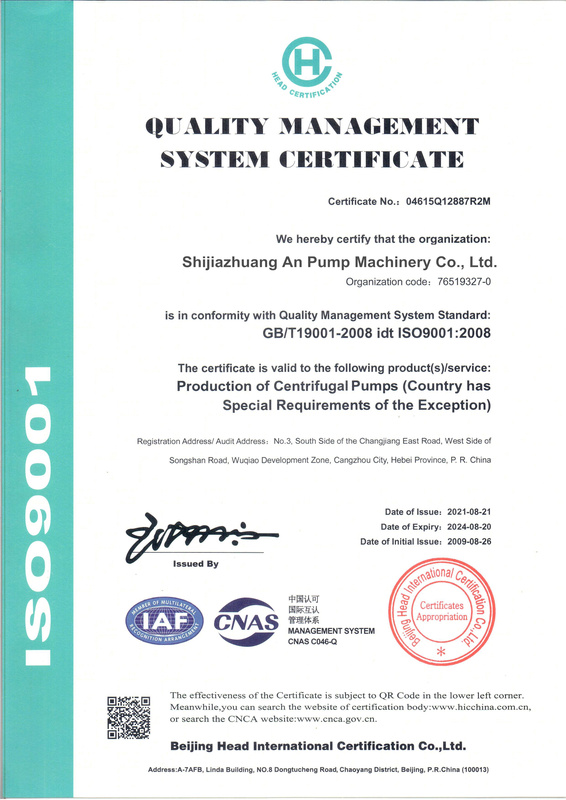
Procurement specs for industrial multistage pumps almost always reference the same short list of certifications. Here is what each one actually tells you - and how it maps to the audit evidence we can send with the quotation.
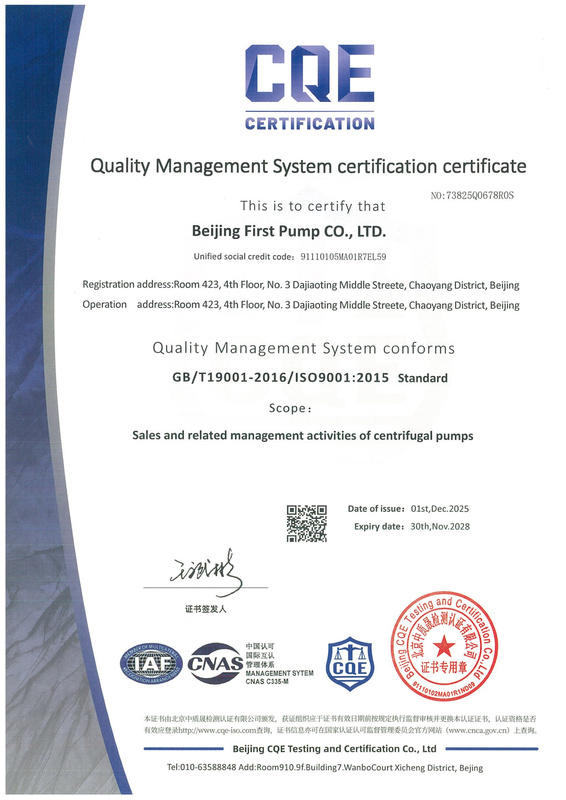
ISO 9001
Quality managementISO 14001
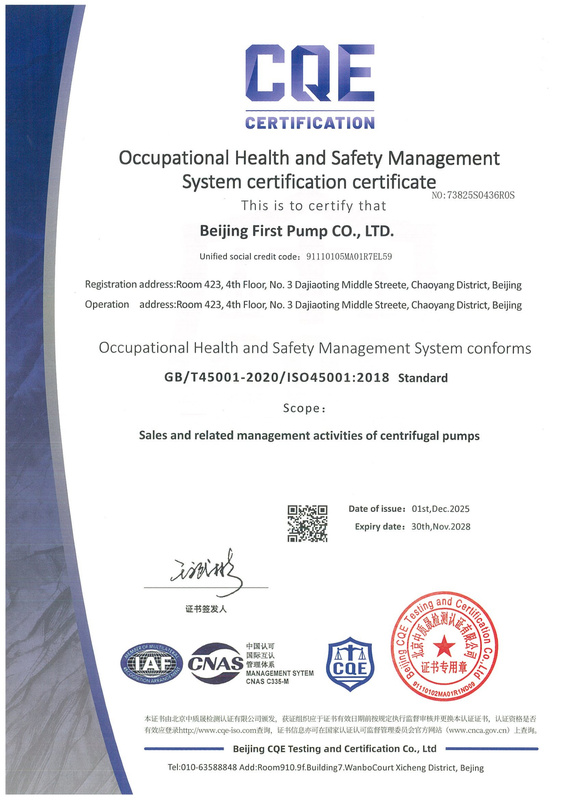
Environmental managementOHSAS 18001
Occupational H&SCE
EU conformityNSF/ANSI 61
Drinking water (on request)| Certification | What it audits | Why procurement asks for it |
|---|---|---|
| ISO 9001 | Quality-management system across design, foundry, machining, assembly, testing and after-sales. | Evidence that every QDLS of the same model is produced to the same dimensional and performance controls — not a one-off handbuilt prototype. |
| ISO 14001 | Environmental-management system — wastewater, coating VOCs, scrap. | Increasingly a mandatory field in EU, Middle East and North American public procurement tenders. |
| OHSAS 18001 | Occupational health & safety in the foundry and machining hall. | Signals a supplier that is not cutting corners on labor protection — a proxy for process discipline. |
| CE | European conformity — Machinery Directive 2006/42/EC, EMC Directive, Low-Voltage Directive. | Legally required for the pump package to enter the EU/EEA market; covers motor-pump assembly as a whole. |
| ISO 9906 (test basis) | Hydraulic performance acceptance test — Grades 1, 2, 3 tolerance bands for flow, head, power and NPSH. | Evidence that the curve on the datasheet is the curve you will actually commission. Grade 2 is the industrial default. |
| NSF/ANSI 61 upgrade | Health-effects evaluation of materials in contact with drinking water — casing, impeller, seals, elastomers. | Required for municipal potable-water boosters and many RO pre-pressure applications in North America. Available on request for our 316 SS builds. |
Procurement Guide — Lead Time, Spares, Shipping and Support
Buyers tell us the single biggest hesitation with a non-European pump brand is not the pump itself - it is the after-sales loop. A pump that ships in six weeks but sits idle for ten more waiting on a mechanical seal defeats the purpose. Here is how the QDL/QDLS program is structured around that concern.
Pricing Factors — What Drives Your Quote
Every QDLS quotation is engineered against the duty point you send in. Below are the variables that move the price:
- Hydraulic envelope: chosen model, stage count, motor kW rating.
- Material call — cast iron vs. 316 SS vs. NSF 61-upgrade elastomer stack.
- Motor options — IE3 standard, IE4 premium efficiency, VFD-ready, and explosion-proof variants.
- Testing & paperwork — ISO 9906 Grade 2 standard; Grade 1 available on request for critical-service tender files.
- Packaging & shipping incoterms — FOB / CIF / DDP; wooden-crate rust-preservation packaging included.
- Quantity & MOQ — 1-unit minimum on standard models; scale discount from 5 units.
Lead Time & Spares
- Standard stock models: typical dispatch in 3–6 weeks from PO confirmation.
- OEM / custom builds — 6–12 weeks typical, with engineering review and factory acceptance test.
- Spare parts stock — high-wear items (mechanical seals, impeller stages, wear rings, O-rings) for every standard QDLS size are held in the Beijing warehouse; orders usually dispatch within 90 days of request.
- Foundry-backed continuity — our 600 ton/month cast-iron capacity and 30-ton crane assembly line let us reproduce any discontinued hydraulic envelope on a re-tool basis when a legacy pump in your plant needs a replacement.
Logistics & On-Site Support
- Global shipping through the Beijing – Tianjin port corridor; CIF to major hubs worldwide.
- Wooden-crate packaging with VCI rust-preservation film for sea-freight transits up to 60 days.
- 24/7 technical support: pre-sales engineers handle sizing and system-curve overlay; post-sales team runs remote diagnostics on anomalies; on-site commissioning support is available on request for critical installations.
Manufacturing Power & Global Reach
Factory Infrastructure





International Exhibitions


Company Qualifications & Certificates



Engineering Tools — Selection & Lifecycle Analysis
Leverage our data-driven engineering tools to streamline your pump selection process and forecast long-term operational expenses. Choose the right hydraulic envelope and model your Total Cost of Ownership (TCO) with precision.
QDLS Vertical Multistage Pump Model Selector
Input your flow rate, head requirements, and system conditions to instantly identify the optimal QDLS model and stage count for your specific duty point. Ensure your selection aligns perfectly with the best-efficiency performance band.
Access SelectorVertical Multistage Pump Lifecycle Cost (TCO) Calculator
Evaluate the 15-year lifecycle cost of your pump system. Factor in initial capital, energy consumption, routine maintenance, and downtime risks to make data-backed procurement decisions and maximize your ROI.
Launch Calculator