Get in Touch with BBP

ISO 9001 CERTIFIED
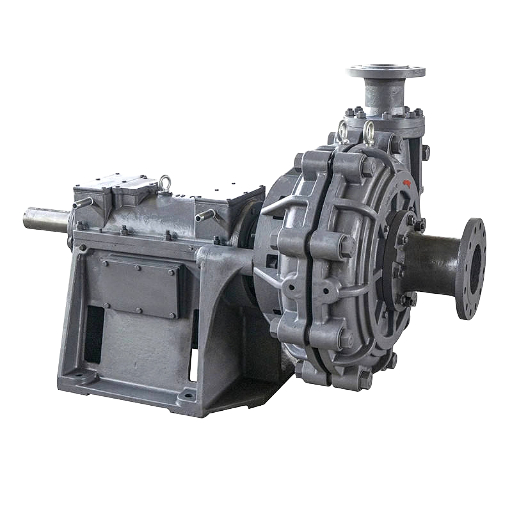
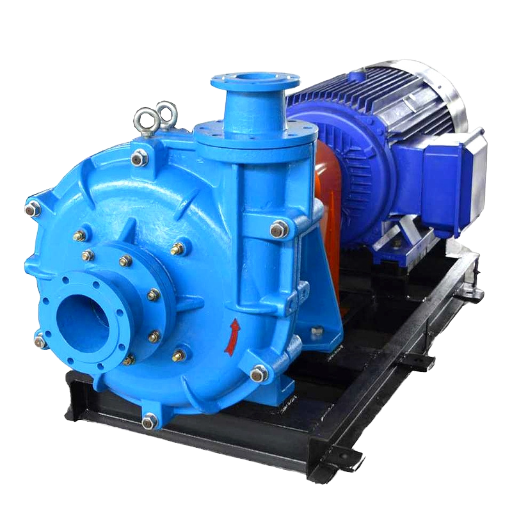
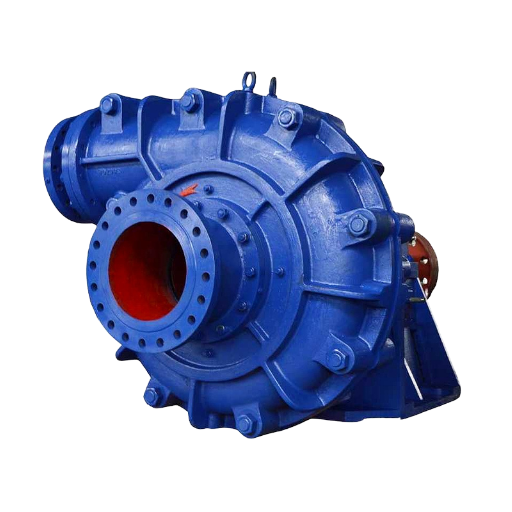
Heavy Duty Slurry Pump
Heavy Duty Slurry Pump — High Head & Large Flow for Mining & Industrial Use
Move abrasive, high-density slurries at flow rates from 36 to 2,800 m³/h (AMG series) or up to 30,000 m³/h (AWN dredging series), with heads up to 80 m. BBP heavy duty slurry pumps are built on Ni-hard high-chromium alloy metallurgy (>550 BHN), backed by ISO 9001-certified manufacturing and two decades of field deployment in mining, dredging, aggregate, and power applications.
- Materials: Ni-Hard Alloy >550 BHN
- Bearing Life: >50,000 hrs (LB10)
- Global Presence: 6 Continents
- Flow Range
- 36–2,800 m³/h (AMG)
- Max Head
- Up to 80 m
- Solids Handling
- Up to 241 mm passage
When Standard Pumps Fail — Why You Need a Heavy Duty Slurry Pump
A slurry pump is a centrifugal pump designed to move slurry—liquid containing suspended solids—whether fine mineral tailings or coarse gravel—at densities that would take down a water pump in a matter of weeks. No, its not just thicker walls; a slurry pump is a fundamentally different horse to a whole new collective of hydraulic design, material science and seal engineering horses.
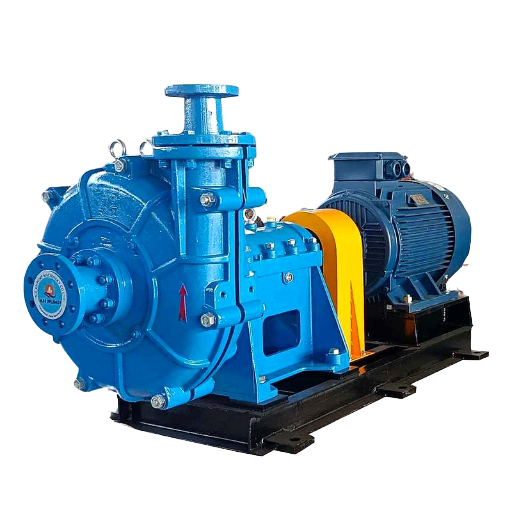
Standard centrifugal pumps fail in slurry service because they were never designed for it. Failure modes are predictable: impeller erosion thins vanes until efficiency drops below usable thresholds. Shaft seals leak under abrasive particle contact, leading to bearing contamination and catastrophic failure. Casing wear creates internal recirculation that wastes energy — sometimes 15–20% of input power — while reducing discharge pressure. Clogging at suction inlets shuts down entire process circuits.
BBP heavy duty slurry pumps address each of these failure points through material selection and geometric design. Our wet-end components — impellers, volute liners, and throatbushes — are cast from Ni-hard high-chromium alloy (N08HC) with hardness exceeding 550 BHN, delivering wear resistance 2–4 times greater than standard white iron. The expeller seal system generates a centrifugal barrier that prevents slurry from reaching the shaft packing, eliminating the single most common cause of unplanned pump shutdowns. Wide flow passages and aggressive vane geometry handle solids up to 241 mm without clogging, maintaining reliable operation in the harshest processing environments.
Fewer shutdowns, longer intervals between wear part replacements, and the kind of durability that maintains consistent hydraulic performance across the service life of each set of wet-end parts. In our experience serving mining operations across 6 continents, the pump that keeps running is worth more than the pump that costs less.
We used slurry pumps in mining (cyclone feed, mill discharge, tailings transfer), aggregate processing (sand and gravel wash, classification), power generation (FGD lime slurry, ash handling), and wastewater treatment (sludge transfer, dewatering feed). And each of these applications had different requirements for hard wearing abrasion and corrosion resistant properties versus hydraulic efficiency—something that is often confounded in one size fits all.
BBP Heavy Duty Slurry Pump Series — Models & Selection Guide
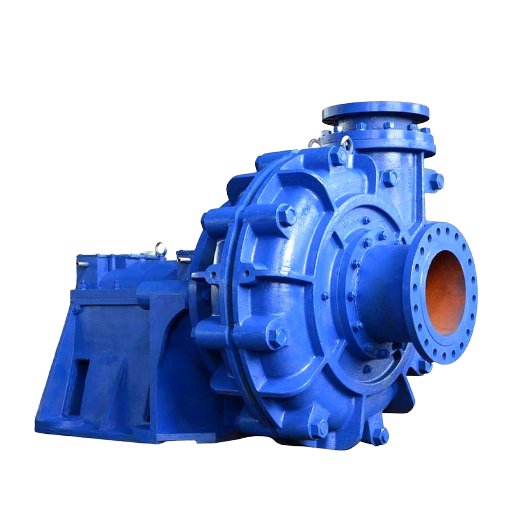
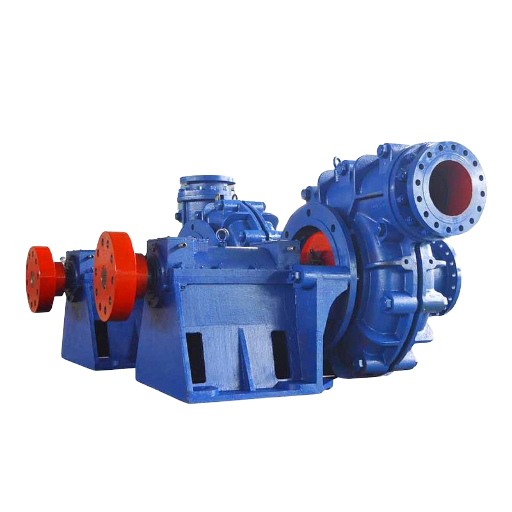
BBP’s heavy-duty slurry pump lineup includes two primary product families: the AMG Series gravel sand pumps for abrasive slurry handling, and the AWN Series dredging pumps for high-volume dredging and land reclamation. The AMG series comes in bare shaft or complete motor-mounted configurations with drive options including V-belts, flexible coupling, gear box, hydraulic coupling, and variable frequency drive. The AWN series ranges from single-suction models (200AWN–500AWN) for moderate throughput to double-suction models (600AWN–1000AWN) capable of flows up to 30,000 m³/h. We also supply submersible slurry pump variants and pump-agitator combinations for sump applications where settled solids need re-suspension before transfer. Both families share Ni-hard high-chromium wet-end metallurgy with hardness exceeding 550 BHN.
AMG Series — Gravel Sand Pump
| Model | Outlet | Speed (r/min) | Flow (m³/h) | Head (m) | Max Power | Max Solid |
|---|---|---|---|---|---|---|
| 6/4D-AMG | 100 mm | 600–1400 | 36–250 | 7–76 | 60 kW | 82 mm |
| 8/6E-AMG | 150 mm | 300–1400 | 180–540 | 12–52 | 120 kW | 120 mm |
| 10/8F-AMG | 200 mm | 500–1000 | 180–828 | 12–46 | 960 kW | 178 mm |
| 12/10G-AMG | 250 mm | 400–850 | 460–1200 | 12–40 | 660 kW | 220 mm |
| 14/12G-AMG | 300 mm | 300–700 | 700–2700 | 8–70 | — | 241 mm |
| 14/12TU-AMG | 300 mm | 300–700 | 700–2700 | 8–70 | 1200 kW | 241 mm |


AMGH Series — High-Head Variants
| Model | Outlet | Speed (r/min) | Flow (m³/h) | Head (m) | Max Power | Max Solid |
|---|---|---|---|---|---|---|
| 10/8F-AMGH | 250 mm | 300–1100 | — | — | 960 kW | 180 mm |
| 12/10G-AMGH | 250 mm | 360–700 | 400–2000 | 20–80 | 600 kW | 210 mm |
| 16/14TU-AMGH | 350 mm | 250–500 | 1000–2800 | 20–40 | 1200 kW | — |
All wet-end components: Ni-hard high-chromium cast iron alloy (N08HC), hardness >550 BHN. Single casing with clamp band connection. Discharge direction: 360° adjustable. Drive options: V-belts, flexible coupling, gear box, hydraulic coupling, VFD.
Application-Based Selection
| Application | Recommended Model | Key Advantage |
|---|---|---|
| Mining mill discharge / cyclone feed | 6/4D-AMG or 8/6E-AMG | High chrome, compact, up to 76 m head |
| Sand & gravel extraction | 10/8F-AMG or 12/10G-AMG | Wide passages, handle solids up to 220 mm |
| Dredging & land reclamation | AWN Series (200–1000AWN) | Up to 30,000 m³/h, deep suction NPSH |
| Tailings transfer (high head) | 12/10G-AMGH or 10/8F-AMGH | High-head variant, up to 80 m head |
| Large-volume slurry transport | 14/12TU-AMG or 16/14TU-AMGH | Up to 2,800 m³/h, 1200 kW motor |
Technical Deep-Dive: Seal Options
Expeller Seal (centrifugal barrier)
Default choice for most slurry applications. A back vane creates centrifugal force that prevents slurry from contacting the shaft. Zero flush water required. Best suited where the pump runs continuously at sufficient speed to maintain the centrifugal barrier.
Packing Seal (stuffing box)
Traditional braided packing in a stuffing box arrangement. Requires flush water supply. Lower initial cost and straightforward maintenance, though regular adjustment is needed as packing wears.
Mechanical Seal
Zero-leakage option for chemical service or environmentally sensitive applications. Higher initial cost. Requires clean flush water supply to protect seal faces from abrasive contact.
Heavy Duty Slurry Pump vs Conventional Pump — Performance Data
Selecting the optimal slurry pump starts with understanding the slurry itself. Particle size, concentration, and chemical make up will determine which technology will survive—and which will drain your maintenance budget. All three major slurry technology choices compare as follows.
Performance Metric
Heavy Duty Slurry Pump
Standard Centrifugal
Positive Displacement
Max Solids Concentration
Up to 65% by weight
5–10%
Up to 80%
Max Particle Size
Up to 241 mm
<3 mm
50 mm (varies)
Wear Life (hours)
3,000–8,000
500–1,500
2,000–6,000
Pump Efficiency
65–80%
75–90%
50–70%
Maintenance Interval
3,000–8,000 hrs
500–1,500 hrs
1,500–4,000 hrs
Initial Cost (relative)
1.3–1.5×
1.0× (baseline)
2.0–3.0×
Best For
Coarse abrasive slurries, mining
Clean/near-clean water
High-viscosity, precise dosing
Yes, an efficiency gap between a heavy duty slurry pump and a clear-water centrifugal pump is real — 65–80% vs 75–90%. But that comparison ignores the fundamental question: how long does the pump actually run before it needs parts? A standard centrifugal pump achieves higher peak efficiency on day one. By week six in an abrasive slurry circuit, impeller erosion has dropped that efficiency below the slurry pump’s baseline, and you are scheduling a shutdown.
Material Selection: When to Use What
Ni-hard high-chromium alloy (N08HC, >550 BHN)
— Best general choice for coarse high-abrasion slurries. Special mineralogy (sharp-edged quartz, copper tailings), particle sizes exceeding 1 mm. BBP’s new-generation material can reach 700 BHN for the most demanding applications. Offers 3-4+ times the wear life of the equivalent standard white iron on the same slurry. Only use high chrome if abrasion is predominantly the wear mechanism.
[+] Read More
Natural rubber lining
—Ideal for fine particle slurries (below 0.5 mm)—mineral tailings, very fine sand, clay suspensions. Rubber has greater absorption energy than metal—mitigating impact when engaging a load of coarse particles, also offers corrosion resistance in dilute acidic environments. Wear life in fine silica in excess of 6,000 hours.
[+] Read More
White Iron (Ni-Hard)
: A cost-effective option for moderate abrasion applications where high chrome’s premium is not justified. Suitable for aggregate washing and lower-concentration slurries. Expect 1,000–2,000 hours of service in typical mining conditions.
[+] Read More
3–4× Longer Wear Life
High-chrome wet-end parts typically deliver 3–4× longer wear life vs standard materials, reducing total cost of ownership by an estimated 20–40% over a 5-year operational period.
Based on industry maintenance data and field deployment patterns
Want to see how we compare for your particular application?
Request a Custom Comparison →Case Studies — Heavy Duty Slurry Pump Performance Across Industries
These representative scenarios illustrate how heavy duty slurry pumps perform across different industrial environments. Each application presents distinct challenges in slurry composition, operating conditions, and performance requirements.
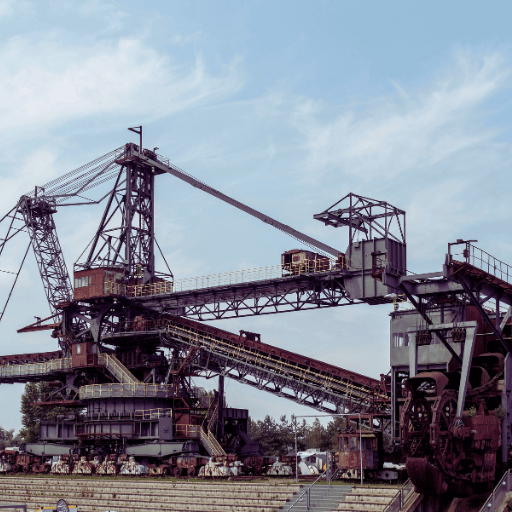
Mining — Copper Concentrator
Cyclone Feed Duty at 45% Solids Concentration
A copper concentrator at 15,000 tonnes/day needed cyclone feed pumps capable of pumping 45% solids by weight of critical to process slurry—including 0.2-2 mm sharp-grit silica. Standard pumps in the plant would give 800–1,000 hours of wear life per liner set before replacement and create costly, unplanned process shutdown.
The engineering team specified a 6/4 E-AH heavy duty slurry pump with A05 high-chrome wet-end components. Impeller and volute liner geometry was matched to the duty point of 280 m/h at 42 m head such that it would operate within the best efficiency zone. BBP’s expeller seal also eliminated the flush water consumption that previously contribute an additional 12 m/h of dilution to the circuit.
Liner life extended to approximately 3,200 hours — a factor of 4 improvement — reducing scheduled maintenance interventions from 6 per year to under 2. Eliminating flush water improved downstream classification efficiency by reducing unwanted dilution.
Aggregate — Sand Washing
Fine Silica Handling for Construction Sand Production
Challenge: Sand washing plant with throughput of 400 m/h of fine silica slurry (d50 = 0.3 mm). Previous experience using metal-lined pumps revealed rapid abrasion of the liner and impeller from high concentration of fine abrasive particles and necessitated impeller replacement every 1,200 hours.
BBP Solution: 4/3 D-AH pump lined with natural rubber provided a solution to this application. Rubber’s elastic deformation allowed it to absorb a much higher proportion of the impact energy imparted by the fine particles than a rigid metal impeller and to retain this advantage over a significantly longer wear life.
Outcome: Wear life increased to approximately 6,200 hours per liner set. Unplanned shutdowns dropped from an average of 4 per year to near zero. The rubber lining also reduced operating noise by an estimated 8–10 dB compared to the metal-lined predecessor.
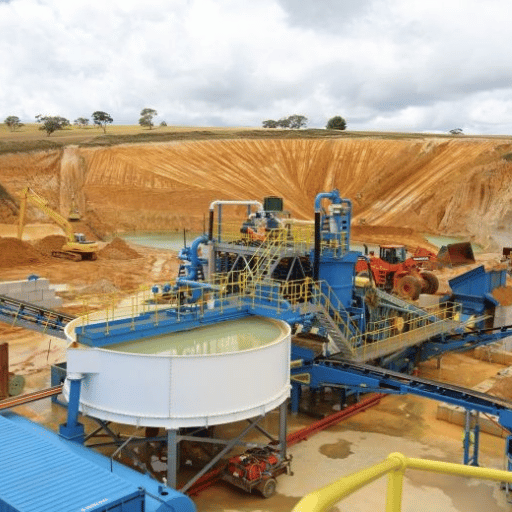
Power Generation — FGD System
Lime Slurry Service in a Corrosive Environment
Q: What makes FGD slurry different from mining slurry?
FGD (Flue Gas Desulfurization) processes operate within a pH window of 2-4 which is extremely corrosive to traditional high-chrome alloys of construction as they are subject to attack not just from the abrasives but also from the acidity itself in the form of chemical corrosion. Each batch of slurry contains a mixture of calcium sulfate crystals and calcium carbonate particles with chloride ions in solution to promote pitting.
Q: How was the material selected?
The engineering team recommended a corrosion-grade high-chrome alloy with increased molybdenum content for resistance to chloride attack and a rubber liner for the volute to handle the sharp, coarse particles (sub-0.1 mm). Our engineers retained the impeller in a corrosion resistant form for maximum strength at high speed.
Q: What was the result?
The hybrid material concept of a rubber volute liner combined with a corrosion-grade metal impeller provided approximately 4,800 hours between replacement than the metal version (pH 3.2) that previously achieved around 1,600 hours.
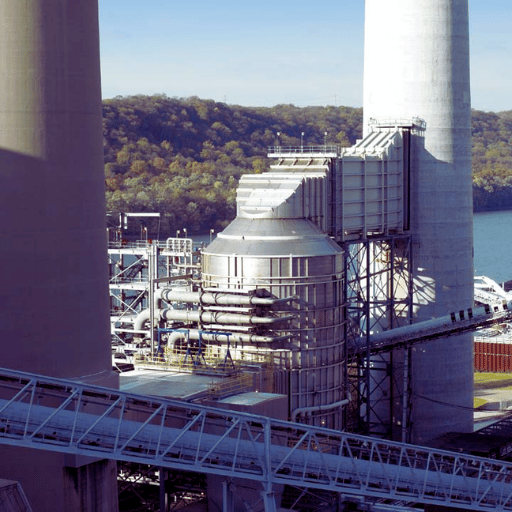
Require similar flow rates?
Request a quote based on your application details →
ISO-Certified Slurry Pump Manufacturing — From Casting to Testing
Every BBP heavy duty slurry pump is manufactured under one roof — from raw alloy melting through final performance verification. This vertical integration is not a marketing claim; it is a quality control decision. When we cast our own high-chrome alloy, heat-treat it in our own furnaces, and machine it on our own CNC equipment, we control every variable that determines how long that pump lasts in your plant.
01
Alloy Melting
02
Casting
03
Heat Treatment
04
CNC Machining
05
Assembly
06
Coating
07
Performance Testing
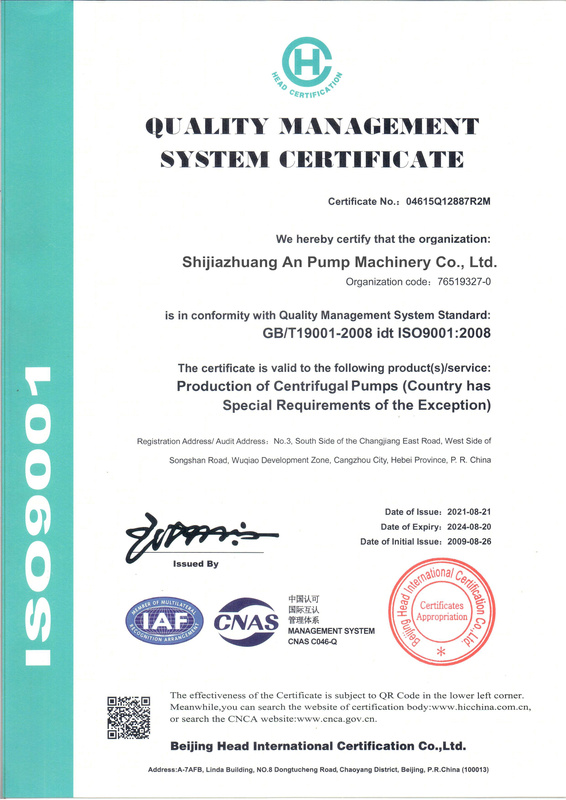
TUV Factory Audit
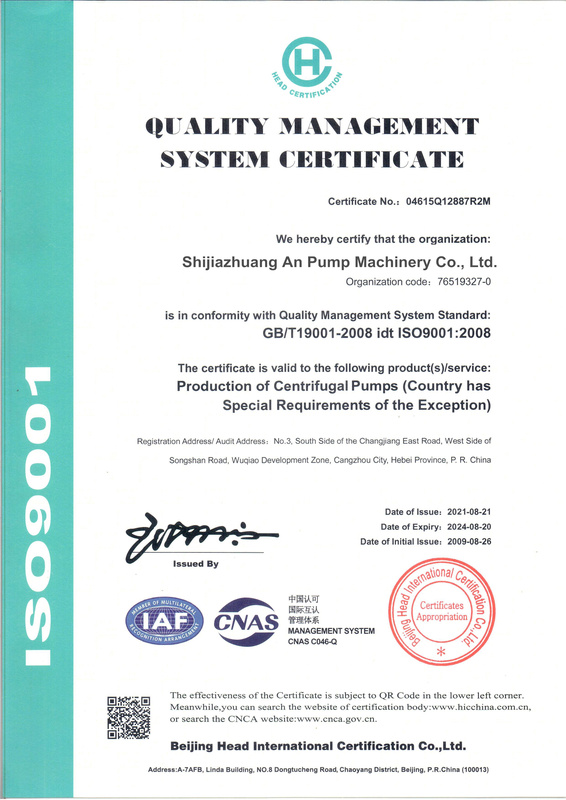
ISO9001 Quality

ISO14001 Environmental

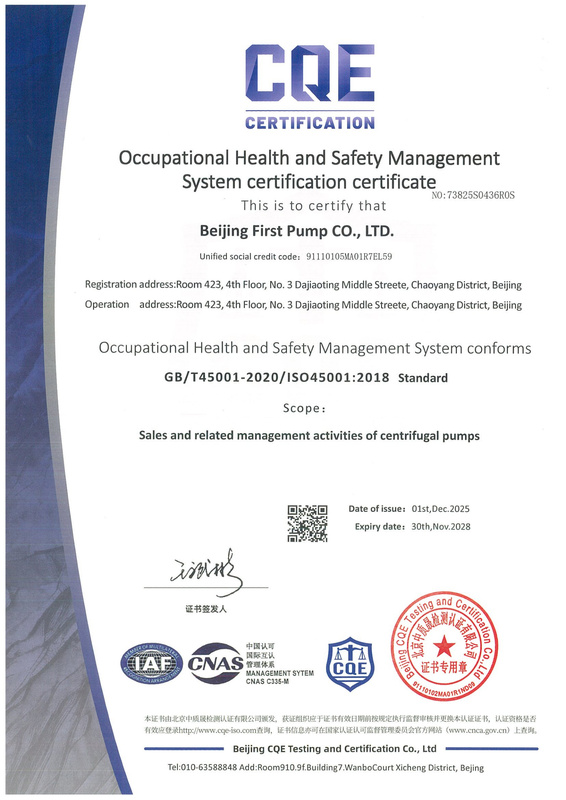
ISO45001 Health & Safety

CE Certification
EAC Certification

Quality Management System
TUV Factory Audit
ISO9001 Quality
ISO14001 Environmental
ISO45001 Health & Safety
CE Certification
EAC Certification
Quality Management System
← Hover sides to scroll automatically · Click to Enlarge →
OEM Capability & Engineering-Led Customization
BBP supplies OEM-compatible replacement parts for Warman AH-series and similar horizontal slurry pump platforms. Our engineering team works from customer-supplied drawings or reverse-engineered samples to produce dimensionally identical wet-end components in our high-chrome or rubber-lined material grades. For new applications, our R&D department runs CFD-assisted hydraulic analysis to match pump geometry to your specific slurry conditions — particle size distribution, concentration, and circuit resistance curve.
We maintain pump mold patterns for over 200 model variants, enabling production of both standard and custom builds without extended tooling lead times. Each pump undergoes factory acceptance testing per ISO 9906:2012 Grade 1B before shipment, with full documentation including material test certificates, dimensional inspection reports, and performance curve verification.
Our metallurgical laboratory tests every heat of alloy for chromium content, hardness (HRC 58–63 for A05), and microstructure uniformity before any casting enters the machining shop. Dimensional tolerances on impellers and volute liners follow ISO specifications to ensure interchangeability — both within our own pump range and with comparable industry-standard models.
This manufacturing depth matters for one practical reason: when you need a replacement impeller in three weeks, not three months, the manufacturer who casts their own alloy and runs their own machine shop can deliver. We do not outsource critical path components, which means our lead times are controlled by our own production schedule — not a subcontractor’s backlog.
Ready to upgrade your pump performance?
Get Instant Quote →
×
![Zoomed Certificate View]()
Procurement Guide — Pricing Factors, Lead Time & Lifetime Support
Pricing Factors Framework
Costings for heavy duty slurry pumps are determined by four factors:
Pump size
Discharge diameter from 1″ to 18″ drives frame size and weight.
Material grade
High chrome costs 30–50% more than white iron but delivers 3–4× the wear life.
Motor configuration
Standalone pump or complete unit with motor, coupling and base frame.
Order volume
Extent of volume discount available for use within 4+ sites and fleet abundance.
Lead Time
Standard model options — the most common sizes in high-chrome and rubber-lined materials — typically ship within 2–4 weeks from order confirmation. Custom configurations, including non-standard alloys, modified hydraulic designs, or specialized motor arrangements, require 4–8 weeks depending on scope. We provide firm delivery dates at quotation stage, not estimates that shift after you place the order.
Spare Parts & Inventory
We provide stock of commonly worn parts of all standard size pumps including impellors, volute liners, throatbushes, seal kits and lubrication packages. Having this equipment available on your site means unplanned downtime can be cut from 60-80% compared to ordering items after breakdown. Our spare parts team can develop a recommended stock list based on your fleet age profile and past wear patterns.
After-Sales Support
Every BBP pump purchase includes pre-sales application engineering, commissioning guidance materials, and access to our 24/7 technical support line. For mining and processing clients, we offer on-site installation supervision, operator training, and remote diagnostics through vibration and wear-rate monitoring programs. Our service engineers have direct access to the same R&D team that designed your pump — there is no tier-1 support wall between you and the engineers who understand the hydraulics.
Slurry Pump Engineering Tools
Slurry Pump Total Cost of Ownership Calculator
Compare your current pump maintenance costs against BBP high chrome slurry pumps. BBP pumps deliver up to 3x longer wear life, cutting replacement frequency and unplanned downtime across your circuit.
Calculate TCO →Slurry Pump Material Selection Guide
Answer five questions about your slurry conditions. This guide applies BBP material engineering principles to recommend the optimal wetted material for maximum wear life and chemical resistance.
Open Guide →FAQ — Heavy Duty Slurry Pump Buyer’s Guide
Pricing varies based on pump size (1″ to 18″ discharge), material grade (high chrome, rubber lined, or white iron), and configuration (bare pump or complete unit with motor). Rather than publishing a price list that would be inaccurate for your specific application, we provide itemized quotations within 24–48 hours of receiving your duty point parameters. Remember that purchase price is generally only 10–15% of total lifecycle cost — material selection and hydraulic efficiency have a far larger impact on your 5-year expenditure.
Rubber linings perform well with particles of less than 0.5 mm in size, where impact velocity is low enough that elastic deformation can absorb it. Metal linings – especially high chrome alloys – are more successful with sharp, cumbersome particles of over 1mm in size where rubber would be cut or torn. For between size particles (0.5-1mm), either material is ideal, and your choice should depend on the chemical make-up of slurry and its temperature and your targeted maintenance cycle. Our application engineers are more than happy to advise once provided with your slurry analysis data.
There are four factors that influence your choice of pump (1) Flow rate – say how many m3/hr your slurry needs to be moved; (2) Total dynamic head – is the vertical lift plus the friction losses within the pipeline; (3) Slurry properties – solids content, size particle distributions, specific gravity and pH; and (4) System configuration – is the suction condition, pipe diameter and layout. Give us these four pieces of information and our engineering team will come back with a pump curve, which highlights the correct model, speed and efficiency.
Wear life depends on the slurry. High-chrome impellers and liners last 3,000–8,000 hours in most mining applications with moderate to high abrasion. Rubber-lined pumps on fine tailings can exceed 6,000 hours. Standard white iron parts last 1,000–2,000 hours under similar conditions. The pump frame and bearing assembly are designed for 20+ years of service — you are replacing wear parts, not the entire pump.
If you do nothing else, be sure to keep: at least one impeller; one set of volute liners (suction side and casing); one throatbush; one seal kit (packing rings, or mech. seal cartridge, depending upon your application).If you have critical-path pumps (downtime costs are far in excess of parts inventory value), stock an entire rotating assembly (shaft, bearing housing, impeller) for swap-outs in hours rather than days.
Yes. We manufacture dimensionally compatible wet-end parts for Warman AH-series and similar horizontal slurry pump platforms. Our parts are produced from the same high-chrome and rubber material grades, cast and machined in our own facility. Provide your existing part number or a dimensional drawing, and our engineering team will confirm compatibility and quote accordingly.
Standard model pumps and common wear parts typically ship within 2–4 weeks. Custom configurations — non-standard alloys, modified hydraulics, or specialized motor setups — require 4–8 weeks. We provide firm ship dates at quotation, and our production planning team updates you at each milestone: casting, machining, assembly, and testing.
Our manufacturing facility holds ISO 9001:2015 quality management certification. Pumps are tested per ISO 9906:2012 (Grade 1B acceptance criteria). Wet-end materials meet ASTM A532 Class III Type A specifications for high-chrome iron. CE marking is available for European market shipments. Material test certificates and factory acceptance test reports are provided with every order.