Get in Touch with BBP

Simply put, a dredge pump impeller is the one part that can make or break the profitability of your dredging project: during production throughput or through unnecessary and expensive downtime. This rotating piece uses shaft power to turn it into slurry velocity-not powered, it can shutdown a complete pipeline. Incorrect design, material or blade profile choice can reduce wear life by roughly 50%, increase energy usage and make pump disassembly necessary in the middle of a project.
Below we cover the engineering concepts driving dredge pump impeller choice here, accompanied with data from dredge research and manufacturer.
Quick Specs: Dredge Pump Impeller
| Impeller Diameter Range | 300–1,400 mm (varies by pump model) |
| Blade Count | 3-blade (standard passage) / 4-blade (high-efficiency) |
| Material | Ni-Hard / High-Chromium alloy (>58 HRC, Cr 24–30%) |
| Max Solids Passage | 82–1,200 mm (model-dependent) |
| Typical Wear Life | 700–1,400+ hours continuous duty |
| Design Method | Computational Fluid Dynamics (CFD) |
How a Dredge Pump Impeller Works — Function Inside the Pump System

The impeller is the single component in the wet end of any centrifugal sand dredge pump that revolves. These centrifugal dredge pumps rely on impeller rotation. As the motor rotates the shaft, the impeller blades use a curved action to send the slurry mixture out via the pump housing and pump casings. This action produces a vacuum in the pump bellmouth, which causes slurry to be sucked from the dredge head or suction pipe.
This slurry is then pumped through the discharge line at the end of the pump casing.
It’s the engineering challenge which sets a dredge pump impeller apart from a standard water pump impeller. It’s a dredge pump that can deal with a slurry of particles, from as small as 0.002 mm, as big as 200 mm, as our research IADC, (International Association of Dredging Companies) states, every turn of the impella blades expose the surface to the abrasive cornucopia of angular quartz particles, gravel and extraneous objects imapacting, causing erosive wear in the leading edge, and abrasive wear in the trailing edge.
Overall hydraulic performance of a dredger is influenced by three parameters of the impeller; a diameter (defining head & flow rate), a blade geometry (controls the flow of solids & efficiency), and the material composition (defines the wear life and extended service life of the impeller before replacing worn parts). Any parameter being incorrect results in production losses through the whole dredging operation.
Dredge Pump Impeller Types — Blade Count, Geometry, and Design Variations
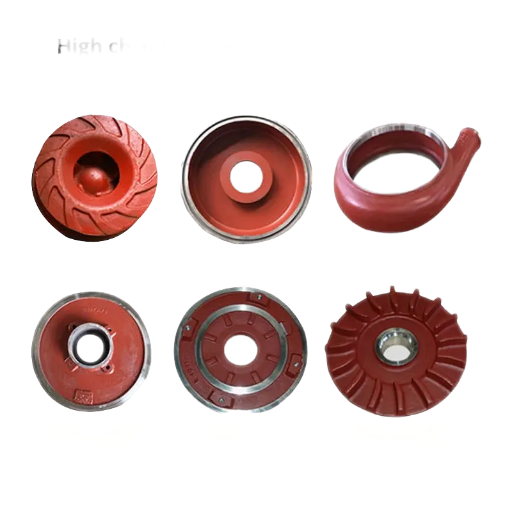
Impeller design of dredge pumps is primarily a trade-off in hydraulic efficiency verses solids passage. Increasing the number of blades on an impeller decreases the impeller passage size (a more ‘closed’ impeller) and tends to require more blades in order to have a stable flow path. Only increased clearance decreases hydraulic efficiency and more blades of a given impeller are better at minimizing flow disturbances.
| Parameter | 3-Blade Impeller | 4-Blade Impeller |
|---|---|---|
| Sphere Passage | ~45% of suction diameter | ~35% of suction diameter |
| Hydraulic Efficiency | Standard baseline | 5–8% higher than 3-blade |
| Anti-Clog Performance | Superior — wider channels | Moderate — narrower channels |
| Best Application | Coarse gravel, rocks, mixed debris | Fine sand, long-distance pipeline transport |
| Typical Use | CSD, river dredging, sand mining | TSHD, fine sediment transport, hopper dredgers |
This is a picture of the dredge pump on Royal IHC’s Cutterspecial with a passage 50% of the size of the suction opening, much larger than normal… Rocks up to half the diameter of the inlet opening would be passed through the pump without causing clogging.
What Is the Purpose of a Pump Impeller?
The function of a pump impeller is to transfer the mechanical energy delivered by the motor, to the fluid being pumped, by imparting kinetic energy to it. However, in a dredge pump, the impeller must be capable of imparting this energy while pumping the slurry, a mixture of water and solid particles, that would render the operating gear of a standard pump impeller useless within hours. The curved vanes on a dredge pump impeller are designed with double-curved blade profiles to control the flow path of the solid phase whilst imparting the energy to the liquid phase.
This is what separates the engineering of a dredge pump impeller from clean-water pump design.
📐 Engineering Note
Some modern designs (eg, Royal IHC’s Curve technology) use double-curved impeller blades which sit on the blade surface at the angle of the incoming flow. This prevents flow separation at the blade leading edge, the single most common cause of flow recirculation which causes the highest levels of erosive wear. VOSTA LMG and other competitors offer 3-blade and 4-blade options; always verify sphere passage as a percentage of suction diameter before defining blade count.
Dredge Pump Impeller Material — High Chrome Alloys vs. Alternatives

Impeller material is by far the most dominant factor affecting wear life in all abrasive dredging applications. Pump selection of impeller material is ultimately a trade-off between a defined level of hardness and wear-resistant materials with corrosion resistance, and matching these properties to the sediment conditions being pumped.
| Material | Chromium Content | Hardness (HRC) | Wear Life vs. Cast Iron | Best Application |
|---|---|---|---|---|
| Ni-Hard / High-Chrome (A05) | 24–30% | >58 HRC | 5–8× | Sand dredging, gravel, high-abrasion slurry |
| Standard Chrome Alloy (A49) | 12–18% | 45–55 HRC | 2–4× | Mill discharge, tailings, moderate abrasion |
| Stainless Steel | 16–18% + Ni/Mo | 25–35 HRC | 1–2× | Saltwater/corrosive, low-abrasion sediment |
| Rubber-Lined | N/A (elastomer) | N/A (Shore A 40–65) | 3–6× (fine slurry only) | Fine sand, clay, low-impact sediment |
A research paper published in Wear (By Elsevier) studied the failure mechanism of a high chromium carbon steel pump turbine reacting to slurry erosion. The paper affirmed the link between high chromium content alloy use and high resistance to erosive wearbut observed 15-20% reductions in hardness from inadequate heat treatment, removing any synergistic effects of the chromium alloying element.
Challenging sand dredging conditions, BBP’s AM and AWN series use high-chromium (Ni-Hard) alloys topping 58 HRC for all wet parts including dredge pump parts and replacement parts. Long field service life in these dredging applications in the prevalent angular quartz conditions results in 2-4 times lifespan compared to more traditional cast irons. Cost premiums for high-chrome impellers in other alloy grades are in the 30-60% range but the extended wear gives an operating hour cost benefit in the majority of cases.
How Impeller Geometry Affects Dredge Pump Efficiency
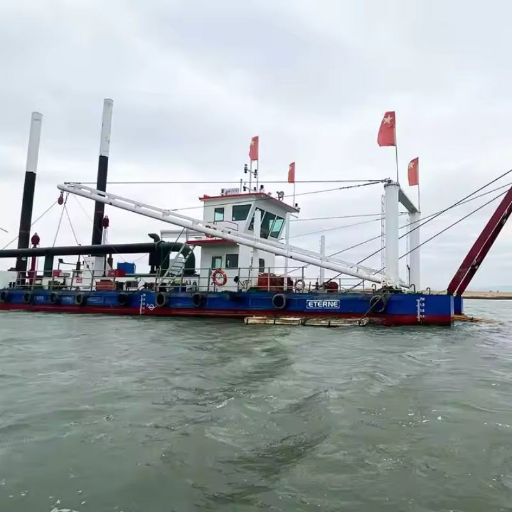
Three geometry variables determine how effectively the dredge pump can turn input power into flow: impeller vane angle at the leading edge, impeller diameter and the impeller-to-pump casing clearance. Incorrect impeller design of these parameters not only reduces high efficiency output: it causes destructive flow phenomena affecting slurry flow and energy consumption that attack the materials of construction.
Flow separation at the blade leading edge is the single biggest efficiency killer in dredge pump impellers. As the slurry enters the impeller, it is often not correctly angled to match the blade surfaces, causing the flow to suddenly separate from the front face and form a recirculation zone. BBP Greenpaper Sapkota et al. found the formation of these zones increased impact probability in the impeller eye, which wore down the wear plates flank rings and impeller off behind-the-trailing edge by 1 mm after 55.7 hours of experimental testing.
Cavitation is next on the list of efficiency aging effects. As the inlet pressure of the slurry drops below the vapor pressure of the liquid phase, vapor bubbles are formed and then imploded against the impellercasingsurface. This is a non-trivial factor in deep-suction applications of trailing hopper dredgers or cutter suction dredgers. BBP’s AWN series addresses this with a NPSH requirement of less than 1 meter – designed specifically for maximum dissolved suction in high-draw applications.
In our calculations, the efficiency gain from the modification of the blades was 5.5% but testing the impeller with curve technology in the laboratory, the efficiency gain is larger. A Cutterspecial dredge pump equipped with curve technology is 6.5% more efficient than a standard Cutterspecial dredge pump.
— Hasan Bugdayci, Product Manager, Royal IHC
That 6.5% efficiency increase has doubled life cycle: 1,400 hours Curve impellers against 700 hours of previous generation. However, both have achieved their beneficial effect through two changes: 1) no flow separation of blade relative flow direction leading to a) a stream lined blade and enhanced efficiency b) a modified blade shape resistant to volute variations, 2) thickening of leading edge at hisaviest wear location. Both the above have been engineered through complex CFD simulation and verified through lab testing
Dredge Pump Impeller vs. Slurry Pump Impeller — Key Engineering Differences
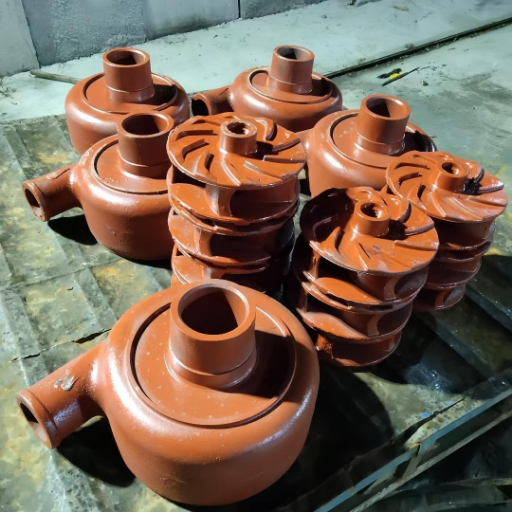
What are the questions of an oredging pump impeller on a commodity pump components inquiry?-Can a slurry pump impeller be used for dredging service?The answer is a definite yes or no by particle size and flow-volume.Dredaing pump impeller is designed to pass oversized solids that would quickly clog a slurry pump,which is tailored for finer abrasive particles in closed-circuit processing.
| Feature | Dredge Pump Impeller | Slurry Pump Impeller |
|---|---|---|
| Max Particle Passage | 82–1,200 mm | 25–76 mm |
| Blade Design | Wide-channel, anti-clog, 3-blade standard | Closed or semi-open, higher vane count |
| Flow Range | 36–14,000 m³/h | 10–1,000 m³/h |
| Material Grade | Ni-Hard / High-Chrome (>58 HRC) | A05 / A49 chrome alloy (45–55 HRC) |
| Primary Application | River dredging, port construction, sand mining | Mill discharge, tailings, mineral processing |
⚠️ Important
Circulating coarse oversize through a high chrome slurry pump impeller that is not designed for such loads produces a worse than normal impeller erosion, damage to the casing and usually seal failure – in weeks, rather than months of service. If your feed stream frequently carries oversize over 76 mm, request a dredge pump impeller to replace your slurry pump.
BBP suggest for operations experiencing both the rough primary extracting method to cleaner downstream processing that they could use AMG, AWN or sand pumps up front for coarse primary removal and horizontally installed slurry pumps downstream within the classifier and tailings circuit. All of the pumps are within their specified work duty and impart most of the wear life to the entire system.
Signs of Impeller Wear — Inspection, Downtime Prevention, and Replacement
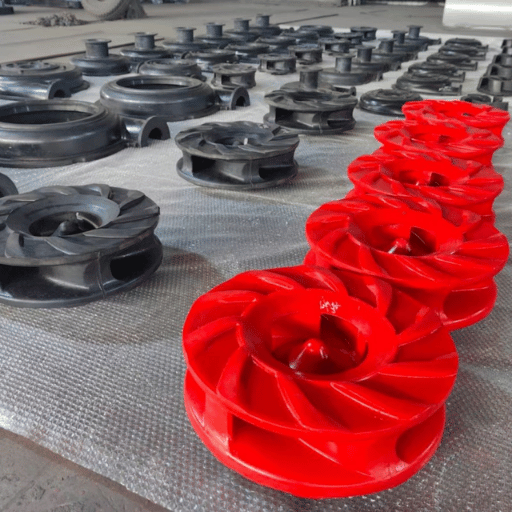
Impeller wear in Dredge pumps is a known phenomenon and understood in terms of its typical response and occurrence; however the implications of not understanding this knowledge are extreme. Every hour of unplanned idling time on a dredging vessel costs thousands of dollars in production, crew standby costs and project delays. It is essential to detect the wear progression well in advance of the onset of failure.
Based on data recorded by IADC (Sapkota et al., utilizing Damen Dredging Equipment’s test loop), two wear mechanisms were shown to act simultaneously on separate sections of the impeller blade. Erosive wear (i.e. particles striking surface at an angle) was observed to be most predominate at the leading edge and where material loss was greatest, at the median span locations. A abrasive wear (i.e. particles sliding along the surface) was the prevailing mechanism at the trailing edge and along the pressure surface.
The third failure mode that is less recognized is horseshoe vortex erosion/abrasion at the point where the impeller blade meets the front shield. Royal IHC documented that the velocity at the high end of the horseshoe vortices are capable of eroding through the surface of the front shield. Eventually a hole forms in front shield and the impeller being changed before the blades reach the end of their service lifetime.
How Do I Know If My Pump Impeller Is Bad?
Five Definable Indicators Signal a Dredge Pump Impeller in the Replacement Zone: Declining flow rate while maintaining set RPM (the impeller cannot produce the designed head); increasing vibration levels (unequal head wear creates impeller imbalance); increasing power requirement at constant head (losses from worn vane profile caused by hydraulic flow breakdown); increasing impeller wear ring clearance (leads to inefficiencies and hydraulic backflow that exacerbates wear); decreasing suction performance in deep-cut (normal grain flow becomes impacted grain flow). Benchmarks in dredge pump maintenance indicate inspecting the impeller every 500 hours and replacing around 1000 hours of continuous duty, but wear rates vary widely depending on slurry abrasiveness and mud-to-coal ratios.
- ✔
Measure impeller OD against original casting specifications-5% or more diameter reduction indicates changing to high wear area impeller type - ✔
Beyond being visually etched and eroded, indicate the direction and severity of erosional grain impingement damage by assessing leading edge erosive pitting - ✔
Through-holes caused by erosive horseshoe vortex hitting front shield at blade intersection -beginning of species forening components - ✔
Wear ring clearance Increased wafer clearance between impeller back face and wear ring back face reduces suction efficiency The unswept/total blade ratio - ✔
Vibration baseline record and monitors the trough of the operating cycle
💡 Pro Tip
Keep an easy to access spare replacement impeller on site in order to avoid boat delays while awaiting procurement and fabrication Teams operating four similar single pump dredgers can standardize available spare parts with interchangeable blades and wear rings for all four pump chassis.
Selecting the Right Dredge Pump Impeller for Your Application

Selecting a single impeller type that balances the three decision axes of application type, blade configuration, and materials grade is critical. Choosing a mismatched set of application/mat grade/blade configuration will either Under perform in energy efficiency or prematurely wear out. Use this decision matrix to match your operating conditions to the correct impeller specification.
The 3-Factor Impeller Selection Rule: Application × Material × Blade Count
| Application | Material | Blade Count | Rationale |
|---|---|---|---|
| River sand dredging | Ni-Hard (>58 HRC) | 3-blade | Large solids passage for mixed gravel + sand |
| Port deepening / CSD | Ni-Hard (>58 HRC) | 3-blade (Cutterspecial type) | 50% sphere passage for rock/boulder clearance |
| TSHD fine sand transport | High-Chrome (A05) | 4-blade | Higher efficiency for long pipeline distance |
| Saltwater / corrosive sediment | Stainless Steel | 3 or 4-blade | Corrosion resistance priority over abrasion |
| Mining slurry (downstream) | A49 Chrome or Rubber | 4-blade or enclosed | Fine particles, efficiency over passage size |
When in doubt between two specifications, go with the lower efficiency impeller with the highest porosity rating to minimize downtime. In most dredging projects across large diameter pipeline operations, a clogged pump costing hours of work during the dredging process will always outweigh even a few points of pure hydraulic system efficiency over the course of a week.
Industry Outlook — CFD Design and Next-Gen Impeller Technology
Global demand for dredging hardware spent $13.28 billion in 2025 and will grow at a rate of 4-5% CAGR for the decadedue ports, navigational channels, flood levees, coastal restoration plans. Here are three routes of development for impeller design.
$13.28B
Global Dredging Market (2025)
4–5%
Annual Growth Rate (CAGR)
6.5%
Efficiency Gain from CFD-Optimized Blades
Using CFD for impeller design will be the industry standard within five years. IADC research demonstrating that CFD can be used to reliably project grain impingement erosion over one or two operating lifespan has now been proven with Royal IHC’s Curve technology-which lasted twice as long as conventional and increased efficiency by 6.5%. Expect CFDimpeller design to be the minimum standard within seven years.
Development of erosion- and corrosion-resistant coatings and technologies advancing the use of specialty materials to improve component life. At present these coatings have demonstrated success in improving the life of centrifugal pump components in the 200–5000PSIB/P atmospheres at Rice University and Texas A& M University in bench tests, but are not yet common on heavy duty dredge pumps used in demanding dredging operations.
smart monitoring integration—built-in vibration sensors and wear indicators—right on the pump package—takes away the calendar-based replacement schedule and puts in condition-based replacement. In planning equipment acquisition for 2026-2027, choose pumps with sensor-ready mounting provisions for the next generation of sensors.
Frequently Asked Questions
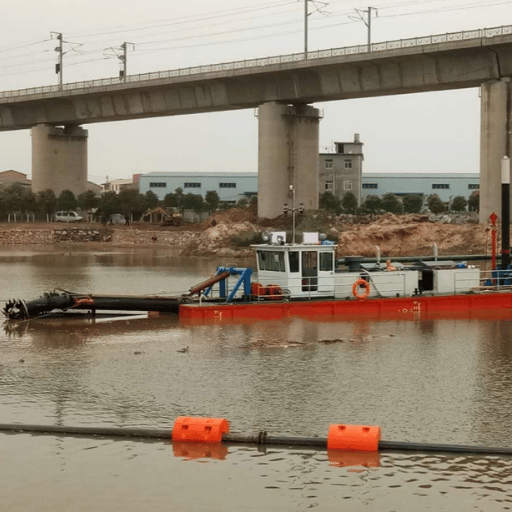
Q: What is a dredge pump impeller made of?
View Answer
50% Ni-Hard high-chromium white iron alloy (24-30% Cr, >58 HRC) is the standard for sand & gravel dredging. For saltwater corrosion control, stainless steel is used. Rubber linings are suitable for fine sand at low impact.
Q: How long does a dredge pump impeller last?
View Answer
Wear life depends on grade, sediment abrasiveness, slurry concentration, and speed. 1,400 hours of CCS-optimized blade profile impeller longevity is a benchmark reaching twice the 700-hour baseline—a previous generation—according to Royal IHC operational data. Typical continuous-duty replacement metrics range from 6 to 12 months, but causes and range vary widely. Clumped, angular quarry gravel causes impeller wear several times faster than mobile fines in a moderately concentrated river bed. Others reports are as low as 3-4 months for aggressive abrasive dredging.
Q: What type of pump is used for dredging?
View Answer
For sand & gravel dredging, centrifugal type dredge pumps are the standard. These heavy-duty pumps feature wide-slotted impellers that propel the slurry through pipelines. For vessel-mounted dredging, trailing suction hopper dredges use onboard dredge pumps that require ultra-low Net Positive Suction Head.
Q: What are common dredging mistakes related to impeller selection?
View Answer
The most commonly avoidable mistake is installing a slurry pump impeller in dredging service where the passage exceeds the design allowance. Avoid similar issues when installing a 4-bladed impeller (increased efficiency at the expense of increased debris passage needs), neglecting net positive suction head in deep-suction, or running the impeller thin and to the edge just to minimize hold time between replacements – at the risk of getting stuck in the middle of the field.
Q: Can you repair a dredge pump impeller or must you replace it?
View Answer
Occasional high-chrome impeller wear can be rectified by hard-facing overlay, but such repairs offer limited longevity. Once wear is over 5% of the impeller’s diameter or massive imbalance develops, only replacement can be guaranteed. Most dredgers keep a supply of spare impellers to use with planned replacement schedules rather than have to repair and repair and unavoidably have a high frequency of downtime.
Q: How does impeller size affect dredge pump performance?
View Answer
Impeller diameter directly affects the head and flow characteristics — larger diameter gives higher head, more flow. Larger diameter also demands higher input power, and higher tip speeds which increase wear. The affinity laws show a 2–fold increase in diameter causes a 4–fold increase in flow rate at similar pressure and power. Proper selecting of the impeller considers the plant and pipeline’s required flow rate and host demands.
Need Help Selecting the Right Impeller?
BBP will assist from the engineering departments advise and provide technical quotes in two days after you have provide your project.
About This Analysis
This generation of content was developed by the content team at BBP, based on published research from the IADC, Curve technology White Paper by Royal I HC, and peer-reviewed laboratory tests of wear against samples. Specify data on the BBP AMG and AWN series pumps is current. Wear Life data quoted from other sources refer to test conditions in controlled environment — actual filed performance is indicated by sediment type and shape, abrasiveness, slurry concentration, speed, etc. Review by BBP engineering.
References & Sources
- Estimations of Sediment Erosion of a Dredge Pump Impeller for the International Association of Dredging Companies (IADC)
- Design and Development of Most Efficient Centrifugal Dredge Pump to date – Royal IHC (Hasan Bugdayci, Product Manager)
- Failure Analysis of a High Chromium Carbon Steel Impeller in Slurry Service – Wear (Elsevier), 2021
- Coatings on Centrifugal Pump Parts – Texas A&M University (OAKTrust Repository)
- Dredging Market Report, Size and Market Progress 2025-2034 – GlobeNewsWire / The Business Research Company
Related Articles
- Centrifugal Sand Dredge Pump – Heavy Duty Solutions from Mining & Dredging
- The Mining Slurry Pump Field Guide – what brakes down, how to select and where does the money go [the Pump]
- Horizontal Split Case Pump – Complete Engineering Guide to Design and Selection
- Rubber Lined Slurry Pump – How to select, apply and maintain it
- Submersible Slurry Pump – Complete Engineering Guide
![Sand Dredge Pump vs Slurry Pump: Key Differences [2026]](https://bbpmfg.com/wp-content/uploads/2026/04/2-17-768x512.png)
![Cutter Suction Dredge Pump: Selection Guide [2026]](https://bbpmfg.com/wp-content/uploads/2026/04/3-3-768x512.png)