Get in Touch with BBP

![Sand Dredge Pump vs Slurry Pump: Key Differences [2026]](https://bbpmfg.com/wp-content/uploads/2026/04/2-17.png)
Sand Dredge Pump vs Slurry Pump — Which One Fits Your Project?
Choosing a sand dredge pump vs slurry pump can be the decision with the most impact in your dredge or mineral processing plant. Select wrong and you will e×perience thousands of dollars of unanticipated downtime, loss of equipment components, and failure to meet production e×pectations. This hand-on guide shows heat-formed data not rounded up specs to balance, wearing parts mass and generalities to flotation z-value, slurry flow rate to impeller geometry, specific gravity to material selection, inlet size to NPSH values in order to ultimately allow engineers and procurement personnel to make the proper choice before requesting a single quote.
Quick Specs: Sand Dredge Pump vs Slurry Pump
| Parameter | Sand Dredge Pump | Slurry Pump |
| Max Particle Size | 82–400 mm | 25–76 mm |
| Flow Range | ³6–14,000 m&sup³;/h | 10–1,000 m&sup³;/h |
| Wear Material | Ni-Hard >58 HRC | A05/A49 Chrome 45–55 HRC |
| NPSH Requirement | <1 m (deep suction capable) | Standard (flooded suction typical) |
| Primary Use | Dredging, sand mining, port deepening | Mill discharge, tailings, mineral processing |
What Is a Sand Dredge Pump?
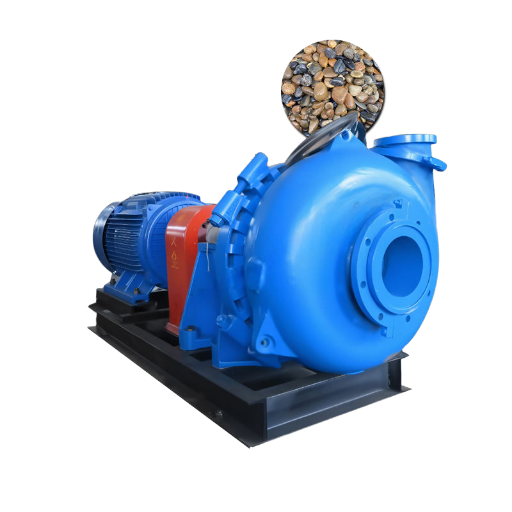
In practice, ” dredge pump, ” ” sand pump, ” and ” slurry pump ” get used fairly interchangeably in the field, but understanding the distinctions is important to defining the equipment used in a particular dredging project. A dredge pump is typically a high-capacity, abrasive solids handling centrifugal pump designed to pass large particles and operate at high efficiencies, able to withstand the erosive abrasion of underwater sand, gravel, or silt. Sediment continually removed from the bottom of the ocean, river or port basin is in the mind of the dred power plant operator, the focus of the 150-year debate over horizontal pipe or vertical pile designs. In portable units that plow land and beach zones, powered by megawatt diesel motors, it is over 20% of the current of the port’s silt and sediment towed into the portside island.
Modern dredge pumps, primarily in the cutter suction dredger ( CSD ) or trailing suction hopper dredger ( TSHD ) flotilla, accommodate 58-145 HRC hardness Ni-Hard 4 components, a full range of impeller sizes, open, 2 or ³ vane, wide channels, and can be fitted with disposable wearways made of various composites and ductile fractions. Power consumer units designed to scavenge 22%, 62%, or larger bits of aggregate scour fleets of whisped-up ball bearings. The specialist gear manages flow rates of up to 60,000 m/h. Smaller slurry pumping alterations are utilized in port construction, underwater silt transportation, or under ground titanium, sand or gravel mining, often with widened, high-through flow impellers.
Sand dredge pumps are subsea, off-shore, or land-based centrifugal units engineered to vacuum up sand, port sediment and gravel at throughput levels from 50 MP/h up to 17554cfs at currents over 100 knots. Able to strike a successful balance of aggressive wear facing with high slurry flow efficiency, more than 100 units in service can handle flow rates to about 14,000 m/h with passage levels to 1425 mm. Materials of construction mean are an integral part of staying with a Ni hard casting alloy with a 5838 HRC integrity when dealing with shifting slurries containing 20-160mm aggregate. Portlining units include larger impellers for handling standard 4-20mm aggregate, with an extensive range of materials of construction, broad channel impellers, cast and ductile internals for abrasive applications.
How does a sand dredge pump work?
These immense pumps work by transforming the kinetic power of a high-velocity inlet, derived from either electrical or diesel power units, into pressure energy. The centrifugal forces within the impeller series cause the sand slurry to accelerate from the inlet to the impeller spokes, reaching velocities of 2500 ft/sec, after which the material discharges at a high rate of speed into the body of the pump, known as the volute. The velocity of the sand slurry within the pump increases as it exits the impeller. The low-NPSH miles of the cavitating process is an alloy of cavitation development and constituent properties at the impeller. A scour design with low inlet back torque, low NPSH parameters, wide-channel impellers and high flow rates produces slurry of high velocity but handles it with minimal wear and tear to the internal concentrator parts of the sand dredge pump.
What Is a Slurry Pump — and How Does It Differ from a Sludge Pump?
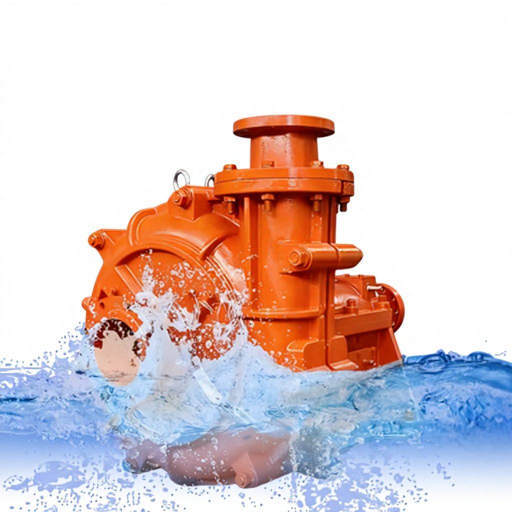
A slurry pump is designed for use in a liquid-solid mixture ( or slurry ) transportation circuit. They are a form of centrifugal pump used to move slurry through processing circuits in mines, mineral processors, waste water treatment plants and chemical plants etc. In general, the inlet feed stream to a slurry pump is well controlled with respect to particle size, solids loading and flow rate. Typical slurry applications are mill discharge, cyclone feed, tailings transfer or ash handling.
Use of semi-open or closed impellers to produce hydraulic efficiency envelopes for optimal hydraulic design. A permanently cast A05 or A49 high-chrome material in the 45 – 55 HRC range, or lined with natural rubber for aggressive fine particle accounts for wet-end parts. Capacity from 10 m /h to 1,000 m /h and passage diameter from 25 to 76 mm. A horizontal slurry pump is the most common design although submersible slurry pumps are also available for sump and pit dewatering.
A slip vs slurry pump. Sludge pumps have to be able to handle a much thicker, stickier material such as sewage biosolids, paper mill pulp and residuals, and other chemical sludges that exhibit high viscosity. Most sludge pumps are positive displacement (Progressive Cavity, diaphragm, peristaltic or other) owing to the solids in the pump not being mobile enough for centrifugal operation. But a typical slurry pump handles flows in suspension – flowable, traverseable mixtures of usually soft, amorphous, high viscosity substances with dense, crystalline mineral particles in a liquid carrying water phase. The particle profile is different – sludge waters are high viscosity with people friendly, high surface, soft, amorphous chunks while high mineral particle densities, hard, discrete particles make a major abrasive wear problem for slurry pumps. Poorly chosen equipment results in either instant plugging with slurry pump on sludge or rapid wearing out with an abrasive, high mineral content slurry pump.
Sand Dredge Pump vs Slurry Pump — Head-to-Head Comparison
| Feature | Sand Dredge Pump | Slurry Pump |
|---|---|---|
| Max Particle Size | 82–400 mm | 25–76 mm |
| Flow Range | 36–14,000 m³/h | 10–1,000 m³/h |
| Head Range | 7–96 m | 9–130 m |
| Impeller Design | Wide-channel, anti-clog, open | Closed or semi-open, efficiency-focused |
| Wear Material Hardness | Ni-Hard / High-Cr >58 HRC | A05/A49 Chrome 45–55 HRC |
| Seal Types | Packing / Mechanical / Combined | Expeller / Mechanical |
| NPSH Requirement | <1 m (deep suction capable) | Standard (flooded suction typical) |
| Primary Applications | River dredging, sand mining, port construction | Mill discharge, tailings, mineral processing |
Particle passage diameter is where these two pump categories diverge most sharply – a dredge pump-wide impeller passage will not block like the narrower slurry passage; flow flow rate and head performance are subservient to passage size issues as noted above. When hardness and particle size exceeds 76 mm, dredge pumps are all the available options.
Common Error: Oversizing slurry pump will not guarantee your flow rate is correct. If you need 100 m /h – for example – then flow rate alone will not overcome passage diameter size restrictions such as a 200 mm gravel feed stream, thus ensure you purchase the correct pump capacity. No matter the horsepower or pump frame size, the impeller channels and passages cannot be larger if material will not pass.
Impeller Design and Wear Materials — Why They Matter
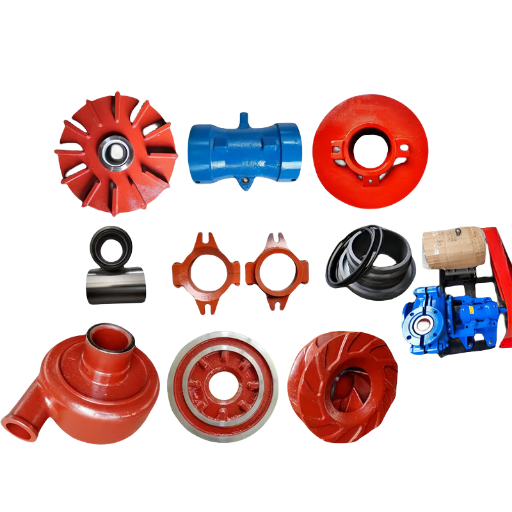
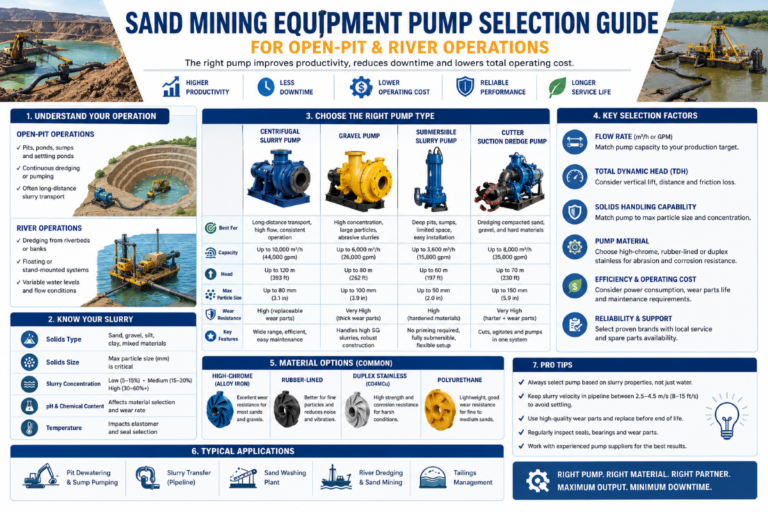
Material selection is how you define the amount of pump run time without maintenance shutdowns. In abrasive environments, selecting the wrong wear material can reduce component life from months to weeks. The following table provides a comparison of the 4 major families of wear material used in dredge and slurry pump applications.
| Material | Hardness | Best For | Life vs Natural Rubber | Limitations |
|---|---|---|---|---|
| Ni-Hard / High-Cr White Iron (A05) | ~60 HRC | Coarse sand, gravel, dredging | 4–10× | Vulnerable to low-pH erosion-corrosion |
| Natural Rubber (NR) | 50–60 Shore A | Fine particles, corrosive slurries | 1× (baseline) | Tears on sharp coarse solids, max ~65 °C |
| Polyurethane (PU) | 85–95 Shore A | Fine silica, mineral sands | 3–5× | Max ~70 °C, fails in strong acids |
| Ceramic / WC Coating | >70 HRC equiv | Ultra-abrasive fine slurries | 6–15× | Brittle, needs controlled suction |
For sand dredging, the materials choices are one of two metals types: Ni-Hard or high chrome white iron. These alloy selections handle gouging effects of impact wear much better than rubber, polyurethane or polymer composites. When abrasive particles approaching 5 mm in D are flowing through a slurry pump with fine particles, the rubber lined units often outperform metal linings since the rubber does not crack or spall from impact. The ideal selection is determined by the particle, not pump plate markings.
Engineering Note – 58 HRC Rule: Any pump type handling angular quartz sand in continuous service should specify wet-end plates that are 58 HRC or higher. Every process pump manufacturer I am aware of – has field data that consistently shows a 2-4 life reduction in sand and gravel applications when the wet-end is below this level. When you are requesting quotes, have the vendors sign off on their mill test certificate for the impeller and casing liner hardness compared to alloy grade specification. (9 out of 10 times they will not list both).
“Off-BBP operation – running a pump far from its best efficiency point – can cut impeller life by 30 to 70 percent regardless of material grade. Recirculation at the eye and incidence angle spikes accelerate asymmetric wear that no alloy can fully compensate for.”
— Dynapro Pumps Engineering Team, Technical Support Resources
This is the fundamental problem with many slurry pumping operationeffort to economize on selection and sizing until one discovers the decision has doubled wear life for aggregate mining pump running 20% away from B Esignificantly bypassing the feed coming through the impeller eye, or maintaining the most erosive section of the pump impeller at the highest velocity possible seems to improve impeller flow passage life by a factor of three or four.
✔ Sand Dredge Pump Advantages
- Passes solids up to 400+ mm without clogging
- Ultra-low NPSH (<1 m) for deep suction
- Ni-Hard >58 HRC delivers 2–4× wear life in sand
- Built for continuous heavy-duty extraction
⚠️ Sand Dredge Pump Limitations
- Lower hydraulic efficiency vs slurry pumps at same flow
- Higher capital cost per unit
- Larger footprint and heavier rotor mass
- Not suited for fine particle circuits
Application Matching — Dredging, Mining, and Processing
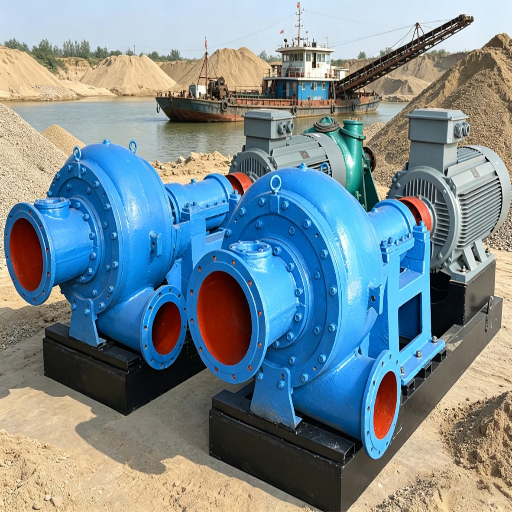
Correct sizing and speed selection matters as much as alloy type. If the slurry pump never leaves the original process design operating zone, then abrasive wear will be manageable for cemented carbide, titanium, rubber-lined, composites, high chrome, and even Ni-hard impellers. But if you place the slurry pump under realistic operating conditions, you’ll realize why alloy type alone is not a guarantee of acceptable wear life.
| Application | Typical Material | Particle Size | Recommended Pump | Why |
|---|---|---|---|---|
| River sand extraction (sand pump application) | Sand + gravel + debris | 50–300 mm | Sand dredge pump | Large solids passage, anti-clog impeller |
| Port/harbor deepening | Seabed sediment + shells | 100–400 mm | Sand dredge pump (AWN series) | Ultra-low NPSH for deep suction |
| Mill discharge | Crushed ore slurry | 1–25 mm | Slurry pump | High efficiency at moderate solids |
| Tailings transfer | Fine mine waste | <1 mm | Slurry pump | Fine particle, corrosion-resistant |
| Sand & gravel aggregate | Mixed sand/gravel | 50–200 mm | Sand dredge pump (AMG series) | Shore-based, wide-channel impeller |
| Mineral processing cyclone feed | Ground ore | 0.1–5 mm | Slurry pump | Precision flow control, stable BBP |
Can a slurry pump be used for dredging?
Your process flow position determines which pump fits. For dredging, the following are the usual locations.
In my experience a slurry pump can only be used appropriately for secondary dredging with fine sediment below 50 mm. Operators often put slurry pumps into action for primary dredging, particularly in settling ponds or lagoons where the material is almost entirely silt and fine sand. Under these conditions, a slurry pump works because the slurry is fed within its design particle passage and concentration parameters.
not appropriate except in extremely fine, light duty dredging where the sand is less than 50 mm in D. When using a slurry pump for dredging where ore the 76 mm or larger, the imp…
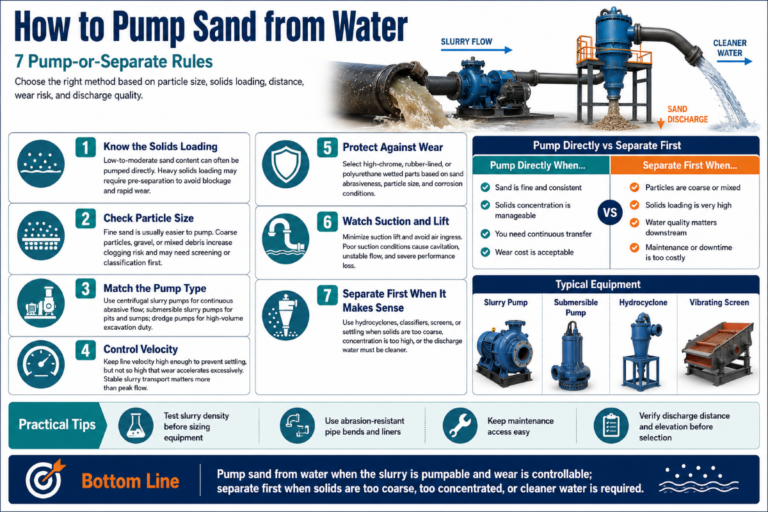
In the case of combined extraction and processing operation the typical answer is a combination of two pump types. In the downstream classification circuit a mining slurry pump is used and upstream of that a dredge pump is handling the primary extraction. Of course a vertical slurry pump is used for sump duty between these locations.
How to Choose — Sand Dredge Pump or Slurry Pump

If the cross reference table & app matching hadn’t already got you to the right one, go down this four step decision method. It’s a filtering method based on the most important factor’s parameters – particle size, which can eliminate the most candidates quickest.
Pump Selection Decision Framework
Step 1: What is the maximum particle size in your feed stream?
→ Greater than 76 mm → Sand dredge pump
→ Less than 76 mm → Continue to Step 2
Step 2: Does your application involve underwater extraction (suction dredging)?
→ Yes → Sand dredge pump
→ No → Continue to Step 3
Step 3: Is slurry concentration (Cw) above 40% with particles under 50 mm?
→ Yes → Slurry pump
→ No → Continue to Step 4
Step 4: Is the circuit a mill discharge, cyclone feed, or tailings line?
→ Yes → Slurry pump
→ No → Contact an engineer — your application may need a combined system
Pro tip: if your project includes primary extraction AND downstream classification, the optimal configuration is to operate a single dedicated pump: a sand dredge for primary extraction, with slurry pumps downstream in the classification / tailings circuits. Each pump works in its specific duty range, thereby increasing life of the system.
5 parameters that you should check with the manufacturer before asking for a quotation: these parameters will for pump category as well as model selection:
- ✔ Maximum particle size and shape (angular vs rounded)
- ✔ Required flow rate and total discharge head
- ✔ Slurry concentration (% solids by weight)
- ✔ pH range and temperature of slurry
- ✔ Installation type (shore-based, vessel-mounted, or submersible)
Keep these numbers at hand so you don’t have to go back and forth with suppliers and it eliminates the most common mistake making parameters known. If we are missing any parameter, always measure it before choosing your pump model, particle size guessing alone could move your recommendation from one category of pump to the other.
Get a Custom Pump Recommendation →
Dredge Pump and Slurry Pump Market Trends 2025–2026
$1.7B
Global slurry pump market (2025)
Global slurry pump market (2025)
4% CAGR
Dredge pump market growth to 2032
Dredge pump market growth to 2032
6% CAGR
Mining pump segment (fastest growing)
Mining pump segment (fastest growing)
Three technology shifts are establishing new norms for both pump categories through 2026. First, adoption of VFDs (Variable Frequency Drives) is increasing quickly in the dredging fleet. Using real-time impeller speed control in response to feed density and pipeline resistance, VFD driven pumps can eliminate 15-30% of the energy lost in the operation of fixed speed drives.
Dredge owners with diesel-electric power plants are paying less in fuel costs per cubic meter of material displaced.
Secondly, additive wear coatings are replacing component life in extreme-wear applications. Dynapro Pumps technical data shows that HVOF (High Velocity Oxygen Fuel) tungsten carbide coatings in service increased component life by 6-15 fold over natural rubber liners in fine abrasive slurries. This does cost money, but the benefit of less shutdowns is sufficient to justify the higher capital cost.
Third, smart monitoring systems—vibration probes, wear on detectors, and belt bearing temp sensors—are becoming standard on most new PP+PV installations. These systems identify early signs of trouble before it leads to unplanned shutdowns, enabling maintenance crews to become more predictive rather than reactive. Data from these units also provides engineers critical information that confirms if pumps are operating near BBP to better inform design decisions.
For procurement teams prepping 2026-2027 projects dredge pump lead times have increased, as port and land reclamation projects accelerate around the world, specify and order early; particularly for large-bore AWN-class dredging pumps, which have constrained foundry capacity. Credence Research anticipates a 4% CAGR in the dredge pump industry through to 2032. Coastal infrastructure investment is growing in Southeast Asia, the middle east, and West Africa; stimulating multiple demand factors.
Frequently Asked Questions

Q: What is the difference between a dredge pump and a slurry pump?
View Answer
Dredge pumps extract large solids (82-400 mm) from underwater sites. Slurry pumps transfer controlled liquid-solid mixtures with smaller particles (25-76 mm) through processing circuits. Passage size and operating severity separate the two.
Q: What particle size can a slurry pump handle?
View Answer
Most slurry pumping applications are for true slurry pumps like the AWN/AMG range handling particles down to sub 1mm size and up to about 76 mm depending on model and impeller design. Where the particle size is greater than 76 mm – often the case with sand dredging and gravel washing – an appropriately designed sand dredge pump with wider impeller channel sections and correspondingly bigger passage diameter is needed to avoid premature wear and blockages.
Q: Which pump is better for mining operations?
View Answer
It depends on the location of the pump within the overall mining circuit. Slurry pumps are used for mill discharge, cyclone feed, and tailings transfer applications where the particles are reduced down to below about 25 mm in size, and flow conditions are relatively predictable with less risk of blockages. Sand dredge pumps are suitable for primary extraction applications by far – normally removing raw sand, gravel, or ore from river beds, open cast pits, or underwater deposits where most of the solids are large unprocessed/ unground material.
Q: How do you determine the appropriate size of a dredge pump?
View Answer
Identify three specification parameters: flow rate required (m/h), Total discharge head (meters) and the maximum particle size expected in the feed stream and cross-reference them with the pump head/flow chart to find a model operating close to its optimal “best efficiency point”. Oversize the pump to reduce energy consumption and extend wear life. Undersize it to cause cavitation and blockages. For sand dredging applications, ensure its rated solids passage size accommodates the maximum expected particle size by 20% or more.
Q: How long do dredge pump wear parts last?
View Answer
Ni-Hard castings (over 58 HRC) are normally good for 6-12 months of industrial service with continuous sand dredging operation; actual wear performance being affected by particle shape, size, angularity, slurry bulk factor, etc. Operation beyond the best efficiency point can reduce wear life by 30-70%.
Q: What factors should be considered when selecting a dredge pump?
View Answer
Five key parameters to consider are: (1) the maximum size and shape of the unground particles; (2) the flow rate and the discharge head; (3) the percentage by weight of the slurry; (4) the pH value and operating temperature of the slurry; (5) type of installation – offshore, onshore, vessel-mounted or submersible. Material specification (at least 58 HRC) and Net Positive Suction Head requirement should also be verified before final selection.
Need Help Selecting the Right Pump?
Our knowledgeable BBP engineers can help with pump selection and offer technical quotations within 48 hours.
About This Analysis
This comparison has been composed based on published manufacturer data, independent material science research from Dynapro Pumps, and market research commissioned from Research and Markets and Credence Research. Sand dredge pumps are based on the specifications from BBP’s AMG and AWN series data sheets. Variances in actual figures depend on local conditions and application, if necessary we provide an approximate value range. Subject to review by the BBP engineering team.
References & Sources
- Dredge Pumps — Suggested Readings — TU Delft OpenCourseWare
- Slurry Pump Impeller Materials: High Chrome vs Rubber vs PU vs Ceramic — Dynapro Pumps
- Slurry Pumps Market Forecast 2026–2031 — Research and Markets
- Dredge Pumps Market Size, Growth and Forecast 2032 — Credence Research
- Study on the Effect of Impeller Wear on Dredging Pump Performance — ResearchGate
- Mining Pumps Market Size Forecast to 2034 — Data Insights Market
![Cutter Suction Dredge Pump: Selection Guide [2026]](https://bbpmfg.com/wp-content/uploads/2026/04/3-3-768x512.png)