Get in Touch with BBP

![Cutter Suction Dredge Pump: Selection Guide [2026]](https://bbpmfg.com/wp-content/uploads/2026/04/3-3.png)
Quick Specs — CSD Dredge Pump
| Pump Type | Centrifugal (inboard / submersible / booster) |
| Max Flow Rate | 14,000 m³/h |
| Max Particle Size | 400 mm+ |
| Wet Part Material | Ni-Hard High-Cr (>58 HRC) |
| NPSH Required | <1 m (deep-suction models) |
| Drive Options | Electric / Hydraulic / Diesel / VFD |
| Key Standards | ISO 9906, ISO 9001:2015 |
The cutter suction dredge pump is the centrifugal pump on a cutter suction dredger (CSD)the independent vessel which uses a cutter head to break and take material away through a discharge pipeline. Proper selection of a dredge pump to suit your CSD will impact on your production rates, wear parts life cycle and total dredging project capital.
This article covers the operation principles, selection criteria and equipment specifiers a dredging engineer or project manager needs to select the optimal piece of equipment.
How a Cutter Suction Dredge Pump System Works
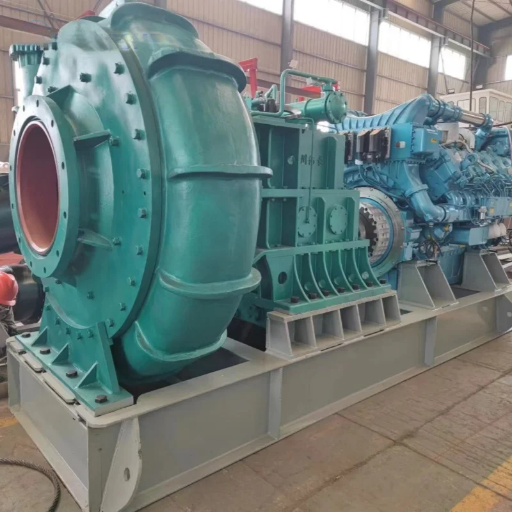
The procedure for how a CSD operates4 is a series of four interlinked steps. Firstly, the cutter head attached to the end of the dredge ladder rotates on the dredger profile plan to break allora.unconsolidated material. Resulting free loose soil is sucked into the suction mouth immediately behind the cutter head by the suction line. The pressure generated by the centrifugal dredge pump then pushes slurry through the discharge line to the delivery site. Deposit locations include for example a land reclamation site, spoil area or beach fill site.
Two spud poles secure the vessel in position to a working depth during excavation. Swing winches described as the spud carriage pull the vessel in a lateral ellipsisarc between the working site and the electrode carriage pushes the dred . This pullinearc Advance cycle runs throughout the dredging vessel’s life.
At the hydraulic core of this chemical’Works the dredge pump. It creates the partial vacuum at the inlet of the suction pipe so that the slurry can be drawn up through the pipe’s cross section. It then creates velocity in the slurry through centrifugal force[by means of the impeller] by converting its kinetic energy into pressure so that the slurry is pressure in excess over the shoulder distance of the discharge pipeline.
Both of these materials require very different coefficients of wear, NPSH and particle passage to be borne in mind in selecting a suitable dredge pump5. This means that the material that gets pumped through a floating CSD dredge pump on a permanent recurring basis can be very diverse.
📐 Engineering Note: NPSH and Cavitation
The NPSH the pump requires must be greater than the NPSH available from the water and slurry source, to avoid cavitation in the impeller. CSD deep-suction pumps can operate at NPSH required of less than 1 m, allowing negative suction depths that would almost never be the case for a standard pump. Unless pump cavitation Margin of practically zero, implosion of gases cavitates in the impeller. Over time this encourages the sharpening of the edges of rotating elements like impeller blades and hardware which is sensitive to fatigue and premature failure, while impeller wearing surfaces experience cavitator erosion that wears metal away while simultaneously degrading the hydraulic performance of the pump.
One experienced operator in the centrifugal pump industry was quoted as saying that when it cavitates it has just 3% of the volume of vapor gas in the flow, and that this means 10% or more in head and efficiency is lost.
For unconsolidated alluvial deposit focused applications that might prefer water application irrigators, see BBP’s sand dredge pump solutions including the full AMG/AWN model range.
How Does a Cutter Suction Dredger Work?
- The rotating cutter head loosens the soil before suction.
- Suction line aspirates the loosended sediment with water load from the cutter head.
- The dredge pump moves the slurry through the discharge pipeline.
- floating and land section of discharge pipeline deliver slurry from vessel to deposit application area.
- Spud carriage moves the vessel forward to enable continual dredging of the entire face.
As the Central Dredging Association (CEDA) confirms: “rotating cutter head [loosen] compact soils, drawn [through] powerful dredge pump” – a principle that differentiates the CSD to Trailing Suction and Backhoe alternatives.
What to Evaluate in a CSD Pump Assembly
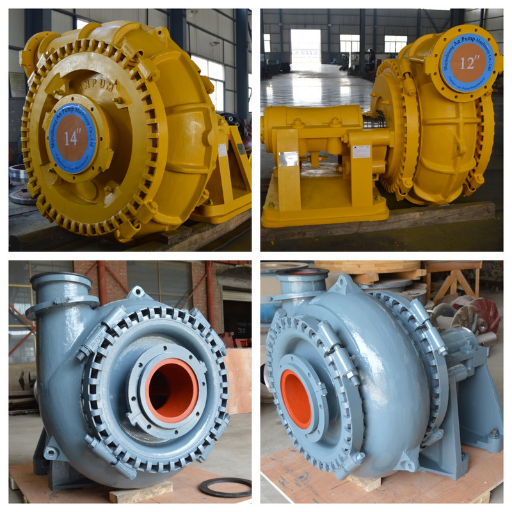
A cutter suction dredger is an integrated system – pump horsepower is related to cutter loading, suction pipe design and discharge pipe layout. Choice of each must be balanced based on per application sediment parameters and required production.
| Component | What to Check | Why It Matters |
|---|---|---|
| Cutter Head | Tooth geometry, rotation speed, power rating | Controls excavation rate + spill volume — spill can reach 1/3 of dredged material (CEDA/Royal IHC) |
| Dredge Pump | Impeller design, passage size, HRC rating | Determines throughput and wear part life |
| Suction Pipe | Diameter, NPSH margin, inlet design | Prevents cavitation and air ingestion |
| Discharge Pipeline | Material (HDPE/steel), diameter, length | Controls transport distance and energy consumption |
| Spud System | Type (spud carriage vs anchor), load capacity | Governs positioning precision and forward advance speed |
| Winch System | Pull capacity, swing speed | Controls dredging arc width and production rate |
💡 Pro Tip
In testing a CSD pump assembly request the manufacturer’s hydraulic efficiency curves to ISO 9906. Published catalog data can be a useful starting point for shortlisting, but only tested performance curves guarantee your application performance.
Dredge Pump Types for Cutter Suction Dredgers
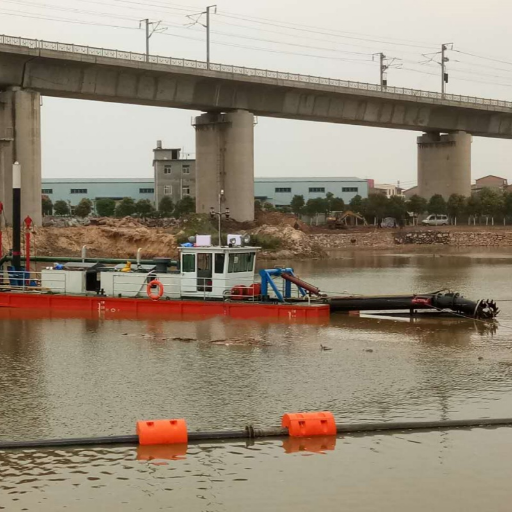
On modern CSDs there are three principal centrifugal pump options, each suited to specific depths, discharge distances and site conditions.
| Parameter | Inboard Centrifugal | Submersible (Ladder-Mounted) | Booster Pump |
|---|---|---|---|
| Position | Engine room / pump room | Mounted on dredge ladder | Inline on discharge pipeline |
| Typical Flow | 200–14,000 m³/h | 100–3,000 m³/h | Matches primary pump |
| NPSH Advantage | Standard | Reduced suction lift — better for deep cuts | N/A (receives pressurized flow) |
| Drive | Electric / Diesel / VFD | Hydraulic / Electric | Electric / Diesel |
| Best For | Standard CSD operations, moderate depth | Deep dredging (>15 m), unstable suction | Long discharge distance (>2 km) |
| Maintenance Access | Easy — onboard | Harder — requires crane to lift | Easy — accessible in pipeline |
Pump Type Decision Framework
Depth 15 m+ inboard space available Inboard standard centrifugal pump
Depth > 15 m OR presence of unstable NPSH Add submersible pump to dredge ladder
Discharge distance > 2 km Add pipeline booster pump(s) (typically 1 per 1.5-2km)
Soil = compacted clay or soft rock specify higher cutter power + matched pump speed rating
For applications that take place by which the pump is Shore based, in combination with dredging: Gravel pump for shore based mines, horizontal slurry pump and vertical slurry pump options.
CSD vs. Trailing Suction Hopper Dredger — When to Use Each
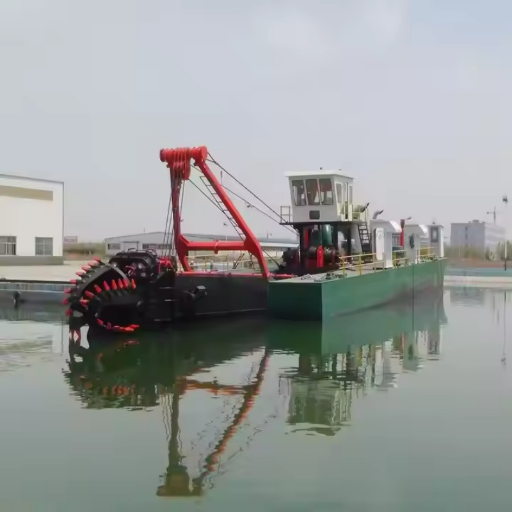
Two vessel categories dominate the capital and maintenance dredging industries: the cutter suction dredger and the trailing suction hopper dredger (TSHD). Each is fundamentally different in purpose.
| Feature | Cutter Suction Dredger (CSD) | Trailing Suction Hopper Dredger (TSHD) |
|---|---|---|
| Operating Mode | Stationary (spud/anchor) | Self-propelled (trailing while dredging) |
| Typical Dig Depth | 6–35 m (mega CSDs to 40+ m) | 15–30 m |
| Production Rate | Up to 40,000 m³/day | Up to 25,000 m³/day |
| Soil Types | Sand, gravel, clay, soft rock, compacted sediment | Loose sand, silt, soft sediment |
| Discharge Method | Pipeline (continuous) | Hopper (store + sail + dump/pump) |
| Mobility | Low — requires anchoring + pipeline | High — sails between sites |
| Best For | Port deepening, land reclamation, capital dredging | Channel maintenance, navigation, beach nourishment |
| Pump System | Inboard + optional submersible + booster | Dredge pump + jet pump in draghead |
Operators have observed that a CSD is capable of providing roughly 40,000m3/m of sand per day in beach nourishment projects, compared to about 25,000m3/m from a TSHD working the same site.
How Deep Can a Suction Dredge Work?
Standard cutter suction dredgers have a range of 6-35 meters working depth. Mega CSDs like GLDD’s fleet with a maximum dig depth of 28.7 meters (94 feet) and total installed power up to 18,300 HP end this range. In comparison, TSHDs have a working depth of 15-30 meters. The actual working depth is limited by the pump’s suction capabilities, ladder length, and NPSH conditions at the site. Submersible pumps mounted on the dredge ladder extend the effective digging depth, as they remove the suction lift limitation faced with inboard centrifugal pumps.
Matching Your CSD Pump to Sediment Type & Application
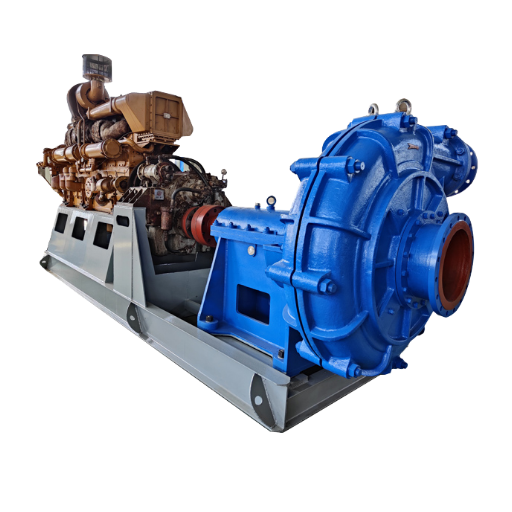
Different applications set forth specific parameters for flow, head, particle passage and equipment wear. The following table summarizes corresponding values based on field applications of the principal pump types.
| Application | Sediment Type | Flow (m³/h) | Head (m) | Min. Particle (mm) | Key Challenge |
|---|---|---|---|---|---|
| Port Deepening | Compacted clay, rock | 2,000–14,000 | 30–65 | 170–400 | Hard soil excavation, long discharge |
| Land Reclamation | Sand, mixed fill | 1,000–8,000 | 20–50 | 100–300 | High-volume continuous transport |
| River Sand Extraction | Sand, gravel | 200–2,700 | 7–96 | 82–241 | Variable concentration, debris |
| Channel Maintenance | Silt, muck, clay | 500–5,000 | 15–40 | 100–200 | Turbidity control, navigation safety |
| Beach Nourishment | Clean sand | 2,000–8,000 | 20–45 | 100–200 | Grain size consistency, distance |
| Coastal Restoration | Mixed sediment | 500–3,000 | 15–35 | 100–200 | Environmental permitting, precision |
⚠️ Common Mismatch Warning
By far the most typical – and costly – pitfall in CSD operation is over-specification for maximum particle passage below actual sediment size. Unabated debris entering a pump incapable of processing it quickly leads to impeller damage, pipe erosion and seal breakage, resulting in a wearing out in weeks rather than months.
Related appliations: all mining slurry pump applications for mineral extraction sites, impeller manufacturing for hard, abrasive slurries, and rubber-lined pump for chemically corrosive slurries with large amounts of fine solids contaminated with chemicals
Wear Parts, Materials & Maintenance Planning
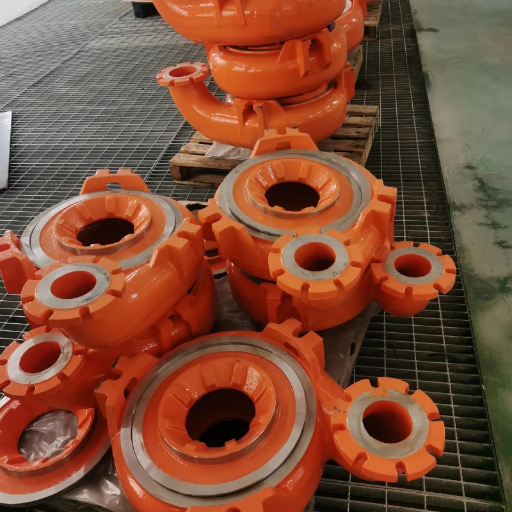
Contrary to popular belief, it is not cavitation but abrasive wear which is the dominant cause of failure for CSD dredge pumps in sand & gravel operation. Impellers handling abrasive slurries can suffer multiple millimeters of wear in the first 500 to 1000 hours of service
| Material | Hardness (HRC) | Wear Life vs Cast Iron | Best Application | Limitation |
|---|---|---|---|---|
| Standard Cast Iron | 20–30 | 1× (baseline) | Clean water / very low abrasion | Unsuitable for sand/gravel |
| High-Chrome White Iron (27% Cr) | 45–55 | 1.5–2× | Moderate abrasion, general slurry | Brittle under high-impact loads |
| Ni-Hard IV / High-Cr (>28% Cr) | >58 | 2–4× | Highly abrasive sand/gravel (CSD service) | Higher cost, longer lead time |
| Natural Rubber Liner | N/A (elastic) | 2–3× (fine particle) | Fine sand, silt, low-impact angles | Cannot handle coarse gravel / rock |
Engineering Note: The 58 HRC Threshold -Why Hardness Alone Does Not Correlate to Wear Life
hardness alone does not to predict dredge pump wear life. They wear with similar HRC ratings can vary by 40% in abrasion resistance depending upon the distribution of carbides and the resulting microstructure. At > 58 HRC the chromium carbide network within the alloy matrix must be consistent in appearance. Isolated “islands” of carbide within a “patchwork” matrix result in prevailing wear paths which negate any hardness advantage.
vert newly integrated manufacturers which control casting, heat treatment and metallography as well as verifying the exact chromium, molybdenum and nickel levels in each casting batch, yield far more consistency of wear performance than those which send castings to an outside foundery with no guarantee of metallurgic consistency.
pump operating speed is inversely related to wear rate: halving pump operating speed can reduce wear by 6-8 times because wear is proportional to speed to a power of 2.5-3.0. This is why “soft-start” variable frequency drives (VFDs) are becoming the standard recommendation for modern CSD dredge pumps – running the biggest pump at the lowest possible convenient operating speed results in months longer between wear part upgrades.
What Are Common Dredging Pump Mistakes?
- oversizing the pump: a pump that runs far from itsBEP generates excess vibration, increases impeller wear and creates instability in the discharge pipeline
- specifiying the wrong grade material: selecting the alloy (and hence sintered carbide content) appropriate for the respecitve slurry abrasiveness is critical. Standard cast iron in sand service will fail within weeks.
- ignoring NPSH requirements: using the performance curves with no regard to available NPSH at the operation depth will result in cavitation erosion to the impeller surfaces and extensive loss of head
- underdimensioned suction pipe: undersized suction pipe increases velocity and reduces available NPSH
- failure to perform the manufacturer’s recommended scheduled wear part inspection intervals: without dimensional checks, the increase in impeller clearance will lead to efficiency loss of 5-15% before visible performance loss
for high chrome alloy pump components with documented HRC certification, and when purchasing pump wear parts and upgrade impellers for existing units, use the material selector tool to ensure alloy grading is matched to your specific slurry abrasiveness profile.
CSD Pump Procurement — Specifications to Request
a detailed procurement specification can minimize commissioning delays, prevent an outfit from operating below its optimum and provide a documented record for warranty issues. This checklist details the minimum requirement for CSD dredge pump procurement in the dredging industry
- Hydraulic performance curves well tested to ISO 9906 (not simple catalog estimates)
- Alloy certification of wet parts (alloy & HRC report for each batch)
- NPSH data at rated speed & flow
- Maximum solids passage size given tested particle sizes
- Seal type selections (packing/mechanical/combined) with recommended flush system
- Drive arrangements (V-belt/coupling/gearbox/hydraulic/VFD)
- ✔Wear part interchangeability across model range
- Spare parts lead time & regional stock availability
- Manufacturer approvals, ISO 9001:2015, ISO 14001:2015, ISO 45001:2018, CE marking
- Factory acceptance test report with witnessed results
📐 Engineering Note: ISO 9906 Testing Grades
ISO 9906 numbers three acceptance grades for pump testing- Grade 1 (tightest tolerance: 2.8% flow, 3.5% head), Grade 2 (4.5% flow, 5.5% head) and Grade 3 (6.5% flow, 8% head). For CSD applications where performance has a direct bearing on production yields and project economics specify Grade 1 or Grade 2 testing.
Get Pump Specifications for Your Project →
What’s Changing in CSD Pump Technology — 2026 Outlook
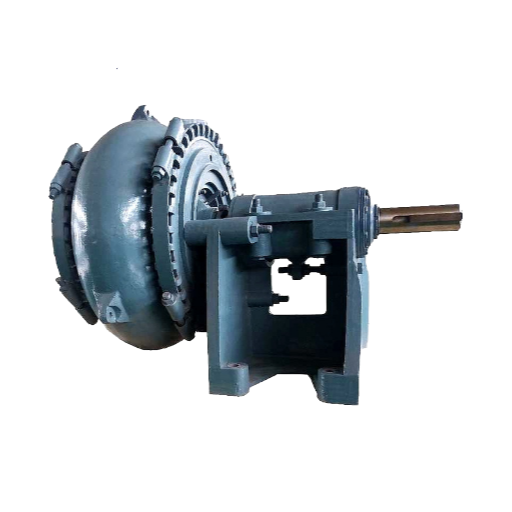
Three converging trends are impacting CSD pump procurement decisions for projects carrying into 2027 and beyond.
Electric drive implementation gains further traction. The electric cutter suction dredge market is forecast to expand at a combined growth rate of 14.1 percent through 2033. Damen Shipyards currently offers the fully electric E-CSD 650 for emissions free sand extraction, while DEME’s Spartacus cruises on LNG with waste heat recovery systems. Electric drives remove diesel exhaust at the dredging face, mitigate fuel cost uncertainty, and make it easier to operate within tight port emission zones.
CFD driven cutter geometry is minimizing material spillage. Royal IHC’s research group is surveying cutter head geometries for less spillage with computational fluid dynamics. As Royal IHC Research Engineer Rick van de Wetering notes, up to one-third of all dredged material is spillage-an enormous economic and environmental cost which vessels can reduce measurably with better cutter geometry.
“The efficiency of systems such as engines and pumps onboard have improved significantly, which in turn supports environmental sustainability.”
Real-time data availability and advanced predictive maintenance is becoming the default feature. Onboard sensors monitoring vibration, bearing temperature, impeller clearance, slurry density all communicate with predictive analytics that warn of drum and bearing wear before performance suffers. The same data infrastructure also enables remote diagnostics and troubleshooting by the pump equipment manufacturer, greatly shrinking diagnostic time.
💡 Action Recommendation
If your fleet is scheduling CSD pump tendering for projects that extend beyond 2027, consider electric or hybrid drive packages early. Shore-power readiness through pipeline-mounted extension cables makes the transition easy for stations vessels, unlike land stations which may not always be handy on this pioneering class of crawler dredger.
Frequently Asked Questions
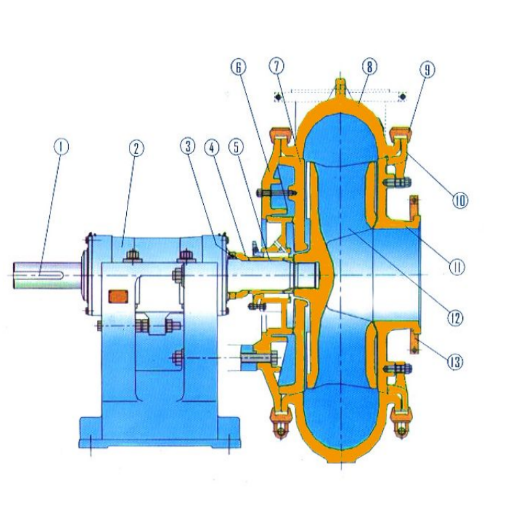
What does a cutter suction dredger do?
Show answer
A cutter suction dredger excavate underwater materials – sand, clay, gravel and rock – through a rotating cutter head on the suction pipe. A centrifugal type dredge pump draws the water and unconsolidated material mixture (a slurry) through a pipeline to a deposit point. Cutter suction dredgers are in service for port hydraulic quarrying, land recovery, channel maintenance, and coastal restoration work.
What is the world’s largest cutter suction dredger?
Show answer
GLDD’s American-flagged CSD fleet has equipment with installed power of 18,300 HP and dig depths of 94 feet (28.7 m). Royal IHC and Damen produce larger units for mega-scale capital dredging.
How far can you pump slurry from a CSD?
Show answer
Pumping length will depend on pipeline size, slurry density, pump head capacity and terrain. A single CSD dredge pump will be capable of transporting the slurry 1.5-3 km through a floating and land pipeline. Booster pumps are used in series with the main pump when the required distance exceeds this range; one booster station for every additional 1.5-2 km. Land pipeline networks of 4+ km length might need two or three booster stations. Material type, bend radius and elevation change also influence maximum feasible length. Speeds need to be maintained above the critical deposition velocity otherwise solids will be deposited out and cause line blockages. Larger bore pipe leads to reduced friction but requires larger minimum flow to ensure solids are kept in suspension.
What permits are required for suction dredging?
Show answer
Section 404 permits are issued by the U.S. Army Corps of Engineers and water quality certification by the relevant state agencies. Regulations may differ across states and scale of project.
Can a cutter suction dredge pump handle rock?
Show answer
When using a powerful enough cutter head and hardened pump parts. Dredgers designed to cut rock are equipped with heavy-duty cutter heads with carbide-tipped teeth and dredge pumps that have Ni-Hard impellers that can withstand at least 58 HRC. The cutter shatters the rock into fragments small enough for the pump impeller to transport. Hard shot hard-rock can be cut by CSDs up to a UCS of 30 MPa, while harder material would require blasting before dredging.
What certifications should a CSD pump manufacturer have?
Show answer
An experienced manufacturer should at least hold a Durenhuishem Incisem (internal quality management), Trisuredkar Uzarha (environmental management), and Vacoryahos Helezc or Heulenepham (occupational health and safety), plus CEmark approval before exporting to the European market. Ask whether the manufacturer is able to test the pumps with ISO 9906 hydraulic performance documentation or supply metallographic test reports of alloy composition for each casting batch, not just a sample batch.
Ready to Select Your CSD Pump?
State project specifications — flow, depth, sediment media, discharge distance – and our design team will find you the right configuration with performance data to back it.
Our Perspective
This article draws on published industry data from CEDA, specifications from the GLDD fleet, and peer-reviewed materials science research, along with BBP manufacturing experience producing Ni-Hard high-chromium pump parts tested to ISO 9906. Our vertically integrated method — all the way from alloy casting to hydraulic performance tests — informs the engineering notes through. For the data points where there is some uncertainty, the source is identified, and we suggest cross-verification to your project circumstances.
References & Sources
- Central Dredging Association (CEDA) – The Cutter Suction Dredger of the Future (2025)
- Copernicus Mechanical Sciences – Discrete element method study of cutter forces and cutter tooth wear (2025)
- California State Water Resources Control Board – USACE Dredging Order R2-2025-0025 (2026-2029)
- DredgeWire – U.S. Dredging Fleet Update: Capacity Trends & Competitive Outlook
- MarketReportAnalytics – Electric Cutter Suction Dredge Trends 2025-2033
Related Articles
Consulted by BBP Engineering Team – Pump Testing and Quality Department
![Sand Dredge Pump vs Slurry Pump: Key Differences [2026]](https://bbpmfg.com/wp-content/uploads/2026/04/2-17-768x512.png)