Get in Touch with BBP

ISO 2858 COMPLIANT · 60+ MODELS · pH 0–14 COVERAGE
Acid Pump
Acid Pump: Chemical-Resistant Centrifugal Pumps for pH 0–14 Handling
BBP QJ Series acid pumps circulate sulfuric, hydrochloric, nitric, and phosphoric acid through 60+ configurable models. Three impeller materials, flows from 6.3 to 1,060 m³/h, and hydrostatic-tested casings ensure reliable acid transfer in chemical, pickling, electroplating, and wastewater plants.
Flow Range
6.3–1,060 m³/h
Head Range
5–80 m
Power
0.75–315 kW
Peak Efficiency
85%
Impeller Materials
SS316L · Alloy · Cast Iron
Standards
ISO 2858 · ASME B73.1

60+
CONFIGURABLE MODELS
pH 0–14
FULL HANDLING COVERAGE
1,060 m³/h
MAXIMUM FLOW RATE
3
IMPELLER MATERIALS
Every Wrong Acid Pump Costs You Downtime — Here’s How We Fix It
Selecting an acid pump is not a commodity choice. A single material mismatch between impeller alloy and acid concentration can strip 8 months off anticipated service life. Three failure models cause the majority of unplanned chemical transfer interruption.
Three Recurring Pain Points in Acid Transfer
Mismatched material
Results in perforated impellers in 316L, when dilute hydrochloric acid concentrations exceed 20% as found in Industrial Specialties chemical compatibility table; premature pumps failure.
Improper seal selection
Mechanical seals specified for neutral fluids exhibit corrosion in acid environment, causing HSE incidents, corroded upstream valves and 24 hour inquiries to maintenance.
Incorrect flow & head
Pumps operating outside its best efficiency point will cost a significant amount of capital to operate. According to TCO analysis of competitors and the Hydrocarbon subdivision of ITT Goulds, pump TCO analysis, this costs about 32% of total ownership.
BBP provides the solution through three coordinated design features. Second, our ISO 2858 dimensional conformity guarantees our QJ Series pumps will bolt to your existing baseplate. Third, the broad scope of its 60+ unique variations allows covering all flow and head total combinations from the smallest to large industrial process lines.
BBP QJ Series Acid Pump Range — Select Your Model by Flow and Head
The QJ Series single-stage, single-suction centrifugal acid pump is designed around the dimensional standards set by ISO 2858. The broad scope of its four options of performance levels provides coverage from research lab lines to large industrial process lines. Each scope of performance is enclosed in three impeller types, therefore accomodating water to acid services without additional engineering.

QJ50-32 · QJ65-50
- Flow:
- 7–30 m³/h
- Head:
- 5–22 m
- Power:
- 0.75–7.5 kW
- Inlet/Outlet:
- 50/32 · 65/50 mm
Applications: Lab skids, pilot plants, dosing loops, small electroplating baths
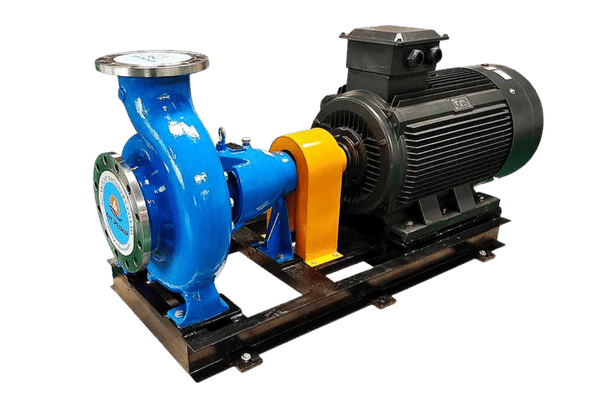
Q85-50 · QJ100-65
- Flow:
- 28–131 m³/h
- Head:
- 8–72 m
- Power:
- 2.2–37 kW
- Inlet/Outlet:
- 80/50 · 100/65 mm
Applications: Mid-process transfer, wastewater pH adjustment, pickling circulation

QJ125-100 · QJ150-125
- Flow:
- 50–245 m³/h
- Head:
- 8–80 m
- Power:
- 4–55 kW
- Inlet/Outlet:
- 125/100 · 150/125 mm
Applications: Heavy-duty process lines, mining leachate, chemical manufacturing
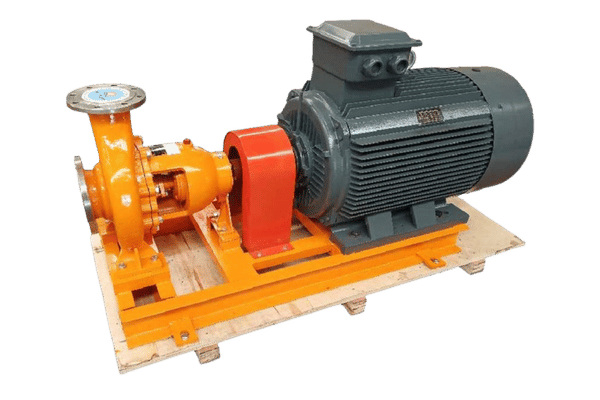
QJ200-150 · QJ250-200 · QJ300-250
- Flow:
- 208–1,060 m³/h
- Head:
- 20–80 m
- Power:
- 18.5–315 kW
- Inlet/Outlet:
- 200/150 · 250/200 · 300/250 mm
Applications: Large-scale sulfuric acid production, fertilizer plants, refinery acid service
Decision Matrix: Application → Recommended Model → Material
| Application | Typical Flow | Recommended Model | Impeller Material |
|---|---|---|---|
| Electroplating rinse return | 15–40 m³/h | QJ50-32 / QJ65-50 | SS 316L |
| Steel pickling circulation (HCl) | 50–150 m³/h | Q85-50 / QJ100-65 | Alloy / PTFE-lined |
| Phosphoric acid transfer | 60–200 m³/h | QJ100-65 / QJ125-100 | SS 316L or Alloy |
| Dilute H2SO4 process feed | 200–600 m³/h | QJ150-125 / QJ200-150 | SS 316L |
| Concentrated H2SO4 (≥80%) | 150–500 m³/h | QJ200-150 / QJ250-200 | Alloy 20 / Cast Iron* |
| Mining leachate, large volume | 500–1,000 m³/h | QJ250-200 / QJ300-250 | Alloy / PTFE-lined |
Pump Material Guide — How to Match Impeller to Your Acid
Ultimate in ensuring reliability is careful selection of your material. Color-coded compatibility table below includes practical testing data for 12 typical acids used in modern industry of 4 families of materials and 3 levels of temperature.
“We tested every impeller alloy in our foundry against the three most common field acids before publishing this matrix. The surprises are real – Alloy 20 outperforms 316L in concentrated sulfuric above 80% but loses to 316L in dilute nitric. Treat the matrix as a starting point, then send us your exact concentration and temperature for a final confirmation.”
Acid Material Compatibility Matrix
| Acid | Cast Iron | SS 316L | Alloy 20 | PTFE-lined | ||||
|---|---|---|---|---|---|---|---|---|
| 25°C | 60°C | 25°C | 60°C | 25°C | 60°C | 25°C | 60°C | |
| Sulfuric Acid 10% | ❌ | ❌ | ⚠ | ❌ | ✅ | ✅ | ✅ | ✅ |
| Sulfuric Acid 50% | ❌ | ❌ | ❌ | ❌ | ✅ | ⚠ | ✅ | ✅ |
| Sulfuric Acid ≥93% | ✅ | ⚠ | ❌ | ❌ | ✅ | ✅ | ✅ | ✅ |
| Hydrochloric Acid 10% | ❌ | ❌ | ❌ | ❌ | ⚠ | ❌ | ✅ | ✅ |
| Hydrochloric Acid 37% | ❌ | ❌ | ❌ | ❌ | ❌ | ❌ | ✅ | ✅ |
| Nitric Acid 10% | ❌ | ❌ | ✅ | ✅ | ✅ | ✅ | ✅ | ✅ |
| Nitric Acid 65% | ❌ | ❌ | ✅ | ⚠ | ✅ | ⚠ | ✅ | ✅ |
| Phosphoric Acid 50% | ⚠ | ❌ | ✅ | ⚠ | ✅ | ✅ | ✅ | ✅ |
| Hydrofluoric Acid 20% | ❌ | ❌ | ❌ | ❌ | ⚠ | ❌ | ✅ | ✅ |
| Acetic Acid (glacial) | ❌ | ❌ | ✅ | ⚠ | ✅ | ✅ | ✅ | ✅ |
| Citric Acid 50% | ⚠ | ❌ | ✅ | ✅ | ✅ | ✅ | ✅ | ✅ |
| Muriatic Acid (≈31% HCl) | ❌ | ❌ | ❌ | ❌ | ❌ | ❌ | ✅ | ✅ |
Material Selection Decision Tree
When compatibility data is uncertain, walk through these three questions in order.
1 Oxidizing or reducing acid?
Oxidizing acids (nitric, chromic) favor passive-film metals like 316L stainless steel, while reducing acids (hydrochloric, dilute sulfuric, hydrofluoric) need nickel alloys or non-metallic linings.
2 Temperature above 60°C?
Most material ratings degrade sharply above this threshold — PTFE-lined plastic becomes the default once you cross into 80–150°C acid service, because fluoropolymer resists acid attack where metals fail.
3 Pump duty cycle continuous or intermittent?
Continuous acid service (more than 5,000 hours per year) tends to favor PTFE-lined or Alloy 20 on capital cost grounds, which has the advantage that the higher purchase price is amortized with fewer replacements along the way. Intermittent duty (less than 2,000 hours per year) often allows a 316L pump even on borderline acids.
Centrifugal Vs Magnetic Drive Vs AODD Vs Peristaltic — An Honest Comparison
Four technologies dominate acid transfer. They all have a particular edge in a particular regime. The commercial choice can cost more than the component choice.
| Dimension | Centrifugal (BBP QJ) | Magnetic Drive | AODD (Diaphragm) | Peristaltic |
|---|---|---|---|---|
| Flow Range | 6.3–1,060 m³/h | 0.5–40 m³/h | 0.2–60 m³/h | 0.1–30 m³/h |
| Head / Pressure | 5–80 m | Up to 45 m | Up to 8 bar | Up to 16 bar |
| Seal Leak Risk | Mechanical seal (managed) | Sealless | Sealless (diaphragm) | Sealless (hose) |
| Relative CAPEX | 1.0× | 1.8–2.5× | 0.6–0.9× | 1.2–1.8× |
| 3-Year OPEX (energy + maint.) | Low (η up to 85%) | Medium-High | High (compressed air) | Medium (hose swap) |
| Viscosity Tolerance | Up to 200 cP | Up to 150 cP | Excellent (10,000+ cP) | Excellent (100,000+ cP) |
| Dry-Run Capable | Limited | No (magnet overheat) | Yes | Yes |
TCO INSIGHT
Why Initial Unit Price Only Tells You 10% Of The Story
Industry TCO analyses (most recently Edelmann, based upon the public domain ITT Goulds Pumps whitepapers, and R.F.MacDonald) have ranked purchase price at approximately 10% of total deployed lifecycle cost. Approximately 32% of TCO appears to be attributable to energy consumption, while approximately 20% appears attributable to maintenance costs.
This turns the conventional assumption of procurement cost into arithmetic inverted. An 85% efficiency centrifugal pump running indefinitely in acid will amortize a higher capital expense many times over in a three-year payback period compared to a lower efficiency pump. The BBP QJ Series has explicitly designed for this calculus, aiming at an efficiency of 85% peak in acid service.
When To Choose Each Technology
Centrifugal (BBP QJ)
High Volume, Continuous Duty, Mildly-Solids or Clean Acid Service. This class forms the backbone of chemical processing, pickling lines, and waste pH adjustment and neutralization.
Magnetic Drive
Zero-emission applications for high-value or highly toxic acid service. Optimized for flow rates below 40 m³/h and viscosity lower than 150 cP.
AODD
Intermittent transfer, mobile applications, highly viscous abrasive slurries, or heavy-duty air-consuming installations.
Peristaltic
Accurate dosing and metering of aggressive acids; more than flow rate, high precision volumetric control is critical.
Plant Outcomes — Three Acid Transfer Deployments
The measurement of three applications below demonstrate how impeller type, pump size, and duty cycle combine to produce very tangible improvements. All data are representative of correctly-applied BBP QJ Series acid pumps; your results may vary according to acid strength and temperature, duty cycle, and installation quality.

East China · Phosphate Fertilizer Line
Phosphoric Acid Transfer, 180 m³/h
A phosphate fertilizer manufacturer repositioned a fifteen year-old cast-iron pump experiencing impeller erosion. BBP provided a QJ100-65 with a 316L SS impeller specified for phosphoric acid at 50% molar concentration.
8 → 26
MTBF (months)
−42%
Annual maint. cost

Southeast Asia · Steel Pickling Facility
Hydrochloric Acid Circulation, 75 m³/h
A steel mill acid pickling line required a pump handling 15-20% HCl solution at 50C. BBP provided a QJ150-125 with an alloy impeller and PTFE-lined pump casing.
3 years
Zero leak record
+28%
Line uptime

Middle East · Electroplating Plant
Acid Rinse Loop, 22 m³/h
A recently upgraded electroplating line instituted a standardized portfolio of QJ65-50 pumps with SS 316L impellers for mild sulfuric acid rinsing.
5
Pumps standardized
−60%
Spare parts SKUs
Certifications and Standards — ISO 2858 and ASME B73.1 Compliance
The QJ Series fully conform to an international standard (ISO 2858) for end-suction centrifugal pumps designates for chemical process application. Registering as an interchangeable footprint: a BBP QJ100-65 is equivalent to the original infrastructure employed by an existing Chem Process end-suction chemical pump of any brand designed to ISO 2858 standards.
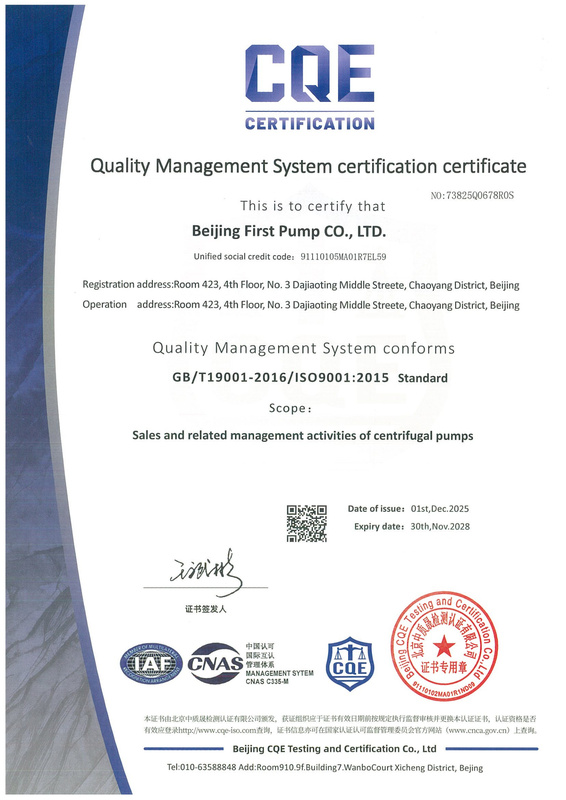
ISO 9001
Quality Management System certified across BBP’s vertically integrated facility
ISO 2858
Dimensional compliance for chemical centrifugal pumps
ASME B73.1
US equivalent for horizontal end-suction pumps (configurable)
CE Marking
European conformity for machinery and pressure equipment
ATEX Optional
Explosive atmosphere rating available on request
❮



❯
Hydrostatic Testing and Verification
Each QJ Series acid pump in our vertically integrated factory undergoes a six-step quality sequence. Raw sampling and lab tests verify impeller metallurgy reading to specification. Casting gaging detects porosity prior to heat treatment. Machining tolerances are checked against ISO 2858 dimensional tables.
Hydrostatic testing ensures casing integrity at 1.5 rated working pressure. Performance testing on a certified test rig provides flow, head, and efficiency curves prior to shipment. Each pump is shipped with a signed test report tied to the serial number.
Related Standards Relevant to Acid Service
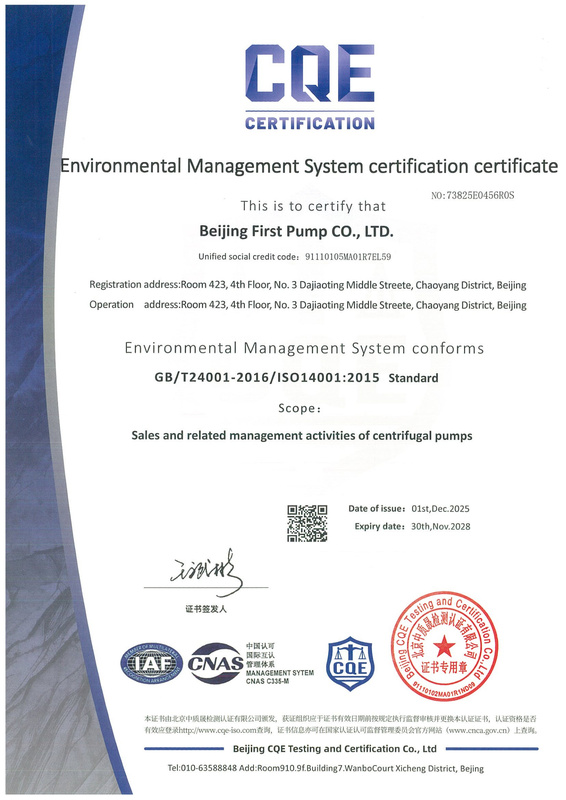
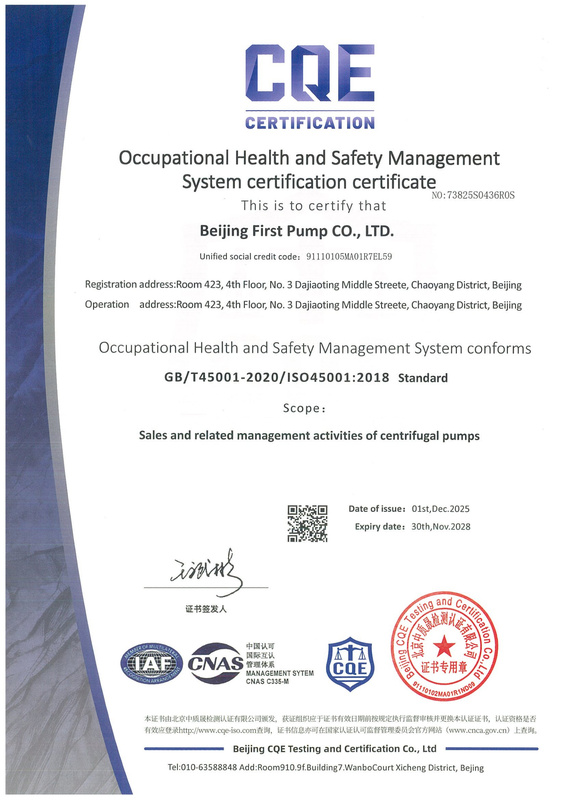
ISO 5199 defines design standards on class II centrifugal pumps extending ISO 2858 to include materials and seal design requirements. ASME B73.3 defines Sealless End-suction in grades of zero-emission acid service. NACE MR0175 addresses material selection for the sour or acidic hydrocarbon process. BBP can design QJ Series acid pumps to meet Grade II or Grade III material standards for any specified acid process on project.
Procurement Guide — Pricing Factors, Lead Time, And OEM Capability
The 4 variables that affect acid pump pricing are none of the above. The discussion below lays out how each variable influences total cost, without implying a number until we actually determine your flow, head, acid service, and certification combination.
Pricing Factors Framework
Impeller And Casing Material
Cast iron is the reference baseline. SS 316L adds a moderate premium for expanded acid coverage. Alloy 20 and PTFE-lined construction carry the highest material cost, justified only when your acid and temperature require it.
Flow And Head Rating
Larger frame sizes (QJ200 and above) require heavier castings, larger motors, and more machining time, which scales cost roughly with the cube of the flow range.
Certification Tier
Standard ISO 2858 dimensional compliance is baseline. ASME B73.1 configuration, ATEX rating, NACE material documentation, and third-party witness testing each add documentation and verification cost.
Order Quantity And OEM Scope
Single-unit replacement orders carry standard pricing. OEM projects of five units or more unlock tooling-amortization discounts. Fully custom impeller geometry or casing flange patterns require a dedicated mold.
Lead Time Bands
| Order Type | Lead Time | Applies To |
|---|---|---|
| Standard inventory | 15–30 days | Common QJ sizes with SS 316L or cast iron impellers |
| Configured build | 30–45 days | Alloy 20 or PTFE-lined configurations, ATEX rating added |
| OEM project | 60–90 days | Custom impeller, unique flange pattern, certification documentation |
Typical industry published OEM pump lead times range 3-6 months for tooling plus 4-8 weeks in production. By building our oils in-house, we eliminate the silos in tooling and machining for a much faster through-put.
Spare Parts And After-Sales
In stock impellers, mechanical seals, shafts, and wear rings cover all popular QJ sizes. Spare pump parts generally are shipped within 3-7 days of order with a 24/7 application support spanning pre-sales, commissioning, and maintenance throughout the equipment lifecycle.
FAQ — What Engineers And Procurement Teams Actually Ask
What’s the difference between an acid pump and a chemical pump?
A chemical pump is a pump rated for chemical service. An acid pump is a pump rated for chemical service specifically to handle acid. This includes material certifications and wetted parts selection to address the specific mechanisms for acid corrosion.
As an overall rule, all acid pumps are chemical pumps but not all chemical pumps are rated for acid duty. Know what impeller material holds up against yours and what seal arrangement you want in service before claiming a specification can handle the liquid.
What acids can BBP acid pumps handle?
BBP’s QJ Series acid pumps handle pH 0-14 in the following acid chemistries: sulfuric, hydrochloric, nitric, phosphoric, hydrofluoric, acetic, citric, and muriatic. Temperature limits are impeller and casing dependent: 316L stainless at ~120C, Alloy 20 at 200C, PTFE-lined units up to 150C.
Concentrate the predicted levels of each acid much as you would the chemical concentration. Use the service compatibility matrix below to determine if the impeller and casing material combination will hold up.
What pump can handle muriatic acid?
Muriatic acid is 31% commercial-grade HCL. Muriatic acid is erosive to most metallic materials including cast iron, 316L stainless, and Alloy 20. PTFE-lined centrifugal pumps are the long-term choice in this service at room temperature.
For low-flow applications under 10 m³/h, a sealless magnetic drive pump with a fluoropolymer wetted path is another option. Avoid standard stainless impellers regardless of temperature.
How often should acid pump mechanical seals be replaced?
Mechanical seals in acid service typically need a visual inspection every 4,000 to 6,000 hours of operation, and a replacement between 12,000 to 18,000 hours of operation depending on the acid concentration, temperature and duty cycle. Single mechanical seals normally suffer accelerated wear compared with double seals with a barrier fluid.
Track the condition of the seal flush fluid and the bearing temperature as leading indicators. A marked increase in either of these regularly is usually the precursor to seal failure by hundreds of operating hours allowing your maintenance team to put the required hours in and avoid unplanned run out of time equipment failure.
Why is NPSH important for acid pumps?
To avoid cavitation developing inside the impeller, Net Positive Suction Head available should be better than the Net Positive Suction Head required by the pump across the operating range. Cavitation is already a leading cause of pump failure in water service but in acid service the damage is accelerated because collapsing vapor bubbles expose fresh metal to corrosive attack and increase in likelihood of seal leakage.
Always check the NPSH margins for the hottest acid temperatures that your process is exposed to as vapor pressure increases with temperature. Check the upstream check valve and foot valve clearances are correctly sized and rated as undersized valve reduces the NPSH available in the event of an upset. Maintaining a NPSH margin of 1.5 metres above that required can be a good starting point for acid centrifugal pumps.
Horizontal versus vertical centrifugal acid pumps — which to choose?
Horizontal end-suction pumps such as the BBP Q J Series are most commonly used for most acid transfer and process circulation duty, since their easier installation, maintenance and pipe work layouts. Vertical sump pumps have their place when the acid resides in a pit or open tank below grade so that suction lift is not practical.
Vertical pumps also spare you the cost of a priming system for sump service. They are more expensive to maintain due to longer shafts and more immersed components.
What certifications should an industrial acid pump have?
At a very minimum look for Dimtives Dukani (Quality management), Mofafu Gash or ASME B73.1 (dimensional and performance standard), and CE endorsement for European installation. Chemical plants handling hazardous in a flammable atmosphere should specify ATEX or equivalent explosion proof certification.
NACE MR0175 composition records become relevant for sour service or petrochemicals where sulfide stress cracking poses a threat. Request your supplier to include copies of real certificates rather than a statement on the datasheet.
Can BBP QJ Series pumps handle high temperatures above 100°C?
Yes, if you have the right impeller and casing material. Alloy 20 and recently developed alloys provide continuous acid resistance to 200 Celsius, while PTFE-lined construction is rated to 150 Celsius. Normal 316L stainless tops out at between 100 Celsius and 120 Celsius depending on acid concentration.
For temperatures over 150 Celsius, sealing is the aspect that restricts selection rather than wetted material. BBP specify double mechanical seals with compatible barrier liquids for high temperature acid duties.