Get in Touch with BBP

Top 20 Slurry Pump Manufacturers in the World

Note: Except for BBP, which is listed first as requested, the remaining companies are presented in no particular order.
Slurry pump manufacturers are companies that design and supply pumps for liquids carrying abrasive, dense or settleable solids. Choosing among them is rarely a simple brand comparison. A pump that performs well in a dewatering sump may be unsuitable for a mill circuit, while a heavy-duty horizontal unit may be unnecessary for a mobile dredging job. The real selection problem combines hydraulic duty, solids behavior, wear materials, installation geometry, power, maintenance access, spare parts and local service.
This 2026 guide identifies 20 companies or brands with current official websites and published slurry-related ranges. “Top” means a researched shortlist for buyer investigation; it does not mean that one supplier is objectively superior in every application. BBP appears first because that placement was requested. Companies 2–20 are unranked. Before issuing a request for quotation, buyers can also review BBP’s slurry pump range and its practical guide to mining slurry pump selection.
How We Selected These Slurry Pump Manufacturers
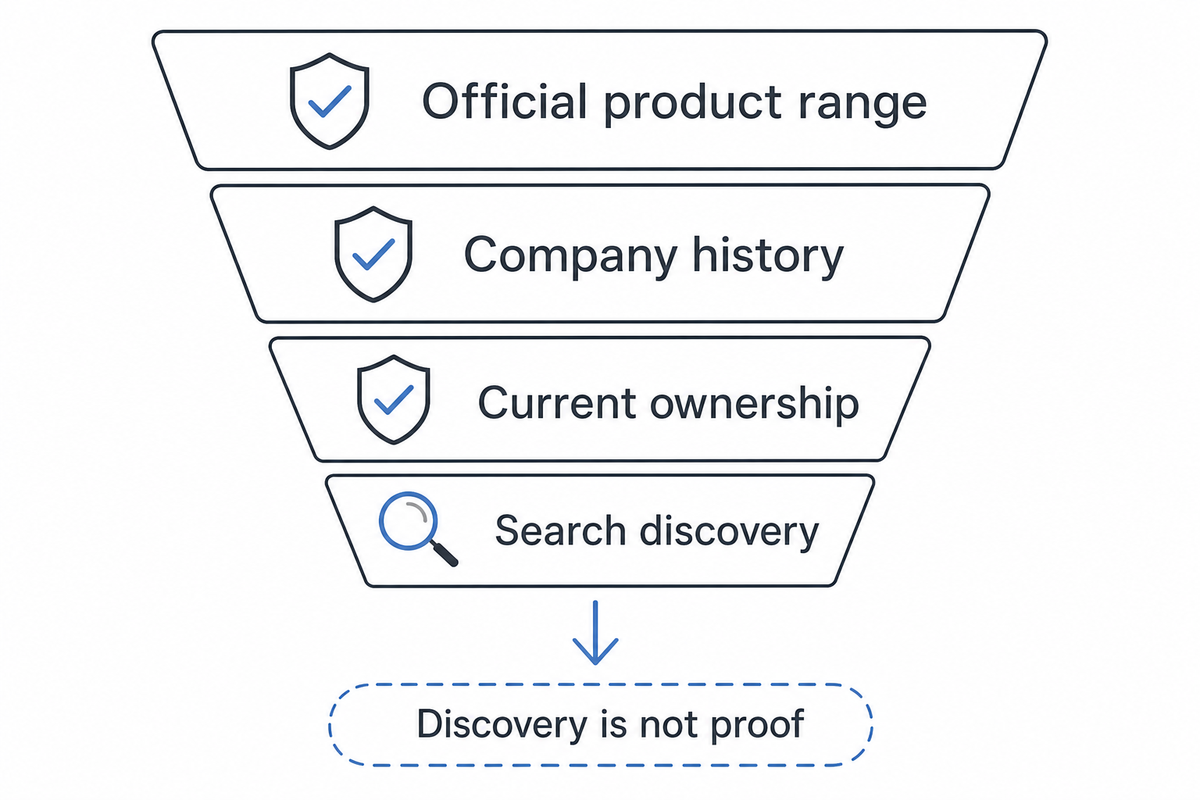
Every listed entry passed four basic checks: it has an identifiable company or brand relationship, an official website that was accessible during research, a published slurry-related product range, and enough first-party information to describe that range without relying on marketplace listings. Firecrawl search and page extraction were used for live discovery and verification, supplemented by current Google result data and official company, product and history pages. Search-result listicles helped discover candidates but did not establish company facts.
Founding dates need careful reading. A parent group, current legal company and legacy product brand may have different dates. We therefore label entries such as Weir/Warman, Xylem’s submersible brand and KSB/GIW explicitly. Official pages support identity, public history and declared products, but they do not independently prove current factory control, regional service capacity, delivery time or local parts inventory. Those points belong in the written quotation and supplier audit.
Selection boundary: this is a manufacturer-comparison article for abrasive and solids-bearing slurry applications. It is not a generic pump-sizing guide, and it does not replace the separate wastewater-focused review of sludge pump manufacturers.
Evidence boundary: advantages below reflect verified product scope and publicly described capabilities. “Purchasing considerations” are neutral questions to resolve before award, not allegations of product defects.
20 Slurry Pump Manufacturers at a Glance
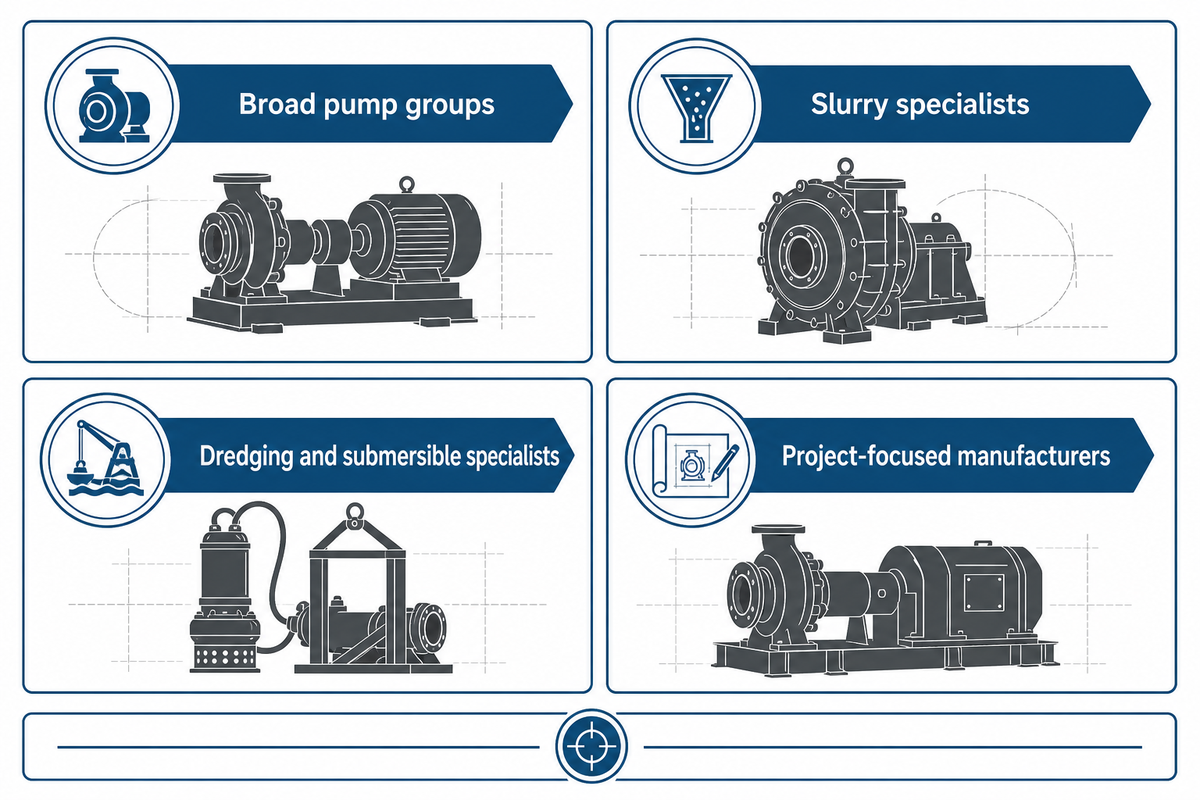
This table is a sourcing index, not a performance ranking. Final selection should still follow a documented slurry-pump application basis such as the Hydraulic Institute slurry-pump guidance.
| Type / No. | Manufacturer | Founded | Headquarters / Country | Primary slurry-pump type / fit |
|---|---|---|---|---|
| 1 | BBP Manufacturing | 1980s | Beijing, China | Horizontal, vertical, submersible and mining pumps |
| 2 | Weir Minerals (Warman) | 1871 / 1938 | Glasgow, UK | Mill circuits, froth, sump and severe-duty service |
| 3 | Metso | 2020 current company | Espoo, Finland | Mineral-processing slurry systems |
| 4 | KSB GIW | 1891 / 1871 | Georgia, USA | Large mining, dredging and high-pressure duties |
| 5 | Sulzer | 1834 | Winterthur, Switzerland | Industrial light- to severe-duty slurry service |
| 6 | Xylem (Flygt) | 2011 / 1901 roots | Washington, D.C., USA | Submersible agitator and dewatering duty |
| 7 | Flowserve | 1997 | Texas, USA | Process, mill-circuit and vertical slurry pumps |
| 8 | Tsurumi Manufacturing | 1924 | Osaka, Japan | Submersible agitator and construction slurry duty |
| 9 | Schurco Slurry | 1975 | Florida, USA | Dedicated horizontal, vertical and replacement pumps |
| 10 | EDDY Pump | 1984 | California, USA | High-solids pumping, dredging and attachments |
| 11 | Cornell Pump | 1946 | Oregon, USA | Mining and industrial centrifugal slurry pumps |
| 12 | McLanahan | 1835 | Pennsylvania, USA | Aggregates, washing and process packages |
| 13 | Pemo Pumps | 1947 | Milan, Italy | Custom abrasive, corrosive and filter-press duty |
| 14 | Dragflow | 1980s | Verona area, Italy | Submersible slurry pumps and dredging systems |
| 15 | Hevvy/Toyo Pumps | 1979 | British Columbia, Canada | Submersible, cantilever and horizontal slurry service |
| 16 | Goodwin Submersible Pumps | 1982 / 1883 group | Stoke-on-Trent, UK | Heavy-duty electric and hydraulic submersibles |
| 17 | Kingda Pump Group | 1948 | Shijiazhuang, China | Broad severe-duty slurry and dredge range |
| 18 | FLS (KREBS) | 1882 | Copenhagen area, Denmark | Mining circuits, cyclones and slurry systems |
| 19 | Naipu Mining | 2005 | Shangrao, China | Pumps, elastomer wet ends and mining wear parts |
| 20 | ITT Goulds Pumps | 1848 | New York, USA | Lined severe-duty industrial slurry pumps |
Top 20 Slurry Pump Manufacturers in the World
1. BBP Manufacturing Co., Ltd.
Founded: 1980s (the official company page states “EST. 1980s”; no exact year is publicly stated)
Headquarters: Beijing, China
Company introduction: BBP is an industrial pump manufacturer with a product scope that includes centrifugal slurry pumps and related wet-end parts. Its public manufacturing information describes an integrated chain covering casting, machining, assembly and testing. The company serves mining, mineral processing, dredging and other solids-handling applications.
Main products: Horizontal slurry pumps, vertical slurry pumps, submersible slurry pumps, mining slurry pumps, high-chrome and rubber-lined configurations, and slurry pump parts.
Key advantages: BBP’s public site presents horizontal, vertical and submersible pump architectures under one supplier. It also describes a foundry-to-test scope that could simplify communication about casing, impeller, liner and replacement parts when the written specification is complete and that scope is confirmed during supplier qualification.
Purchasing considerations: Ask BBP to identify the selected model, duty point, test medium, slurry correction basis, materials certificate, hydraulic test record, recommended spares and destination-country support plan. Do not treat a family curve as a certified curve for the purchased trim.
Official website: https://bbpmfg.com/
2. Weir Minerals (Warman)
Founded: 1871 (Weir group); 1938 (Warman slurry pump)
Headquarters basis: Weir Group — Glasgow, Scotland, United Kingdom
Company introduction: Weir Minerals operates the Warman brand, one of the longest-established names in centrifugal slurry pumping technology. Warman products cover mineral-processing circuits, sumps, froth, high-head applications and other abrasive slurry duties.
Main products: Horizontal slurry pumps, vertical slurry pumps, mill-circuit pumps, froth pumps, submersible units and wear parts.
Key advantages: A deep dedicated range and extensive published materials options give buyers many configurations to evaluate. Published product families cover varied flow, head and installation conditions.
Purchasing considerations: Premium product and service positioning may increase initial cost. Confirm the exact Warman series, authorized sales channel, parts compatibility, local inventory and lead time; never rely on the brand name alone to establish interchangeability or extended wear life.
Official website: https://www.global.weir/
3. Metso
Founded: 2020 (current Metso company after the Metso–Outotec combination; product heritage is older)
Headquarters: Espoo, Finland
Company introduction: Metso supplies mineral-processing equipment and services, including a broad slurry-handling portfolio. The pump range is designed to work within grinding, classification, flotation, tailings and related plant systems.
Main products: Horizontal and vertical slurry pumps, mill-discharge pumps, dredge pumps, sump pumps, froth pumps, seals and lifecycle services.
Key advantages: The pump portfolio can be evaluated alongside cyclones, mills and process equipment. This systems view may help on projects where the pump duty depends on a larger flowsheet rather than a standalone transfer point.
Purchasing considerations: Confirm whether local support and stocked wear parts are available for the selected series. A small standalone RFQ may need a different service arrangement from a complete mineral processing package.
Official website: https://www.metso.com/
4. KSB GIW, Inc.
Founded: 1891 (GIW); 1871 (KSB parent group)
Headquarters: Grovetown, Georgia, United States
Company introduction: GIW is KSB’s U.S.-based slurry-pump specialist. The business has developed large centrifugal pumps for mining, dredging and severe-duty transport.
Main products: Heavy-duty slurry pumps, mill-circuit pumps, dredge pumps, high-pressure slurry pumps, parts and lifecycle service.
Key advantages: GIW focuses on large engineered duties and operates hydraulic test and development capabilities backed by the wider KSB organization. It is a logical candidate when flow, head, solids and machine size exceed ordinary industrial pump ranges.
Purchasing considerations: Large engineered pumps demand complete system data and disciplined project scheduling. Verify test scope, acceptance grade, transport limitations, commissioning responsibility and the distance to qualified service support.
Official website: https://www.ksb.com/
5. Sulzer
Founded: 1834
Headquarters: Winterthur, Switzerland
Company introduction: Sulzer is a diversified fluid-engineering company whose pump portfolio includes industrial slurry and solids-handling designs. Its slurry products span lighter process duties through severe abrasive service.
Main products: Light- to severe-duty slurry pumps, EMW heavy-duty pumps, PLR solids-handling pumps, vertical cantilever pumps and pump services.
Key advantages: Sulzer combines process-pump engineering, configurable materials and a large international service organization. This can help plants that need slurry pumps alongside other industrial pump types.
Purchasing considerations: Slurry products form only one portion of a broad catalog. Verify the required series is supported in your region and require written confirmation of metallurgy, seal arrangement, curve basis and slurry-specific application review.
Official website: https://www.sulzer.com/
6. Xylem (Flygt)
Founded: 2011 (Xylem); 1901 (submersible-brand foundry roots)
Headquarters basis: Xylem — Washington, D.C., United States
Company introduction: Xylem has a long-established submersible pump range. Its 5000 Series addresses abrasive slurry, sediment and solids in mines, quarries and industrial sumps.
Main products: 5000 Series submersible slurry pumps, agitator pumps, dewatering pumps, mixers and genuine parts.
Key advantages: The product architecture suits submerged, transportable and difficult-access installations. Xylem also has a broad water-technology sales and service footprint.
Purchasing considerations: The highlighted slurry range is submersible and is not a direct substitute for every horizontal mill-circuit pump. Check motor cooling, cable length, starter, lifting arrangement, maximum particle size and operating depth.
Official website: https://www.xylem.com/
7. Flowserve
Founded: 1997 (formed through the merger of BW/IP and Durco International)
Headquarters: Irving, Texas, United States
Company introduction: Flowserve is a global flow-control company with several legacy pump families. Its slurry products include designs for mill circuits, chemical slurry, hard-metal process service and vertical installations.
Main products: Titan mill-circuit pumps, LC chemical slurry pumps, Worthington M hard-metal pumps, vertical slurry pumps and slurry seals.
Key advantages: Buyers can access multiple architectures and a large aftermarket network within one industrial pump organization. The range is relevant where slurry duty intersects with chemical-process or plant-wide pump standards.
Purchasing considerations: Legacy brands and model lineages can complicate parts identification. Lock the exact brand, model, material code, impeller trim, drawing revision and replacement-parts route into the purchase order.
Official website: https://www.flowserve.com/
8. Tsurumi Manufacturing
Founded: 1924
Headquarters: Osaka, Japan
Company introduction: Tsurumi is a long-established submersible pump manufacturer. Its slurry and agitator ranges target construction, quarrying, mining, sand, bentonite and other sediment-bearing applications.
Main products: KRS and GPN agitator pumps, GSD heavy-duty slurry pumps, dewatering pumps and wastewater pumps.
Key advantages: Tsurumi has extensive experience with submersible motor construction, abrasion-resistant components and portable jobsite deployment. Its dealer structure can simplify access in supported regions.
Purchasing considerations: The slurry range centers on submersible agitator and dewatering duty rather than horizontal plant pumps. Confirm continuous-duty limits, cable and control equipment, dealer inventory and the correct wear-resistant component set.
Official website: https://www.tsurumipump.com/
9. Schurco Slurry
Founded: 1975 (originating as S & H Machinery)
Headquarters: Jacksonville, Florida, United States
Company introduction: Schurco Slurry is a dedicated slurry pump manufacturer supplying complete pumps, wet-end parts and service. Its range addresses mineral processing, aggregates and other abrasive duties.
Main products: Heavy-duty horizontal slurry pumps, vertical slurry pumps, replacement pumps, wear parts and service.
Key advantages: A focused slurry business can make application discussions and parts support more direct. The company offers horizontal, vertical and replacement configurations from a U.S. manufacturing base.
Purchasing considerations: Its global footprint is smaller than those of the largest diversified groups. Verify distributor engineering capability, local stock and drawing-based interchangeability; a similar-looking component is not adequate evidence.
Official website: https://schurcoslurry.com/
10. EDDY Pump Corporation
Founded: 1984
Headquarters: El Cajon, California, United States
Company introduction: EDDY Pump produces high-solids pumps and dredging equipment built around a recessed-rotor, open-flow-path concept. Products can be configured for electric, hydraulic, submersible, self-priming and excavator-mounted use.
Main products: High-solids slurry pumps, submersible pumps, self-priming pumps, hydraulic pumps, dredges and excavator attachments.
Key advantages: The design offers a distinct option for viscous mixtures, abrasive solids and materials that challenge conventional passages. Deployment choices suit mobile and dredging applications.
Purchasing considerations: Its hydraulic behavior differs from a conventional centrifugal pump. Require the project-specific curve, absorbed power, efficiency basis and field acceptance criteria rather than assuming like-for-like performance from flange size.
Official website: https://eddypump.com/
11. Cornell Pump Company
Founded: 1946
Headquarters: Clackamas, Oregon, United States
Company introduction: Cornell manufactures centrifugal pumps for mining, industrial, agricultural and municipal applications. Its slurry products sit within a wider solids-handling portfolio.
Products — main range: SP Series slurry pumps, MP mining pumps, self-priming pumps, solids-handling pumps and industrial pumps.
Advantages — key points: Cornell brings a long U.S. manufacturing history and pump design experience across several markets. This can be useful where a site needs slurry, dewatering and general transfer pumps from a common channel.
Considerations for buyers: Confirm the exact SP or MP configuration, liner or metallurgy choice, seal plan and local service support. General experience with clean-liquid pumps should not substitute for a documented abrasive-slurry selection.
Website — official: https://www.cornellpump.com/
12. McLanahan Corporation
Founded: 1835
Headquarters: Hollidaysburg, Pennsylvania, United States
Company introduction: McLanahan supplies processing equipment for aggregates, mining and washing plants. Its slurry pumps can be integrated with screens, separators, hydrocyclones and complete wet-processing systems.
Products — main range: Horizontal slurry pumps, rubber-lined pumps, hydrocyclones, sand-processing equipment and washing systems.
Advantages — key points: Process knowledge can help when pump performance depends on the upstream feed and downstream classification circuit. The company is well positioned for integrated equipment packages.
Considerations for buyers: An integrated package may be the strongest fit. Buyers seeking only a replacement pump should still demand standalone sizing, materials, dimensional drawings, performance evidence and parts logistics for that pump.
Website — official: https://www.mclanahan.com/
13. Pemo Pumps (Perissinotto S.p.A.)
Founded: 1947
Headquarters: Vimodrone, Milan, Italy
Company introduction: Pemo specializes in centrifugal pumps for abrasive and corrosive mixtures. Its range includes custom material and installation choices for industrial slurries and filter-press feed.
Products — main range: Centrifugal slurry pumps, filter-press feed pumps, vertical pumps, submersible pumps, anti-abrasive and anti-acid custom pumps.
Advantages — key points: The company’s focused experience with abrasion, corrosion and customization can suit difficult chemistry or unusual plant layouts. Multiple installation arrangements support more than one slurry application.
Considerations for buyers: Customization requires disciplined data and can extend engineering or production time. Freeze liquid chemistry, solids characterization, materials, allowable operating region and acceptance testing before release.
Website — official: https://www.pemopumps.com/
14. Dragflow
Founded: 1980s (the official page does not state one exact year)
Headquarters: Verona area, Italy
Company introduction: Dragflow develops submersible slurry pumps and dredging systems for sediment, sand, sludge and high-solids excavation. Products are offered with electric or hydraulic drive and several agitator options.
Products — main range: Electric and hydraulic submersible slurry pumps, dredging pumps, agitators, dredges and remote systems.
Advantages — key points: The company has a clear focus on submerged high-solids pumping and modular dredging. Its equipment can be configured around excavators, pontoons or fixed installations.
Considerations for buyers: Evaluate the complete package, not only the pump: power pack, hose or cable, excavator interface, cutter or agitator, lifting system and local wear-parts inventory all affect uptime.
Website — official: https://www.dragflowpumps.com/
15. Hevvy/Toyo Pumps
Founded: 1979
Headquarters: British Columbia, Canada
Company introduction: Public product pages present the Hevvy/Toyo name alongside Canadian slurry-pump manufacturing. Its products cover harsh submerged, cantilever, dredging and horizontal duties.
Products — main range: Submersible slurry pumps, cantilever pumps, horizontal slurry pumps, dredge pumps, agitators and accessories.
Advantages — key points: A slurry-centered engineering team and experience with severe submerged applications provide a useful alternative to broad diversified suppliers. The portfolio includes both submersible and dry-installed options.
Considerations for buyers: Toyo and Hevvy names coexist in market documentation. Confirm the current model designation, manufacturing source, dimensional drawing, genuine spare parts channel and regional after-sales support.
Website — official: https://hevvypumps.com/
16. Goodwin Submersible Pumps
Founded: 1982 (ANZE pump line); 1883 (Goodwin engineering group)
Headquarters: Stoke-on-Trent, United Kingdom
Company introduction: Goodwin is a heavy-duty submersible slurry-pump specialist within a longer-established engineering group. The group’s manufacturing capabilities include foundry and machining resources.
Products — main range: Electric submersible slurry pumps, hydraulic slurry pumps, high-head pumps, side-cutter pumps and wear parts.
Advantages — key points: The focused product architecture suits mines, quarries, tanks and sumps where abrasion and high solids are central. In-group production capabilities can support control over critical components.
Considerations for buyers: This is primarily a submersible specialist rather than a full horizontal mill-circuit supplier. Verify frequency, voltage, starter, cable, lifting arrangement, cooling and the nearest authorized repair location.
Website — official: https://www.goodwininternationalpumps.com/
17. Kingda Pump Group
Founded: 1948
Headquarters: Shijiazhuang, Hebei, China
Company introduction: Kingda is a Chinese manufacturer with a long published history in slurry, dredging and process pumps. Its catalog spans common horizontal and vertical configurations and associated parts.
Products — main range: Horizontal slurry pumps, vertical slurry pumps, dredge pumps, desulfurization pumps and pump parts.
Advantages — key points: The breadth of severe-duty products and a dedicated manufacturing base can support multi-model sourcing. It is relevant to buyers comparing international alternatives for mining and dredging projects.
Considerations for buyers: International buyers should audit document language, material traceability, casting and test records, claimed interchangeability, export references and destination-country service. Define inspection hold points before production.
Website — official: https://kingdapump.com/
18. FLS (KREBS)
Founded: 1882 (FLS business)
Headquarters basis: FLS group — Copenhagen area, Denmark
Company introduction: FLS supplies mining and cement technology. Its KREBS slurry pumps are closely connected with cyclone circuits and mineral-processing flowsheets.
Products — main range: KREBS millMAX pumps, slurryMAX split-case pumps, gravelMAX pumps, heavy-duty process pumps, cyclones and slurry systems.
Advantages — key points: The combination of pumps, cyclones and process knowledge supports circuit-level engineering. It is a strong candidate for mining projects where pump behavior must be evaluated with classification equipment.
Considerations for buyers: The organization is oriented toward mining technology and large installed systems. Confirm local stock, the exact KREBS model and impeller, support for standalone orders and who owns system-performance responsibility.
Website — official: https://fls.com/
19. Naipu Mining
Founded: 2005 (official company history)
Company address: Shangrao, Jiangxi, China
Company introduction: Naipu Mining supplies slurry pumps and elastomer wear products for mineral-processing plants. The portfolio extends beyond pumps to liners and other wear components.
Products — main range: Horizontal slurry pumps, froth pumps, rubber wet-end parts, mill liners and mining wear products.
Advantages — key points: Combining pumps with elastomer components may help buyers managing several wear-intensive assets. The product mix is aligned with mining concentrators and replacement parts.
Considerations for buyers: Verify regional service, local stock, English-language test documentation, material identification and references for the exact pump size. A broad wear-product catalog does not by itself prove the selected hydraulic duty.
Website — official: https://www.naipumining.com/
20. ITT Goulds Pumps
Founded: 1848 (Goulds Pumps)
Brand base / operations location: Seneca Falls, New York, United States
Company introduction: Goulds Pumps is an ITT industrial pump brand with a long manufacturing history. Its slurry range includes lined designs for severe abrasive and corrosive service.
Products — main range: XHD extra-heavy-duty lined pumps, SRL rubber-lined pumps, vertical slurry pumps, process pumps, parts and monitoring services.
Advantages — key points: Goulds combines severe-duty lined pump designs with an established industrial sales and service channel. The broader process-pump portfolio can suit plants seeking consistent procurement standards.
Considerations for buyers: Goulds covers many pump categories. Specify the slurry series, liner compound, gland or seal arrangement, curve revision and genuine-parts route rather than purchasing on corporate heritage alone.
Website — official: https://www.gouldspumps.com/
How to Verify a Slurry Pump Bid: The Post-Quote Evidence Check
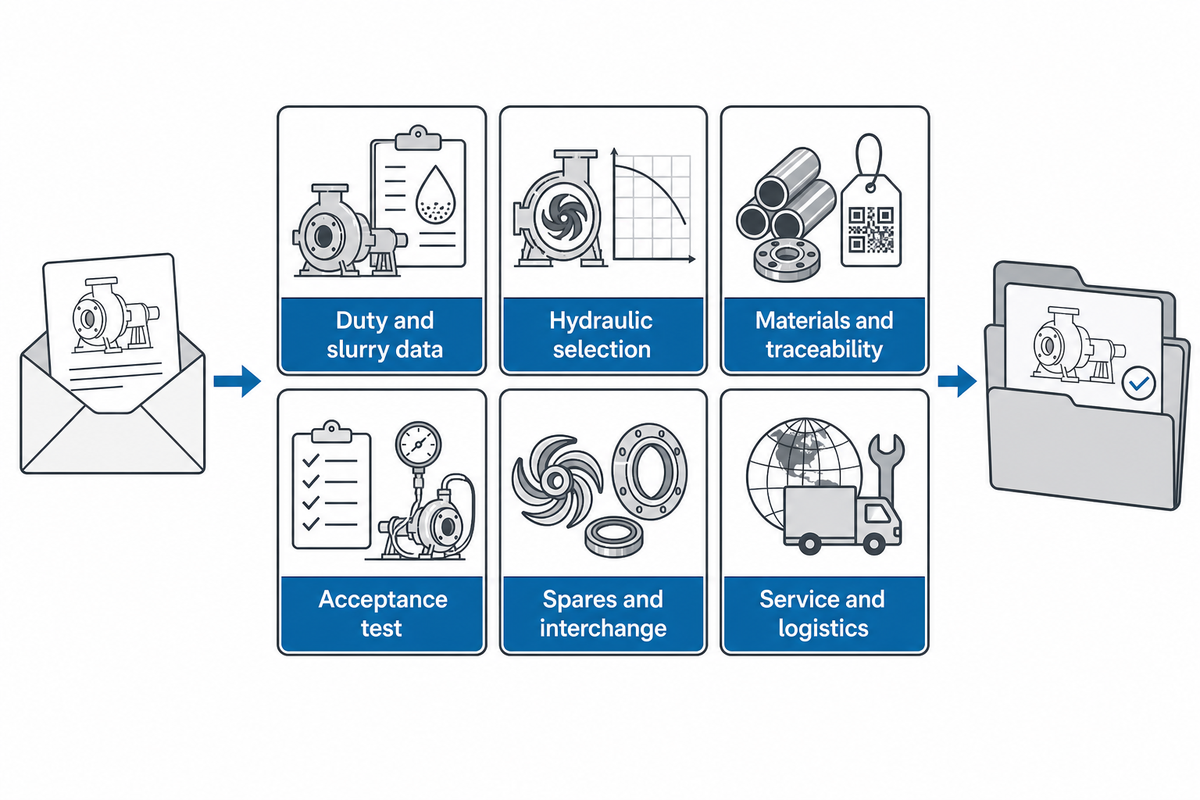
The buyer’s initial request for quotation should already define the duty and commercial scope; BBP’s industrial pump RFQ specification guide covers that earlier step. The Post-Quote Evidence Check begins after bids arrive. A catalog shows what a supplier offers, but it does not prove that the quoted configuration will work in your system. Request the same six returned files from every shortlisted supplier so the bid comparison is based on evidence rather than different sales formats.
Illustrative duty-sheet format—not recommended operating values: a completed project sheet might show minimum/normal/maximum flow of 120 m³/h, 150 m³/h and 180 m³/h (approximately 528 gpm, 660 gpm and 793 gpm); head of 28 m, 32 m and 36 m (about 92 ft, 105 ft and 118 ft); solids of 25 wt%, 30 wt% and 35 wt%; mixture density of 1,250 kg/m³, 1,350 kg/m³ and 1,450 kg/m³; particle values of 0.2 mm, 0.8 mm and 6 mm; temperature of 15 °C, 25 °C and 40 °C (59 °F, 77 °F and 104 °F); speed of 900 rpm, 1,050 rpm and 1,200 rpm; power of 55 kW, 75 kW and 90 kW (approximately 74 hp, 101 hp and 121 hp); suction pressure of 0.8 bar, 1.0 bar and 1.2 bar (about 11.6 psi, 14.5 psi and 17.4 psi); supply frequency of 50 Hz or 60 Hz; and motor voltage of 400 V or 460 V. These figures are fictitious placeholders that demonstrate the required units and three-point structure. They must not be used to select a pump.
- Begin with the duty and slurry data sheet. Record minimum, normal and maximum flow (m³/h); static and friction head (m); suction pressure (bar); altitude (m); temperature (°C); liquid chemistry; solids concentration (wt% and vol%); mixture density (kg/m³); specific gravity; particle-size distribution and maximum particle size (mm); hardness; particle shape; corrosiveness; entrained air and the expected wear mechanism. Include the system curve and operating scenarios.
- Next, obtain a hydraulic selection file. Require the selected model, speed (rpm), impeller diameter (mm), absorbed power (kW), efficiency (%), net positive suction head (m) and operating point. Distinguish a family selection chart, a published performance curve and a certified curve for the purchased pump and impeller trim.
- The third file covers materials and traceability. List casing, impeller, liner, shaft, sleeves, elastomers and fasteners with material standards or supplier grades. Define certificates, heat or batch traceability, hardness checks and any inspection hold points.
- Before production, agree on the acceptance-test plan and report. State the governing standard, acceptance grade, test medium, instrumentation, tolerances, witness points and report format. A clean-water test can validate hydraulic manufacture under its stated basis, but it does not alone prove abrasive slurry performance.
- For maintenance planning, collect spares and interchange evidence. Request a two-year recommended spares list, drawings, part numbers, shelf-life notes, local stock statement and dimensional or drawing evidence for any claimed interchangeability. Review BBP’s slurry pump spare-parts guide when building this list.
- Close the package with a service and logistics plan. Identify manufacturing location, inspection responsibility, packaging, export documents, shipping terms, installation supervision, commissioning, warranty process, repair location and response path. Ask for current lead times in the quotation rather than copying them from an old project.
| Evidence checkpoint | Comparison question | Clarify before award |
|---|---|---|
| Duty sheet | Is the same operating envelope used by every bidder? | Missing minimum, normal or maximum case |
| Slurry characterization | Are concentration, density and particle data quantified? | Generic “abrasive slurry” description |
| Hydraulic selection | Is the quoted operating point shown on the curve? | Family chart without purchased configuration |
| Materials schedule | Are all wetted parts and grades identified? | Unqualified “wear-resistant” wording |
| Traceability plan | Which records follow the supplied components? | Certificate scope not tied to parts |
| Acceptance-test plan | Are test basis, medium and acceptance criteria stated? | Catalog curve offered as test evidence |
| Spares schedule | Are current part numbers and stocking responsibilities clear? | Interchange claim without drawings |
| Service plan | Who owns commissioning, warranty and repair response? | Regional responsibility left undefined |
| Commercial schedule | Do price, exclusions and lead-time basis align? | Low bid with unresolved technical exclusions |
Important test caveat: ISO 9906 hydraulic acceptance testing applies to liquids that behave like clean, cold water. If a supplier presents an ISO 9906 certificate, ask what it proves about the manufactured pump and what separate correction or application basis is used for slurry density, viscosity, solids and wear.
The actual operating point comes from the intersection of the pump and system curves. It can move when solids concentration, pipe condition, valve position, speed or impeller diameter changes.
The Four-Handoff Risk Chain
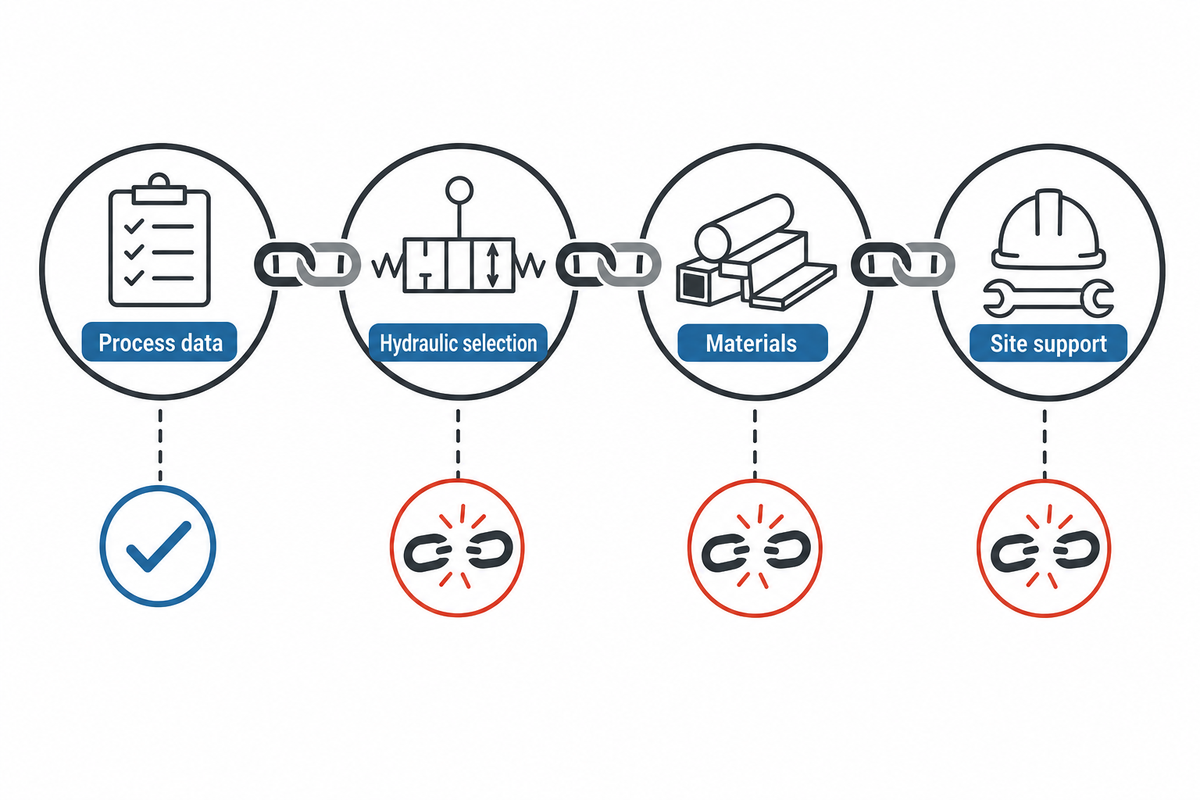
Many failures begin between departments rather than inside one component. Use this four-handoff chain to decide where the quotation needs an owner and a written acceptance point.
A U.S. Mine Safety and Health Administration investigation illustrates why pump-maintenance procedures and responsibilities must be explicit before work begins.
- Process data → hydraulic selection: incomplete solids or system data can put the selected centrifugal pump away from its intended operating region, increasing recirculation, vibration, power demand or unstable flow.
- Hydraulic selection → materials: correct head and flow do not prevent excessive wear when the impeller, casing or liner does not match abrasion, impact and corrosion.
- Materials → manufacturing and testing: the specified alloy or elastomer must survive casting, machining, balancing, assembly and inspection with traceable records.
- Shipment → site support: a technically correct pump can still lose availability when cables, starters, seals, tools, replacement parts or trained service are missing.
This chain also explains why the lowest purchase price may not produce the lowest total cost of ownership. Compare expected maintenance intervals, energy at the actual operating point, shutdown consequences, spares and service—not an unsupported promise of wear life.
Which Type of Manufacturer Fits Your Application?
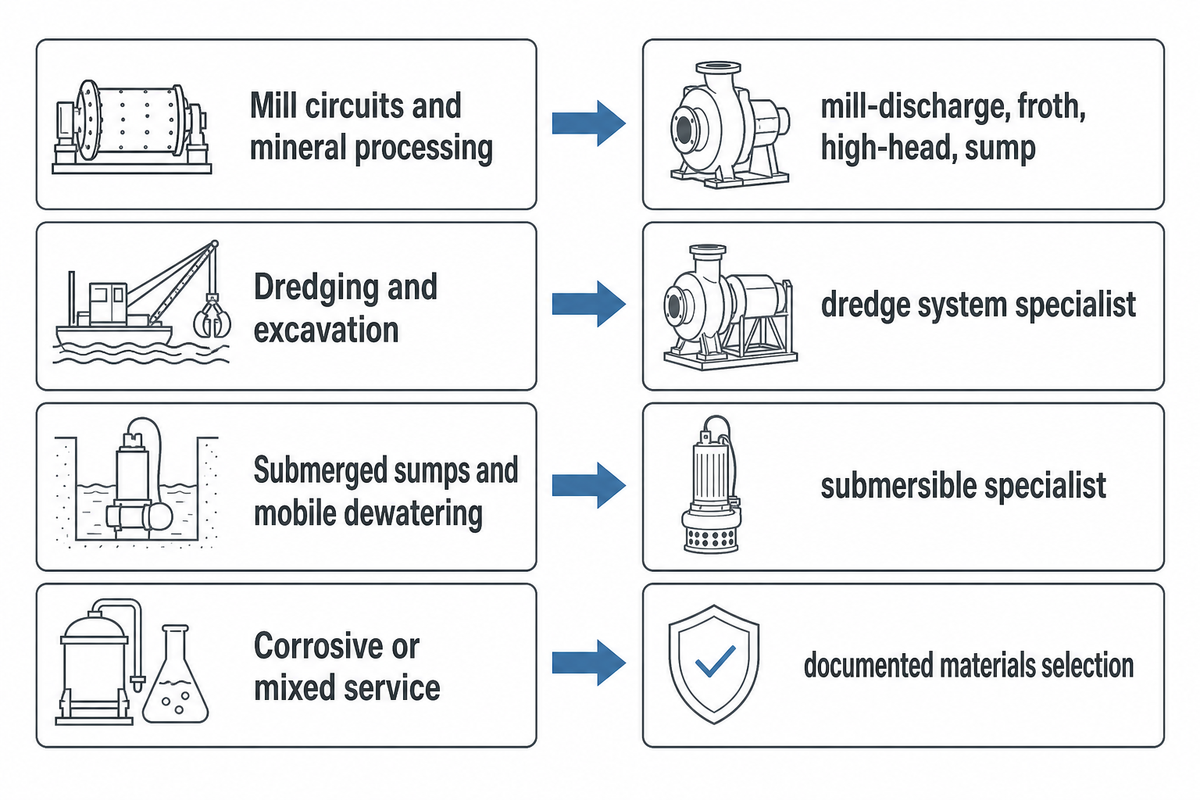
Use the Hydraulic Institute slurry-pump terminology and application framework as a common technical vocabulary before comparing the supplier categories below. It separates pump-architecture fit from later curve, materials, acceptance-test, spares and service comparisons for the stated duty in each project.
For mill circuits and mineral processing: prioritize manufacturers with documented mill-discharge, froth, high-head and vertical sump experience. Review how the supplier handles changing density, abrasive solids, operating region and wet-end material selection. This narrows the pump architecture before commercial comparison begins.
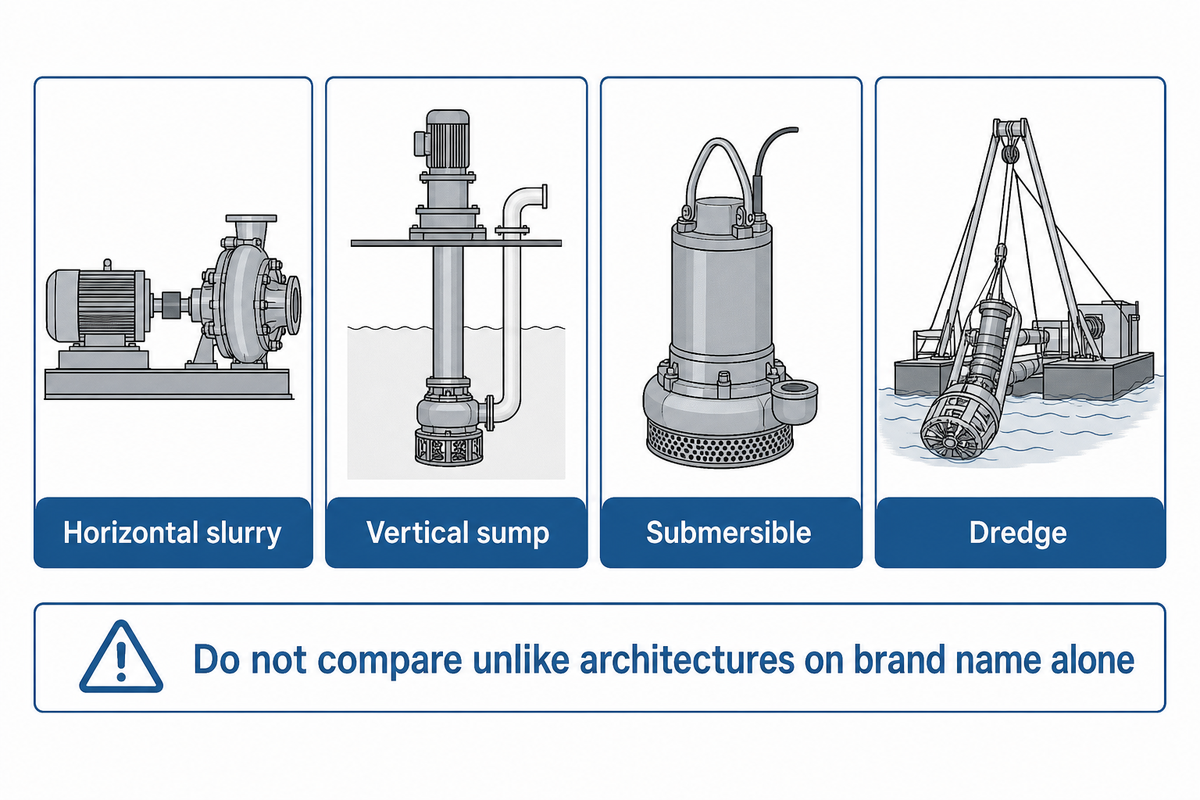
For dredging and excavation: compare dredge pumps, hydraulic or electric drive, agitators, cutters, pontoons and excavator interfaces as one system. A high-solids pump without the correct feed mechanism may not deliver the expected production.
For submerged sumps and mobile dewatering: submersible slurry pumps from Xylem, Tsurumi, Dragflow, Hevvy/Toyo, Goodwin and other specialists may reduce priming and installation complexity. Motor cooling, cable protection and lifting remain part of the duty.
For corrosive or mixed abrasion-corrosion service: ask for the material-selection reasoning, not merely a “wear-resistant” label. Metal hardness, rubber compound, particle impact and chemical attack can pull selection in different directions.
For replacements: verify shaft centerline, flange drilling, base dimensions, rotation, curve, materials, power and part drawings. The phrase “replacement pump” does not automatically mean every part is interchangeable.
Frequently Asked Questions
Which company makes the best slurry pump?
No single slurry pump manufacturer is best for every duty. Mill-circuit, submersible agitator, filter-press feed and dredge pumps solve different problems. Separate dry-installed, cantilever, submersible and dredging architectures first. Then compare the operating point, allowable region, wet-end materials, seal arrangement, power, test basis, spares and site support. The best shortlist is the one whose documented evidence matches the complete duty sheet and the consequences of downtime. Require written confirmation of the purchased configuration and support available near the plant.
What is the difference between a slurry pump and a dredge pump?
A slurry pump is a broad category for mixtures containing solids. A dredge pump is configured for excavation or transport of sediment, often with large passages, high solids handling, an agitator or cutter, and a floating or excavator-mounted system. Some dredge pumps are slurry pumps, but many plant slurry pumps are not dredging packages. Confirm the feed method, mounting interface, discharge route, driver, controls and lifting plan together, because pump capacity alone does not define a complete working dredging system.
What information should I send to a pump supplier?
Send flow and head ranges, a system curve, suction conditions, pipe data, solids concentration, specific gravity, particle distribution and maximum size, hardness and shape, liquid chemistry, temperature, installation layout, motor supply, operating schedule, maintenance constraints and required standards. Photos and samples help but do not replace quantified duty data.
Do slurry pump manufacturers supply replacement parts and service?
Many do, but coverage varies by model and region. Ask for current part numbers, drawings, recommended stock, manufacturing location, local inventory, repair capability, warranty route and response responsibility. Obtain those commitments in writing for the destination site, and identify who owns each after-sales obligation.
How do I get a certified pump curve?
Define the purchased model, impeller trim, speed, test standard, acceptance grade, test medium and witness requirement in the request for quotation. A catalog or published family curve is useful for selection, but it is not the same as a certified result tied to the supplied configuration.
Final Shortlisting Advice
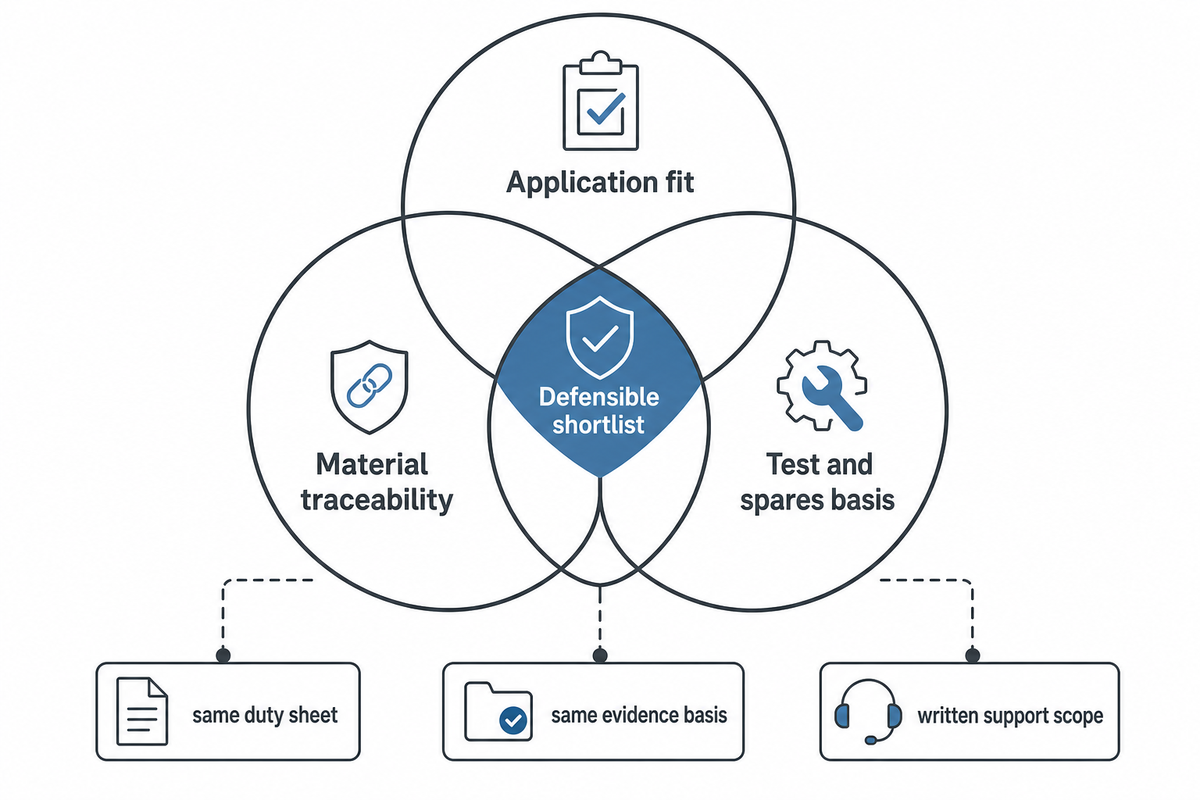
Start with application fit, not company size. Select three to five manufacturers whose pump architecture matches the installation, then apply the same Post-Quote Evidence Check to each bid. Compare exclusions as carefully as inclusions. If one quotation omits the system curve, solids data, material traceability, test basis or spare-parts route, its lower price is not yet comparable.
At an operating mine, a missing wear part or undocumented factory acceptance test (FAT) can turn routine maintenance into prolonged downtime. Treat a quotation with no current stock plan or test basis as incomplete. Search pages may describe candidates as industrial slurry pump manufacturers, the best slurry pump manufacturers, the largest slurry pump manufacturers or small slurry pump manufacturers. Those labels are not technical selection evidence.
Search interest for “slurry pump manufacturers” has risen in recent data, but that is an information-demand signal—not proof of higher tender volume, mine throughput, capital expenditure or pump orders. The useful response is better sourcing discipline. To discuss a documented duty with BBP, contact the engineering team and send the operating data before requesting a final selection.
References & Sources
- Hydraulic Institute: Rotodynamic Centrifugal Slurry Pumps
- Hydraulic Institute: Rotodynamic Pump Operating Regions
- Hydraulic Institute: Hydraulic Performance Acceptance Tests
- ISO 9906:2012 — Rotodynamic Pump Hydraulic Acceptance Tests
- U.S. Mine Safety and Health Administration: Pump Maintenance Safety Case
Research reviewed on August 15, 2026. Company ownership, product ranges and service coverage can change. Confirm current information directly with each manufacturer before procurement.
WHY BUYERS WORK WITH BBP
About BBP Manufacturing
BBP Manufacturing Co., Ltd. is a Beijing-based industrial pump manufacturer with in-house foundry, heat treatment, machining, assembly, coating and inspection capabilities. We support industrial projects across slurry handling, sewage treatment, clean water transfer, chemical service, fire protection, irrigation and OEM pump supply.
Our Engineering Support
We help engineering buyers select and source the right pump configuration, not just compare prices. Send us your flow rate, head, medium, solids content, temperature, pH value, material requirement and installation conditions. BBP engineers will recommend a pump series, material option, duty curve basis, lead time and spare-parts plan for your RFQ.
Company Profile // DATA_SHEET
Name
BBP Manufacturing Co., Ltd.
Brand Name
BBP
Country
China
Headquarters
Beijing, P.R. China
Business Type
Industrial Pump Manufacturer
Model
B2B / OEM / ODM / Project Supply
Main Products
Slurry Pumps, Sewage Pumps, Centrifugal Pumps, Split Case Pumps, Multistage Pumps, Chemical Pumps, Fire Pumps, Irrigation Pumps
Manufacturing Capability
Foundry, Heat Treatment, Machining, Assembly, Coating, Inspection
Certifications
ISO 9001 / CE / SGS / BV / TÜV
Export Reach
90+ Countries & Regions
Standard Lead Time
About 25 Days for Standard Configurations
Contact Person
Wesley · International Sales
Phone / WhatsApp
+86 182 1085 0516
Email
contact@bbpmfg.com
Website
https://bbpmfg.com/
Address
Room 2803, Building 11, Phase II, Nuode Center, Fengtai District, Beijing, P.R. China