Get in Touch with BBP


GW
I work in the pump industry, with a particular interest in water treatment, chemical dosing, and site dewatering. Through BBP's articles, I explain pump operating principles and selection factors, helping readers connect specifications with the liquid being handled, the required duty, and day-to-day maintenance needs.
Axial Flow Pump vs Centrifugal Pump: Head, Flow and Power
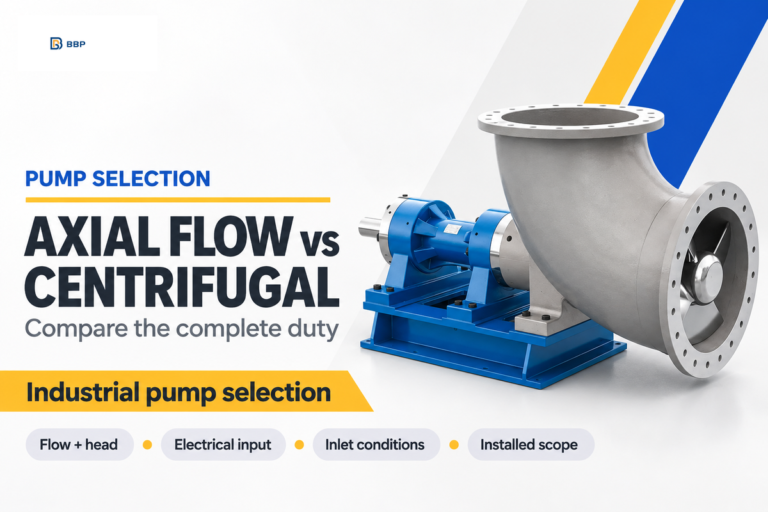
A comparison of axial flow pump vs centrifugal pump begins with the water you have to convey (flow, total head) and changes that occur during operation. Axial styles work for higher flow rates at low pressure. Radial centrifugal styles cover…
Continuous-Duty Chemical Dosing Pump: Selection Criteria for 24/7 Water Treatment
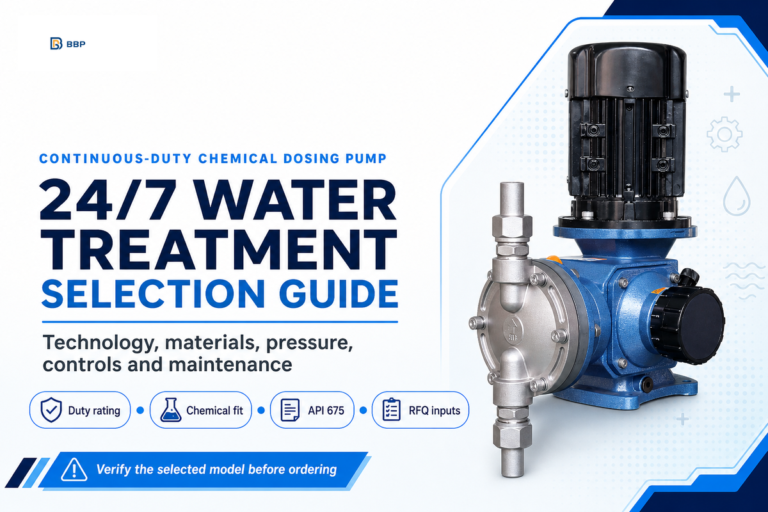
Chemical dosing pump continuous duty water treatment refers to selecting a positive-displacement metering pump built to inject chemical at a fixed rate around the clock, without the scheduled downtime that limits standard-duty designs. In 24/7 water treatment service — disinfection,…
Centrifugal Trash Pump vs Standard Trash Pump: Construction Dewatering Guide

(Updated August 2026) Quick Specs, BBP T-Series Centrifugal Trash Pumps Frame / discharge size 2 in – 8 in Flow range 200 – 2,800 GPM Total dynamic head 40 – 145 ft Max solids passing size 1.25 in – 3…
Split Case Pumps and Split Casing: How They Work, Where They Fit, and What to Check Before Selection

Split Case Pumps: 7 Checks for Selection & Service Engineering guide for water-moving projects Split Case Pumps are often discussed as if they were the default solution for every high-flow water system. This isn’t the case. Instead, ask whether the…
Rubber Lined Slurry Pump: How to Select, Apply, and Maintain It
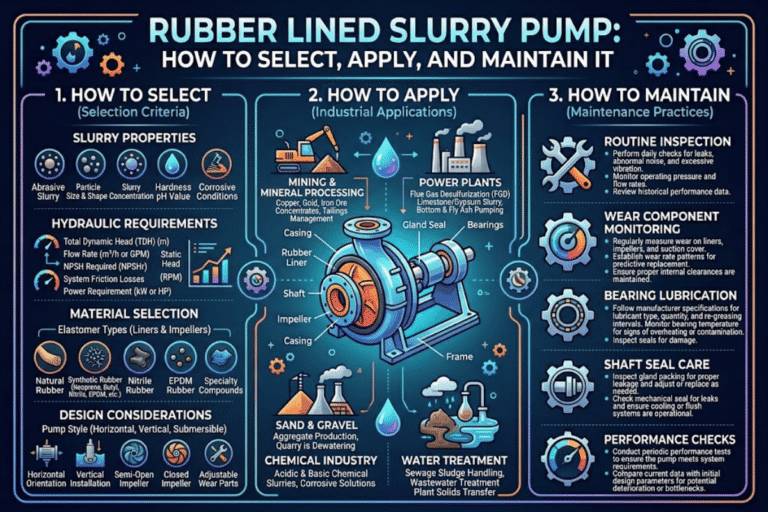
A rubber lined slurry pump is a centrifugal pump whose wet end — volute, throat bush, impeller, and cover plates — is protected by an elastomer liner rather than a hard-metal alloy. The rubber absorbs particle energy through elastic rebound,…
The Mining Slurry Pump Field Guide: What Breaks, How to Pick the Right One, and Where the Money Actually Goes
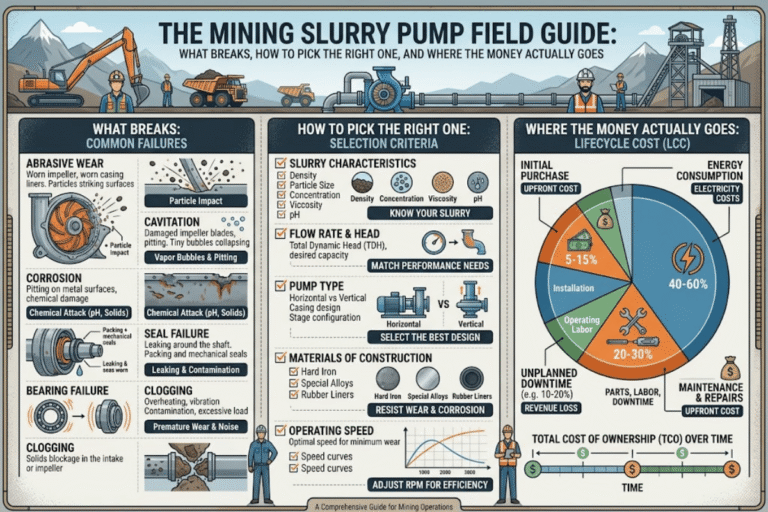
The mining slurry pump: the subject which has perhaps the greatest impact on the economics of a 24 versus a 14 hour run, and which has the greatest impact on the annual energy bill once the pumps are running. This…
Trending now