Get in Touch with BBP


Jasonxue
I work in the industrial pump sector and write about pump selection, system performance, and maintenance. Here at BBP, I share practical explanations of pump components, operating conditions, and common wear issues to help readers understand their options and ask the right questions when choosing or maintaining a pump.
Pump Horsepower Calculator for Flow, Head and Efficiency
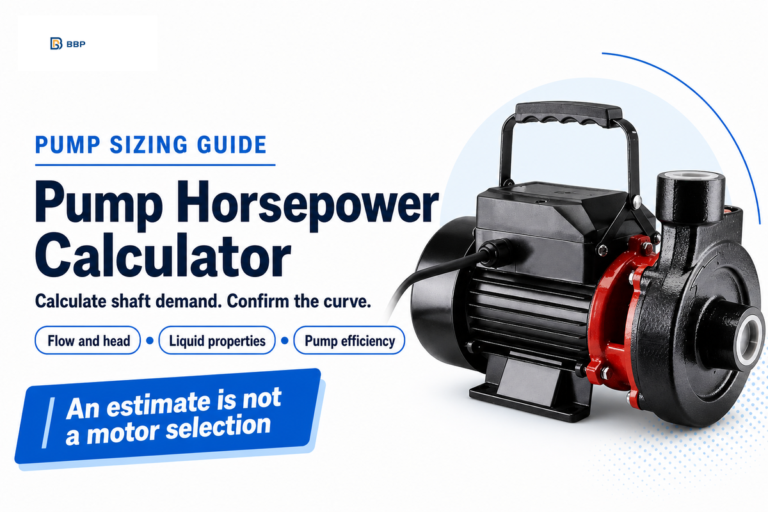
A pump horsepower calculator calculates the power required at the pump shaft using flow rate, total head, liquid specific gravity and pump efficiency. Enter one operating point, then use the result to confirm a supplier’s power curve. Motor selection requires…
Pump Alignment: Tolerances, Soft Foot and Thermal Growth
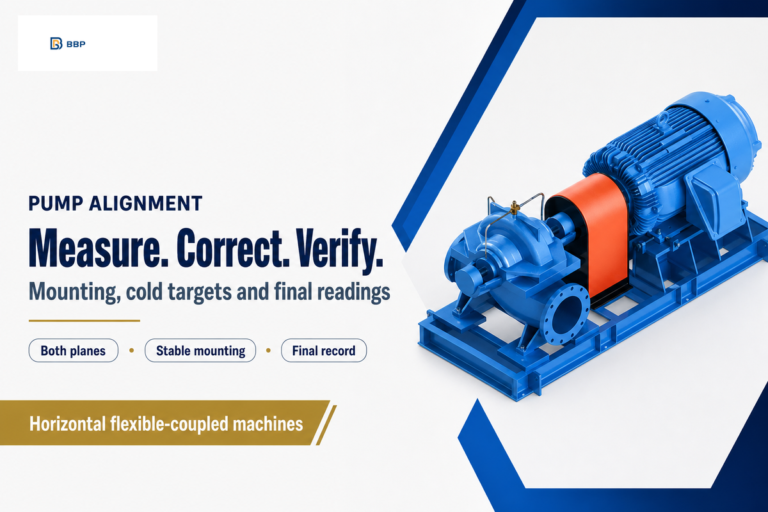
Pump alignment defines the relationship between pump and driver shafts so that the coupled machine operates within its specified limits. Checks record the angular errors and offsets in two planes, compare them to the correct cold target, and repeat the…
Pump Bearings: Choose the Right Type and Avoid Repeat Failures
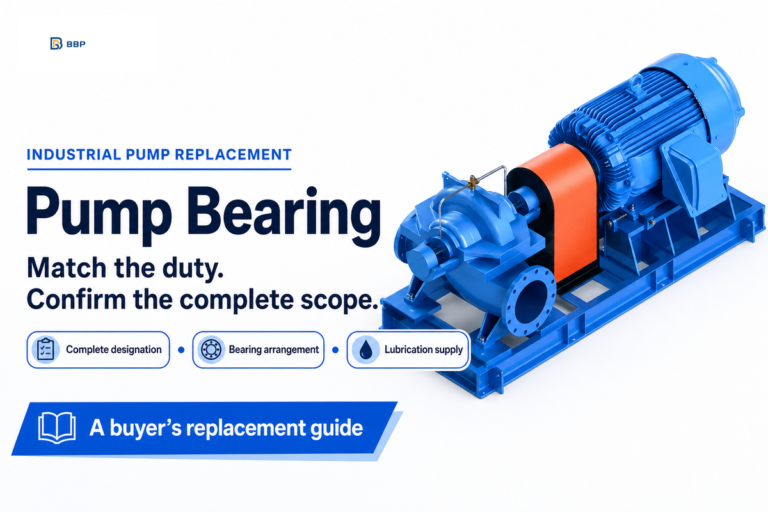
The function of the pump bearing is to help the rotating shaft, and support the impeller in its proper position. Replacing a damaged bearing requires determination of its duty, complete designation, and surrounding assembly. A correct match of bore size…
Mechanical Seal Types for Pumps: Single, Double, Cartridge, and Split Designs
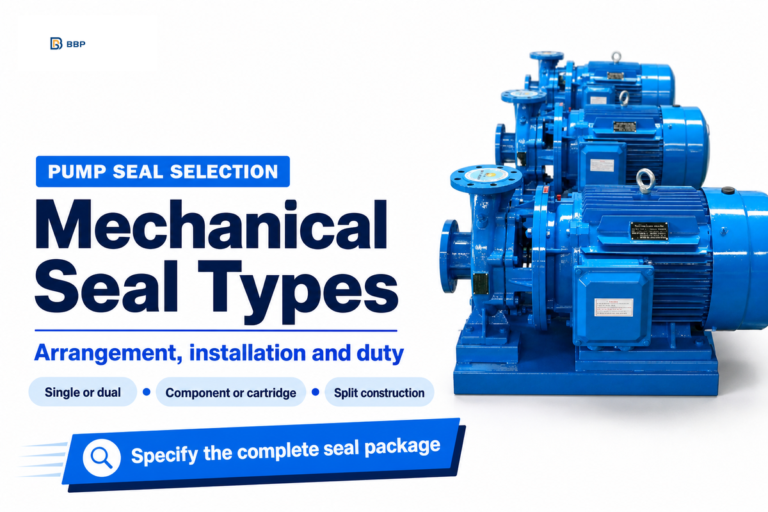
Updated September 2026 Mechanical seal types for pumps are labels for several different design choices. Single and double describe the sealing arrangement; cartridge describes a preassembled unit; split describes parts that assemble around the shaft. Choose the arrangement for the…
Pump Wear Ring Clearance, Materials and Replacement Decisions

The pump wear ring reduces internal leakage by means of a controlled running clearance. Replacement requires understanding which surface the ring faces across the gap, what clearance the drawing specifies, and why the ring has worn. Updated September 2026 A…
Pump System Curve: Calculation and Worked Example
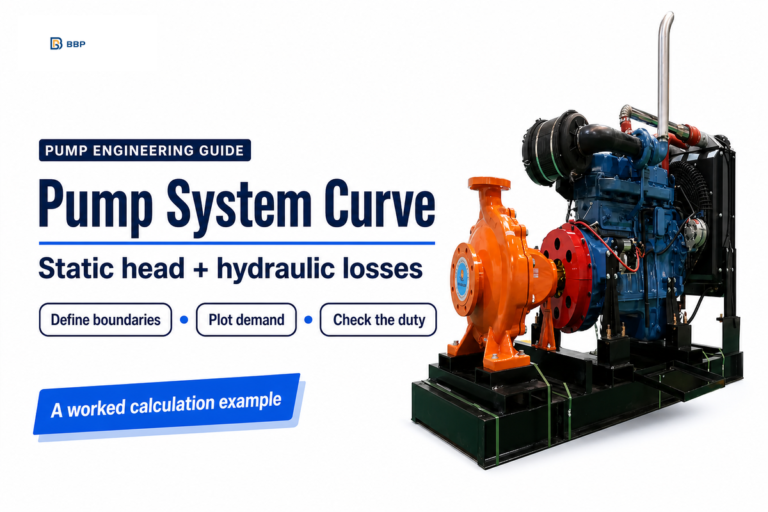
A pump system curve is a plot that shows the head required at each flow rate. In the case of a water-transfer line, this means that static demand is added to flow-dependent losses. A graph of this demand is compared…
Total Dynamic Head Calculation: Static, Pressure, Velocity, and Friction Components
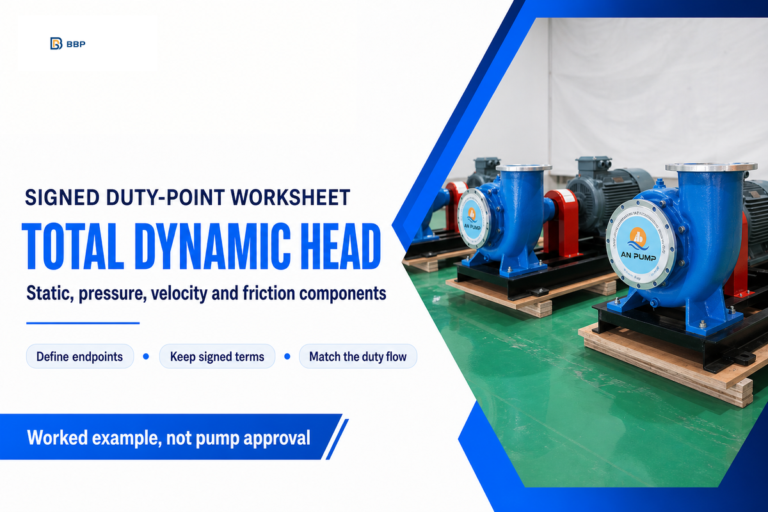
Updated September 2026 · Engineering worksheet for steady liquid systems reviewed against university, government, and Hydraulic Institute references Total dynamic head calculation is an endpoint-to-endpoint energy balance, not a collection of positive numbers. At one defined flow, elevation, pressure and…
Pump Sizing Calculation: A Step-by-Step Duty-Point Worksheet

Pump sizing calculation is based on the water a process needs and the resistance of the route. To size a pump, put those inputs and then pick horsepower. The worksheet below constructs a clean water duty point, shows all assumed…
Water Tank Volume Calculator: Size Storage for Booster, Irrigation, and Fire-Water Systems

Updated: August 30, 2026 A water tank volume calculator is a geometry and volume conversion tool that translates internal tank dimensions into cubic metres, litres, and US gallons. That geometric result is just the beginning. Defensible storage sizing must also…
Friction Loss Formula for Pump Systems: Darcy-Weisbach and Hazen-Williams Worked Examples

Updated August 2026 A friction loss formula is a calculation that converts resistance inside a pipe into head loss or pressure drop. For ordinary water service, the two formulas you will see most often are Darcy-Weisbach and Hazen-Williams. Darcy-Weisbach starts…