Get in Touch with BBP


Jasonxue
I work in the industrial pump sector and write about pump selection, system performance, and maintenance. Here at BBP, I share practical explanations of pump components, operating conditions, and common wear issues to help readers understand their options and ask the right questions when choosing or maintaining a pump.
Pump Affinity Laws: Flow, Head, Power Formulas and VFD Worked Examples
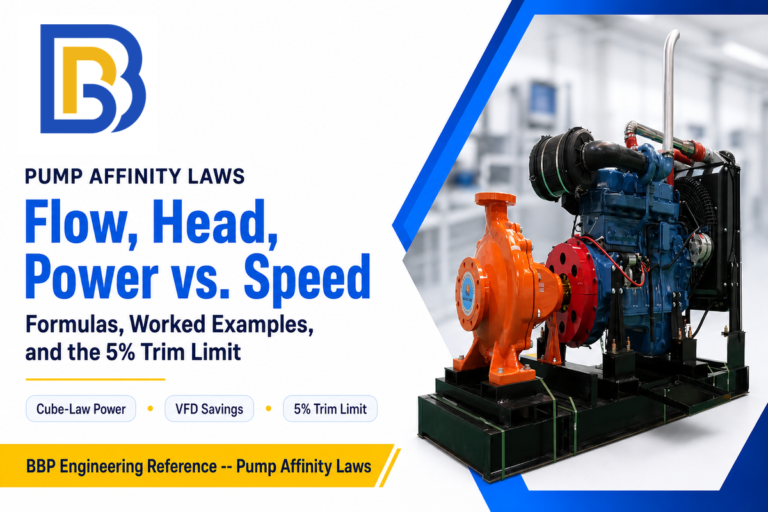
Pump affinity laws are three ratio formulas that predict how a rotodynamic pump’s flow, head, and power change when its speed or impeller diameter is adjusted — the same physics behind BBP’s centrifugal water pump range. The quick-reference table below…
Pump Power Formula: Convert Flow and Head into Hydraulic, Shaft, and Motor Power
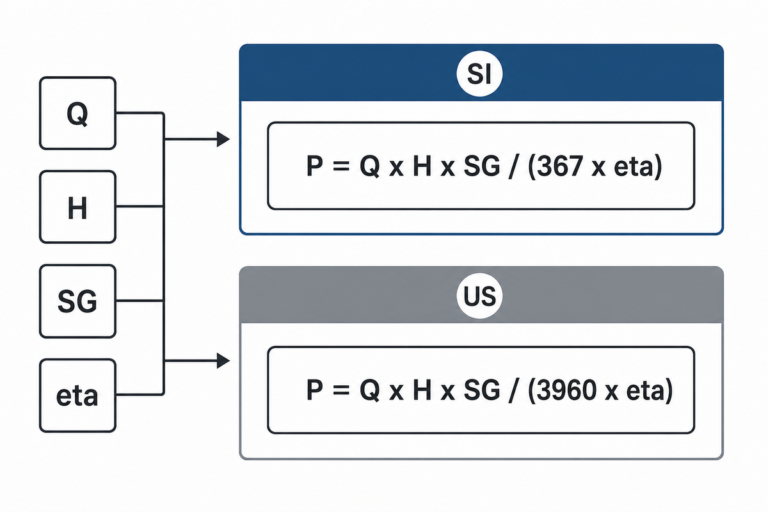
Updated August 2026 The pump power formula is the equation that converts flow rate and head into hydraulic, shaft, or motor power, depending on which point in the energy chain you’re measuring. Every version you find online reduces to the…
VFD-Controlled Pump Energy Savings: The Complete ROI Guide

Updated August 2026 Credible vfd pump energy savings roi analysis starts with measured pump duty, not a motor nameplate or a promised percentage. Variable frequency control can cut input energy when demand varies and fixed-speed operation wastes head, but static…
5 Reasons Split Case Fire Pumps Get Red-Tagged in NFPA 20 Inspections (and How to Fix Each Before the Inspector Arrives)

A split case fire pump NFPA 20 red tag inspection finding is the result an authority having jurisdiction (AHJ) or an inspection/test/maintenance (ITM) contractor reaches when they determine the system, driver, controller, or paperwork to be non-compliant and refuse to…
Slurry Transfer Pump vs In-Process Slurry Pump: Long-Distance Pumping Guide
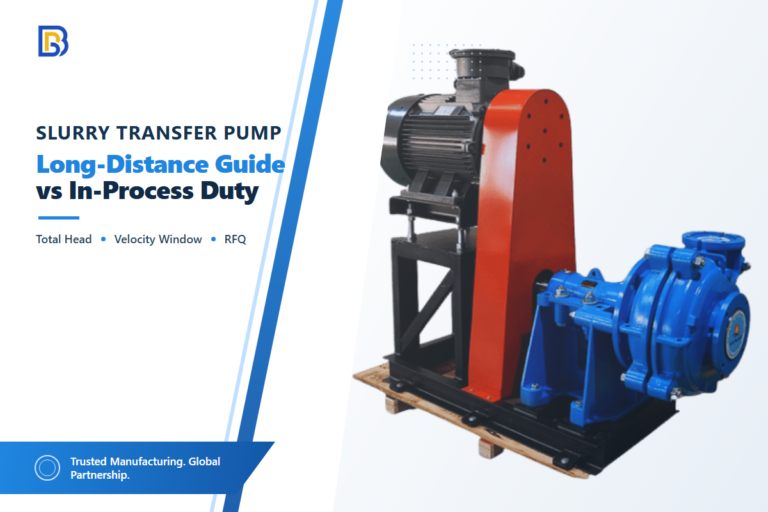
Quick specs for this guide Selection boundary: whole transfer route versus one process operation Core inputs: route profile, required flow, slurry condition and operating pattern Decision assets: duty-boundary test, head worksheet, velocity window, and four-duty-point RFQ Evidence limit: no BBP…
Pump Cavitation: Causes, Symptoms, and Prevention Across Pump Types
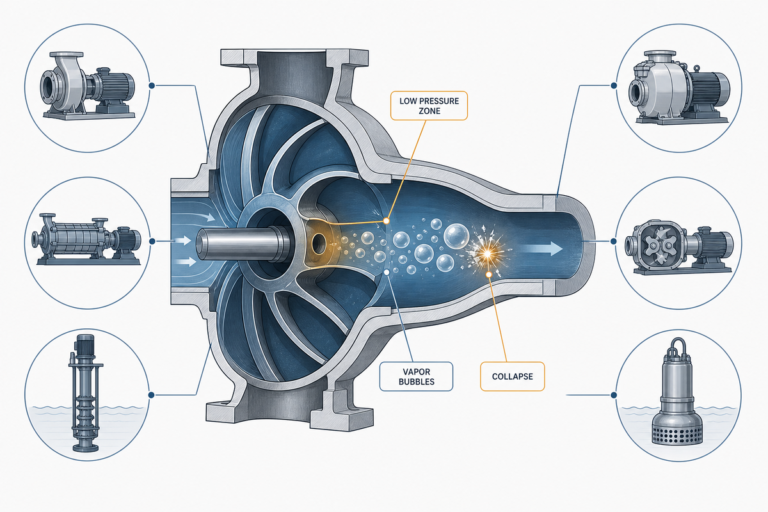
Updated July 2026 Quick Specs Trigger mechanism Local pressure drops below the liquid’s vapor pressure, forming vapor bubbles that collapse under higher pressure downstream Two root categories Suction cavitation (low inlet pressure) and discharge cavitation (restricted outlet) Audible signature A…
Cavitation in Slurry Pumps: NPSH Math, Solids-Driven Onset Shift, and How to Diagnose It Before It Pits Your Impeller

Cavitation in slurry pumps npsh solids onset is the working search label for a diagnostic boundary: local pressure, liquid condition, and inlet flow can allow vapor structures to form before their collapse produces noise, instability, or impeller damage. Updated July…
How to Write an RFQ for Industrial Pumps: The Complete Specification Checklist
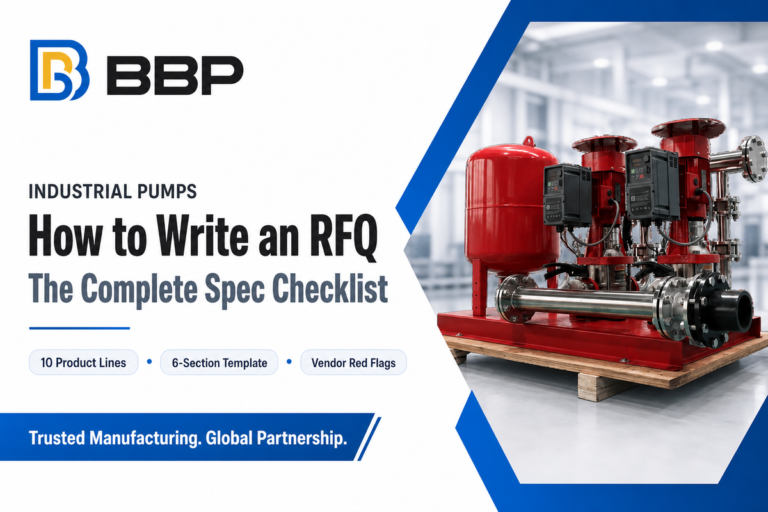
An RFQ is a formal document that asks every supplier to quote the exact same pump specification, so their bids can be compared fairly. Learning how to write RFQ industrial pumps buyers can actually use comes down to one habit:…
Pump Industry Standards: What API, ANSI, ISO, HI, and NFPA Actually Require

What Is an API Pump and Why Should I Care? There’s a set of standards, or an industry consensus-API 610, ANSI/ASME B73.1, ISO 2858/5199, Hydraulic Institute standards, and NFPA 20-that govern how centrifugal pumps should be designed, tested, and installed…
Slurry Pump Maintenance Guide: BEP Operation, Wear Monitoring & Changeout

Slurry pump maintenance is a unified system at best, not a static checklist: the pump operating point vs. best efficiency point (BEP), the physical wear rate between the impeller and the liners, and the vibration or temperature signal it puts…