Get in Touch with BBP

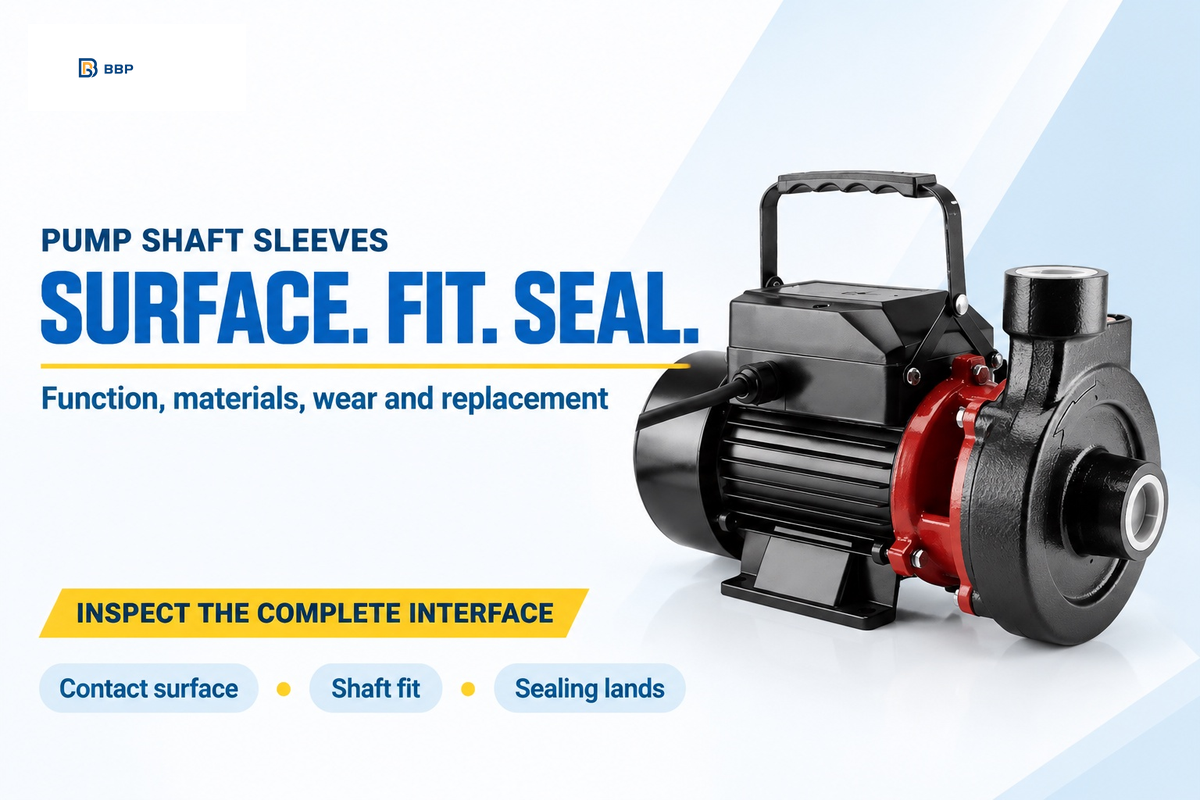
A pump shaft sleeve is a replaceable cylindrical part fitted over a pump shaft to protect a working surface from wear or corrosion. Packing, seals and their supporting components determine which sleeve surfaces matter. Before replacing one, check the contact surface, the fit between the sleeve and the shaft, and the sealing interfaces. A universal groove-depth limit can’t settle all three.
This guide provides those connections. For application selection, compare BBP’s complete pump configurations.
At a glance
- A sleeve protects an interface; the shaft transmits motor power to the impeller.
- Surface wear, loose fit and hidden sealing damage require different checks.
- Material, surface treatment and replacement dimensions belong to the particular pump and seal assembly.
- Record the damage mechanism before ordering another identical part.
What Is a Pump Shaft Sleeve and What Does It Protect?
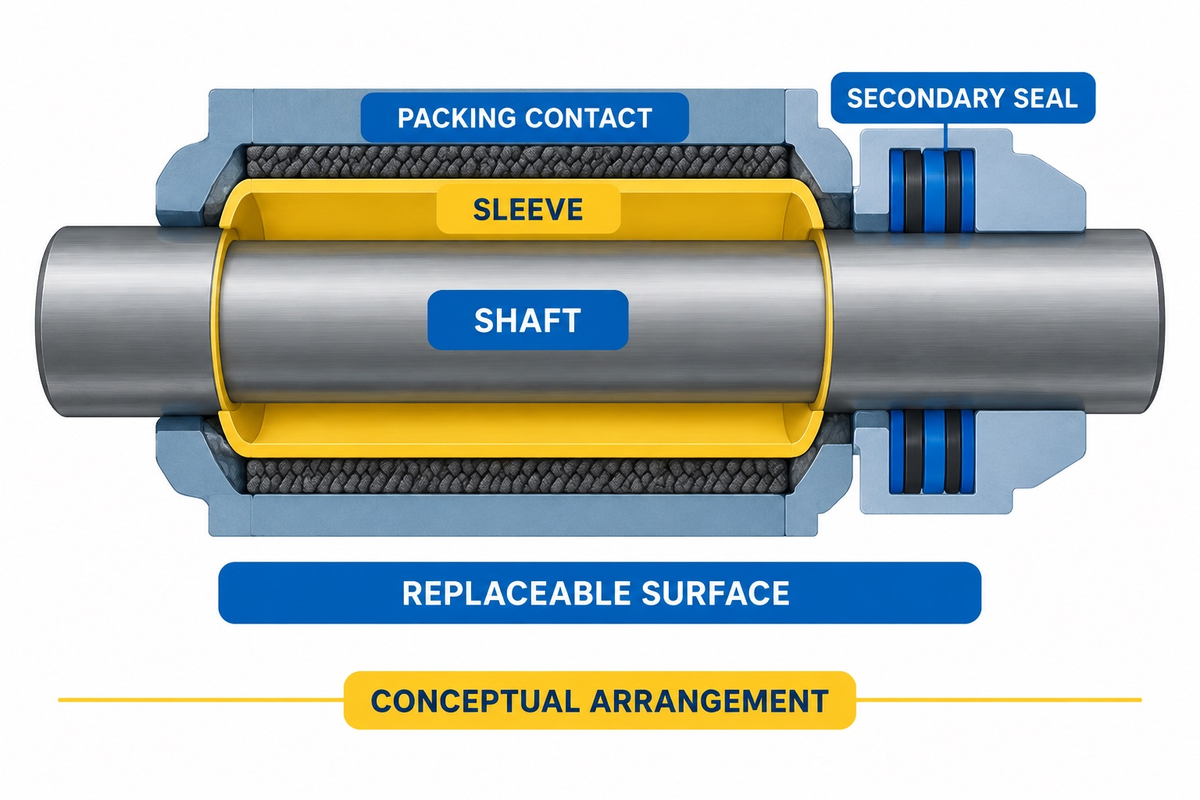
A shaft sleeve provides a replaceable surface between the shaft and a wear or corrosion-producing environment. In a packed centrifugal pump, the packing bears against its outside surface inside the stuffing box. Other arrangements use a sleeve with a mechanical seal. The exact function depends on the shaft design and sealing arrangement, rather than the part’s cylindrical shape, alone.
Replacing a sleeve can save a more expensive shaft. If liquid ingress beneath a sleeve causes shaft corrosion, or a loose sleeve damages its seat, shaft repair may be needed alongside sleeve replacement. The assembly should be opened and the sleeve seat and underlying metal inspected. KSB’s shaft-protecting sleeve explanation recognizes retention and leakage between components, as well as thermal expansion and contraction, as design concerns.
Certain horizontal split-case pumps have a sleeve and a threaded shaft nut positioning the impeller. A replacement part with a similar outside diameter can still be wrong if its length or shoulders differ. Jim Elsey’s discussion of solid shafts and cartridge seals is an excellent illustration to consider the assembly drawing before assuming that a sleeve is always simply a protective tube.
Shaft Sleeve, Wear Ring, Bushing, or Repair Sleeve?
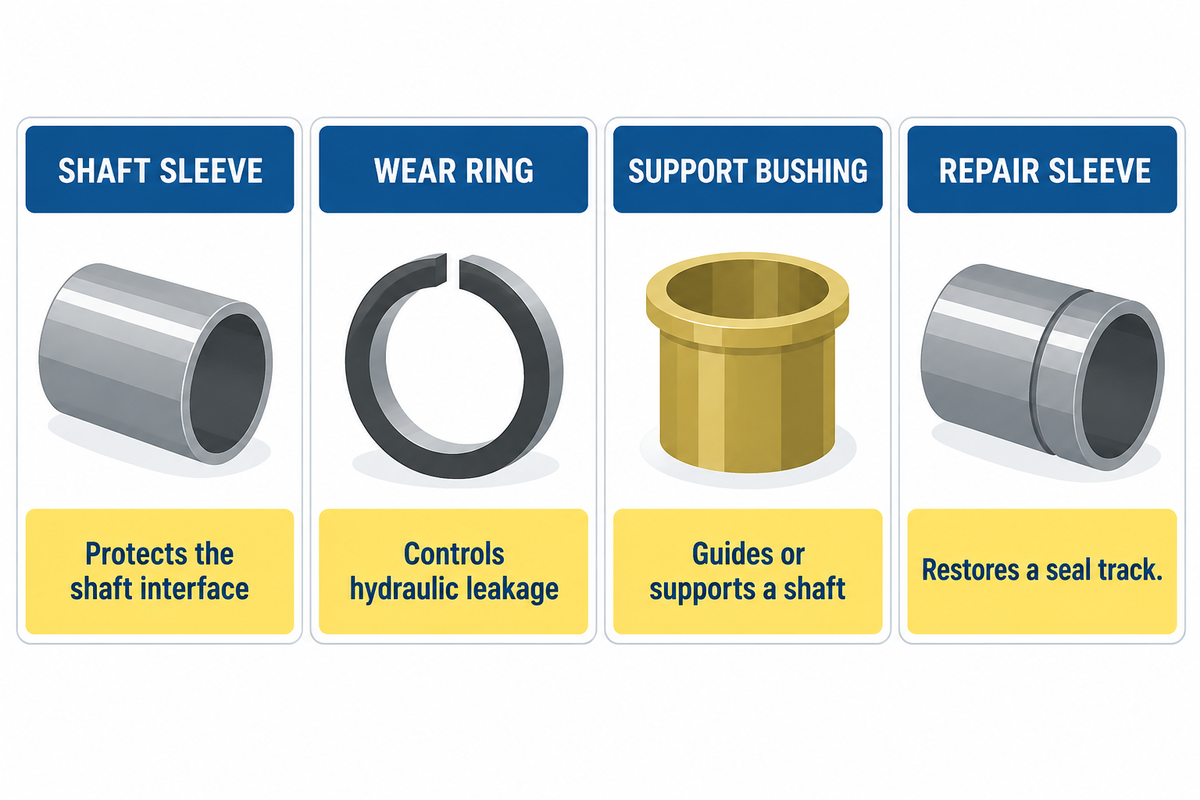
A shaft sleeve protects a rotating shaft interface; a wear ring controls internal hydraulic leakage. A bushing may guide or support a shaft, and a thin repair sleeve restores a specific seal-running surface. Similar names don’t establish interchangeability.
| Component | Main interface | Replacement question |
|---|---|---|
| Pump shaft sleeve | Shaft, packing or seal arrangement | Are the surface, fit, retention and sealing lands acceptable? |
| Hydraulic wear ring | Rotating and stationary hydraulic parts | Is the specified running clearance acceptable? |
| Shaft-support bushing | Shaft journal and support bore | Are bearing clearance, alignment and lubrication acceptable? |
| Thin shaft repair sleeve | Existing radial shaft-seal track | Does the repair product approve this diameter and sealing application? |
For example, SKF specifies a 0.28 mm (0.011 in) wall for its Speedi-Sleeve product family. That’s the product thickness, not the allowable wear on an original pump sleeve. In regards to the wear of radial shaft sealing applications, SKF’s wear-sleeve information doesn’t approve replacing every pump sleeve with a thin repair shell.
For the relationship between the sleeve and other slurry-pump components, use the broader slurry pump parts guide. Keep wear ring clearance values out of a shaft-sleeve inspection record unless these values are explicitly identified as a separate measurement.
Which Shaft Sleeve Materials Suit the Fluid and Contact Conditions?
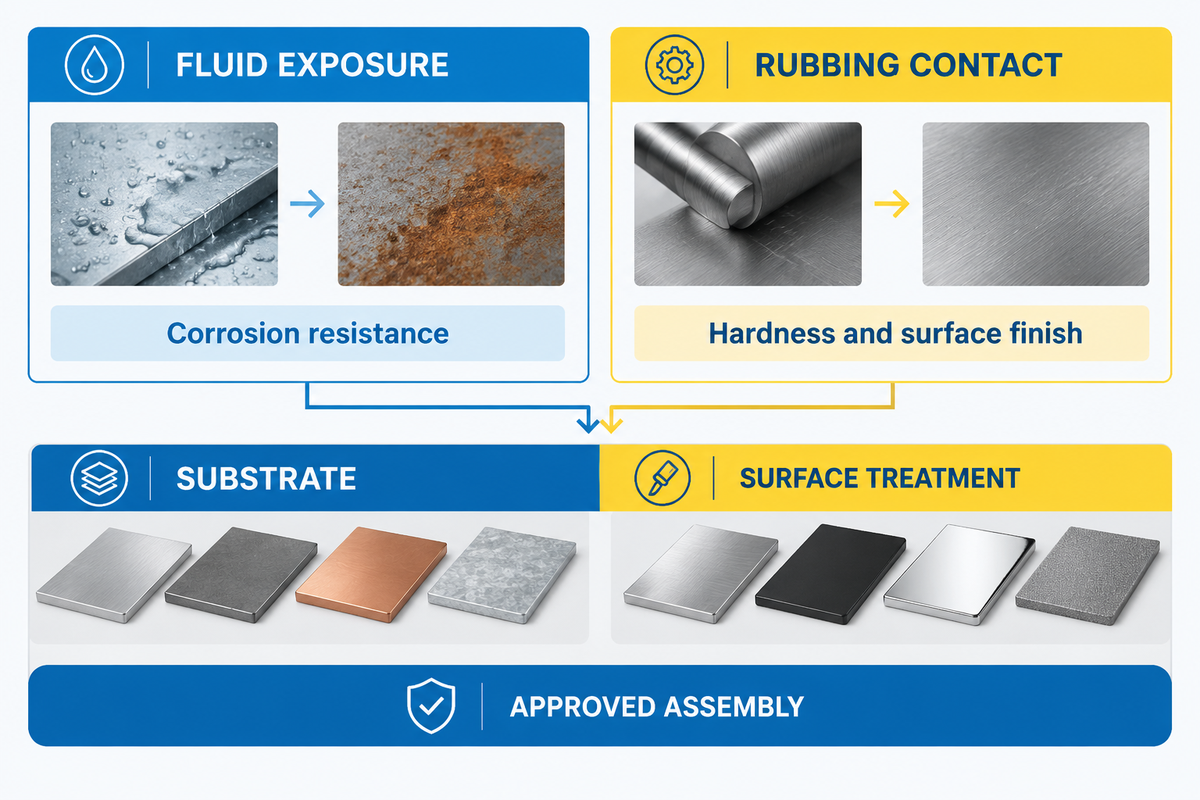
Choose the base material for corrosion resistance and the contact band for hardness and finish per the approved assembly specification; for packed sleeves, one pump lexicon names chrome plating, nitriding or plasma coating for the packing band, with surface hardness above 800-1000 HV. Corrosion resistance is required in cases of chemical attack; hardness and surface finish affect the rubbing interface. A material that performs well in clean water may respond differently to abrasive solids or other chemical combinations. Specify the substrate, surface treatment type and any coating, separately, as they may fail for different reasons.
BBP’s Slurry pump Spare-parts page lists SS420, SS304, and ceramic sleeves. These are catalog options as opposed to confirmations that these options fit all pump models and services. Obtain the part number and application confirmation before substituting one for another. A grade name alone doesn’t describe the finished sleeve’s tolerance and sealing.
For a hardened or coated sleeve, consider what happens when the surface layer is worn away. KSB’s shaft-seal technical entry discusses thin hardened surfaces that can’t be remachined. Metal may be removed, thereby removing the very surface layer of contact that’s intended to resist wear. Polishing may leave an unsuitable functional surface.
Illustrative maintenance decision: A waste water plant repeatedly replaces a stainless sleeve after grooves appear beneath the packing. Procurement recommends a harder surface; operations requests the quickest like-for-like replacement. The maintenance engineer checks whether grit is entering with the flush water and whether packing adjustment is creating excess heat. If either of these is the case, changing the material leaves a wear mechanism active. A useful purchase request describes the grade, surface treatment, fluid and solids exposure, and asks which approved sleeve and packing combination addresses these. This is an illustrative example; it isn’t an actual BBP field case or an example to predict the service life of a sleeve.
For ceramic sleeves, use the handling and installation method specified for that construction. Don’t carry over handling and repair instructions for all-metal sleeves, if the listed dimensions happen to match.
Why Do Pump Shaft Sleeves Develop Grooves, Pits, or Fretting?
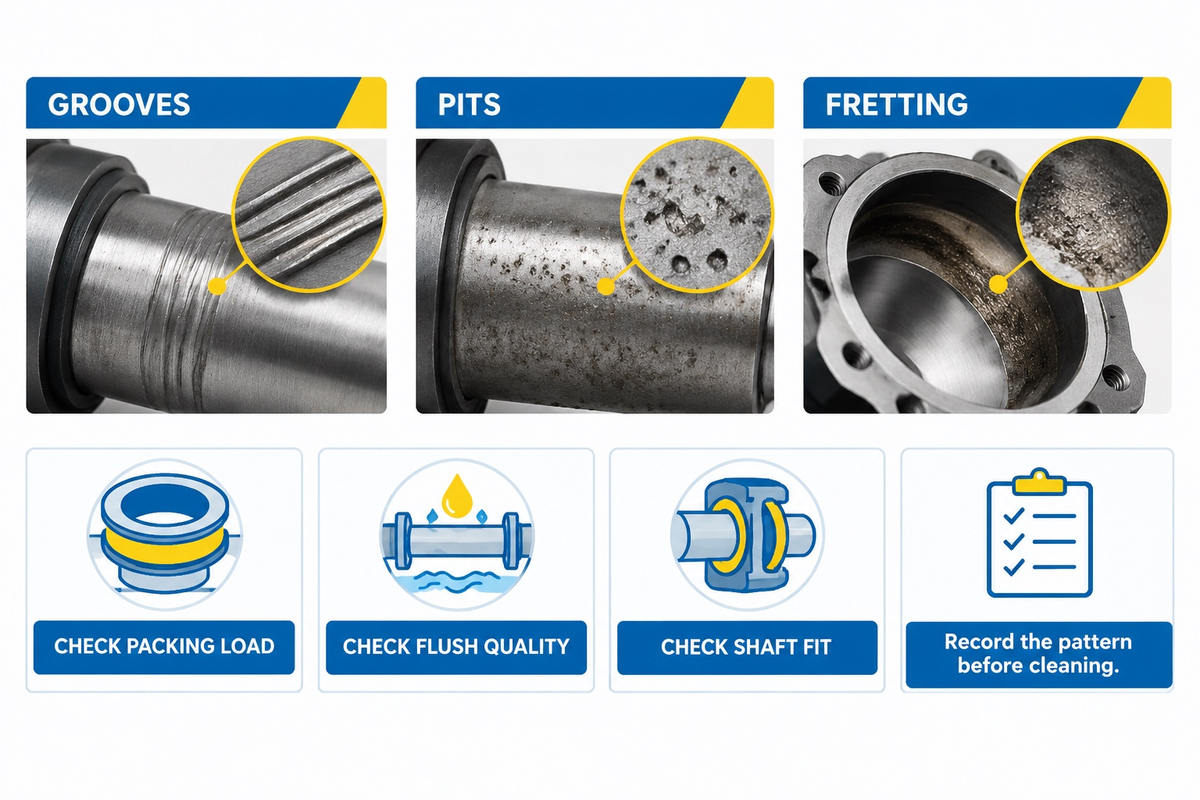
Grooves usually result from contact wear at the packing track, pits usually result from localized surface attack, and fretting wear occurs due to small relative movement at an interface. These are preliminary assessments. Determining the cause requires assessment of packing condition and contaminants, flush delivery, shaft motion and the sleeve’s fit.
The U.S. Department of Energy states that over-tightened packing can wear a shaft or its sleeve and increase power use. Packings need controlled leakage for lubrication and cooling. Over-tightening to the point of dryness can work against this requirement. Leakage from mechanical seals must be evaluated according to its own design and operating conditions.
“Overtightening causes unnecessary wear on the shaft or its wear sleeve and increases electric power use.”
Flushing liquid can contain abrasive material and erode the contact. Andrew Collins of KETO discusses this mechanism in Pump Industry’s shaft-sleeve discussion. With the flush line connected, still check that the liquid reaching the packing is clean and that the lantern ring is properly positioned.
Comparing the location of damage with the condition of the removed packing and sealing components helps distinguish the cause of a local groove on a rubbing band from the causes of corrosion beneath the sleeve or damage around a retaining feature. In the case of leakage being the first symptom, the pump seal leakage guide describes a method to assess the cause of the leakage without assuming the sleeve is at fault.
How Should You Inspect a Sleeve and Interpret Wear Limits?
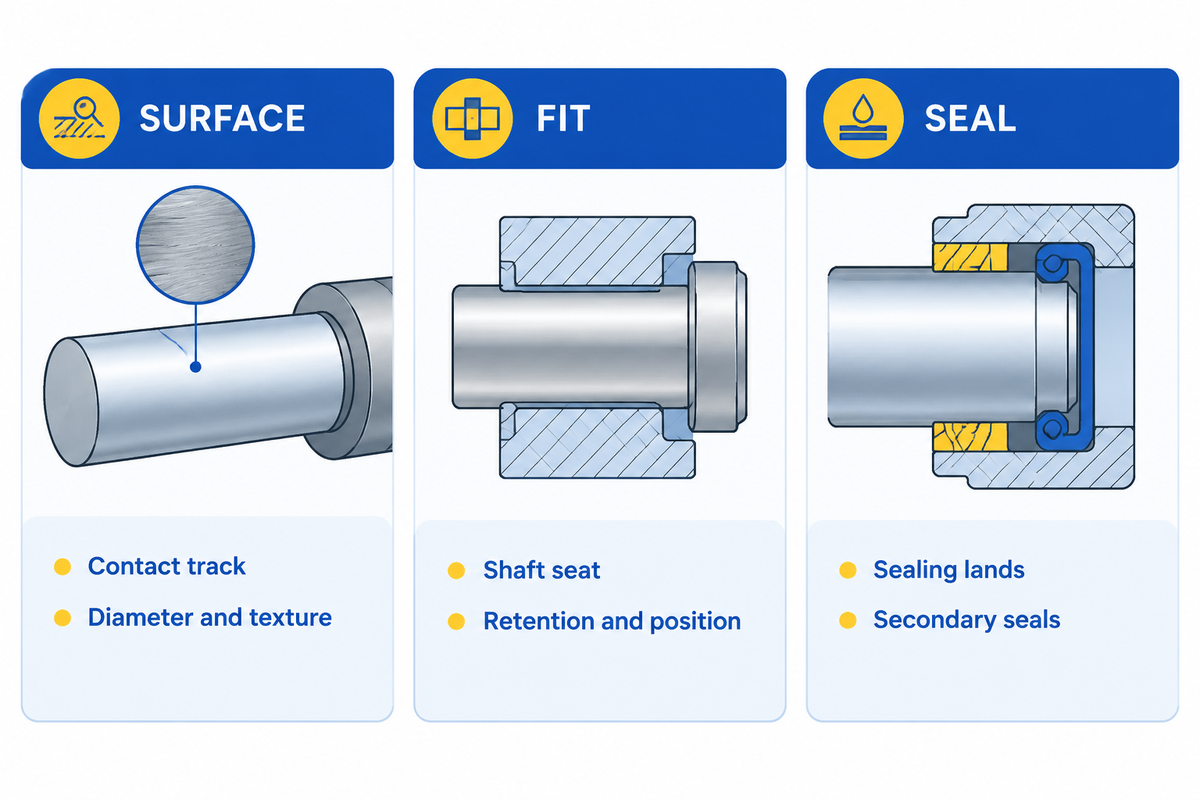
When evaluating a sleeve against the instructions and drawings, record the observed defect, dimension measured and acceptance criterion. Depth of a groove isn’t the same as outside-diameter loss, running clearance, surface roughness or runout.
Record the correct part ID and make the cleaned surface accessible for examination. Where repeatability allows, record diameters at locations. Where the inspection method permits, record diameters in perpendicular directions. Note how and where each was taken. For later readers to understand the notation, keep acceptance limits and nominal sizes, and measured sizes separate.
Also, consider shape of the wear. Chris Boss, writing for the Fluid Sealing Association, explains that braided packing can usually tolerate slight wear that forms smooth, shallow waviness uniformly around the shaft or sleeve circumference. Axial scratches, pitting and large wear will be treated differently. This packing inspection guidance gives a 16 to 32 μin Ra surface finish for a packed shaft and sets no acceptance criteria for mechanical seals or damaged coatings.
| Check | Record | Decision or handoff |
|---|---|---|
| Contact track | Groove location, direction and extent | Engineering compares damage with the sealing surface requirement |
| Outside diameter | Readings and axial measurement positions | Compare with the correct sleeve drawing |
| Roundness indication | Directional diameter differences | Investigate geometry using the approved inspection method |
| Surface texture | Roughness measurement where specified | Apply the packing or seal specification |
| Coating or hardened layer | Cracks, flaking or exposed substrate | Confirm permitted repair; do not assume polishing is allowed |
| Internal fit and shaft seat | Corrosion, movement marks and fit readings | Assess both components before approving a new sleeve |
| Secondary sealing lands | O-ring grooves, seats and associated damage | Resolve a potential bypass leak path |
| Retention and axial location | Threads, shoulders, length and position | Confirm retention and any impeller-positioning function |
| Assembled running condition | Specified runout check and seal setting | Release only against the assembly’s requirements |
An illustrative example: A technician reports that a removed sleeve “has grooves.” There’s record of smooth, even, circumferential waviness in the packing band and a separate axial scratch in the packing band. Treating both as the same wear-depth reading would hide a more useful distinction. The engineer reviews the packing guidance and pump’s acceptance limits and provides a disposition. Procurement receives either an approved reusable part or an identified replacement request. No one should interpret a photograph as giving them authority to act.
Preserve inspection findings before and after repair. The American Petroleum Institute repair guidance announcement emphasizes a documented repair process for pumps within its scope. A clear record separates the condition found, the work performed and the condition accepted.
When Can You Polish a Sleeve, and When Should You Replace It?
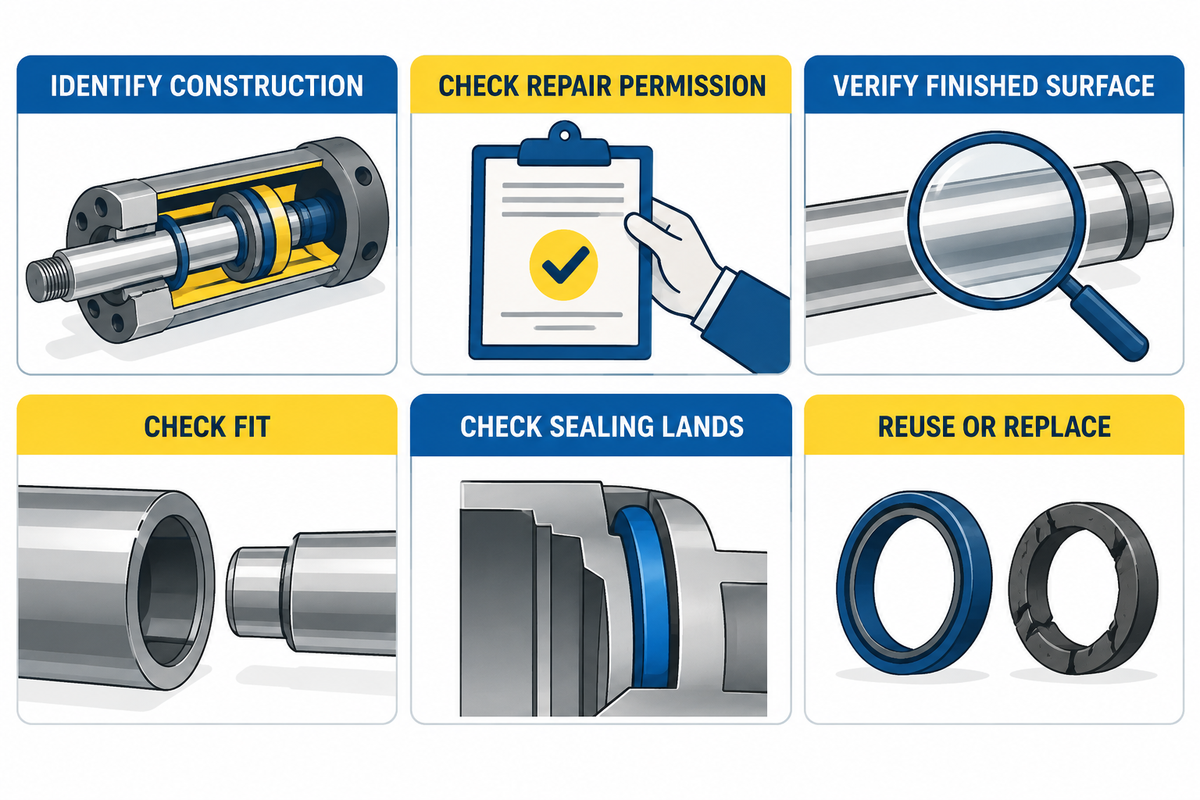
Polishing is an alternative only if an approved repair method permits it and the finished sleeve meets its dimensional and surface requirements. Replacement is usually the case when the damage can’t be removed to meet those requirements, the treated surface can’t be restored to those requirements by the approved method, and/or fit and sealing features can’t be accepted. Approve reuse on the measured dimensional and surface requirements, not on how the surface looks.
KSB’s restriction on remachining certain thin treated surfaces is especially pertinent here. This doesn’t mean that every sleeve is irreparable. A bulk-metal sleeve, a surface-hardened sleeve and a coated assembly may require different repair dispositions.
Use this sequence: identify the material and treatment; classify the damage; check the permitted repair method; determine whether the finished geometry and surface can comply; inspect the shaft and secondary seals; then approve reuse or replacement. A sleeve may have an acceptable outside surface, but still may not satisfy the fit or sealing-land requirements.
Illustrative Outage Decision: There’s a spare sleeve available immediately and a workshop that offers to polish the removed part. The removed sleeve has a damaged surface layer and there’s no documented repair allowance. The planner compares the cost of an identified replacement against inspection, possible rework and another removal, if the polished part can’t be accepted. There’s no defensible savings percentage without actual quotes and downtime costs. Repair should be attempted only if it produces an inspectable, approved component within the outage. A low price from the workshop doesn’t answer that question. The example is hypothetical and doesn’t reflect on a particular supplier’s turnaround time.
Pump Shaft Sleeve Replacement: A Safe Work Sequence

Plan to replace a shaft-sleeve as maintenance on the complete assembly. Qualified personnel should use the site approved energy isolation and fluid handling procedures and follow the instructions for the manufacturer’s removal, fitting and verification. Sleeve retention, seal arrangement and access differ between pumps. Take heating, interference-fit and tightening-torque values from that pump’s own instructions, not from another pump.
For applicable U.S. industrial servicing, OSHA’s hazardous-energy control standard addresses isolation, stored energy and verification prior to work. Electrical isolation alone does not resolve pressure, hot liquid, chemical exposure or possible reaccumulation of energy. Site procedures must address the actual fluid and equipment.
- Identify and prepare. Confirm model, drawing, replacement part and sealing components. Record the failure condition and assembly orientation.
- Isolate and make accessible. Apply the approved isolation, draining, depressurization and decontamination procedure. Verify the required conditions before disassembly.
- Remove by the specified method. Document retention, spacers and seals. Avoid transferring heating or force instructions from a different pump.
- Inspect the assembly. Check the shaft seat, contact track, sealing lands and locating features. Resolve the wear cause before fitting the replacement.
- Fit and verify. Use specified sealing components and assembly settings. Complete the required position, runout, free-rotation and seal checks.
- Return to service under procedure. Restore guards and equipment, establish required lubrication or flush conditions, and monitor the defined startup observations.
KSB uses examples of threaded interfaces to illustrate why assembly instructions are important: its lubricant advice differentiates threaded interfaces from axial faces. The specific maintenance example isn’t a reason to apply anti-seize to every sleeve surface. Add the sleeve’s accepted readings and replacement details to the pump’s maintenance history.
What Information Makes a Replacement Request Usable?
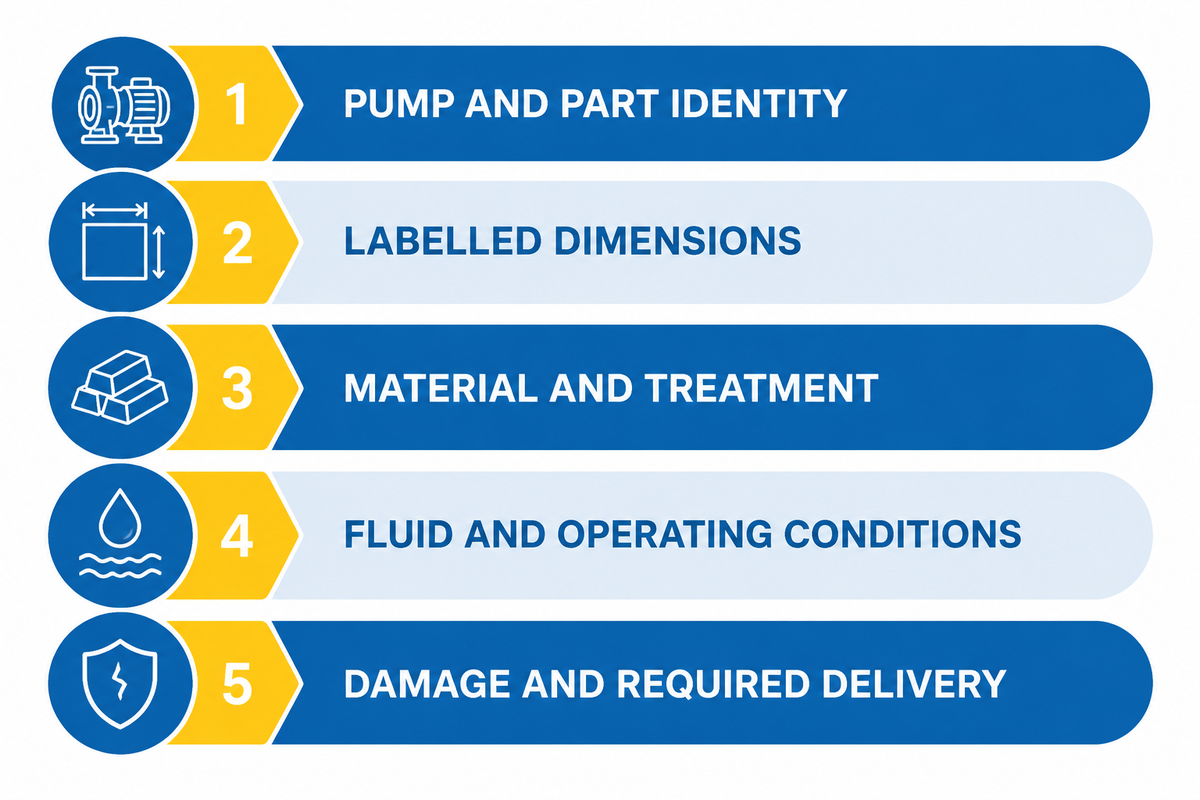
A request that’s usable identifies the pump, the specific component, and the service condition. Send the part number and drawing revision, if available, and identify dimensions by feature. Provide the arrangement of seals and any damage. This helps engineering evaluate the need for the component while procurement requests a quote for the part, rather than a similarly appearing sleeve.
| Information | Prepared by | Why it changes the decision |
|---|---|---|
| Manufacturer, model, serial number, part number | Maintenance | Identifies the assembly and its revision |
| Length, outside and inside diameters, shoulders, threads and grooves | Technician / engineering | Checks fit, location and retention |
| Material, treatment, coating and seal arrangement | Engineering | Defines contact and chemical compatibility |
| Fluid, temperature, solids and flush conditions | Operations | Tests whether the original damage mechanism remains |
| Damage photos, inspection readings and required delivery | Maintenance planner / procurement | Supports an informed repair or replacement quotation |
For a horizontal split-case pump, include the locating features of the sleeve where they establish impeller position. For reoccurring failures, provide evidence of the failed component and request a replacement. Purchasing the correct part geometry and resolving the cause of the wear are linked.
Replacement price and delivery depend on the identified part, material and treatment, drawing requirements, stock availability and inspection scope. Compare quotations for the same finished component and delivery basis. A sleeve price alone excludes any shaft repair, seal work and outage labor; obtain those items separately when they affect the maintenance decision.
Need help identifying the replacement?
Send BBP the pump model, sleeve part number or drawing, sealing arrangement and service conditions. Include inspection photographs so the request covers the damaged interfaces as well as the dimensions.
Frequently Asked Questions
Does every centrifugal pump have a shaft sleeve?
No. Sleeve use depends on the shaft design and seal arrangement. Some assemblies use a solid shaft surface directly; a cartridge mechanical seal may have its own sleeve. Identify the component on the drawing before ordering. Removing a sleeve from a design that requires one is a redesign decision, not a routine parts substitution.
Can a shaft sleeve cause leakage even if its outside looks smooth?
Yes. Liquid can leak through a sleeve-to-shaft sealing interface even when the external contact track appears sound. Damaged secondary seals, corroded sealing lands or an unacceptable fit can matter. The inspection must include the hidden interfaces and shaft seat. A smooth outside surface answers only one part of the condition assessment; it doesn’t prove the assembled sealing arrangement is intact.
Can a shaft repair sleeve replace an original pump sleeve?
Only where the repair product and assembly requirements explicitly permit that use. Thin repair sleeves generally restore a defined seal-running surface on an existing shaft. An original pump sleeve can also have shoulders, threads, sealing grooves or an axial-location function. Matching the shaft diameter doesn’t reproduce those features.
Check what the repair product is designed to restore, the required finished surface, and how it affects the mating seal. Obtain approval for the actual application before using it as an alternative. If the original sleeve must provide fit, retention or a secondary sealing interface that the proposed repair product doesn’t supply, the repair product can’t be assumed to perform the same job.
How long should a pump shaft sleeve last?
Pump shaft sleeve service life follows the pump, fluid, solids, sealing arrangement and operating history; in slurry pumps with a lantern restrictor, a gland flush that is always on, clean and at a higher pressure than the wet end keeps slurry off the packing, and sleeve and packing life is usually acceptable. Track the same inspection features over successive maintenance events. Repeated damage at the same location calls for investigation of packing adjustment, contamination, flush delivery and shaft condition rather than an unsupported calendar replacement interval.
Is stainless steel always the best shaft sleeve material?
No. A stainless grade must still suit the fluid and contact conditions. Abrasion, corrosion and surface-treatment damage are different problems. Specify the approved material and finished surface for the application, and check the mating packing or seal requirements before changing the grade.
References & Sources
The technical discussion incorporates cited KSB sleeve and shaft seals; the U.S. Department of Energy Maintenance sheet; SKF’s repair sleeve; and attributed Packing and pump-design articles. For an example of a specific application maintenance, see NCAT’s irrigation pump maintenance guide. Its application packings and wear ring clearances should remain in context.